

If you or someone you love has just been handed a diagnosis of angina, the paper bag of tablets and sprays from the pharmacy can feel bewildering. What does each one actually do? Which is the "rescue" and which is the "preventer"? Why does one give you a thumping headache and another make your ankles swell?
This guide walks you through the nine most common angina medicines used in the UK, in plain English. You'll learn how each one works, what dose to expect, what side effects are normal (and which ones are not), and the critical safety rules that could one day save your life.
What Is Angina, Really?
Angina is chest pain, pressure or breathlessness caused by not enough blood reaching your heart muscle. It usually feels like a heavy weight, a tight band, or someone pressing on your chest. The pain can also spread to the arms, jaw, neck, back or even your teeth.
It happens because the coronary arteries (the pipes that feed the heart itself) have become narrowed, usually by fatty plaques. When your heart works harder, say climbing stairs or feeling stressed, it needs more oxygen than those narrowed arteries can deliver. That's when angina strikes.
Angina is not a disease; it's a warning sign. It tells you the heart isn't getting enough blood, and that signal is a chance to act before a heart attack happens.
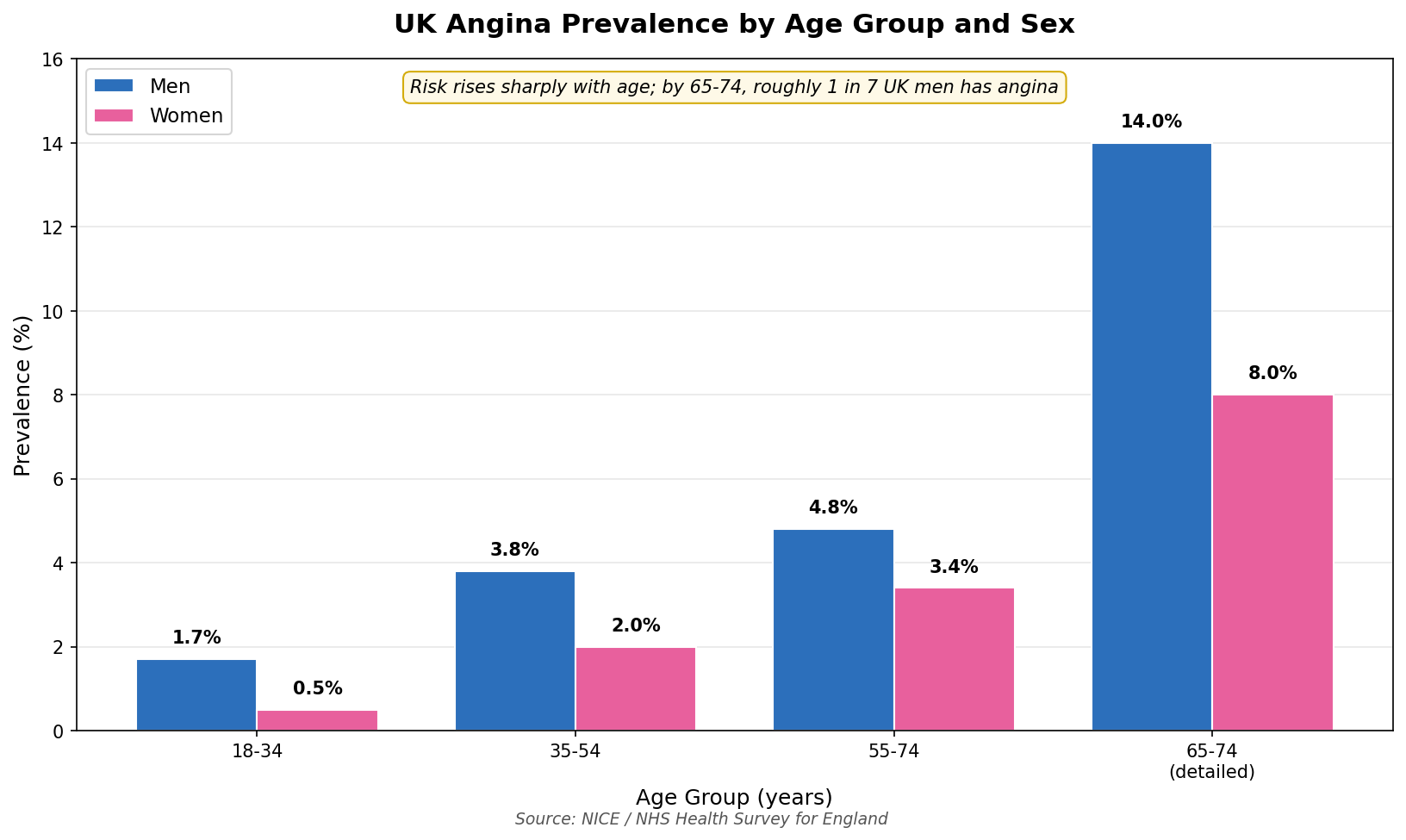 Figure 1: Angina prevalence rises sharply with age. By ages 65-74, roughly 1 in 7 UK men and 1 in 12 UK women have it. Data from NICE and the NHS Health Survey for England.
About 2 million people in England have had angina, and 2.3 million UK adults are living with coronary heart disease. The reassuring news? A huge international study called CLARIFY, which followed 32,691 patients for five years, found that 84.4% had their angina controlled on medication alone; only 4.5% ended up needing a stent or bypass. For most people, the right combination of tablets and a spray does the job.
How Angina Medicines Actually Work
Angina medicines fall into four job types, and knowing which one does which makes the whole treatment plan click into place.
- Rescue medicines stop an attack that's happening right now (GTN spray).
- Preventers stop attacks from happening in the first place (beta blockers, calcium channel blockers, long-acting nitrates, ivabradine, nicorandil, ranolazine).
- Secondary prevention medicines reduce your long-term risk of heart attack and stroke (aspirin, statins).
- Lifestyle changes work alongside all of the above and are, pound for pound, some of the most powerful "medicines" of the lot.
Most angina patients end up on three or four of these at once: a GTN spray in the pocket, one or two preventer tablets, aspirin and a statin.
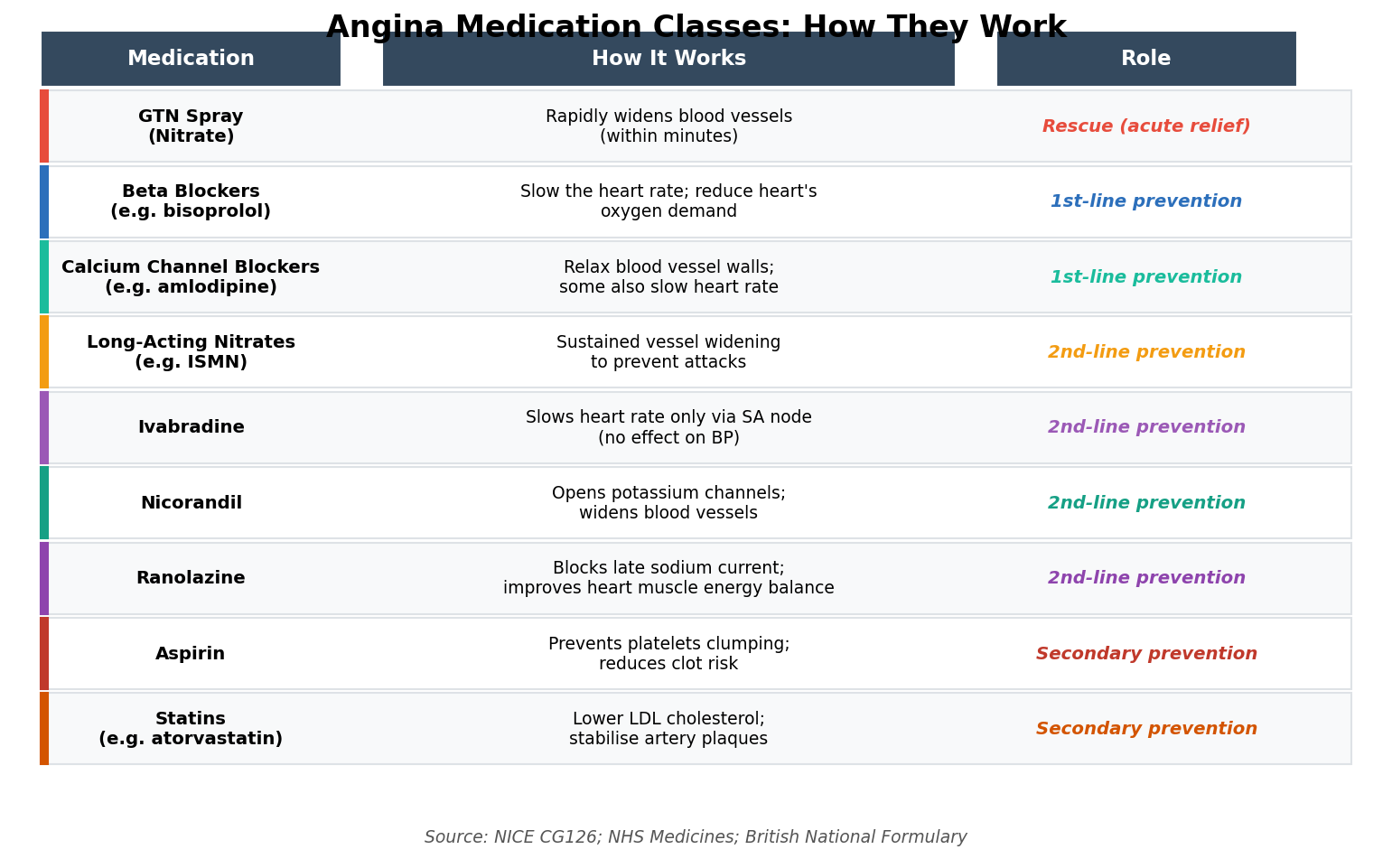 Figure 2: The nine medication classes used in angina care, grouped by role. Data from NICE CG126 and NHS medicines guidance.
The Individual Medicines
1. GTN Spray (Glyceryl Trinitrate): Your Rescue Medicine
What it does. GTN rapidly widens blood vessels, including the coronary arteries, so more blood and oxygen reach your heart muscle. It also lowers the workload on the heart. Relief usually comes within a couple of minutes.
How to use it.
- Sit down first (it can make you lightheaded).
- Spray once under the tongue, close your mouth.
- If pain continues after 5 minutes, use another spray.
- Repeat once more if needed. Maximum three sprays in 15 minutes.
- If pain is still there after three sprays, call 999. This may be a heart attack.
You can also use GTN preventively, a quick spray before climbing a steep hill or doing something you know triggers your angina.
Common side effects. Headache (very common; this actually confirms the drug is working), flushing, lightheadedness. These usually fade within minutes.
Critical safety rule. Never combine any nitrate with erectile dysfunction tablets such as sildenafil (Viagra), tadalafil (Cialis) or vardenafil (Levitra). The combination can crash your blood pressure to fatal levels. Leave at least 24 hours between the two.
2. Beta Blockers (Bisoprolol, Atenolol): A First-Line Preventer
What they do. Beta blockers block adrenaline's effect on the heart, slowing the heart rate and softening the force of each beat. That reduces the heart's oxygen demand, so angina attacks happen less often.
Typical doses.
- Bisoprolol: 5-10 mg once daily (maximum 20 mg).
- Atenolol: 100 mg daily, as one or two doses.
- Doctors start low and build up slowly.
Common side effects. Tiredness, cold hands and feet, nausea, impotence or reduced libido, vivid dreams, pins and needles. Many people adjust within a few weeks.
Who should be cautious. People with asthma or significant COPD (beta blockers can tighten airways), those with a very slow heart rate, severe heart block, or anyone using a salbutamol reliever inhaler regularly. Beta blockers can also mask the warning signs of low blood sugar in diabetes.
Never stop beta blockers suddenly. A rapid stop can trigger a rebound in blood pressure, palpitations, or even a heart attack. Any reduction must be tapered under medical supervision.
3. Calcium Channel Blockers (Amlodipine, Diltiazem, Verapamil): The Other First-Line Preventer
What they do. These relax the muscle in blood vessel walls, widening the coronary arteries and reducing the heart's workload. The "rate-limiting" ones (diltiazem and verapamil) also slow the heart rate.
Typical doses.
- Amlodipine: 5 mg once daily, increased to 10 mg if needed.
- Diltiazem (modified-release): 180-480 mg daily.
- Verapamil: 80-120 mg three times daily.
Common side effects. Flushing, headache, dizziness, tiredness, and swollen ankles and lower legs (very common with amlodipine). Diltiazem and verapamil can also slow the heart too much.
Who should be cautious. Verapamil must not be combined with a beta blocker (risk of dangerously slow heart rate). Verapamil and diltiazem are avoided in heart failure. If you can't take a beta blocker (for example, because of asthma), diltiazem or verapamil is usually the next choice.
4. Long-Acting Nitrates (Isosorbide Mononitrate): A Second-Line Preventer
What they do. A sustained version of GTN. Instead of a quick blast to stop an attack, these keep blood vessels gently widened all day to prevent attacks happening in the first place.
Typical doses. Modified-release capsules 25-120 mg once in the morning, or modified-release tablets 60 mg once daily (occasionally two).
Common side effects. Headache (very common at first, usually improves), flushing, lightheadedness, low blood pressure.
The tolerance problem. About 1 in 4 people find that nitrates stop working as well over time, a problem called nitrate tolerance. That's why doctors deliberately build a nitrate-free interval into the daily schedule, usually by using a once-daily modified-release product.
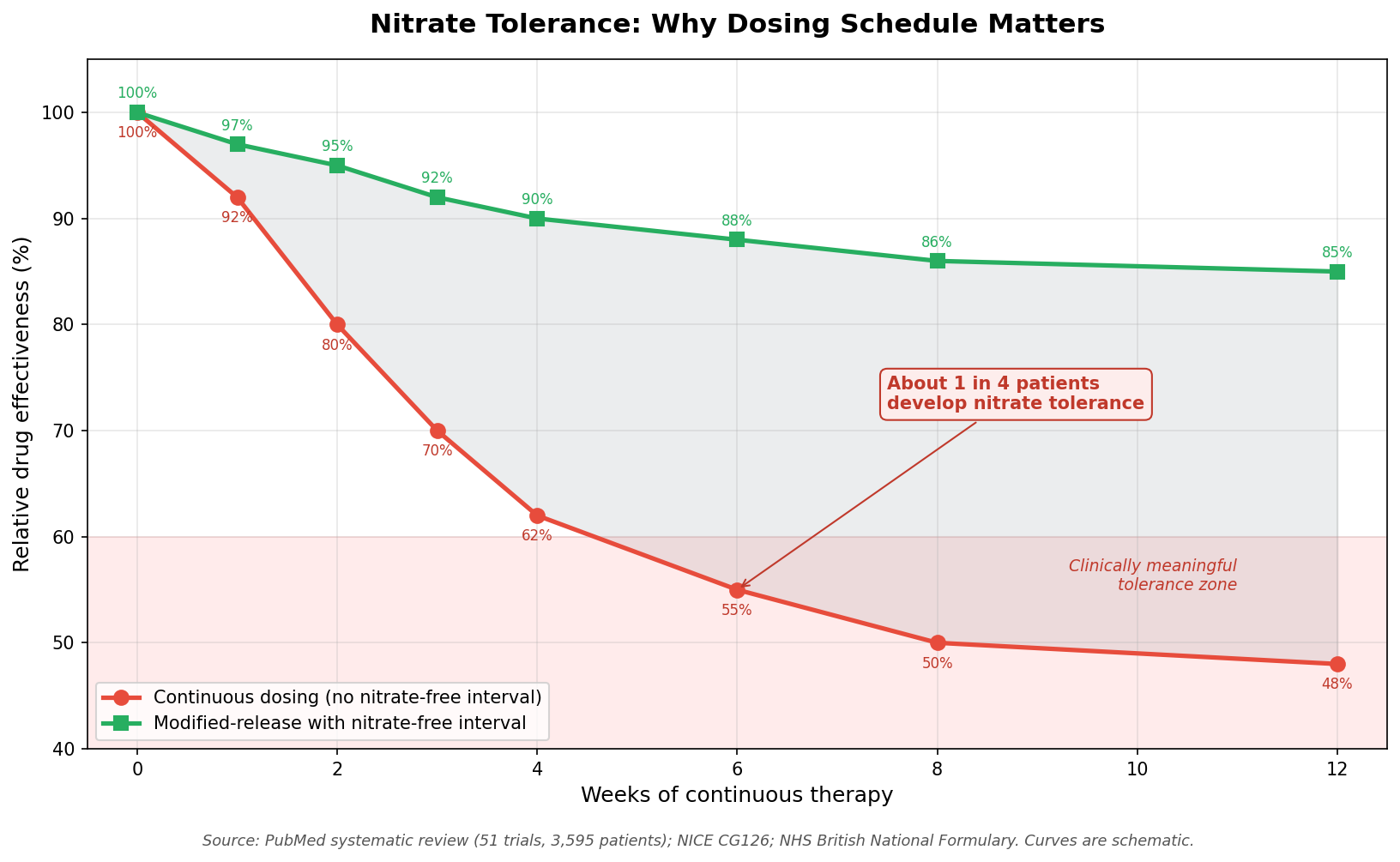 Figure 3: Continuous nitrate dosing can halve effectiveness within 8-12 weeks. Modified-release dosing with a daily nitrate-free interval keeps effectiveness close to 85-90%. Data from PubMed systematic reviews and NICE CG126.
Same safety rule as GTN: never within 24 hours of sildenafil, tadalafil or vardenafil.
5. Ivabradine: Heart-Rate Control Without Beta Blockers
What it does. Ivabradine selectively slows the heart's natural pacemaker (the sinoatrial node) without affecting blood pressure, the strength of heart contractions, or electrical conduction. That makes it a useful option when beta blockers can't be used.
Typical dose. Start at 5 mg twice daily with food, moving to 7.5 mg twice daily after 3-4 weeks if needed. Older patients usually start at 2.5 mg twice daily. If angina symptoms haven't improved after three months, it's stopped.
Common side effects. Brief bright-light visual sensations called phosphenes (dose-dependent, often fade over time); a slower-than-normal heart rate in about 1 in 13 users; atrial fibrillation in roughly 1 in 19; dizziness and headache.
Who shouldn't take it. People with sick sinus syndrome, significant heart block, a pacemaker, or already-slow heart rates.
6. Nicorandil: The Reserve Vessel-Opener
What it does. Nicorandil opens potassium channels in blood vessel walls, widening the coronary arteries and improving oxygen supply to the heart.
Typical dose. 10 mg twice daily to start (or 5 mg twice daily if you're prone to headaches), rising to 10-20 mg twice daily. Maximum 30 mg twice daily.
Common side effects. Headache (very common early on), nausea, flushing, dizziness.
The serious side effect you must know about. Nicorandil can cause painful ulcers in the mouth, gut, skin, eyes or genital area. These ulcers can be severe, don't heal with normal treatment, and only clear up when nicorandil is stopped. Risk is higher if you also take aspirin, other NSAIDs, or steroids. Any new unexplained ulcer while on nicorandil needs an urgent GP review.
This is why nicorandil is kept as a reserve, used only when first-line options don't work or can't be tolerated.
7. Ranolazine: The Rate-and-Pressure-Neutral Option
What it does. Ranolazine works inside heart muscle cells, dialling down a sodium current that can lead to calcium overload. The result is better oxygen use and better muscle relaxation without affecting your heart rate or blood pressure.
Typical dose. Start at 375 mg twice daily, titrating up to 500 mg and then 750 mg twice daily if tolerated.
Common side effects. Dizziness, headache, nausea and constipation. Side effects tend to be dose-related, so dropping back a step often helps.
Who shouldn't take it. People with severe liver disease, severe kidney disease, or taking certain other heart-rhythm medicines. Ranolazine is particularly useful for patients with low blood pressure or those who can't tolerate more rate-slowing.
8. Aspirin: The Clot Preventer
What it does. Aspirin stops blood platelets from clumping together, which reduces the risk of a clot forming inside a narrowed coronary artery and causing a heart attack.
Typical dose. 75 mg once daily, taken with or after food to protect the stomach.
Common side effects. Indigestion, easier bruising, nosebleeds, and in some cases stomach ulcers or gastrointestinal bleeding. People with aspirin allergy, a history of stomach ulcers, or clotting disorders may need an alternative.
Alternative. Clopidogrel 75 mg daily is used if aspirin isn't suitable.
Aspirin for angina is lifelong unless a doctor says otherwise. Do not stop it on your own, even if you feel fine.
9. Statins (Atorvastatin): The Plaque Stabiliser
What they do. Statins block a liver enzyme that makes cholesterol. They lower LDL ("bad") cholesterol, calm inflammation inside arteries, and stabilise existing plaques so they're less likely to rupture and trigger a heart attack.
Typical dose. Atorvastatin 80 mg once daily is NICE's first-line choice for people with established coronary heart disease. Lower doses are used when needed.
Common side effects. Headache, nausea, diarrhoea or constipation, tiredness, and raised liver enzymes (checked with blood tests).
Muscle pain. A small number of people develop muscle aching, tenderness or weakness. Report this to your GP, severe muscle breakdown (rhabdomyolysis) is rare but important.
Who shouldn't take them. People with severe liver disease, those who are pregnant, trying to conceive or breastfeeding, and anyone with previous serious muscle reactions to statins.
Statins don't stop angina pain, but they dramatically reduce the chance of a heart attack or death from heart disease.
Comparison Table: The Nine Medicines at a Glance
| Medicine | Role | Typical Dose | Watch Out For | Key Rule |
|---|---|---|---|---|
| GTN spray | Rescue | 1-3 sprays, 5 min apart | Headache, dizziness | 24-hour gap with Viagra/Cialis; call 999 after 3 sprays |
| Beta blocker (bisoprolol) | 1st-line preventer | 5-10 mg daily | Tiredness, cold extremities | Avoid in asthma; never stop abruptly |
| Calcium channel blocker (amlodipine) | 1st-line preventer | 5-10 mg daily | Ankle swelling, flushing | Don't combine verapamil with beta blocker |
| Long-acting nitrate (ISMN) | 2nd-line preventer | 25-120 mg modified-release daily | Headache, tolerance | 24-hour gap with ED drugs |
| Ivabradine | 2nd-line preventer | 5-7.5 mg twice daily | Phosphenes, slow heart rate | Not with pacemaker or AV block |
| Nicorandil | 2nd-line preventer | 10-30 mg twice daily | Serious ulcers | Report any new ulcer urgently |
| Ranolazine | 2nd-line preventer | 375-750 mg twice daily | Dizziness, constipation | Avoid in severe liver/kidney disease |
| Aspirin | Secondary prevention | 75 mg daily | Stomach bleeding | Lifelong unless doctor says otherwise |
| Atorvastatin | Secondary prevention | 80 mg daily | Muscle pain | Not in pregnancy or severe liver disease |
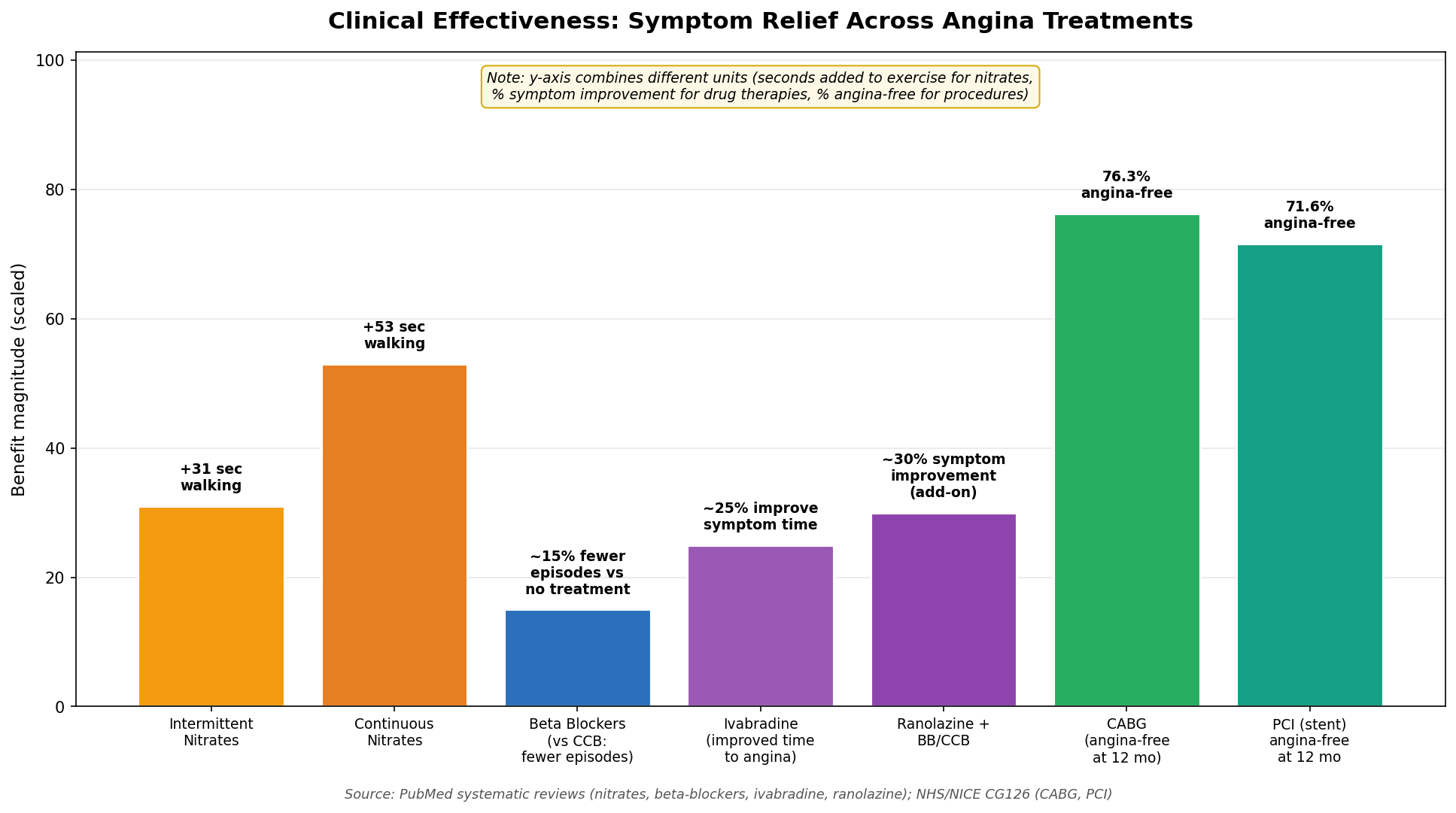 Figure 4: Symptom-relief benefit across the main treatments. Data from PubMed systematic reviews, NICE CG126 and Mayo Clinic treatment summaries. Note that bypass surgery (CABG) achieves the highest 12-month angina-free rate, but drug therapies give substantial, meaningful relief for most people.
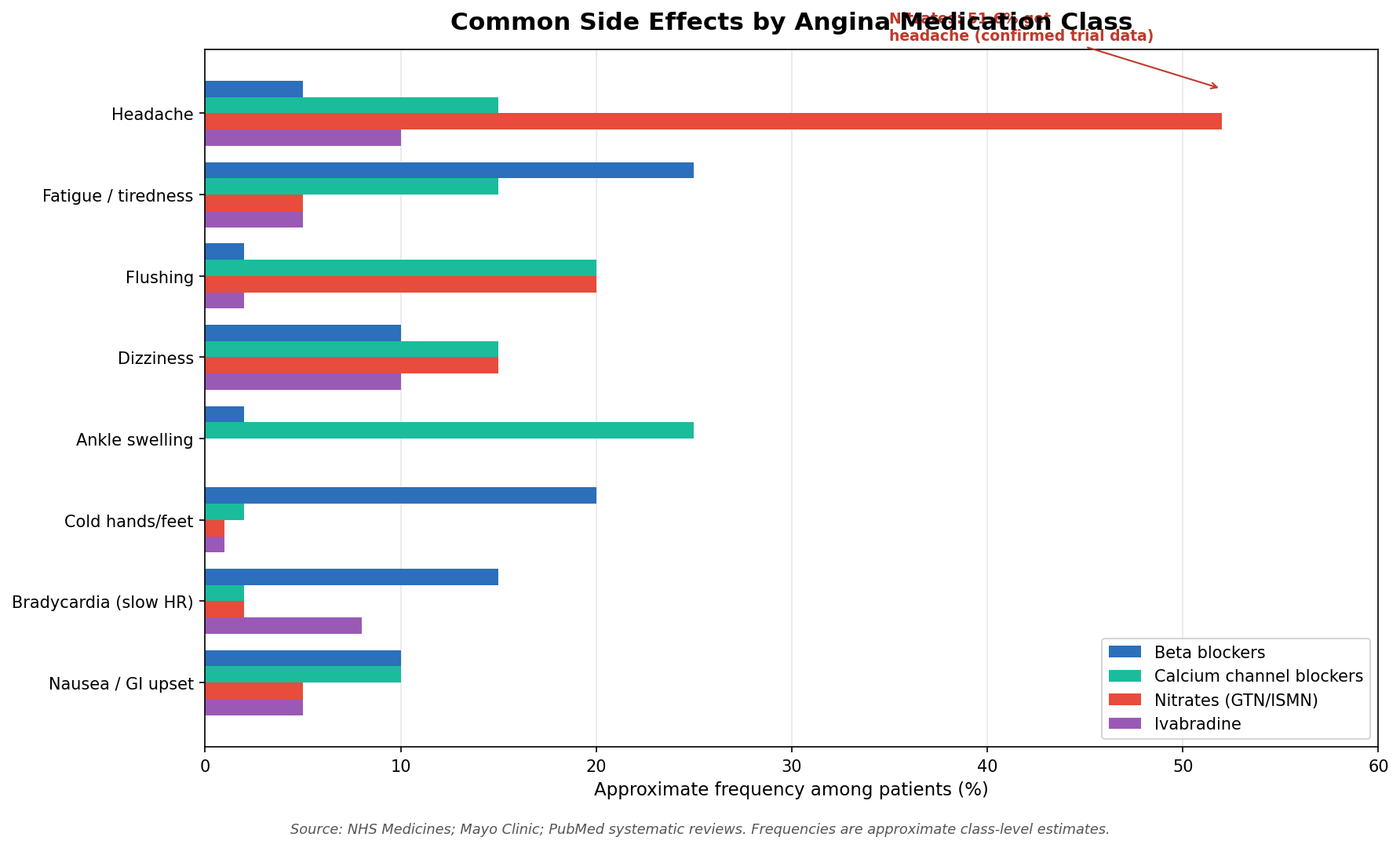 Figure 5: Comparing common side effects across drug classes. Nitrates stand out for headache (around 51.6% of users), calcium channel blockers for ankle swelling, and beta blockers for fatigue and cold extremities. Data from NHS medicines pages, Mayo Clinic and PubMed reviews.
How Doctors Choose Which Medicines to Prescribe
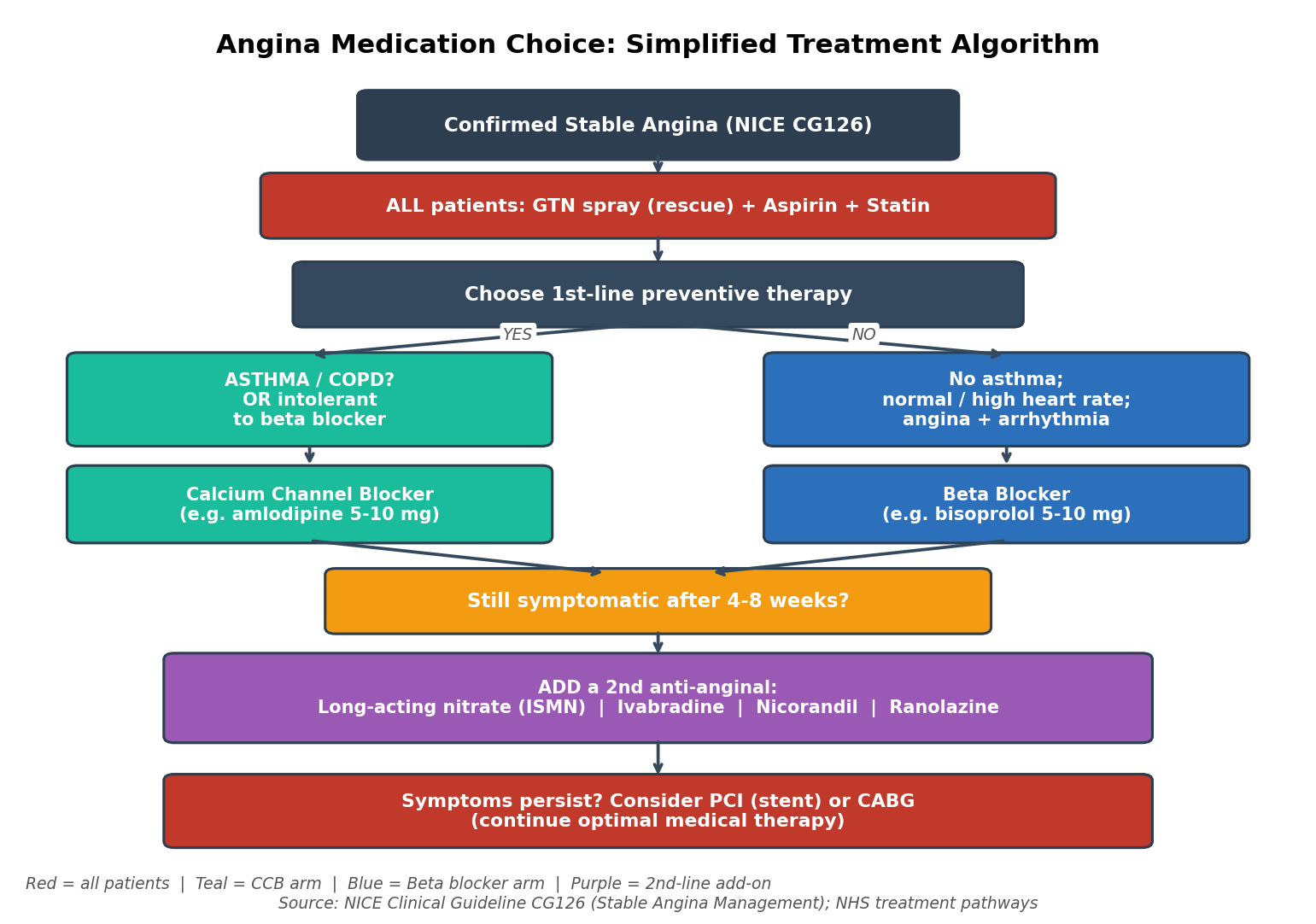 Figure 6: A simplified version of how clinicians work through the NICE angina treatment pathway. Data from NICE CG126.
In practice, almost everyone with stable angina gets the same "starter pack": a GTN spray, aspirin and a statin. The main decision point is which first-line preventer to add.
- Have asthma, COPD or very slow heart rate? Likely a calcium channel blocker.
- Otherwise fit, no breathing issues? Likely a beta blocker.
- Still getting symptoms after a few weeks? Doctors often combine a beta blocker and a long-acting dihydropyridine like amlodipine (but never with verapamil).
- Still symptomatic? Add a second-line agent (long-acting nitrate, ivabradine, nicorandil or ranolazine).
- Severe or persistent symptoms despite optimal medicines? Consider a stent (PCI) or bypass (CABG).
Lifestyle and Prevention: The Medicines You Don't Swallow
Medicines matter enormously, but lifestyle changes are proven therapy, not optional extras. The evidence here is some of the strongest in all of cardiology.
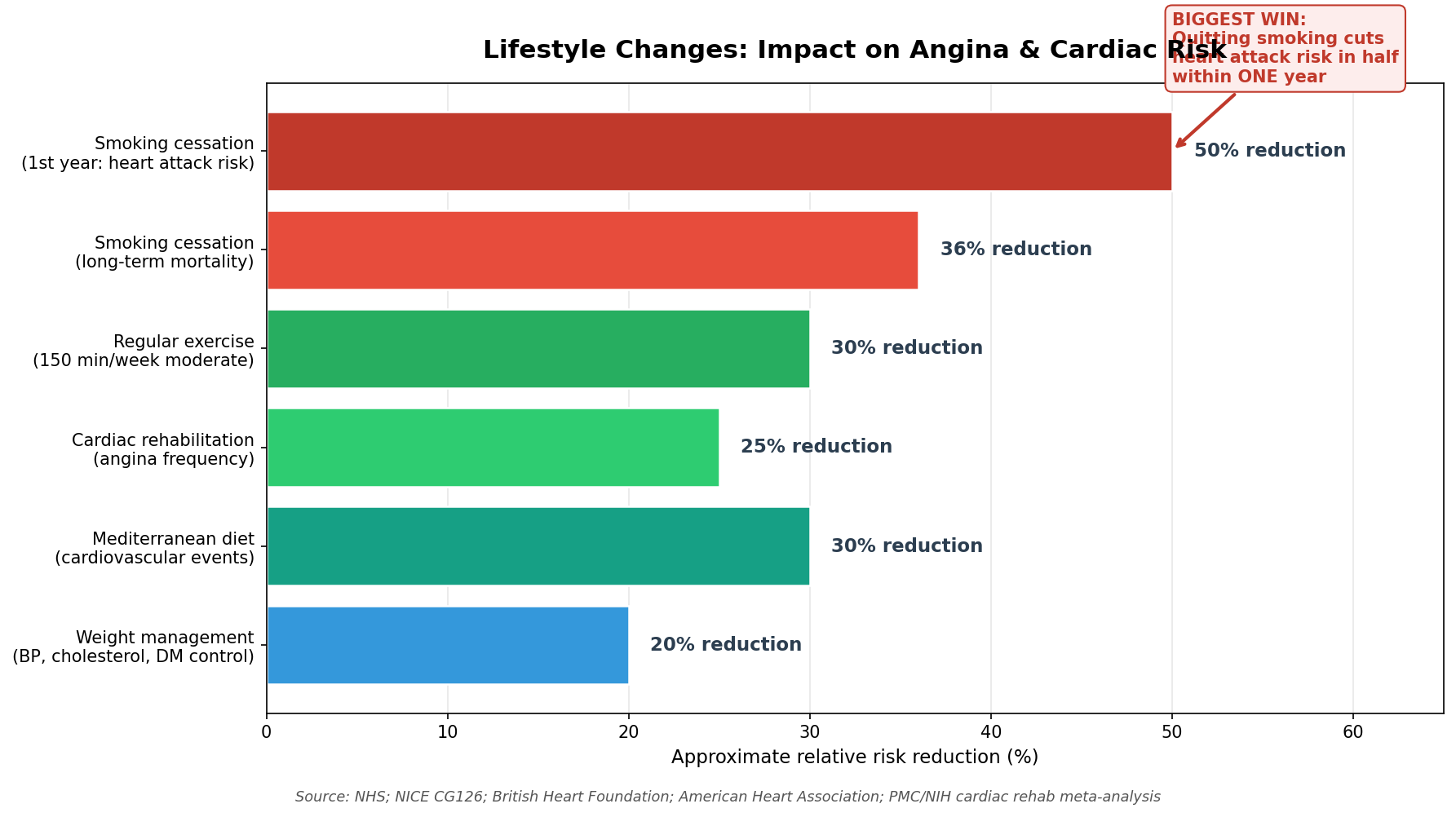 Figure 7: Approximate risk reduction from different lifestyle interventions. Quitting smoking is in a league of its own. Data from NHS, NICE, British Heart Foundation, American Heart Association and PMC cardiac rehabilitation meta-analyses.
- Quit smoking. This alone cuts your heart attack risk by roughly half within the first year of stopping and reduces long-term mortality by about 36%. It is the single biggest intervention anyone with angina can make.
- Move 150 minutes a week. Brisk walking, cycling, swimming, or dancing (around 30 minutes, five days a week). It lowers blood pressure, raises HDL ("good") cholesterol and reduces angina frequency.
- Eat a Mediterranean-style diet. More vegetables, fruit, whole grains, oily fish, nuts, pulses and olive oil. Fewer processed meats, sugary drinks and salt.
- Attend cardiac rehabilitation. This free NHS programme reliably reduces how often you get chest pain and improves exercise capacity. Take-up is often lower than it should be, which is a shame given the evidence.
- Keep blood pressure, cholesterol and diabetes well controlled.
- Manage stress and prioritise sleep.
When to Seek Help
Angina symptoms can shift. Knowing what counts as "normal," "worsening," and "emergency" is one of the most important parts of living well with the condition.
Call 999 immediately if:
- Chest pain lasts more than 15 minutes.
- Three GTN sprays, five minutes apart, haven't relieved the pain.
- Chest pain comes on at rest with no obvious trigger.
- Pain spreads to the arm, jaw, neck, shoulder, back or stomach.
- You also feel sweaty, sick, lightheaded or breathless.
Contact your GP or NHS 111 within a day or two if:
- Your angina feels worse than usual.
- Attacks are happening more often.
- Attacks are lasting longer than before.
- You start getting angina at rest or when woken from sleep.
Changes in pattern can signal unstable angina, a medical emergency that often precedes a heart attack. Don't tough it out.
Everyday reminders:
- Never stop beta blockers suddenly. Always taper under medical supervision.
- Never combine any nitrate with Viagra, Cialis or Levitra within 24 hours.
- Carry your GTN spray with you at all times and check the expiry date.
- Tell any new doctor or dentist about every medicine you take.
The headline reassurance from the research: with modern treatment, more than 8 in 10 people with stable angina are managed on medicines and lifestyle changes alone over a five-year window. Most live for many years with good quality of life. Catch it early, treat it properly, and give the lifestyle side its full attention; the odds really are in your favour.
Further Reading
Understanding Angina
- NHS: Angina
- Mayo Clinic: Angina symptoms and causes
- American Heart Association: Angina (Chest Pain)
- American Heart Association: Unstable Angina
- NIH StatPearls: Stable Angina
Diagnosis and Clinical Guidelines
- NICE CG126: Stable angina management
- NICE CG95: Chest pain of recent onset assessment
- NICE QS21: Stable angina quality standard
- Mayo Clinic: Angina diagnosis and treatment
Individual Medicines
- NHS: Glyceryl Trinitrate (GTN) spray
- NHS: Beta blockers
- Mayo Clinic: Beta blockers
- Mayo Clinic: Calcium channel blockers
- Mayo Clinic: Isosorbide mononitrate
- Mayo Clinic: Ranolazine
- NHS: Nicorandil
- NHS: Aspirin
- NHS: Atorvastatin
- NHS: Statins side effects
Lifestyle and Prevention
- American Heart Association: Lifestyle Changes to Prevent a Heart Attack
- American Heart Association: Cardiac Rehabilitation
- PMC/NIH: Cardiac Rehabilitation Meta-analysis
Research and Outcomes
- PubMed: Long-term beta blockers for stable angina
- PubMed: Nitrates for stable angina (systematic review)
- PubMed: Ivabradine in stable angina
- PubMed: Ranolazine for stable angina
- NHS: CLARIFY study on chronic stable angina
- PMC/NIH: Angina contemporary diagnosis and management
Drug Interactions and Safety
Helpful Resources
- National Institute for Health and Care Excellence. Stable angina: management (CG126) [Internet]. [cited 2026 Nov 3]. Available from: https://www.nice.org.uk/guidance/cg126
- National Institute for Health and Care Excellence. Recent-onset chest pain of suspected cardiac origin: assessment and diagnosis (CG95) [Internet]. [cited 2026 Nov 3]. Available from: https://www.nice.org.uk/guidance/cg95
- National Institute for Health and Care Excellence. Stable angina quality standard (QS21) [Internet]. [cited 2026 Nov 3]. Available from: https://www.nice.org.uk/guidance/qs21/chapter/quality-statement-2-first-line-treatment
- National Health Service. Angina [Internet]. [cited 2026 Nov 3]. Available from: https://www.nhs.uk/conditions/angina/
- National Health Service. Glyceryl trinitrate (GTN) [Internet]. [cited 2026 Nov 3]. Available from: https://www.nhs.uk/medicines/glyceryl-trinitrate-gtn/
- National Health Service. Common questions about glyceryl trinitrate (GTN) [Internet]. [cited 2026 Nov 3]. Available from: https://www.nhs.uk/medicines/glyceryl-trinitrate-gtn/common-questions-about-glyceryl-trinitrate-gtn/
- National Health Service. Beta blockers [Internet]. [cited 2026 Nov 3]. Available from: https://www.nhs.uk/medicines/beta-blockers/
- National Health Service. Nicorandil [Internet]. [cited 2026 Nov 3]. Available from: https://www.nhs.uk/medicines/nicorandil/
- National Health Service. Side effects of nicorandil [Internet]. [cited 2026 Nov 3]. Available from: https://www.nhs.uk/medicines/nicorandil/side-effects-of-nicorandil/
- National Health Service. Aspirin [Internet]. [cited 2026 Nov 3]. Available from: https://www.nhs.uk/medicines/aspirin/
- National Health Service. Atorvastatin: who can and cannot take it [Internet]. [cited 2026 Nov 3]. Available from: https://www.nhs.uk/medicines/atorvastatin/who-can-and-cannot-take-atorvastatin/
- National Health Service. Statins side effects [Internet]. [cited 2026 Nov 3]. Available from: https://www.nhs.uk/conditions/statins/side-effects/
- Mayo Clinic. Angina: symptoms and causes [Internet]. [cited 2026 Nov 3]. Available from: https://www.mayoclinic.org/diseases-conditions/angina/symptoms-causes/syc-20369373
- Mayo Clinic. Angina: diagnosis and treatment [Internet]. [cited 2026 Nov 3]. Available from: https://www.mayoclinic.org/diseases-conditions/angina/diagnosis-treatment/drc-20369378
- Mayo Clinic. Beta blockers [Internet]. [cited 2026 Nov 3]. Available from: https://www.mayoclinic.org/diseases-conditions/high-blood-pressure/in-depth/beta-blockers/art-20044522
- Mayo Clinic. Calcium channel blockers [Internet]. [cited 2026 Nov 3]. Available from: https://www.mayoclinic.org/diseases-conditions/high-blood-pressure/in-depth/calcium-channel-blockers/art-20047605
- Mayo Clinic. Ranolazine (oral route) [Internet]. [cited 2026 Nov 3]. Available from: https://www.mayoclinic.org/drugs-supplements/ranolazine-oral-route/description/drg-20069114
- Mayo Clinic. Isosorbide mononitrate (oral route) [Internet]. [cited 2026 Nov 3]. Available from: https://www.mayoclinic.org/drugs-supplements/isosorbide-mononitrate-oral-route/description/drg-20072923
- American Heart Association. Angina (chest pain) [Internet]. [cited 2026 Nov 3]. Available from: https://www.heart.org/en/health-topics/heart-attack/angina-chest-pain
- American Heart Association. Unstable angina [Internet]. [cited 2026 Nov 3]. Available from: https://www.heart.org/en/health-topics/heart-attack/angina-chest-pain/unstable-angina
- American Heart Association. Lifestyle changes to prevent a heart attack [Internet]. [cited 2026 Nov 3]. Available from: https://www.heart.org/en/health-topics/heart-attack/life-after-a-heart-attack/lifestyle-changes-for-heart-attack-prevention
- Wiysonge CS, Bradley HA, Volmink J, Mayosi BM, Opie LH. Long-term beta-blockers for stable angina: systematic review and meta-analysis. Eur J Prev Cardiol. 2012;19(3):330-341. Available from: https://pubmed.ncbi.nlm.nih.gov/22779086/
- Wei J, Wu T, Yang Q, Chen M, Ni J, Huang D. Nitrates for stable angina: a systematic review and meta-analysis of randomized clinical trials. Int J Cardiol. 2011;146(1):4-12. Available from: https://pubmed.ncbi.nlm.nih.gov/20557963/
- Werdan K, Perings S, Köster R, et al. Effectiveness of ivabradine treatment in different subpopulations with stable angina pectoris. Cardiology. 2016;133(2):93-104. Available from: https://pubmed.ncbi.nlm.nih.gov/27057864/
- Banon D, Filion KB, Budlovsky T, Franck C, Eisenberg MJ. The usefulness of ranolazine for the treatment of refractory chronic stable angina pectoris. Am J Cardiol. 2014;113(6):1075-1082. Available from: https://pubmed.ncbi.nlm.nih.gov/28178363/
- Villano A, Di Franco A, Nerla R, et al. Effects of ivabradine and ranolazine in patients with microvascular angina pectoris. Am J Cardiol. 2013;112(1):8-13. Available from: https://pubmed.ncbi.nlm.nih.gov/23558043/
- Camm AJ, Manolis A, Ambrosio G, et al. International observational analysis of evolution and outcomes of chronic stable angina: the CLARIFY study [Internet]. NHS Medicines Resources. [cited 2026 Nov 3]. Available from: https://www.medicinesresources.nhs.uk/international-observational-analysis-of-evolution-and-outcomes-of-chronic-stable-angina-the-multinational-clarify-study.html
- Kloner RA, Hutter AM, Emmick JT, Mitchell MI, Denne J, Jackson G. Time course of the interaction between tadalafil and nitrates. J Am Coll Cardiol. 2003;42(10):1855-1860. Available from: https://pmc.ncbi.nlm.nih.gov/articles/PMC3437061/
- Ford TJ, Corcoran D, Berry C. Stable coronary syndromes: pathophysiology, diagnostic advances and therapeutic need. Heart. 2018;104(4):284-292. Available from: https://www.ncbi.nlm.nih.gov/pmc/articles/PMC7035719/
- Anderson L, Thompson DR, Oldridge N, et al. Exercise-based cardiac rehabilitation for coronary heart disease: Cochrane systematic review and meta-analysis [Internet]. PMC. [cited 2026 Nov 3]. Available from: https://pmc.ncbi.nlm.nih.gov/articles/PMC8325103/
- European Society of Cardiology. ESC Atlas of Cardiology [Internet]. [cited 2026 Nov 3]. Available from: https://eatlas.escardio.org/Atlas/ESC-Atlas-of-Cardiology
- National Center for Biotechnology Information. Stable angina: StatPearls [Internet]. [cited 2026 Nov 3]. Available from: https://www.ncbi.nlm.nih.gov/sites/books/NBK559016/
- Centers for Disease Control and Prevention. Prevalence of selected cardiometabolic diseases, United States 2013-2021. MMWR Morb Mortal Wkly Rep. 2024;73(3):50-55. Available from: https://www.cdc.gov/mmwr/volumes/73/wr/mm7303a1.htm
