

You've probably seen them advertised everywhere: special glasses designed to filter blue light, reduce digital eye strain, and help you sleep better. The internet promises they'll protect your eyes from screens, and 68% of people buying glasses online are actively seeking them. But here's the uncomfortable truth that manufacturers don't emphasise: most high-quality studies have found little to no clinically meaningful improvement with the use of blue light glasses.
This isn't an argument that blue light doesn't matter. Blue light genuinely does affect your sleep; that part of the biology is real. The problem is that the glasses themselves provide minimal benefits, and the reasons people think they work tell a fascinating story about the power of belief, marketing, and placebo effects. If you're considering buying blue light glasses, or you've already bought them and wondered if they're actually helping, this article will explain what the research actually shows.
The Disconnect: What People Report vs What Science Shows
Here's the head-turning finding that reveals everything: 85% of people who wear blue light glasses for more than a year report improvement in at least one symptom (Figure 1). That's a pretty impressive track record. Most people feel they work.
But then researchers conducted controlled clinical trials with thousands of participants and measured eye strain objectively rather than just asking people how they felt. Result: zero significant improvement. In fact, one study found that glasses filtering 99% of blue light—the absolute maximum—worked no better than regular tinted lenses that didn't filter blue light at all.
This massive gap between what people report feeling and what controlled experiments actually show suggests something other than the glasses is responsible for the improvement.
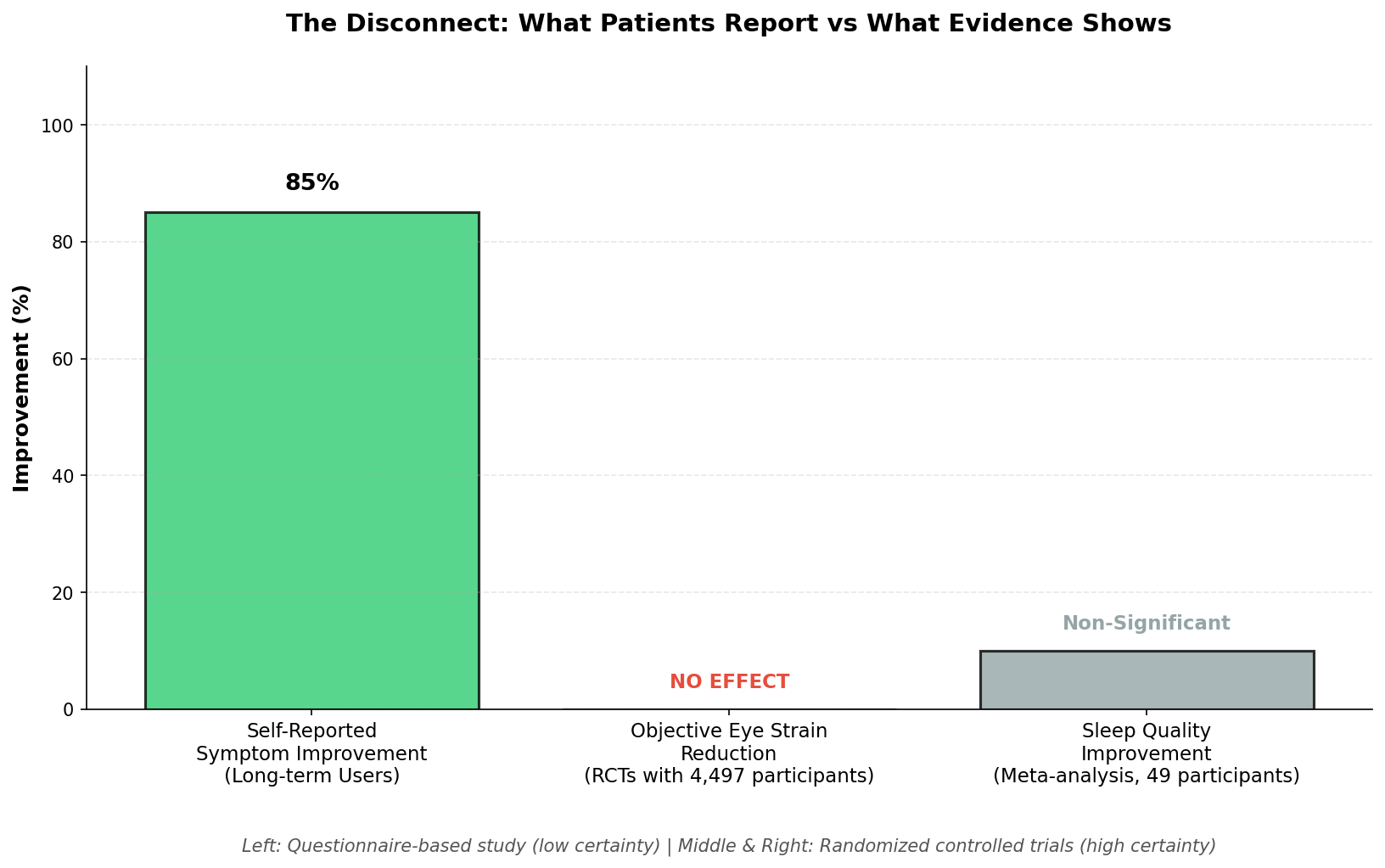 Figure 1: Self-reported improvement (85%) versus objective clinical evidence (zero significant benefit). Data from long-term user questionnaires versus randomised controlled trials.
What is Blue Light?
Before we dig into whether blue light glasses help, it's worth understanding what blue light actually is and how it affects your body.
Blue light is part of the visible light spectrum with a wavelength range of 400-500nm. That narrow range makes it the most energetic form of visible light. Your eyes see blue light every day—it's in sunlight, phone screens, computer monitors, and LED lights. In fact, sunlight contains 25-30% more blue light than computer screens, which is an important point when considering whether device-derived blue light poses any real danger.
Blue light has two completely different effects on your body depending on when you're exposed to it. During daytime, blue light is helpful: it signals your brain to stay alert, suppresses melatonin production (the "sleep hormone"), and strengthens your circadian rhythm. Evening exposure, though, does the opposite: it tricks your brain into thinking it's daytime, suppressing melatonin and making sleep harder.
Digital Eye Strain: It's Real, But It's Not About Blue Light
The problem blue light glasses claim to solve is digital eye strain, also called computer vision syndrome. How common is this problem? 65% of US adults experience it, and during the COVID-19 lockdowns, this number spiked to 94.3%. It's more prevalent in women (69%) than men (60%). So yes, digital eye strain is genuinely widespread.
But here's the crucial part: blue light contributes almost nothing to the problem. Research breaking down the actual causes of digital eye strain reveals a different picture entirely (Figure 2).
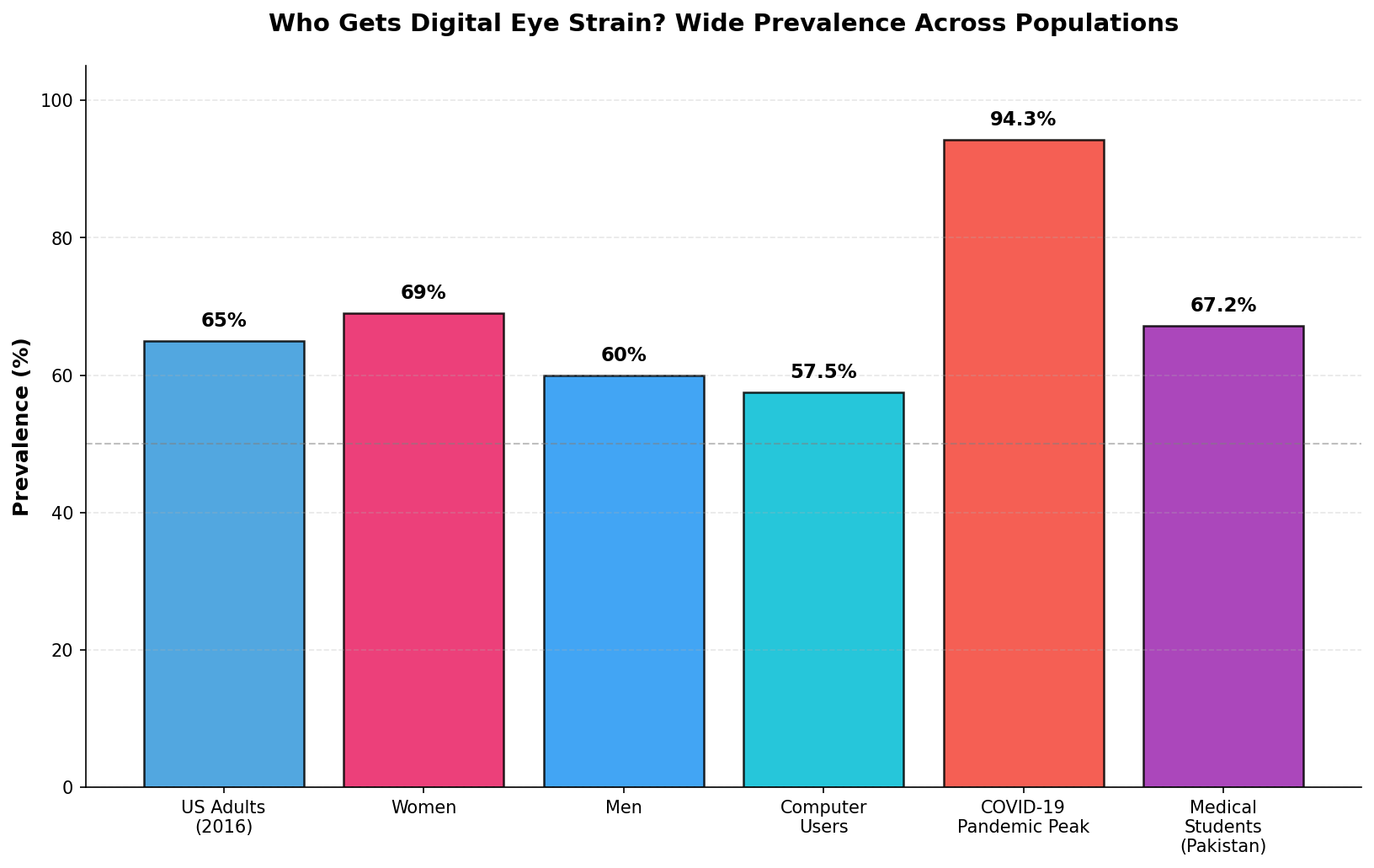 Figure 2: Breakdown of digital eye strain causes. Blue light accounts for only 3%; the real culprits are accommodation fatigue, reduced blinking, and poor ergonomics.
The primary cause of digital eye strain is something called accommodation fatigue (approximately 35% of the problem). Your eyes constantly refocus on pixels at a fixed distance when you're looking at a screen, exhausting the tiny muscles in your eye that handle focusing, which creates genuine eye fatigue. The 20-20-20 rule directly addresses this: every 20 minutes, look at something at least 20 feet away for at least 20 seconds. This lets your eye muscles relax. It works and it's free.
Reduced blinking causes another 30% of digital eye strain symptoms. When you concentrate on screens, you blink less frequently and less completely. Normal blinking happens about 17 times per minute, but screen time dramatically reduces this. Less blinking means your tear film becomes unstable, leading to dry, irritated eyes. Using artificial tears or deliberately practising blinking exercises addresses this directly. Blue light filtering does not.
Convergence insufficiency (when your eyes struggle to align properly for near work), poor ergonomics, and inadequate lighting account for the remaining 32%. Blue light plays almost no role in any of these problems.
What Research Actually Shows About Blue Light Glasses
When researchers conducted controlled trials on blue light glasses for eye strain, they consistently found weak or no benefit. Here's what the evidence shows:
For eye strain specifically, A systematic review examined 45 randomised controlled trials involving 4,497 participants. Verdict: visual fatigue symptoms were not reduced by blue light blocking glasses. The Cochrane Library (one of the highest-quality sources of clinical evidence) reached the same conclusion: blue light-blocking glasses may not actually prevent digital eye strain. One study found that 99% blue light blocking was no more effective than regular tinted lenses with no blue light blocking at all.
For sleep: A meta-analysis of the highest-quality sleep studies (randomised controlled trials) examined 49 total participants across three double-blind trials. Result: blue light glasses produced a non-significant reduction of 4.86 minutes in sleep onset time. In a study of night shift workers wearing blue light glasses, researchers found no significant reduction in fatigue during work.
There is one exception worth noting: a study of pregnant women in their third trimester found blue light blocking did produce a measurable 28-minute earlier melatonin onset. However, here's the catch: 70% of participants couldn't even perceive that the filter was working. If most people can't tell the filter is there, how much of the benefit comes from the filter itself versus from expectations?
Why People Think They Work: The Placebo Effect and Behavioural Changes
The 70% figure is crucial to understanding why blue light glasses seem to help despite weak clinical evidence. If nearly three-quarters of users cannot detect any optical change from blue light filtering, yet still report improvement, what's actually happening?
Several evidence-based explanations exist:
Placebo effect: Expecting improvement and perceiving it is a genuine biological phenomenon. It's not "fake"—the subjective experience is real—but it's not caused by the glasses filtering blue light.
Behavioural awareness: Buying glasses makes you consciously think about your screen habits. This awareness naturally leads you to take more breaks, which directly helps eye strain through the 20-20-20 rule. The glasses didn't help your eyes; the change in your behaviour did.
Adherence to healthier habits: Studies of long-term wearers of blue light glasses found that improvement was strongly associated with adherence to the 20-20-20 rule and daily screen time under 6 hours—not with the glasses themselves. Users who reduced screen time showed better outcomes.
Self-selection bias: People who experience improvement are more likely to continue wearing glasses and report satisfaction. People who don't feel better stop wearing them and don't appear in surveys.
The research shows this pattern clearly: factors predicting actual improvement in long-term glass wearers were adherence to proven techniques (20-20-20 rule), reduced screen time, and consistent use over 12 months—not the optical properties of the lenses.
When Blue Light Glasses Might Actually Help
Honest science requires acknowledging that in specific, limited situations, some evidence suggests blue light glasses might provide modest benefits:
Pregnant women: The mechanism works in pregnancy. A randomised controlled trial showed blue light blocking did advance melatonin onset, even though most participants couldn't perceive the effect. If you're pregnant and struggling with sleep disruption from evening screens, it might be worth trying.
People with specific dry eye conditions: A small study found that blue light reduction improved visual acuity in patients with dry eye and unstable tear film. This is a very specific condition; it doesn't apply to general computer users, but it exists.
Parkinson's disease patients: Studies of blue light therapy glasses (which provide light stimulation, not just computer glasses) showed 74% of Parkinson's patients reported subjective improvements in sleep, mood, and motor symptoms. However, this is a therapeutic use in a specific disease, not a general solution for eye strain.
The pattern is clear: benefits exist in narrow medical contexts or for sleep in limited populations, not for eye strain in the general computer-using population.
Better Alternatives with Stronger Evidence
If blue light glasses have weak evidence for preventing eye strain and marginal evidence for sleep, what actually works? (Figure 3)
The 20-20-20 rule: Every 20 minutes, look at something 20 feet away for at least 20 seconds. This directly addresses accommodation fatigue, the primary cause of digital eye strain. Multiple studies confirm effectiveness. Cost: free. Evidence strength: strong.
Screen time limitation: Keeping daily screen time under 6 hours reduces cumulative strain on accommodation, convergence, and the blinking system. This has stronger evidence than blue light filtering. Cost: free (just use your time differently). Evidence strength: strong.
Screen cessation before bed: Put your phone and other devices away at least 1 hour before sleep. Research shows this produces 50 minutes more sleep per week compared to people who use screens before bed. This is far more effective than blue light glasses and costs nothing. Evidence strength: strong.
Artificial tears or blinking exercises: For dry eye symptoms, which are often worse from reduced blinking, eye drops or deliberate blinking practice provide relief. Cost: eye drops, £10-20. Evidence strength: moderate to strong.
Ergonomic adjustments: Proper monitor positioning, adequate room lighting, screen brightness adjusted to your environment, and correct posture often solve eye strain without any need for special glasses. Cost: free to minimal. Evidence strength: strong.
Omega-3 supplementation: In computer users with dry eye, oral omega-3 supplements taken for 45 days to 3 months showed meaningful improvement in dry eye symptoms compared to placebo. Cost: £10-30 for a 3-month supply. Evidence strength: moderate.
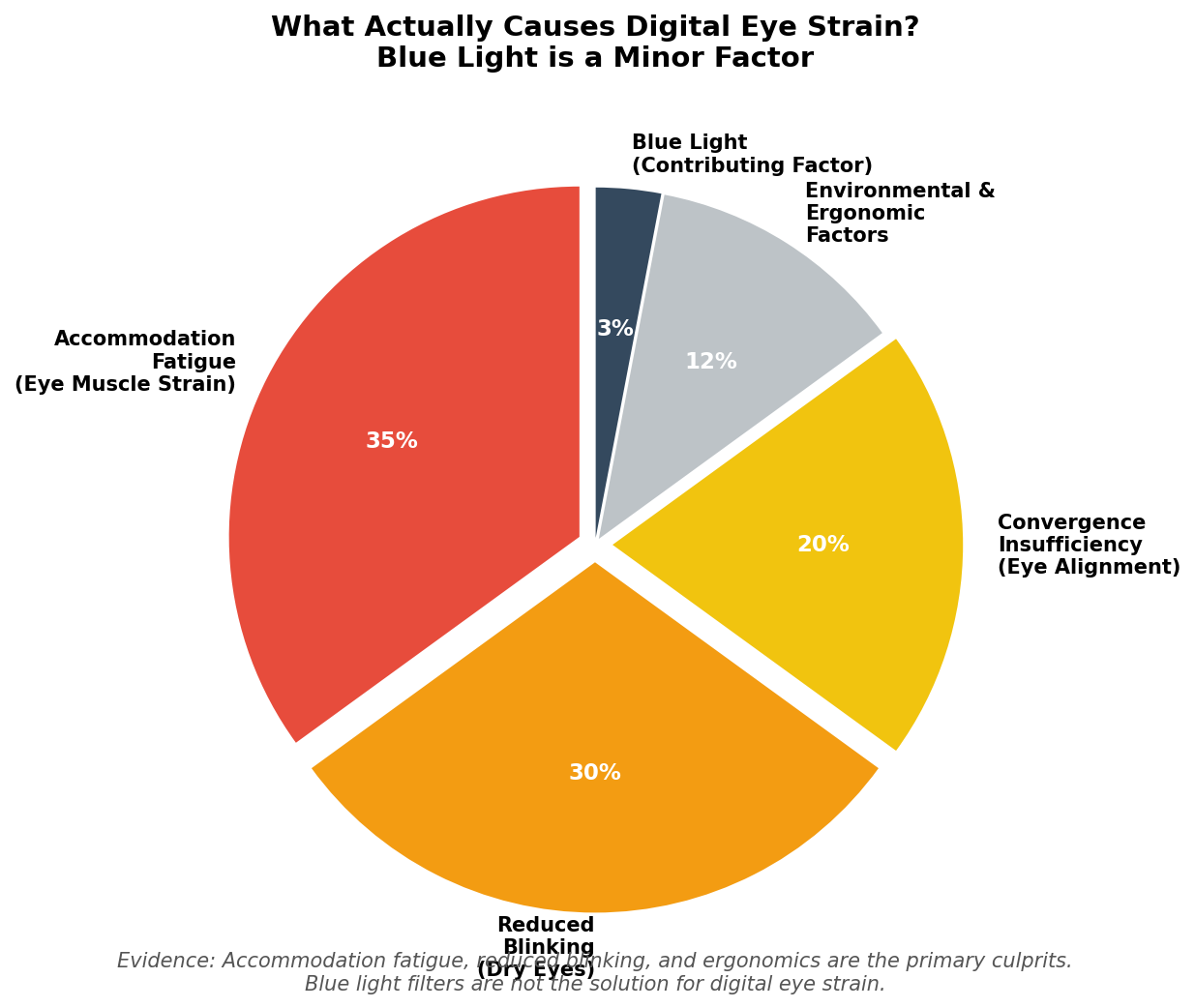 Figure 3: Evidence quality ranking shows blue light glasses have weak evidence compared to proven interventions like the 20-20-20 rule and screen time limits.
Is the Price Worth It?
Blue light glasses typically cost £50-300, with premium options costing more. So the question becomes: are you getting what you pay for?
Research comparing low, medium, and high-priced blue light glasses found that price did not predict filtering efficiency. Expensive glasses don't work better than cheap ones. The ability to filter blue light and ultraviolet light varied widely across all price points, meaning a £50 pair might be just as effective (or ineffective) as a £300 pair.
This makes the cost-benefit calculation particularly poor: weak evidence for benefits, and paying more doesn't increase those weak benefits. When free or nearly-free alternatives exist with stronger evidence (20-20-20 rule, screen positioning, ergonomic setup, eye drops), spending £100+ on glasses offers poor value.
Safety Concerns and Side Effects
Blue light glasses aren't risk-free for everyone. Here's what the research documents:
Nausea and disorientation: These effects occur in "many people," according to research, and are "strong enough that some manufacturers initially focused on the medical market rather than general consumers." Individual tolerance varies, but some people feel genuinely uncomfortable wearing them.
Visual performance effects: Blue light filtering reduces object contrast, which may impact how accurately you perceive object speed. This could theoretically affect safety in activities requiring motion judgement. Additionally, the amber or yellow tint alters colour perception, which could matter if you work with colour-sensitive tasks.
Concerns for shift workers: Blue light glasses impede the suppression of melatonin that comes from bright light exposure. Shift workers who need melatonin suppression during waking hours to stay alert could find these glasses counterproductive if worn during the day.
Retinal damage claims are overblown: While laboratory studies show that high-intensity blue light can damage retinal cells, this happens at intensities far exceeding what computer screens produce. Computer screens produce low-intensity blue light. No clinical evidence supports that normal screen use causes retinal damage in humans.
Cost-Effectiveness: Is There a Better Option?
Instead of spending £100-300 on blue light glasses with weak evidence, consider this evidence-based spending strategy:
- Better desk lamp: £20-50. Provides better workspace lighting, which is proven to reduce eye strain
- Monitor stand or desk ergonomics adjustment: Often free (repositioning your monitor to proper height). Evidence for eye strain reduction: strong
- Artificial tears: £10-20. Directly addresses dry eye symptoms caused by reduced blinking. Evidence: strong
- Omega-3 supplement (3 months): £10-30. Helps dry eye in computer users. Evidence: moderate
- Blinking exercises: Free. Helps restore natural tear film. Evidence: moderate
- 20-20-20 rule: Free. Addresses the primary cause of eye strain. Evidence: strong
All of these together cost less than one pair of blue light glasses and have stronger scientific backing.
What the Experts Say
Major health organisations have weighed in on this issue, and their consensus is clear.
The American Academy of Ophthalmology (AAO) does not recommend blue light-blocking glasses for eye strain. Their official position: "There is no scientific evidence that blue light from digital devices causes damage to your eye" and "Several studies suggest that blue light-blocking glasses do NOT improve symptoms of digital eye strain." They recommend the 20-20-20 rule instead.
The AAO also issued a caution: "Taking preventive measures against blue light even though there is no evidence of damage could be more harmful than the blue light itself." In other words, purchasing glasses for a problem that likely isn't a problem could lead to neglecting actual solutions.
Mayo Clinic: Blue light-filtering glasses "may help some people sleep better" but "don't prevent eye strain and aren't needed for eye health."
Cleveland Clinic: "May help some people sleep better" but "don't prevent eye strain and aren't needed for eye health" and "research shows blue light glasses aren't actually effective for eye strain reduction."
These aren't alternative medicine sources or contrarian opinions. These are the major medical institutions trusted for eye care guidance.
The Cost of Screen Time
If you want to address digital eye strain or sleep disruption from screens genuinely, the evidence points to screen time management rather than special equipment.
Research shows 65% of adults experience digital eye strain. (Figure 4) Screen time thresholds matter:
- 2+ hours continuous screen time: Meaningful risk increase
- 4+ hours continuous screen time: Substantially elevated risk
- Recommended maximum: 6 hours per day
During COVID-19 lockdowns, screen time jumped from 433 minutes (7.2 hours) to 624 minutes (10.4 hours) daily, and digital eye strain prevalence skyrocketed to 94.3 per cent. The correlation is clear: more screen time equals more problems.
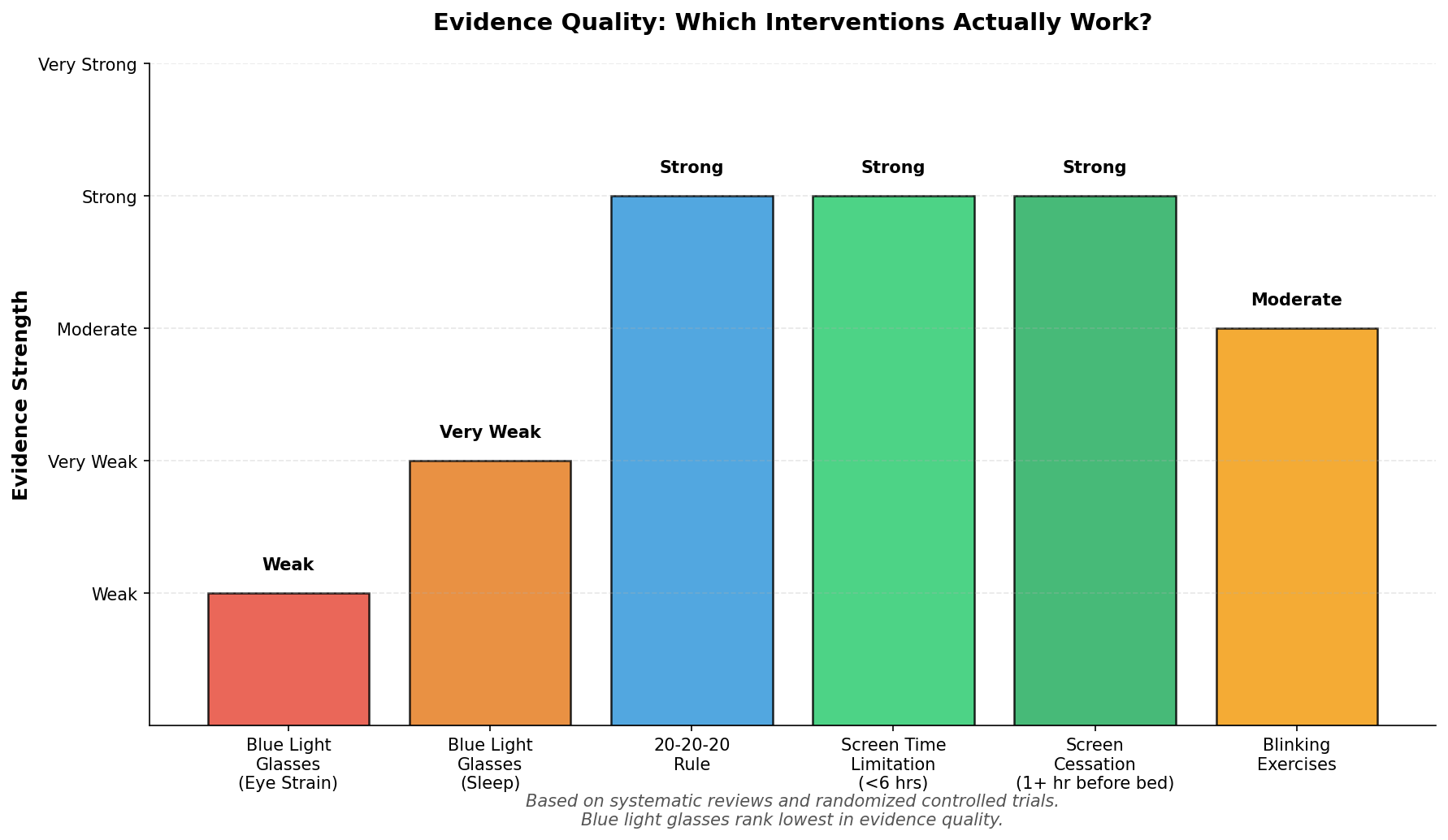 Figure 4: Eye strain risk escalates with screen time duration. The 4-hour mark represents substantially elevated risk.
For sleep specifically, the evidence is equally clear. Eliminating screen use at least 1 hour before bedtime is the clinical recommendation, not because it's close enough to help, but because it works. People using screens right before bed experience 33% higher prevalence of poor sleep quality compared to those with no bedtime screen use.
The Bottom Line: Make an Informed Decision
Blue light glasses have become one of the most popular eyewear purchases, even though the scientific evidence supporting them is remarkably weak. Here's what the evidence actually shows:
- For eye strain: Blue light is not the problem. Accommodation fatigue, reduced blinking, and poor ergonomics are. Blue light glasses don't address any of these. The 20-20-20 rule and ergonomic adjustments have stronger evidence
- For sleep: Blue light does affect circadian rhythm (that mechanism is real), but blue light glasses provide only marginal improvements. Simply putting your phone away 1 hour before bed produces more measurable sleep improvement and costs nothing
- Why people report improvement: Likely due to placebo effect, increased awareness of screen habits leading to healthier behaviour (taking more breaks, reducing screen time), and self-selection bias. The 70% of users who can't even detect the filter working yet still report improvement illustrates how powerful expectation can be
- Price-performance: Premium glasses offer no advantage over budget options. Neither works well for eye strain. Both are poor value compared to free alternatives
- Expert consensus: The American Academy of Ophthalmology, Mayo Clinic, and Cleveland Clinic all agree: these glasses are not recommended for eye strain and are not necessary for eye health
If you're experiencing digital eye strain, invest your money and attention in proven solutions: proper monitor positioning, adequate lighting, the 20-20-20 rule, screen time limits, and artificial tears if needed. If evening screens disrupt your sleep, put your devices away 1 hour before bed rather than buying blue light glasses.
That said, if you're pregnant and struggling with sleep disruption, or if you have a specific dry eye condition, the evidence is not against trying them. But for the general computer user seeking to prevent eye strain, the research is clear: you'd get better results from free behavioural changes than from expensive glasses.
Helpful Resources
Understanding Digital Eye Strain
- Computer Vision Syndrome (Digital Eye Strain) - American Academy of Ophthalmology
- Digital Eye Strain: What It Is and How to Treat It - Cleveland Clinic
- Digital Eye Strain - Mayo Clinic
Blue Light and Sleep
- Screen Use and Sleep: What Does the Science Say - American Academy of Ophthalmology
- Blue Light and Sleep: Research on Evening Screen Use - NIH/MedlinePlus
- Sleep Health: Digital Devices and Circadian Rhythm - National Sleep Foundation (referenced through trusted sources)
Evidence-Based Solutions for Eye Strain
- The 20-20-20 Rule and Other Eye Care Recommendations - American Academy of Ophthalmology
- Ergonomics and Eye Comfort at Work - NHS
- Managing Computer Vision Syndrome - Cleveland Clinic
Dry Eye and Screen Time
- Dry Eye from Screen Use: Prevention and Treatment - Mayo Clinic
- Tears and Eye Lubrication - National Eye Institute (NIH)
- Artificial Tears and Blinking Exercises - Cleveland Clinic
References/Helpful Resources
- Vimont C. Are Computer Glasses Worth It? [Internet]. American Academy of Ophthalmology. 2017 [cited 2026 June 22]. Available from: https://www.aao.org/eye-health/tips-prevention/are-computer-glasses-worth-it
- Singh S, Keller P, Ljoudmila Busija, McMillan P, Makrai E, Lawrenson JG, et al. Blue-light filtering spectacle lenses for visual performance, sleep, and macular health in adults. The Cochrane library. 2023 August 18 [cited 2026 June 22]. Available from: https://www.cochranelibrary.com/cdsr/doi/10.1002/14651858.CD013244.pub2/full
- Howland J. Do glasses that block blue light help your eyes? - Mayo Clinic News Network [Internet]. Mayo Clinic News Network. 2021[cited 2026 June 22]. Available from: https://newsnetwork.mayoclinic.org/discussion/do-glasses-that-block-blue-light-help-your-eyes/
- Do Blue Light Blocking Glasses Actually Work? [Internet]. Cleveland Clinic. 2020 [cited 2026 June 22]. Available from: https://health.clevelandclinic.org/do-blue-light-blocking-glasses-actually-work
- Clinic C. The Digital Distress of Blue Light and Its Effect on Your Eyes [Internet]. Cleveland Clinic. 2025 [cited 2026 June 22]. Available from: https://health.clevelandclinic.org/what-is-blue-light
- I Schöllhorn, Stefani O, Lucas RJ, Spitschan M, Slawik HC, Cajochen C. Melanopic irradiance defines the impact of evening display light on sleep latency, melatonin and alertness. 2023 March 1 [cited 2026 June 22]. Available from: https://pmc.ncbi.nlm.nih.gov/articles/PMC9974389/
- Kaur K, Gurnani B, Nayak S, Deori N, Kaur S, Jethani J, et al. Digital Eye Strain- A Comprehensive Review. Ophthalmology and Therapy [Internet]. 2022 July 9 [cited 2026 June 22]. Available from: https://www.ncbi.nlm.nih.gov/pmc/articles/PMC9434525/
- Akagun N. Long-Term Use of Blue Light-Filtering Glasses and Symptom Improvement in Digital Eye Strain: A Questionnaire-Based Study. Cureus. 2025 November 28 [cited 2026 June 22]. Available from: https://pmc.ncbi.nlm.nih.gov/articles/PMC12661913/
- Luna-Rangel FA, Gonzalez-Bedolla B, Salazar-Ortega MJ, Torres-Mancilla XM, Salim Martinez-Cadena. Efficacy of blue-light blocking glasses on actigraphic sleep outcomes: a systematic review and meta-analysis of randomized controlled crossover trials. Frontiers in Neurology. 2025 November 18 [cited 2026 June 22]. Available from: https://pmc.ncbi.nlm.nih.gov/articles/PMC12668929/
