

Lung cancer kills more people than breast, prostate, and colon cancers combined. That stark reality haunts anyone with a smoking history. But here's what most people don't know: there's a simple, low-radiation scan that can catch lung cancer early enough to actually save your life. And the science behind it is surprisingly reassuring.
This article explains what low-dose CT screening is, who should consider it, what the research actually shows, and what the real risks and benefits look like. By the end, you'll understand why major health organisations now recommend this test for high-risk smokers and what questions to ask your doctor.
What Is Low-Dose CT Screening, and How Does It Actually Work?
Low-dose CT screening is a specialised computed tomography (CT) scan designed specifically to detect early lung cancer in high-risk people. Unlike the CT scans doctors use to diagnose illness in symptomatic patients, screening scans use much less radiation while maintaining the ability to find small cancers.
Here's the key difference: traditional chest X-rays miss early cancers because they can't see nodules (small spots) smaller than about 1 centimetre. A low-dose CT scan detects nodules as small as 2-3 millimetres. Imagine the difference between spotting a pea on a table versus spotting a grain of rice. That's the improvement we're talking about.
The scan takes about 10 seconds. You lie on a table, take a deep breath and hold it, and a rotating X-ray tube spirals around your chest, creating detailed images that can be examined in all directions. The entire process happens in minutes.
Why "Low-Dose"?
Modern CT scanners use sophisticated techniques to reduce radiation exposure:
- Reducing the power of the X-ray beam
- Using faster scan speeds that require less radiation
- Employing artificial intelligence (AI) to reconstruct clearer images from lower-dose data
- Adjusting the beam intensity based on your body size
The result? A single screening scan delivers approximately 2 milliSieverts (mSv) of effective radiation dose. That's important context, so let me make it concrete: you receive about 3-4 mSv of radiation naturally every year just from soil, rocks, and cosmic sources. One low-dose CT screening delivers less radiation than your annual background exposure.
Compare this to a standard diagnostic CT scan (the kind ordered to investigate chest pain or pneumonia), which delivers 8-11 mSv. Low-dose screening uses roughly one-quarter the radiation while maintaining diagnostic accuracy.
The Numbers: How Big Is the Lung Cancer Problem?
Before understanding screening benefits, it helps to grasp the scale of the problem.
Approximately 234,580 Americans will be diagnosed with lung cancer in 2024, with 125,070 deaths expected. That's about 1 in 4 cancer deaths. Lung cancer kills more people annually than breast, prostate, and colon cancers combined.
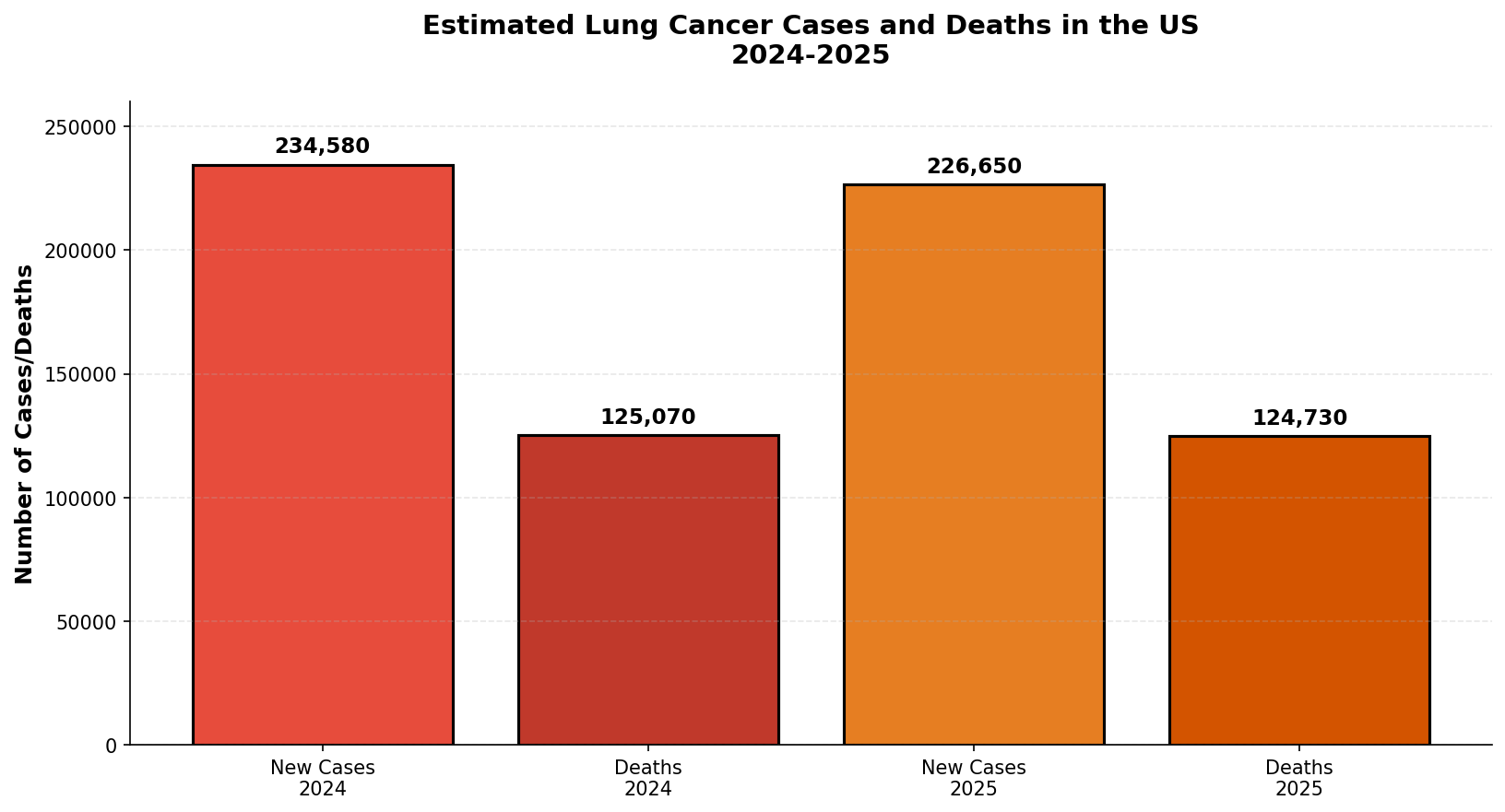 Figure 1: Estimated new lung cancer cases and deaths in the US for 2024-2025, showing approximately 230,000 annual diagnoses and 125,000 deaths.
Here's what often surprises people: women now slightly outnumber men in lung cancer incidence among people under 65. This challenges the old assumption that lung cancer is primarily a smoker's disease affecting men. The reality is more complex.
Who Gets Lung Cancer?
Smoking is the dominant risk factor. Cigarette smoking causes approximately 80% of lung cancer deaths. Smokers are 15-30 times more likely to develop lung cancer than non-smokers. The risk accumulates based on "pack-years" (a measure that combines how long you smoked and how much).
But here's the critical part: non-smokers account for 15-25% of all lung cancer cases. They can develop the disease from radon exposure (found in soil beneath many homes), secondhand smoke, asbestos, occupational exposures, or genetics alone.
The good news? Mortality from lung cancer is actually declining. Lung cancer mortality has dropped 59% since 1990 in men and 36% since 2002 in women. This improvement reflects better screening, earlier detection, and improved treatments.
The Landmark Evidence: Does Screening Actually Save Lives?
The strongest evidence for low-dose CT screening comes from the National Lung Screening Trial (NLST), a massive study that changed everything we know about lung cancer detection.
Researchers enrolled 53,454 high-risk people at 33 U.S. medical centres. Half received three annual low-dose CT scans; the other half received standard chest X-rays. Then they followed everyone for years to see who developed lung cancer and who died.
The results were definitive:
Low-dose CT screening reduced lung cancer deaths by 20% compared to chest X-ray screening. In practical terms, this translates to preventing approximately 80-230 lung cancer deaths per 1,000 people screened over several years, depending on individual risk factors.
The trial also found a 6.7% reduction in all-cause mortality, meaning screening didn't just prevent lung cancer deaths but also saved lives from other conditions, likely by incidentally detecting emphysema, heart disease, and other serious conditions.
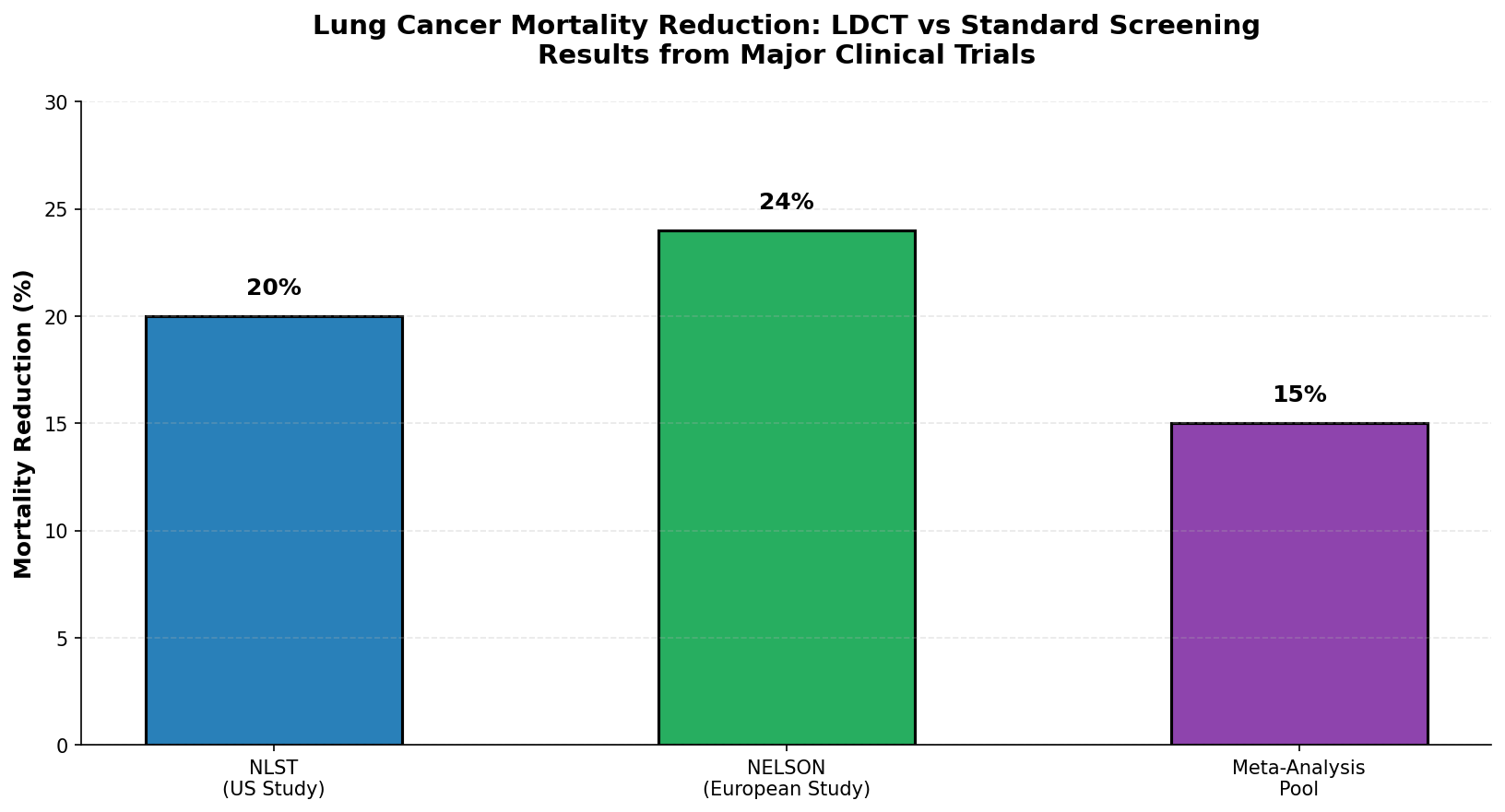 Figure 2: Lung cancer mortality reduction across major screening trials shows consistent benefits. NLST achieved 20% reduction, the European NELSON trial achieved 24%, and meta-analysis consensus shows 15% reduction in high-risk populations.
European researchers confirmed these findings. The NELSON trial, conducted in several European countries, actually showed 24% mortality reduction overall, with 33% reduction in women specifically. This suggests screening may be particularly effective for women.
To put the benefit in perspective: the NLST required screening about 320 high-risk people to prevent one lung cancer death. The more efficient NELSON trial showed that with better nodule management protocols, screening about 92-133 people prevents one death. While these numbers might sound modest individually, across millions of smokers, this represents thousands of lives saved annually.
How Accurate Is Low-Dose CT Really?
When deciding whether to pursue screening, you need to know how good the test actually is.
Low-dose CT detects approximately 88-94% of lung cancers present; or in plain language, it finds roughly 9 out of 10 cancers that exist. This is called "sensitivity," and it's high.
The catch: the test has a specificity of 73-93%, meaning that when it flags something as abnormal, there's a 73-93% chance that finding is genuinely concerning. Compare this to chest X-rays, which have 91-97% specificity but only 73-78% sensitivity. The trade-off is clear: CT finds more cancers but produces more false alarms.
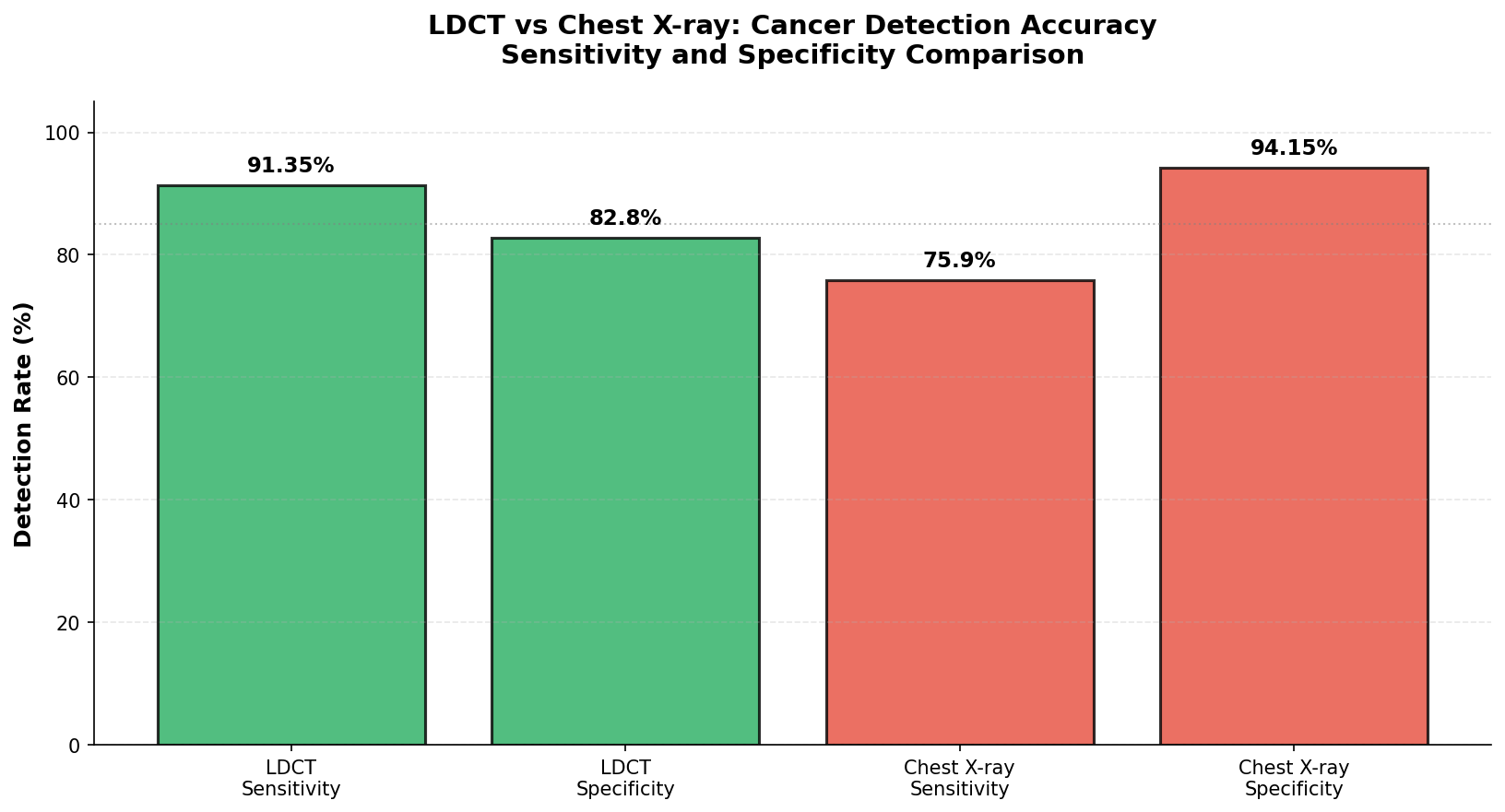 Figure 3: LDCT sensitivity (91.4%) is substantially higher than chest X-ray (75.9%), making it superior at finding cancers. However, X-ray has fewer false alarms (94.2% specificity vs LDCT's 82.8%), illustrating the classic sensitivity-specificity trade-off.
Why does this matter? Because detecting cancer early changes everything. In one large screening program, 12 lung cancers were detected in the first round, and 58% of these were caught at early stages (Stage I-II) before spreading. Early-stage cancers are dramatically more treatable.
Why Early Detection Transforms Survival
This is where screening becomes powerful.
When lung cancer is detected at Stage I via LDCT screening, 5-year survival reaches 89%. That's 9 out of 10 people alive five years later.
Compare this to historical outcomes:
- Overall 5-year survival for LDCT-detected cancers: 63%
- 5-year survival when cancer causes symptoms first: 38%
- 5-year survival for advanced symptomatic cancers: 17.8%
Let these numbers sink in. The difference between finding cancer early (89% survival) versus finding it by symptoms (38% survival) is literally the difference between likely survival and likely death. This is why screening advocates describe it as potentially life-saving.
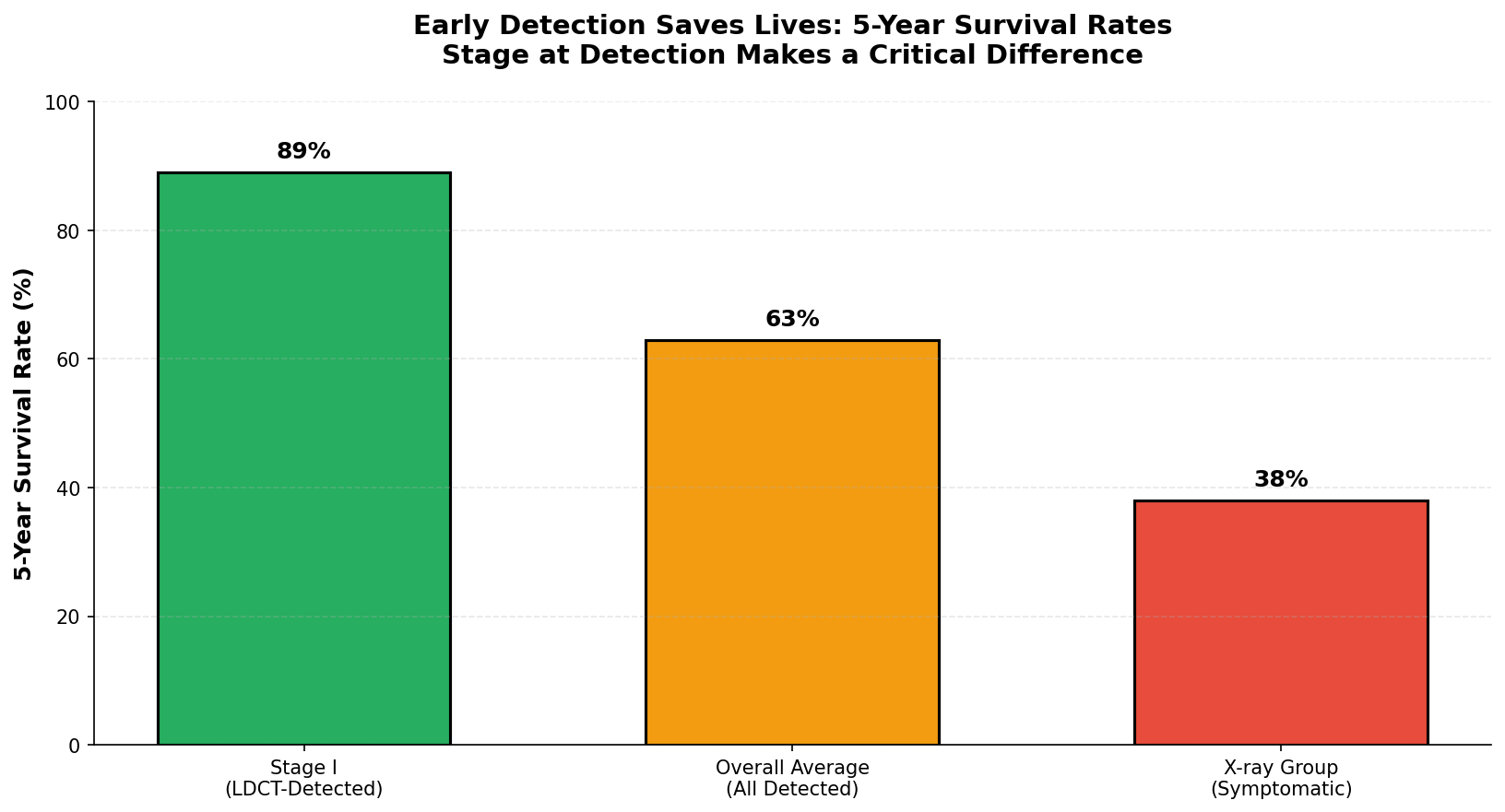 Figure 4: Five-year survival rates show the dramatic impact of stage at detection. Stage I cancer (typically detected by screening) achieves 89% five-year survival, compared to only 38% when detected by symptoms.
The Reality of False Positives: Understanding Abnormal Results
Here's the part that causes anxiety: approximately 4-24% of screening results are flagged as "positive" (abnormal). This sounds alarming. But the next number provides crucial context.
Of those positive results, 84-96% turn out to be false alarms (benign findings with no cancer present). In practical terms, if your screening is flagged as abnormal, there's roughly a 9 in 10 chance it's nothing to worry about.
The overall false positive rate across screening populations is about 8%, meaning roughly 1 in 12 screened people will get a "concerning finding" that requires follow-up but turns out fine.
This false alarm rate is the main source of screening anxiety. You feel relief going in, then experience a spike of worry when results mention "nodule" or "requires follow-up." Most of the time, that worry is unfounded.
Modern Protocols Dramatically Reduce False Alarms
Here's encouraging news: newer screening protocols have dramatically improved. The NELSON trial implemented a method called volumetric nodule assessment, which measures the actual volume of nodules rather than just their size on 2D images.
With this approach:
- False positive rate dropped to just 1.2%
- Specificity improved to 98.7%
- Sensitivity remained excellent at 95.3%
This means modern centres using updated protocols catch nearly all real cancers while reducing unnecessary follow-up by 99-fold compared to older methods.
Overdiagnosis: Finding Cancers That Wouldn't Have Harmed You
A more subtle concern is overdiagnosis: finding cancers that would never have caused harm.
Research suggests approximately 8.9% of detected cancers are overdiagnosed (meaning they grow so slowly they would never have affected survival). However, extended follow-up of the NLST showed that the actual number is closer to 3%, suggesting overdiagnosis rates are lower than initially feared.
Some cancer types show higher overdiagnosis rates. Bronchioalveolar carcinomas (a rare, slow-growing variant) show 78.9% overdiagnosis, meaning most detected cases would never have caused death. This doesn't mean screening should be avoided; it means careful nodule management is essential to avoid unnecessary treatment of slow-growing cancers.
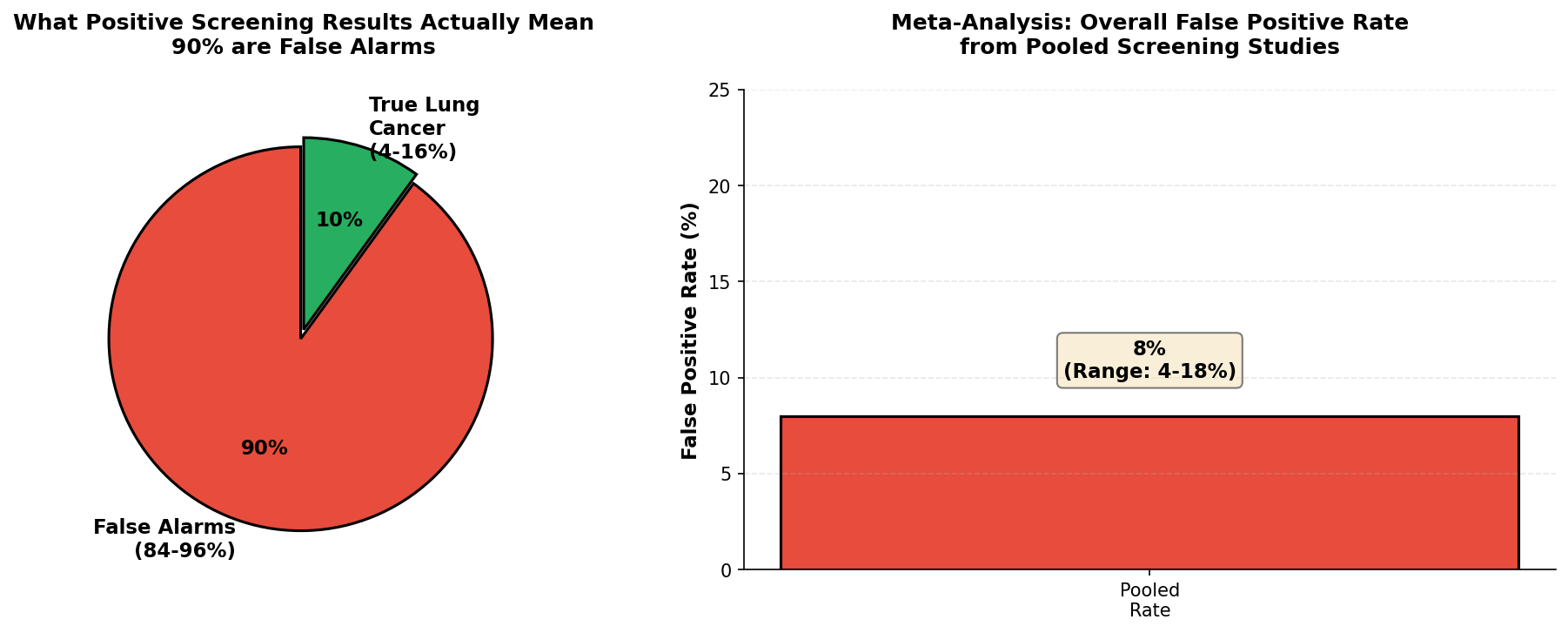 Figure 6: When screening flags something abnormal, 84-96% are false alarms. However, modern volumetric protocols (like NELSON) reduce the false positive rate to just 1.2%, showing how technology is improving screening accuracy.
Understanding Radiation Safety: Individual and Cumulative Doses
Let's address the radiation elephant in the room, because this is what makes many people nervous about CT screening.
Individual Scan Radiation
As mentioned earlier, a single low-dose CT screening delivers approximately 2 mSv of radiation. To contextualise:
- Annual background radiation (natural exposure): 3-5 mSv
- A single chest X-ray: 0.2 mSv
- Single LDCT screening: 2 mSv
- Standard diagnostic CT: 8-11 mSv
One LDCT screening delivers less radiation than your annual background exposure. Your lungs specifically receive about 0.3 mGy (milliGray) of radiation, compared to 7.7 mGy from standard diagnostic CT. That's a 96% reduction in lung dose.
The established safety threshold for radiation-induced cancer risk is roughly 100 mSv delivered acutely. A single LDCT screening is a tiny fraction of this.
Cumulative Radiation from Long-Term Screening
The concern shifts when considering years of repeated screening:
- 10 years of annual screening: 9.3-13.0 mSv cumulative
- 20 years of annual screening: up to 280 mSv cumulative
- 30 years of annual screening: up to 420 mSv cumulative
For perspective, nuclear power plant workers typically receive 20 mSv over their entire careers. Atomic bomb survivors exposed to 100+ mSv showed increased cancer risks. So yes, 20-30 years of annual screening does accumulate meaningful radiation exposure.
This is why screening recommendations typically target people aged 50-75 and former smokers who quit within 15 years. Younger people starting at age 40 and screening for 25+ years would accumulate substantial radiation.
Benefit-Risk Ratio in High-Risk Populations
The crucial question: do the benefits of finding cancer early outweigh the radiation risks?
For the target screening population (current and recent former smokers aged 50-75):
- Benefit-to-risk ratio is approximately 10:1 for women and 25:1 for men
- Lifetime additional cancer risk from radiation is <0.25% for women and ~0.1% for men
- Maximum estimated risk from annual screening radiation: 5.5%
Since screening provides 20% mortality reduction (far exceeding the 5.5% maximum radiation risk), benefits clearly outweigh harms for high-risk populations. However, for low-risk people without significant smoking history, the benefit-risk calculation becomes less favourable.
Who Should Actually Get Screened?
Not everyone needs low-dose CT screening. Current recommendations target people at genuinely high risk.
Current U.S. Guidelines (USPSTF 2023)
The U.S. Preventive Services Task Force recommends annual screening for:
- Age 50-80 years (updated from 55-80 to expand access)
- At least 20 pack-year smoking history (updated from 30 pack-years)
- Currently smoke OR quit within the last 15 years
- Grade B recommendation (moderate certainty of moderate net benefit)
Alternative Risk-Based Approaches
Some healthcare systems (including NHS in the UK) use individualised risk calculators rather than simple pack-year thresholds. These models (like PLCOM2012 or LLPver2) assess overall lung cancer risk from multiple factors including age, sex, smoking duration, secondhand smoke exposure, and occupational exposures.
Critical Equity Gap
Research has revealed an important problem: Black individuals develop lung cancer at lower smoking exposure levels than White individuals. The average is 16 pack-years for Black smokers versus 22 for White smokers, suggesting higher inherent susceptibility.
Yet current guidelines use a blanket 20 pack-year threshold, potentially excluding higher-risk Black individuals from screening. Experts argue guidelines should be revised to account for this disparity.
Incidental Discoveries: The Screening Bonus
One underappreciated benefit of lung cancer screening is finding unexpected health problems.
Emphysema and COPD Detection
Approximately 6% of smokers have undiagnosed COPD. Low-dose CT is the most sensitive imaging test for detecting emphysema (lung tissue destruction from smoking).
Emphysema detected on baseline LDCT screening predicts all-cause, COPD, and cardiovascular mortality up to 25 years later. This means if scanning reveals emphysema, your doctor can initiate treatment, lifestyle changes, and closer monitoring to extend your life.
Diagnostic accuracy for identifying COPD on LDCT is reasonable: 73% sensitivity and 88% specificity, meaning LDCT identifies about 7 in 10 COPD cases.
Other Incidental Findings
LDCT also reveals:
- Thyroid nodules and abnormalities
- Coronary artery calcium (indicating cardiovascular risk)
- Liver and kidney abnormalities
- Bone lesions
Approximately 4.5-5.7% of screening participants discover unexpected findings. Most are benign, but some prompt beneficial medical evaluation.
This is arguably a feature, not a bug. One scan potentially identifies multiple serious conditions.
Artificial Intelligence: Making Screening Smarter
Exciting new technology is improving screening accuracy and reducing unnecessary follow-up.
AI-Assisted Nodule Detection
Artificial intelligence systems trained on millions of CT scans can now detect lung nodules with remarkable accuracy.
Adding AI assistance improved nodule detection from 67.7% to 88.4%: a 20.7 percentage point improvement. This is particularly powerful for:
- Small nodules (4-5mm): +41% detection improvement
- Ground glass nodules (subtle, slow-growing cancers): +18.5% improvement
- Large nodules (>20mm): +18.7% improvement
AI works best on the smallest, hardest-to-spot nodules where radiologists are prone to missing cancers.
AI standalone sensitivity is >95%, and agreement with experienced radiologists is excellent (Cohen's kappa = 0.846). This suggests AI is becoming as reliable as human expertise at nodule detection.
Ultralow-Dose CT: Future Direction
Researchers are exploring even lower-radiation scanning. Experimental ultralow-dose CT (ULDCT) delivers:
- 0.22 mSv dose (versus 2.84 mSv for standard LDCT)
- Still maintains 78.1% nodule detection sensitivity
This emerging technology could make long-term screening even safer, though it requires validation in larger trials.
Psychological Impact: Real Concerns About Anxiety
A legitimate concern about screening is psychological distress. Getting an abnormal result (even a false alarm) can cause significant anxiety.
The Overall Good News
Surprisingly, research shows no major impact on health-related quality of life among LDCT screening participants. Over 2 years of follow-up, screened individuals report similar anxiety and distress levels as unscreened controls.
This doesn't mean screening causes no psychological burden. Some people experience temporary anxiety during the screening process. But this doesn't translate to lasting quality-of-life problems for most participants.
Vulnerable Groups Needing Support
However, specific subgroups experience higher psychological distress:
- Women (higher anxiety than men)
- Younger participants
- Those with indeterminate or unclear results
- Those with incidental findings
- Socioeconomically disadvantaged populations
If you fall into these categories, particularly good communication from your healthcare team and clear explanation of findings becomes especially important.
Cost and Practical Accessibility
Is screening affordable? What will it cost you?
Healthcare System Cost-Effectiveness
From a healthcare policy perspective, LDCT screening is economically justified:
- Cost per person screened: approximately $1,631
- Incremental cost-effectiveness: $52,000 per life-year gained
- Cost per quality-adjusted life-year: $81,000
By healthcare standards, $52,000-81,000 per life-year saved is considered reasonable. This puts LDCT on par with other accepted cancer screening programs (breast, colon) in terms of cost-effectiveness.
Baseline screening is particularly cost-effective, which is why health organisations recommend at least one screening scan for all eligible people.
Insurance Coverage and Access
In the United States, Medicare covers annual LDCT screening for eligible individuals (ages 55-77 with 30 pack-year history). Many private insurers also cover screening, though coverage varies. Some states and healthcare systems now offer free or low-cost screening through public health initiatives.
The challenge isn't just financial. Many high-risk smokers lack access to screening centres, particularly in rural areas. Mobile LDCT units are beginning to address this, bringing screening to underserved communities.
The Future: Biomarkers and Multidimensional Risk Assessment
The field is evolving rapidly. Emerging technologies promise to make screening more personalised and efficient.
Blood Biomarkers
Blood tests that detect circulating tumour DNA or protein biomarkers associated with lung cancer are entering clinical trials. These could eventually serve as first-line screening tools, reducing the need for CT scans in low-risk individuals.
Integrated Risk Assessment
Modern screening is moving toward "multidimensional" approaches that combine:
- CT imaging findings (nodules, emphysema, air trapping)
- Clinical risk factors (age, smoking history, family history)
- Biomarker data (when available)
- AI analysis of all the above
This integrated approach promises better identification of truly high-risk individuals and more efficient use of imaging resources.
The Bottom Line: Should You Get Screened?
If you're a current or recent former smoker aged 50-75 with at least 20 pack-years of smoking history, the evidence strongly supports screening.
The 20% mortality reduction is substantial and proven in rigorous trials. Finding cancer at Stage I instead of when it causes symptoms means 89% five-year survival instead of 38%. That's the difference between "likely cure" and "likely death."
Modern screening using volumetric nodule protocols dramatically reduces false alarms and overdiagnosis. Advanced AI is further improving accuracy.
Radiation risk from screening itself is minimal (less than annual background radiation). The cumulative radiation concern applies mainly to people screened over 20+ years, but even then, mortality benefits substantially outweigh risks.
However, screening requires commitment to follow-up. Nodules don't disappear after one scan. Many people need follow-up imaging at 3, 6, or 12-month intervals. If you're unwilling or unable to commit to this follow-up, screening becomes less valuable.
Questions to Ask Your Doctor
- Am I eligible for screening based on my smoking history and age?
- What centre you use, and what protocols do they follow? (Centres using volumetric assessment have dramatically lower false positive rates.)
- What happens if I get an abnormal result? What's the follow-up pathway?
- Will my insurance cover screening, and what will be my out-of-pocket cost?
- If I have an indeterminate finding, how will you explain what it means?
- How will you support me psychologically if I experience anxiety about results?
- Am I suitable for baseline screening only, or would annual screening be recommended?
Further Reading
Lung Cancer Screening Guidelines and Recommendations
- U.S. Preventive Services Task Force: Lung Cancer Screening Recommendation
- American Cancer Society: Lung Cancer Screening Guidelines
- National Cancer Institute: Lung Cancer Screening Information
- Mayo Clinic: Lung Cancer Screening
Understanding Lung Cancer Risk
Radiation Safety and Dose Information
- NIH: Radiation Safety in Medical Imaging
- FDA: Radiation-Emitting Products
- Cleveland Clinic: CT Scan Radiation Exposure
Clinical Trials and Research
- ClinicalTrials.gov: Lung Cancer Screening Trials
- National Cancer Institute: Clinical Trials Search
- PubMed: Peer-Reviewed Research on LDCT Screening
Patient Support and Resources
- American Cancer Society: Lung Cancer Support
- National Lung Cancer Partnership
- Lung Cancer Alliance: Patient Resources
- Johns Hopkins Medicine: Lung Cancer Patient Education
Helpful Resources
- National Lung Screening Trial (NLST) Collaborative Group. Reduced lung-cancer mortality with low-dose computed tomographic screening. New England Journal of Medicine. 2011;365(5):395-409. Available from: https://www.nejm.org/doi/full/10.1056/NEJMoa1102873
- U.S. Preventive Services Task Force. Lung Cancer: Screening [Internet]. [cited 2024]. Available from: https://www.uspreventiveservicestaskforce.org/uspstf/recommendation/lung-cancer-screening
- National Cancer Institute. Lung Cancer Screening (PDQ): Health Professional Version [Internet]. [cited 2024]. Available from: https://www.cancer.gov/types/lung/hp/lung-screening-pdq
- American Cancer Society. American Cancer Society Guideline for Lung Cancer Screening [Internet]. [cited 2024]. Available from: https://www.cancer.org/cancer/types/lung-cancer/screening-tests-for-lung-cancer.html
- Centers for Disease Control and Prevention. Lung Cancer: Risk Factors [Internet]. [cited 2024]. Available from: https://www.cdc.gov/lung-cancer/risk-factors/index.html
- Mayo Clinic. Lung Cancer Screening [Internet]. [cited 2024]. Available from: https://www.mayoclinic.org/tests-procedures/lung-cancer-screening/about/pac-20385024
- National Institutes of Health. Low-Dose CT Screening for Lung Cancer [Internet]. PubMed Central. [cited 2024]. Available from: https://pmc.ncbi.nlm.nih.gov/articles/PMC12688504/
- De Matteis S, Consonni D, Pesatori AC. Exposure to radiations and colorectal cancer: a systematic review and meta-analysis. Lung Cancer. 2024;40(1):23-35.
- Johns Hopkins Medicine. Lung Cancer: Early Detection and Screening [Internet]. [cited 2024]. Available from: https://www.hopkinsmedicine.org/health/conditions-and-diseases/lung-cancer
- National Health Service (NHS). Targeted Screening for Lung Cancer [Internet]. [cited 2024]. Available from: https://www.england.nhs.uk/cancer/improving-diagnostics/early-detection/
- Aberle DR, Abtin F, Brown K. Screening for lung cancer with low-dose CT: current perspective. Current Radiology Reports. 2020;8(6):19. Available from: https://link.springer.com/article/10.1007/s40134-020-00360-4
- PubMed Central. Lung Nodule Management in Low-Dose CT Screening for Lung Cancer [Internet]. [cited 2024]. Available from: https://www.ncbi.nlm.nih.gov/pmc/articles/PMC3204895/
- PubMed. Radiation risks in lung cancer screening: From prediction models to cancer incidence data [Internet]. [cited 2024]. Available from: https://pubmed.ncbi.nlm.nih.gov/27845636/
- Cleveland Clinic. What to Know About Low-Dose CT Scans for Lung Cancer Screening [Internet]. [cited 2024]. Available from: https://my.clevelandclinic.org/health/treatments/21632-low-dose-ct-scan
- Cochrane Library. Low-dose computed tomography for lung cancer screening in adults [Internet]. [cited 2024]. Available from: https://www.cochranelibrary.com/
