

There's a trend taking over gyms, wellness centres and home bathrooms: people jumping into ice-cold water on purpose. Some claim it builds resilience, improves mood, and accelerates recovery.1 Others worry it's dangerous. The truth sits somewhere in the middle, and it's more nuanced than either camp suggests.
Cold water immersion (CWI) is a real physiological stressor that triggers measurable changes in your body.2 Yes, some benefits are supported by decent evidence. But others are wildly overstated in marketing. This article cuts through the hype and gives you what you actually need to know before you jump in.
What Actually Happens When You Enter Cold Water
The first few seconds are crucial. When cold water hits your skin, your nervous system doesn't gradually adjust; it launches an emergency response called the cold shock response.3
Your body detects the temperature drop within milliseconds and triggers an involuntary survival reflex. This is evolutionary programming that served your ancestors well, but can backfire in modern water immersion.
The First 30 Seconds: The Danger Zone
Here's what happens simultaneously:
Your breathing goes haywire. You experience an involuntary gasp of 2-3 litres of air (uncontrollable and immediate).4 This is followed by hyperventilation that can exceed 60 breaths per minute (normal is 12-20).4 Your ability to hold your breath, normally 60-90 seconds, drops to just a few seconds.3
Your heart and blood pressure spike dramatically. Blood pressure can rise sharply within just one minute.2 Heart rate increases by 40 or more beats per minute.2 If your resting heart rate is 60 bpm, it might jump to 100+ bpm almost instantly.
Stress hormones flood your system. Norepinephrine (a stress hormone that triggers alertness) can increase several-fold, in some studies by as much as 530%.2 This is what makes you feel "alive" and creates the rush people describe, but it's a real neurochemical change, not a placebo.
Your nervous system is torn in two directions. Your sympathetic nervous system (fight or flight) activates because of the cold shock, increasing heart rate and blood pressure. Simultaneously, your parasympathetic nervous system (rest and digest) activates through a diving reflex triggered by facial immersion. These two systems firing at the same time (normally they work in sequence) creates a conflict that can, in rare cases, trigger serious heart rhythm problems.3
Why does this matter? This isn't gentle. It's a full-system emergency response, which is exactly why cold water immersion carries real risks for people with certain health conditions.
What Happens Next: Minutes 1-3
By the two-minute mark, if you haven't panicked and have controlled your breathing, your nervous system begins to stabilise.3 Breathing slows from hyperventilation to rapid but manageable. Heart rate remains elevated but becomes manageable. Your body starts generating heat through shivering and activating brown fat.2
The danger from drowning is greatest in these first 3 minutes because of the uncontrollable gasping and hyperventilation.4 This is why most cold water deaths happen rapidly, before hypothermia even develops.
After You Exit: The Hormonal Cascade
The immediate effects fade quickly. Norepinephrine (that alert feeling) drops within minutes of exiting.5 But cortisol, a longer-lasting stress hormone, remains elevated for 1-2 hours post-exposure.5 This is when the delayed stress-reduction effect that some research shows actually appears, around the 12-hour mark.6
What The Research Actually Shows: Which Benefits Are Real?
Let's talk about what makes headlines versus what the evidence actually supports. The data from 40+ peer-reviewed studies reveals a pattern: some benefits have solid evidence, others are overstated, and a few are pure marketing fiction.
Benefit #1: Muscle Soreness Relief (The Strongest Evidence)
The finding: Cold water immersion reduces delayed-onset muscle soreness (DOMS) by roughly 37-68% immediately after a workout.1 The effect is most pronounced right after exercise but fades significantly by 24-48 hours.1
What this means in practical terms: If you do an intense workout and jump in cold water immediately after, you'll notice noticeably less soreness in the short term. But that soreness will likely return. You won't prevent the deep muscle soreness you feel the next day; you'll just get temporary relief.
Why it works: Cold narrows blood vessels and reduces inflammation temporarily.1
Evidence quality: Good.1 Multiple controlled trials show consistent findings.
Benefit #2: Stress Reduction (The Time-Dependent Mystery)
The finding: At 12 hours post-immersion, stress hormones drop significantly.6 But here's the twist: you won't feel stressed relief right after cold water. In fact, you'll feel activated and alert.6
What this means: You won't walk out of cold water feeling calm. You'll feel energised, alert, and slightly stressed (that's the norepinephrine spike). But something about the experience appears to reduce stress markers later. The exact mechanism is unclear; it might be nervous system adaptation, hormonal rebalancing, or a sense of accomplishment.6
Evidence quality: Moderate.6 This finding needs replication in more studies.
Benefit #3: Mood and Mental Health (The Overstated Benefit)
The finding: About 59% of regular cold water swimmers report feeling less depressed.1 However (and this is critical), when researchers pooled all the studies together, mood improvements disappeared in the meta-analysis.1
What this means: Some people genuinely feel better. But it's not universal. The effect might be partly placebo, partly real. Cold water immersion is not proven as a treatment for clinical depression or anxiety.1 If you have been diagnosed with depression or anxiety, this is not a substitute for therapy or medication.
The dopamine myth (debunked): Fitness marketers claim cold water immersion causes a massive dopamine surge that improves your mood. Here's the problem: dopamine in your blood cannot cross the blood-brain barrier itself.2 The mood boost you feel is from norepinephrine (alertness) and endorphins (natural painkillers), not dopamine affecting your brain.2 Whether cold exporsure significantly alters brain dopamine is still unclear.
Evidence quality: Weak.1 Self-reported, no control groups, no blinding possible (people know they're in cold water).
Benefit #4: Muscle Growth (The Surprising Finding)
The finding: If you're lifting weights to build muscle, cold water immersion after your workout makes almost no difference; it might slightly impair gains.1 The effect size is negligible (SMD = 0.14).1
What this means: Muscle growth requires inflammation. Your muscles need the inflammatory response to adapt and grow.1 Cold water suppresses inflammation temporarily, interfering with this process. If muscle growth is your goal, skip the ice bath immediately after lifting weights.1
Evidence quality: Good.1 Clearly documented.
Benefit #5: Immune System Strengthening (The Weak Evidence)
The finding: Single cold immersion moves immune cells around but doesn't create more of them.1 One study found 29% reduction in sickness absence among people who took regular cold showers—but that's self-report from surveys, not a controlled trial.1
What this means: Measurable changes in immune cell ratios don't prove you'll catch fewer colds.1 You might see modest immune benefits after 6+ weeks of consistent practice, but expect them to be modest, not dramatic.1
Evidence quality: Weak.1 Small studies, limited clinical outcomes.
Benefit #6: Metabolic Rate and Weight Loss (The Misleading Claim)
The finding: Cold water immersion increases calorie burn through brown fat activation and shivering thermogenesis.2 Winter swimmers (people swimming in cold water all season) burn 500-1,000 extra calories per 24 hours.2 A single ice bath? Probably 50-200 calories, depending on temperature and duration.2
The catch: After cold immersion, you get hungry and eat significantly more to compensate.1 The metabolic boost is completely negated by increased appetite.1
What this means: Cold water immersion is not an effective weight loss strategy.1 Don't bother with it if your goal is losing weight.
Evidence quality: Good for the metabolic effect itself; weak for practical weight loss benefits.1
Benefit #7: Insulin Sensitivity and Blood Sugar (The Emerging Benefit)
The finding: Cold exposure helps your body use blood sugar more efficiently by activating brown fat, which acts as a "glucose sink."2 This may have modest benefits for people with prediabetes or type 2 diabetes risk.2
The caveat: Long-term clinical benefits (actually preventing diabetes) are not yet proven.2
Evidence quality: Moderate.2 Promising but preliminary.
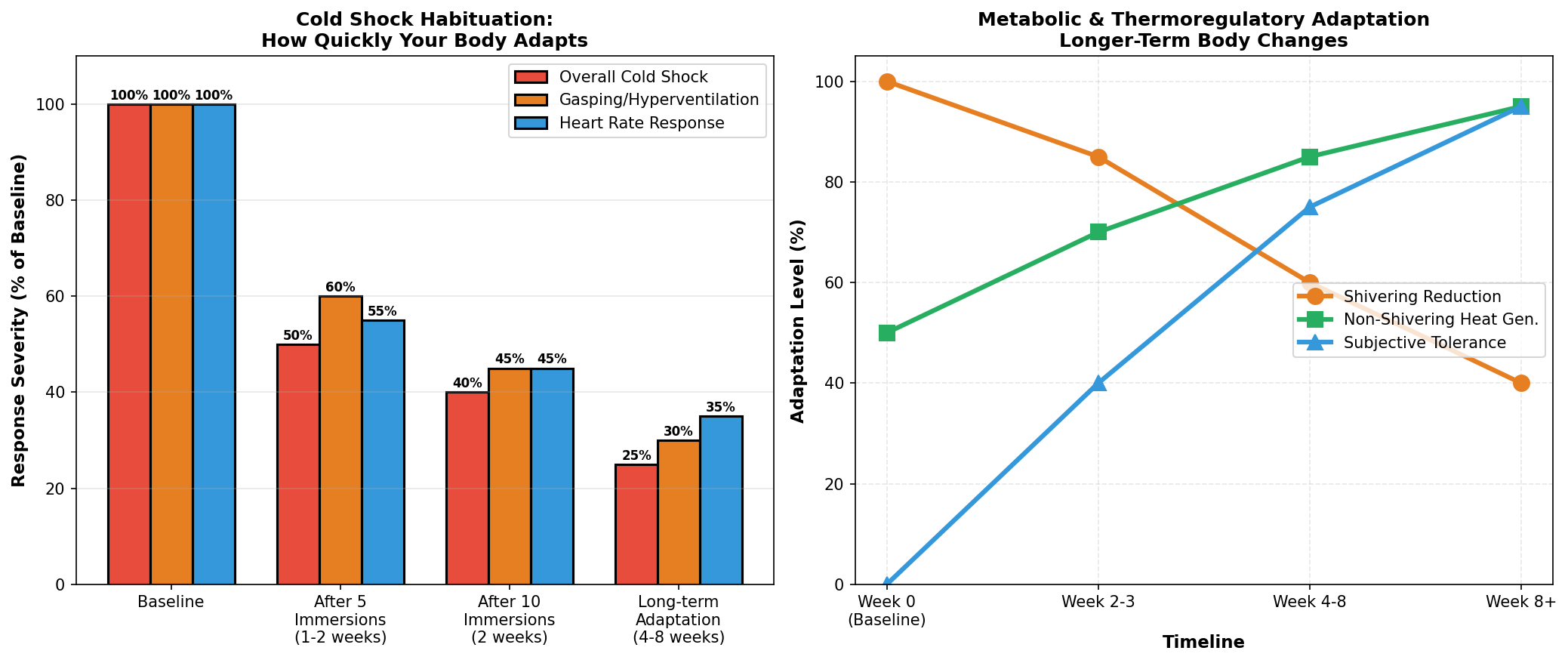 Figure 2: Comparing effect sizes and evidence quality for different claimed benefits. Muscle soreness relief and muscle damage markers show strong evidence (green bars). Mood improvement and immune benefits show weaker evidence (orange and red bars).1
Your Body Adapts Faster Than You'd Think
One of the most encouraging findings: adaptation happens much quicker than you might expect.
After just 5 immersions over 1-2 weeks, your cold shock response reduces by 50%.3 That means your gasping, hyperventilation, and panic response are cut in half with minimal practice.3 Most of this adaptation persists for up to a year even after you stop exposure.3
After 10 immersions (about 2 weeks), significant reductions occur in how intensely you feel the cold, how dramatically your heart rate spikes, and how much you shiver.3
By 4-8 weeks of consistent practice, deeper physiological changes happen: improved heat generation without shivering, better blood vessel control, and metabolic adaptations.3 These metabolic changes persist for several months even after you stop.3
Why does this matter? It means you're not stuck with the overwhelming panic of that first immersion. Your nervous system genuinely learns. Safety improves relatively quickly.
The Hormonal Timeline: When Effects Peak and Decline
Understanding when different hormones peak helps you understand what you'll actually feel at different times.
Norepinephrine (the alert, alive feeling): Increases 530% during immersion, peaks immediately, then drops rapidly within minutes of exiting.5 By 1 hour after, it's mostly back to baseline.5 This is the immediate "rush" people describe.
Cortisol (the stress hormone needed for adaptation): Increases 40% during immersion and keeps building for 1-2 hours post-exposure, reaching peak effect around the 2-hour mark.5 It remains elevated for 12+ hours in some cases.5 This longer elevation is what enables adaptation but can be problematic if repeatedly spiked in people with anxiety or adrenal issues.
Dopamine (peripheral): Increases in your blood but does not affect your brain due to the blood-brain barrier.2
Getting Started Safely: The Right Way to Progress
If you decide to try cold water immersion, progression matters more than most people realise.
Temperature Guidelines
Too cold is dangerous. Below 50°F (10°C) introduces serious hypothermia risk and nerve injury risk, especially in untrained people.4 A 2-minute immersion at 40°F in someone new to cold water can begin causing dangerous body cooling.4
Safe for beginners: 55-60°F (13-16°C). This is cool enough to activate physiological benefits but warm enough to let your body adapt safely.4
Therapeutic range: 50-59°F (10-15°C). This is the sweet spot for recovery benefits once you've built tolerance; a 2-10 minute session at this temperature is well within safety margins for healthy adults without contraindications.4
Why temperature matters so much: Water removes heat from your body 25 times faster than air.4 Even small temperature differences create major safety differences.
The 7-Day Beginner Progression
Start here and move to the next level only if comfortable:
- Day 1: 59-60°F (15-16°C) for 30-60 seconds. Cool but manageable
- Day 2: 59-60°F (15-16°C) for 1-2 minutes. You notice the cold; breathing is controlled
- Day 3: 57-58°F (14-15°C) for 1-2 minutes. Noticeably colder; practise controlled breathing
- Day 4: 57-58°F (14-15°C) for 2-3 minutes. Intense but manageable
- Day 5: 55-56°F (13-14°C) for 2-3 minutes. Significantly colder; your body is adapting
- Day 6: 55-56°F (13-14°C) for 3-4 minutes. Building tolerance
- Day 7: 50-55°F (10-13°C) for 3-5 minutes. You're now in the therapeutic range4
Skip a day or repeat a level if you're uncomfortable. There's no rush.
Duration Guidelines
Maximum benefit from norepinephrine release happens within 3-5 minutes of cold exposure.4 Staying longer than 5-7 minutes doesn't give proportionally greater benefits; it just adds risk without extra reward.4
- Beginners (weeks 1-2): 30 seconds to 2 minutes4
- Building tolerance (weeks 3-4): 2-5 minutes4
- Established practice: 2-10 minutes maximum; 5-10 minutes is ideal for experienced practitioners4
Breathing Techniques: Your Most Powerful Tool
The gasping reflex is involuntary; you cannot stop it. But you can control what happens next through breathing.
Box Breathing (best for beginners):
- Breathe in through your nose for a count of 4
- Hold for a count of 4
- Exhale through your mouth for a count of 4
- Hold empty for a count of 4
- Repeat 5-10 times before entering water, and continue this pattern while immersed4
This calms your nervous system and prevents hyperventilation.
Extended Exhale Breathing (most calming):
- Breathe in through your nose for a count of 4
- Exhale slowly through your mouth for a count of 6-8 (the longer exhale is key)4
- Repeat 8-10 times before immersion
Longer exhales directly activate your parasympathetic nervous system; the brake pedal of your nervous system.4
Cardiovascular Stress by Temperature
The colder the water, the greater your heart works. This is important for understanding your personal risk.
Who Should NOT Do Cold Water Immersion
Some people need to avoid this entirely. Others need medical clearance first.
Medical Conditions to Avoid CWI
Cardiac and circulatory conditions (high risk):
- Heart disease or history of heart attack
- Uncontrolled high blood pressure
- Arrhythmias (irregular heartbeat) or history of fainting
- Long QT syndrome
- Aneurysm or cardiovascular disease
Why? Cold water causes immediate spikes in heart rate and blood pressure. For someone with heart disease, this sudden stress can trigger heart attack or stroke.4
Respiratory conditions:
- Severe asthma or cold-induced asthma
- Uncontrolled breathing problems
Why? Cold water triggers rapid, uncontrolled breathing that can spiral into a dangerous breathing crisis for people with asthma.4
Circulatory and neurological conditions:
- Raynaud's syndrome or poor blood flow
- Neuropathy (nerve damage)
- Cold allergies
- Diabetes with foot or leg complications
- Seizure disorders
Other at-risk populations:
- Pregnancy (effects not well-studied)
- People recovering from recent illness
- Young children and elderly people
Medications Requiring Doctor Clearance
- Beta blockers (metoprolol, atenolol, propranolol): These medications lower heart rate and blood pressure. Combined with cold water's effects, your body struggles to adapt to the shock4
- SSRIs and antidepressants (citalopram, escitalopram, paroxetine): Interactions with cold exposure aren't fully understood4
- Any psychiatric medications if you have PTSD, panic disorder, or anxiety: Cold water immersion triggers acute stress that can worsen these conditions4
Talk to your doctor or pharmacist before starting if you take any regular medications.
Common Mistakes That Make Cold Immersion Dangerous
Mistake 1: Starting With Water That's Too Cold
You see experienced cold plungers in 38-42°F water and think you should start there. You get in, panic immediately, hyperventilate, and decide cold water is dangerous and terrible.
The problem: You've bypassed critical physiological adaptation.4 Your nervous system needs time to learn how to respond to cold.
The fix: Start at 59-60°F even if it feels "not cold enough."4 Your body will feel it. Progress slowly (2 weeks minimum before dropping to therapeutic range).
Mistake 2: Staying in Too Long
You've heard cold exposure is good, so longer must be better. You stay in 15-20 minutes on your first attempt.
The problem: Maximum hormonal benefit happens in 3-5 minutes.4 Extended immersion just adds risk without added benefit. You're introducing hypothermia risk unnecessarily.4
The fix: Stick to 2-5 minutes during the learning phase. Even experienced practitioners rarely exceed 10 minutes.
Mistake 3: Improper Breathing (Holding Your Breath or Hyperventilating)
Cold hits, you hold your breath to "tough it out," or you panic and gasp repeatedly.
The problem: Holding your breath intensifies the cold shock response.4 Rapid shallow breathing depletes oxygen.4 Both prevent your nervous system from calming.
The fix: Practice controlled breathing (box breathing or extended exhale) before entering. Make breathing your primary tool, not something to avoid.
Mistake 4: Neglecting Proper Rewarming
You get out, shiver intensely, but think you can just wait it out or jump in a hot shower.
The problem: The "afterdrop" effect makes you actually get colder after exiting because cooled blood from your extremities returns to your core.4 A hot shower can increase afterdrop by drawing more cold blood to your core.4 Severe hypothermia can develop 30 minutes to 2+ hours after exiting.4
The fix:
- Get dry clothes on immediately
- Use dry towels, not wet ones
- Layer up (shirt, sweatshirt, pants)
- Warm up gradually with blankets
- Wait 20 minutes before any hot shower
- Drink warm beverages4
Mistake 5: Doing It Alone
You're in your backyard tub alone, thinking "it's my own property, what could go wrong?"
The problem: If you lose consciousness, have a cardiac event, or can't get out, nobody knows.4 Cold shock response can incapacitate you faster than you expect.4
The fix: Always have someone present who knows cold water safety. This is non-negotiable, especially your first 5-10 times.
Mistake 6: Ignoring Medical Contraindications
You have mild high blood pressure or take a beta blocker, but think cold immersion will be fine.
The problem: Cold plus cardiovascular medications equals increased heart attack or stroke risk during the shock phase.4
The fix: Talk to your doctor first. Cold water immersion is optional; your health is not.
The Inflammation Response: What It Actually Means
Here's something counterintuitive: cold water immersion causes immediate inflammation markers to spike.6 Immediately after immersion, inflammation increases by a standardised mean difference of 1.03.6 One hour later, it climbs to 1.26.6
Does this sound bad? It actually isn't. Cold water is a physiological stressor (like exercise-induced muscle damage). The acute inflammation is your body's adaptive response.6 Similar to how exercise causes inflammation initially, which leads to muscle strengthening, cold immersion causes inflammation that prompts adaptation.6
However, this matters for people with inflammatory conditions. If you have rheumatoid arthritis, lupus, or other autoimmune or inflammatory conditions, the acute inflammation spike could temporarily worsen symptoms.6 For these people, the benefits might not justify the temporary symptom flare.6
Realistic Expectations by Your Goal
If Your Goal: Recover From Intense Workouts
What works: Immediate soreness relief (DOMS reduced by 37-68%).1 Best protocol: 10-15 minutes at 50-59°F immediately post-workout.4
What doesn't: Prevents delayed soreness that develops 24-48 hours later.1
Evidence: Good.1
If Your Goal: Improve Mood
What works: Some people report feeling better; increased alertness is real.1 Best protocol: Regular practice (2-3 times per week) with consistent routine.1
What doesn't: Not proven as clinical treatment for depression; effects are variable.1
Evidence: Weak to moderate.1
If Your Goal: Build Muscle
What works: Skip ice baths immediately post-lifting.1 Use cold immersion on non-lifting days if you want.1
What doesn't: Cold water immediately after resistance training may impair muscle growth.1
Evidence: Good.1
If Your Goal: Lose Weight
What works: Not effective; metabolic boost offset by increased eating.1
Better alternative: Focus on diet and regular exercise.1
Evidence: Weak.1
If Your Goal: Strengthen Your Immune System
What works: Maybe modest benefit after 6+ weeks of consistent practice.1 Best protocol: 3-5 times per week, 50-59°F, 5-10 minutes.4
What doesn't: Won't prevent colds or serious infections.1
Evidence: Weak.1
If Your Goal: Improve Cardiovascular Health
Best for: Healthy people with no cardiac history (theoretical long-term benefits).4
High risk for: Anyone with cardiac history (documented serious events).4
Requirement: Medical clearance if you have any cardiac risk factors.4
Evidence: Moderate (benefits theoretical; risks documented).4
The Bottom Line
Cold water immersion is a real physiological stressor that triggers measurable changes in your body.3 Some benefits have decent evidence. Others are marketing hype.
What's worth doing:
- Muscle soreness relief immediately after intense exercise (temporary but real)1
- Possible mood and stress reduction if done regularly, though effects are inconsistent1,6
- Nervous system adaptation and cold tolerance building (if that's your goal)3
What's not worth doing:
- Weight loss strategy (offset by increased appetite)1
- Clinical mood disorder treatment (not a substitute for therapy or medication)1
- Immune system strengthening as primary goal (weak evidence)1
- Muscle building (likely impairs gains)1
Critical safety points:
- If you have any cardiac, respiratory, or chronic health condition, get medical clearance first4
- Start at 55-60°F (13-16°C) and progress slowly over 2+ weeks4
- Never go alone4
- Maximum benefit occurs within 3-5 minutes; longer sessions just add risk4
- Use controlled breathing; it's your most powerful safety tool4
- Proper rewarming prevents dangerous hypothermia4
The science shows cold water immersion works; but only if you do it correctly and have realistic expectations about which benefits actually exist.
Further Reading
Physiological Research and Mechanisms
- Cold Water Immersion neurohormesis and clinical implications - Journal of Neuropsychiatry and Clinical Neurosciences
- Brown fat thermoregulation in winter swimmers - Cell Reports Medicine
- Human cold habituation physiology, timeline, and modifiers - PubMed Central
- Cardiovascular responses to cold water immersion - Physiological Reports
Health Benefits and Evidence
- Effects of cold-water immersion on health and wellbeing: Systematic review and meta-analysis - PLOS One
- Impact of different doses of cold water immersion on recovery - Frontiers in Physiology
- Effects on exercise recovery and muscle damage - PubMed Central
Safety Guidelines and Risk Factors
- Wilderness Medical Society clinical practice guidelines for cold water immersion - Wilderness Medicine Society
- Cardiovascular diseases, cold exposure and exercise - PubMed Central
- Cold water immersion safety: Hypothermia risk and emergency protocols - NOAA
Recovery and Athletic Performance
- Effects of cold water immersion on resistance training-induced hypertrophy - Wiley Online Library
- Cold water immersion after exercise on fatigue recovery - Frontiers in Physiology
Mental Health and Mood Effects
- Short-term head-out cold-water immersion and brain networks - PubMed Central
- Protocol for systematic review on cold-water exposure and mental health - Frontiers in Psychiatry
Metabolism and Brown Adipose Tissue
- Cold-exposure and brown adipose tissue volume - ScienceDirect
- Effects on energy expenditure and appetite in healthy adults - ScienceDirect
Beginner Guidance and Breathing Techniques
- Acclimation to cold water progression protocols - Cold Water Safety Foundation
- Breathing techniques for cold immersion - Ice Barrel
References/Helpful Resources
- Moore E, Fuller JT, Bellenger CR, Saunders S, Halson SL, Broatch JR, et al. Effects of Cold-Water Immersion Compared with Other Recovery Modalities on Athletic Performance Following Acute Strenuous Exercise in Physically Active Participants: A Systematic Review, Meta-Analysis, and Meta-Regression. Sports Medicine [Internet]. 2022 Dec 17 [cited 2026 Apr 20];53(3):687–705. Available from: https://pubmed.ncbi.nlm.nih.gov/36527593/
- Teległów A, Wrześniewski K, Blecharz J. Hormonal and Psychological Responses to a Single Cold-Water Immersion in Regularly Winter-Swimming Males. Applied Sciences [Internet]. 2025 June 24 [cited 2026 Apr 20];15(13):7107. Available from: https://www.mdpi.com/2076-3417/15/13/7107#:~:text=Moreover%2C%2024%20h%20after%20cold,compared%20with%20the%20control%20group.
- Tipton MJ. The Initial Responses to Cold-Water Immersion in Man. Clinical Science [Internet]. 1989 Dec 1 [cited 2026 Apr 20];77(6):581–8. Available from: https://www.semanticscholar.org/paper/The-initial-responses-to-cold-water-immersion-in-Tipton/f368724e7223be6ab3a06a51b6f12eee50b5ded2.
- Davis CA, Schmidt AC, Sempsrott JR, Hawkins SC, Arastu AS, Giesbrecht GG, et al. Wilderness Medical Society Clinical Practice Guidelines for the Treatment and Prevention of Drowning: 2024 Update. Wilderness & Environmental Medicine. 2024 Jan 31;..
- Castellani JW, Young AJ. Human physiological responses to cold exposure: Acute responses and acclimatization to prolonged exposure. Autonomic Neuroscience [Internet]. 2016 Apr [cited 2026 Apr 20];196:63–74. Available from: https://pubmed.ncbi.nlm.nih.gov/26924539/
- Leeder JDC, van Someren KA, Bell PG, Spence JR, Jewell AP, Gaze D, et al. Effects of seated and standing cold water immersion on recovery from repeated sprinting. Journal of Sports Sciences [Internet]. 2015 Jan 9 [cited 2026 Apr 20];33(15):1544–52. Available from: https://pure.atu.ie/en/publications/effects-of-seated-and-standing-cold-water-immersion-on-recovery-f-3/
