

Most of us brush our teeth twice daily and think we're done with oral hygiene. But your tongue is a completely different ecosystem, and for many people, it's the real culprit behind bad breath, that white coating they see in the mirror, and even some dental problems. The question isn't whether you should care about your tongue; it's whether tongue scraping is worth adding to your routine, and if so, how to do it safely.
The honest answer: tongue scraping works, but it's not a miracle cure. It's a practical tool that can significantly reduce bad breath, improve how your mouth looks and feels, and make foods taste better. The research is solid on this, though the evidence isn't perfect. Let's dig into what science actually says and help you decide if it's right for you.
Why Your Tongue Matters More Than You Think
Your tongue isn't just for tasting food. It's one of the largest bacterial ecosystems in your mouth. Unlike your smooth teeth, your tongue's surface is rough and covered with thousands of tiny ridges, where bacteria, dead skin cells, food debris, and mucus collect to form a coating.
This coating is the problem. The bacteria living in it produce foul-smelling chemicals called volatile sulfur compounds (VSCs), which smell exactly like rotten eggs.3 When this coating gets thick, particularly overnight whilst you're sleeping (when your saliva production drops dramatically), bacterial populations explode. This is why morning breath is so notoriously bad: your tongue has been a breeding ground for odour-producing bacteria for 8 hours straight.
The coating itself isn't just bad for breath. It can affect how your mouth looks, interfere with taste, and even increase your risk of cavities, since cavity-causing bacteria thrive there, too. Cleaning your tongue, therefore, isn't vanity; it's a legitimate part of oral health.
What Tongue Scraping Actually Does (The Evidence)
The research on tongue scraping is more detailed than many people realise. Here's what we know for certain:
Bad Breath Reduction: The Main Benefit
The strongest evidence centres on bad breath reduction. When researchers compared a tongue scraper directly to a toothbrush, the results were striking.
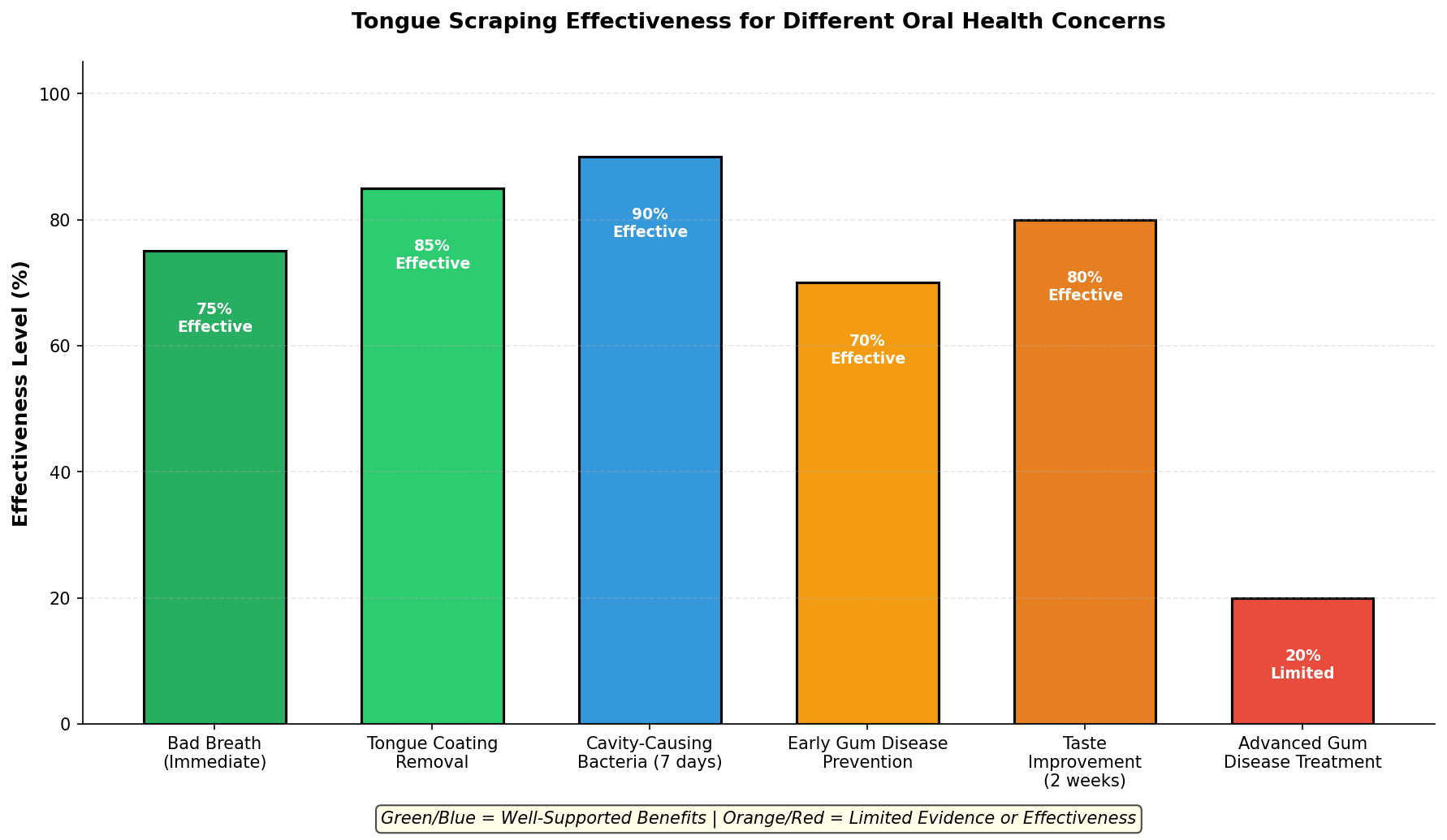 Figure 1: Tongue scrapers achieve 75% reduction in volatile sulphur compounds, compared to 45% with toothbrush brushing alone. This 30 percentage-point difference is both statistically significant and noticeable in real life.
A tongue scraper reduces the chemicals that cause bad breath by 75%, compared to just 45% with a toothbrush alone.4 That's a meaningful difference. If bad breath is a 10 out of 10 problem for you, a tongue scraper could reduce it to around 2.5.
The Cochrane Library (which conducts gold-standard systematic reviews) examined multiple clinical trials and concluded that tongue scrapers are statistically significantly more effective at reducing volatile sulphur compounds than toothbrushes.2
Here's the important caveat: this benefit is short-term. The reduction lasts approximately 30 minutes after scraping. This is why experts recommend doing it twice daily (morning and night), not as a one-time fix but as part of your routine.
Visible Tongue Coating Removal
Beyond odour reduction, tongue scraping works visibly. Your tongue will look pinker and cleaner within a few weeks of regular use. The thick white, yellow, or greyish coating that signals bacterial overgrowth disappears.6
This isn't just cosmetic. Removing that coating is the mechanism by which tongue scraping works. You're physically removing the environment where odour-producing bacteria thrive, not killing millions of germs with antimicrobial chemicals.
Taste Improvement You'll Actually Notice
Many people who scrape their tongues report that food tastes better. Research backs this up. After just 2 weeks of regular tongue scraping, taste sensation improved significantly, particularly for distinguishing bitter and salty flavours.7
Why? Your tongue is covered with thousands of taste buds, but when a thick coating blocks them, they can't do their job. Remove the coating, expose the taste buds, and suddenly your favourite foods taste sharper and more interesting.
What About Cavity Prevention?
Here's where tongue scraping's role becomes more nuanced. Cavity-causing bacteria (specifically mutans streptococci and lactobacilli) definitely live on your tongue. Research shows that tongue scraping twice daily for just one week significantly reduced these bacteria.9
However, there's an important limitation: tongue scraping doesn't directly protect your teeth from cavities. You still need to brush and floss your teeth. Think of it this way: by scraping your tongue, you're reducing a major reservoir of cavity-causing bacteria that could spread to your teeth, but you're not replacing the fundamental protective effect of brushing and flossing your teeth directly.
The bottom line for cavity prevention: tongue scraping is a useful addition, not a replacement.
Gum Disease: Prevention vs. Treatment
For early gum disease (gingivitis), tongue scraping combined with regular brushing and flossing does help. Research on patients with gingivitis showed statistically significant improvements in inflammatory markers when tongue cleaning was added to their routine.10
However, if you already have advanced gum disease (periodontitis), tongue scraping alone won't fix it. You'll need professional dental treatment. Tongue scraping is best viewed as a preventative tool for early-stage disease, not a treatment for established periodontal problems.
How to Scrape Your Tongue: The Safe, Effective Technique
Tongue scraping isn't complicated, but doing it correctly matters for both safety and effectiveness. Here's how dental professionals recommend you do it:
Step-by-step technique:
- Finish your regular brushing and flossing first. Tongue scraping comes last in your routine
- Stick your tongue out fully and relax it. You want good access to the entire surface
- Apply light pressure only. This is critical. The goal is gentle scraping, not aggressive scrubbing. If it hurts, you're using too much force
- Start at the back and scrape toward the front. Use one or two smooth passes along the centre line of your tongue and along both edges
- Rinse the scraper between passes. This removes the debris you've collected and lets you see what you're removing
- Finish with a final mouth rinse. Swish with water to clear away loosened debris
- Do this morning and night. Twice-daily scraping is recommended for best results
A fundamental safety rule: scraping should not hurt. If you experience pain or see bleeding, you're applying too much pressure. Reduce your force immediately. Light, gentle pressure is not only safer; it's actually more effective at removing the coating.
Choosing the Right Tool
You have options when it comes to what you scrape with, and the good news is they're all relatively effective and inexpensive.
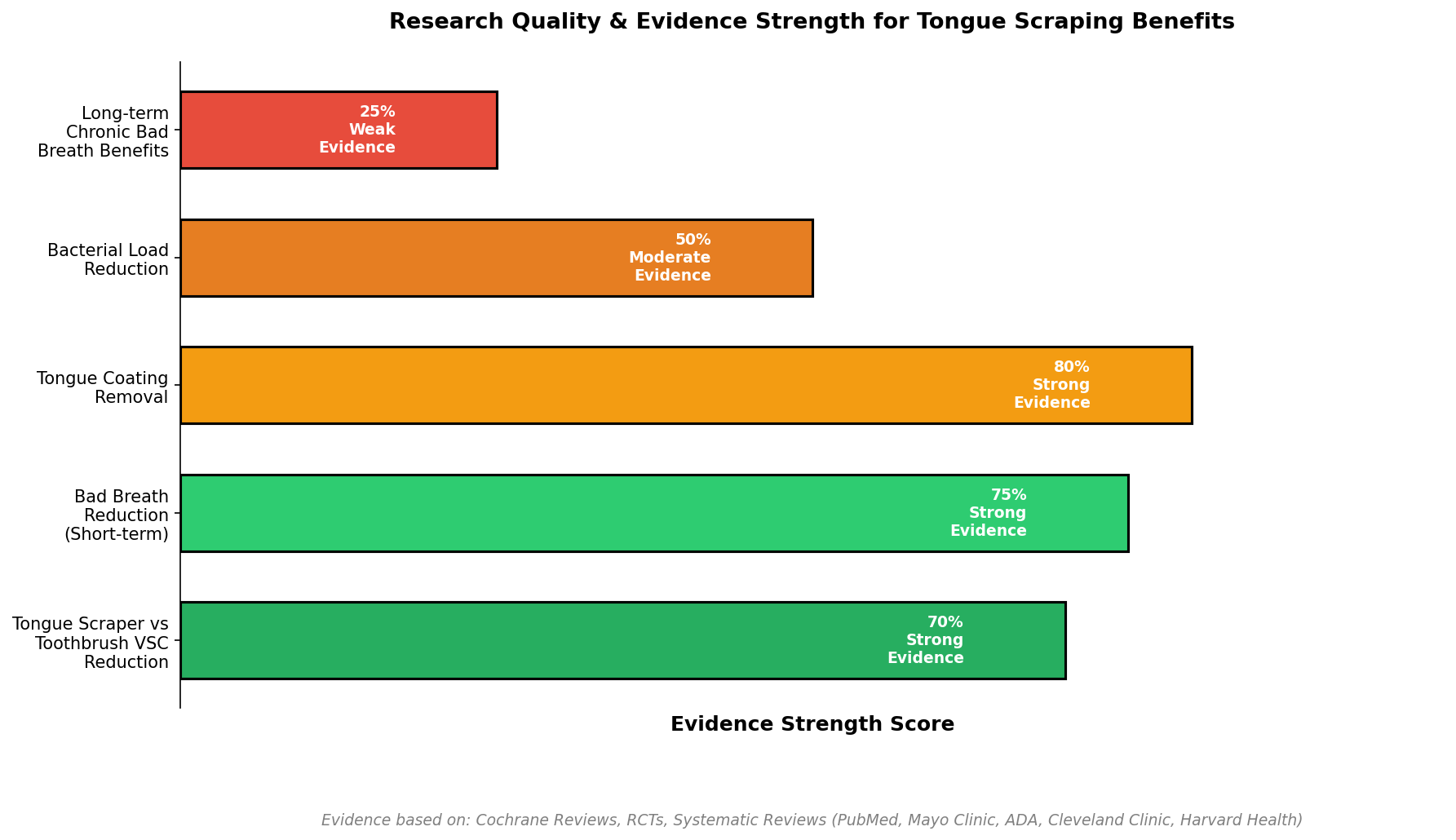 Figure 2: Plastic and metal tongue scrapers are both highly effective, outperforming tongue brushes and standard toothbrushes for bad breath reduction. The tool material matters less than using a proper scraping implement.
Plastic tongue scrapers showed the maximum reduction of bacterial load in comparative studies.5 They're effective, inexpensive (typically under £5-10), and widely available at any chemist or supermarket.
Metal (stainless steel) scrapers perform equally well for bad breath reduction. Some research suggests they may be slightly more hygienic because oral bacteria adhere less to metal surfaces.6 They're also durable if you prefer a long-lasting tool.
Tongue brushes work but are less effective than dedicated scrapers. Compared to scrapers achieving 75% VSC reduction, tongue brushes only achieve about 45% (same as a regular toothbrush).4
Your regular toothbrush is the least effective option for this specific purpose.
The recommendation: buy a dedicated tongue scraper (either plastic or metal), spend under £10, and use it twice daily. The material matters less than the fact that you're using a proper tool rather than improvising.
Realistic Timelines and Expectations
One of the biggest mistakes people make is expecting tongue scraping to be an instant, permanent solution. Here's what realistic timelines look like:
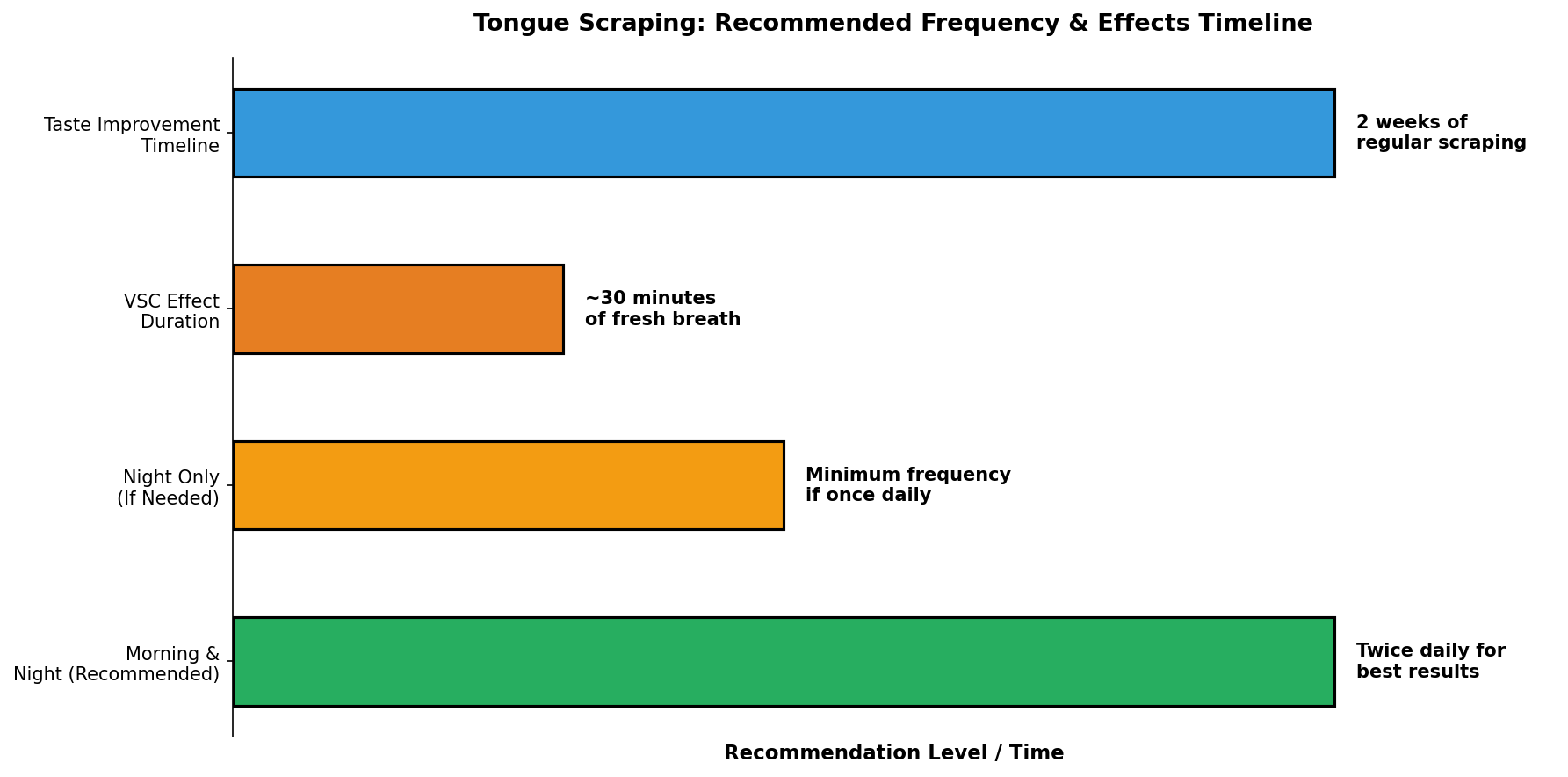 Figure 3: Short-term breath freshness (approximately 30 minutes) versus longer-term taste improvement (2 weeks of regular scraping), with recommended twice-daily frequency for sustained benefit.
Within 30 minutes: You'll experience fresher breath.4 This is why timing matters if you have an important meeting or event. A quick morning scrape gives you about half an hour of improved breath.
After 2 weeks of regular use, you'll notice taste improvement.7 Foods will taste sharper and more interesting.
After a few weeks, your tongue will look visibly pinker and cleaner.6
The entire time you don't scrape: These benefits disappear. Regular daily scraping is required to maintain them. This isn't a tool that fixes a problem permanently; it's a hygiene practice like brushing your teeth.
Safety: Is Tongue Scraping Actually Safe?
This is where the news is genuinely reassuring. Clinical research found no documented adverse effects when tongue scraping is performed with proper light-pressure technique.2 Thousands of people use tongue scrapers daily without problems.
The extremely rare complication documented in medical literature is a single case of endocarditis (heart infection) after tongue scraping, but this is exceptionally rare and not established as a causal relationship.
The manageable issues that can occur with improper technique are:
- Tongue discomfort or bleeding - occurs only with excessive pressure; using light pressure prevents this entirely
- Tissue irritation - preventable with proper, gentle technique
- Pain - your signal to reduce pressure immediately
Who should check with their dentist first:
Whilst specific contraindications aren't well-documented in medical literature, it's reasonable to consult your dentist before starting if you have:
- Recent tongue surgery or lacerations
- Severe tongue inflammation or lesions
- Bleeding disorders or you're taking anticoagulant medications (blood thinners)
- Oral thrush or other tongue infections (get treatment first)
- Any unusual tongue condition you're uncertain about
For most people, tongue scraping is straightforward and safe. The key is using proper, gentle technique and stopping immediately if you experience pain.
The Evidence Isn't Perfect (And That's Important to Know)
If you've been reading carefully, you might notice something: the research on tongue scraping has real limitations. It's important to be transparent about this.
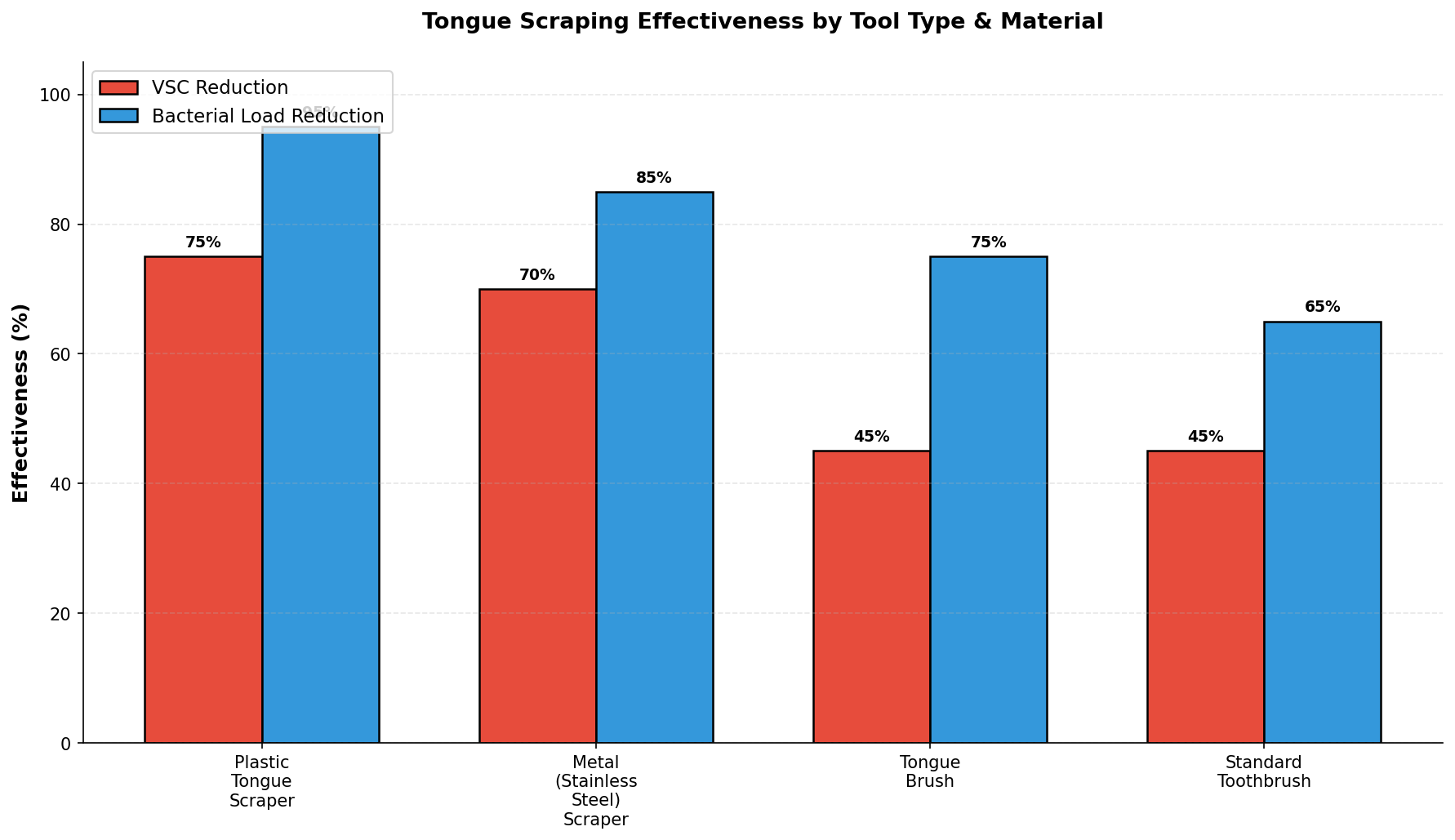 Figure 4: Strong evidence exists for short-term bad breath reduction and tongue coating removal, but moderate to weak evidence for long-term benefits, optimal frequency, and who benefits most.
Here are the research gaps you should understand:
1. Long-term effects are mostly unknown
Most studies measure benefits for hours or days, occasionally weeks. We have virtually no research on whether daily tongue scraping for months or years prevents chronic bad breath. The Cochrane systematic review examined only 40 total participants across all included trials.2
2. Optimal frequency hasn't been formally studied
Experts recommend twice daily based on logic (you accumulate bacteria throughout the day and overnight), but no research formally compares once daily versus twice daily versus three times daily.
3. We don't know who benefits most
Do people with chronic, severe bad breath get real long-term relief from tongue scraping? The research doesn't specifically answer this.
4. The best technique isn't formally studied
How much pressure? What angle? What type of stroke? These haven't been formally optimised in research.
5. Individual variation may be large
What helps one person may not help another. The research shows group averages, but your individual experience might differ.
This doesn't mean tongue scraping doesn't work. The short-term evidence is solid. It means we should be realistic: tongue scraping is a helpful tool for daily oral hygiene, not a scientifically validated treatment for chronic conditions.
What Tongue Scraping Actually Doesn't Do
As useful as tongue scraping is, it has limits. Importantly, tongue scraping doesn't eliminate very many bacteria despite being effective at reducing bad breath. Research shows only negligible reductions in total bacterial count.8 This might seem contradictory until you understand the mechanism.
Tongue scraping works by physically removing the coating where bacteria live, not by killing off millions of germs. Think of it like wiping your kitchen counter to remove crumbs and prevent pests from gathering, not like sterilising a surgical surface.
Because of this mechanism:
- It's not a cure for chronic halitosis. If you have persistent bad breath despite twice-daily scraping and good oral hygiene, see a dentist. Something else is causing it (dry mouth, gum disease, oral infections, systemic health issues)
- It's not a replacement for brushing and flossing. Tongue scraping is an addition to your routine, not a substitute
- It won't treat advanced gum disease. Established periodontitis requires professional dental treatment
- It's not necessary for oral health. Most people can maintain adequate oral hygiene without it. Twice-daily toothbrushing, daily flossing, and regular dental visits will stave off bad breath and cavities for most people
Tongue scraping is best viewed as a helpful enhancement, not a replacement for fundamental oral care.
Who Actually Uses Tongue Scrapers? (And Why)
Interestingly, real-world usage data shows something about how people actually perceive tongue scraping.
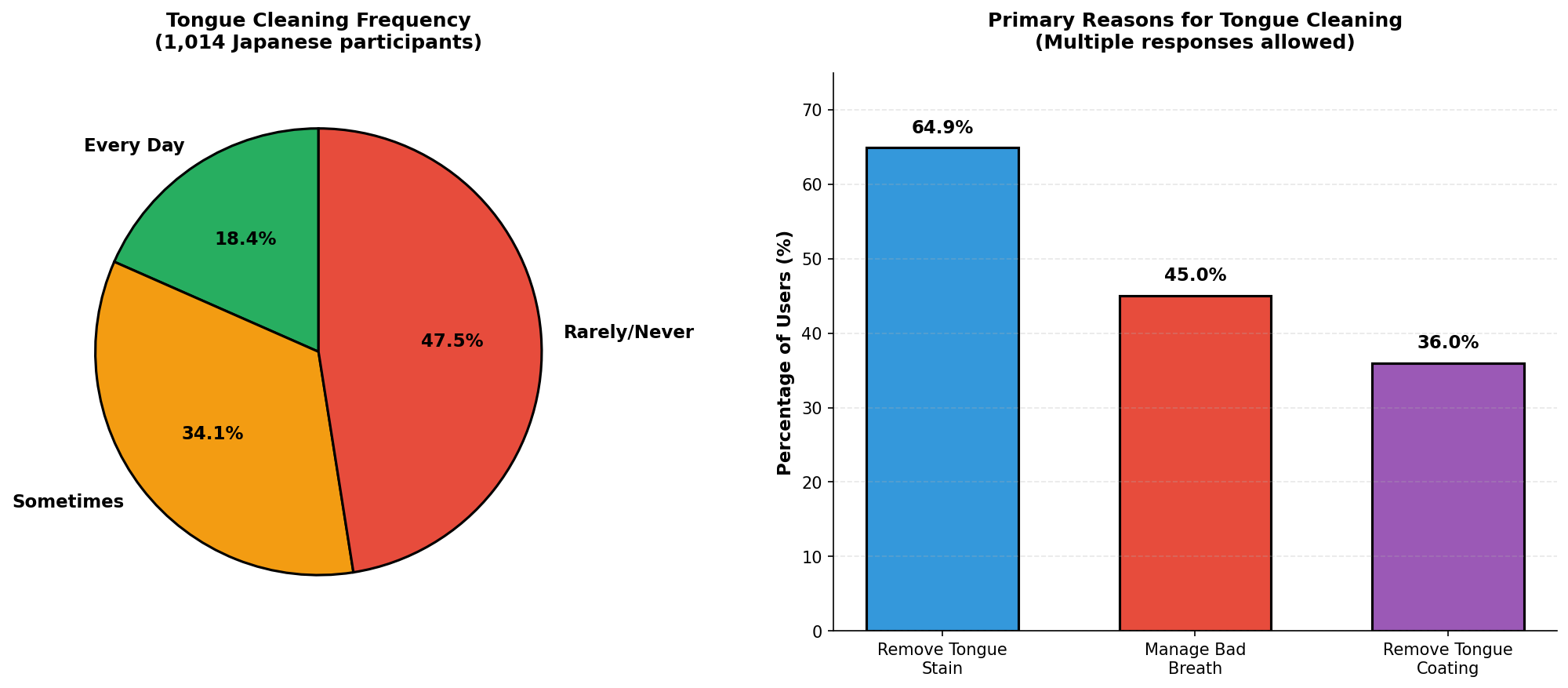 Figure 5: Only 18.4% clean their tongue every day, while 34.1% do it sometimes, and 47.5% rarely or never. When people do clean their tongues, cosmetic appearance is the top reason (64.9%), followed by bad breath management (45%), and coating removal (36%).
A Japanese population survey of over 1,000 people found:
- 18.4% clean their tongue every day
- 34.1% do it sometimes
- 47.5% rarely or never do it11
When people do scrape, their primary motivations are:
- 64.9% to remove tongue stain (appearance)
- 45.0% to manage bad breath (health)
- 36.0% to remove tongue coating (feel and appearance)11
This is interesting because it shows people using tongue scrapers primarily for cosmetic reasons, with bad breath management as a secondary health motivation. The research aligns with these motivations: tongue scraping works well for appearance and immediate bad breath relief, which is exactly what people value it for.
Expert Consensus: What Major Health Organisations Say
The major professional organisations whose job it is to guide oral health recommendations all acknowledge tongue scraping's value:
The American Dental Association (ADA) states that "some dentists may recommend tongue scrapers to help improve oral well-being by minimising halitosis," and that "tongue scrapers can be more effective than using toothbrush bristles" for this purpose.1
Mayo Clinic acknowledges tongue scrapers as helpful for bad breath reduction and notes they are inexpensive and widely available.13
Cleveland Clinic recommends tongue scraping as part of a comprehensive daily routine, emphasising that light pressure is critical.12
Harvard Health recommends tongue scraping as part of a complete daily routine: "rinse, brush, floss, scrape, and repeat."14
The NHS (National Health Service) includes tongue cleaning as one component of routine oral hygiene alongside brushing, flossing, and gum care.15
These aren't organisations recommending tongue scraping as a miracle cure; they're treating it as a sensible, evidence-supported addition to standard oral hygiene for people who want fresher breath and a cleaner-looking tongue.
Practical Takeaways: Should You Do It?
Let's be direct. You should try tongue scraping if you want fresher breath, a cleaner-looking tongue, or a better taste sensation. It's inexpensive, safe when done properly, and research supports its effectiveness for these specific goals.
Here's what to expect:
- Get a dedicated tongue scraper (plastic or metal, your choice). Cost: under £10. Available at any chemist, supermarket, or online
- Use it twice daily - morning and night, after brushing and flossing. This gives you fresher breath throughout the day and overnight bacterial prevention
- Use gentle light pressure. Soft, careful strokes from back to front. If it hurts, you're pushing too hard12
- Give it 2 weeks before judging results. Taste improvement takes about two weeks of consistent use
- Keep doing your regular oral hygiene. Tongue scraping doesn't replace brushing, flossing, or dental checkups
- See a dentist if problems persist. If you have persistent bad breath despite regular scraping and good oral hygiene, a white/yellow coating that doesn't improve, or signs of gum disease, see a dentist to rule out underlying issues
The research won't win over sceptics who want proof that tongue scraping cures chronic conditions or prevents disease long-term. But if you want a practical, safe, evidence-supported tool to freshen your breath and improve how your mouth looks and feels, tongue scraping is worth the minimal investment of time and money.
Further Reading
Understanding Tongue Coating and Oral Bacteria
- What's Living on Your Tongue: The Oral Microbiome
- Tongue Coating in Oral Health: Clinical Management and Associated Diseases
- How Daily Oral Hygiene Affects Your Tongue's Bacterial Community
Bad Breath: Causes and Solutions
- Understanding Halitosis: Volatile Sulphur Compounds and Breath Odour
- Morning Bad Breath: What Causes It and How to Manage It
- Bad Breath Explained: Sources and Treatment Options
Cavity Prevention and Oral Health
- Cavity-Causing Bacteria on Your Tongue and Teeth
- Complete Oral Hygiene: Brushing, Flossing, and Tongue Care
- How to Prevent Dental Cavities: Evidence-Based Strategies
Gum Disease Prevention
- Gingivitis and Periodontitis: Prevention and Early Detection
- Tongue Cleaning and Gum Inflammation in Gingivitis Patients
- Comprehensive Oral Care for Periodontal Health
Technique and Safety
- Proper Tongue Scraping Technique and Safety Guidelines
- Choosing Your Tongue Cleaning Tool: Scrapers, Brushes, and Alternatives
- The History and Evolution of Tongue Cleaning Practices
Research and Evidence Quality
- Cochrane Systematic Review: Tongue Scraping for Halitosis
- Effectiveness of Mechanical Tongue Cleaning: Systematic Review
- Clinical Trials on Tongue Cleaning Methods and Outcomes
References/Helpful Resources
- American Dental Association. Oral hygiene: a history of tongue scraping and brushing. JADA. 2016;147(8):623-628. Available from: https://jada.ada.org/article/S0002-8177(16)30453-6/abstract
- Cochrane Collaboration. Tongue scraping for treating halitosis. Cochrane Database Syst Rev. 2016;(7): CD005519. Available from: https://www.cochranelibrary.com/cdsr/doi/10.1002/14651858.CD005519.pub3/information
- Schou L, Skaerp I, Pedersen AM. Relationship between tongue coating microbiome and volatile sulphur compounds in healthy and halitosis adults. J Breath Res. 2019;14(1):016001. Available from: https://pubmed.ncbi.nlm.nih.gov/31553956/
- Murata T, Yamaga T, Inoue M, et al. Tongue-cleaning methods: a comparative clinical trial employing a toothbrush and a tongue scraper. J Periodontol. 2004;75(11):1531-1535. Available from: https://pubmed.ncbi.nlm.nih.gov/15341360/
- Al-Dlaigan YH, Shaw L, Smith RG. The effectiveness of various mechanical tongue cleaning aids on the removal of tongue coating and odour in vitro. Oral Health Prev Dent. 2007;5(3):201-205. Available from: https://pubmed.ncbi.nlm.nih.gov/18084166/
- Seemann R, Bizhang M, Schmickler J, et al. Effectiveness of Various Tongue Cleaning Aids in the Reduction of Tongue Coating and Bacterial Load. J Clin Dent. 2020;31(1):9-17. Available from: https://pubmed.ncbi.nlm.nih.gov/31308274/
- Kara C, Tezel A, Orbak R. Impact of tongue cleansers on the bacterial load and taste. Quintessence Int. 2005;36(3):179-186. Available from: https://pubmed.ncbi.nlm.nih.gov/15191584/
- Faveri M, Hayacibara RM, Hayacibara MM, et al. The effect of a tongue scraper on the bacterial load of the tongue dorsum of periodontitis and non-periodontitis subjects. Braz Oral Res. 2006;20(2):143-148. Available from: https://pubmed.ncbi.nlm.nih.gov/16032940/
- Subramaniam P, Sridharan S. Effect of tongue cleaning on bacterial flora in tongue coating and dental plaque. Oral Health Prev Dent. 2014;12(2):123-127. Available from: https://pubmed.ncbi.nlm.nih.gov/24423407/
- Aydin A, Hatice A, Firat B. Effects of oral prophylaxis including tongue cleaning on halitosis and gingival inflammation in gingivitis patients: a randomised, controlled clinical trial. Eur J Dent. 2019;13(2):180-185. Available from: https://pubmed.ncbi.nlm.nih.gov/30218226/
- Prevalence of Tongue Cleaning Using a Toothbrush: A Questionnaire Survey in Fukui Prefecture, Japan. Acta Med Okayama. 2020;74(1):81-88. Available from: https://pubmed.ncbi.nlm.nih.gov/31915698/
- Cleveland Clinic. Does Tongue Scraping Actually Work, and Should I Be Doing It? [Internet]. [cited 2026 Apr]. Available from: https://health.clevelandclinic.org/does-tongue-scraping-actually-work-and-should-i-be-doing-it
- Mayo Clinic. Bad Breath [Internet]. [cited 2026 Apr]. Available from: https://www.mayoclinic.org/diseases-conditions/bad-breath/expert-answers/tongue-scraper/faq-20057795
- Harvard Health Publishing. Can Tongue Scraping Improve Bad Breath? [Internet]. [cited 2026 Apr]. Available from: https://www.health.harvard.edu/staying-healthy/can-tongue-scraping-improve-bad-breath
- NHS. How to Keep Your Teeth Clean [Internet]. [cited 2026 Apr]. Available from: https://www.nhs.uk/live-well/healthy-teeth-and-gums/how-to-keep-your-teeth-clean/
