

What Nutritionists Want You to Know
Cancer can feel like a diagnosis that arrives out of nowhere, the result of bad luck or bad genes. However, according to research from the World Health Organisation, National Cancer Institute and the NHS, cancer cases can be caused by environmental factors including diet.
This article looks at what the science says about the link between food and cancer, what registered dietitian nutritionists (RDNs) do and how to get help if needed.
The Fast-Rising Cancer Burden
Globally, there were 20 million new cancer cases and 9.7 million cancer deaths in 2022, according to the WHO's International Agency for Research on Cancer. About 1 in 5 people develop cancer in their lifetime, and the world is on track for more than 35 million new cases per year by 2050, a 77% increase.
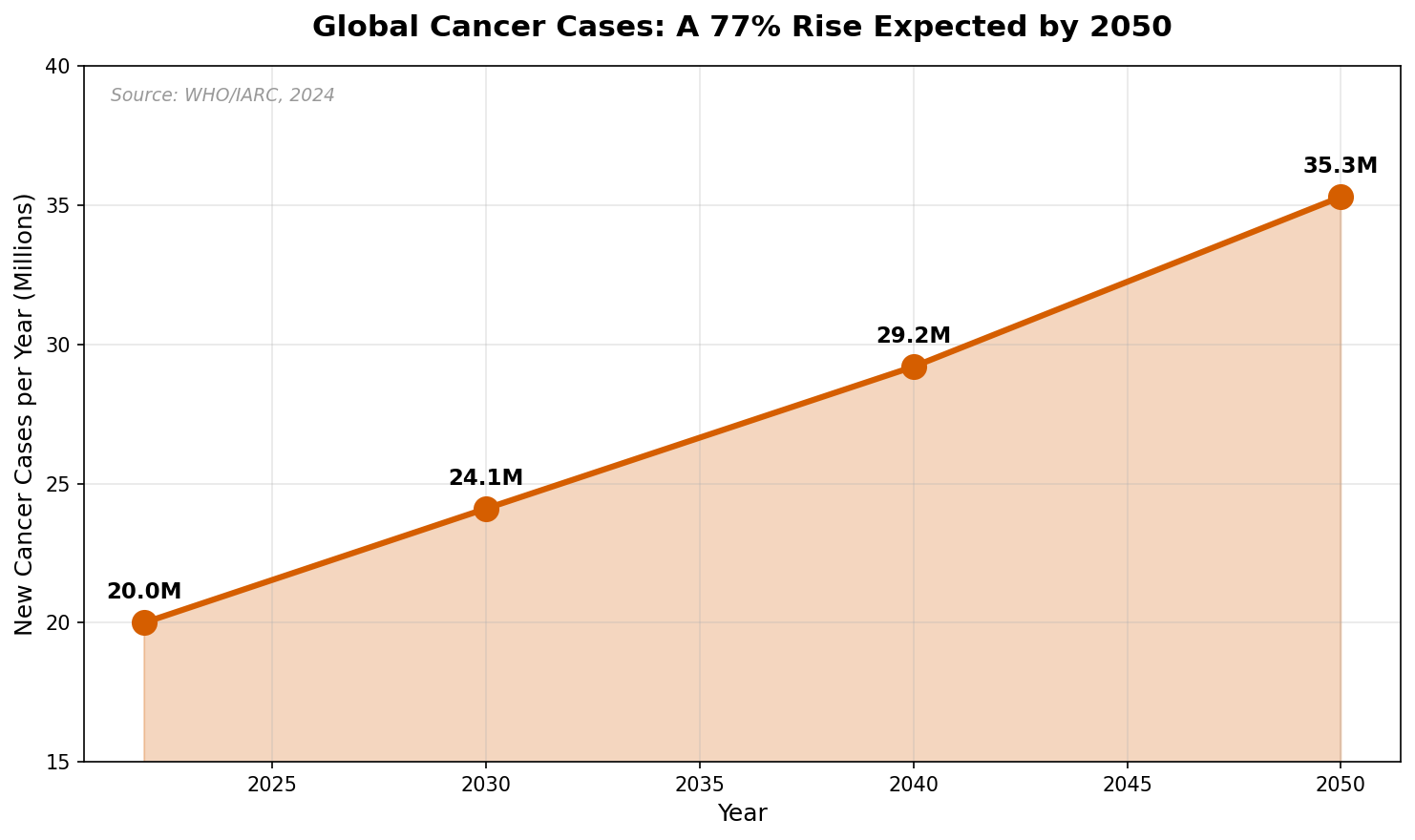 Figure 1: Global cancer cases are projected to rise from 20 million in 2022 to over 35 million by 2050. Data from WHO/IARC.
Those numbers are daunting, but they hide an important second story: most cancers are not driven by mysterious forces. They are shaped by the food we eat, our body weight, how much we move, how much we drink and whether we smoke.
How Much Cancer Is Actually Preventable?
Multiple independent analyses point to the same striking conclusion.
- 40% of all cancer cases are preventable through a healthy diet, physical activity, weight control and avoiding alcohol and tobacco (NIH/WCRF)
- 42% of cancers in US adults are linked to modifiable risk factors (NCI, CDC)
- 40% of UK cancers could be prevented (NHS)
- Suboptimal diet alone is directly tied to 5.2% of new cancer cases in the US each year (roughly 80,000 cases)
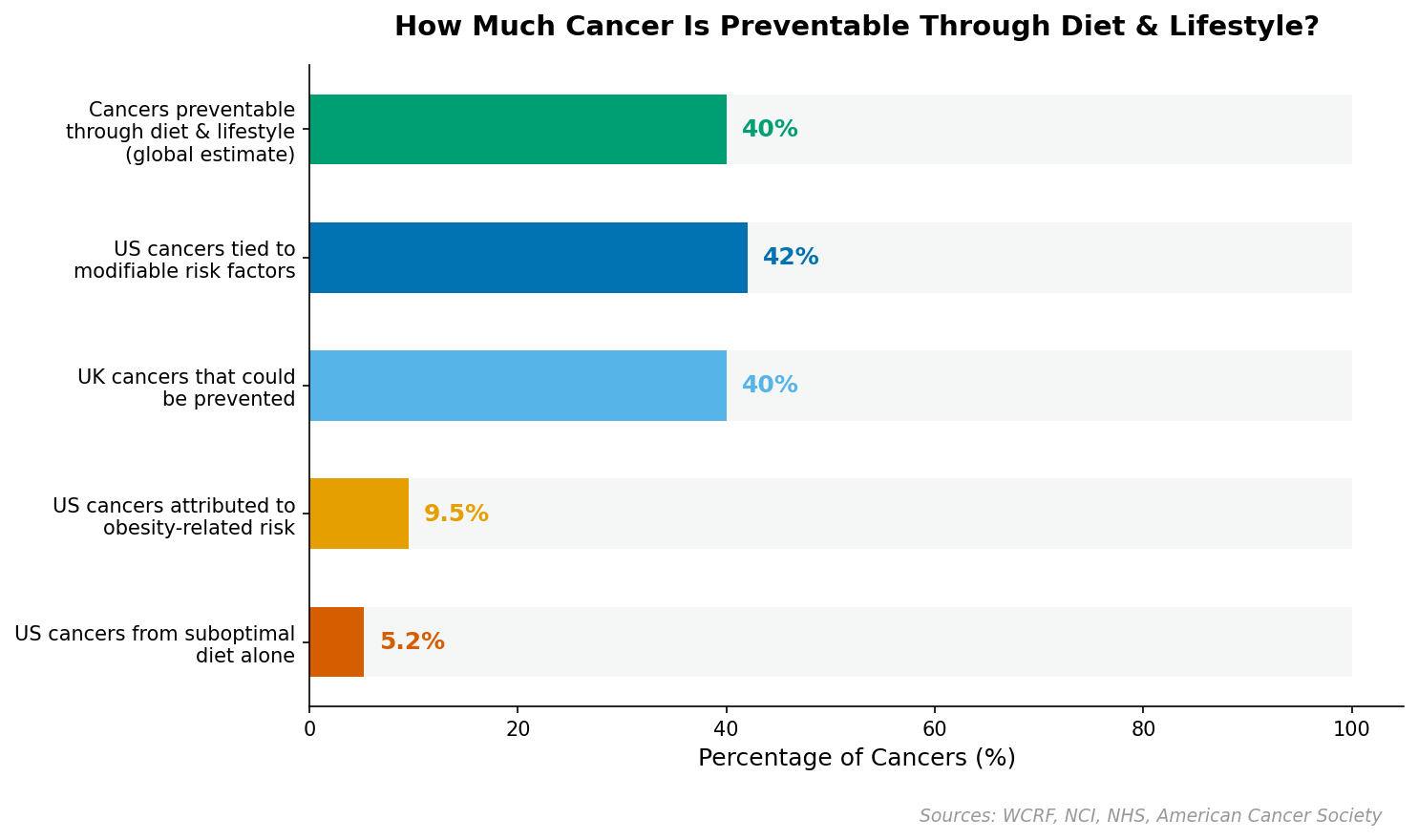 Figure 2: Up to half of all cancer cases are linked to factors people can change. Data from NIH and WCRF.
In other words, 1 in 3 cancer diagnoses could potentially be avoided, with lifestyle and diet being right at the centre of it.
The Foods That Matter Most and the Ones to Cut Back On
Decades of research have narrowed down the dietary patterns that consistently lower cancer risk and the ones that raise it. Nutritionists use this to create evidence based diet and nutrition plans.
What Helps
Fibre - Higher fibre intake is linked to lower rates of oesophageal, gastric, colon, rectal, breast, endometrial, ovarian, kidney, prostate and pancreatic cancers. Each additional 10 g of fibre per day reduces breast cancer risk by about 4% and high fibre intake is associated with around a 60% lower risk of pancreatic cancer in women. The AICR target is at least 30 g of fibre a day.
Mediterranean and Plant-Based Eating - A meta-analysis of 26 studies involving 2.2 million people found that strong adherence to a Mediterranean diet was associated with a 15-49% reduction in colorectal cancer risk. Plant-based patterns are also tied to lower breast cancer rates, independent of weight change.
Cruciferous Vegetables - Broccoli, cauliflower, cabbage and kale contain sulforaphane, a compound that helps the body neutralise carcinogens and is linked to lower bladder, colon, prostate and breast cancer risk.
Soy Foods - Despite persistent rumours, dietary soy is not linked to higher breast cancer risk. In fact, intake from foods like tofu, edamame and soy milk has been associated with up to a 60% reduction in breast cancer recurrence in postmenopausal women on tamoxifen.
What to Limit
Processed Meat - Classified as a Group 1 carcinogen by the WHO (the same broad category as tobacco). Every 50 g of processed meat eaten daily raises colorectal cancer risk by 18%. That is roughly the equivalent of a hot dog or two slices of bacon a day.
Red Meat - A Group 2A "probably carcinogenic" classification, with about a 17% higher colorectal cancer risk for every 100 g per day.
Alcohol - Linked to cancers of the mouth, throat, oesophagus, liver, colon, rectum and breast. In 2022 there were more than 538,000 alcohol-associated cancers in the US and even one drink a day raises breast cancer risk. The AICR advice to lower alcohol intake to prevent cancer.
Added Sugars and Ultra-Processed Foods - A high intake of sugar drives obesity, insulin spikes and inflammation, all of which raise cancer risk.
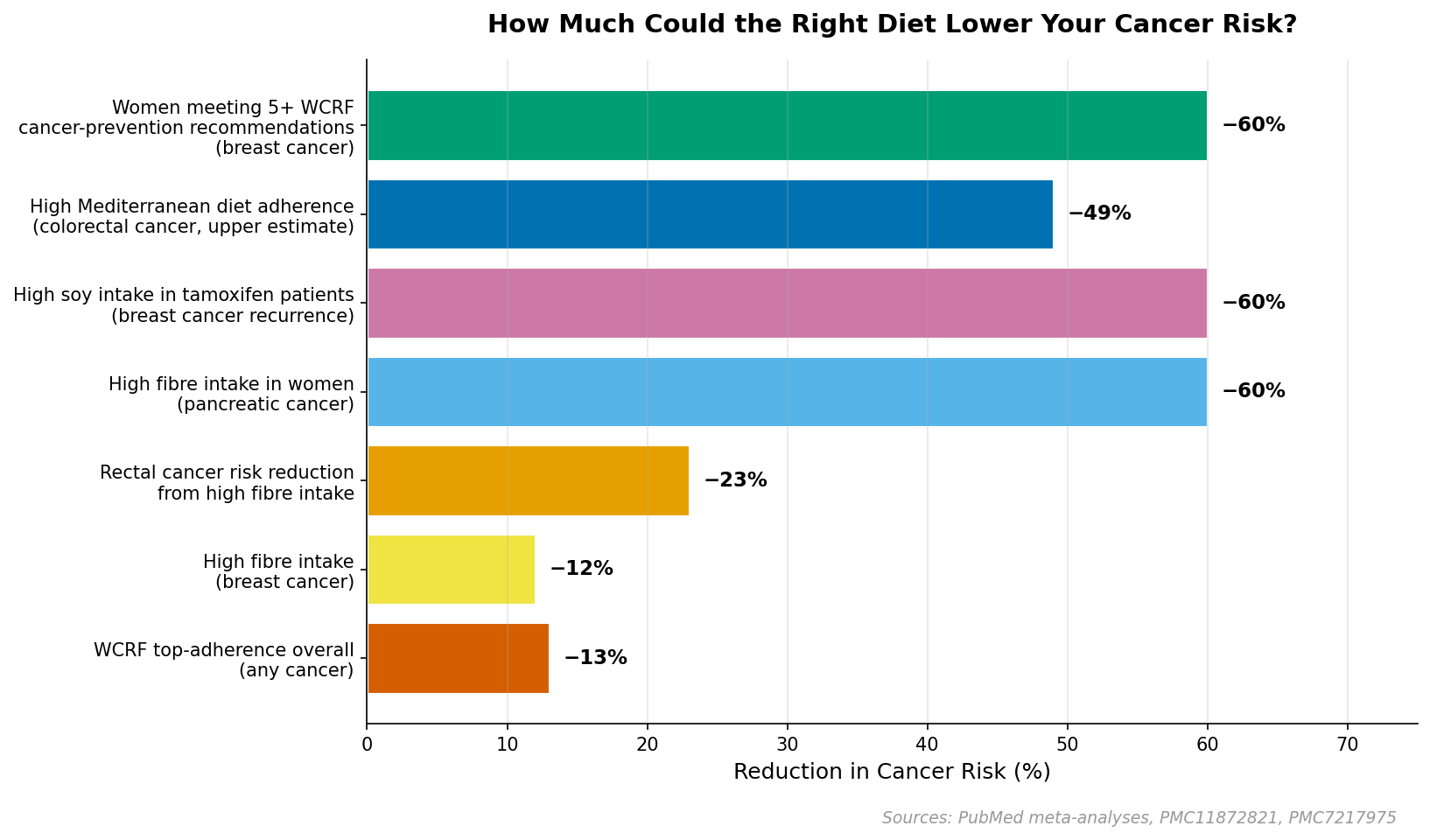 Figure 3: Key dietary patterns and the measured cancer risk reductions. Data from PubMed meta-analyses and AICR.
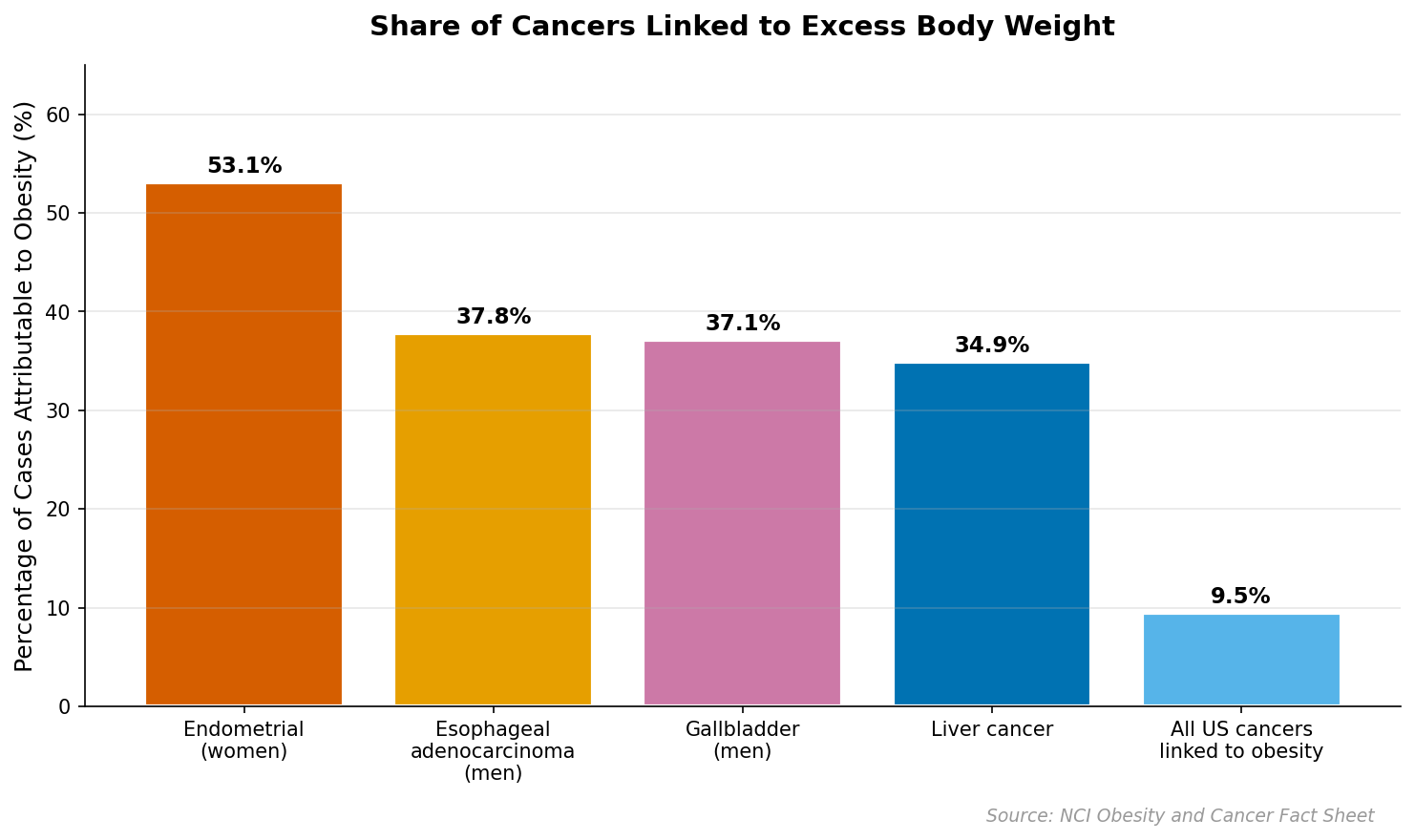 Figure 4: Evidence-based dietary targets used by nutritionists in cancer prevention. Data compiled from the NCI, AICR, WCRF and NHS.
Weight Is the Other Big Lever
If diet is one side of the prevention coin, body weight is the other. The two are tightly linked.
- Excess body weight is linked to 13 types of cancer, which together account for 40% of all cancers diagnosed in the US each year (NCI)
- In 2019, excess weight caused roughly 43,720 new cancers in US men (4.8%) and 92,200 new cancers in US women (10.6%)
- Some cancers are dominated by weight as a risk factor. 53.1% of endometrial cancers in women and 37.8% of oesophageal adenocarcinomas in men are attributable to excess weight
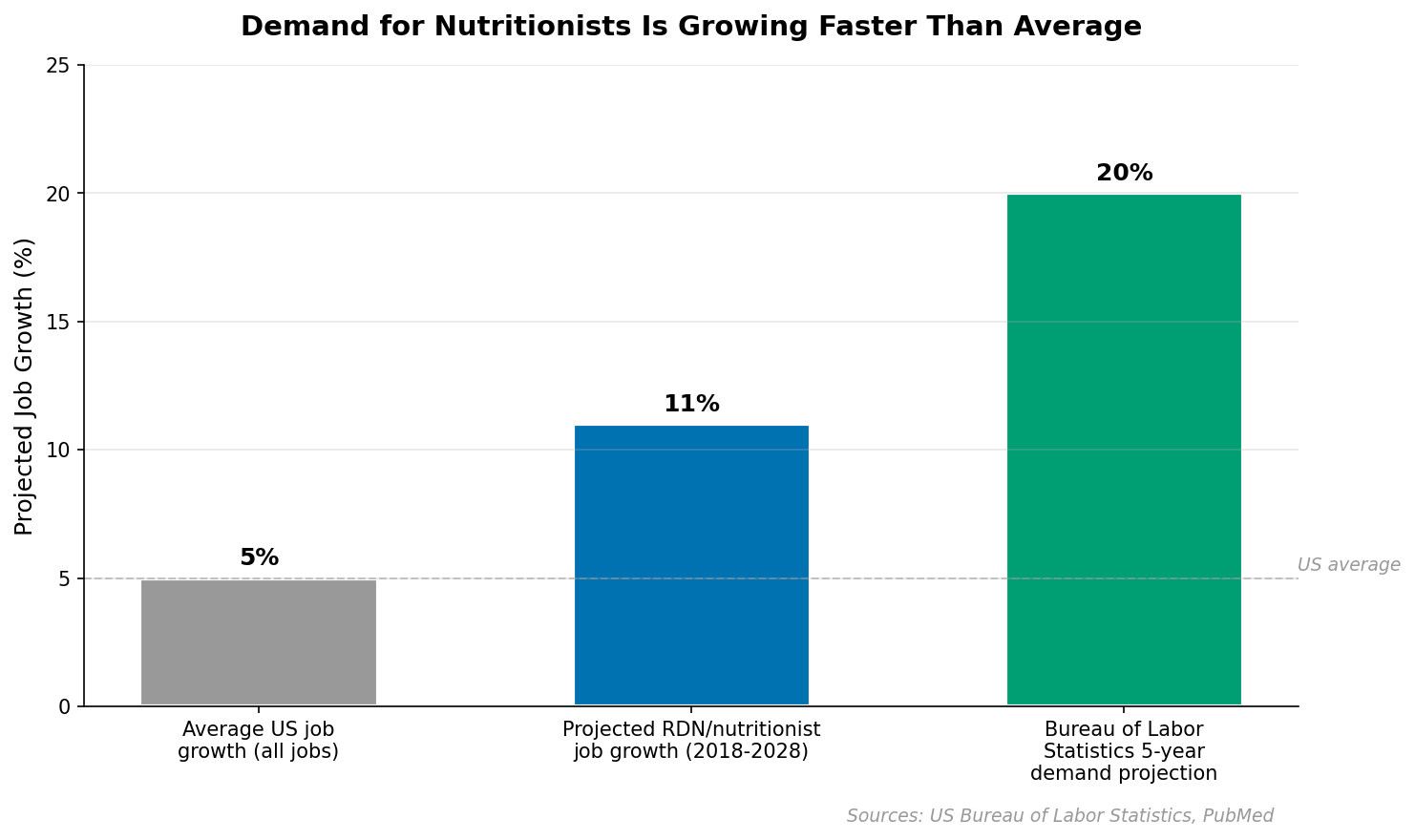 Figure 5: For some cancers, more than a third of cases are linked to excess body weight. Data from the National Cancer Institute.
The CDC notes that helping patients lose >5% of their body weight through diet and activity can meaningfully lower the cancer risk. That is a goal nutritionists are uniquely equipped to support.
So What Exactly Does a Registered Dietitian Nutritionist Do?
An RDN is not the same as a wellness influencers or supplement sellers. They are regulated clinicians with academic training, supervised practice and national board certification.
How They Are Qualified
In the United States, becoming an RDN now requires:
- A master's degree from an accredited dietetics programme (effective from January 2024)
- Completion of an accredited supervised practice programme
- Passing the Commission on Dietetic Registration (CDR) national exam
- 75 hours of continuing education every 5 years
For oncology, RDNs can earn an extra credential: the Board Certified Specialist in Oncology Nutrition (CSO), which allows them to work with cancer patients and high cancer risk patients.
In the UK, the equivalent regulated title is a Registered Dietitian (RD), governed by the Health and Care Professions Council. Importantly, "nutritionist" alone is not always a protected title; to get clinical-level advice, look for "RDN", "RD" or "CSO" in their credentials.
What They Actually Do
A good oncology dietitian's job is to translate population-level guidelines into something that fits the patient's life. That typically means:
- Personal Risk Assessment - based on diet, BMI, family history, alcohol use and lifestyle
- Practical Meal Planning - that meets evidence-based targets without ignoring culture, budget or schedule
- Behaviour Change Support - to ensure and encourage consistent diet plans are kept
- Weight Management - with strategies built for the long term
- Addressing Food Insecurity - a major driver of poor outcomes in cancer survivors
- Cutting Through Misinformation - about miracle diets, supplements and "anti-cancer" foods sold online
Does Working With a Nutritionist Actually Change Outcomes?
The data say yes. Systematic reviews indexed on PubMed show RDN-led nutrition interventions improve weight maintenance, quality of life, nutrient intake and treatment tolerance in cancer patients. In adjacent fields where the evidence is even stronger, medical nutrition therapy (MNT) has been associated with a 9.5% reduction in hospital use for people with diabetes and an 8.6% reduction for people with cardiovascular disease, plus large drops in physician visits.
For prevention specifically, women who closely follow >5 of the WCRF/AICR recommendations have about a 60% lower breast cancer risk than those who follow few or none. Each additional recommendation followed is tied to about a 5% lower overall cancer risk. The catch? More than 90% of people fall short on plant foods, processed foods or red and processed meat. That gap is precisely where nutritionists earn their keep.
A Growing Profession
If you are reading this and thinking the world needs more nutritionists, you would be right; the job market agrees.
- There were around 71,000 RDN and nutritionist jobs in the US in 2018
- The field is projected to grow about 11% from 2018 to 2028, far faster than the 5% average for all jobs
- The Bureau of Labour Statistics has projected a 20% rise in demand over a recent five-year period
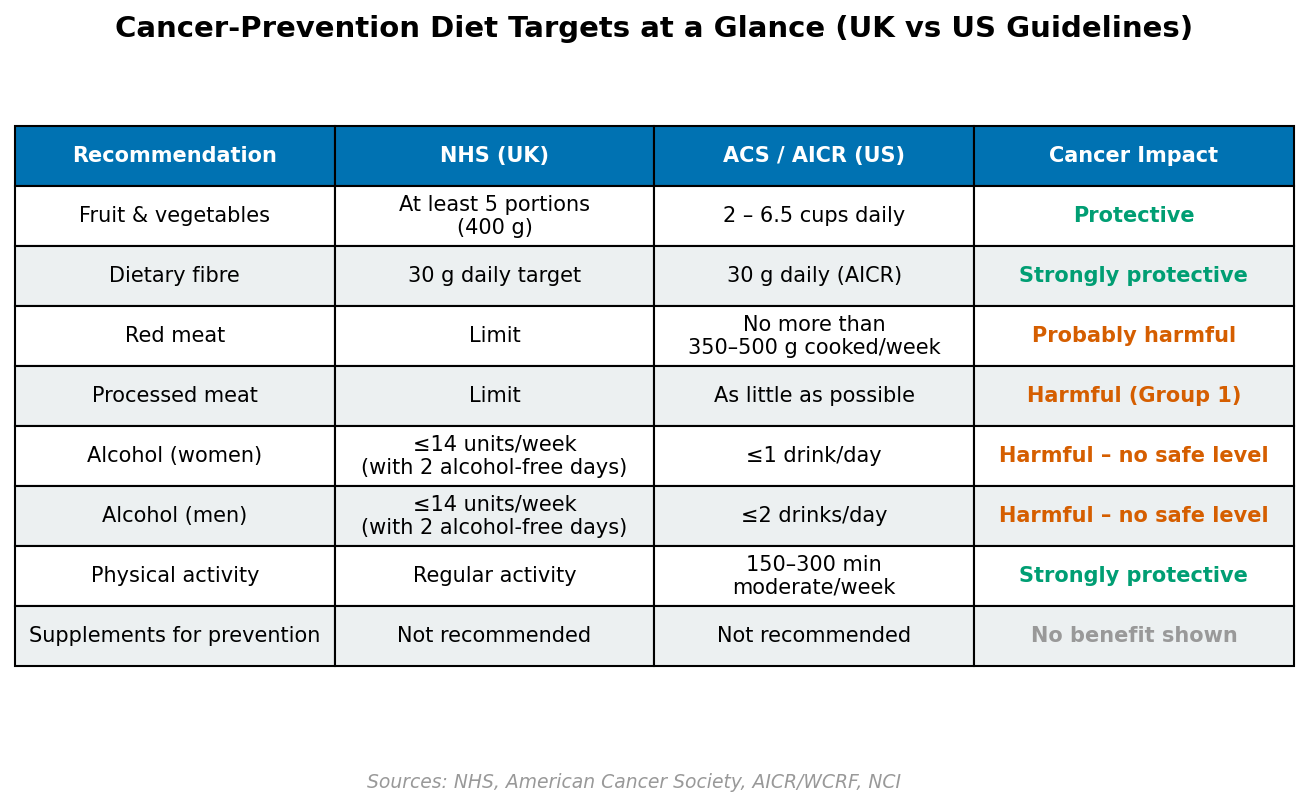 Figure 6: Demand for registered dietitians and nutritionists is growing faster than the overall labour market. Data from the US Bureau of Labour Statistics.
But there is a worrying gap on the front lines of cancer care. A national survey published on PubMed found that more than 90% of cancer patients are treated in outpatient centres, yet most centres do not have enough RDN coverage. The average outpatient cancer centre employs just 1.7 full-time equivalent dietitians. Even NCI-designated centres average only 3.1, which is far below what most experts say is needed.
Getting Access to a Nutritionist
This is where the UK and the US look quite different.
In the US
Medicare currently covers medical nutrition therapy only for diabetes, certain kidney disease and post-kidney-transplant care. Cancer is not on the list. The Medical Nutrition Therapy Act of 2023 proposes expanding coverage to 11 more conditions including cancer, obesity, malnutrition and cardiovascular disease, which would be a major step forward if it passes. In the meantime, many patients access dietitians through hospital systems during treatment, through private insurance or out of pocket.
In the UK
NHS dietitian services are typically free at the point of care for cancer patients. Referrals usually come from a consultant, GP, clinical nurse specialist or via the Macmillan Advice and Guidance Service. Several major NHS centres including The Royal Marsden, Clatterbridge, Leeds Cancer Centre, King's College Hospital and Royal Surrey have dedicated oncology dietetic teams. Waiting times vary by trust.
If you are not currently a cancer patient but want help with prevention, both countries also have private dietitians who consult by video, phone or in person.
Busting the Myths Nutritionists Hear Every Day
A surprising amount of an oncology dietitian's work is undoing what patients have read online. A few of the biggest culprits, based on guidance from the NCI, Mayo Clinic and AICR are:
- "Sugar feeds cancer" - All cells use glucose for energy and cutting all sugar will not starve a tumour. The real concern is that high sugar intake drives obesity and insulin spikes, both of which independently raise cancer risk
- "Soy causes breast cancer" - Dietary soy is not linked to higher breast cancer risk and actually lower it
- "Supplements can replace a healthy diet" - Major trials show vitamin and mineral supplements generally do not prevent cancer in well-nourished people and some can raise risk. The AICR explicitly recommends against supplements for cancer prevention
- "Organic food prevents cancer" - No high-quality evidence supports this. The protective effect comes from eating more fruit and vegetables in general, whether organic or not
- "I have to eliminate red meat entirely" - WCRF/AICR recommend limiting red meat to no more than 350 to 500 g (cooked weight) per week and avoiding processed meat as much as possible. Limiting, not eliminating, is the message
Practical Takeaways You Can Start Today
You do not need to wait for an appointment to start. Here is a short, evidence-based checklist a nutritionist would happily endorse:
- Fill at least half ( ideally two-thirds) of your plate with vegetables, fruit, whole grains and beans
- Aim for 5 or more portions of fruit and vegetables daily (NHS) and around 30 g of fibre per day (AICR)
- Make at least half your grains whole grains
- Limit red meat to under 350 to 500 g cooked per week and avoid processed meat where possible
- Cut back on sugar-sweetened drinks and ultra-processed snacks
- Keep alcohol intake low (the NHS guideline is under 14 units a week with at least 2 alcohol-free days; for cancer specifically, less is always better)
- Move your body. The American Cancer Society recommends 150 to 300 minutes of moderate or 75 to 150 minutes of vigorous activity per week, more if you can
- Aim for a healthy weight across adulthood. If you carry extra weight, even a 5% loss can meaningfully lower your risk
If you have a family history, a recent diagnosis or simply want a plan that fits your life, ask your GP or oncology team for a referral to a registered dietitian. In the US, look for "RDN" or "CSO" credentials; in the UK, look for "RD" registered with the HCPC.
You cannot control everything that causes cancer, but the science is clear - what you eat, how much you weigh, how much you move and how much you drink can affect the risk of cancer. A registered nutritionist's job is to help you make dietary and lifestyle changes that can help reduce that risk.
Further Reading
Cancer Prevention Guidelines
- American Cancer Society Guideline on Diet and Physical Activity
- NCI: Diet and Cancer Prevention
- NHS: Eating a Balanced Diet
- WHO Q&A on Red and Processed Meat
Specific Foods and Risk
- NCI: Cruciferous Vegetables and Cancer Prevention
- NCI: High-Fiber Foods
- NCI: Alcohol and Cancer Risk Fact Sheet
- NCI: Obesity and Cancer Fact Sheet
Working With a Nutritionist
- NCI: Nutrition in Cancer Care (PDQ)
- Royal Marsden NHS Trust: Nutrition and Dietetics
- Clatterbridge Cancer Centre: Dietetics Service
- Mayo Clinic: Diet Tips During Cancer Treatment
Cancer Myths and Misconceptions
Global Cancer Data
References/Helpful Resources
- World Health Organization / International Agency for Research on Cancer. Global cancer burden growing, amidst mounting need for services [Internet]. 2024 Feb 1 [cited 2026 Jun 9]. Available from: https://www.who.int/news/item/01-02-2024-global-cancer-burden-growing--amidst-mounting-need-for-services
- World Health Organization. Cancer: Carcinogenicity of the consumption of red meat and processed meat [Internet]. [cited 2026 Jun 9]. Available from: https://www.who.int/news-room/questions-and-answers/item/cancer-carcinogenicity-of-the-consumption-of-red-meat-and-processed-meat
- National Cancer Institute. Diet [Internet]. [cited 2026 Jun 9]. Available from: https://www.cancer.gov/about-cancer/causes-prevention/risk/diet
- National Cancer Institute. Obesity and cancer fact sheet [Internet]. [cited 2026 Jun 9]. Available from: https://www.cancer.gov/about-cancer/causes-prevention/risk/obesity/obesity-fact-sheet
- National Cancer Institute. Alcohol and cancer risk fact sheet [Internet]. [cited 2026 Jun 9]. Available from: https://www.cancer.gov/about-cancer/causes-prevention/risk/alcohol/alcohol-fact-sheet
- National Cancer Institute. Cancer and alcohol: a global burden [Internet]. 2021 [cited 2026 Jun 9]. Available from: https://www.cancer.gov/news-events/cancer-currents-blog/2021/cancer-alcohol-global-burden
- National Cancer Institute. Cruciferous vegetables and cancer prevention [Internet]. [cited 2026 Jun 9]. Available from: https://www.cancer.gov/about-cancer/causes-prevention/risk/diet/cruciferous-vegetables-fact-sheet
- National Cancer Institute. Common cancer myths and misconceptions [Internet]. [cited 2026 Jun 9]. Available from: https://www.cancer.gov/about-cancer/causes-prevention/risk/myths
- National Cancer Institute. Nutrition in cancer care (PDQ) [Internet]. [cited 2026 Jun 9]. Available from: https://www.cancer.gov/about-cancer/treatment/side-effects/appetite-loss/nutrition-hp-pdq
- National Cancer Institute, Division of Cancer Control and Population Sciences. Modifiable risk factors [Internet]. [cited 2026 Jun 9]. Available from: https://cancercontrol.cancer.gov/research-emphasis/future-directions/modifiable-risk-factors
- Centers for Disease Control and Prevention. Obesity and cancer [Internet]. [cited 2026 Jun 9]. Available from: https://www.cdc.gov/cancer/obesity/
- Centers for Disease Control and Prevention. Alcohol and cancer [Internet]. [cited 2026 Jun 9]. Available from: https://www.cdc.gov/cancer/risk-factors/alcohol.html
- National Health Service (Royal Marsden NHS Foundation Trust). Nutrition and dietetics for cancer patients [Internet]. [cited 2026 Jun 9]. Available from: https://www.royalmarsden.nhs.uk/your-care/support-living-with-and-beyond-cancer/treatments-therapies-services/nutrition
- National Health Service. Eating a balanced diet [Internet]. [cited 2026 Jun 9]. Available from: https://www.nhs.uk/live-well/eat-well/how-to-eat-a-balanced-diet/eating-a-balanced-diet/
- Clatterbridge Cancer Centre NHS Foundation Trust. Dietetics service [Internet]. [cited 2026 Jun 9]. Available from: https://www.clatterbridgecc.nhs.uk/patients-and-visitors/our-services/dietetics
- Mayo Clinic. Diet tips during cancer treatment [Internet]. [cited 2026 Jun 9]. Available from: https://newsnetwork.mayoclinic.org/discussion/diet-tips-during-cancer-treatment/
- Mayo Clinic. Cancer causes: popular myths about the causes of cancer [Internet]. [cited 2026 Jun 9]. Available from: https://www.mayoclinic.org/diseases-conditions/cancer/in-depth/cancer-causes/art-20044714
- Rock CL, Thomson C, Gansler T, et al. American Cancer Society Guideline for Diet and Physical Activity for Cancer Prevention. CA Cancer J Clin. 2020;70(4):245-271. Available from: https://www.cancer.org/cancer/risk-prevention/diet-physical-activity/acs-guidelines-nutrition-physical-activity-cancer-prevention.html
- Rock CL, Thomson CA, Sullivan KR, et al. American Cancer Society nutrition and physical activity guideline for cancer survivors. CA Cancer J Clin. Available from: https://www.cancer.org/cancer/risk-prevention/diet-physical-activity/acs-guidelines-nutrition-physical-activity-cancer-prevention.html
- Key TJ, Bradbury KE, Perez-Cornago A, et al. Diet, nutrition, and cancer risk: what do we know and what is the way forward? PMC. Available from: https://pmc.ncbi.nlm.nih.gov/articles/PMC6738231/
- Rock CL, Thomson CA, et al. Cancer cases attributable to suboptimal diet in the United States. PMC. Available from: https://pmc.ncbi.nlm.nih.gov/articles/PMC6649723/
- Illescas O, Rodriguez-Sosa M, Gariboldi M. Mediterranean diet and prevention of colorectal cancer. PMC. Available from: https://pmc.ncbi.nlm.nih.gov/articles/PMC11872821/
- Shams-White MM, Brockton NT, Mitrou P, et al. Operationalizing the 2018 WCRF/AICR cancer prevention recommendations: a standardised scoring system. PMC. Available from: https://pmc.ncbi.nlm.nih.gov/articles/PMC7217975/
- Aune D, Chan DS, Lau R, et al. Dietary fibre, whole grains, and risk of colorectal cancer: systematic review and meta-analysis. PubMed. Available from: https://pubmed.ncbi.nlm.nih.gov/29516760/
- Thompson KL, Elliott L, Fuchs-Tarlovsky V, et al. Oncology evidence-based nutrition practice guideline for adults. PubMed. Available from: https://pubmed.ncbi.nlm.nih.gov/29576093/
- Trujillo EB, Shapiro AC, Stephens N, et al. Inadequate nutrition coverage in outpatient cancer centers: results of a national survey. PubMed. Available from: https://pubmed.ncbi.nlm.nih.gov/31885583/
- Trujillo EB, Read M, Skiba MB, et al. Impact of nutrition care by registered dietitian nutritionists on outpatient cancer patient outcomes. PubMed. Available from: https://pubmed.ncbi.nlm.nih.gov/36691979/
- de van der Schueren MAE, Laviano A, Blanchard H, et al. Systematic review and meta-analysis of the evidence for oral nutritional intervention on nutritional and clinical outcomes during chemo(radio)therapy. PubMed. Available from: https://pubmed.ncbi.nlm.nih.gov/36765780/
- Hanmer S, Bauer JD. Nutritional counselling for patients with incurable cancer: systematic review. PubMed. Available from: https://pubmed.ncbi.nlm.nih.gov/36680918/
- National Center for Biotechnology Information. Providers of nutrition services [Internet]. NCBI Bookshelf. [cited 2026 Jun 9]. Available from: https://www.ncbi.nlm.nih.gov/books/NBK225306/
- Medical Nutrition Therapy Act analysis. Expansion of Medicare coverage for medical nutrition therapy. PMC. Available from: https://pmc.ncbi.nlm.nih.gov/articles/PMC12038497/
- Registered dietitian nutritionists as leaders in lifestyle and culinary medicine. PMC. Available from: https://pmc.ncbi.nlm.nih.gov/articles/PMC11806448/
- Compensation and benefits survey of the dietetics profession 2024. PubMed. Available from: https://pubmed.ncbi.nlm.nih.gov/39701639/
