

When you turn 70, your doctor might suddenly stop pushing cancer screening. Or they might keep recommending the same tests as always. The truth is somewhere in the middle, and it's far more complicated than a simple age cutoff.
Cancer is dramatically more common in older adults. Two-thirds of all new cancer diagnoses happen in people aged 60 and older, and the risk keeps climbing with each passing year. Yet the biggest discovery in cancer prevention over the last decade isn't a new test or drug; it's the realisation that routine screening for everyone after 70 doesn't make sense the way it did for younger people. Instead, doctors now focus on something radically different: personalised decision-making that accounts for your health, how long you're likely to live, and what actually matters to you.
This shift reflects a hard truth that medicine is still grappling with: detecting cancer early isn't always good news. Sometimes screening finds cancers that would never have harmed you, leading to unnecessary surgery, chemotherapy, or radiation. The benefits of screening can take 10 to 15 years to appear, but the harms happen immediately. For someone who might have only 5 to 10 years left, this timing doesn't work in the screening's favour.
This article is designed for adults over 70 (or their families) wrestling with the screening question. Whether you're making decisions for yourself or helping a parent navigate their health choices, understanding the real evidence will help you avoid both unnecessary testing and unwarranted worry.
Why Cancer Becomes More Common With Age
The statistics are striking. Nearly half of all new cancer diagnoses globally occur in people aged 70 to 84. Men aged 65 and older face a fourfold increase in cancer risk compared to men aged 45 to 64, while women's risk roughly doubles.
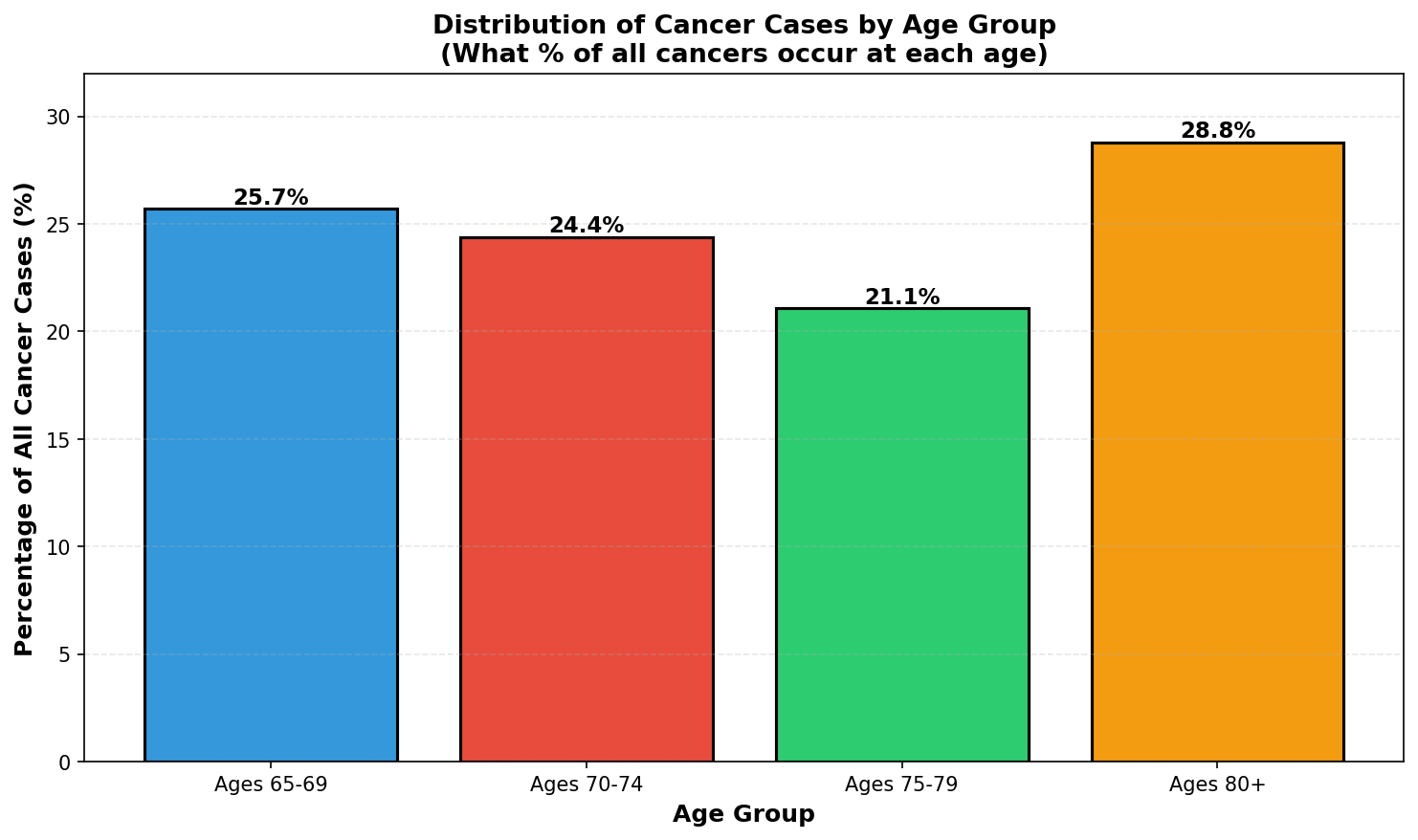 Figure 1: Cancer incidence increases with age. Data shows that people aged 70-84 account for nearly half of all new cancer diagnoses globally.
The most common cancers in older adults are lung, colorectal, breast (in women), and prostate (in men). What's important to know about these cancers is that they typically grow slowly in older people. A slow-growing cancer might never cause noticeable symptoms or death during someone's remaining lifetime, even if left completely untreated. This reality is central to why screening decisions become more complicated after 70.
Understanding the 10-Year Rule
Here's the fundamental issue that changes everything about screening in older age: screening benefits take 10 to 15 years to appear.
What does this mean practically? If you're screened for colorectal or breast cancer today, and screening detects something that might become dangerous, the benefit from finding it early typically doesn't materialise for a decade or more. If you're expected to live fewer than 10 years (which is increasingly common as you age), you're unlikely to see that benefit. You're much more likely to experience the immediate harms: the anxiety from false positives, the burden of follow-up tests, or unnecessary treatment.
This is why medical guidelines now focus on life expectancy as the primary decision point rather than age alone. A healthy 75-year-old with a life expectancy of 15 years has a very different screening picture than a 70-year-old with heart disease, diabetes, and kidney problems, whose life expectancy might be only 5 to 7 years.
Approximately 70% of US adults aged 74 have no comorbidities that significantly reduce their life expectancy, suggesting that many older adults could continue screening if they chose to. But that's different from saying they automatically should.
Screening Rates: Where Older Adults Stand Today
Despite guidelines recommending individualised decisions, screening participation varies widely. About 80% of eligible women aged 70 and older receive breast cancer screening, while roughly 67% are up-to-date with colorectal cancer screening. Prostate screening is lower, with about 57% of eligible men having recent PSA tests.
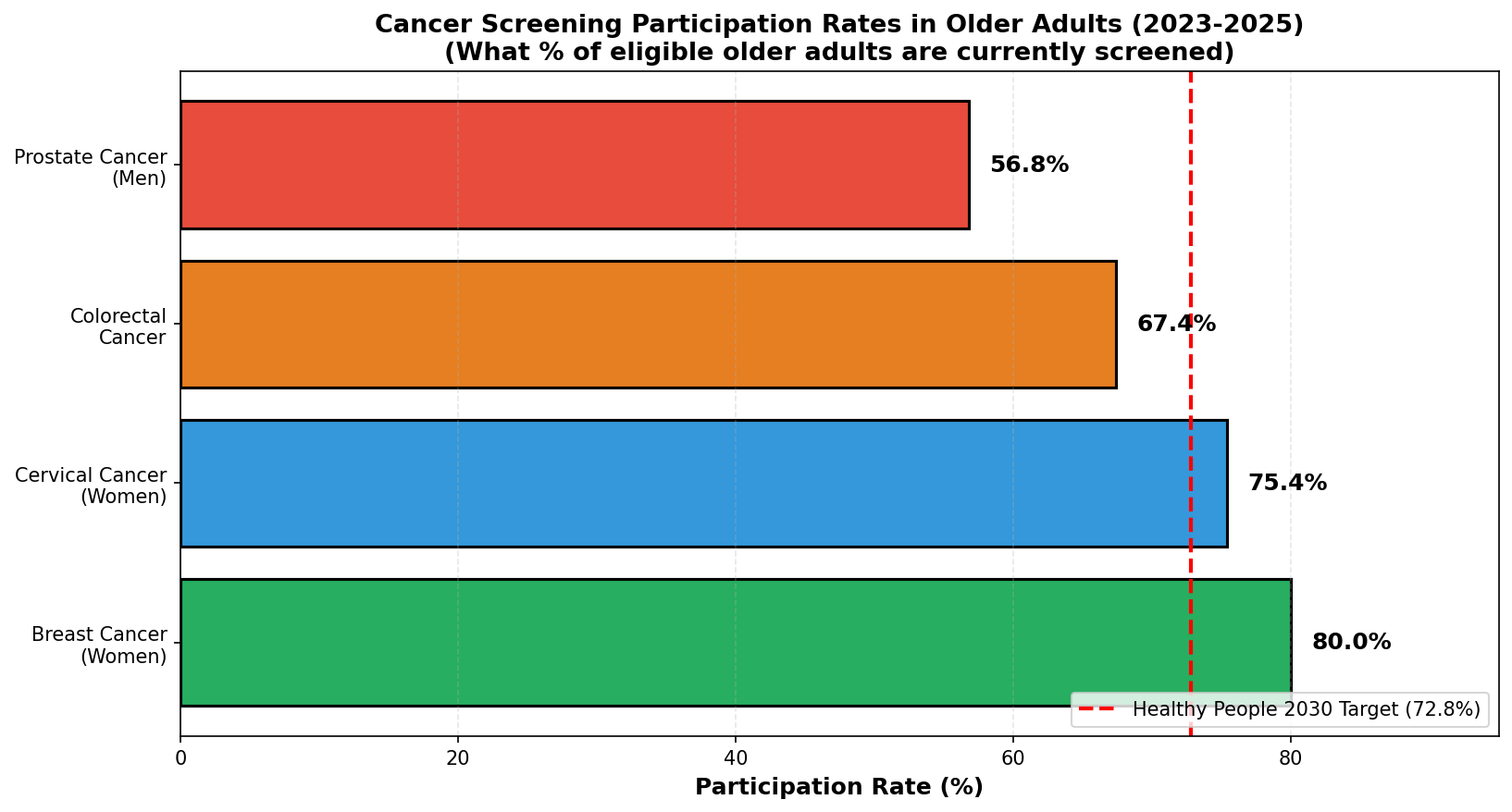 Figure 2: Current screening participation rates show variation by cancer type. Colorectal cancer screening falls short of the national target of 72.8%.
Yet here's a critical finding that reveals a major communication gap: approximately 72% of older adults with fewer than 10 years of expected remaining life continue colorectal cancer screening. For these individuals, screening is unlikely to provide any benefit. They're experiencing the harms without the payoff. This suggests that conversations about whether continued screening still makes sense aren't happening nearly as often as they should.
The Overdiagnosis Problem: Finding Cancers That Won't Hurt You
One of the most counterintuitive but important concepts in cancer screening is overdiagnosis. This is the discovery of cancers that would never have caused symptoms or death if left undetected.
Imagine a slow-growing prostate cancer detected through PSA screening in an 80-year-old man. The cancer is real, but it's so slow-growing that the man would have died of something else before it ever caused problems. Yet now, knowing about it, the man faces pressure to consider treatment: surgery, radiation, or hormonal therapy. Each carries real risks. Surgery might cause erectile dysfunction or incontinence. Radiation can cause bowel symptoms. And all of this for a cancer that was never going to harm him.
The statistics are sobering. For prostate cancer, the overdiagnosis rate increases dramatically with age:
- Age 50: 16% chance of overdiagnosis
- Age 70: 32% chance
- Age 80 and older: 58% chance
This means more than half of prostate cancers detected by PSA screening in men aged 80 and older would never cause clinical harm.
Breast cancer follows a similar pattern:
- Ages 70 to 74: 31% overdiagnosis rate
- Ages 75 to 84: 47% overdiagnosis rate
- Ages 85 and older: 54% overdiagnosis rate
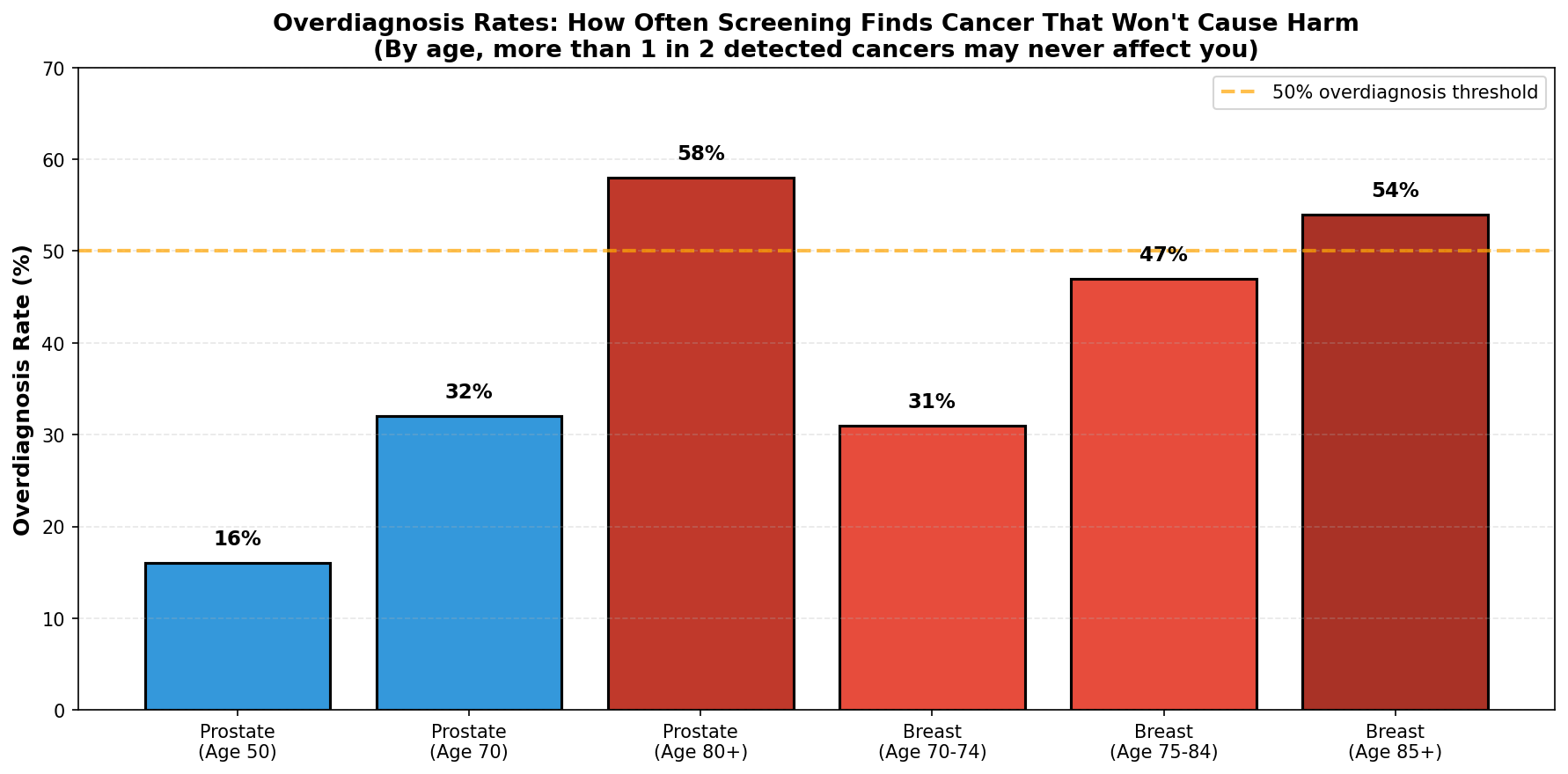 Figure 3: Overdiagnosis rates increase substantially with age. The orange line marks the 50% threshold, beyond which more detected cancers won't cause more harm than they would.
These aren't theoretical concerns. For every prostate cancer death prevented by PSA screening, 24 men are diagnosed with cancers they didn't need treatment for. This ratio helps explain why the US Preventive Services Task Force recommends against routine prostate screening for men aged 70 and older.
The Benefit-Harm Trade-off: Why Age Matters More Than You'd Think
Here's where the maths becomes crucial. Screening offers benefits, but those benefits shrink with advancing age, while harms tend to stay constant or increase.
Consider breast cancer screening. At age 74, screening could generate 7.8 to 11.4 additional life-years per 1,000 women screened. But by age 80, that benefit drops to 4.8 to 7.8 life-years per 1,000. By age 90, it's only 1.4 to 2.4 life-years per 1,000. Meanwhile, overdiagnosis rates are moving in the opposite direction, climbing from 1.2 to 5.0 overdiagnosed cancers per 1,000 screens at age 74 to 3.7 to 7.5 per 1,000 at age 90.
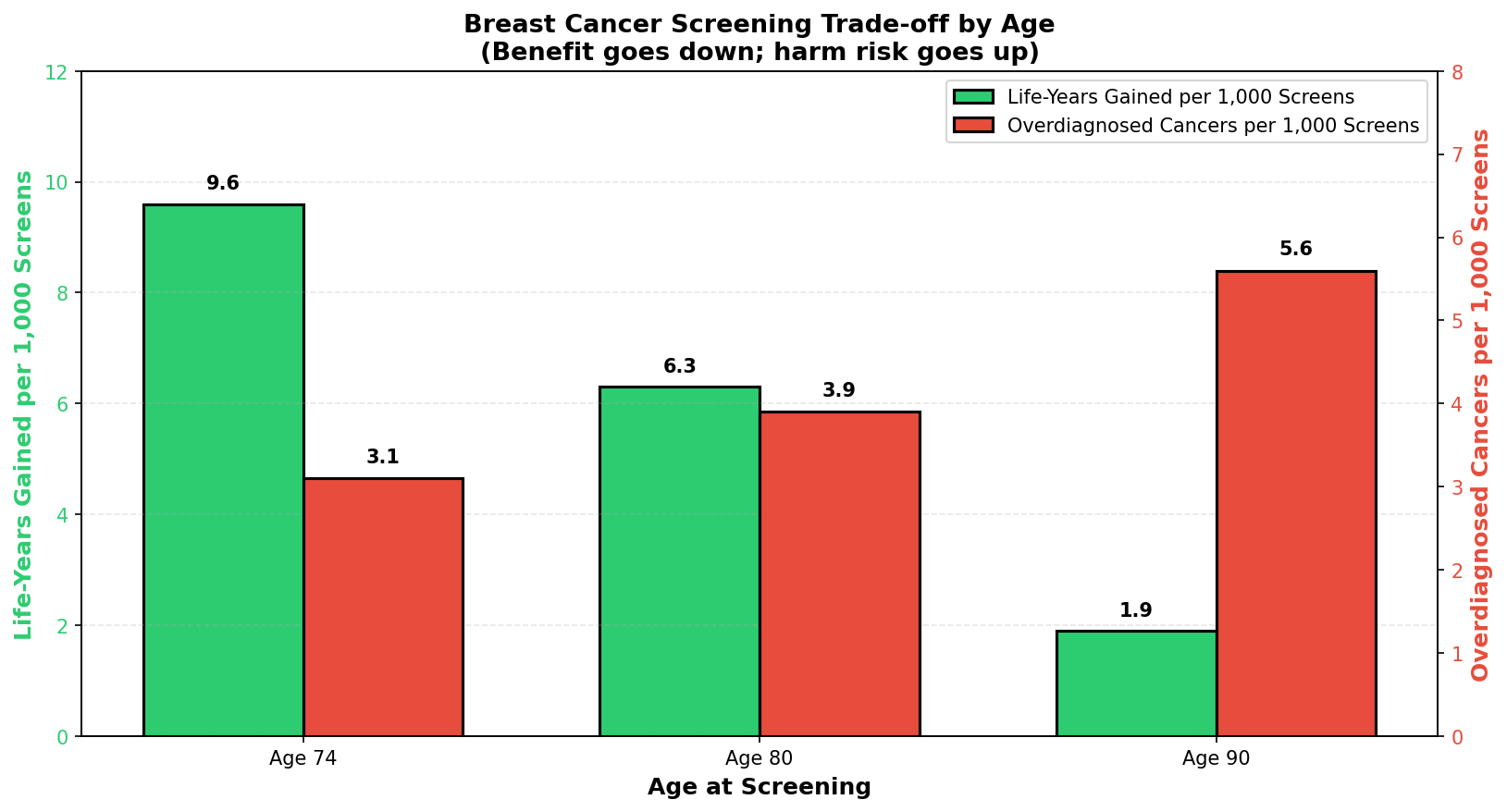 Figure 4: As age increases, screening benefits (green) decline while overdiagnosis rates (red) increase. By age 90, you're more likely to be overdiagnosed than to gain life-years from screening.
The mathematical crossover point is stark. Eventually, you reach an age where you're more likely to be overdiagnosed than to benefit from screening. For many women, this happens somewhere in their late 70s to early 80s.
Procedural Risks: Understanding Physical Complications
Screening tests themselves carry risks, and these risks increase with age. The most detailed data comes from colonoscopy, one of the most commonly discussed screening tests in older adults.
Among adults aged 65 and older, the risks include:
- Bleeding: 23.5 per 10,000 procedures
- Perforation (puncturing the colon): 7.8 per 10,000 procedures
For people aged 80 and older (octogenarians), risks climb substantially:
- Perforation: 1.5 per 1,000 procedures (roughly double the rate in 65- to 80-year-olds)
- Gastrointestinal bleeding: 2.4 per 1,000 procedures
- Cardiovascular or pulmonary complications: 28.9 per 1,000 procedures (this complication class appears almost exclusively in the very elderly)
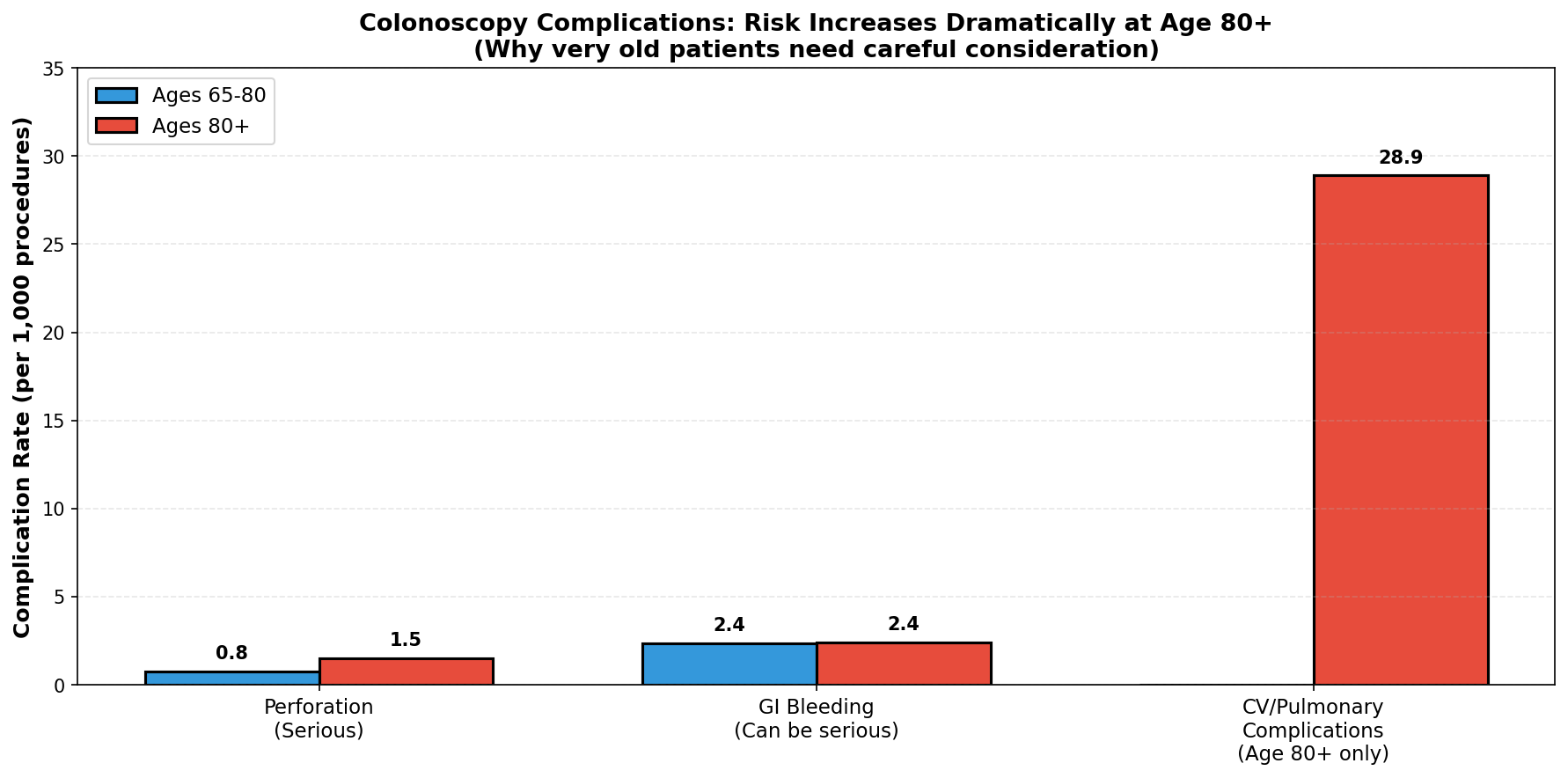 Figure 5: Procedural risks increase substantially in octogenarians (80+), particularly for bleeding and cardiac/pulmonary complications.
These complications are manageable in most cases, but in frail or very elderly patients with multiple health conditions, they can be serious. A perforation can require emergency surgery and hospitalisation. This is why health status (not just age) matters so much in the decision to screen.
For those undergoing first-time colonoscopy screening after age 75, the bleeding risk is higher at approximately 5.2%, though serious perforation remains rare. These are important considerations when weighing whether a screening test makes sense.
Current Screening Recommendations by Cancer Type
Guidelines have shifted substantially in recent years, reflecting the evidence about ageing, overdiagnosis, and quality of life. Here's what major organisations actually recommend:
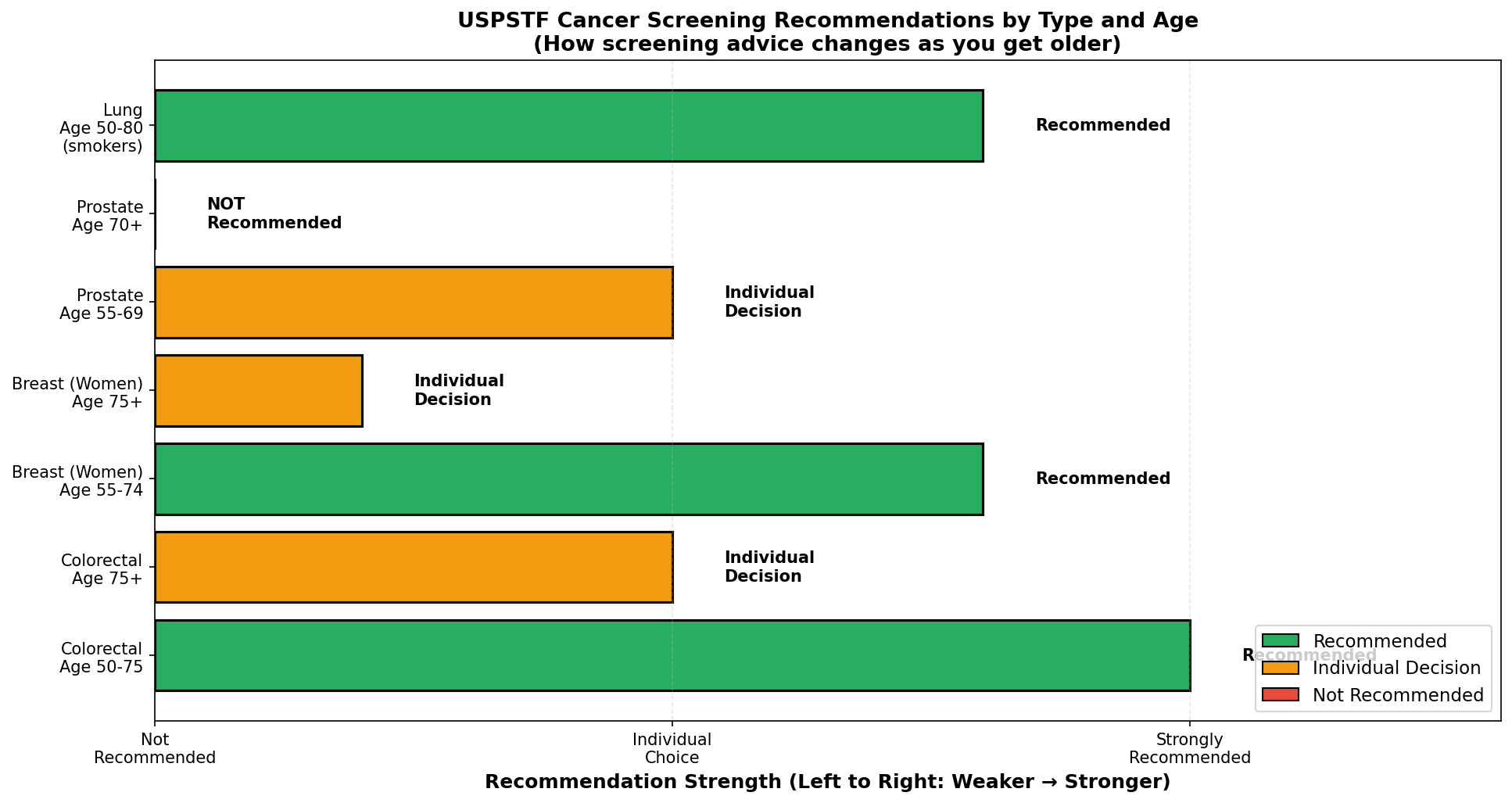 Figure 6: USPSTF recommendations shift from green (recommended) to yellow (individual decision) to red (not recommended) as age increases and evidence becomes more uncertain.
Colorectal Cancer
For ages 50 to 75, screening is recommended. But starting at age 75, it becomes an individual decision based on life expectancy, previous screening history, and health status. By age 85 and older, guidelines generally recommend against routine screening.
An important nuance: if someone has never been screened before and is 75 to 85 years old in good health with a life expectancy exceeding 10 years, first-time screening can still prevent colorectal cancer deaths at manageable complication rates. But this is different from continuing routine colonoscopy surveillance in someone who's been screened before.
The benefit is approximately 1 cancer death prevented for every 42 healthy people aged 70 to 74 screened. The benefit decreases with advancing age and increases frailty.
Breast Cancer
For women aged 40 to 74, screening mammography has a moderate net benefit. But the evidence quality changes at age 75 and beyond. The problem is simple: the major randomised trials testing whether mammography screening saves lives included very few women aged 75 and older. Without that evidence, guidelines can't make strong recommendations.
The American Cancer Society and the US Preventive Services Task Force both say women aged 75 and older should decide based on individual circumstances. For women aged 65 to 75 in good health, screening may reduce breast cancer mortality by approximately 45%, though this benefit is considerably less dramatic than in younger women.
A critical consideration: more than half of breast cancers detected in women aged 85 and older would never have caused clinical harm.
Prostate Cancer
This has the strongest guidance: routine PSA screening is not recommended for men aged 70 and older, with high confidence that harms outweigh benefits. The evidence simply doesn't support the benefit for this age group. The overdiagnosis problem is particularly severe, and treatment harms (erectile dysfunction, urinary incontinence, bowel symptoms) are particularly problematic when life expectancy is limited.
For men aged 55 to 69, shared decision-making is recommended, meaning conversations about personal values should guide the choice. But at 70 and beyond, clinical guidelines have moved beyond "discuss it" to "don't do it".
Lung Cancer
For current or recent former smokers aged 50 to 80 with 20 or more pack-years of smoking history, annual low-dose CT scanning can reduce lung cancer mortality. However, only 4.5% of eligible older adults with a smoking history actually receive screening, suggesting significant barriers to access or awareness.
When older smokers do get screened, the findings can be concerning because many benign nodules are detected, creating anxiety and unnecessary follow-up. Balancing the genuine benefit of detecting early lung cancers against overdiagnosis remains challenging.
Quality of Life and the Risk of Unnecessary Treatment
Beyond overdiagnosis and procedural risks, there's a deeper question that medical literature is only beginning to adequately address: how does screening affect older adults' actual quality of life?
Research shows that when older adults face serious illness, most prioritise quality of life and independence over maximum survival extension. Yet these preferences often aren't reflected in screening conversations or treatment decisions.
When actual cancer is found through screening and treated surgically, most older adults preserve their preoperative quality of life three months after surgery, independent of their age. This is reassuring. But complications from surgery correlated with worsening quality of life, highlighting that avoiding procedural complications becomes increasingly important as life expectancy shortens.
The honest reality is that we lack robust research comparing quality of life trajectories with and without screening in older populations. This represents a critical evidence gap, particularly given how much quality of life matters to older adults' actual health decisions.
The Psychological Impact: Real But Usually Temporary
Screening inevitably produces false positives; findings that suggest cancer but turn out to be benign. Understanding the emotional impact matters because it's real, even if often temporary.
Nearly 40% of people who receive false-positive screening results describe the experience as "very scary" or "the scariest time of my life." The anxiety typically peaks around the time of notification and intensifies with the communication of results requiring further testing.
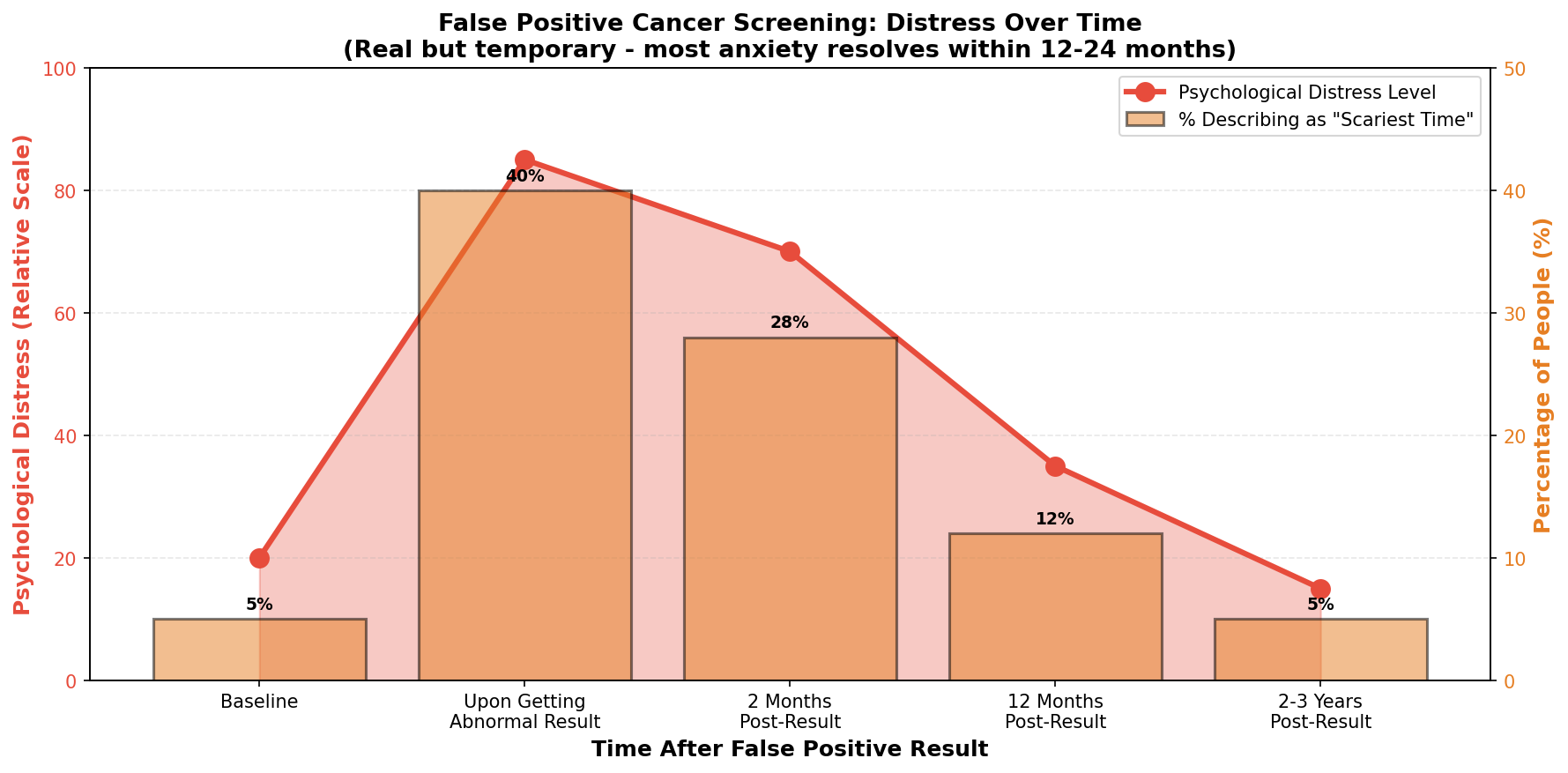 Figure 7: Acute anxiety from false positives peaks at 2 months post-result and gradually resolves. Most people return to baseline by 12-24 months, though some experience longer-term distress.
The good news: for most people, this distress is temporary. At 12 months post-false positive, most people's worry has decreased substantially, and by 2 to 3 years, most have returned to baseline psychological functioning. Breast cancer-specific distress may persist longer (up to 3 years in some women), but even this typically resolves.
However, people with a smoking history or family history of cancer experience notably higher anxiety throughout the screening process, including after negative results. These high-risk groups deserve extra support during screening decisions.
Shared Decision-Making: Moving Beyond One-Size-Fits-All
The evidence is clear: the old model of doctors making screening recommendations and patients passively accepting them doesn't work well for older adults. Modern guidelines emphasise shared decision-making, where doctor and patient collaborate based on the patient's values and circumstances.
Research shows shared decision-making actually works. When doctors use structured conversations and decision aids (tools that explain benefits and harms clearly), the results improve:
- 39% of patients with shared decision-making complete screening within 12 months, compared to 29% in standard care
- 51% of patients in shared decision-making receive their preferred approach, compared to 46% in standard care
- Better shared decision-making reduces "decisional conflict" (that stuck, uncertain feeling about what to do)
Yet a significant gap persists. Older adults prioritise their age and life expectancy most heavily when making screening decisions, with physician recommendations being far less influential than these personal factors. This suggests that doctors who simply say "you should be screened at your age" are ignoring what actually motivates their patients' decisions.
Perhaps most concerning: less than 25% of older adults with limited life expectancy recall discussing stopping screening with their doctors. Many continue screening not because it makes sense for them, but because the conversation about whether to stop never happened.
Putting It Together: How to Make a Screening Decision
If you're facing a screening decision after age 70, here are the key questions to discuss with your doctor:
1. What's Your Likely Life Expectancy?
This is the single most important question. If you expect to live fewer than 10 years (based on your overall health and any serious conditions you have), routine cancer screening that takes 10+ years to provide benefit doesn't align with your situation. Your doctor can use tools that estimate life expectancy based on age, health conditions, and functional status.
2. Are You Healthy Enough to Handle Screening and Potential Follow-Up?
This goes beyond age. Can you tolerate the screening test (emotional discomfort, physical discomfort, time commitment)? If something is found, are you healthy enough for further diagnostic testing and potential treatment? If you have serious heart disease, advanced dementia, or severe frailty, the burden of screening might outweigh any benefit.
3. What Matters Most to You?
Some people prioritise early detection and feel they want to do everything possible to catch the disease. Others prioritise staying active and independent and would rather avoid testing. Neither is wrong, but your values should guide your decision.
4. Have You Been Screened Before?
If you've already had multiple normal screening tests, the value of additional screening becomes even lower. Your prior screening history matters.
5. Understand Your Specific Numbers
Don't just hear "screening is recommended" or "screening isn't recommended." Ask your doctor for specific numbers for your situation. How many people like you need to be screened to prevent one death? How likely is overdiagnosis? What are your specific procedural risks?
Practical Guidance for Specific Situations
If You're 70 to 74 and Healthy
At this age, with good health and normal life expectancy, most guidelines support continued screening if you want it. But this should be an informed choice, not an automatic one. Discuss benefits, harms, and your personal values.
If You're 75 to 85
This is where guidelines emphasise individual decision-making most strongly. Your overall health matters more than your exact age. If you're in good health with no serious comorbidities and life expectancy exceeds 10 years, screening might still make sense for you. If you have multiple health conditions or limited life expectancy, the case for screening weakens substantially.
For colorectal cancer specifically, if you've never been screened before, you might derive benefit from a single screening even at age 75 to 85. But an ongoing surveillance colonoscopy is less justified.
If You're 85 and Older
Guidelines generally recommend against routine cancer screening at this age. Life expectancy becomes increasingly limited, overdiagnosis risk increases dramatically, and procedural risks climb. If screening has already found something requiring treatment, that's a different conversation, but initiating new routine screening rarely makes sense.
Special Consideration: Current or Former Smokers
If you're a current smoker or quit within the past 15 years and have a 20+ pack-year smoking history, annual low-dose CT lung cancer screening may benefit you at ages up to 80, particularly if your life expectancy exceeds 10 years. Smoking history justifies this additional consideration beyond other cancer types.
For Families Supporting Ageing Relatives
If you're helping an older parent or relative navigate screening decisions, your role is to facilitate the conversation, not decide for them.
Start by understanding their life expectancy. Ask their doctor for an honest assessment. Ask about their other health conditions and whether these affect screening safety. Then, critically, ask your relative what matters most to them. Do they want to prioritise detecting disease early, or do they prioritise staying independent and avoiding medical procedures?
Don't be surprised if the decision seems to change. As people age and health circumstances shift, priorities evolve. What seemed important at 72 might feel different at 78. Support ongoing conversations with their doctor rather than locking into a single decision.
If you notice your relative is continuing screening despite limited life expectancy (and their doctor has never discussed this), it might be worth gently raising the question. Something like "Have you talked with your doctor about whether screening still makes sense given everything going on?" can open a conversation that hasn't happened yet.
The Bottom Line
Cancer is more common in older age, and this means screening discussions become more important, not less. But more important doesn't mean more screening. It means more thoughtful, individualised decision-making that accounts for your specific situation, your likely lifespan, your other health conditions, and what you actually value.
The evidence supports a fundamental shift from "everyone at this age should be screened" to "let's talk about whether screening makes sense for you." That conversation should happen between you and your doctor, with honesty about benefits, harms, uncertainty, and your own values guiding the decision.
Age alone doesn't determine whether screening is right for you. Health status, life expectancy, previous screening history, personal values, and specific comorbidities matter far more than the number of years you've been alive. A healthy 80-year-old in perfect health might benefit more from screening than a frail 70-year-old with multiple conditions. This individualised approach is more complex than simple age-based rules, but it's also more honest about what evidence actually supports.
The best time to have these conversations is before a problem develops, when you're still thinking clearly and can discuss your values without the urgency of acute illness. Whether you're 70 now and thinking about the next decade, or supporting a relative navigating these questions, starting the conversation matters more than any single decision.
Further Reading
National Health Service & UK Guidance
- NHS Bowel Cancer Screening Programme
- NHS Breast Cancer Screening Programme
- NICE Colorectal Cancer Screening Guidelines
US Preventive Services Task Force
- USPSTF Colorectal Cancer Screening Recommendations
- USPSTF Breast Cancer Screening Recommendations
- USPSTF Prostate Cancer Screening Recommendations
- USPSTF Framework for Individualizing Cancer Screening in Older Adults
Cancer Screening in Older Adults
- National Cancer Institute: Cancer Screening Overview
- Mayo Clinic: When to Stop Cancer Screening in Older Adults
- American Cancer Society Screening Recommendations by Age
Understanding Overdiagnosis and Decision-Making
- Cochrane Library: Screening for Cancer Overdiagnosis
- NIH Resources on Shared Decision-Making in Cancer Screening
- PubMed: Life Expectancy and Cancer Screening in Older Adults
Quality of Life and Ageing
- Johns Hopkins Medicine: Cancer Screening in Older Adults
- Harvard Health: When to Stop Cancer Screening
- Cleveland Clinic: Senior Health and Cancer Screening
References/Helpful Resources
- US Preventive Services Task Force. Screening for colorectal cancer: US Preventive Services Task Force recommendation statement [Internet]. Available from: https://www.uspreventiveservicestaskforce.org/uspstf/announcement/final-recommendation-statement-screening-colorectal-cancer
- US Preventive Services Task Force. Screening for breast cancer: US Preventive Services Task Force recommendation statement [Internet]. Available from: https://www.uspreventiveservicestaskforce.org/uspstf/recommendation/breast-cancer-screening
- US Preventive Services Task Force. Screening for prostate cancer: US Preventive Services Task Force recommendation statement [Internet]. Available from: https://www.uspreventiveservicestaskforce.org/uspstf/recommendation/prostate-cancer-screening
- US Preventive Services Task Force. Individualizing cancer screening in older adults [Internet]. Available from: https://www.uspreventiveservicestaskforce.org/uspstf/about-uspstf/methods-and-processes/individualizing-cancer-screening-older-adults
- National Cancer Institute. Cancer Incidence in Older Adults in the United States: Characteristics, Specificity, and Completeness of the Data. PubMed. Available from: https://pubmed.ncbi.nlm.nih.gov/33584972/
- Centers for Disease Control and Prevention. Use of Cancer Screening Tests, United States, 2023 [Internet]. Available from: https://www.cdc.gov/pcd/issues/2025/25_0139.htm
- Centers for Disease Control and Prevention. Baseline Estimates of Colorectal Cancer Screening Among Adults Aged 45 to 75 Years [Internet]. Available from: https://www.cdc.gov/pcd/issues/2025/25_0175.htm
- Centers for Disease Control and Prevention. Cancer Screening Prevalence and Associated Factors Among US Adults [Internet]. Available from: https://www.cdc.gov/pcd/issues/2022/22_0063.htm
- Henley SJ, Pham-Kanter G, Zheng Z, et al. Estimating Breast Cancer Overdiagnosis After Screening Mammography Among Older Women in the United States. JAMA Intern Med. 2023;183(10):1059-1068. Available from: https://pubmed.ncbi.nlm.nih.gov/37549389/
- Nelson HD, Tyne K, Naik A, et al. Screening for Breast Cancer: Systematic Evidence Review Update. Agency for Healthcare Research and Quality. Available from: https://pubmed.ncbi.nlm.nih.gov/25948872/
- Draisma G, Boer R, Otto SJ, et al. Lead times and overdiagnosis associated with prostate-specific antigen screening: a life expectancy model. J Natl Cancer Inst. 2006;98(2):122-132. Available from: https://www.ncbi.nlm.nih.gov/pmc/articles/PMC12870694/
- Etzioni R, Gulati R, Tsodikov A, et al. Screening for prostate cancer: risks and benefits. Cancer Prev Res (Phila). 2024;17(2):89-99. Available from: https://pubmed.ncbi.nlm.nih.gov/41533408/
- Dominitz JA, Whitaker MW, Ward JC, et al. Comparing risks and benefits of colorectal cancer screening in elderly patients. Gastroenterology. 2005;129(3):852-860. Available from: https://pubmed.ncbi.nlm.nih.gov/16230070/
- Liang PS, Dominitz JA, Bynum JP, et al. Prevalence and mortality of colonoscopy-related adverse events in older US adults. Gastrointest Endosc. 2024;100(5):827-836. Available from: https://www.ncbi.nlm.nih.gov/pmc/articles/PMC12175784/
- Mucci LA, Hjelmborg JB, Harris JR, et al. Familial Risk and Heritability of Cancer Among Twins in Nordic Countries. JAMA. 2016;315(17):1898-1917. Available from: https://www.ncbi.nlm.nih.gov/pmc/articles/PMC3371336/
- Yoon JH, Park S, Choi KS, et al. Single-Round LDCT Screening in Men Aged ≥70 Years: Prevalence of Pulmonary Nodules and Lung Cancer Detection. Cancers (Basel). 2025;14(2):458. Available from: https://www.ncbi.nlm.nih.gov/pmc/articles/PMC12293317/
- US Preventive Services Task Force. Screening for lung cancer: US Preventive Services Task Force recommendation statement. JAMA. 2021;325(2):123-133. Available from: https://pubmed.ncbi.nlm.nih.gov/33687468/
- Jørgensen KJ, Gøtzsche PC. Overdiagnosis and overtreatment of breast cancer: a review of the evidence. Ugeskr Laeger. 2009;171(7):516-522. Available from: https://pubmed.ncbi.nlm.nih.gov/19233176/
- Schütze M, Wöckel A, Hügel S. Breast cancer screening in older women. Dtsch Arztebl Int. 2018;115(15):254-260. Available from: https://www.ncbi.nlm.nih.gov/pmc/articles/PMC5993346/
- National Institutes of Health. Comorbidity-adjusted life expectancy: a new tool to inform recommendations for optimal screening strategies [Internet]. Available from: https://pubmed.ncbi.nlm.nih.gov/24247672/
- American Cancer Society. Colorectal Cancer Screening Guidelines [Internet]. Available from: https://www.cancer.org/cancer/types/colon-rectal-cancer/detection-diagnosis-staging/acs-recommendations.html
- American Cancer Society. Breast Cancer Screening Guidelines [Internet]. Available from: https://www.cancer.org/cancer/types/breast-cancer/screening/acs-recommendations.html
- American Cancer Society. Prostate Cancer Screening Recommendations [Internet]. Available from: https://www.cancer.org/cancer/types/prostate-cancer/detection-diagnosis-staging/acs-recommendations.html
- American Cancer Society. Lung Cancer Screening Guidelines [Internet]. Available from: https://www.cancer.org/cancer/types/lung-cancer/screening/guidelines.html
- National Institutes of Health. Cancer Screening in Older Adults: Individualized Decision-Making and Communication Strategies [Internet]. Available from: https://pmc.ncbi.nlm.nih.gov/articles/PMC7594102/
- National Institutes of Health. Shared Decision-Making in Colorectal Cancer Screening for Older Adults [Internet]. Available from: https://www.ncbi.nlm.nih.gov/pmc/articles/PMC11344228/
- National Institutes of Health. Psychological Response to False-Positive Cancer Screening Results [Internet]. Available from: https://www.ncbi.nlm.nih.gov/pmc/articles/PMC6963193/
- National Institutes of Health. Systematic Review of Psychological Consequences of False-Positive Mammograms [Internet]. Available from: https://pubmed.ncbi.nlm.nih.gov/23540978/
- National Institutes of Health. Quality of Life After Major Cancer Surgery in Older Adults [Internet]. Available from: https://www.ncbi.nlm.nih.gov/pmc/articles/PMC9275771/
- National Institutes of Health. Variation in Receipt of Cancer Screening by Life Expectancy [Internet]. Available from: https://pubmed.ncbi.nlm.nih.gov/37783982/
- National Institutes of Health. Older Adults' Cancer Screening Intentions and Discussions About Stopping Screening [Internet]. Available from: https://pubmed.ncbi.nlm.nih.gov/31147981/
- Johns Hopkins Medicine. Cancer Screening and Older Adults [Internet]. Available from: https://www.hopkinsmedicine.org/
- Mayo Clinic. Screening for Colon Cancer in Older Adults: Risks, Benefits, and When to Stop [Internet]. Available from: https://www.mayoclinicproceedings.org/article/S0025-6196(19)30269-1/fulltext
- Harvard Health Publishing. When to Stop Cancer Screening [Internet]. Available from: https://www.health.harvard.edu/
- National Institute of Diabetes and Digestive and Kidney Diseases. Life Expectancy and Cancer Screening Decisions [Internet]. Available from: https://www.niddk.nih.gov/
