

Have you noticed that some people seem to bounce back from stress effortlessly while others stay wound up for hours? Or that your digestion improves when you're relaxed but falls apart when you're anxious? The difference often comes down to something called vagal tone, and the good news is that it's something you can actually improve.
Your vagus nerve is essentially your body's primary "stress relief system." Think of it as the brain's direct communication cable to your heart, lungs, stomach, and digestive organs. A stronger vagal tone means your nervous system can switch more effectively from stress mode to relaxation mode, from worry to calm. This ability to shift gears profoundly affects your cardiovascular health, mental well-being, inflammation levels, digestion, and even how well you sleep.
The remarkable part: you can measure vagal tone, and you can improve it within days using simple, science-backed practices.
What Is Vagal Tone, Really?
The vagus nerve is the longest nerve in your body, running from your brainstem all the way down through your chest, past your heart, and into your digestive system. It's the 10th cranial nerve, or “cranial nerve X."
Here's what makes it special: approximately 80% of your vagus nerve is sensory, meaning it sends information from your organs up to your brain. Only about 20% sends signals downward to control your organs. This means your gut health, sleep quality, and even physical sensations directly influence your emotional state. It's a genuine two-way communication system between your brain and body.
Vagal tone refers to the strength and responsiveness of this nerve. Specifically, it measures how effectively your parasympathetic nervous system (your body's "rest and digest" system) can activate through the vagus nerve. Higher vagal tone means better nervous system flexibility. Lower vagal tone means your stress response gets stuck in the "on" position.
How Vagal Tone Is Actually Measured
Scientists measure vagal tone using a non-invasive technique called heart rate variability (HRV). This measures the tiny fluctuations in time intervals between consecutive heartbeats. Contrary to what you might think, a completely regular heartbeat isn't actually healthy; the natural variation in beat-to-beat timing reflects vagal control.
The most specific measurement is RMSSD (Root Mean Square of Successive Differences). In healthy adults, RMSSD averages around 65 milliseconds. Higher values indicate stronger vagal tone; lower values suggest reduced parasympathetic capacity.
Why should you care about HRV? Because research shows that people with high HRV recover faster from stress, have better emotional regulation, experience less anxiety, and have significantly lower cardiovascular mortality risk. People with low HRV, by contrast, face 2.1 times higher mortality risk compared to those with high HRV. That's not a small difference.
Why Your Vagal Tone Matters More Than You Probably Realise
Your vagus nerve touches nearly every major system in your body, so when vagal tone improves, the benefits spread across multiple health domains simultaneously.
Stress Recovery and Emotional Resilience
Your autonomic nervous system has two opposing branches: the sympathetic nervous system (fight-or-flight response that activates under stress) and the parasympathetic nervous system (rest-and-digest response that calms you down). The vagus nerve is the primary controller of the parasympathetic branch.
When vagal tone is high, your nervous system can activate under stress (which is actually necessary and healthy for survival), but then rapidly return to calm when the threat passes. When vagal tone is low, your body stays in a heightened state of alertness even after danger has passed. Individuals with low vagal tone exposed to high stress show significantly higher rates of anxiety and depression compared to those with high vagal tone.
Think of it this way: high vagal tone gives your nervous system a more responsive "dimmer switch" for stress, while low vagal tone leaves you stuck with an on-off switch that gets stuck in the on position.
The Anti-Inflammatory Effect
This is where things get genuinely fascinating. The vagus nerve releases acetylcholine, a neurotransmitter with powerful anti-inflammatory effects. Here's the mechanism: when your vagus nerve activates, it tells your immune cells to stop producing inflammatory molecules. Specifically, it inhibits the release of tumour necrosis factor (TNF) and other pro-inflammatory cytokines (signalling molecules that fuel inflammation).
Higher vagal tone means greater anti-inflammatory capacity. This matters because chronic inflammation underlies nearly every major disease: heart disease, diabetes, autoimmune conditions, depression, and even cognitive decline. By improving vagal tone, you're literally strengthening your body's natural anti-inflammatory system.
Cardiovascular Health
Low vagal tone is one of the strongest independent predictors of cardiovascular disease and death, rivalling traditional risk factors like high blood pressure and cholesterol. Research shows that decreased vagal function predicts both heart attacks and sudden cardiac death. Depression of vagal tone after a heart attack is one of the strongest predictors of whether a patient will die in the following year.
The mechanism is straightforward: your vagus nerve controls moment-to-moment heart rate and blood pressure through a process called heart rate variability. When vagal tone is high, your heart rhythm is more flexible and responsive. When it's low, your heart rhythm becomes rigid and less capable of adapting to demands.
Mental Health and Cognitive Function
Studies consistently show that vagal tone correlates with mental health outcomes. People with higher resting vagal tone have:
- Lower rates of anxiety and better anxiety control
- Lower rates of depression and faster recovery from depressive episodes
- Better working memory and cognitive function
- Superior emotional regulation and self-control
The vagus nerve literally influences which brain areas activate and how they communicate. Strengthening vagal tone can improve psychological resilience and emotional flexibility.
The Natural Interventions That Actually Work
The best part about vagal tone is that it responds remarkably quickly to lifestyle changes. Unlike genetic traits, vagal tone changes within days or weeks. Here's what the research shows about interventions with proven effectiveness.
1. Breathing Exercises: The Foundation
Deep breathing is the most immediate, evidence-based way to activate your vagus nerve. The mechanism is elegant: when you inhale, stretch receptors in your lungs increase your heart rate. When you exhale slowly, vagal nerve activity increases and slows your heart rate. This creates an oscillating pattern that, with repetition, strengthens your vagus nerve.
Research shows that a single 5-minute session of deep, slow breathing increases heart rate variability by 21-46%. This isn't a subtle effect; it's measurable within minutes.
The optimal breathing pattern is key. Aim for 5-6 breaths per minute (breathing in for a count of 4, holding for 4, exhaling for 6-8 seconds). This specific pace resonates with your body's natural baroreceptor sensitivity and maximises vagal activation.
Duration matters too. A minimum of 5 minutes produces measurable improvement in a single session. For sustained vagal tone improvement, aim for 10-30 minutes daily. Most research suggests that people who practice 10+ minutes of slow breathing daily show the most significant long-term benefits.
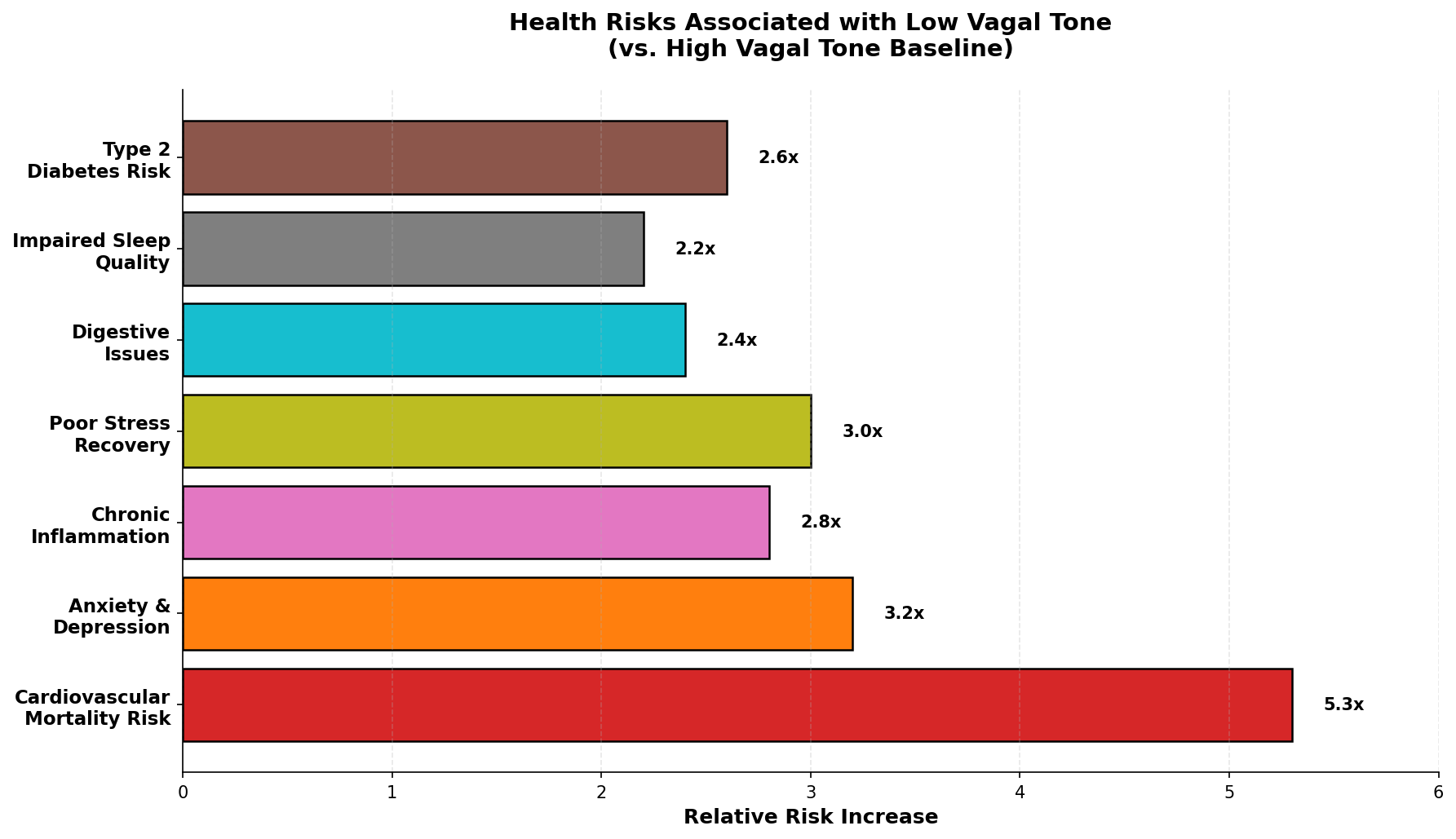 Figure 1: Heart rate variability (a measure of vagal tone) improves measurably within 5 minutes of slow breathing practice and accumulates with daily practice over weeks.
How to practice: Sit comfortably, close your eyes, and breathe in through your nose for a count of 4. Hold for 4. Exhale through your mouth for 6-8 seconds. The longer exhalation is where vagal activation happens. Repeat for 5-10 minutes daily. Many people notice immediate calming effects within the first minute.
2. Physical Exercise: Training Your Nervous System
Regular aerobic exercise induces measurable increases in resting vagal tone. The mechanism involves multiple pathways: exercise triggers sympathetic withdrawal (less stress hormone activity), increases vagal outflow, and reshapes how your autonomic nervous system functions.
Research on fitness shows that regular endurance-type exercise produces sustained increases in vagal tone and improved heart rate recovery after exertion. Aerobic activity is particularly effective compared to strength training alone, though combined approaches may offer benefits.
The timeline matters: expect to see improvements in resting vagal tone within 2-4 weeks of regular aerobic exercise. The effect accumulates over time; long-term exercisers show markedly higher vagal tone than sedentary individuals.
An additional benefit: cold water face immersion after exercise provides immediate acceleration of post-exercise parasympathetic recovery. Some athletes use brief ice immersion after training to enhance their parasympathetic recovery capacity, essentially training their body to switch from sympathetic activation to parasympathetic calm more efficiently.
Practical approach: Aim for 3-5 sessions weekly of aerobic exercise (walking, jogging, cycling, swimming) lasting 30-45 minutes. Consistency matters more than intensity. If you want to experiment with post-exercise recovery enhancement, try 30-60 seconds of cold water on your face or a brief cold shower after your workout.
3. Meditation and Mindfulness: Sustainable Mental Training
Meditation strengthens vagal tone through sustained attention and emotional regulation. Research shows both immediate effects and cumulative benefits with consistent practice.
A substantial 2024 study tracked 74 people through a six-week meditation course with 10 weeks of daily practice monitoring. Participants practising more than 10 minutes daily showed statistically significant increases in well-being scores. Another randomised controlled trial found that 10 minutes of daily mindfulness meditation for just 30 days significantly reduced anxiety. The control group showed no improvement, confirming the effect was real.
The types of meditation that work include standard mindfulness meditation, heart rhythm meditation (which combines meditation with slow breathing and heart focus), and self-compassion meditation. All activate vagal pathways effectively.
The threshold appears to be around 10 minutes daily for meaningful benefits. Beyond that, longer sessions show superior outcomes, but even 10 minutes consistently beats sporadic longer sessions.
Getting started: Download a meditation app (Insight Timer, Headspace, Calm). Start with a guided 10-minute meditation. Practice daily for 30 days to notice anxiety reduction. Those continuing beyond 30 days see cumulative improvements in well-being, emotional regulation, and stress resilience.
4. Sleep: The Overlooked Leverage Point
Sleep quality directly depends on vagal tone. During sleep, your vagus nerve coordinates parasympathetic dominance (your body's restorative state). Higher resting vagal tone predicts better sleep quality; better sleep reinforces higher vagal tone. It's a positive feedback loop.
Research shows that people with higher heart rate variability (vagal tone) fall asleep faster, experience fewer nighttime awakenings, and report greater sleep satisfaction. This suggests that improving vagal tone is a pathway to better sleep, and vice versa.
Interestingly, vagus nerve stimulation increases the complexity of heart rate variability specifically during sleep (indicating better vagal regulation during rest), while sleep-related vagal activation promotes anti-inflammatory processes. This means your sleep literally becomes more healing when vagal tone improves.
Sleep optimisation strategies:
- Practice 5-10 minutes of slow breathing before bed (using the 5-6 breaths-per-minute pattern)
- Maintain a consistent sleep schedule (trains your parasympathetic nervous system)
- Keep your bedroom cool and dark (supports parasympathetic dominance)
- Avoid screens for at least 1 hour before sleep (reduces sympathetic activation from blue light)
5. Diet and Gut Health: The Microbiota-Vagus Connection
This mechanism might surprise you: your gut bacteria directly influence your vagal tone through the vagus nerve. The vagus nerve serves as the primary communication pathway between your gut microbiota and your brain. Diet shapes your microbiota, which produces compounds that activate vagal sensors.
Research shows that specific bacterial strains regulate emotional behaviour and brain neurotransmitter function through vagus nerve signalling. For instance, Lactobacillus strains increase expression of GABA receptors (the brain's calming neurotransmitter) through vagal communication. This is genuine gut-brain-axis science.
Fermented foods contain beneficial bacteria that populate your microbiota and produce short-chain fatty acids, polyphenols, and neurotransmitters that activate vagal pathways. These foods include:
- Yoghurt and kefir
- Miso and tempeh
- Sauerkraut and kimchi
- Kombucha
- Natto (fermented soybeans)
Additionally, prebiotic fibres feed your beneficial bacteria. Good sources include:
- Onions and garlic
- Asparagus
- Bananas
- Oats
Research timeline: Changes to gut microbiota composition take 4-8 weeks, so dietary improvements to vagal tone require consistency over at least a month to show measurable effects.
Practical approach: Include fermented foods 3-5 times weekly. Add prebiotic fibre sources to your meals daily. Reduce ultra-processed foods (linked to dysbiosis, which impairs vagal signalling). Stay hydrated (supports the mucosal barrier that bacteria live in).
6. Cold Water Exposure: The Ancient Dive Response
Cold water exposure triggers the mammalian diving reflex, an ancient survival response that activates the vagus nerve. When your face hits cold water, your nervous system automatically slows your heart rate, redistributes blood to vital organs, and enhances parasympathetic activity.
Research shows that cold water face immersion provides immediate acceleration of post-exercise parasympathetic recovery. The effect occurs through simultaneous sympathetic and parasympathetic activation via the diving response; the net result is heart rate slowing and blood redistribution to oxygen-critical tissues.
This isn't just useful post-exercise. Ice packs on your face or neck elicit vagus nerve stimulation, resulting in measurable heart rate reduction. Some people use brief cold exposure throughout the day as a parasympathetic reset button.
The effective exposure time is relatively short: 30-60 seconds of cold water activates the diving response. Frequency of 2-3 times weekly produces training effects without adaptation (your body won't stop responding if you don't overdo it).
Safety note: This technique isn't recommended for people with heart conditions or without medical supervision. Always warm up gradually and stop if you experience discomfort.
How to practice: Start conservatively. Splash cold water on your face and neck for 30 seconds. After 2-3 weekly sessions for 30 days, your parasympathetic response strengthens and activates more rapidly. Alternatively, take a 30-60 second cold shower.
7. Vocal Exercises: An Emerging Technique
The vagus nerve controls your larynx and throat muscles. Activation of these muscles through vocalisation directly stimulates the vagus nerve. While research is still developing in this area, preliminary evidence is intriguing.
A 2022 study found that 1 minute of voiced gargling produced immediate effects on the electrical activity of throat muscles, with most participants reporting improved voice quality and phonatory comfort.
This suggests that vocal exercises might activate vagal pathways effectively. Practical approaches include:
- Gargling for 1 minute with water or while humming
- Humming or sustained "om" sounds
- Singing
- Throat singing (Mongolian style creates sustained vocal vibrations)
The research here is less extensive than for breathing or exercise, so vocal exercises are perhaps best viewed as a complementary technique rather than a primary intervention. But they're free, require no equipment, and may offer additional benefits.
How to Integrate These Practices: The Synergistic Approach
Research increasingly shows that combining multiple interventions produces superior results compared to any single approach. A person practising breathing (5 minutes daily) plus meditation (10 minutes daily) plus regular exercise plus dietary improvements shows better outcomes than someone doing any one intervention consistently.
Here's a practical integration strategy for someone with limited time:
Morning routine (15 minutes):
- 5 minutes of slow breathing (5-6 breaths/minute)
- 10 minutes of guided meditation
Throughout the day:
- Include fermented food with at least one meal
- Aim for 30 minutes of aerobic activity (walking, cycling, jogging)
- Consider brief cold water exposure (30 seconds after shower)
Evening routine (10 minutes):
- Slow breathing practice before bed to prepare your nervous system for sleep
This integrated approach covers multiple intervention pathways simultaneously: direct nervous system training (breathing, meditation), physical adaptation (exercise), microbiota support (diet), and parasympathetic priming (sleep preparation). The combination creates redundancy; if you miss one day of meditation, your exercise and dietary practices continue providing benefit.
Measuring Your Progress
You can monitor your vagal tone improvement through:
- Subjective markers: improved sleep quality, faster stress recovery, better emotional regulation, easier digestion
- Heart rate recovery: time for your heart rate to return to baseline after exercise (improving with stronger vagal tone)
- Resting heart rate: generally decreases with improved vagal tone
- Wearable devices: some smartwatches and fitness trackers estimate HRV, allowing you to track trends (though accuracy varies)
- Medical testing: your doctor can order formal HRV testing if you want an objective measurement
Most people notice subjective improvements (better sleep, faster stress recovery, improved mood) within 2-4 weeks of consistent practice. Measurable physiological improvements typically appear within 3-8 weeks, depending on the intervention.
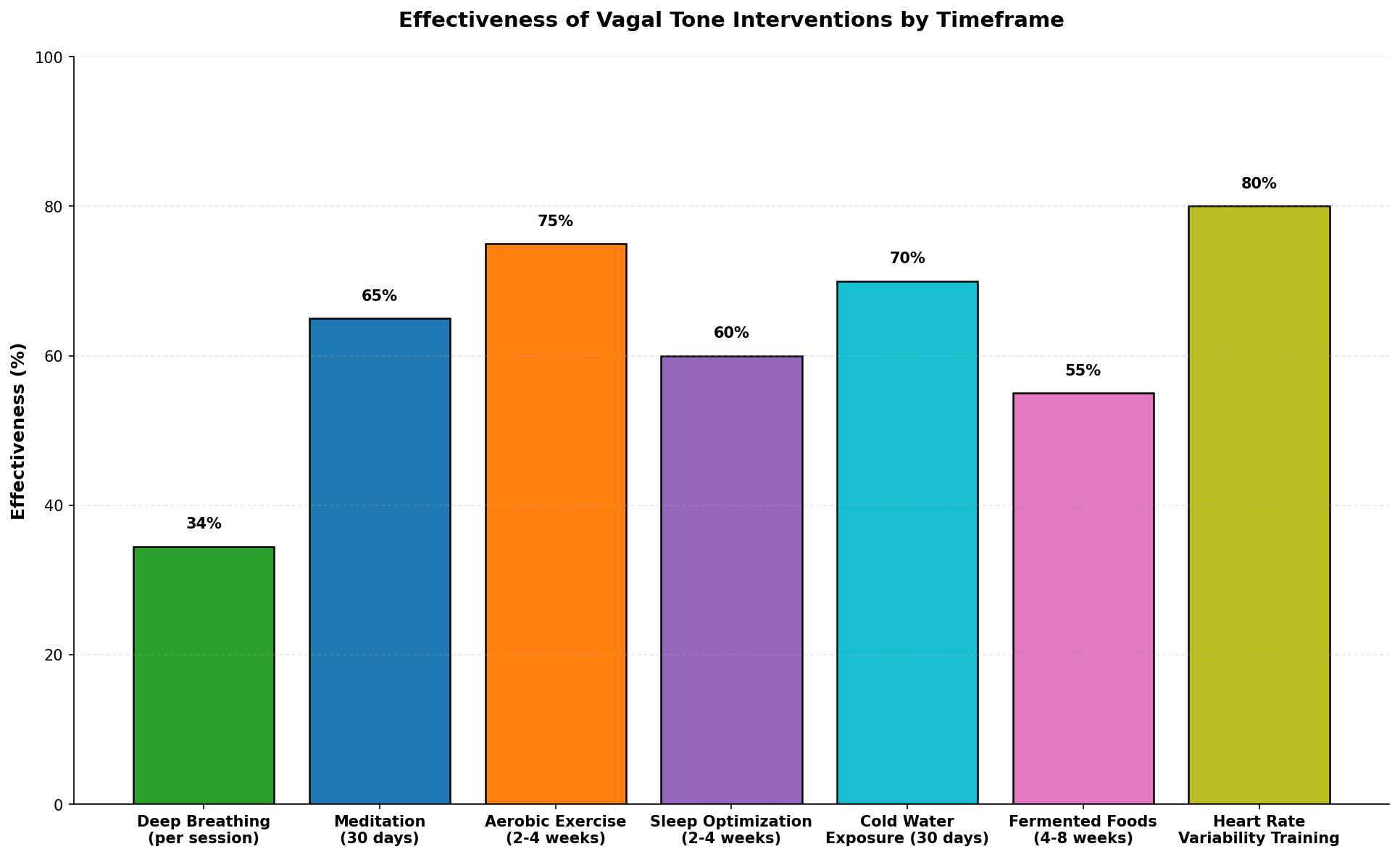
Figure 2: Different vagal tone interventions work on different timescales. Breathing shows immediate effects within minutes; meditation and diet require weeks; exercise shows sustained improvement over months.
When You Should See a Medical Professional
For the vast majority of people, the interventions described above are safe and beneficial. However, certain situations warrant professional guidance:
- Existing cardiac conditions: Cold water exposure requires medical clearance
- Treatment-resistant anxiety or depression: Discuss vagal tone enhancement with your doctor. Medical VNS (vagus nerve stimulation) devices exist for severe cases
- Autoimmune conditions or chronic inflammation: Your doctor should supervise your approach
- Uncontrolled high blood pressure: Some interventions may need adjustment
Additionally, if you're considering formalised vagus nerve stimulation (an implanted device), this requires specialist evaluation. Research shows that 91 % of clinical trials evaluating vagus nerve stimulation found it safe and effective, and patients worldwide have received VNS for conditions including epilepsy, treatment-resistant depression, and inflammatory disorders. But this is a medical intervention requiring specialist involvement.
For most people, the lifestyle interventions described here are sufficient to produce meaningful improvements in vagal tone, stress resilience, and overall health.
Further Reading
Understanding Vagal Tone and the Vagus Nerve
- Cleveland Clinic: Vagus Nerve Anatomy and Function
- NIH National Center for Biotechnology Information: Heart Rate Variability as a Marker of Vagal Tone
Breathing and Meditation Interventions
- PubMed Central: Effects of Slow Breathing on Heart Rate Variability
- NIH: Heart Rhythm Meditation and Vagal Tone Improvements
- Research on Mindfulness Meditation for Anxiety Reduction
Physical Activity and Vagal Training
- PubMed: Cardiac Vagal Tone and Exercise Performance
- Research on Cold Water Exposure and Parasympathetic Recovery
Sleep and Vagal Function
- NIH: Heart Rate Variability and Sleep Quality Relationships
- PubMed Central: Vagus Nerve Stimulation for Sleep Quality Enhancement
Gut Health and the Vagus Nerve
- NIH: The Gut-Brain Axis and Vagal Communication
- PubMed Central: Fermented Foods and Brain Health Through the Gut-Vagal Pathway
- Research on Probiotics and Emotional Regulation
Vagal Tone and Disease Prevention
- PubMed: Vagal Tone as a Cardiovascular Mortality Predictor
- NIH: The Vagus Nerve and Anti-inflammatory Response
References/Helpful Resources
- Yadav I, Waqas R, Mohammad A, Lashari UG, Sabra M, Dwayat A, et al. Heart Rate Variability as a Predictor of Mortality in Heart Failure: A Systematic Review and Meta-Analysis. Cureus [Internet]. 2025 [cited 2026 July 8]. Available from: https://www.cureus.com/articles/433003-heart-rate-variability-as-a-predictor-of-mortality-in-heart-failure-a-systematic-review-and-meta-analysis.
- Jensen MK, Andersen SS, Andersen SS, Liboriussen CH, Kristensen S, Jochumsen M. Modulating Heart Rate Variability through Deep Breathing Exercises and Transcutaneous Auricular Vagus Nerve Stimulation: A Study in Healthy Participants and in Patients with Rheumatoid Arthritis or Systemic Lupus Erythematosus. Sensors [Internet]. 2022 [cited 2026 July 8]; 22(20):7884. Available from: https://www.mdpi.com/1424-8220/22/20/7884.
- Tisdell EJ, Lukic B, Banerjee R, Liao D, Palmer C. The Effects of Heart Rhythm Meditation on Vagal Tone and Well-being: A Mixed Methods Research Study. Appl Psychophysiol Biofeedback [Internet]. 2024 [cited 2026 July 8]; 49(3):439–55. Available from: https://link.springer.com/10.1007/s10484-024-09639-0.
- O’Donnell K, Dunbar M, Speelman D. Effectiveness of Daily Mindfulness Meditation App Usage to Reduce Anxiety and Improve Well-Being During the COVID-19 Pandemic: A Randomized Controlled Trial. Cureus [Internet]. 2023 [cited 2026 July 8]. Available from: https://www.cureus.com/articles/169107-effectiveness-of-daily-mindfulness-meditation-app-usage-to-reduce-anxiety-and-improve-well-being-during-the-covid-19-pandemic-a-randomized-controlled-trial.
- Ataei P, Kalantari H, Bodnar TS, Turner RJ. The gut–brain connection: microbes’ influence on mental health and psychological disorders. Front Microbiomes [Internet]. 2026 [cited 2026 July 8]; 4:1701608. Available from: https://www.frontiersin.org/articles/10.3389/frmbi.2025.1701608/full.
- Albuquerque AASDR, Balata PMM, De Amorim GO, Vieira ACAS, Da Silva HJ, Pernambuco L. Effects of Voiced Gargling on the Electrical Activity of Extrinsic Laryngeal Muscles and Vocal Self-assessment. Journal of Voice [Internet]. 2022 [cited 2026 July 8]; 36(4):515–22. Available from: https://linkinghub.elsevier.com/retrieve/pii/S0892199720302241.
- Horowitz MA, Sussman JH, Zomalan B, Rendler J, Singh A, Birouty N, et al. Vagus nerve stimulation: An update of currently registered clinical trials on ClinicalTrials.gov. Surgical Neurology International [Internet]. 2026 [cited 2026 July 8]; 17:64. Available from: http://surgicalneurologyint.com/surgicalint-articles/vagus-nerve-stimulation-an-update-of-currently-registered-clinical-trials-on-clinicaltrials-gov/.
