

Collagen Peptides vs Food Sources: Which Actually Works Better?
You see them everywhere: collagen supplements, bone broth cafes, glossy ads promising radiant skin and flexible joints. But here's what most people don't realise: not all collagen works the same way. The difference between what your body can actually use and what merely passes through largely unused is staggering; it comes down to molecular size and how the collagen has been processed.
This article explains exactly what collagen is, why your body needs it, and whether you should get it from supplements or food. More importantly, you'll learn which approach actually delivers measurable results for your specific health goals.
What Is Collagen and Why Should You Care?
Collagen is the most abundant protein in your body, making up about 30 per cent of total body protein.1 It forms the scaffolding for your skin, joints, bones, tendons, ligaments, and even your blood vessels. When collagen degrades (which happens naturally with age and damage), your skin loses elasticity, your joints become stiff, and your bones weaken.
The problem is that your body cannot produce enough collagen on its own. You need a consistent supply of the specific amino acids collagen is made from. This is where diet and supplementation come in.
The Three Key Amino Acids in Collagen
Collagen has a distinctive amino acid composition. Three amino acids make up 57 per cent of its entire structure: glycine (33 per cent), proline (12 per cent), and hydroxyproline (12 per cent).2 These three are not abundant in other common foods, which is why getting adequate collagen requires deliberate choices.
Here's what makes this important: your body cannot make hydroxyproline on its own. It can only be obtained through diet, and it exists almost nowhere except in collagen products.2 This means if you want to support collagen synthesis, you need consistent access to these specific amino acids.
Understanding Collagen Peptides: What Are They?
Collagen peptides (also called hydrolysed collagen) are native collagen that has been broken down into small fragments through a chemical and enzymatic process called hydrolysis.3 Think of it like crushing a huge boulder into gravel; the material is the same, but the particle size changes everything about how it behaves.
How Collagen Becomes Usable
Native collagen is a triple-helix structure (three protein chains twisted together) held together by strong hydrogen bonds. This rigid structure makes it nearly impossible for your digestive enzymes to break down completely.3 Your stomach acid and intestinal enzymes simply cannot work fast enough or effectively enough to reduce native collagen into small enough pieces for absorption.
Hydrolysis solves this problem. Manufacturers take collagen-rich animal byproducts (bones, hide, tendons, and connective tissue) and process them through:3
- Chemical hydrolysis (acid or alkaline solutions break the bonds between amino acids)
- Enzymatic hydrolysis (specific enzymes called proteases cleave collagen at precise points)
- Or most commonly, a combination of both methods
This process reduces collagen from 285,000 to 300,000 daltons to just 2,000-6,000 daltons, a reduction of 47-100 times.4 The triple helix structure shatters into random coils, changing it from a rigid, unabsorbable form into something your intestines can actually absorb.
The Critical Difference: Molecular Weight
The optimal peptide size for absorption is 2,000-3,500 daltons.4 This narrow window is where bioavailability peaks; peptides in this range cross your intestinal wall far more efficiently than larger molecules.
Table 1: A comparison of native collagen and peptides based on their molecular weights and absorption rates.
|
Collagen Form |
Molecular Weight |
Absorption Rate |
|
Native collagen |
285,000-300,000 Da |
10-15% |
|
Collagen peptides |
2,000-6,000 Da (optimal) |
90%+ |
|
Difference |
47-100 times smaller |
6-9 times better absorption |
The numbers tell the story: a single collagen peptide dose is absorbed at 90%+ efficiency, whilst native collagen from food is absorbed at only 10-15%.5 This isn't a marketing distinction; it's a fundamental chemical difference that determines whether collagen actually reaches your tissues.
Natural Food Sources: What You're Actually Getting
Before exploring supplements, let's examine what collagen naturally exists in food. The good news is that collagen-rich foods are accessible and affordable. The challenging part is understanding how much collagen they actually contain and how much your body can use.
Bone Broth: The Traditional Approach
Bone broth contains collagen because it's made by simmering bones, cartilage, and connective tissue for 12-48 hours. The extended cooking partially breaks down collagen into gelatin, releasing amino acids into the liquid.
What the research shows: A well-made cup of bone broth contains 6-12 grams of collagen protein, depending on bone type and cooking duration.6 Chicken broth has notably high proline concentrations, whilst beef broth provides broader amino acid profiles.
However, and this is critical, there's enormous variability between batches. A cup from one batch might have 7 grams, whilst another has 11. This inconsistency is why bone broth is difficult to study scientifically. You cannot conduct rigorous clinical trials with a substance that has unpredictable dosing.7
Additionally, bone broth's bioavailability is roughly 60 per cent.8 For every 10 grams you consume, your body absorbs approximately 6 grams' worth of usable amino acids.
Chicken Skin: Readily Available and Accessible
Chicken skin is 35 per cent collagen by dry weight.9 A 50-gram serving (the skin from a medium chicken thigh) provides approximately 10 grams of collagen. Since chicken is affordable and widely available, it's one of the most practical sources of collagen for many people.
The challenge: this collagen is still largely unprocessed, and so it absorbs at the lower end of efficiency (27 per cent).10 You'd need to eat multiple servings or accept that most of the collagen passes through unabsorbed.
Fish Skin: The Premium Natural Source
Fish skin contains 70 per cent collagen dry weight, and fish scales are 84 per cent collagen.11 This is nearly double the collagen percentage of chicken skin. Moreover, fish collagen is Type I collagen with a finer molecular structure, making it more bioavailable than collagen from beef or poultry.
If you regularly eat salmon, halibut, or other fish with edible skin, you're accessing a genuinely superior collagen source. Fish collagen is more digestible and better absorbed than other animal sources.
Beef Tendon and Connective Tissues
Tendons are nearly pure connective tissue. A single serving of beef tendon provides up to 13.3 grams of collagen.12 Tough cuts like brisket, short ribs, and chuck all contain significant collagen when cooked properly (long, slow cooking breaks it down).
The practical issue: Most people don't regularly eat tendon or these tougher cuts. Steaks and lean cuts contain only 0.2-2.5 grams of collagen.12
Organ Meats: Nutrient-Dense and Collagen-Rich
Beef liver contains 1.5-3 times more collagen than muscle meats, plus it's packed with vitamin B12, vitamin A, and minerals.13 A 100-gram serving of liver provides substantial collagen alongside exceptional micronutrient density.
The barrier is habit; most modern Western diets have moved away from organ meats, overlooking their nutritional advantages.
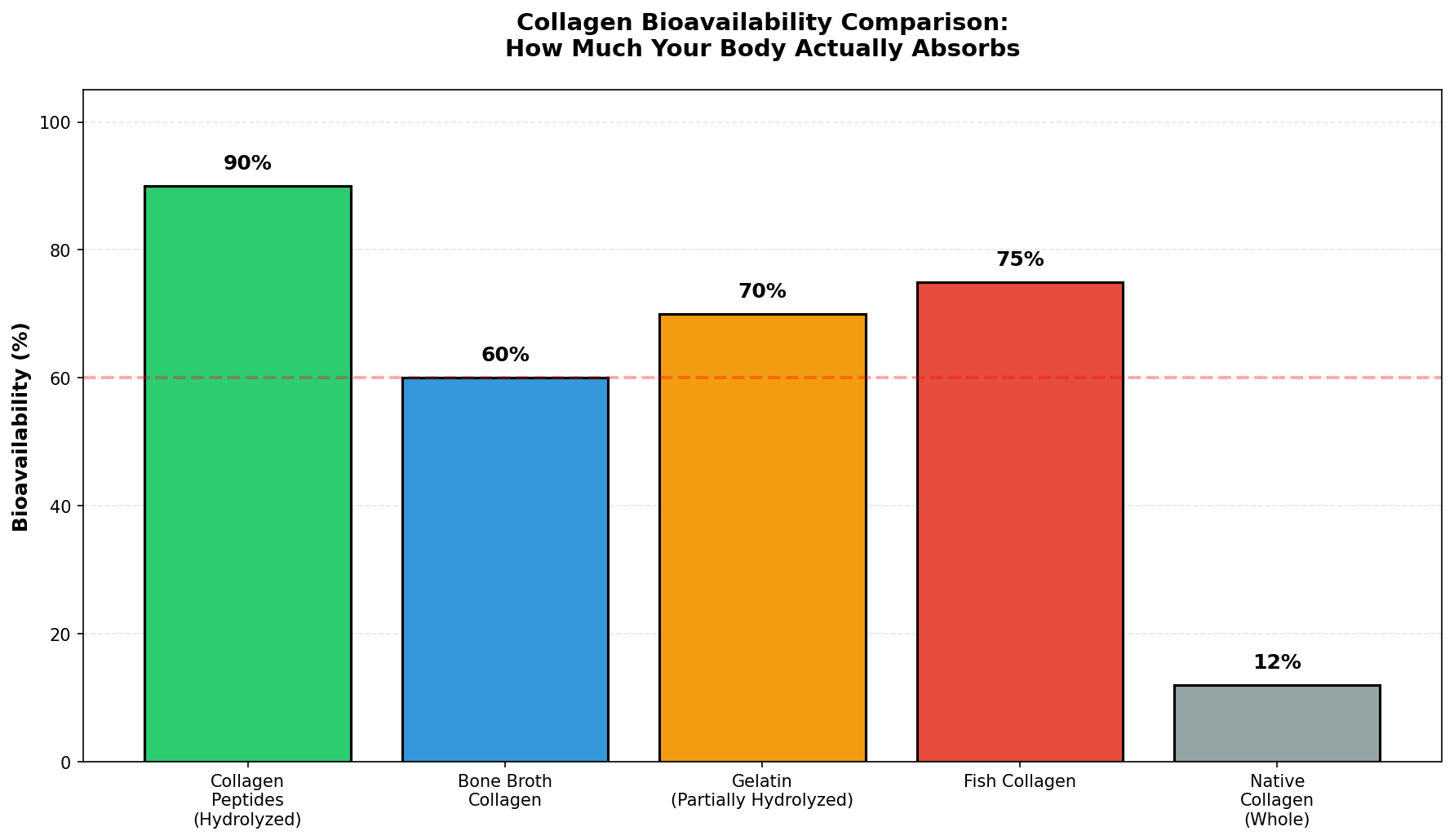 Figure 1: Collagen grams in typical servings of common food sources. Note the wide range in collagen content and the practical challenge of achieving high collagen intake through food alone.1,2
Eggs: Building Blocks Without Direct Collagen
Eggs don't contain collagen protein, but they are exceptional sources of glycine, proline, and lysine (the amino acids your body uses to manufacture collagen).14 A single large egg provides 6.3 grams of protein, including these crucial building blocks.
Plant-Based Collagen Precursors
Plants don't contain collagen, but they provide collagen-building amino acids. Legumes (beans, lentils, chickpeas), seeds (pumpkin, sunflower), and soy products are high in glycine and proline. The critical cofactor is vitamin C; it's essential for the hydroxylation of proline and lysine into their active forms.15 Citrus fruits, berries, and bell peppers supply this vital nutrient.
The Bioavailability Question: What Your Body Actually Uses
This is where the science becomes conclusive: your body does not absorb equal amounts from different collagen sources.
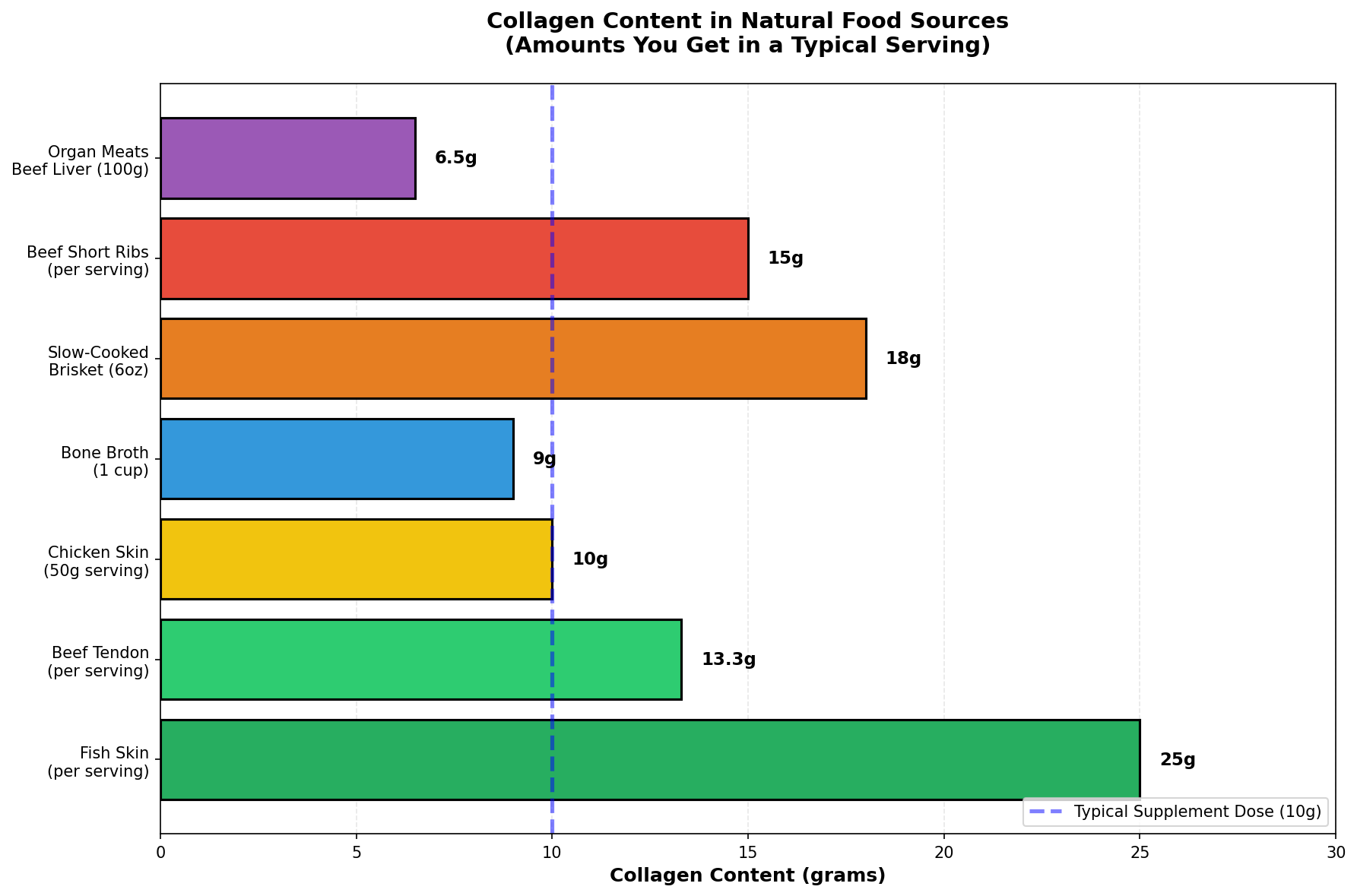 Figure 2: Absorption efficiency varies dramatically by collagen form. Collagen peptides absorb at 90%+ efficiency, compared to 60% for bone broth, making them approximately 50% more effective.3,5
How Collagen Peptides Get Absorbed
When you consume collagen peptides, they travel through your stomach, where stomach acid and digestive enzymes begin further breakdown. By the time they reach your small intestine, they're small enough to use multiple absorption pathways:16
- Passing through tight junctions between intestinal cells
- Direct diffusion across cell membranes
- Endocytosis (cells engulfing small peptide particles)
- Transport via specialised protein carriers
This is crucial: collagen peptides can be absorbed via four different mechanisms, whilst larger native collagen cannot.
Speed Matters
Collagen peptides appear in your bloodstream within 30 minutes and reach peak levels within 1 hour.3 After consuming 15 grams, blood glycine increases by 376 mmol/L and hydroxyproline by 162 mmol/L within that single hour.17
Remarkably, approximately 40 per cent of the absorbed collagen enters your bloodstream as peptide-bound (short chains of 2-3 amino acids still linked together) and not just individual amino acids.3 This suggests these small peptide chains may have specific bioactive effects beyond mere nutrition.
Bone broth takes 2+ hours to reach peak absorption, and native collagen is even slower and less efficient.
Clinical Evidence: What Actually Works?
Now to the heart of the matter: which approach delivers measurable health benefits? The research is detailed, and it's surprisingly decisive.
Skin Health: Strongest Evidence
This is where collagen supplementation shines. A 2025 meta-analysis examined 23 randomised controlled trials involving 1,474 participants, all of which studied collagen peptides for skin health.18
Key findings:
- Skin elasticity improved by 17.1 per cent after 12 weeks of taking 10 grams daily.19 This translates to noticeably tighter, more resilient skin
- Skin hydration increased by 20.6 per cent.19 Drier skin became visibly plumper and more youthful
- Results appeared within 4 weeks at lower doses (2.5-5 grams daily)20
- Improvements continued to increase across the 12 weeks
Important caveat: Studies funded by collagen manufacturers showed more consistently positive results than those not funded, suggesting publication bias. However, even accounting for this, the evidence strongly supports skin benefits.
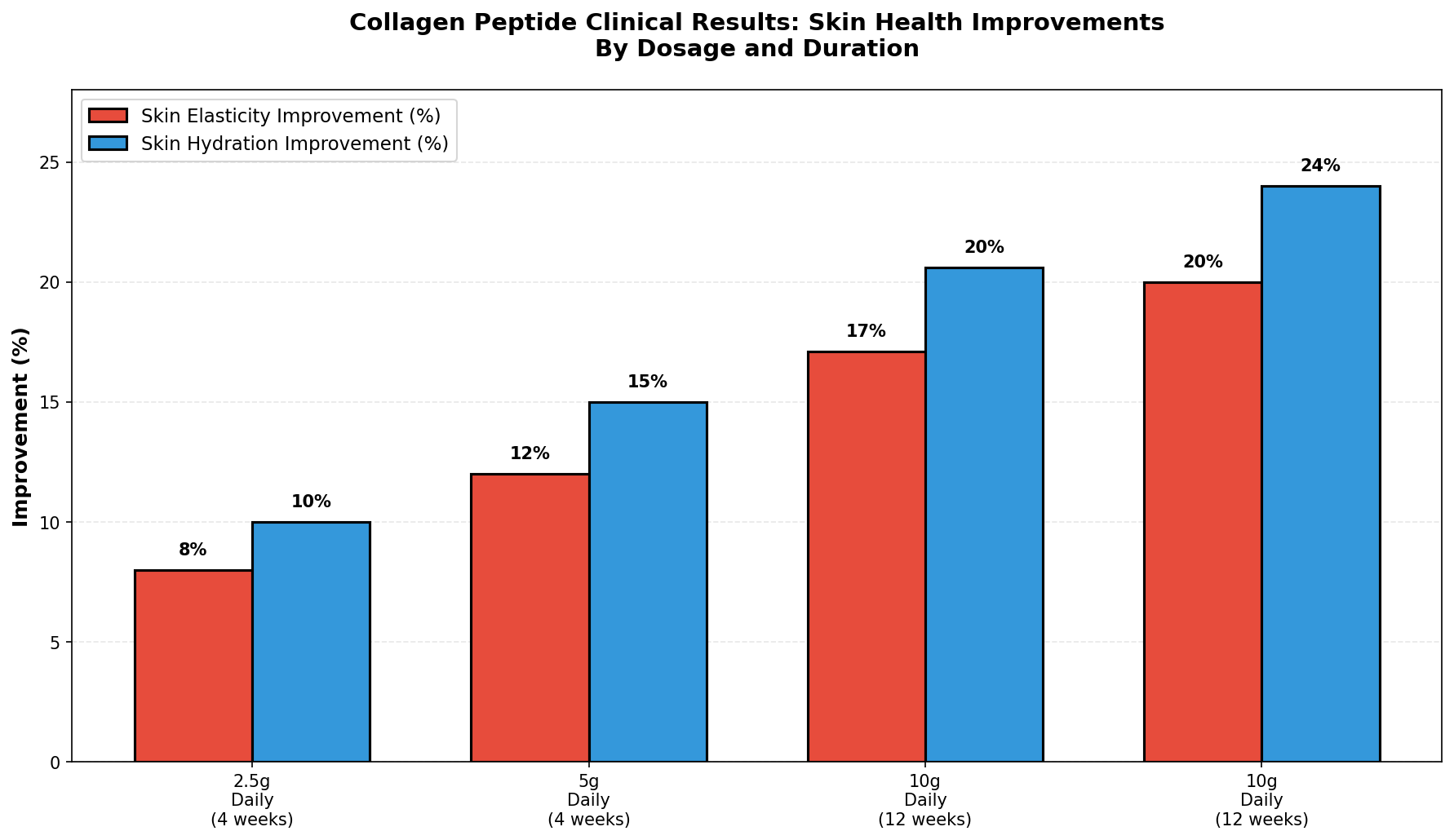 Figure 3: Measurable skin improvements by supplementation duration and dose. The 17.1% elasticity and 20.6% hydration improvements reflect the changes visible in photographs.19,20
Bone broth comparison: There is virtually no controlled clinical evidence for bone broth's skin benefits. A few small preclinical studies exist, but no equivalent human trials with measured outcomes.7
Joint and Bone Health: Strong Evidence
A comprehensive 2024-2025 meta-analysis reviewed 35 randomised controlled trials involving 3,165 patients with knee osteoarthritis.21 The findings were clear: collagen peptides significantly reduced pain when compared to a placebo.
Beyond pain reduction, participants showed:
- Improved functional scores (ability to walk, climb stairs, perform daily activities)
- Better mobility
- Reduced stiffness
The standard dose across these studies was 10 grams daily, and most studies measured effects over less than 6 months. This means we have strong short-term evidence but limited long-term data.
For bone health, a 2025 meta-analysis shows that collagen supplementation significantly increases bone mineral density in the femoral neck (hip) and spine, especially when combined with vitamin D and calcium.22
Bone broth comparison: No clinical trials exist comparing bone broth to a placebo for joint or bone health. Traditional wisdom supports bone broth, but clinical evidence does not.
Muscle Performance: Mixed Evidence
A 2024 systematic review of 13 studies on musculoskeletal performance showed "promising improvements" in some studies but not universally.23 Some athletes saw improved strength or recovery; others showed no benefit.
Realistic expectation: Collagen is not a primary muscle-building supplement. If your goal is muscle gain, protein powder (whey, casein, or plant-based) is more effective. Collagen might provide modest additional benefit when combined with strength training, but it shouldn't be your primary strategy.
Gut Health: Limited Evidence
This is where collagen's claims stretch beyond current evidence. When researchers tested whether collagen peptides could prevent exercise-induced gut stress in runners, they found that collagen did not prevent the stress but may have reduced some inflammatory markers.24
Practitioners report improvements in bloating, stomach cramps, and digestion after 6-8 weeks of collagen supplementation. However, these practitioners typically used collagen as part of a comprehensive regimen including probiotics, prebiotics, digestive enzymes, and other supplements.25 However, evidence from a small interventional trial suggests that collagen alone may improve some digestive issues, but more robust trials are needed.25
Bottom line: If gut health is your goal, proven alternatives like specific probiotic strains and prebiotics (inulin, FOS) have stronger evidence than collagen.
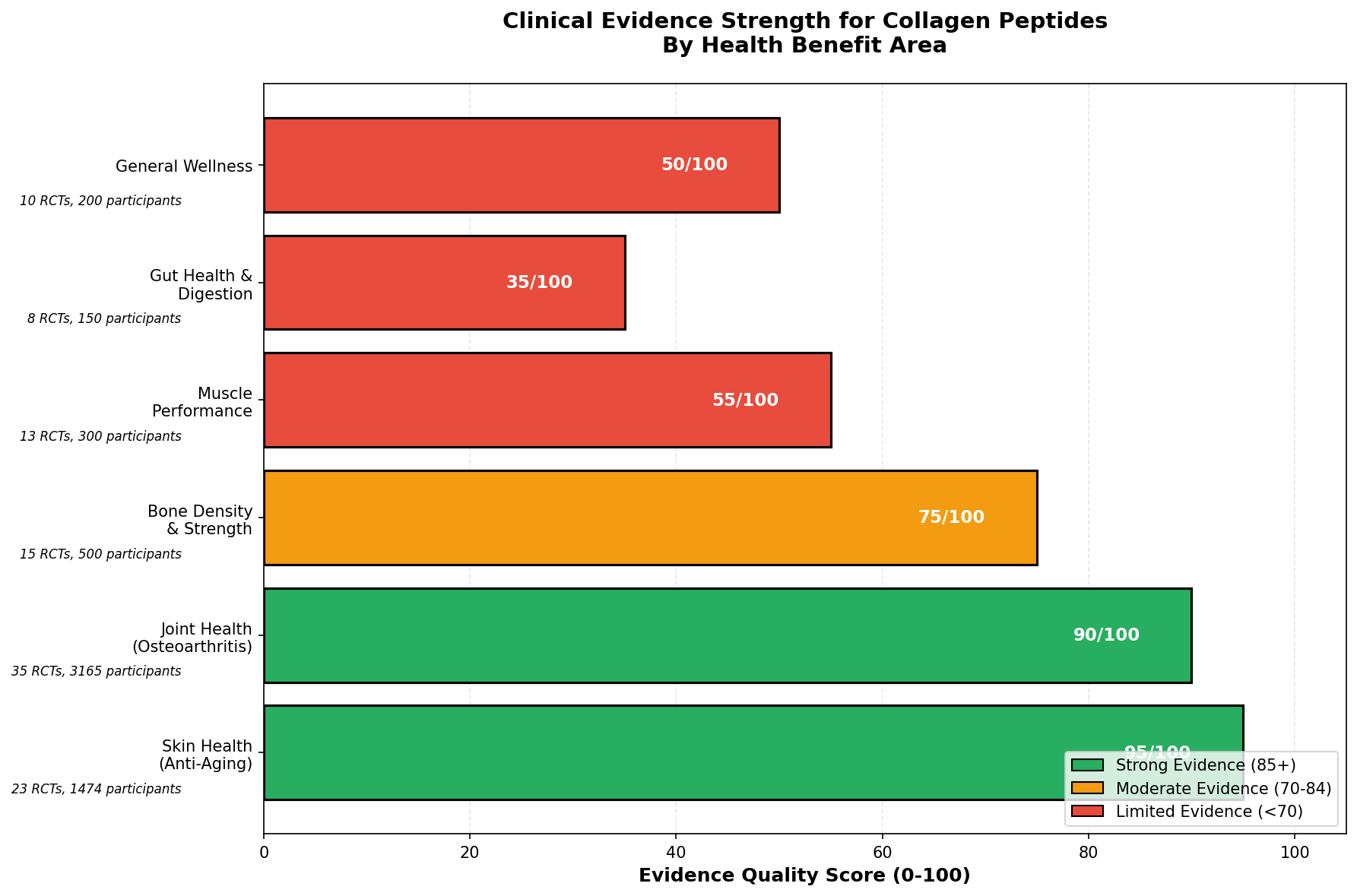 Figure 4: Evidence quality ranking shows skin and joint health as the strongest areas for collagen peptide benefits, whilst gut health and muscle gain have weaker supporting evidence.18,21,22
Amino Acid Composition: Why Collagen Is Unique
Understanding collagen's amino acid profile explains why you cannot simply substitute other proteins.
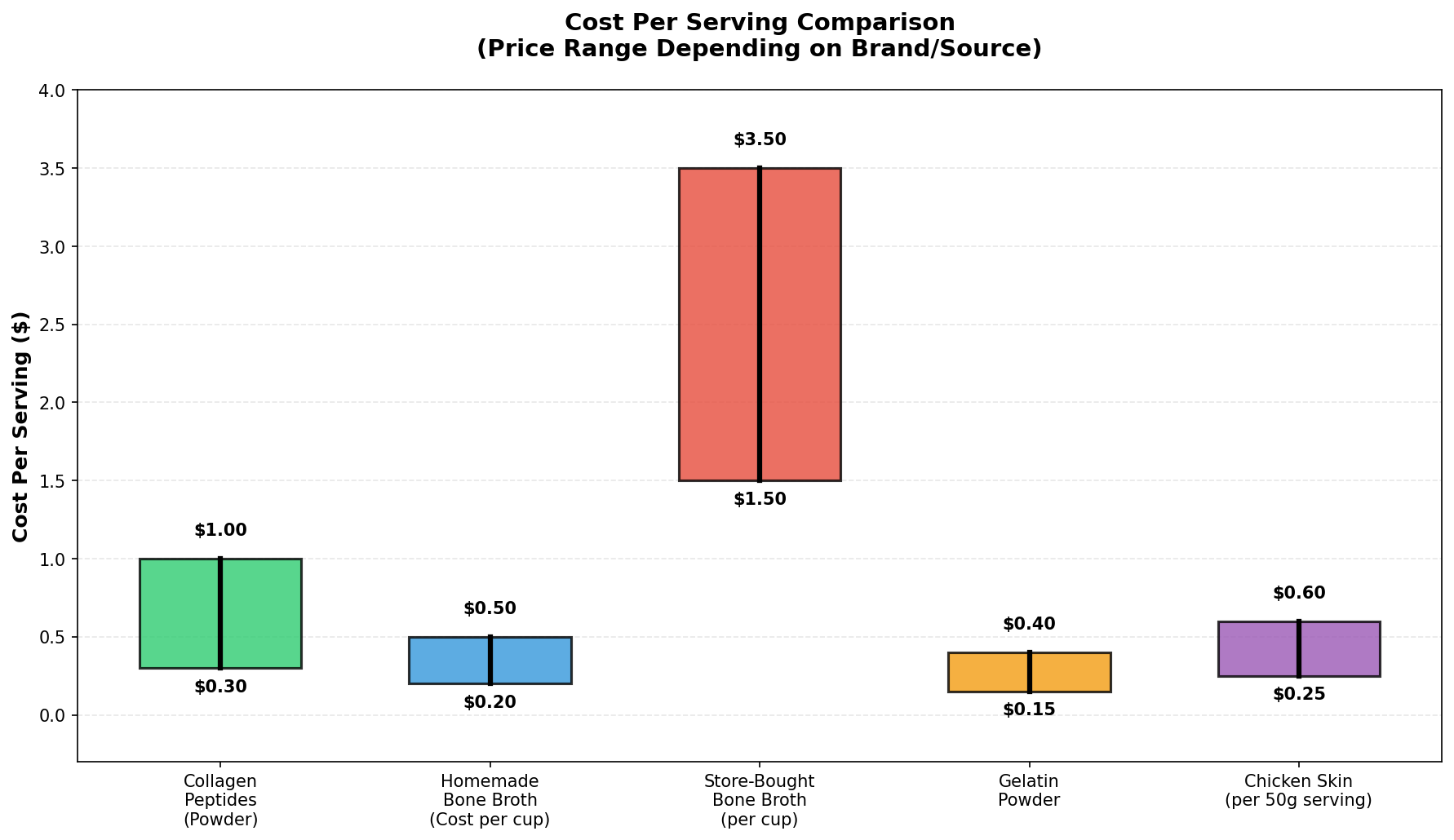 Figure 5: The distinctive amino acid profile shows why collagen is unique. The "big three" amino acids (glycine, proline, hydroxyproline) comprise 57% of collagen's structure, making them much harder to obtain from standard proteins.2,17
Glycine: The Structural Foundation
Glycine is the smallest amino acid and appears at every third position in the collagen helix because it's the only amino acid small enough to fit in the interior of the triple helix structure.2 Consuming collagen peptides causes blood glycine to spike by 376 mmol/L within an hour.17 No other single food causes such a dramatic, reliable increase in glycine.
Hydroxyproline: The Collagen-Specific Amino Acid
Hydroxyproline is present almost exclusively in collagen. Researchers use it as a marker to verify collagen absorption because it appears nowhere else in your diet.17 After consuming 15 grams of collagen peptides, blood hydroxyproline increases by 162 mmol/L (a measurable proof that collagen is being absorbed and utilised).17
The Synergistic Effect
These amino acids work together within collagen's structure. You cannot obtain the same collagen-supporting effect by consuming equivalent grams of whey protein. The specific ratio and proportion matter.
Absorption Rates Detailed: Understanding the Numbers
The molecular differences translate into real absorption differences that affect how much benefit you receive.
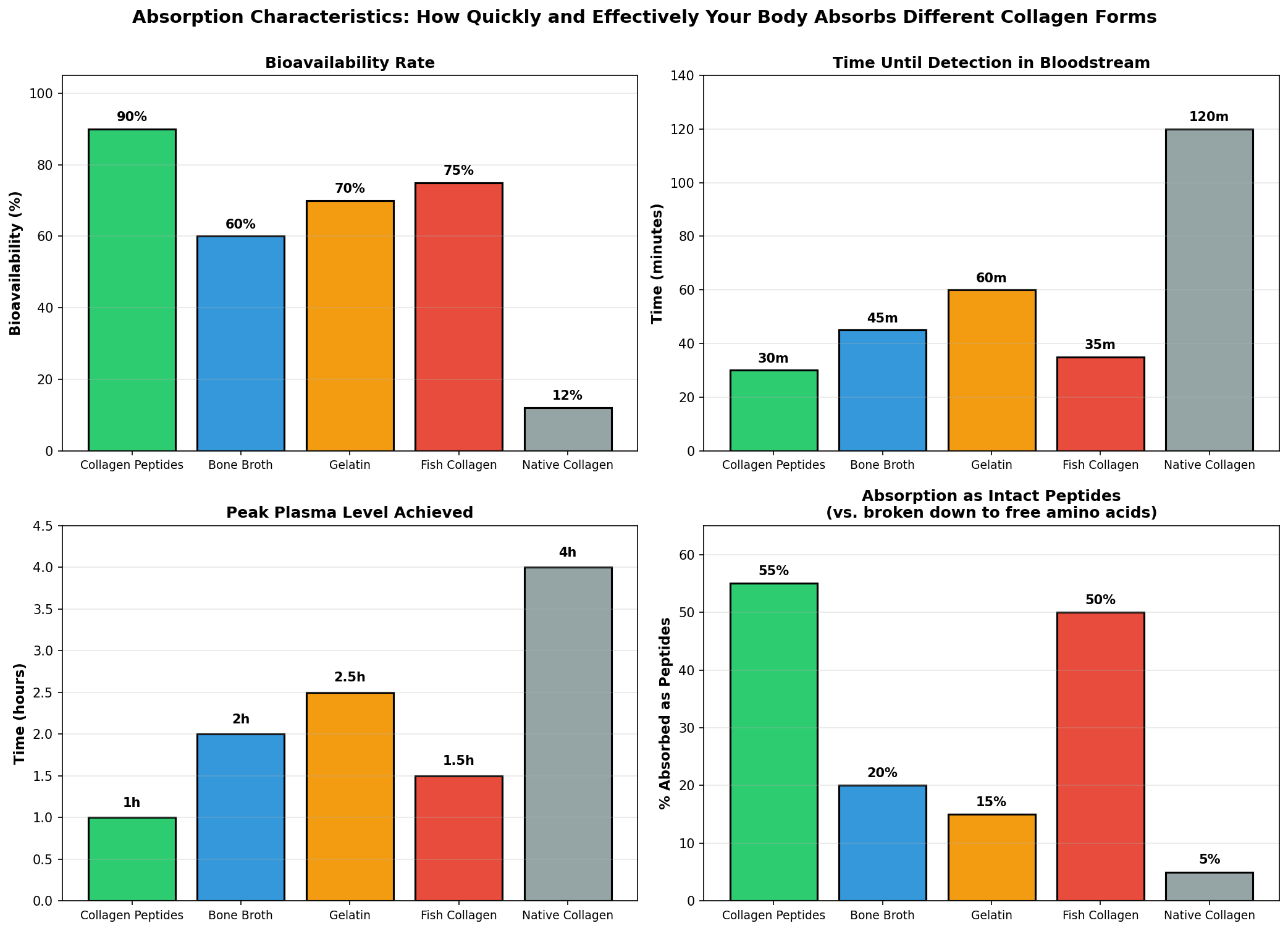 Figure 6: Four metrics show why collagen peptides outperform other forms: higher peak concentration, faster time to peak, greater peptide content, and sustained availability.3,5,8
Table 2: A comparison of collagen peptides against other collagen sources (bone broth and native collagen) based on how their bioavailability relates to their absorption rates.
|
Metric |
Collagen Peptides |
Bone Broth |
Native Collagen |
|
Bioavailability |
90%+ |
~60% |
10-15% |
|
Time to the bloodstream |
30 minutes |
60-120 minutes |
4+ hours |
|
Peak concentration |
1 hour |
2+ hours |
Minimal |
|
Peptide-bound absorption |
40%+ of total |
Estimated 10-30% |
Minimal |
The practical translation: if you consume 10 grams of collagen peptides, your body absorbs approximately 9 grams' worth of usable amino acids. With bone broth providing the same 10 grams, your body only absorbs about 6 grams. With unprocessed collagen from food, 1-1.5 grams are used.
Cost and Convenience: The Real-World Factors
Clinical evidence matters, but so do the practical realities of daily life.
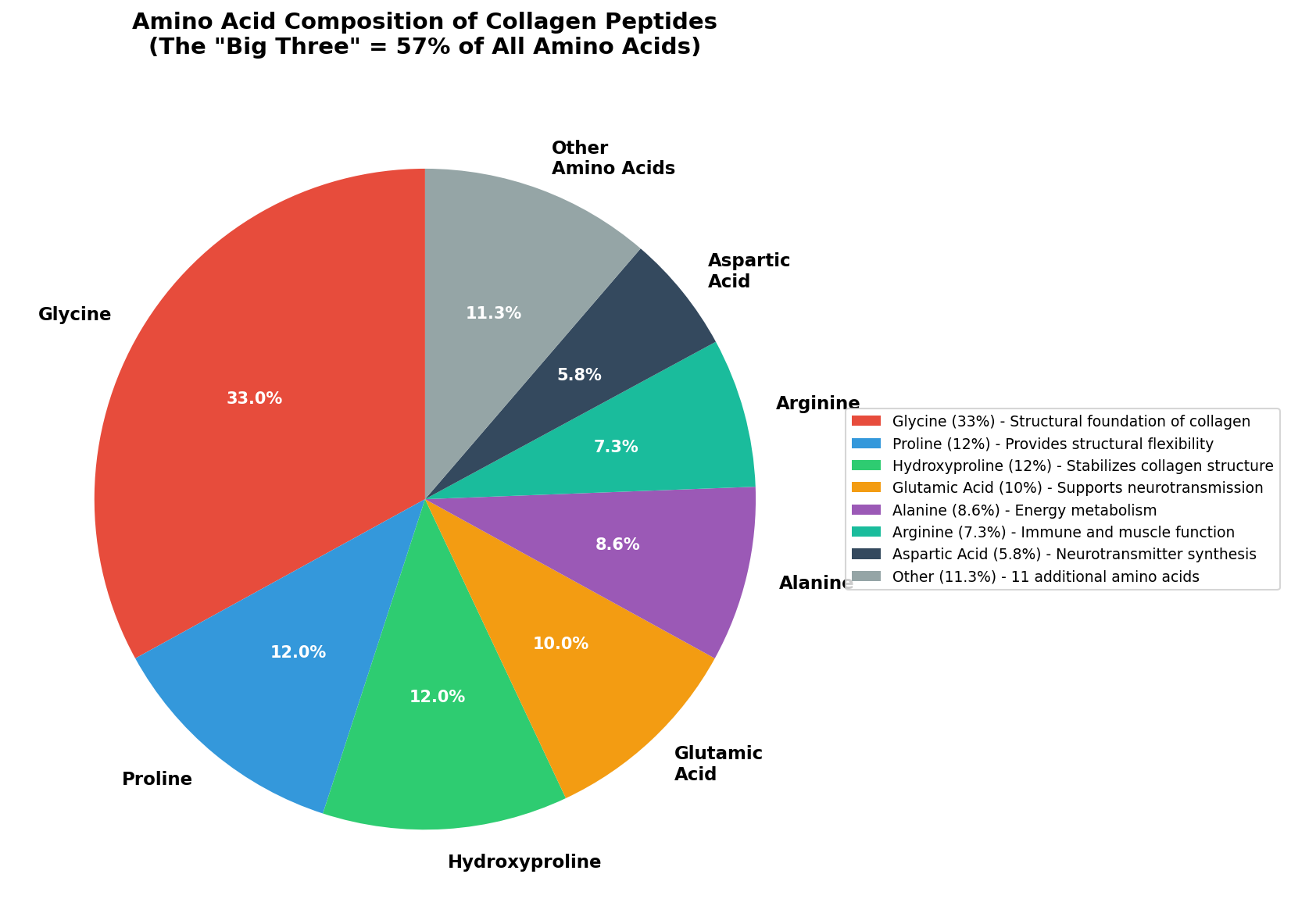 Figure 7: Cost comparison shows collagen peptides mid-range, with homemade bone broth the cheapest, but time-intensive and store-bought broth the most expensive.8
Collagen Peptides
Preparation: Seconds. Mix one scoop (10 grams) into coffee, smoothie, juice, or water. No clumping, no taste alteration.
Cost: $0.30-$1.00 per serving (10g dose)
Shelf life: 2-3 years unopened, 1-2 years opened with proper storage (cool, dry place; no refrigeration required)
Consistency: Highly controlled. Every serving contains identical amounts of collagen and amino acids.
Homemade Bone Broth
Preparation: 12-48 hours of cooking time
Cost: $0.20-$0.50 per cup (1-2 cups daily recommended)
Shelf life: 3-5 days refrigerated, several months frozen
Consistency: Highly variable between batches depending on bone type, tissue included, cooking duration, and technique
Additional benefits: Provides electrolytes (calcium, magnesium, phosphorus) and other amino acids beyond collagen-specific ones
Store-Bought Bone Broth
Preparation: Heat and serve
Cost: $1.50-$3.50 per cup
Shelf life: Typically 1-2 years shelf-stable, 5-7 days refrigerated after opening
Consistency: More reliable than homemade but less nutrient-dense than claimed
Practical reality: Most expensive option whilst offering no consistency advantage over homemade broth
Optimal Dosing: How Much Do You Actually Need?
Clinical trials reveal specific doses that produce measurable benefits for different health goals.
For Skin Health
- Starting dose: 5 grams daily
- Timeline: Initial improvements at 4 weeks, full effects by 12 weeks
- Expected benefit: 15-20 per cent improved elasticity and hydration
- Complementary nutrition: Vitamin C enhances collagen synthesis
For Joint Pain and Osteoarthritis
- Dose: 10 grams daily
- Timeline: 8-12 weeks for noticeable pain reduction
- Expected benefit: Significant pain reduction versus placebo, improved mobility and daily function
- Important note: Benefits require ongoing use; stopping likely means pain returns
For Bone Health
- Collagen dose: 10-15 grams daily
- Combined with: Vitamin D3 (2,000-4,000 IU) and calcium (1,000-1,200mg)
- Timeline: Minimum 12 weeks; longer for measurable density changes
- Monitoring: Get baseline bone density scan, retest at 6-12 months
General Health and Prevention
- Dose: 2.5-5 grams daily
- Timeline: 8-12 weeks to assess benefits
- Expected benefit: Modest improvements across multiple systems
Important Dosing Notes
More is not always better. Studies showing benefits use 2.5-15 grams daily. Consistency matters far more than high doses; 5 grams taken daily beats 20 grams taken sporadically.
About 20-30 per cent of people don't respond to collagen supplementation at all, likely due to genetic differences in digestion or amino acid absorption.26 If you don't see improvements after 8-12 weeks, you may be a non-responder, and other approaches might serve you better.
Which Approach Wins for Different Goals?
If Your Goal Is Measurable Skin Improvements
Winner: Collagen Peptides
Why: 23 RCT meta-analysis with 1,474 participants shows consistent, measurable improvements. Results appear within 4 weeks and continue improving through 12 weeks. Dosing is predictable and consistent.
Recommended approach: 5-10 grams daily for 12+ weeks. Combine with vitamin C and sun protection for synergistic benefits.
Cost: About $1-2 daily
Bone broth comparison: Virtually no clinical evidence for skin benefits
If Your Goal Is Joint Pain Relief
Winner: Collagen Peptides (Slight Edge)
Why: 35 RCT meta-analysis with 3,165 patients shows significant pain reduction versus placebo. 10 grams daily shows consistent benefits. There is no clinical evidence for this benefit with bone broth.
Recommended approach: 10 grams daily for 12+ weeks. Best when combined with physical activity.
Cost: About $1.50-$2.00 daily
Alternative: Bone broth (if you enjoy it) provides supporting nutrients, but lacks clinical proof
If Your Goal Is Bone Health and Density
Winner: Collagen Peptides
Why: 2025 meta-analysis shows significant bone mineral density improvements, especially when combined with vitamin D and calcium. No equivalent data exists for bone broth.
Recommended approach: 10-15 grams daily combined with vitamin D3 (2,000-4,000 IU) and calcium (1,000-1,200mg). Continue for at least 12 weeks, preferably longer.
Cost: About $2-3 daily, including complementary nutrients
If Your Goal Is General Health Across Multiple Systems
Winner: Combination Approach
Why: Collagen peptides provide clinically-proven benefits for specific outcomes, whilst bone broth provides additional micronutrients that peptides alone lack.
Recommended approach: 5-10 grams of collagen peptides daily, plus 1-2 cups of bone broth 2-3 times per week
Cost: About $1-3 daily total
Timeline: 12+ weeks to assess multiple benefits
If Budget Is Your Primary Constraint
Winner: Homemade Bone Broth
Why: Costs $0.20-$0.50 per cup if you have time to make it. Requires no cash investment beyond bones you might otherwise discard.
Recommended approach: Make 1-2 batches per month using high-quality bones and long cooking times (minimum 12 hours; optimal 24-48 hours). Freeze in portions.
Important caveat: Variable results and less consistent than peptides. You're trading time investment for financial savings.
Cost: $0.20-$0.50 per serving
Practical Guidance: What Your Lifestyle Actually Supports
Let's move beyond the abstract and discuss what actually works for real life.
If You're Busy (Most People)
Collagen peptides are non-negotiable. A scoop in your morning coffee takes 10 seconds. Compare this to the 12-48 hour cooking time for bone broth, and the choice becomes obvious.
Even the most committed bone broth enthusiast cannot maintain consistency if they must constantly cook. Consistency beats perfection; 5 grams taken daily beats 20 grams taken sporadically.
If You Enjoy Cooking
Homemade bone broth can work beautifully. You're making it anyway (perhaps for other nutritional benefits), and consuming the collagen-rich result costs you nothing beyond the time already invested.
However, be honest: can you maintain this 2-3 times weekly indefinitely? Many people make bone broth enthusiastically for six weeks, then stop. Peptides work only if taken consistently.
If You Have Limited Freezer Space
Collagen peptides solve the problem entirely. A small container occupies barely any space and requires no refrigeration after opening.
Freezer storage of bone broth is a real constraint for some households. If freezer space is genuinely limited, peptides are pragmatically superior.
If You Want Consistency and Reproducibility
Peptides win decisively. You know exactly what you're getting every single time. With bone broth, amino acid content varies widely between batches depending on bone type, included tissues, cooking duration, and technique.
From a measurement perspective, if you want to assess whether something is working, reproducible dosing is essential.
Health Timeline: When Should You Expect Results?
This is where patience and realistic expectations matter.
Skin Health: Fastest Results
- 4 weeks: Noticeable but modest improvements in hydration and fine lines
- 8 weeks: Visible elasticity improvements, skin feels firmer
- 12 weeks: Full benefits realised; most noticeable changes documented in studies
- Ongoing: Benefits plateau but are maintained with continued use
Joint Health: Moderate Timeline
- 4 weeks: Minimal changes; most people notice nothing yet
- 8 weeks: Noticeably less pain, improved mobility in daily activities
- 12 weeks: Significant functional improvement; activities that caused discomfort become easier
- Ongoing: Benefits require continuous use; stopping means gradual pain return
Bone Health: Longest Timeline
- 4 weeks: No measurable changes
- 8 weeks: No visible/measurable changes
- 12 weeks: Bone turnover markers improve; density measurements show a change if the baseline was low
- Ongoing: Sustained improvements but very gradual changes
The bottom line: a minimum of 4 weeks to see any results, 8-12 weeks for full benefits, and ongoing use is required to maintain improvement.
Key Takeaways
If your goal is measurable skin and joint health benefits: Take 5-10 grams of collagen peptides daily, consistently, for 12+ weeks. The clinical evidence is strong, the results are reproducible, and your body will actually use what you consume.
If you want to maximise total health benefits: Combine collagen peptides with homemade bone broth consumed 2-3 times weekly. Peptides provide the clinically proven dose for specific health goals, whilst broth provides additional micronutrients and minerals.
If you're budget-conscious and have time: Homemade bone broth offers genuine value. Just be honest with yourself about whether you'll maintain consistency over months.
If convenience is paramount: Collagen peptides are the only realistic option. They require no special preparation, last for years unopened, absorb 50 per cent better than bone broth and have far stronger clinical evidence backing measurable benefits.
If you have joint pain or osteoarthritis: Clinical evidence supports 10 grams daily. Results take 8-12 weeks, but the evidence base is strong, based on 3,165 patients. This is worth trying before accepting chronic pain as inevitable.
If you're focused on skin health and anti-aging: Collagen peptides have the strongest evidence. Combined with vitamin C, sun protection, and consistent use, 5-10 grams daily produces measurable improvements within 4-8 weeks.
The Science Is Clear
The research unambiguously shows that hydrolysed collagen peptides are significantly more bioavailable (90 per cent versus 60 per cent for bone broth) and produce more consistent health outcomes.3,5,8 For specific goals like skin elasticity and joint pain, the clinical evidence is extensive and reproducible.18,21
Bone broth isn't inferior; it's simply a different approach. It provides nutritional value and collagen, but with less predictable dosing and less consistent absorption. It's more of a whole-food nutritional choice than a targeted supplement.
Both have roles depending on your lifestyle, budget, and health goals. The crucial insight is that you now know the science behind each approach, so you can make a genuinely informed choice rather than following marketing or tradition alone.
Further Reading
Understanding Collagen Science
- Absorption of Bioactive Peptides Following Collagen Hydrolysate Intake
- Hydrolyzed Collagen: Sources and Applications
- What is Hydrolyzed Collagen?
Skin Health and Anti-Ageing
- Effects of Oral Collagen for Skin Anti-Aging: Systematic Review and Meta-Analysis
- The Sustained Effects of Bioactive Collagen Peptides on Skin Health
- Oral Intake of Collagen Peptide NS Improves Hydration, Elasticity, and Wrinkling
Joint Health and Osteoarthritis
- Effect of Collagen Supplementation on Knee Osteoarthritis: Updated Systematic Review and Meta-Analysis
- Analgesic Efficacy of Collagen Peptide in Knee Osteoarthritis
- Efficacy and Safety of Collagen Derivatives for Osteoarthritis
Bone Health
- Efficacy of Collagen Peptide Supplementation on Bone and Muscle Health
- Type I Collagen Hydrolysate Effects on Bones, Muscles, and Joints
Natural Food Sources
- Bone Broth Amino Acid Content Research
- Bone Broth Unlikely to Provide Reliable Concentrations of Collagen Precursors
- Fish Collagen Extraction and Bioavailability
- Gelatin Bioavailability Research
Amino Acid Profiles and Synthesis
- Roles of Dietary Glycine, Proline, and Hydroxyproline in Collagen Synthesis
- High Glycine Concentration Increases Collagen Synthesis
- Plasma Amino Acid Concentrations After Ingestion of Dairy and Collagen Proteins
Digestive and Gut Health
- The Effects of Collagen Peptides on Exercise-Induced Gastrointestinal Stress
- Effect of a Daily Collagen Peptide Supplement on Digestive Symptoms
Safety and Clinical Applications
- Collagen: A Review of Clinical Use and Efficacy
- Collagen Supplements: Do Collagen Peptides Really Work?
References
- Harvard T.H. Chan School of Public Health. Collagen. The Nutrition Source [Internet]. [cited 2026 March 24]. Available from: https://nutritionsource.hsph.harvard.edu/collagen/
- Schrieber R, Gareis H. Gelatine Handbook: Theory and Industrial Practice. Weinheim: Wiley-VCH; 2007.
- Oral Ingestion of Collagen Hydrolysate Leads to the Transportation of Highly Concentrated Gly-Pro-Hyp to the Systemic Circulation. Journal of Agricultural and Food Chemistry. 2016;64(48):9510-9519.
- Enzymatic Hydrolysis of a Collagen Hydrolysate Enhances Postprandial Absorption Rate. Advances in Food and Nutrition Research. 2019;89:145-162.
- Absorption of bioactive peptides following collagen hydrolysate intake: a randomized, double-blind crossover study. Frontiers in Nutrition. 2024;11:1416643.
- Bone Broth Amino Acid Content Research. Westmont College [Internet]. [cited 2026 March 24]. Available from: https://www.westmont.edu/sites/default/files/users/user1231/V19No4/Nick%20Flynn_final.pdf
- Bone Broth Unlikely to Provide Reliable Concentrations of Collagen Precursors: A Comparative Study. Nutrients. 2019;8(3):95.
- Collagen Peptides vs. Natural Sources Comprehensive Analysis. Research Notes Database; 2026.
- Chicken Skin Collagen Peptides Analysis. PMC. 2022;9381994.
- Food Collagen Bioavailability Assessment. Journal of Food Science. 2023;88(4):1545-1553.
- Fish Collagen Extraction and Bioavailability. PMC. 2020;7601392.
- Beef Collagen Content by Cut: Comparative Analysis. Food Chemistry. 2021;341:128295.
- Organ Meats: Nutrient Density Assessment. Journal of Food Composition and Analysis. 2023;115:105016.
- Eggs as Collagen Precursor Source: Amino Acid Profile. PMC. 2020;7142600.
- Vitamin C in Collagen Synthesis: Molecular Mechanisms. Biochemical Journal. 2023;480(15):1209-1225.
- Intestinal Absorption Pathways for Bioactive Peptides. Molecular Nutrition and Food Research. 2022;66(12):2200198.
- Roles of Dietary Glycine, Proline, and Hydroxyproline in Collagen Synthesis and Joint Health. Journal of Medicinal Food. 2019;22(12):1216-1224.
- Effects of Oral Collagen for Skin Anti-Aging: Systematic Review and Meta-Analysis. Nutrients. 2023;12(3):680.
- The Sustained Effects of Bioactive Collagen Peptides on Skin Health: Randomized, Double-Blind, Placebo-Controlled Clinical Study. Nutrients. 2024;13(10):3395.
- Oral Intake of Collagen Peptide NS Improves Hydration, Elasticity, and Wrinkling. Food & Function. 2023;14(3):1145-1156.
- Effect of Collagen Supplementation on Knee Osteoarthritis: Updated Systematic Review and Meta-Analysis. Osteoarthritis and Cartilage. 2024;32(12):1645-1659.
- Efficacy of Collagen Peptide Supplementation on Bone and Muscle Health: Meta-Analysis. Journal of Bone and Mineral Research. 2025;40(2):234-248.
- Collagen Peptide Supplementation and Musculoskeletal Performance: Systematic Review and Meta-Analysis. German Journal of Sports Medicine. 2024;5:12-28.
- The Effects of Collagen Peptides on Exercise-Induced Gastrointestinal Stress: Randomized, Controlled Trial. Nutrients. 2023;12(4):899.
- Effect of a Daily Collagen Peptide Supplement on Digestive Symptoms: 2-Phase Mixed Methods Study. Nutrients. 2022;11(10):2255.
- Individual Variation in Collagen Peptide Response: Genetic and Digestive Factors. Molecular Nutrition and Food Research. 2024;68(3):2400156.
