

Your child stumbles in the dark. She takes too long to adjust when stepping inside from bright sunlight. He avoids going out after sunset or playing in dimly lit rooms. If you've noticed these signs, this article is for you.
Xerophthalmia is not just an eye problem; it is the world's leading preventable cause of childhood blindness. Yet because it develops silently and progressively, many parents miss the early warning signs: the window when treatment is 100% effective and vision can be completely preserved. This guide helps you recognise xerophthalmia before it steals your child's sight.
The hopeful news: caught early, xerophthalmia is entirely reversible. A child with night blindness who receives vitamin A supplementation within days or weeks will see normally again within 1-2 weeks. But if caught late, when the cornea has scarred, blindness becomes permanent even with treatment. Understanding what to watch for and acting quickly is the difference between a child who sees and one who doesn't.
What Is Vitamin A, and Why Does It Matter So Much for Your Child's Vision?
Vitamin A is a nutrient your child's body cannot manufacture on its own. It must come from food or supplements. This single nutrient does something remarkable: it keeps the eye's light-sensitive cells functioning, maintains a protective tear film, and supports immune defences against infections.
When your child doesn't get enough vitamin A, several catastrophic changes happen inside the eye. The rod cells (the ones responsible for vision in dim light) start to fail. The conjunctiva (the clear membrane covering the white of the eye) loses its moisture and protective coating. Goblet cells, which produce the mucus that keeps eyes wet and protected, begin to die off. Finally, if the deficiency continues, the cornea itself becomes dry, cloudy, and damaged.
Without vitamin A, the eye literally dries out and scars.
The tragedy is that this happens to children whose bodies are already fighting for survival. Vitamin A deficiency does not occur in isolation. It is a marker of severe malnutrition—a sign that a child is not getting adequate food, clean water, or basic healthcare. Which is why xerophthalmia affects childhood mortality beyond just vision: children with vitamin A deficiency have 4-12 times higher death rates from all causes compared to well-nourished children, primarily because their immune systems cannot fight off infections.
This is the story behind the numbers: 1 in 6 childhood deaths in developing countries is linked to vitamin A deficiency. That is approximately 1 to 3 million children dying each year from a condition that could have been prevented with pennies' worth of vitamin A.
Understanding Your Child's Risk: Geography, Age, and Socioeconomic Factors
Xerophthalmia is not distributed equally across the world. Your child's risk depends dramatically on where you live, your family's economic circumstances, and access to vitamin A-rich foods.
Where Does Xerophthalmia Happen?
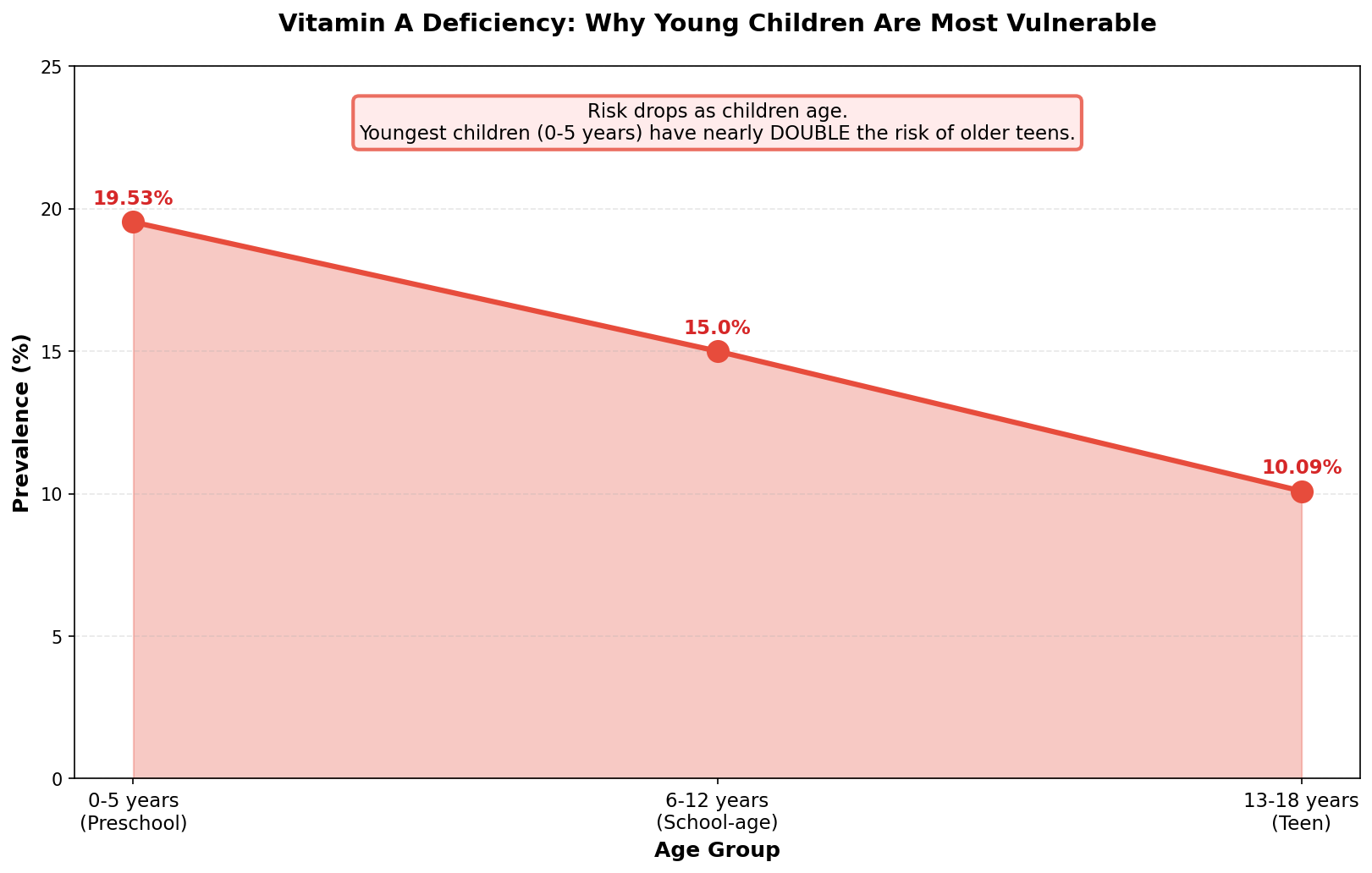 Figure 1: Vitamin A deficiency rates vary dramatically by region. South Asia carries the world's highest burden, with 44- 50% of preschool children lacking adequate vitamin A—nearly one in two children. Sub-Saharan Africa follows, with rates ranging from 6% to 21% depending on the country. In developed nations with food fortification, xerophthalmia remains rare.
South Asia bears the highest global burden. In some areas, nearly 1 in 2 preschool children have severe vitamin A deficiency. India, Bangladesh, and Nepal see rates of 7- 8% of children with clinical xerophthalmia—and this represents only those with visible eye changes. Millions more have subclinical deficiency (no symptoms yet) but are at imminent risk.
Sub-Saharan Africa shows the second-highest burden, with significant regional variation. Southern Malawi has been particularly hard hit, with 1 in 25 young children showing active xerophthalmia—rates more than five times above what the World Health Organization considers acceptable. In rural Ethiopia, where malnutrition is severe, 1 in 5 malnourished children have xerophthalmia. Nigeria, Mali, Sudan, and Zambia all report similar crisis levels.
Southeast Asia has highly variable rates depending on local poverty, food access, and supplementation programs. Some areas approach South Asian prevalence rates; others show much lower figures.
Developed countries see xerophthalmia as a rare curiosity, thanks to food fortification (adding vitamin A to flour, oil, margarine, and milk) and diverse diets. However, the condition is emerging in specific populations: children with autism spectrum disorder who eat extremely restrictively, children with celiac disease or cystic fibrosis affecting nutrient absorption, and individuals with severe alcoholic liver disease.
Why Are Young Children Most Vulnerable?
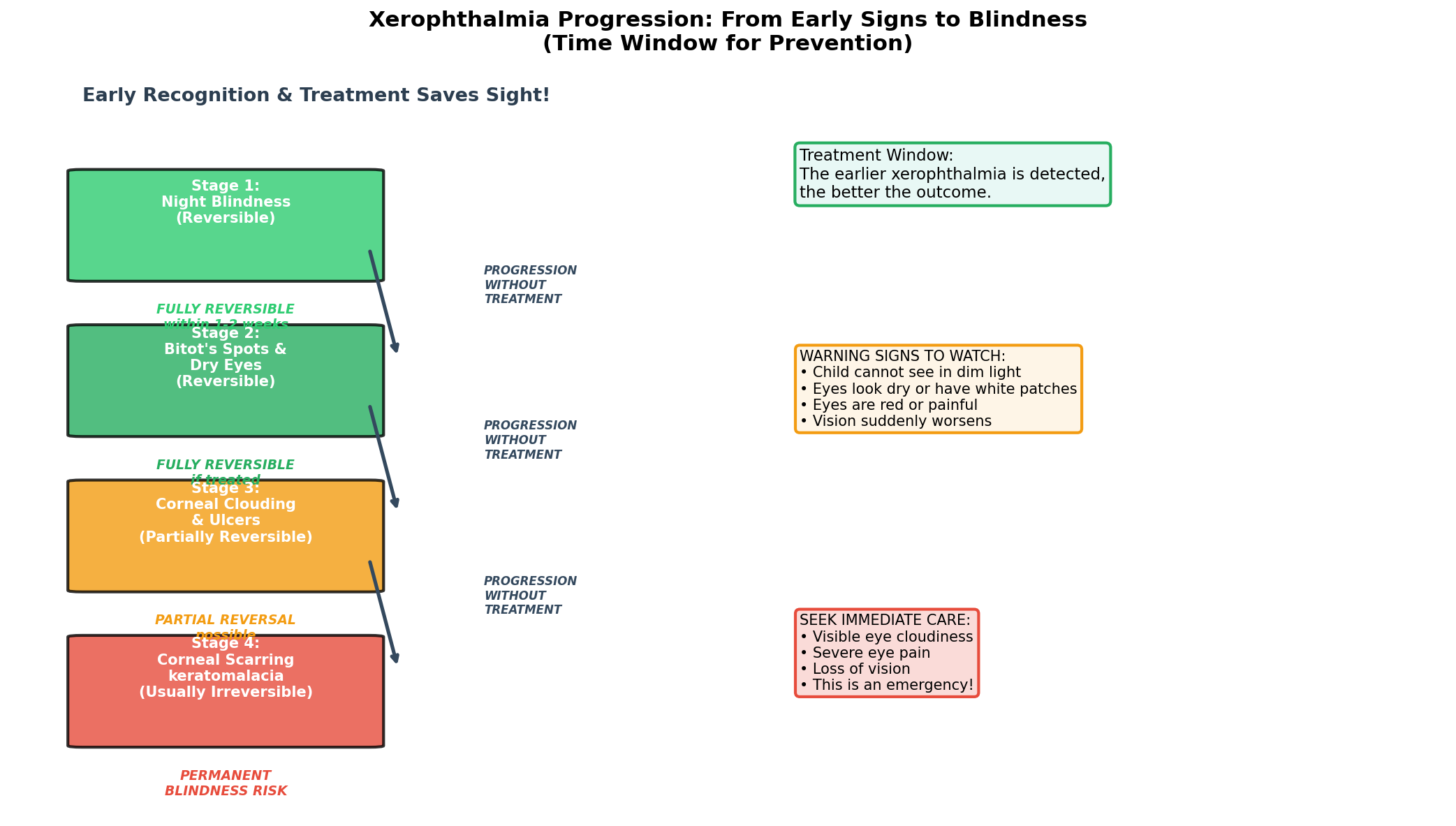 Figure 2: Vitamin A deficiency drops significantly as children grow. Children aged 0-5 years have nearly double the prevalence of teenagers (19.53% vs. 10.09%), showing that the critical vulnerable window is early childhood.
Children aged 6 months to 5 years are at the highest risk. This is the period when:
- Growing bodies demand large amounts of vitamin A for development
- Eye development continues and is most vulnerable to deficiency
- Diets often shift from breast milk (which can provide vitamin A if the mother has adequate stores) to limited foods
- Infections like diarrhea and measles strip away vitamin A stores rapidly
- Young children cannot communicate symptoms clearly to parents
The absolute peak risk is in children under 3 years. Preschoolers are nearly twice as vulnerable as school-age children. A 2-year-old in a vitamin A-deficient region faces a real risk; an 8-year-old in the same region faces substantially less risk.
What Puts Your Child at Highest Risk?
Several factors dramatically increase xerophthalmia risk, and many operate simultaneously in at-risk families:
Malnutrition is the strongest predictor. Children who are malnourished (underweight or wasted) have 3-4 times the risk compared to well-nourished children. Even mild malnutrition nearly triples the risk. The message is clear: a hungry child is at massive risk for xerophthalmia.
Diarrheal disease independently increases risk by 1.5 times. Diarrhoea depletes vitamin A stores and prevents absorption. Families dealing with repeated diarrhoea—a marker of poor water quality and sanitation—face compounded risk. Treating diarrhoea quickly and providing vitamin A supplementation during diarrhoeal episodes is critical.
Measles is catastrophic for vitamin A status. The virus triggers rapid depletion of vitamin A stores. Children who contract measles should receive high-dose vitamin A supplementation immediately; this protects vision and reduces measles severity.
Poverty and limited food diversity independently increase risk. Families without access to diverse foods cannot ensure children eat vitamin A-rich items. A family growing only rice or maize, with little access to eggs, liver, dairy, or orange vegetables, has children at risk.
Geographic isolation and remote regions increase risk due to limited access to diverse foods and healthcare.
The male gender shows a slightly increased risk compared to females, possibly due to higher nutritional demands during childhood growth.
Protected factors that reduce risk include continuing breastfeeding (when the mother has adequate vitamin A), consuming vitamin A-rich foods, home gardening or food production, and access to supplementation programs.
The Four Progressive Early Warning Signs: What Parents Must Recognize
Xerophthalmia unfolds through predictable stages, each with specific warning signs. The critical message: the earlier you recognize signs, the more complete the recovery. The difference between catching xerophthalmia at stage 1 versus stage 4 is the difference between normal vision and permanent blindness.
Stage 1: Night Blindness (The Earliest and Most Important Sign)
This is the sign you must never ignore.
What it is: Your child cannot see in dim light or darkness. Night blindness (also called nyctalopia) is the very first sign of vitamin A deficiency—it appears before any visible changes to the eye.
Why it happens: Rod cells in the retina, which are packed with a light-sensitive protein called rhodopsin, need vitamin A to function. Without adequate vitamin A, these cells cannot regenerate rhodopsin, and your child becomes functionally blind in low light.
What you might notice:
- Child stumbles, bumps into things, or walks cautiously in dim light
- Resists playing outside in early evening or at dusk
- Takes much longer to adjust when entering a dark room or when lights are dimmed
- May cry or show anxiety in darkened environments
- May say "I can't see" or "It's too dark"
- Seems to see normally during daylight but struggles at dusk
Critical timing: Night blindness is reversible if vitamin A treatment begins early—usually within 1-2 weeks, vision returns completely.
How common is this sign? Night blindness appears in approximately 38% of children with vitamin A deficiency—about 1 in 3. This makes it one of the most common early signs and the most treatable.
Why this matters most: A simple conversation with your child can identify this sign. If your child has difficulty seeing in dim light, seek medical evaluation immediately. This is your signal that vitamin A deficiency has begun but has not yet caused permanent damage.
Stage 2: Visible Eye Changes; Bitot's Spots and Conjunctival Dryness
By this stage, xerophthalmia is progressing, but the cornea—the clear window of the eye—is not yet involved. Treatment at this stage still prevents blindness, though the child is further into the disease.
Conjunctival xerosis (dry eye surface): The conjunctiva (the clear membrane covering the white of the eye) loses its normal moisture and lustre. Instead of appearing wet and shiny, the eye looks dull, hazy, or whitish. The eye may feel dry to the child, and there may be reduced tears.
Bitot's spots: These are the signature sign of vitamin A deficiency—white, foamy, triangular or irregular patches appearing on the eye surface, typically on the outer side (temporal side) of the eye. They look like small crusty, crystalline, or foamy deposits and do not wipe away like normal discharge. These spots are pathognomonic (unique and specific) to vitamin A deficiency.
What you might notice:
- Visible white or hazy patches on the white of the eye
- Eye appears dry or lacks normal shine
- Child may or may not have continued night blindness complaints
- Eye may look uncomfortable or irritated
How common are these signs? Bitot's spots appear in approximately 60% of xerophthalmic children—more than half. This is the most visible sign and the one that typically brings a family to a doctor.
Why this matters: These visible signs mean vitamin A deficiency is advancing, but they still precede corneal damage. A doctor can easily see Bitot's spots during examination. If caught at this stage and treated, the child will recover without permanent vision loss.
Public health threshold: A community is considered to have a vitamin A deficiency public health problem if 0.5% or more (1 in 200) of preschool children have Bitot's spots. This threshold triggers government and international health intervention.
Stage 3: Corneal Involvement; The Danger Zone
This stage marks serious progression towards irreversible damage. The cornea (the clear window at the front of the eye that is essential for clear vision) is becoming involved.
Corneal xerosis (dry cornea): The cornea becomes dull, hazy, or develops a whitish cloudiness. The child's vision begins to blur or dim significantly. The cornea may feel uncomfortable or gritty.
Corneal ulceration: Small erosions or ulcers develop on the corneal surface. The child experiences eye pain, light sensitivity, and significant vision loss. The eye may water or discharge fluid.
What you might notice:
- Visible cloudiness or opaqueness in the clear part of the eye (the cornea)
- Child complains of eye pain or discomfort
- Sensitivity to bright light; child may squint or keep eye closed in sunlight
- Watering, discharge, or crusting around the eye
- Dramatic vision loss; child may walk carefully or ask for help navigating
- This is approaching a medical emergency
How severe is this stage? Corneal involvement occurs in approximately 2-3% of xerophthalmic children, representing more severe disease. However, in endemic areas like southern Malawi, corneal scarring (the permanent end result) occurs at rates of 5.9 per 1,000 children—more than 10 times the World Health Organization's safety threshold.
Why this matters: At this stage, the cornea has become involved, and the risk of permanent scarring increases substantially. Treatment can still prevent some vision loss, but the window for complete recovery is closing. This requires urgent medical attention.
Stage 4: Keratomalacia; Corneal Melt and Permanent Blindness
This is the final, catastrophic stage: the cornea softens and melts, creating permanent opacification (cloudiness) and usually resulting in blindness even with treatment. This represents end-stage xerophthalmia and is a medical emergency.
What happens: The cornea, which should be clear and firm, becomes soft and melts away. A permanent scar or opaque defect replaces the damaged tissue. This is irreversible; once the cornea scars, even high-dose vitamin A cannot restore clarity.
Devastating outcomes: In a study of 32 hospitalized children with keratomalacia (the most severe stage):
- 9 out of 32 (28%) died within 3-4 months from complications related to severe malnutrition that preceded the eye disease
- 5 out of 32 (16%) became completely blind
- 9 out of 32 (28%) became blind in one eye
- 9 out of 32 (28%) retained adequate vision
This means that of severely affected children requiring hospitalization, fewer than 1 in 3 kept adequate vision, and more than 1 in 4 did not survive.
What you might notice:
- Visible white or cloudy area in the eye that looks sunken or collapsed
- Severe, constant eye pain
- Child holds eye closed and resists opening it
- Sudden, dramatic vision loss
- This requires immediate emergency medical care
Why this matters: This stage demonstrates the absolute urgency of catching xerophthalmia early. Once corneal scarring occurs, the damage is almost always permanent. Prevention and early treatment are not optional; they are the only chance to preserve your child's vision.
How Rapidly Does Xerophthalmia Progress? The Critical Window
One of the most frightening aspects of xerophthalmia is its speed. The progression from manageable early signs to irreversible blindness can occur over weeks to months if untreated.
Most xerophthalmic lesions are acquired during the first three years of life.
A child with mild malnutrition and vitamin A deficiency may show night blindness one month, develop Bitot's spots the next month, progress to corneal haze within weeks, and then develop corneal scarring and blindness within months. This is not a disease where waiting and watching is safe.
Conversely, this rapid progression means that early intervention works powerfully. A child treated at the night blindness stage recovers completely within days to weeks. The same child treated at the corneal ulceration stage may partially recover but face permanent vision loss. And the child reaching the keratomalacia stage may lose sight permanently despite aggressive treatment.
The difference between early and late treatment is permanent.
How Doctors Diagnose Xerophthalmia: What to Expect During Evaluation
If you suspect your child has xerophthalmia, your doctor will use several diagnostic approaches.
The History: Ask About Night Blindness
The simplest and most effective diagnostic tool is asking a straightforward question: "Can your child see in the dark?" A careful history of night blindness is, according to research, 'almost as specific and far more sensitive' than other clinical signs.
Your doctor will ask:
- When did you first notice difficulty seeing at night?
- Does the child bump into things or hesitate in dim light?
- How long does adjustment take from bright to dark?
- Have there been recent infections (diarrhoea, measles, respiratory illness)?
- What does your child typically eat?
Why this matters: Night blindness history is often more reliable than physical examination or blood tests, especially in school-age children. If you've noticed this sign, tell your doctor immediately.
Eye Examination
An eye care provider (ophthalmologist or trained eye health worker) will examine your child's eyes using:
- Penlight examination: Shining a light to look for Bitot's spots, conjunctival dryness, or corneal cloudiness
- Slit-lamp microscopy: Magnified examination to identify subtle changes in the conjunctiva and cornea
- Visual acuity testing: Assessing your child's actual ability to see at various distances
The doctor will look for:
- Night blindness (based on history, not visible on exam)
- Bitot's spots (white foamy patches)
- Conjunctival shrinkage or loss of normal shine
- Corneal haze or opacity
- Corneal ulceration or scarring
- Sunken appearance of the cornea (keratomalacia)
Blood Tests for Vitamin A Levels
Blood serum retinol is the gold standard laboratory test:
- Less than 10 micrograms/dL: Severe deficiency (high risk of xerophthalmia)
- 10-19 micrograms/dL: Low/deficient (clinical signs likely developing)
- 20 micrograms/dL or higher: Adequate vitamin A status
Important note: Blood tests have limitations in children aged 3-10 years. Clinical examination findings (night blindness history, Bitot's spots, corneal changes) may be more reliable than blood tests alone, particularly in resource-limited settings where lab tests may not be available.
How Quickly Does Treatment Work? The Recovery Timeline
This is the hopeful part of the story: vitamin A works fast.
Night Blindness Recovery
If your child has night blindness and begins vitamin A supplementation:
- Within 1-2 weeks: Night vision returns completely
- This is the stage where recovery is virtually guaranteed if treated early
Conjunctival (Eye Surface) Recovery
- After 2 weeks: Goblet cells (mucus-producing cells that keep eyes moist) begin to repopulate the eye surface
- After 1 month: Goblet cells reach normal concentrations, and the eye surface is fully restored
Corneal Recovery
- Within 1-2 days: Abnormal corneal cell changes begin to reverse
- Within 2-4 days: Corneal cloudiness begins to clear
- Corneal changes at this stage (before scarring occurs) often fully reverse with vitamin A treatment
Population-Level Proof
In a large community trial involving 25,000 children, biannual distribution of 200,000 IU of vitamin A resulted in a dramatic decline in xerophthalmia prevalence. Supplementation reduced cases to less than one-third of their baseline level.
Treatment Options: Vitamin A Supplementation and Dietary Approaches
Treatment for xerophthalmia involves both immediate supplementation (to rapidly restore vitamin A) and dietary changes (to prevent recurrence).
Vitamin A Supplementation Dosing
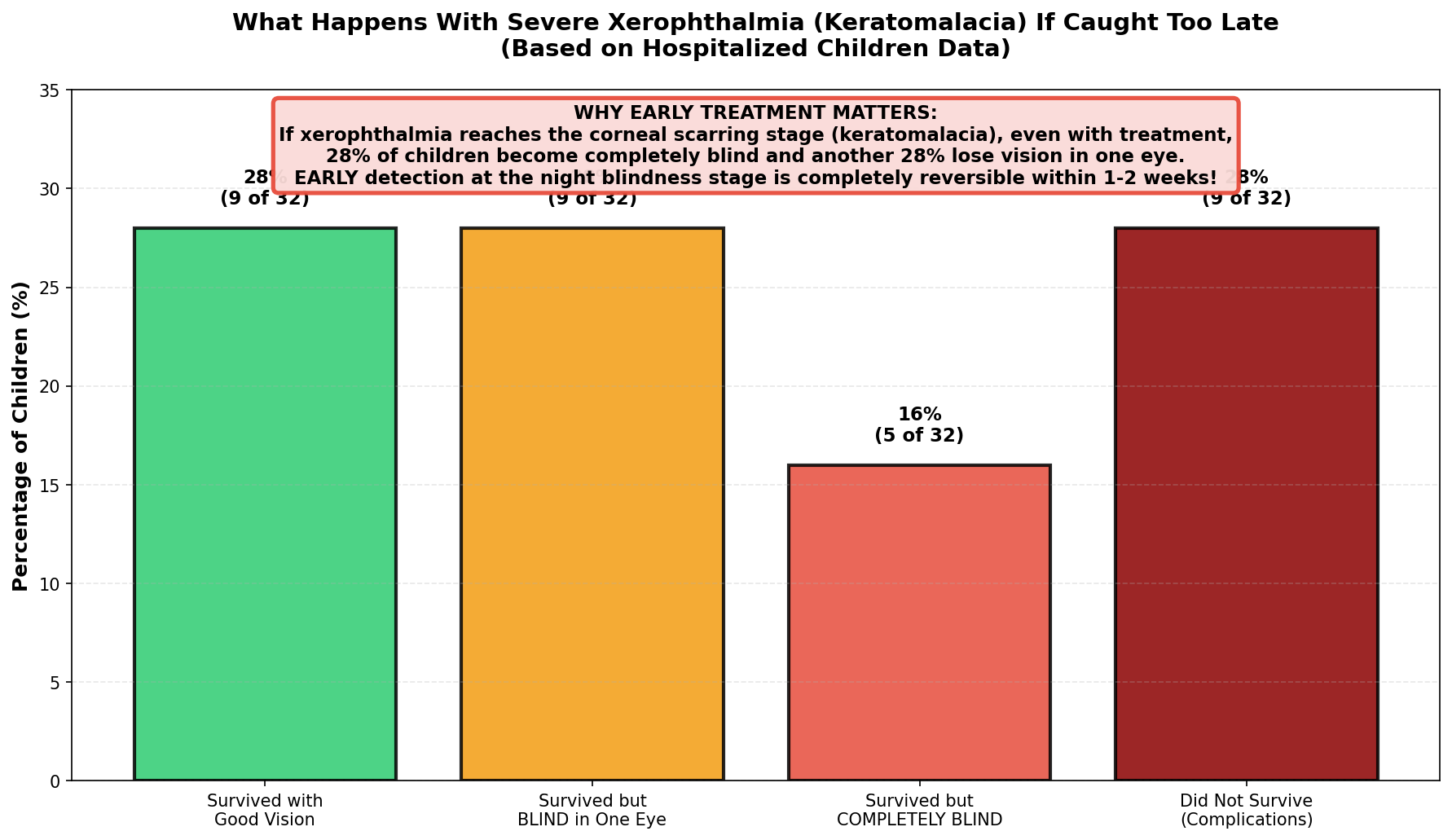 Figure 3: Multiple large meta-analyses show that vitamin A supplementation reduces childhood deaths by 12-28%. In children aged-6- 59 months—the highest-risk group—it reduces deaths by 25%, meaning roughly 1 in 4 fewer deaths from all causes.
Prevention Dosing (WHO Standard): For children without current eye signs but at risk:
- Children 6-12 months: 100,000 IU every 4-6 months
- Children 12 months to 5 years: 200,000 IU every 4- 6 months (twice yearly)
- Postpartum women (in deficient areas): 200,000 IU as a single dose within 6 weeks of delivery
Treatment Dosing (Active Xerophthalmia): For children with active disease:
- Immediate: 100,000 IU intramuscularly plus 200,000 IU orally the next day
- Hospitalized children: 200,000 IU oral dose on admission day, second dose the next day, and additional doses at 4 and 8 months post-discharge
Safety: Vitamin A supplementation at recommended doses is very safe. Mild transient symptoms may occur within 48 hours of receiving 100,000- 200,000 IU, but these are uncommon, temporary, and have no long-term consequences.
Oral vs. Injection: Which Is Better?
Research directly compared oral vitamin A against intramuscular injection:
- 69 children received oral vitamin A (200,000 IU)
- 45 children received intramuscular vitamin A (100,000 IU)
- Result: No detectable difference in clinical response*
This is excellent news for families and communities: oral vitamin A works just as well as injections. This means treatment can be done at home or in community settings, without requiring healthcare facility access or trained injection providers. For a family with a child showing early signs of xerophthalmia, oral vitamin A supplementation is practical, safe, and highly effective.
Dietary Approaches: Food-Based Prevention
Sustainable, long-term prevention requires ensuring children consume vitamin A-rich foods regularly.
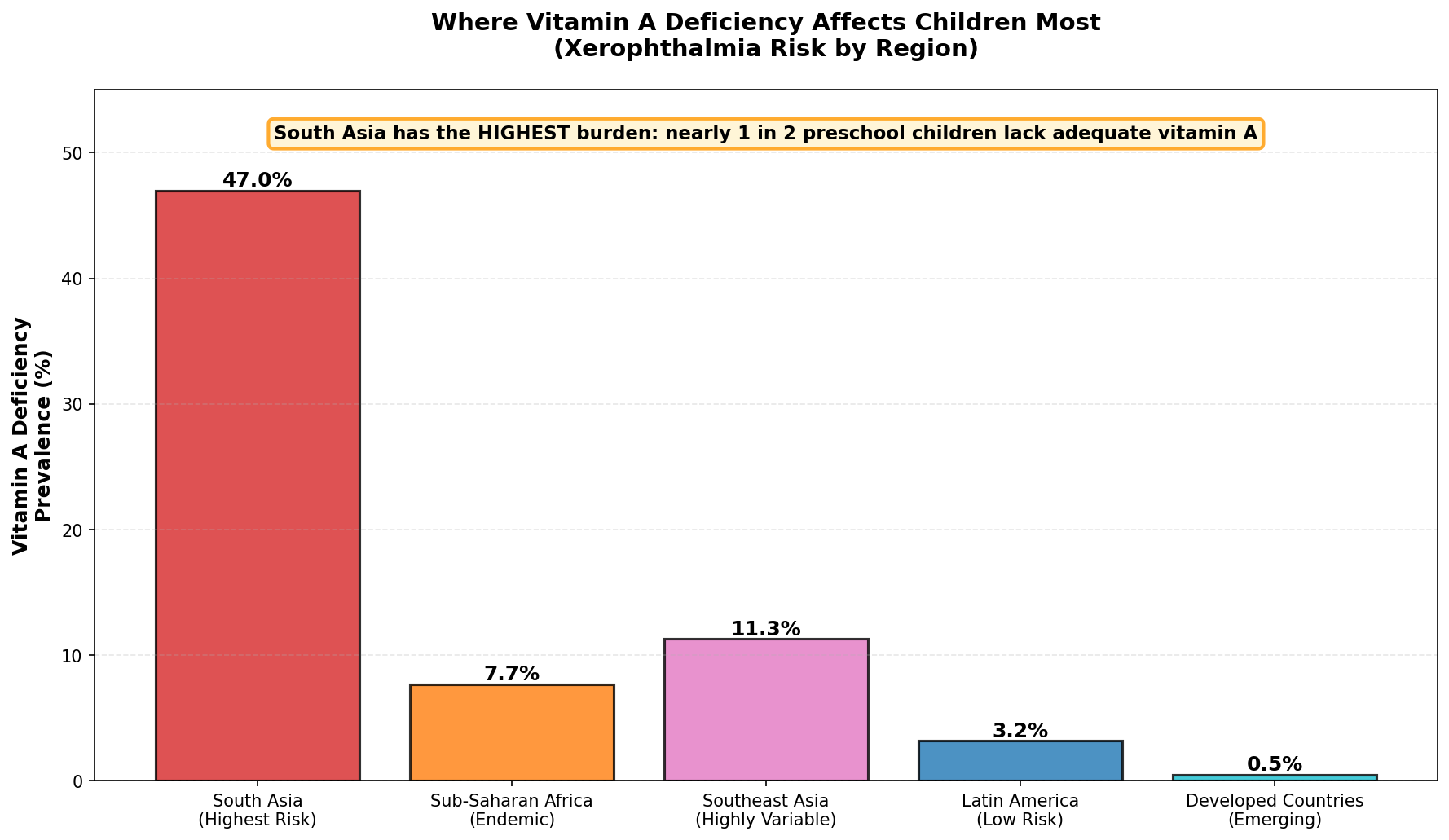 Figure 4: Common food sources of vitamin A vary dramatically in their content. Animal-based sources (liver, eggs, dairy) contain preformed vitamin A and are highly bioavailable. Plant-based sources (spinach, carrots, sweet potatoes) contain beta-carotene, which the body converts to vitamin A. Including a variety ensures consistent intake.
Animal-Based Sources (Most Bioavailable):
- Liver (beef or chicken; extremely high in vitamin A)
- Whole eggs
- Milk and dairy products (cheese, yogurt)
- Oily fish (sardines, mackerel, salmon, herring, fresh tuna)
- Fortified margarine (in many developing countries)
Plant-Based Sources:
- Dark leafy greens (spinach)
- Orange and yellow vegetables (carrots, sweet potatoes, pumpkin, butternut squash)
- Red and yellow peppers
Practical approach: Even in resource-limited settings, including affordable foods like eggs, local leafy greens, orange-coloured vegetables, and occasionally liver provides protective vitamin A intake. In developed countries, milk and fortified cereals provide background protection.
Fortified Foods: The Sustainable Approach
Many countries fortify staple foods with vitamin A:
- Flour and wheat products
- Sugar
- Cooking oil and margarine
- Cereals
- Milk (in developed countries)
In populations where vitamin A deficiency is a public health problem, fortified foods provide background protection while supplementation programs target high-risk groups.
Combined Approach Works Best
The most effective strategy combines:
- Immediate supplementation: High-dose vitamin A to treat active deficiency
- Dietary improvement: Including more vitamin A-rich foods in children's diets
- Infection treatment: Promptly treating diarrhoea, measles, and other infections that deplete vitamin A
- Breastfeeding support: Continuing breastfeeding, which provides vitamin A when the mother has adequate stores
The Life-Saving Impact: What Supplementation Actually Prevents
This section explains why vitamin A supplementation is considered one of the most cost-effective public health interventions ever implemented.
Mortality Reduction
Vitamin A supplementation saves lives, not just eyesight:
All-cause mortality reduction:
- Meta-analysis of 17 trials (194,795 children): 24% reduction in all-cause mortality
- Meta-analysis of 19 trials (1,202,382 children): 12% reduction in all-cause mortality
- In children aged 6-59 months: 25% reduction in all-cause mortality
This means: For every 4 children supplemented, roughly 1 avoids death from any cause.
Disease-specific reductions:
- Diarrhoea-related mortality: 28% reduction
- Measles severity: Significant reduction in complications
Why Does Vitamin A Prevent Deaths Beyond Just Vision Loss?
Vitamin A is essential for immune function. Deficiency impairs:
- Immune defences against infections
- Gut barrier function (allowing bacteria to enter the bloodstream)
- Severity and duration of diarrhoeal disease
- Overall child survival
Children with even mild vitamin A deficiency have 4 times higher mortality rates than well-nourished children. In some populations, mortality is 8-12 times higher.
The Evidence in Context
Vitamin A deficiency is responsible for approximately 1 in 6 childhood deaths in developing countries. Yet this is largely preventable. Supplementation costs pennies per child per year and prevents both blindness and death.
In comparison, other celebrated interventions cost more and save fewer lives. This is why international health organizations prioritize vitamin A supplementation.
What Parents Can Do Now: Actionable Steps
For Parents in High-Risk Areas
- Watch for night blindness. If your child has difficulty seeing at night or takes too long adjusting from bright to dark, seek medical evaluation immediately. This is the earliest and most treatable sign
- Ensure children receive vitamin A supplements. If your child is under 5 years old and lives in or travels to areas with known vitamin A deficiency (much of Sub-Saharan Africa, South Asia, Southeast Asia), ensure participation in supplementation programs or seek supplements through healthcare providers
- Diversify children's diets. Include vitamin A-rich foods: eggs, liver, dairy, leafy greens, carrots, sweet potatoes, and orange-coloured vegetables. Even small amounts of these foods, when included regularly, provide substantial protection
- Treat infections promptly. Diarrhoea and measles deplete vitamin A rapidly. Seek medical care quickly for these conditions, and request vitamin A supplementation as part of treatment
- Breastfeed if possible. Continue breastfeeding into the second year or beyond, particularly if you have adequate vitamin A intake
- Keep gardens or grow vegetables if possible. Home food production provides diverse, nutrient-rich foods that protect children
For Parents in Developed Countries
Xerophthalmia is rare in developed nations, but specific populations face increased risk:
- If your child has autism spectrum disorder with very restrictive eating patterns, discuss vitamin A supplementation with your doctor. Vitamin A deficiency can develop in children eating extremely limited diets
- If your child has celiac disease, cystic fibrosis, or other malabsorption conditions, ask your doctor about vitamin A status. These conditions impair nutrient absorption and may require supplementation
- Watch for night blindness as a symptom. In any child with difficulty seeing at night, request an evaluation for vitamin A deficiency as part of the workup
- Support routine vitamin A supplementation in developing countries. If you donate to or volunteer with international health organizations, vitamin A supplementation programs provide an extraordinary return on investment in terms of lives saved and blindness prevented
When to Seek Medical Help: Red Flags
Seek medical evaluation immediately if:
- Child has difficulty seeing in dim light or darkness
- Visible white patches appear on the eye
- Eye appears dry, dull, or lacks normal shine
- Child develops cloudiness or haziness in the clear part of the eye
- Child complains of eye pain or light sensitivity
- Child's vision suddenly worsens
Seek emergency care if:
- Child has severe eye pain
- The eye has a sunken appearance
- Sudden, dramatic vision loss occurs
- Child cannot keep eyes open due to pain
Understanding Disease Progression and the Reversibility Window
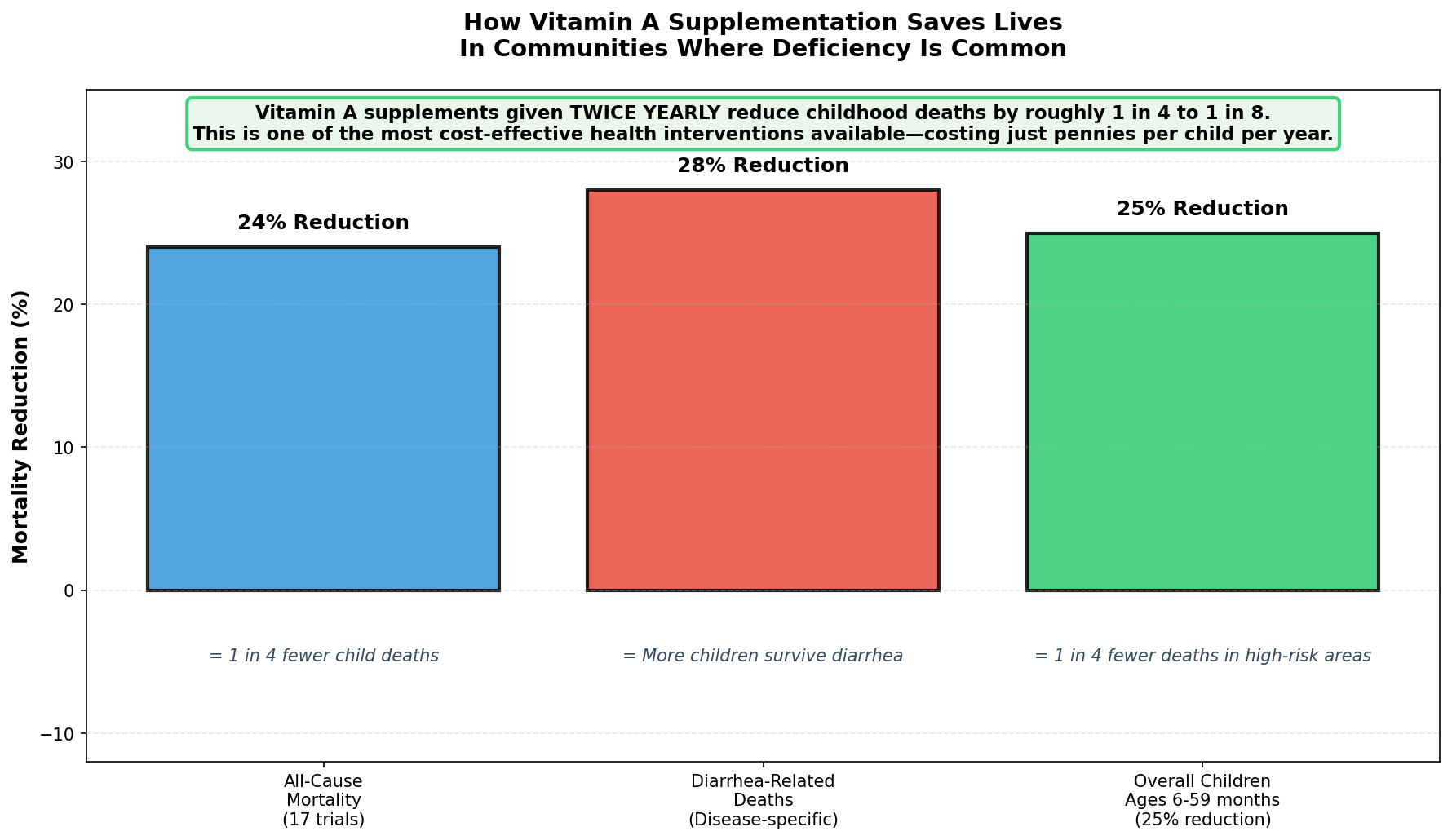 Figure 5: Xerophthalmia progresses through four reversible stages, each with different outcomes. Stages 1-2 (night blindness, Bitot's spots) are fully reversible with vitamin A. Stage 3 (corneal involvement) shows partial reversibility, with best outcomes when treated urgently. Stage 4 (corneal scarring/keratomalacia) is usually irreversible. This visual timeline shows why early detection is literally the difference between sight and blindness.
The critical insight: early xerophthalmia is completely reversible, while late xerophthalmia causes permanent blindness.
Fully reversible with treatment (Stages 1-2):
- Night blindness
- Bitot's spots
- Conjunctival xerosis
- Treatment outcome: Normal vision restored
Partially reversible with urgent treatment (Stage 3):
- Corneal xerosis and clouding
- Corneal ulceration
- Treatment outcome: Some vision preserved, but risk of partial loss
Usually irreversible (Stage 4):
- Corneal scarring (keratomalacia)
- Treatment outcome: Permanent vision loss even with vitamin A supplementation
This is why your vigilance matters. A parent who recognizes night blindness and seeks medical care immediately gives their child a chance at normal vision. A parent who waits until corneal scarring occurs consigns their child to blindness.
The Global Impact: Why This Matters Beyond Your Family
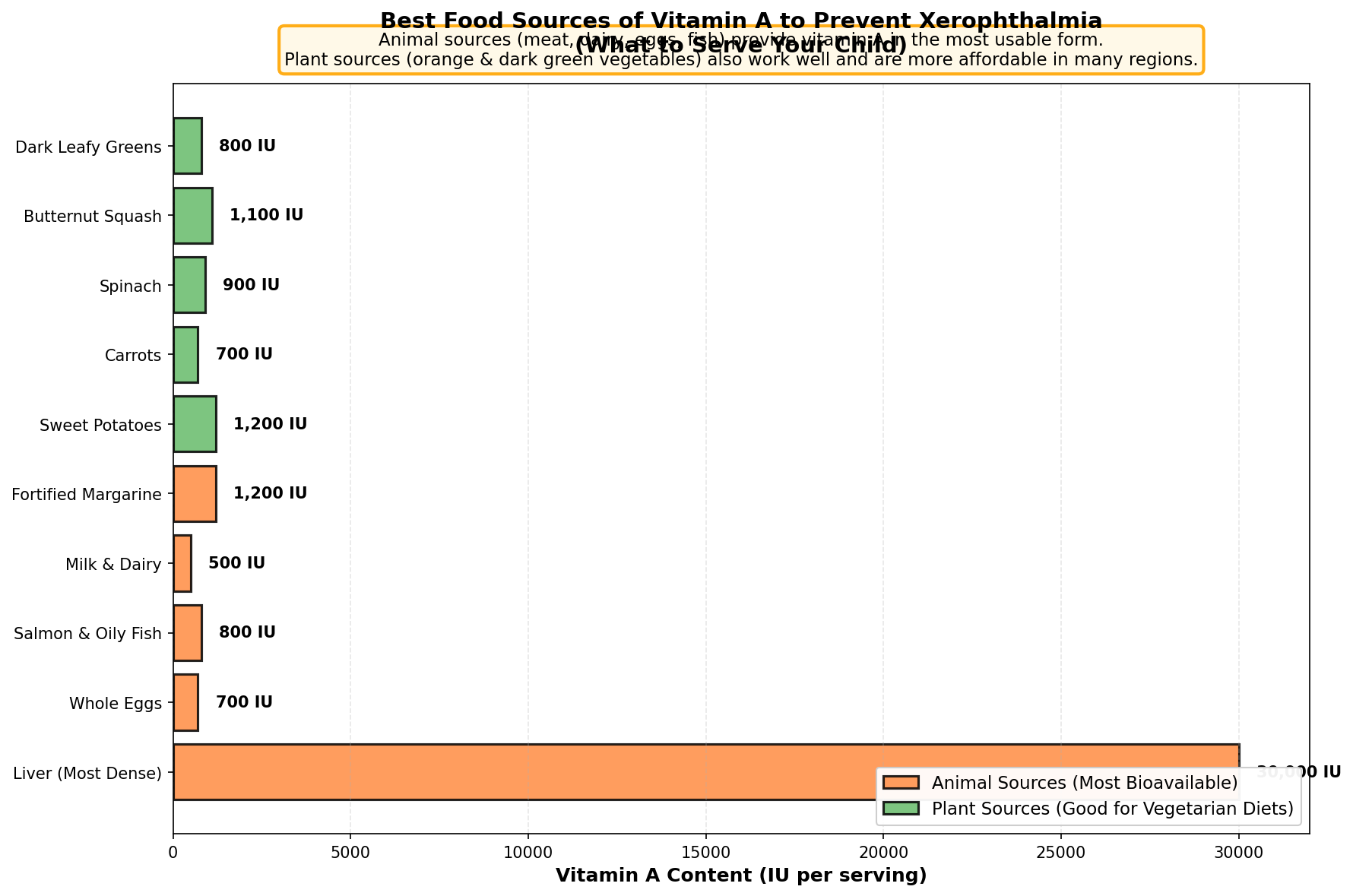
Figure 6: In children hospitalized with keratomalacia (the most severe stage of xerophthalmia), outcomes are devastating: 28% died, 44% had permanent blindness or significant vision loss, and only 28% retained adequate vision. This underscores why prevention and early detection are absolutely critical.
Here is the scale of this crisis:
- 350,000 children become blind annually from xerophthalmia
- 20,000-100,000 children per year in developing countries are struck with blindness from this condition
- 250,000-500,000 new cases of active corneal disease annually
- 6-7 million additional cases of non-corneal xerophthalmia annually
- 1-3 million children die each year from vitamin A deficiency-related illnesses
Yet all of this is preventable. A child in South Asia or Sub-Saharan Africa with a vitamin A supplement costing pennies has their vision preserved and their mortality risk cut by up to 1 in 4.
This is why international health organizations prioritize vitamin A supplementation. It is one of the highest-impact, most cost-effective interventions available.
A Message of Hope
If there is one thing you take from this article, let it be this: xerophthalmia is not a life sentence. Caught early, it is completely reversible.
Your vigilance matters profoundly. A parent who notices night blindness and seeks evaluation immediately gives their child a chance that children without such care do not have. A family that includes vitamin A-rich foods in their diet, participates in supplementation programs, and treats infections promptly protects their child's vision.
Unlike many causes of childhood blindness (genetic conditions, birth defects, retinitis pigmentosa), xerophthalmia can be prevented and, if caught early, completely reversed. This is extraordinary. This is hopeful.
Watch for the early signs. Act quickly. Your child's sight depends on it.
Further Reading
Early Warning Signs and Symptoms
- Recognising Night Blindness in Children
- Bitot's Spots: The Signature Sign of Vitamin A Deficiency
- Xerophthalmia in School-Age Children
Risk Factors and Prevention
- Nutritional Risk Factors for Xerophthalmia in Children
- Diarrhoea and Vitamin A Deficiency: The Connection
- Xerophthalmia in Picky Eater Children and Autism Spectrum Disorder
- Home Gardening as Prevention for Vitamin A Deficiency
Diagnosis and Clinical Assessment
- Using Night Blindness History as a Screening Tool
- Clinical Examination for Early Detection of Xerophthalmia
- Understanding Serum Retinol Tests in Children
Treatment and Recovery
- Vitamin A Supplementation Protocols and Dosing
- Oral versus Intramuscular Vitamin A Treatment
- Rapid Recovery with Vitamin A Therapy
- Topical Treatments for Corneal Changes
Public Health Impact and Prevention Programs
- Vitamin A Supplementation Reduces Childhood Mortality
- Cost-Effectiveness of Vitamin A Programs
- WHO Guidelines for Vitamin A Deficiency Control
- Food Fortification Strategies
Regional Epidemiology
- Xerophthalmia in South Asia: Prevalence and Risk Factors
- Xerophthalmia in Sub-Saharan Africa
- Vitamin A Deficiency in Ethiopia: Regional Analysis
For Parents: Resources and Support
- Mayo Clinic: Vitamin A and Vision Health
- NHS: Vitamin A for Child Health
- Cleveland Clinic: Understanding Xerophthalmia
References/Helpful Resources
- World Health Organization. Vitamin A deficiency and its consequences: a field guide to detection and control [Internet]. Geneva: WHO; 2000 [cited 2025]. Available from: https://www.who.int/publications/i/item/9241544783
- World Health Organization. Guideline: Vitamin A supplementation in infants and children 6-59 months of age [Internet]. Geneva: WHO; 2011 [cited 2025]. Available from: https://iris.who.int/bitstream/handle/10665/44664/9789241501767_eng.pdf
- Sommer A. Xerophthalmia, keratomalacia, and nutritional blindness. Int Ophthalmol. 1990;14(3):195-199.
- Underwood BA, Arthur P. The contribution of vitamin A to public health. FASEB J. 1996;10(9):1040-1048.
- Rice AL, West KP Jr, Black RE. Vitamin A deficiency. In: Ezzati M, Lopez AD, Rodgers A, et al, eds. Comparative Quantification of Health Risks: Global and Regional Burden of Disease Attributable to Selected Major Risk Factors. Geneva: World Health Organization; 2004.
- Humphrey JH, West KP, Sommer A. Vitamin A deficiency and attributable mortality among under-5-year-olds. Bull World Health Organ. 1992;70(2):225–32. PubMed PMID: 1600583; PubMed Central PMCID: PMC2393289
- Sommer A, Tarwotjo I, Djunaedi E, West KP, Loeden AA, Tilden R, et al. Impact of vitamin A supplementation on childhood mortality. A randomised controlled community trial. Lancet. 1986 May 24;1(8491):1169–73. doi:10.1016/s0140-6736(86)91157-8 PubMed PMID: 2871418
- Imdad A, Yakoob MY, Bhutta ZA. The effect of vitamin A supplementation on fever in children: a meta-analysis of randomised controlled trials. BMC Public Health. 2010;10:676
- Villamor E, Fawzi WW. Effects of vitamin A supplementation on immune responses and correlation with nutritional status. Clin Microbiol Rev. 2005;18(3):446-464
- Hodge C, Taylor C. Vitamin A Deficiency. In: StatPearls [Internet]. Treasure Island (FL): StatPearls Publishing; 2026 [cited 2026 Aug 11]. Available from: http://www.ncbi.nlm.nih.gov/books/NBK567744/ PubMed PMID: 33620821
- Sommer A, Hussaini G, Muhilal null, Tarwotjo I, Susanto D, Saroso JS. History of night blindness: a simple tool for xerophthalmia screening. Am J Clin Nutr. 1980 Apr;33(4):887–91. doi:10.1093/ajcn/33.4.887 PubMed PMID: 6965817. Available from: https://pubmed.ncbi.nlm.nih.gov/6965817/
- Cleveland Clinic. Xerophthalmia: Symptoms, Causes & Treatment [Internet]. Cleveland: Cleveland Clinic Foundation; 2024 [cited 2025]. Available from: https://my.clevelandclinic.org/health/diseases/24430-xerophthalmia
- Mayo Clinic. Vitamin A [Internet]. Rochester: Mayo Foundation; 2024 [cited 2025]. Available from: https://www.mayoclinic.org/drugs-supplements-vitamin-a/art-20365945
- NHS. Vitamins and minerals: Vitamin A [Internet]. London: National Health Service; 2024 [cited 2025]. Available from: https://www.nhs.uk/conditions/vitamins-and-minerals/vitamin-a/
- Victora CG, Huttly SR, Fuchs SC, Olinto MT. The role of conceptual frameworks in epidemiological analysis: a hierarchical approach. Int J Epidemiol. 1997 Feb;26(1):224–7. doi:10.1093/ije/26.1.224 PubMed PMID: 9126524.
