

You've probably seen the debates online. Fluoride in water prevents cavities, some say. Others worry it causes all sorts of health problems. So what's actually true?
The honest answer: fluoride is one of the most well-researched public health interventions in history, with robust evidence supporting both its cavity-prevention benefits and its safety profile at recommended levels. But there are also genuine scientific questions worth understanding, particularly about newer concerns that emerged in recent decades.
This article cuts through the confusion. You'll learn how fluoride actually works in your mouth, what the evidence shows about real risks and benefits, and what claims don't hold up to scrutiny.
How Fluoride Protects Your Teeth (The Science Simplified)
Fluoride works in four distinct ways to prevent cavities. Understanding these mechanisms helps explain why it's so effective.
Enamel Strengthening and Repair
Your tooth enamel is constantly under attack. Every time you eat sugar or acidic foods, the bacteria in your mouth produce acid that weakens the mineral structure. Fluoride essentially triggers tooth repair. When fluoride contacts weak spots on your teeth, it triggers the minerals to reposition, creating a harder, more acid-resistant surface than your original enamel. This process happens remarkably fast; remineralisation can begin within 5 minutes of exposure to fluoride.
Blocking Acid Damage
Fluoride also acts as a shield. At the low, sustained levels found in fluoridated water or toothpaste, fluoride absorbs into the crystal surfaces of your teeth and prevents acid from dissolving them in the first place. The remineralised enamel becomes more resistant to future acid attacks.
Killing Cavity-Causing Bacteria
Here's something that surprised even many dentists: fluoride is antimicrobial. It specifically targets Streptococcus mutans, the primary bacterium responsible for cavities. Fluoride works through multiple mechanisms; it inhibits the enzymes bacteria need to break down sugar, disrupts their energy systems (making their own acid production toxic to them), and actually triggers cell death. This antimicrobial action happens at the same concentrations found in plaque and saliva.
Building Protection During Tooth Development (Children Only)
In children, there's an additional mechanism. During tooth development (before permanent teeth fully emerge, typically before age 8), fluoride that's ingested gets incorporated into the enamel structure itself. This creates long-term protection, particularly for the pit and fissure surfaces of molars, even after the teeth erupt into the mouth.
The Evidence: How Much Do Cavities Drop?
The cavity-prevention benefits are substantial and consistent across all age groups.
In children, fluoridated water reduces cavities by approximately 25% overall, though the effect varies by tooth type. Baby teeth show about a 40% reduction in cavities, while permanent teeth show roughly 25% reduction. In adults, a meta-analysis of the best available studies found that water fluoridation prevents approximately 27% of cavities across all age groups.
For context, here's what that means in practical terms: a child at typical cavity risk might prevent 2-5 cavities over their lifetime through water fluoridation alone, and that's before adding fluoride toothpaste or professional fluoride applications.
There's also a particularly impressive statistic for concentrated fluoride applications. When dentists apply 38% silver diamine fluoride (a highly concentrated fluoride) directly to existing cavities in baby teeth, it arrests the decay progression 92.31% of the time. This approach is particularly useful for young children with multiple cavities who are difficult to treat.
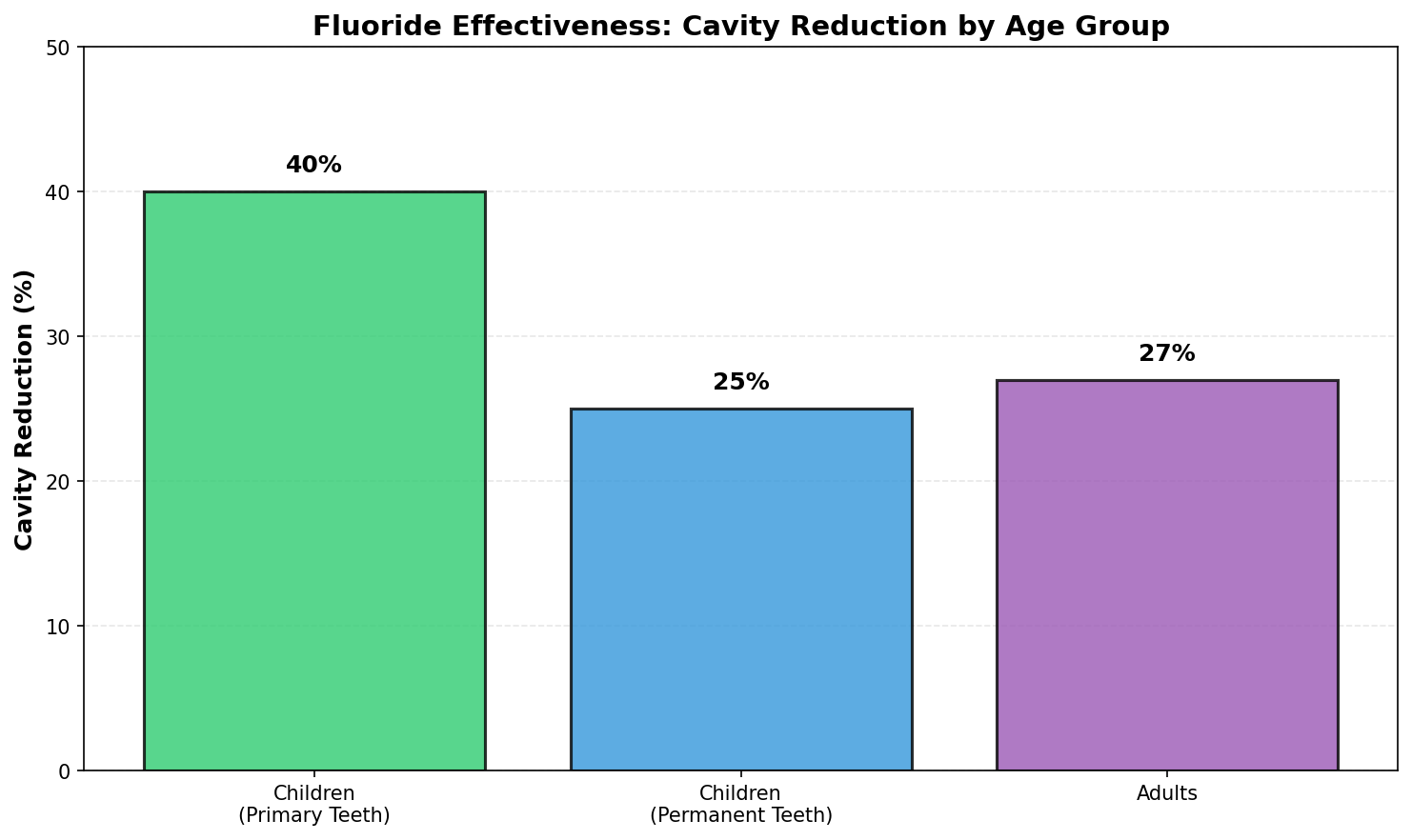 Figure 1: Cavity prevention varies by age and tooth type. Data shows children's baby teeth benefit more (40% reduction) than permanent teeth (25% reduction), with adults seeing approximately 27% reduction in cavities.
Global Fluoridation: Who's Using It?
Water fluoridation has been implemented across multiple countries for decades, with varying levels of adoption.
Approximately 372 million people globally receive fluoridated water, but this represents only about 5.4-5.7% of the world population. Fluoridation remains concentrated in developed nations, reflecting both the infrastructure requirements and political decisions involved in implementation.
The United States has the most extensive fluoridation programme globally. 72.3% of the U.S. population (over 209 million people) has access to fluoridated water through community water systems. Australia comes close second with 89% coverage. Canada reaches roughly 75%, as do Ireland and Chile. Brazil, in Latin America, serves 75% of its population.
The United Kingdom presents a different picture: only 10% of England's population (about 5.8 million people) receives fluoridated water. This isn't because of safety concerns; it reflects decentralised governance. Individual local authorities in the UK make their own decisions about fluoridation, creating the patchwork coverage. Despite this, England's Chief Dental Officer and the UK's four Chief Medical Officers all endorse water fluoridation as safe and effective.
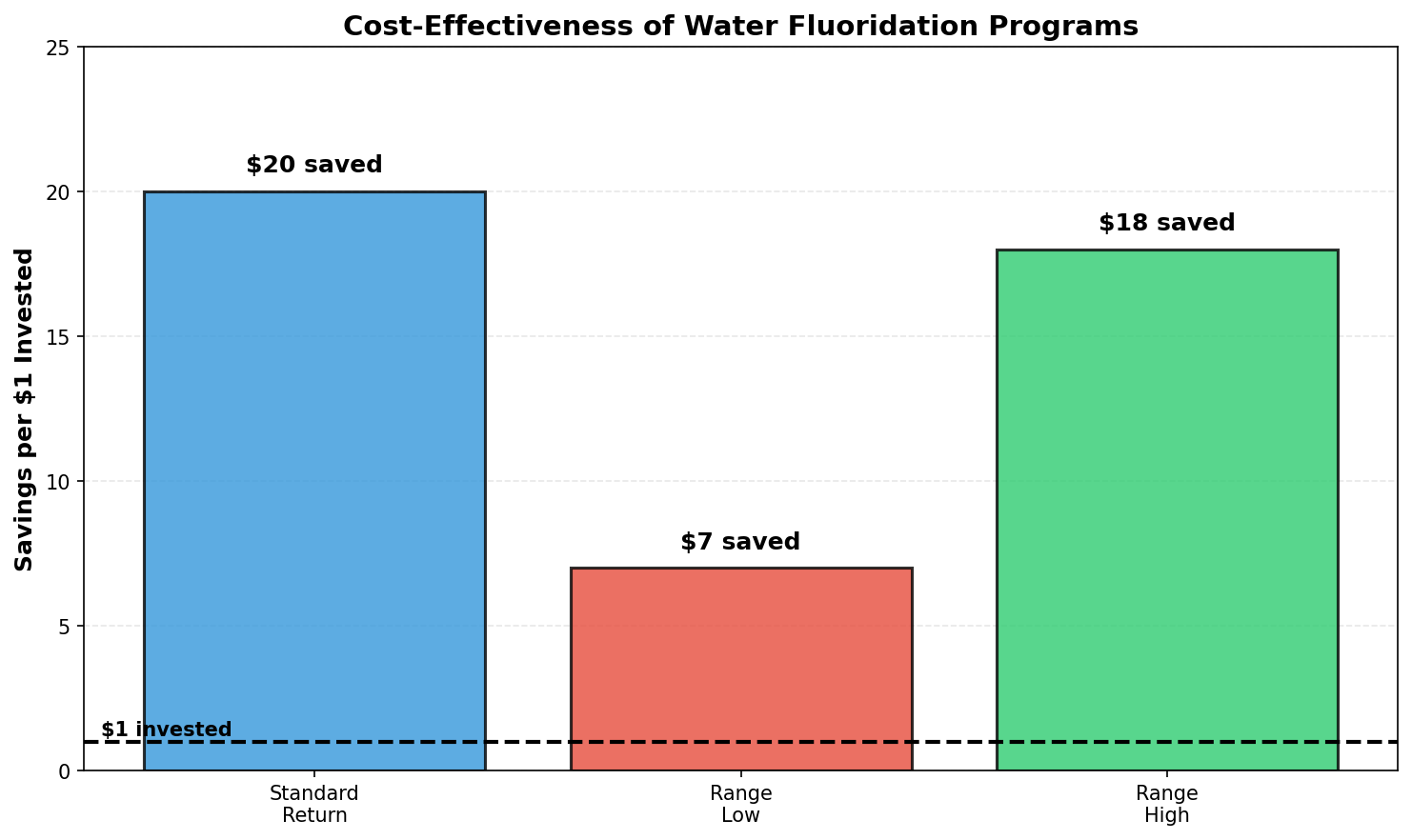 Figure 2: Population coverage varies dramatically by country, reflecting both effectiveness and policy differences. The U.S., Australia, and Canada lead in coverage; Europe remains lower due to decentralised governance and philosophical differences about public health interventions.
Cost-Effectiveness: The Economics Are Compelling
One reason fluoridation persists despite occasional controversy: it's exceptionally cost-effective.
For every $1 communities invest in water fluoridation, they save approximately $7-$20 in dental treatment costs. The most commonly cited figure in the U.S. is $20 saved per dollar spent. Even at the conservative end, that's a 7-fold return on investment.
For American schoolchildren alone, if fluoridation were removed from water systems today, communities would face an additional $9.8 billion in dental treatment costs over just 5 years. That's not hypothetical; it's based on projections modelling what would happen if fluoridation ended.
Australia's economic analysis reached similar conclusions: extending fluoridation to all Australian communities of 1,000 or more people would be cost-effective with a 100% probability of net cost-savings. Ireland found that its fluoridation programme actually produces negative costs from the healthcare system's perspective, meaning it generates net savings.
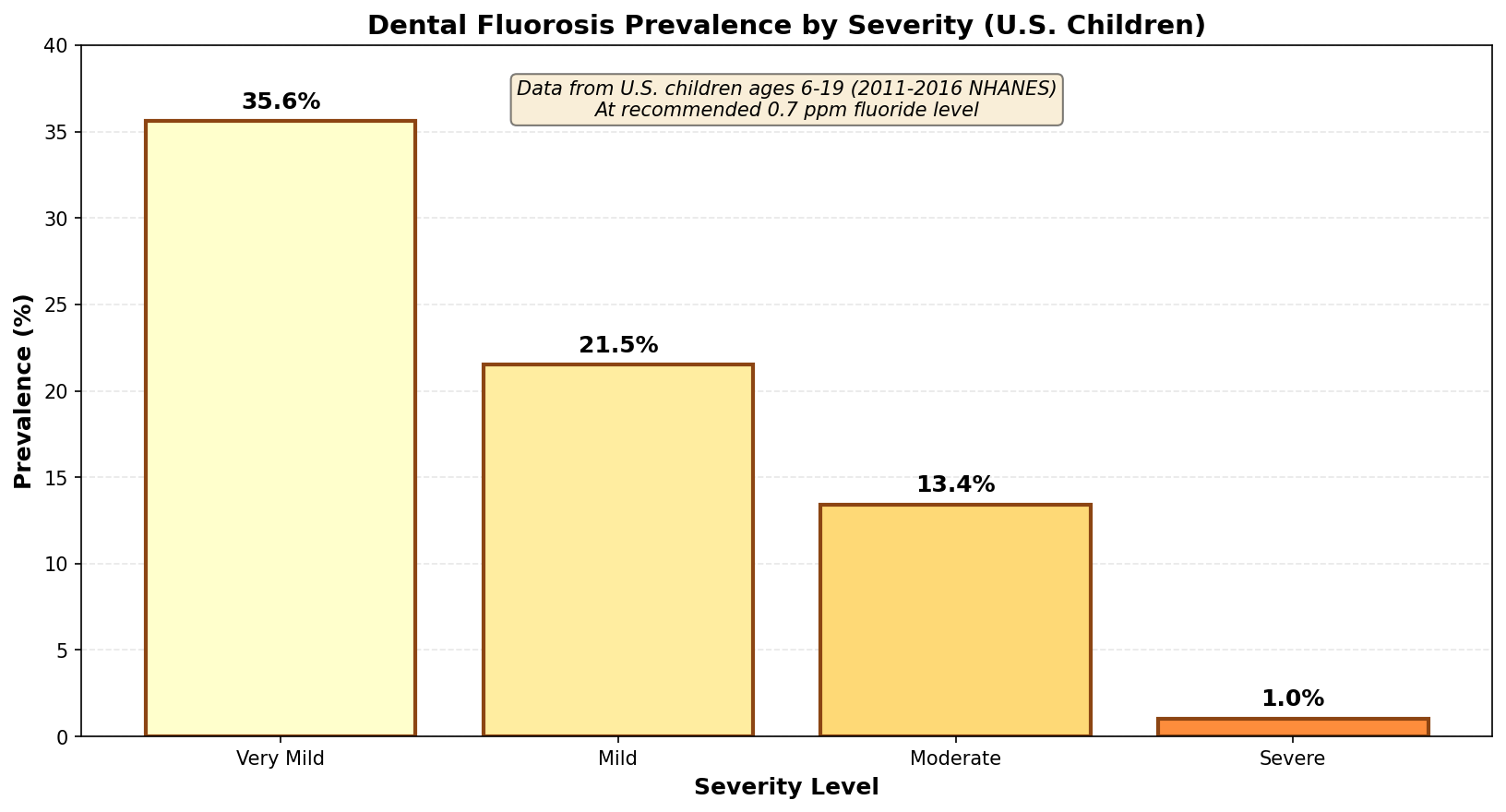 Figure 3: For every dollar invested in community water fluoridation, societies save $7 to $20 in dental treatment costs. This exceptional return on investment makes water fluoridation one of the most cost-effective public health interventions available.
Fluoridation Coverage and Health Equity
Here's something important that often gets overlooked: water fluoridation is one of the few public health interventions that actually reduces health disparities rather than widening them.
In fluoridated communities, socioeconomic differences in cavity rates essentially disappear. Studies show that among children and adolescents with lifetime exposure to fluoridation, there are no significant disparities in cavity rates by income level. In non-fluoridated areas, wealthy families can afford fluoride toothpaste, professional dental care, and supplements. Low-income families often cannot.
When communities have stopped fluoridation programmes, the impact has been starkly unequal. Disadvantaged populations and those without dental insurance experienced significantly higher rates of untreated decay after cessation. Geographic disparities widened immediately. This demonstrates that for low-income families, fluoridation provides automatic protection that cannot be replicated through individual product purchases.
Australia's historical data illustrates the multi-generational impact. Australians born after 1970, when fluoridation expanded nationally, have approximately 50% lower cavity rates compared to their parents' generation. That effect has persisted for more than half a century.
How Safe Is Fluoride at Recommended Levels?
The evidence-based answer: at the recommended level of 0.7 mg/L (sometimes written as 0.7 ppm) in drinking water, fluoride is safe. This is the position of the CDC, the U.S. Environmental Protection Agency (EPA), the National Institutes of Health (NIH), the World Health Organisation (WHO), and major public health organisations worldwide.
The EPA set a safety standard of 2.0 mg/L precisely as a safeguard. This means the recommended level (0.7 mg/L) has a nearly 3-fold safety margin before reaching the EPA's safety threshold. The U.S. Public Health Service specifically chose 0.7 mg/L because it maximises cavity prevention while minimising cosmetic concerns.
In practice, compliance is excellent. Between 2016 and 2021, 99.99% of all fluoridated water in U.S. systems stayed below the 2.0 mg/L EPA safety limit, and 83.7% of measurements met the minimum benefit threshold of 0.6 mg/L or higher.
What About Systemic Health Effects?
The CDC makes a clear statement: "Expert panels of scientists from the United States and other countries have not found convincing scientific evidence linking community water fluoridation with adverse health effects such as increased cancer risk, heart disease, osteoporosis, or other systemic disorders."
This conclusion is based on decades of research involving millions of people. Cancer rates in fluoridated communities do not differ from non-fluoridated communities. Heart disease rates show no connection to water fluoridation. Kidney and liver function remain normal in populations consuming fluoridated water at recommended levels.
This doesn't mean there are zero questions remaining. A few areas warrant genuine scientific attention; distinguishing between those and debunked claims matters.
Dental Fluorosis: The Real Cosmetic Concern (and Why It's Mostly Not a Problem)
Dental fluorosis is the only documented health effect linked to fluoride at recommended levels. It's worth understanding in detail because it's both: (a) real, and (b) almost always cosmetic rather than health-threatening.
What It Is
Dental fluorosis is a change in tooth enamel appearance that occurs when children ingest excess fluoride while their teeth are developing, specifically before age 8. It causes white spots, streaks, or, in more severe cases, brown discolouration. The key fact: it affects only tooth appearance, not function, not cavity protection, and not health.
After age 8, children cannot develop dental fluorosis, no matter how much fluoride they consume, because tooth enamel development is complete.
How Common Is It at Recommended Levels?
This is where the data gets important. In a large national U.S. sample of children aged 6-19 (2011-2016 NHANES data), the prevalence was:
- 35.6% with very mild fluorosis (usually imperceptible)
- 21.5% with mild fluorosis (barely visible white spots)
- 13.4% with moderate fluorosis (noticeable but still minor)
- 1.0% with severe fluorosis (noticeable discolouration)
The critical point: 71% of all fluorosis cases are very mild or mild, and severe fluorosis occurs in less than 1% of children.
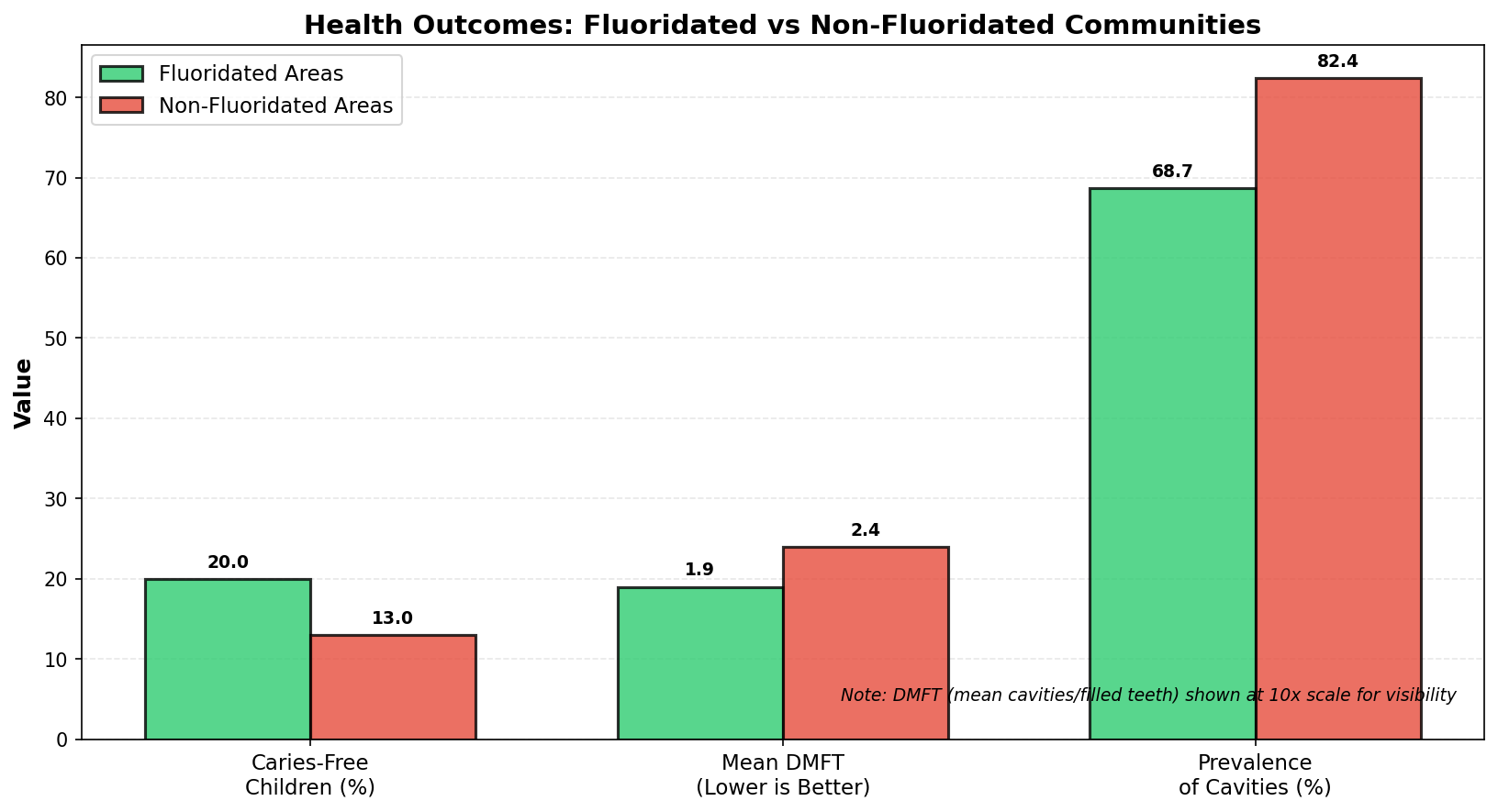 Figure 4: The vast majority of dental fluorosis at recommended fluoride levels is very mild or mild, causing minimal or no cosmetic concern. Severe fluorosis is rare, affecting less than 1% of exposed children.
Why Has Fluorosis Increased Over Time?
You may have heard that dental fluorosis rates are going up in the U.S. This is true. Prevalence among 12-15 year-olds was 22% in 1986-1987, 41% in 1999-2004, and 65% in 2011-2012.
The reason: multiple fluoride sources, not just water fluoridation. People today are exposed to fluoride from water, toothpaste (often swallowed by young children), processed foods and beverages made with fluoridated water, fluoride mouthwashes, and professional dental products. When fluoride from all these sources combines, total exposure increases.
This has led to a genuine policy discussion: given that children are already getting fluoride from toothpaste and processed foods, is the additional fluoride from water necessary? This is a reasonable question without an easy answer. Removing water fluoridation wouldn't eliminate fluorosis (since toothpaste and processed foods would still contribute); it would lower total fluoride exposure.
The key practical point for parents: you can reduce fluorosis risk by using appropriate amounts of fluoride products for your child's age, supervising toothbrushing to minimise swallowing, and being aware of your water's fluoride level.
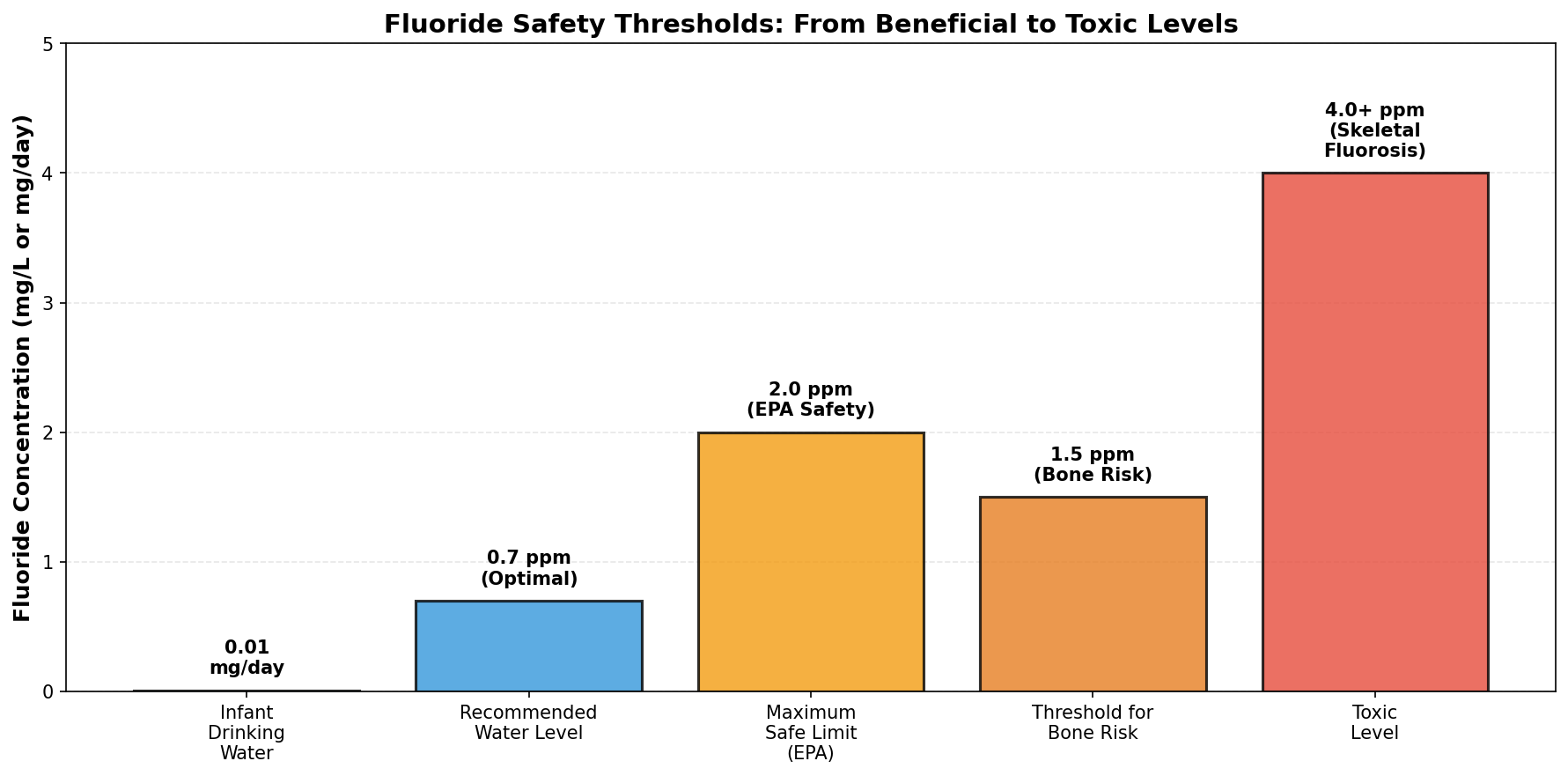 Figure 5: Dental fluorosis prevalence has increased over time, primarily because of multiple fluoride sources (water, toothpaste, processed foods). This trend reflects cumulative exposure rather than water fluoridation alone.
The Neurodevelopment Question: Where Science Genuinely Debates
Here's where the conversation becomes more complex. There is one area where legitimate scientific debate exists, and it deserves honest exploration.
What Studies Show at High Fluoride Levels
Research in areas with naturally high fluoride in drinking water (parts of China, Iran, India) consistently documents associations between fluoride and lower IQ in children. A systematic review found that 18 of 19 high-quality studies conducted in these areas reported an inverse association (higher fluoride equals lower IQ).
One study found that a 0.5 mg/L increase in maternal urinary fluoride was associated with a 2.12-point decrease in children's IQ and a 2.63-point decrease in performance IQ.
Critical context: these studies were conducted in areas where fluoride levels far exceeded recommended limits. WHO guidelines are up to 1.5 mg/L, and many of these study areas exceeded 2-4 mg/L or higher.
The Crucial Difference: Recommended Levels
At the fluoride levels communities actually use (0.7 mg/L), the scientific picture is different. Eight studies specifically examined IQ in children exposed to recommended fluoride levels. None found statistically significant differences. One recent large Australian population-based longitudinal study actually found slightly higher full-scale IQ scores among those exposed to fluoride, though the difference was small and the study found statistical equivalence between exposed and non-exposed groups.
The National Toxicology Program, in a comprehensive 2024 review examining 89 human studies, 199 animal studies, and dozens of in vitro reviews, concluded: "Current evidence does not establish causation at recommended exposure levels."
This is important: the evidence does support concerns about neurodevelopment at higher exposures (>1.5 mg/L, which is more than double the recommended level), but not at the levels communities actually add to water.
What Remains Uncertain
There is genuine scientific uncertainty at intermediate levels (1.0-1.5 mg/L). Some evidence suggests effects might emerge in this range, but the evidence is conflicting, and the window between "recommended" and "high exposure" remains unclear. This is a reasonable area for continued research, and some scientists argue for caution as more is learned.
Thyroid Function and Other Health Questions
Thyroid concerns: At recommended fluoride levels (0.7 mg/L), research found no evidence that fluoride causes thyroid disorders. Multiple studies found no association between recommended fluoride exposure and abnormal thyroid function tests. However, at very high fluoride levels (>3-6 mg/kg/day, far exceeding environmental exposure), animal studies show potential for thyroid impairment. In humans, studies examining this question had significant methodological problems. There's also speculation that adequate iodine intake may protect against any potential thyroid effects; this remains under-researched.
Bone health: At recommended levels (0.7 mg/L), research provides substantial evidence that fluoride does NOT have adverse effects on bone strength, bone mineral density, or fracture rates. When fluoride has been used at very high therapeutic doses (>20 mg/day) to treat osteoporosis, it increases bone density but doesn't translate into stronger bones or fewer fractures. A 2025 meta-analysis found a non-linear dose-response relationship with fracture risk, suggesting a threshold around 1.5 mg/L (nearly double the recommended level) where increased fracture risk may emerge. At community water fluoridation levels, bone health is not a concern.
Kidney and liver health: No carefully documented cases of kidney or liver disease have been attributed to fluoride at recommended levels.
Immune function: No credible evidence links recommended fluoride exposure to immune system damage.
Distinguishing Real Concerns from Unfounded Claims
Here's what the evidence actually supports versus what remains unsupported:
Not supported by evidence at recommended levels:
- Fluoride causes cancer
- Fluoride causes heart disease
- Fluoride damages the kidneys or the liver
- Fluoride damages the immune system
- Fluoride damages the brain at recommended levels (though effects are documented at much higher levels)
Supported by evidence, but with important context:
- Fluoride affects IQ in children: TRUE at high levels (>1.5 mg/L), NOT supported at 0.7 mg/L
- Fluoride can affect thyroid function: POSSIBLE at high levels, but human evidence is weak, and the effect doesn't appear at recommended levels
- Fluoride causes dental fluorosis: TRUE, but mostly mild cosmetic changes in 71% of cases; doesn't affect function or health
- Very high fluoride (>4 mg/L) causes skeletal fluorosis: TRUE, but extremely rare in the U.S.
Individual Choices and Alternatives
If you have concerns about water fluoridation, what are your actual options?
If your water is fluoridated and you prefer not to ingest it:
- You can purchase fluoride-free bottled water for drinking and cooking, though this becomes expensive for a family
- Reverse osmosis or distillation filters can remove fluoride from tap water (standard carbon filters do not)
- You can still receive cavity protection from fluoride toothpaste and professional applications
If your water is not fluoridated and you want additional fluoride:
- Fluoride toothpaste at 1,000-1,500 ppm is available over-the-counter for daily use
- Higher-concentration toothpaste (5,000 ppm) is available by prescription for people at high cavity risk
- Dentists can apply concentrated fluoride varnish (22,600 ppm) professionally
- Some areas have fluoride supplements or rinses, though these require active engagement
For parents managing dental fluorosis risk:
- Use appropriate fluoride amounts for your child's age: a smear (rice-grain size) for ages 0-3, a pea-sized amount for ages 3-6
- Supervise toothbrushing and encourage children to spit out toothpaste
- Avoid fluoride mouth rinse for children under age 6 due to swallowing risk
- Know your water's fluoride level (contact your local water authority)
- Discuss with your dentist how to balance cavity prevention with fluorosis risk
Safety Thresholds: Understanding the Margins
To understand the safety profile, it helps to see where recommended levels sit on the spectrum from beneficial to toxic.
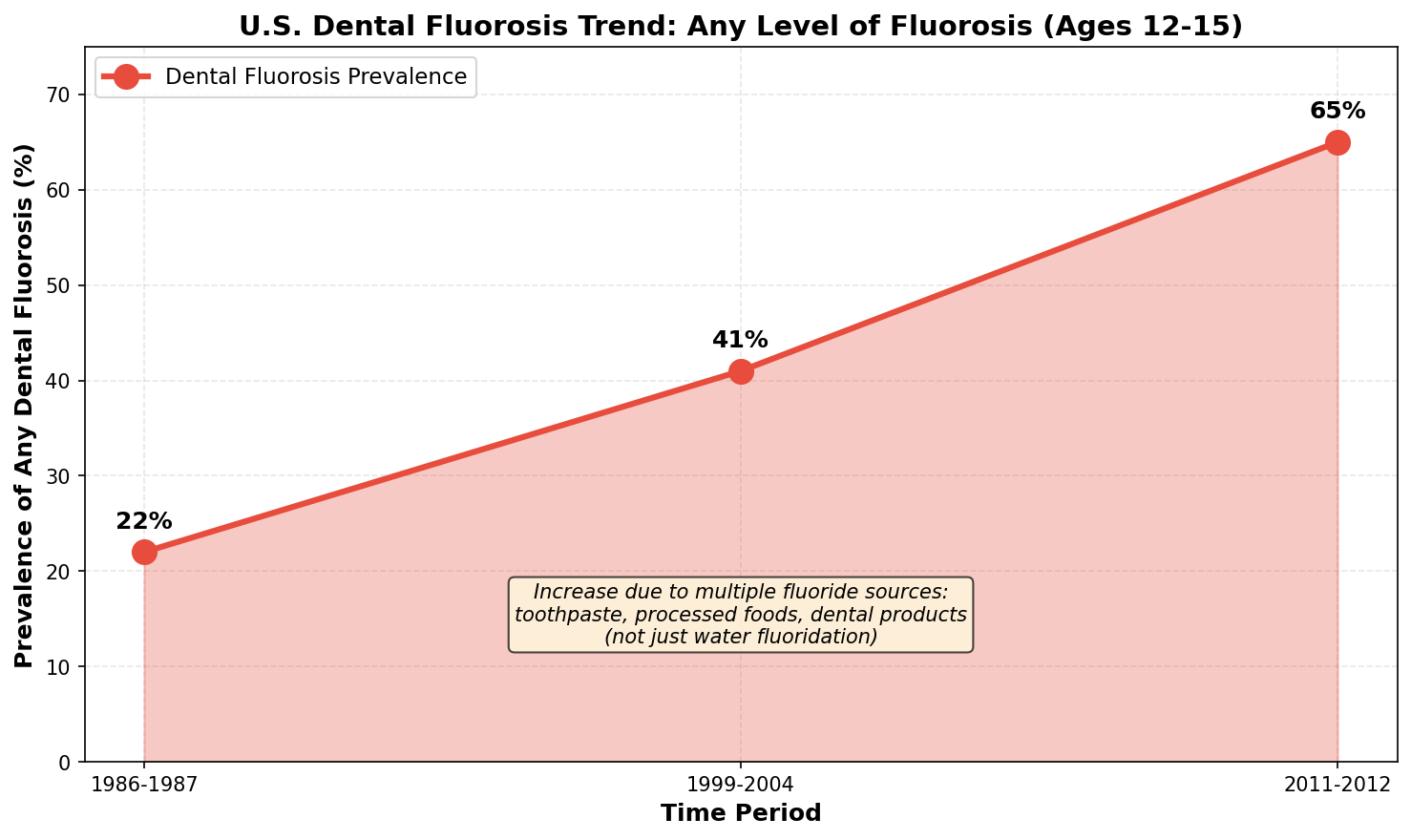 Figure 6: The recommended water fluoridation level (0.7 mg/L) sits well below safety thresholds, with a 3-fold margin to the EPA safety limit and many-fold margin to toxic levels. This provides a substantial safety buffer.
The recommended level for water (0.7 mg/L) maximises cavity prevention while minimising fluorosis risk. The EPA safety limit (2.0 mg/L) is set at nearly 3 times the recommended level, creating a deliberate safety margin. Bone-related concerns emerge around 1.5 mg/L (double the recommended level). Skeletal fluorosis requires chronic exposure above 4 mg/L. Acute toxicity requires massive single-dose ingestion (like swallowing an entire tube of toothpaste).
This tiered structure shows that fluoride follows toxicology's fundamental principle: the dose makes the poison. At recommended levels, the dose is safe; at higher levels, risks emerge in a dose-dependent manner.
The Bottom Line: Risk-Benefit Assessment
Let's summarise what the evidence actually shows:
What is well-supported:
- Fluoride at 0.7 mg/L prevents approximately 25% of tooth decay in children and adults
- At recommended levels, fluoride does NOT cause cancer, heart disease, kidney disease, or other systemic diseases
- Dental fluorosis is the primary documented effect, mostly cosmetic and very mild
- At recommended levels, there is NO evidence of thyroid, bone, or IQ effects
- Water fluoridation is exceptionally cost-effective (saving $7-$20 per dollar invested)
- Fluoridation reduces health disparities, particularly benefiting low-income populations
What remains genuinely uncertain:
- Whether fluoride at intermediate levels (1.0-1.5 mg/L) affects neurodevelopment; evidence shows effects at much higher levels (>1.5 mg/L), but uncertainty exists at intermediate levels
- The exact role of fluoride in thyroid function; some evidence suggests effects are possible at high levels, but research quality is poor, and adequate iodine may protect
- Long-term effects of cumulative fluoride exposure from multiple sources; most research focuses on water alone, and total exposure is increasing over time
What is not supported:
- Fluoride causes cancer at recommended levels
- Fluoride causes systemic health disease at recommended levels
- Fluoride should be completely eliminated (the documented benefits far outweigh documented risks at recommended levels)
For most people in the U.S. and Australia, at recommended fluoride levels, the cavity-prevention benefit is well-established and clearly significant. The documented risk is dental fluorosis, which in the vast majority of cases is a minor cosmetic issue in children ages 0-8 that does not affect health or function. Systemic health risks remain unsupported by evidence at recommended levels.
For parents of young children (ages 0-8), the practical approach is to monitor total fluoride exposure from all sources, use age-appropriate amounts of fluoride products, and work with your dentist to balance cavity prevention with fluorosis minimisation.
For individuals with concerns about fluoride in water, alternatives exist, though most require active engagement or expense. The key is understanding the actual evidence rather than responding to unsupported claims.
Further Reading
How Fluoride Works
- NIDCR: Fluoride and Dental Health (National Institute of Dental and Craniofacial Research)
- Cleveland Clinic: How Does Fluoride Support Dental Health?
- NIH Office of Dietary Supplements: Fluoride Health Professional Fact Sheet
Cavity Prevention Evidence
- Cochrane Library: Fluoride Toothpastes for Preventing Dental Caries
- CDC: About Fluoride and Oral Health
- Cochrane Library: Water Fluoridation for Cavity Prevention
Safety Evidence and Health Effects
- CDC: Scientific Statement on Community Water Fluoridation
- CDC: About Dental Fluorosis
- Cleveland Clinic: Is Fluoride Bad for You?
- Cleveland Clinic: Fluorosis - What's the Right Amount of Fluoride?
Neurodevelopment and Emerging Questions
- NIH National Toxicology Program: Fluoride Exposure and Neurodevelopment
- PubMed: Fluoride Exposure and Children's IQ Scores (2024)
- PubMed: Fluoride and Children's IQ: Evidence of Causation Lacking (2024)
Global Fluoridation Programmes and Implementation
- CDC: 2022 Water Fluoridation Statistics
- NHS England: Support for Water Fluoridation
- NHMRC: Water Fluoridation and Human Health in Australia
Cost-Effectiveness and Health Equity
- PubMed: Cost-Effectiveness of Community Water Fluoridation
- PubMed: Projected Outcomes of Removing Fluoride From U.S. Water Systems
- PubMed: Effects of Community Water Fluoridation on Dental Caries Disparities
Recommended Fluoride Amounts and Safety Levels
- NIH: Fluoride Dietary Reference Intakes
- CDC: Community Water Fluoridation Levels for Effectiveness and Safety (MMWR 2023)
- NHS: Fluoride Recommendations for Children
References/Helpful Resources
- CDC. Community Water Fluoridation Recommendations [Internet]. [cited 2025 Jan 15]. Available from: https://www.cdc.gov/fluoridation/about/community-water-fluoridation-recommendations.html
- National Institute of Dental and Craniofacial Research. Fluoride & Dental Health [Internet]. [cited 2025 Jan 15]. Available from: https://www.nidcr.nih.gov/health-info/fluoride
- CDC. Scientific Statement on Community Water Fluoridation [Internet]. [cited 2025 Jan 15]. Available from: https://www.cdc.gov/fluoridation/about/statement-on-the-evidence-supporting-the-safety-and-effectiveness-of-community-water-fluoridation.html
- Cochrane Library. Water fluoridation for the prevention of dental caries. In: Cochrane Database Syst Rev. 2024;2:CD010856. Available from: https://www.cochranelibrary.com/cdsr/doi/10.1002/14651858.CD010856.pub3/full
- NIH Office of Dietary Supplements. Fluoride: Health Professional Fact Sheet [Internet]. [cited 2025 Jan 15]. Available from: https://ods.od.nih.gov/factsheets/Fluoride-HealthProfessional/
- NIH National Center for Biotechnology Information. Fluoride - Dietary Reference Intakes [Internet]. [cited 2025 Jan 15]. Available from: https://www.ncbi.nlm.nih.gov/books/NBK109832/
- Cleveland Clinic. Fluoride: Uses, Benefits & Side Effects [Internet]. [cited 2025 Jan 15]. Available from: https://my.clevelandclinic.org/health/treatments/11195-fluoride
- Cleveland Clinic. Is Fluoride Bad for You? [Internet]. [cited 2025 Jan 15]. Available from: https://health.clevelandclinic.org/is-fluoride-bad-for-you
- CDC. 2022 Water Fluoridation Statistics [Internet]. [cited 2025 Jan 15]. Available from: https://www.cdc.gov/fluoridation/php/statistics/2022-water-fluoridation-statistics.html
- NHS England. Statement of Support for Water Fluoridation by the Chief Dental Officer for England [Internet]. [cited 2025 Jan 15]. Available from: https://www.england.nhs.uk/primary-care/dentistry/clinical-policies/statement-of-support-for-water-fluoridation-by-the-chief-dental-officer-for-england/
- Taylor KW, Eftim SE, Sibrizzi CA, et al. Fluoride Exposure and Children's IQ Scores: A Systematic Review and Meta-Analysis. JAMA Pediatr. 2025;179(3):282-292. Available from: https://pubmed.ncbi.nlm.nih.gov/39761023/
- Moore D, Glenny AM. Fluoride and children's IQ: evidence of causation lacking. Evid Based Dent. 2024;25(2):95-97. Available from: https://pubmed.ncbi.nlm.nih.gov/38824186/
- NIH National Toxicology Program. Fluoride Exposure: Neurodevelopment and Cognition [Internet]. [cited 2025 Jan 15]. Available from: https://ntp.niehs.nih.gov/research/assessments/noncancer/completed/fluoride
- Cronin J, Moore S, Harding M, et al. A cost-effectiveness analysis of community water fluoridation for schoolchildren. BMC Oral Health. 2021;21(1):158. Available from: https://pubmed.ncbi.nlm.nih.gov/33765985/
- Choi SE, Simon L. Projected Outcomes of Removing Fluoride From US Public Water Systems. JAMA Health Forum. 2025;6(5):e251166. Available from: https://pubmed.ncbi.nlm.nih.gov/40445598/
- Matsuo G, Aida J, Osaka K, et al. Effects of Community Water Fluoridation on Dental Caries Disparities in Adolescents. Int J Environ Res Public Health. 2020;17(6):2020. Available from: https://pubmed.ncbi.nlm.nih.gov/32204333/
- CDC. About Dental Fluorosis [Internet]. [cited 2025 Jan 15]. Available from: https://www.cdc.gov/oral-health/about/about-dental-fluorosis.html
- Ferreira MKM, Nascimento PC, Bittencourt LO, et al. Is there any association between fluoride exposure and thyroid function modulation? A systematic review. PLoS One. 2024;19(4):e0301911. Available from: https://pubmed.ncbi.nlm.nih.gov/38593166/
- Mazzoli R, Filippini T, Iamandii I, et al. The association of fluoride exposure with bone density and fracture risk: a dose-response meta-analysis. Environ Health. 2025;24(1):73. Available from: https://pubmed.ncbi.nlm.nih.gov/41068882/
