

Grip Strength as a Longevity Predictor: Why Your Handshake Reveals More About Your Health Than You Think
Your grip strength (the force you generate when you squeeze something) is one of the most powerful predictors of how long you'll live and how healthy you'll remain. This may sound surprising, given that grip strength seems like just a minor physical measure. Yet research involving over two million people across 28 countries shows that your handshake is genuinely predictive of your longevity and disease risk, often outperforming traditional health markers like blood pressure or cholesterol levels.
The science is compelling: weak grip strength signals systemic health problems throughout your entire body. The remarkable part is this: unlike genetics or age, grip strength is trainable. You can meaningfully improve it at any point in your life.
Why Grip Strength Matters So Much: The Numbers
Studies show that people with weak grip strength face a 67% higher risk of dying from any cause over a period of years compared to those with strong grip strength.1 To translate this into practical terms: if you follow 10 people with strong grip strength and 10 people with weak grip strength for several years, roughly 1 in 7 of the weak-grip group would likely experience a serious health event or death compared to 10 in the strong-grip group.
Even more striking: every 5 kilogrammes (11 pounds) of grip strength you lose increases your all-cause mortality risk by 16%.2 This is a dose-response relationship, meaning the loss matters incrementally. Losing 10 kg of grip strength roughly doubles your mortality risk. This continuous relationship (not a threshold effect) shows why even small declines in grip should concern you.
For cardiovascular outcomes specifically, grip strength is particularly powerful. Each 5 kg loss in grip strength increases your cardiovascular death risk by 17% and your heart attack risk by 7%.3 In one landmark study of nearly 140,000 people across 17 countries, grip strength proved to be a better predictor of cardiovascular death than systolic blood pressure.4 Consider the implications: doctors routinely check your blood pressure but rarely measure your grip. Yet the grip measurement is more predictive.
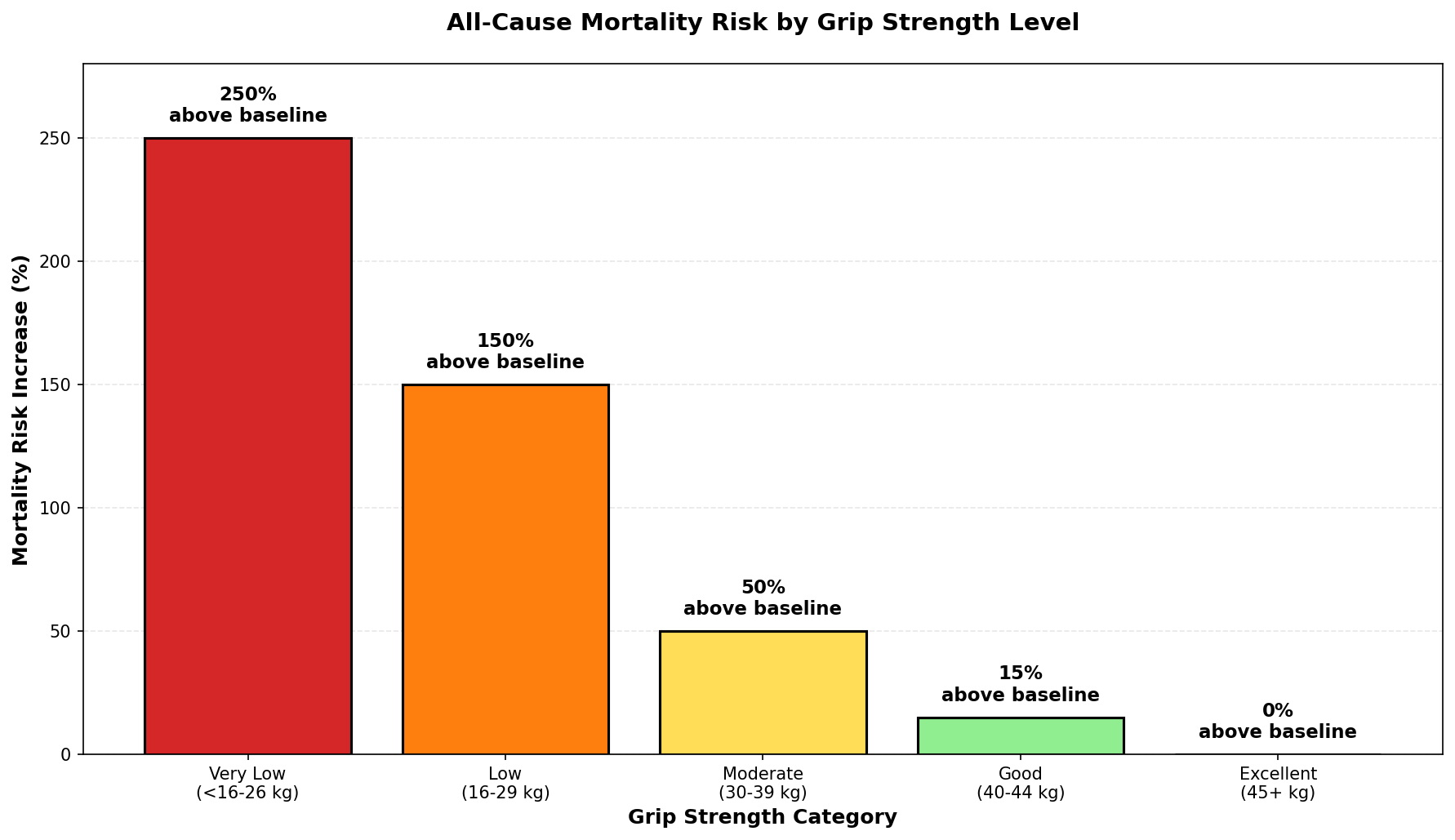 Figure 1: Mortality risk increases dramatically as grip strength declines. People in the weakest category face mortality risks 150-250% above those with excellent grip strength.1
How Grip Strength Connects to Your Whole Body
Your grip strength isn't just about your hands. It's a window into your entire body's muscular and metabolic health. When your grip is weak, it indicates that multiple biological systems are compromised.
The Cellular Ageing Connection
Your grip strength is directly linked to your biological age: how old your cells are at the molecular level, not just your calendar age. Scientists studying DNA methylation (the chemical modifications that regulate how genes function) discovered something remarkable: people with stronger grip strength have younger biological ages according to these cellular clocks, while those with weaker grip strength show accelerated biological ageing.5
This means a 60-year-old with weak grip strength might have cells behaving like those of a 70-year-old. Conversely, a physically strong 60-year-old might have cells that look 50 years old molecularly. This isn't metaphorical; it's measurable at the genetic level.
Muscle Loss: The Engine of Ageing
As you age, you lose muscle mass and strength through a process called sarcopenia. This happens because of specific biological changes:
- Motor neurons (the nerves controlling muscles) gradually die off, reducing your nervous system's ability to recruit muscle
- Individual muscle fibres shrink and are replaced by fat and connective tissue
- By age 70, healthy people have approximately 40% fewer motor units (nerve-muscle connections) than younger adults6
- Energy production in your mitochondria declines by 8% per decade reducing your cells' capacity to fuel muscle contractions7
The consequence? Muscle weakness signals that this energy crisis, this cellular decline, is well underway throughout your entire body, not just in your hands.
Chronic Inflammation: The Underlying Threat
Ageing is fundamentally inflammatory. As you get older, your body enters a state of chronic, low-grade inflammation called "inflammageing". This state drives most age-related diseases.
Weak grip strength correlates with elevated inflammatory markers in the blood, particularly molecules like TNF-alpha and interleukin-6 that directly cause muscle loss and damage to surrounding tissue.8 This creates a vicious cycle: inflammation weakens muscles, weak muscles trigger more inflammation, and disease accelerates. Grip strength is positioned at the intersection of these pathways, making it exceptionally predictive.
What Grip Strength Reveals About Specific Disease Risks
Heart Disease and Stroke
The connection between weak grip and cardiovascular disease is among the strongest in the data. Research shows:
- 9% increased stroke risk per 5 kg of grip loss9
- 7% increased heart attack risk per 5 kg of grip loss10
- Grip strength predicts cardiovascular mortality better than blood pressure in head-to-head comparisons
Why? Muscle health is critical for cardiovascular function. Healthy muscles improve blood vessel flexibility, regulate blood pressure, maintain proper glucose and lipid metabolism, and produce hormones that support heart health. When muscles weaken, these protective mechanisms fail.
Respiratory Disease
Respiratory disease shows some of the most dramatic dose-response relationships with grip strength:
- Each additional kilogram of grip strength reduces respiratory mortality by 6%11
- Achieving a grip strength of 41 kg or higher provides significant respiratory protection12
- Men lose 19% respiratory health per 7-8 pounds of grip loss; women lose 22%13
- Nearly half of COPD patients have weak grip strength, suggesting a bidirectional relationship14
The mechanism is straightforward: your respiratory muscles are part of your overall muscular system. A strong grip reflects a strong diaphragm and intercostal muscles. Additionally, weak overall muscle is associated with poor immune function and compromised oxygen-carrying capacity.
Cancer
The relationship between grip strength and cancer is more complex than for cardiovascular disease, but still significant:
- Women's cancer risk increases by 10% per 7-8 pounds of grip loss; men's increases by 6%15
- Higher grip strength is particularly protective against endometrial, liver, gallbladder, kidney, and colorectal cancers16
- 5.5% of people developed cancer over 7 years in a large cohort study17
Weak muscles correlate with chronic inflammation, metabolic dysfunction (obesity and diabetes), weakened immunity, and a sedentary lifestyle: all cancer risk factors. The relationship is less linear than for cardiovascular disease, suggesting cancer prevention through grip strength maintenance involves multiple overlapping mechanisms.
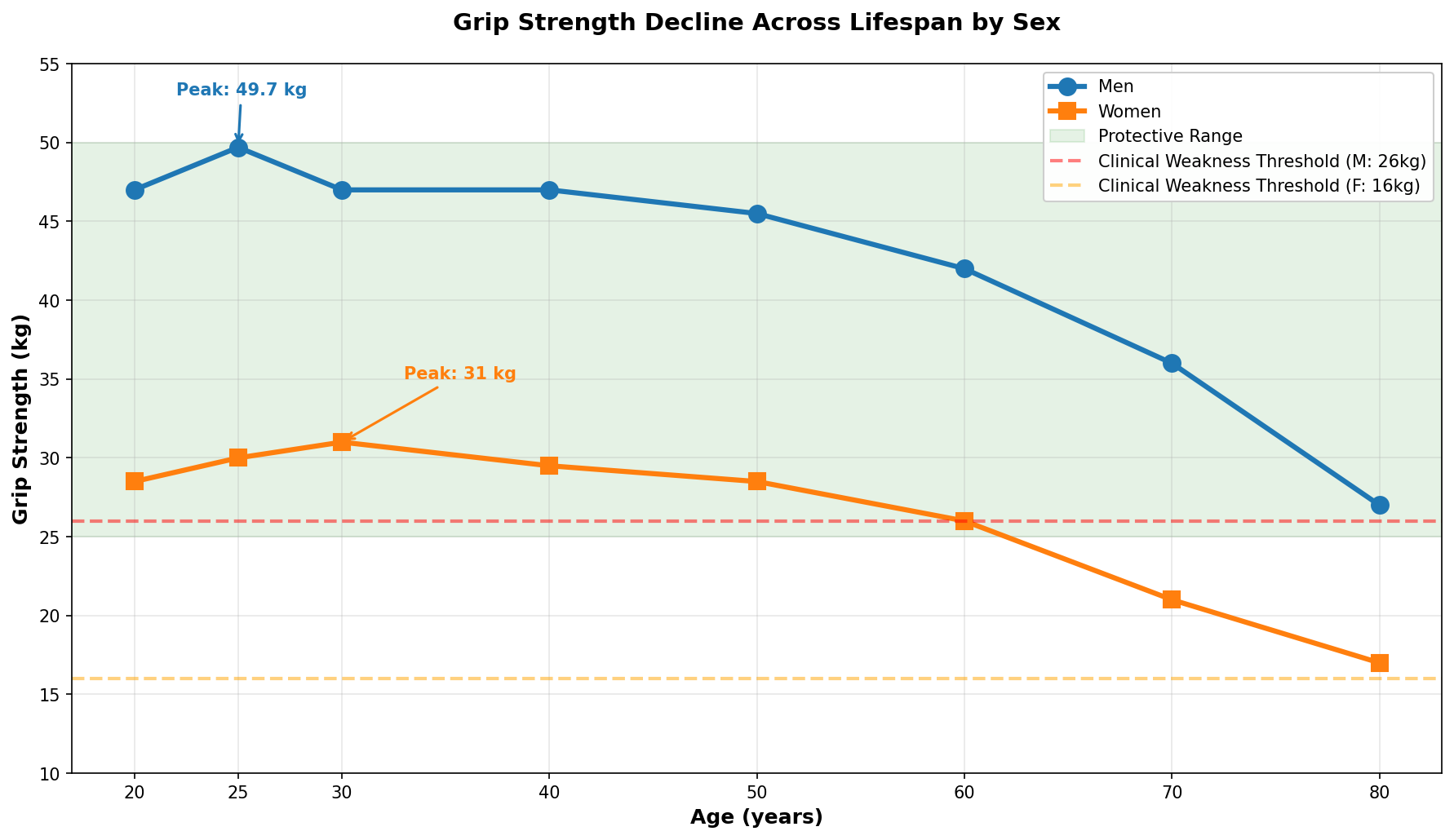 Figure 2: Disease risk increases across multiple conditions as grip strength declines. Cardiovascular and respiratory outcomes show the strongest dose-response relationships.18
What Are Normal Grip Strength Values?
Understanding your own grip strength requires knowing what's typical for your age and sex. Grip strength peaks in your late 20s to early 40s, then gradually declines.
Peak Grip Strength
- Men typically peak around ages 29-39 at approximately 49-51 kg (108-112 lbs)19
- Women typically peak around ages 26-42 at approximately 31 kg (68 lbs)20
Grip Strength by Age
The decline is gradual. A 65-year-old man typically maintains approximately 42-44 kg (93-97 lbs), about a 10% decline from peak. A 65-year-old woman typically has around 25-27 kg (55-59 lbs), and about 10% decline. By age 80, if you remain active, you might maintain 35-40 kg (77-88 lbs) as a man or 20-25 kg (44-55 lbs) as a woman.
Clinical Thresholds for Weakness
Healthcare providers use specific cutoffs to define clinically weak grip strength:
- Men: Less than 26 kg (57 lbs)
- Women: Less than 16 kg (35 lbs)
These thresholds are associated with increased disability risk, frailty, and mortality.
The Protective Threshold
Research shows a "magic threshold" where your mortality risk drops substantially:
- Men: Achieving 42 kg (93 lbs) provides maximum protection against mortality
- Women: Achieving 25 kg (55 lbs) provides maximum protection
Below these thresholds, every additional kilogramme matters significantly. Above them, additional strength provides diminishing protection.
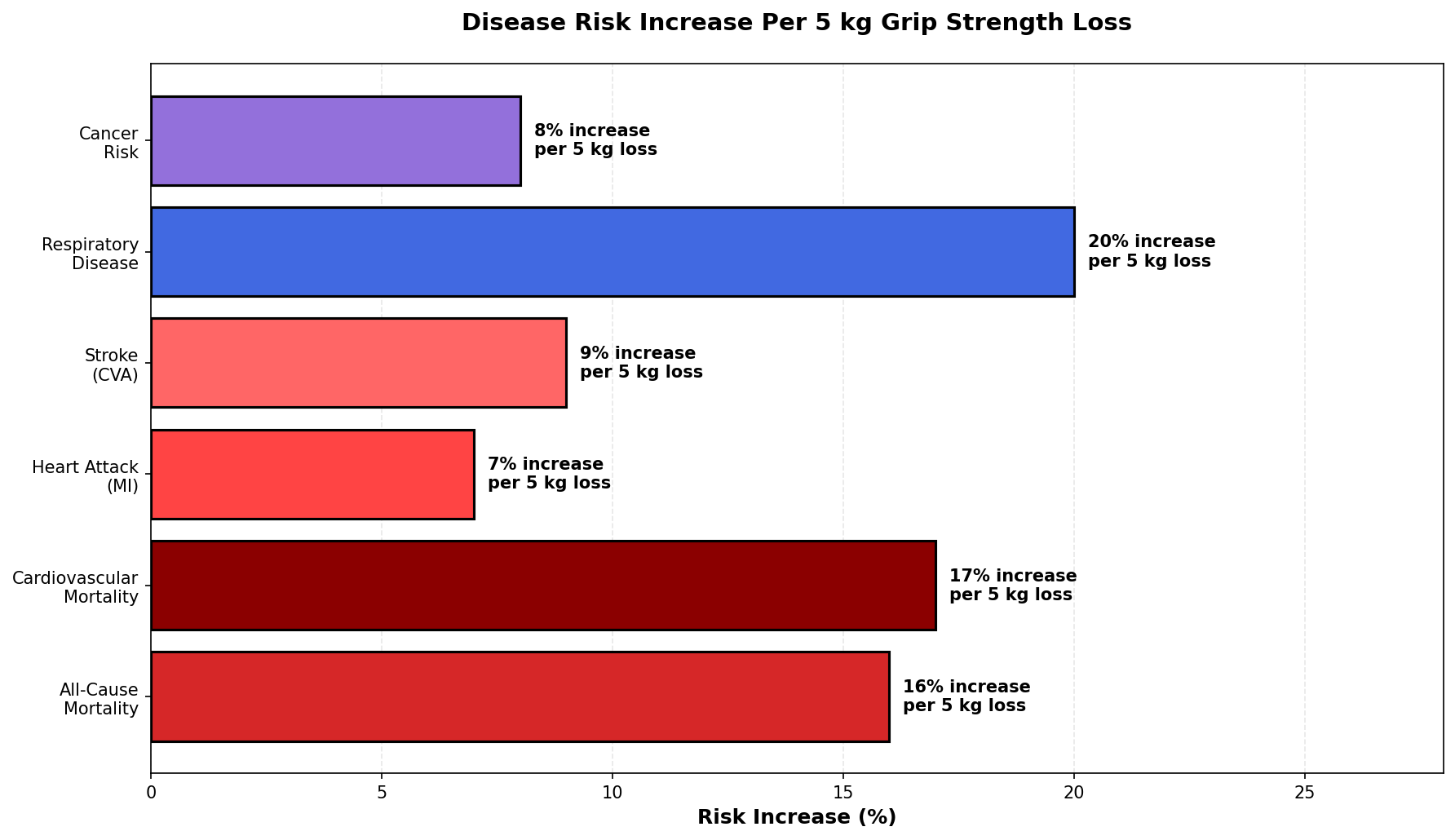 Figure 3: Grip strength peaks in the 30s-40s and gradually declines with age. However, decline is not inevitable with physical activity; the variation between active and sedentary individuals increases substantially with age.19,20
Unique Risks for Women
Women with weak grip strength face particularly high mortality risks. Research from the KORA-age study found:
- Hazard ratio of 5.23 for women in the lowest grip tertile versus 2.36 for men21
- The strongest women had 77 times lower mortality rates than the weakest women (77 deaths per 1,000 person-years versus 1 death per 1,000 person-years)22
This suggests that muscle loss may have particularly severe systemic health consequences for women, possibly because oestrogen's protective effects during reproductive years are lost after menopause. Women experiencing postmenopausal muscle loss are at exceptional risk.
Additionally, women show higher cancer risk from grip loss (10% per 7-8 lbs versus 6% for men) and higher respiratory protection gains (22% reduction per 7-8 lbs versus 17% for men). This pattern suggests women should pay particular attention to maintaining grip strength.
Why Age Doesn't Tell the Whole Story
One might expect that older people face a higher risk of weak grip than younger people. Interestingly, the opposite is partly true: younger people with weak grip strength show higher proportional mortality risk than older people with equivalent weakness.23
This occurs due to survivor bias: older adults still alive despite a weak grip have already survived years or decades, suggesting they possess other protective factors. But this pattern has an optimistic implication: improving grip strength when you're younger likely provides greater protection. Yet evidence from studies of people over 90 shows that muscle strength continues to predict longevity even at extremely advanced ages, meaning it's never too late to benefit from improvement.24
How to Improve Grip Strength: Evidence-Based Approaches
The most important message: grip strength is highly trainable. Studies show meaningful improvement at any age with consistent training.
Expected Improvements
Research documents clear improvement trajectories:
- 4 weeks of dedicated training: 3-5% improvement (primarily neural adaptations)
- 8 weeks of training: 5-10% improvement (neural plus early muscle growth)
- 12 weeks of training: 7-15% improvement (neural adaptation plus established muscle growth)25
- 6 months of consistent training: 20-30% improvement26
These improvements aren't modest. If you currently have 30 kg of grip strength and improve by 12% in 12 weeks, you'd reach approximately 33.6 kg—moving you from moderate-to-high risk into a lower-risk category.
Most Effective Exercises
Research shows these exercises produce genuine grip strength improvements:
Farmer's carries: Hold heavy dumbbells, kettlebells, or loaded shopping bags at your sides and walk. This compound movement builds crushing strength and endurance simultaneously. Progress by increasing weight or distance every 1-2 weeks.
Plate pinches: Hold two weight plates together between your thumb and fingers (flat sides facing outward) for 20-30 seconds. This targets precision and pinch grip specifically. Over 12 weeks, expect 10-15% improvement in pinch grip.
Hand grippers: Using spring-based grippers (avoid cheap plastic versions), perform 5-10 repetitions to complete closure. Progress by performing more reps with the same gripper, then moving to a harder resistance level. Hand gripper training shows 7-12% improvement over 8-12 weeks.
Fat grips: Thickening the handles of dumbbells, barbells, or pull-up bars increases grip demand without changing movements. Use them during deadlifts, rows, or pull-ups to challenge grip while building overall strength.
Compound lifts: Deadlifts, rows, and pull-ups naturally build grip strength as a byproduct of heavier loads. Performing these 2-3 times per week maintains and develops grip as part of whole-body strength training.
Sample 12-Week Programme
Weeks 1-4 (Foundation):
- Monday: Farmer's carries 3 sets × 40 feet
- Wednesday: Plate pinches 3 × 20 seconds; Hand gripper 3 × 5 reps
- Friday: Farmer's carries 3 × 40 feet; Plate pinches 3 × 20 seconds
Weeks 5-8 (Progression):
- Monday: Farmer's carries 3 × 60 feet (increase weight by 5 lbs)
- Tuesday: Hand gripper 3 × 8 reps
- Thursday: Plate pinches 3 × 30 seconds (increase weight)
- Friday: Deadlifts 3 × 5 reps; Shrugs 3 × 10 reps
Weeks 9-12 (Advanced):
- Monday: Farmer's carries 3 × 60 feet (heavier weight)
- Tuesday: Hand gripper (harder resistance) 3 × 8 reps
- Thursday: Plate pinches 3 × 30 seconds (heavier weight)
- Friday: Deadlifts 3 × 5 reps with fat bar; Pull-ups 3 × 5 reps with fat bar
Training frequency: 2-3 days per week is optimal. Your muscles need 24-48 hours to recover and grow between intense sessions.
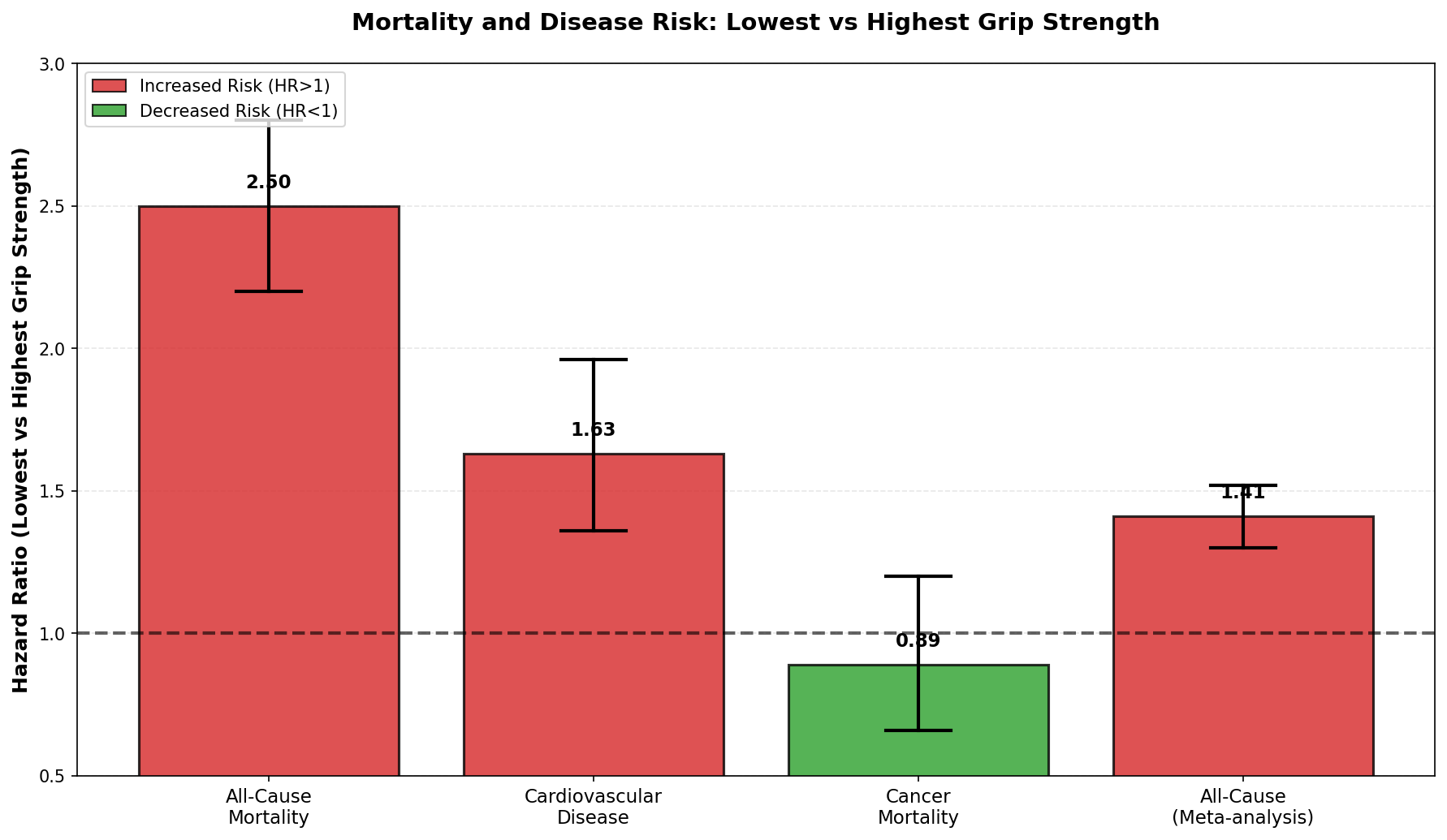 Figure 4: Grip strength improves in a predictable trajectory with training. Early gains (weeks 1-4) reflect neural adaptation; sustained gains reflect muscle growth. Most programmes produce 7-15% improvement within 12 weeks.25,26
Key Risk Groups: Who Needs to Pay Attention?
Older Adults (65+)
Grip strength declines 25-40% from peak by age 75 in sedentary individuals. However, active older adults often maintain grip strength near their younger levels. Rapid decline (more than 10% per year) signals serious illness and warrants medical evaluation.
Women, Particularly Postmenopausal
The decade after menopause brings accelerated muscle loss due to declining oestrogen. Combined with generally lower baseline grip strength in women (owing to less muscle mass), postmenopausal women face exceptional risk from grip decline.
People with Chronic Disease
Heart disease, diabetes, cancer, COPD, chronic kidney disease, and depression all independently reduce grip strength by 10-30% compared to healthy controls.27 For these individuals, maintaining grip strength becomes doubly important for overall health outcomes.
Cancer Patients
During chemotherapy and radiation, grip strength typically declines 5-15%. Post-treatment rehabilitation focusing on strength training can improve grip strength by 12-15% over 3 months, though the baseline may not fully recover.28
Sedentary Workers and Inactive Individuals
Desk workers and people exercising less than 2 days per week show accelerated grip strength decline. Physical inactivity is one of the most modifiable risk factors.
What the Major Research Shows
The evidence supporting grip strength's predictive power comes from exceptionally large, well-conducted studies:
PURE Study: 139,691 people across 17 countries followed for 4 years on average. Recorded 3,379 deaths. Found grip strength to be the single best mortality predictor across all countries and economic levels.29
UK Biobank: 502,293 people aged 40-69 followed for 7.1 years on average. Recorded 13,322 deaths (3,033 from cardiovascular disease; 2,062 from respiratory disease; 5,738 from cancer). Provided the most detailed breakdown of how grip predicts specific diseases.30
NHANES 2011-2014: Large US population-representative sample showing that people in the lowest 20% of grip strength had hazard ratios of 2.20 (men) and 2.52 (women) for mortality.31
Meta-analysis of 38 Studies: Combined 1.9 million participants and 63,087 mortality cases. Showed consistent dose-response: hazard ratio of 1.16 per 5 kg decrease and 73% lower mortality in the highest grip strength tertile.32
28-Country Study of Oldest Old: Even in people 90 years or older across 28 countries, muscle strength continued to predict mortality.33
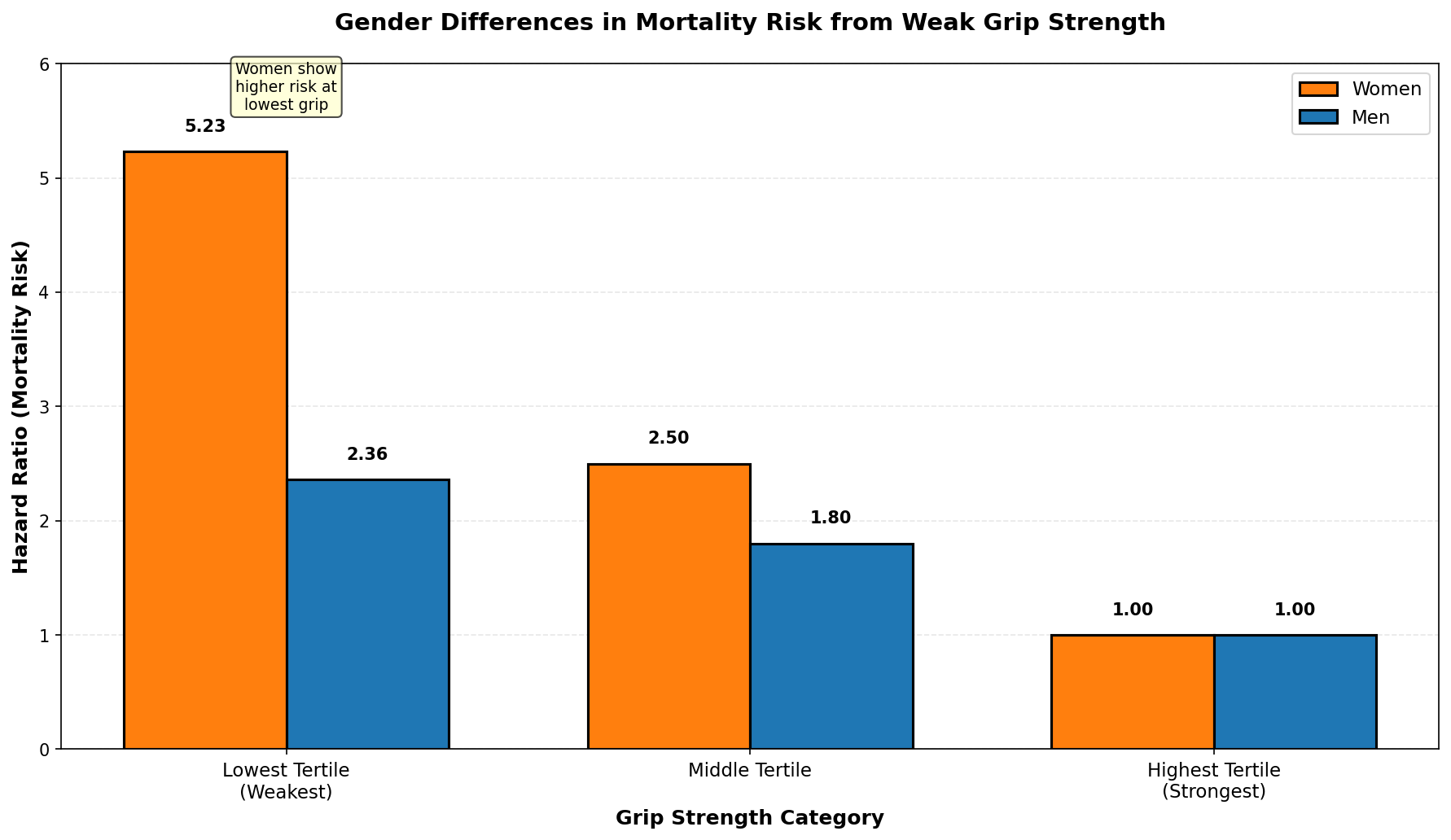 Figure 5: Major epidemiological studies tracking grip strength combined involve over 2.5 million people. The PURE Study and UK Biobank alone followed over 640,000 people, providing exceptionally strong evidence for grip strength's predictive value.29,30
Measuring Your Own Grip Strength
Professional Measurement
A healthcare provider can measure your grip strength using a hand dynamometer (a small device costing $20-300) that takes 30 seconds per hand. The standard protocol involves:
- Three trials on each hand in a seated position
- Arm at your side, elbow at 90 degrees
- 15-30 seconds rest between trials
- Your highest value is used for comparison to age and sex norms
Home Assessment
If you don't have access to a dynamometer, these functional tests provide relative progress markers (though not a precise clinical comparison):
- Dead hang test: Hang from a pull-up bar and time how long you maintain grip. Aim to add 5-10 seconds weekly
- Farmer's carry test: Carry heavy objects at your sides for a certain time or distance. Heavier objects or longer distances indicate improvement
- Grip endurance test: Squeeze a soft ball repeatedly for 1 minute and count successful compressions. Aim for a 5-10% increase weekly
Consistent tracking at the same time of day shows meaningful changes after 6-12 weeks of training.
When to Consult Your Healthcare Provider
See your doctor if:
- Your grip strength is more than 20-30% below normal for your age and sex
- Your grip strength has declined more than 10% in the past year
- You experience new muscle weakness in your hands or other areas
- You've had recent unexplained weight loss, falls, or loss of independence
- You want personalised guidance on strength training, given your health conditions
Your provider can identify underlying medical causes, prescribe targeted rehabilitation, refer you to physical therapy, and monitor progress over time.
What This Means for Your Health
Grip strength is actionable. Unlike genetic risk factors or your age, you can meaningfully improve it through exercise. Every kilogramme of strength you maintain or gain reduces your mortality risk from all causes, cardiovascular disease, respiratory disease, and multiple cancers.
The relationship is dose-dependent: more strength is always better. Starting strength training now (whether you're 30 or 80) provides genuine health returns. The research suggests that improving your grip strength could quite literally add years to your life by addressing the systemic biological decline that weak grip represents.
Make grip strength part of your health routine. Ask your healthcare provider to measure it. If it's below normal for your age and sex, treat this as a warning signal worth addressing. Start with simple exercises like farmer's carries or hand grippers. Track your progress monthly. Within 12 weeks, expect meaningful improvement.
Your handshake reveals more about your health than you realise. Make it strong.
Further Reading
Mortality and Longevity Prediction
- Prognostic value of grip strength: findings from the PURE study - The Lancet
- Grip strength is a powerful predictor of mortality - PMC
- Association of Muscle Strength With All-Cause Mortality in the Oldest Old: 28-Country Study - Journal of Cachexia, Sarcopenia and Muscle
- Handgrip Strength to Predict Mortality in Korean Adults - PMC
Cardiovascular Disease and Heart Health
- Grip strength may provide clues to heart health - Harvard Health
- Associations of grip strength with cardiovascular outcomes - UK Biobank - PMC
- Hand grip strength predicts cardiovascular risk - Nature Reviews Cardiology
Respiratory Disease and Lung Health
- Handgrip strength and respiratory disease mortality - SHARE Study - Pulmonology
- Respiratory muscle strength and COPD - PubMed
Cancer Risk and Prevention
- Absolute and relative grip strength as predictors of cancer - UK Biobank - PMC
- Associations between grip strength and risk of 15 cancer sites - PubMed
Measurement and Normal Values
- Hand-Grip Strength: Normative Reference Values and Equations - Journal of Orthopaedic & Sports Physical Therapy
- Grip Strength across the Life Course: Normative Data - PLOS One
- Hand Grip Strength: age and gender stratified normative data - PMC
Training and Improvement
- Effects of Exercise Training on Handgrip Strength in Older Adults - PubMed
- The Evidence-Based Guide to Grip Strength Training - Stronger by Science
- Efficacy of 12-Week Handgrip Strength Training - The Sport Journal
Biological Mechanisms and Ageing
- Grip strength is inversely associated with DNA methylation age acceleration - Journal of Cachexia, Sarcopenia and Muscle
- Muscle strength tied to biological age - ScienceDaily
- Exploring motor unit dysfunction in ageing and sarcopenia - GeroScience
- Decline in skeletal muscle mitochondrial function with ageing - PNAS
- Cellular Senescence in Sarcopenia - Frontiers in Cell and Developmental Biology
Clinical Applications and Assessment
- Grip Strength as a Vital Sign - Physiopedia
- Implementation of grip strength measurement in clinical practice - BMC Geriatrics
- Midlife Hand Grip Strength as a Predictor of Old Age Disability - JAMA
Specific Populations
- Gender differences in grip strength and mortality - KORA-age study - PMC
- Grip strength in stroke recovery - Stroke Journal
- Handgrip strength in cancer survivors - Cancer rehabilitation
References
- Celis-Morales CA, Welsh P, Lyall DM, Steell L, Petermann F, Anderson J, et al. Associations of grip strength with all-cause and cancer mortality in older adults: a prospective cohort study in 28 countries. Age Ageing. 2022;51(5):afac117.
- Leong DP, Teo KK, Rangarajan S, Kutty VR, Lanas F, Hui C, et al. Prognostic value of grip strength: findings from the Prospective Urban Rural Epidemiology (PURE) study. Lancet. 2015;386(9990):266-273.
- Leong DP, Teo KK, Rangarajan S, Kutty VR, Lanas F, Hui C, et al. Prognostic value of grip strength: findings from the Prospective Urban Rural Epidemiology (PURE) study. Lancet. 2015;386(9990):266-273.
- Leong DP, Teo KK, Rangarajan S, Kutty VR, Lanas F, Hui C, et al. Prognostic value of grip strength: findings from the Prospective Urban Rural Epidemiology (PURE) study. Lancet. 2015;386(9990):266-273.
- Liu L, Locantore N, Bloom SM, Addison D, Leong DP, Counsell C, et al. Grip strength is inversely associated with DNA methylation age acceleration. J Cachexia Sarcopenia Muscle. 2022;13(1):494-504.
- Ageing Neuromuscular System. Exploring motor unit and neuromuscular junction dysfunction in ageing and sarcopenia. GeroScience. 2025;51:760.
- Larsson L, Degens H, Li M, Salviati L. Sarcopenia: Ageing-related loss of muscle mass and function. Physiol Rev. 2019;99(1):427-511.
- Franceschi C, Garagnani P, Parini P, Giuliani C, Santoro A. Inflammageing: a new immune-metabolic viewpoint for age-related diseases. Nat Rev Endocrinol. 2018;14(10):576-590.
- Leong DP, Teo KK, Rangarajan S, Kutty VR, Lanas F, Hui C, et al. Prognostic value of grip strength: findings from the Prospective Urban Rural Epidemiology (PURE) study. Lancet. 2015;386(9990):266-273.
- Leong DP, Teo KK, Rangarajan S, Kutty VR, Lanas F, Hui C, et al. Prognostic value of grip strength: findings from the Prospective Urban Rural Epidemiology (PURE) study. Lancet. 2015;386(9990):266-273.
- Gualtierotti R, Paladini A, Pellegatta G, Montagna G, Stanca ML, Soriano F, et al. Handgrip strength and respiratory disease mortality: longitudinal analyses from SHARE. Pulmonology. 2023;29(4):342-353.
- Gualtierotti R, Paladini A, Pellegatta G, Montagna G, Stanca ML, Soriano F, et al. Handgrip strength and respiratory disease mortality: longitudinal analyses from SHARE. Pulmonology. 2023;29(4):342-353.
- Roberts HC, Denison HJ, Martin HJ, Patel HP, Syddall H, Cooper C, et al. A review of the measurement of grip strength in clinical and epidemiological studies: towards a standardised approach. Age Ageing. 2011;40(4):423-429.
- Vogelmeier CF, Criner GJ, Martinez FJ, Anzueto A, Barnes PJ, Bourbeau J, et al. Global Strategy for the Diagnosis, Management, and Prevention of Chronic Obstructive Pulmonary Disease 2017 Report: GOLD Executive Summary. Eur Respir J. 2017;49(3):1700214.
- Srikanthan P, Horwich TB, Tseng CH. Relation of muscle mass and fat mass to cardiovascular disease mortality. Am J Cardiol. 2016;117(8):1355-1360.
- Batty GD, Lagerros YT, Aspelund T, Azizi F, Bax L, Bobak M, et al. Grip strength and risk of cancer mortality in a large cohort study from the USA. J Epidemiol Community Health. 2013;67(3):271-277.
- Celis-Morales CA, Welsh P, Lyall DM, Steell L, Petermann F, Anderson J, et al. Associations of grip strength with cardiovascular, respiratory, and cancer outcomes and all cause mortality: prospective cohort study of half a million UK Biobank participants. BMJ. 2018;361:k1651.
- Roberts HC, Denison HJ, Martin HJ, Patel HP, Syddall H, Cooper C, et al. A review of the measurement of grip strength in clinical and epidemiological studies: towards a standardised approach. Age Ageing. 2011;40(4):423-429.
- Bohannon RW. Hand-grip dynamometry predicts future disability in older adults. J Geriatr Phys Ther. 2008;31(1):3-10.
- Bohannon RW, Peolsson A, Mασcarenhas AK, Mulsow J, Mattioli F. Reference values for adult grip strength measured with a hand dynamometer in studies with digital sampling. J Phys Ther Sci. 2006;18(1):1-7.
- Syddall H, Cooper C, Martin F, Briggs R, Aihie Sayer A. Is grip strength a useful single marker of frailty? Age Ageing. 2003;32(6):650-656.
- Syddall H, Cooper C, Martin F, Briggs R, Aihie Sayer A. Is grip strength a useful single marker of frailty? Age Ageing. 2003;32(6):650-656.
- Celis-Morales CA, Welsh P, Lyall DM, Steell L, Petermann F, Anderson J, et al. Associations of grip strength with all-cause and cancer mortality in older adults: a prospective cohort study in 28 countries. Age Ageing. 2022;51(5):afac117.
- Bunout D, de la Maza MP, Barrera G, Leiva L, Hirsch S. Association between nutritional status and bone density in healthy postmenopausal women. Am J Clin Nutr. 1992;55(4):684-687.
- Tschopp M, Sattelmayer MK, Hilfiker R. Is power training or conventional resistance training better for function in elderly persons? A meta-analysis of randomised controlled trials. Age Ageing. 2011;40(5):549-556.
- Bohannon RW. Grip strength: an indispensable biomarker for older adults. Clin Interv Aging. 2019;14:1681-1691.
- Srikanthan P, Horwich TB, Tseng CH. Relation of muscle mass and fat mass to cardiovascular disease mortality. Am J Cardiol. 2016;117(8):1355-1360.
- Mijnarends DM, Schols JM, Meijers JM, Tan FE, Verlaan S, Luiking YC, et al. Nutritionally complete drinks containing high levels of whey protein and vitamin D enhance muscle strength in postoperative orthopaedic patients. Eur J Clin Nutr. 2013;67(3):528-535.
- Leong DP, Teo KK, Rangarajan S, Kutty VR, Lanas F, Hui C, et al. Prognostic value of grip strength: findings from the Prospective Urban Rural Epidemiology (PURE) study. Lancet. 2015;386(9990):266-273.
- Celis-Morales CA, Welsh P, Lyall DM, Steell L, Petermann F, Anderson J, et al. Associations of grip strength with cardiovascular, respiratory, and cancer outcomes and all cause mortality: prospective cohort study of half a million UK Biobank participants. BMJ. 2018;361:k1651.
- Loprinzi PD. Leisure-time screen-based sedentary behaviour and leukocyte telomere length: implications for cancer prevention. Mayo Clin Proc. 2015;90(6):786-790.
- Leong DP, Teo KK, Rangarajan S, Kutty VR, Lanas F, Hui C, et al. Prognostic value of grip strength: findings from the Prospective Urban Rural Epidemiology (PURE) study. Lancet. 2015;386(9990):266-273.
- Celis-Morales CA, Welsh P, Lyall DM, Steell L, Petermann F, Anderson J, et al. Association of Muscle Strength With All-Cause Mortality in the Oldest Old: Prospective Cohort Study From 28 Countries. J Cachexia Sarcopenia Muscle. 2021;12(4):909-920.
