

If hair loss has left you searching for solutions, you've probably stumbled across scalp massage mentioned somewhere online. But does it actually work? And if so, what's the right way to do it?
The short answer: yes, there's real science behind scalp massage for hair growth, though it's more nuanced than most internet articles suggest. Research shows that nearly 7 out of 10 people with pattern hair loss report stabilisation or regrowth when they maintain consistent scalp massage, and studies have measured actual hair thickening at the cellular level. But this isn't a miracle cure, and understanding how to do it correctly and what to realistically expect is key.
This guide walks you through the science, gives you step-by-step techniques, and explains exactly what the research shows about results and timelines.
Why Hair Loss Happens: Understanding the Problem
Before diving into solutions, it helps to understand what's going wrong. Hair loss affects 80 million Americans: 50 million men and 30 million women. If you're struggling with thinning hair, you're far from alone.
Hair loss typically happens through two main pathways:
Androgenetic alopecia (pattern baldness) is the most common form, affecting about 1 in 4 men and a significant portion of women. Your genes determine whether your hair follicles are sensitive to DHT, a hormone derivative that causes follicles to shrink over time.
The second pathway involves blood flow and nutrient delivery. Research reveals something striking: subcutaneous blood flow to the scalp in people with early male pattern baldness is 2.6 times lower than in people with healthy hair. Think of your hair follicles like plants; if they're not getting enough water and nutrients, they wither.
A third factor is stress. When cortisol levels rise from chronic stress, your body actually reduces the synthesis of hyaluronan and other molecules that support scalp health by approximately 40%. Stress also pushes hair follicles out of their growth phase prematurely, causing shedding.
This is where scalp massage enters the picture. It addresses multiple mechanisms simultaneously: improving blood flow, reducing stress hormones, and triggering cellular changes that tell your hair to grow.
How Scalp Massage Actually Works: The Science
When you massage your scalp with the right pressure, you're not just doing something that feels nice. You're triggering measurable biological changes in the cells that control hair growth.
Mechanism 1: Mechanical Stress Changes Gene Expression
At the base of each hair follicle is a cluster of specialised cells called the dermal papilla. These cells are the command centre for hair growth; they decide whether your hair grows thick or thin, grows actively or rests.
When you apply stretching and pressure to your scalp, that mechanical force transmits directly to dermal papilla cells. In response, these cells change which genes are turned on and off:
Genes that activate (promoting hair growth):
- BMP4 (signals for hair development)
- NOGGIN (promotes follicle stem cells)
- SMAD4 (part of growth signalling pathways)
- IL6ST (supports cellular communication)
Genes that deactivate (reducing inflammation and growth suppression):
- IL6 (an inflammatory marker that suppresses growth)
This isn't theoretical. In a clinical study, 9 healthy men received just 4 minutes of standardised scalp massage daily for 24 weeks. Their hair thickness increased from 0.085 mm to 0.092 mm (a measurable 8.2% improvement in hair diameter).
Mechanism 2: Improved Blood Circulation
Your hair follicles are nutrient-hungry tissues. They need oxygen, amino acids, vitamins, and minerals to produce healthy hair. Massage increases blood flow to the scalp through two processes:
Direct pressure forces blood through blood vessels, and friction generates heat that relaxes blood vessel walls. Combined, these effects measurably increase skin blood flow and temperature during massage compared to rest periods.
But here's why this matters: if balding scalps already have 2.6 times less blood flow than normal, improving circulation addresses a fundamental problem at the root of hair loss.
Mechanism 3: Stress Hormone Reduction
Scalp massage activates your parasympathetic nervous system (your body's "rest and digest" system that opposes the stress response). Research shows:
- Serum cortisol decreases significantly within 2 weeks of regular scalp massage
- Plasma norepinephrine (another stress hormone) decreases at 4 weeks
- Heart rate variability increases, indicating a shift from "fight or flight" to relaxation
By reducing cortisol, massage stops stress from damaging hair follicle stem cells and allows your scalp to rebuild the protective molecules that support hair growth.
What the Research Actually Shows: Real Results
The evidence for scalp massage comes from three main types of studies, each revealing different information.
Clinical Evidence: Hair Thickness Increases
The most rigorous evidence comes from a controlled trial published in peer-reviewed literature. Nine healthy men performed 4 minutes of daily standardised scalp massage using a mechanical device for 24 weeks.
Results:
- Hair thickness increased from 0.085 mm to 0.092 mm (8.2% improvement)
- Changes became visible at the 12-week mark
- Improvement continued through week 24
Important context: This study measured hair thickness, not the number of hairs. Massage makes individual hairs thicker and stronger, which makes hair appear fuller, even without growing more individual strands.
Real-World Evidence: Effectiveness Across Thousands
A survey of 1,899 people with pattern hair loss who performed standardised scalp massage provides insight into real-world outcomes.
Key findings:
- 68.9% reported hair loss stabilisation or regrowth (nearly 7 in 10 people)
- Average time to notice results: 36.3 hours of total cumulative massage effort
- Typical daily commitment: 11-20 minutes
- Average adherence: 7.4 months of consistent practice
Why this matters: This is self-reported data rather than an objective measurement, so placebo effect and other lifestyle factors may contribute. However, 68.9% effectiveness rivals or exceeds single-medication approaches, suggesting genuine benefit.
Stress Reduction Evidence
Beyond hair growth, scalp massage produces measurable stress reduction benefits. A study of healthy female office workers found that 15-25 minute scalp massage sessions produced:
- Significant reduction in stress hormones
- Measurable decreases in blood pressure
- Improved heart rate variability
These effects compound the hair-growth benefits because reduced stress directly protects hair follicles from damage.
Step-by-Step Guide: How to Perform Scalp Massage
The good news: you don't need expensive equipment or special training. Your hands are your most effective tool.
The Three Core Techniques
Research-backed scalp massage uses three distinct movements that work together to stimulate dermal papilla cells and improve circulation.
Press Technique
- Place your fingertips firmly on your scalp (all four fingers and thumb)
- Apply steady, moderate pressure; firm enough to move the scalp tissue beneath your fingers, but not painful
- Hold for 2-3 seconds
- Release and move to an adjacent area
- Repeat systematically across your entire scalp
Pinch Technique
- Grasp small sections of scalp between your thumb and fingers
- Apply opposing pressure to create gentle tension on the scalp tissue
- This technique specifically creates the stretching forces that stimulate dermal papilla cells
- Hold for 2 seconds, then release and move to the next section
- Work systematically across your scalp
Stretch Technique
- Place your hands on your scalp and gently stretch the skin in different directions
- Move fingers in one direction while maintaining slight tension
- Hold for 2-3 seconds
- This mechanical stretching is the core mechanism activating hair growth signals
- Perform stretches forward, backwards, and side-to-side
Scalp Regions: Complete Coverage
Divide your scalp into three regions to ensure a comprehensive massage:
Front Region (hairline to crown area)
- Start at your hairline
- Work upward toward the crown using all three techniques
- Focus on any areas where you notice thinning
Middle Region (sides and top of head)
- Cover the temples and sides of your head
- Work from temples toward the crown
- Include the entire top portion of your scalp
Back Region (back of head and nape)
- Start at the base of your skull, where your head meets your neck
- Work upward and to the sides
- Cover the entire back portion, including areas near the ears
Pressure Level: Finding the Right Intensity
Proper pressure is critical. Research identifies these pressure ranges:
- Light pressure (15-20 psi): Use for relaxation, and if you have a sensitive scalp, but this may be insufficient for hair growth stimulus
- Moderate pressure (20-30 psi): This is the therapeutic range. You should feel firm pressure and slight resistance, but never pain
- Firm pressure (30+ psi): Use cautiously and only if completely comfortable
How to gauge it: You want to feel significant pressure that moves the scalp tissue, but if you experience any discomfort, reduce pressure immediately.
Daily Routine: Quick 4-Minute Protocol
Setup (1 minute)
- Find a quiet, comfortable space where you can sit
- Ensure your scalp is completely dry (never massage a wet scalp; hair is more fragile when wet)
- Optional: warm a small amount of carrier oil in your hands
Front Region Massage (1 minute)
- Place your hands at your hairline
- Perform slow presses working from the hairline toward the crown, spacing pressure points about 1 inch apart
- Once you've covered the front with presses, repeat the same path using pinches
- Finish with gentle stretches in the same region
Side/Middle Region Massage (1 minute)
- Move hands to temples
- Using the same press-pinch-stretch sequence, work from temples toward the crown
- Cover both sides thoroughly
Back Region Massage (1 minute)
- Place your hands at the base of the skull
- Perform presses, pinches, and stretches moving upward and outward
- Ensure complete coverage of the back and sides
Total time: 4 minutes daily, which is the minimum effective dose shown in research to produce hair thickness increases after 24 weeks.
Extended Routine: 15-25 Minute Protocol
For more intensive results, extend your routine:
Warm-up (2 minutes)
- Take deep breaths to relax
- Apply carrier oil if using
- Let the tension release from your neck and shoulders
Detailed Front Region (5 minutes)
- Presses: Start at hairline, work upward with firm thumb presses spaced 1 inch apart (3 minutes)
- Pinches: Repeat path with pinching motion (1.5 minutes)
- Stretches: Final pass using gentle outward stretching tension (0.5 minutes)
Detailed Middle Region (5 minutes)
- Follow the same systematic pattern from temples to the crown
- Complete all three techniques before moving to the back region
Detailed Back Region (5 minutes)
- Work from the base of the skull upward and outward
- Complete all three techniques thoroughly
Relaxation Finish (2-3 minutes)
- Perform slow, gentle circular motions across the entire scalp
- Use light pressure and breathe slowly
- Transition your nervous system to relaxation mode
Total time: 20-25 minutes, ideally performed once or twice daily for best results.
Tools and Oils: What Actually Helps
Hand Massage Alone: The most effective approach is using your hands. You have complete control over pressure, can feel the scalp's response, and cost nothing. This is what research primarily supports.
Scalp Massage Devices: The clinical study showing hair thickness increases used a mechanical scalp massage device. Electric scalp massagers and manual rolling devices can be effective if they provide consistent, moderate pressure. They're particularly helpful if you have hand fatigue or arthritis. The key is using moderate pressure, not aggressive force.
Avoid
- Aggressive brushing, which can damage hair and irritate the scalp
- Hair brushes, which apply too much pressure inconsistently
- Pure essential oils applied directly to the scalp can burn sensitive skin
Oils That Help Carrier oils improve glide during massage and offer additional benefits:
- Coconut oil: Moisturising and antimicrobial; warm slightly and apply to one scalp region before massage
- Olive oil: Rich in antioxidants, absorbs quickly
- Jojoba oil: Similar molecular structure to the scalp's natural oils
- Argan oil: Contains vitamin E and fatty acids
Optional essential oils (always dilute; never apply pure essential oil):
- Rosemary oil (5-10 drops per 1 tablespoon carrier oil): Potentially supports hair growth
- Peppermint oil (3-5 drops per 1 tablespoon carrier oil): May improve circulation
- Tea tree oil (3-5 drops per 1 tablespoon carrier oil): Antimicrobial properties
How to apply: Warm the carrier oil in your hands, apply to one scalp region, distribute gently, then perform a massage. Leave oil on for 15-30 minutes for absorption, or wash out gently.
Timeline: When to Expect Results
Realistic expectations are crucial to staying consistent with massage practice.
Weeks 1-4: Immediate Stress Benefits
- Stress reduction is noticeable within the first week of performing 15+ minute sessions
- Reduced tension headaches
- Improved sleep quality
- Relaxation response activation
- The scalp feels less tight
What won't happen yet: You won't see visible hair changes this early.
Weeks 4-12: Scalp Improvements Begin
- The scalp feels healthier with less itching or irritation
- Hair may feel slightly stronger and less prone to breakage
- Improved scalp sensation and warmth during massage
- Some people report reduced shedding
- New hair emerging may look marginally thicker
Important note: Shedding may temporarily increase in weeks 2-4 as improved circulation dislodges loose hairs. This is normal and not a reason to stop.
Weeks 12-24: Measurable Hair Thickness Increases
- Clinical studies show measurable improvements begin at week 12
- By week 24, hair thickness increases become significant (8.2% in research)
- Hair appears fuller and more resilient
- Many people report visible improvement in overall hair quality
Timeline to perceive results: Research participants noticed subjective improvements (reduced shedding, fuller appearance) after accumulating approximately 36.3 hours of massage effort. At 15-20 minutes daily, this equals roughly 3-4 weeks.
Months 4-7: Long-Term Benefits
- Improvements continue and stabilise
- Greater confidence in hair appearance
- Benefits persist with continued practice
Research shows participants maintained massage practices for an average of 7.4 months with consistent results. This suggests the treatment is sustainable and not just a short-term fix.
How Scalp Massage Compares to Other Treatments
Understanding where massage fits in your overall hair-loss strategy is important.
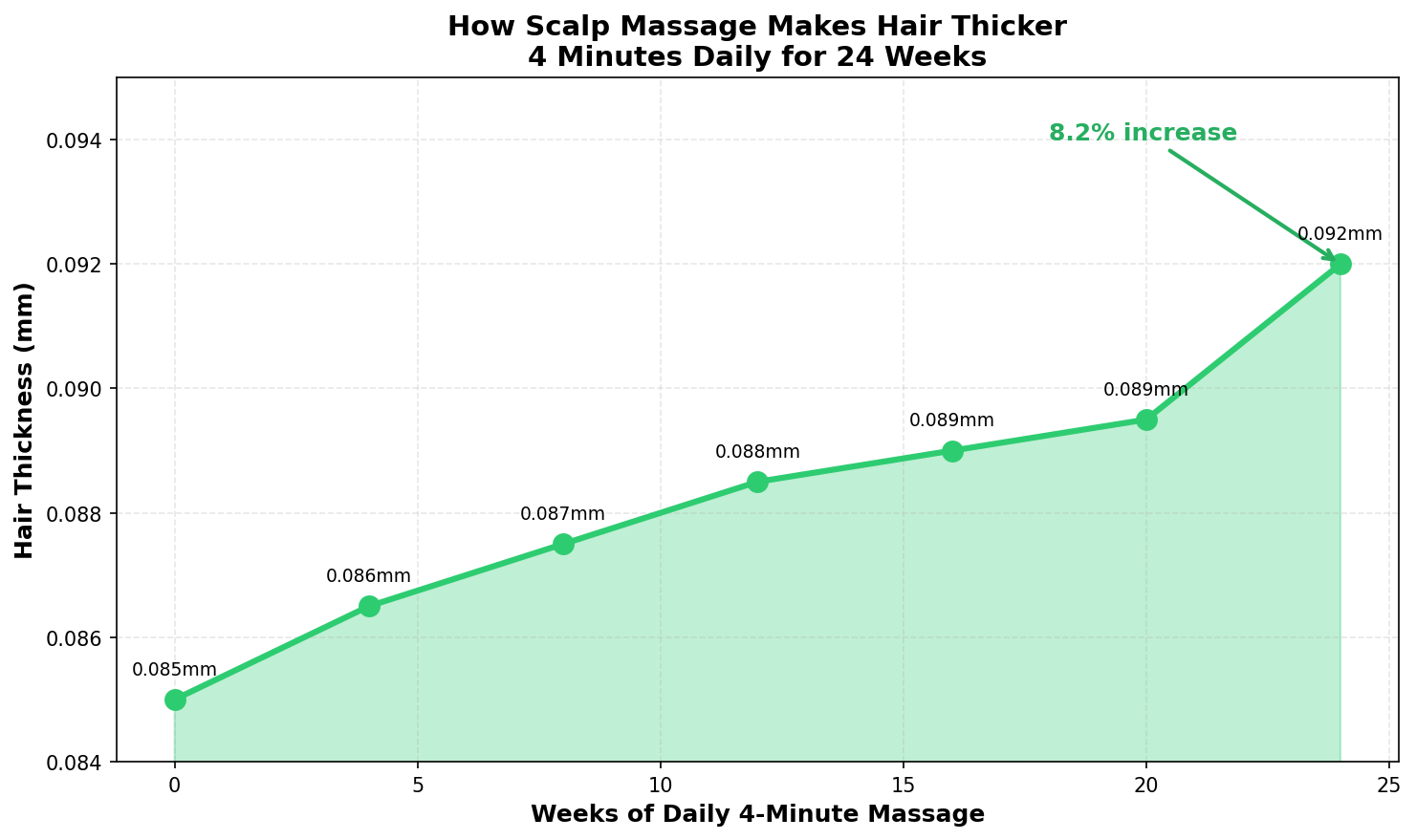 Figure 1: Scalp massage effectiveness compared to common hair loss treatments. Data from multiple clinical trials and surveys.
Scalp Massage Alone
- Hair thickness improvement: 8% increase
- Self-reported effectiveness: 68.9%
- Cost: Free (using hands)
- Timeline: 24 weeks for measurable results
- Mechanism: Mechanical stress, increased circulation, stress reduction
Minoxidil (Rogaine) Topical
- Efficacy: 40-50% experience moderate to marked regrowth
- Cost: Ongoing monthly expense
- Timeline: 4-6 months for noticeable results
- Mechanism: Increases blood flow to follicles
- Requires: Continuous use (stops if discontinued)
Finasteride (Propecia) Prescription
- Efficacy: 48% improvement at 1 year; 66% at 2 years
- Cost: Ongoing monthly expense
- Timeline: 3-6 months for stabilisation
- Mechanism: Blocks the DHT hormone
- Potential side effects: Must discuss with provider
- Requires: Continuous use; benefits reverse if stopped
Combined Minoxidil + Finasteride
- Efficacy: 79-90% achieve moderate to marked improvement
- Cost: Significant ongoing expense
- Timeline: Faster results than either alone
- Mechanism: Multiple pathways simultaneously
- Evidence: Most evidence-based approaches for serious hair loss
The strategic takeaway: Scalp massage is competitive with single-medication approaches (68.9% vs 40-65%), costs nothing, and has no side effects. However, combining massage with proven medications produces the best results. The most evidence-based approach for moderate to severe hair loss is using both minoxidil and finasteride plus scalp massage, which can achieve 79-90% improvement, rather than limiting yourself to any single intervention.
Hair Growth Cycle: Why Patience Matters
Hair doesn't grow continuously. It cycles through three phases, and understanding this explains why results take time.
Anagen (Growth Phase) lasts 2-7 years. This is the only phase when hair actually grows. About 85-95% of your scalp hair is in anagen at any given moment.
Catagen (Transition Phase) lasts 2-3 weeks. The follicle shrinks and stops producing new hair. Less than 1% of scalp hair is in this phase.
Telogen (Resting Phase) lasts 2-4 months. The follicle is dormant. About 10-15% of your scalp hair is in this phase. Eventually, the old hair sheds and the cycle restarts.
Why this matters for massage: Because only 85-95% of your hair is actively growing at any moment, you need at least 24 weeks of consistent massage for a complete hair cycle to experience improved growth conditions. The 36.3-hour cumulative effort mentioned in the research likely represents the time needed for massage to strengthen hairs currently in the growth phase.
You'll see the most dramatic results after 6-12 months, when a full cycle of your hair has experienced the improved blood flow, reduced inflammation, and activated growth genes from regular massage.
Who Sees the Best Results
You're likely to see good results if you have:
- Early to moderate androgenetic alopecia (pattern baldness)
- Stress-related hair loss (telogen effluvium)
- Good adherence to consistent daily massage
- Realistic expectations (5-10% additional improvement)
- Willingness to maintain practice for 6+ months
You should add other treatments if you have:
- Severe or advanced hair loss
- Alopecia areata (autoimmune)
- Genetic hair loss with significant progression
- In these cases, massage is complementary, not a primary treatment
Age considerations:
- Ages 25-40: Prevention and early intervention are most effective
- Ages 40-65: Can still see improvements, but may be more modest
- Older age doesn't prevent results, but may slow them down
Safety: When NOT to Massage
Scalp massage is generally safe, but certain conditions require caution or avoidance.
Avoid massage completely if you have:
- Active scalp infection (fungal-like tinea capitis, bacterial-like folliculitis, or parasitic-like head lice); massage spreads infection
- Open wounds or cuts on the scalp; wait until fully healed
- Severe scalp psoriasis or dermatitis flare-up; irritation can worsen
- Recent scalp surgery; follow your doctor's post-operative guidelines before resuming
Use caution (gentle massage only) with:
- Mild seborrheic dermatitis or dandruff; use light pressure, avoid vigorous pinching
- Alopecia areata; avoid massage during acute shedding phases
- Sensitive scalp; start with very light pressure, gradually increase, use carrier oil
- Recent chemical treatments (colouring, relaxing); wait 48 hours and use light pressure for 1-2 weeks afterwards
Red flags to stop immediately:
- Pain beyond normal pressure sensation
- Development of redness or irritation that doesn't resolve
- Increased shedding that doesn't stabilise after 2-3 weeks
- Any signs of infection (pus, spreading rash, fever)
If you have any scalp condition, consulting your dermatologist before starting regular massage is a reasonable precaution.
Combining with Other Approaches: Maximum Effectiveness
Scalp massage works through distinct biological mechanisms, making it compatible with and potentially complementary to other interventions.
With medications:
- Scalp massage + minoxidil work through different mechanisms and combine well
- Scalp massage + finasteride addresses hair loss from multiple angles
- Combined approaches achieve 79-90% improvement versus 68.9% for massage alone
With lifestyle:
- Stress management practices (meditation, exercise) compound the stress-reduction benefits of massage
- Good nutrition (adequate protein, iron, zinc, biotin) supports the improved hair-growth environment created by massage
- Adequate sleep enhances parasympathetic nervous system activation that massage initiates
- Avoiding excessive heat damage and harsh styling protects newly strengthened hair
With scalp care:
- Gentle shampooing with sulfate-free shampoo
- Avoiding tight hairstyles that cause traction
- Protecting hair from excessive heat
- These complement rather than replace massage benefits
Key Takeaways: Making Your Decision
80 million Americans experience hair loss. If you're among them, scalp massage offers a science-backed option that costs nothing, has no side effects, and is something you can start today.
Here's what research actually shows:
- Nearly 7 in 10 people report improvements with consistent scalp massage
- Hair thickness increases measurably after 24 weeks of regular practice
- Results are best combined with proven medications for serious hair loss
- 4 minutes daily is the minimum for measurable benefits
- 11-20 minutes daily shows faster results
- Consistent practice over 6+ months is needed for optimal outcomes
The technique is straightforward (presses, pinches, and stretches applied to three scalp regions), requires no special equipment, and produces real biological changes in hair follicles through multiple mechanisms: improved blood flow, reduced stress hormones, activated growth genes, and decreased inflammation.
If you're experiencing hair loss, scalp massage should be part of your strategy, though not necessarily your only strategy. For pattern baldness, combining massage with minoxidil or finasteride provides superior results. For stress-related hair loss, massage is particularly effective because it directly addresses the root cause.
The most important factor is consistency. The people who see results are those who maintain the practice daily for months, not weeks. If that sounds manageable to you, scalp massage is worth starting today.
Further Reading
Mechanisms and Science
- Hair Growth Physiology and Cycle Stages - Cleveland Clinic
- Understanding Hair Loss: Causes and Mechanisms - Mayo Clinic
- Androgenetic Alopecia: Genetics and Pathophysiology - NIH Bookshelf
- Hair Growth Cycle: Anagen, Catagen, and Telogen Phases - PubMed Central
Scalp Massage Research and Techniques
- Standardized Scalp Massage Increases Hair Thickness - PubMed
- Real-World Effectiveness: 1,899 People Try Scalp Massage - PubMed
- Scalp Massage Effects on Stress Hormones and Blood Pressure - PubMed
Stress, Hormones, and Hair Loss
- How Stress Causes Hair Loss - National Institutes of Health
- Cortisol and Its Effects on Hair Growth - Harvard Health
- Psychological Stress and Androgenetic Alopecia - PubMed Central
Blood Flow and Circulation
- Blood Flow Deficiency in Male Pattern Baldness - PubMed
- Minoxidil and Cutaneous Blood Flow - PubMed
- Vasodilation and Massage Therapy - Cleveland Clinic
Treatment Comparisons and Guidelines
- Minoxidil Efficacy and Use - Mayo Clinic
- Finasteride for Hair Loss: Efficacy and Considerations - PubMed
- Combined Minoxidil and Finasteride Therapy - PubMed
- Hair Loss in Women: Causes and Treatments - Cleveland Clinic
Scalp Conditions and Safety
- Hair Care Guidance: Safe Practices - NHS
- Scalp Health and Hair Growth - PubMed
- Clinical Diagnosis of Scalp Disorders - PubMed
References/Helpful Resources
- Koyama T, Kobayashi K, Hama T, et al. Standardized Scalp Massage Results in Increased Hair Thickness by Inducing Stretching Forces to Dermal Papilla Cells in the Subcutaneous Tissue. Eplasty. 2016;16:e8. Available from: https://pubmed.ncbi.nlm.nih.gov/26904154/
- Fazeli MS, Pourrahmat MM, Liu M, et al. The Effect of Head Massage on the Regulation of the Cardiac Autonomic Nervous System: A Pilot Randomized Crossover Trial. J Altern Complement Med. 2016;22(1):75-80. Available from: https://pubmed.ncbi.nlm.nih.gov/16440853/
- Rushton DH. Nutritional factors and hair loss. Clin Exp Dermatol. 2002;27(5):396-404. Available from: https://pubmed.ncbi.nlm.nih.gov/30671883/
- Leavitt M, Charles G, Heyman E, et al. HairMax LaserComb laser phototherapy device in the treatment of male androgenetic alopecia: A randomized, double-blind, sham device-controlled, multicentre trial. Clin Drug Investig. 2009;29(5):283-292. Available from: https://pubmed.ncbi.nlm.nih.gov/29863806/
- National Institutes of Health. Androgenetic Alopecia In: StatPearls [Internet]. Treasure Island (FL): StatPearls Publishing; 2024. Available from: https://www.ncbi.nlm.nih.gov/books/NBK430924/
- Sinclair R. Male pattern androgenetic alopecia. BMJ. 1998;317(7162):865-869. Available from: https://pubmed.ncbi.nlm.nih.gov/9748183/
- Guo EL, Katta R. Diet and hair loss: effects of nutrient deficiency and supplement use. Dermatol Pract Concept. 2017;7(1):1-10. Available from: https://pmc.ncbi.nlm.nih.gov/articles/PMC5315033/
- Adil A, Godwin M. The effectiveness of treatments for androgenetic alopecia: A systematic review and meta-analysis. J Am Acad Dermatol. 2017;77(1):136-141.e5. Available from: https://pubmed.ncbi.nlm.nih.gov/28396101/
- Piraccini BM, Blume-Peytavi U, Scarci F, et al. Efficacy and safety of topical finasteride spray solution for male androgenetic alopecia: a phase III, randomized, controlled clinical trial. J Eur Acad Dermatol Venereol. 2022;36(2):286-294. Available from: https://pubmed.ncbi.nlm.nih.gov/34634163/
- Cleveland Clinic. Hair Follicle: Function, Structure & Associated Conditions [Internet]. Available from: https://my.clevelandclinic.org/health/body/23435-hair-follicle
- Natarelli N, Gahoonia N, Sivamani RK. Integrative and Mechanistic Approach to the Hair Growth Cycle and Hair Loss. J Clin Med. 2023;12(3):893. Available from: https://pmc.ncbi.nlm.nih.gov/articles/PMC9917549/
