

You have just received your laboratory results, maybe you are scanning them on your patient portal or maybe a nurse left a voicemail. One thing is certain: there is a "H" or an "L" next to your result and your stomach just dropped.
This is the moment when most people start Googling worst-case scenarios. The moment when that one number outside the "normal range" starts to feel like a diagnosis.
Here is what you need to know, before the anxiety spiral begins: an abnormal laboratory result does not mean you are necessarily sick. This article exists specifically to stop you from panicking because the vast majority of out-of-range results mean absolutely nothing without context.
This guide is designed to demystify laboratory reports. You will learn what those results mean and why doctors interpret them completely differently than you do.
By the time you finish, you will understand that your laboratory report is not a judgment on your health, it is a snapshot in time, one piece of a much larger picture that only your doctor can see.
What You Are Actually Looking At: The Basic Structure
Laboratory reports all follow the same general format because they are designed by people who want you to understand them. Here is what each column means.
- Test Name - the name of the test performed, e.g. white blood cell count, glucose level, liver enzymes
- Your Result - the actual value from your blood or urine sample
- Reference Range - what is considered the normal range for the test
- Units - the unit of measurement for each test e.g. grams per decilitre, cells per microliter, millimoles per litre
Flags - "H" for high, "L" for low, sometimes an asterisk - designed to highlight unusual values.
It is meant to be readable to help you and your doctor communicate about your health.
The Shocking Truth About "Normal": Why 5% of Healthy People Fail the Test
Approximately 5% of completely healthy people will have at least one result outside the normal range of any given test. Reference ranges are calculated by testing 120 to 200+ healthy individuals and using the central 95% of their results as the "normal" range. By mathematical definition, that excludes the lowest 2.5% and the highest 2.5%.
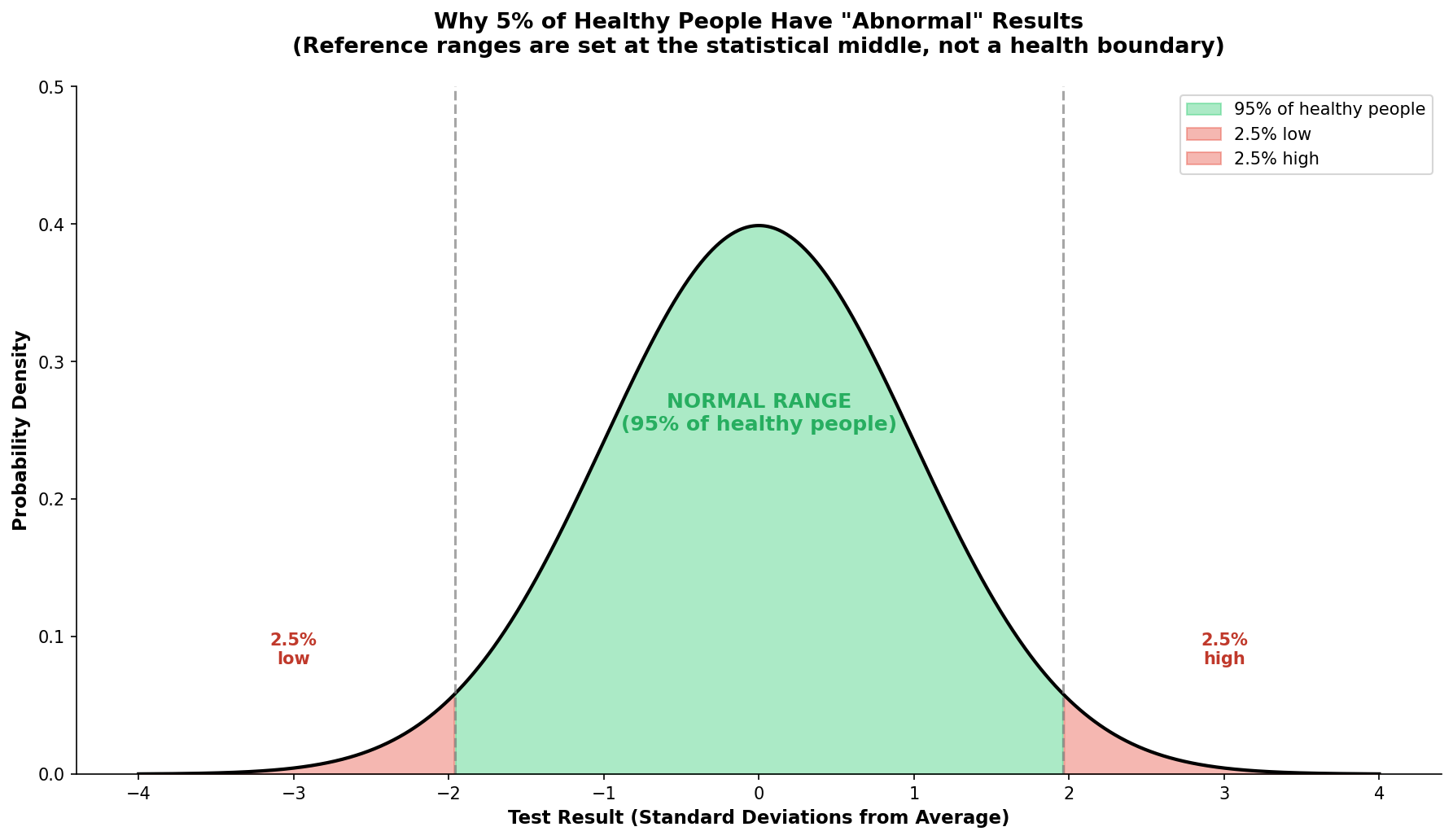 Figure 1: The bell curve of the laboratory results from healthy people. By definition, 5% fall outside the normal range even though they are completely healthy.
This is why the doctor never, ever interprets a single abnormal result in isolation. They look for patterns and compare your result to previous results, ask about your symptoms, medications and lifestyle activities, and may even order repeat testing to see if the results are true.
Your Personal Normal Might Not Be the Published Normal
The reference range printed on your laboratory report is a statistical average for a population, so your "normal" might be different from the statistical normal.
Age makes an enormous difference, e.g. children have much higher alkaline phosphatase than adults because their bones are still growing or thyroid hormone levels increase naturally with age (so at age 75, TSH levels may be 5.5 which is considered normal even if the reference range says 0.4 to 4.0). Sex matters too; men typically have different baseline values than women for many tests. Pregnancy completely changes reference ranges for most tests. The medication you take, your lifestyle and ethnicity can affect what is "normal". Someone with a chronic health condition might have shifted baselines that are healthy for them, even if they are outside the normal statistical range.
The Most Common Tests, Explained Simply
Understanding what each test actually measures:
Complete Blood Count (CBC): Blood Cells
The CBC measures three main things: red blood cells, white blood cells and platelets.
- Red blood cells carry oxygen. Low red blood cells (anaemia) can cause fatigue. High red blood cells (polycythaemia) can indicate dehydration or a blood disorder
- White blood cells are the cells of the immune system. High white blood cells can mean you are actively fighting an infection, stressed or from a recent vaccine. Low white blood cells might mean your immune system needs support
- Platelets help your blood clot. Very low platelets need attention. Slightly high or low platelets is not usually concerning
The key point: even if one of these is flagged as abnormal, your doctor will consider whether you have symptoms matching the result, your previous results were similar or if anything in your life explains the change.
Metabolic Panel (CMP): Body Chemistry
This panel checks glucose, kidney function, liver function and electrolytes.
- Glucose is a measure of blood sugar levels. It fluctuates and can be affected by eating or fasting or stress (can raise blood glucose temporarily)
- Kidney function measured using creatinine and GFR levels. A small increase might be due to dehydration but a large increase may need investigation
- Liver enzymes measured using ALT and AST. Can be elevated because of intense exercise or recent heavy meals
- Electrolytes such as sodium or potassium, need to be balanced but they fluctuate naturally throughout the day
Cholesterol Panel: Heart Risk
Your total cholesterol number matters less than the breakdown between LDL ("bad" cholesterol) and HDL ("good" cholesterol). LDL cholesterol is what you want low because it deposits on artery walls, HDL cholesterol is what you want high because it cleans up excess cholesterol. A slightly elevated LDL in one test is not a heart disease diagnosis but your doctor might recommend lifestyle changes or, in some cases, medication.
Thyroid (TSH): Metabolism
TSH is one of the most frequently checked tests and is one of the most commonly misinterpreted. A normal TSH with > 99% accuracy means the thyroid is working fine even if it is slightly on the high or low end of normal. If you have no symptoms and TSH levels are stable, there is no problem. Abnormal TSH warrants follow-up testing with free T4 which is crucial in diagnosing thyroid problems, it cannot be done from TSH alone.
Why Doctors Interpret Results So Differently Than You Do
When you see an abnormal result on your patient portal, you see one thing: a number outside the normal range. When your doctor sees the same result, they see:
- How far from normal is the result? A value barely outside the range is completely different from one that is extremely abnormal
- Is this a pattern? Did your previous result look similar or is this new?
- Do you have symptoms? An isolated abnormal result without matching symptoms is usually nothing to worry about
- Are related tests also abnormal? If your glucose is slightly elevated but all your diabetes-related tests are normal, that is reassuring
- What explains this? Did you fast? Are you on a new medication? Did you have intense exercise yesterday?
- What is the clinical significance? A mildly elevated value might be interesting but unimportant. An extremely elevated value needs action
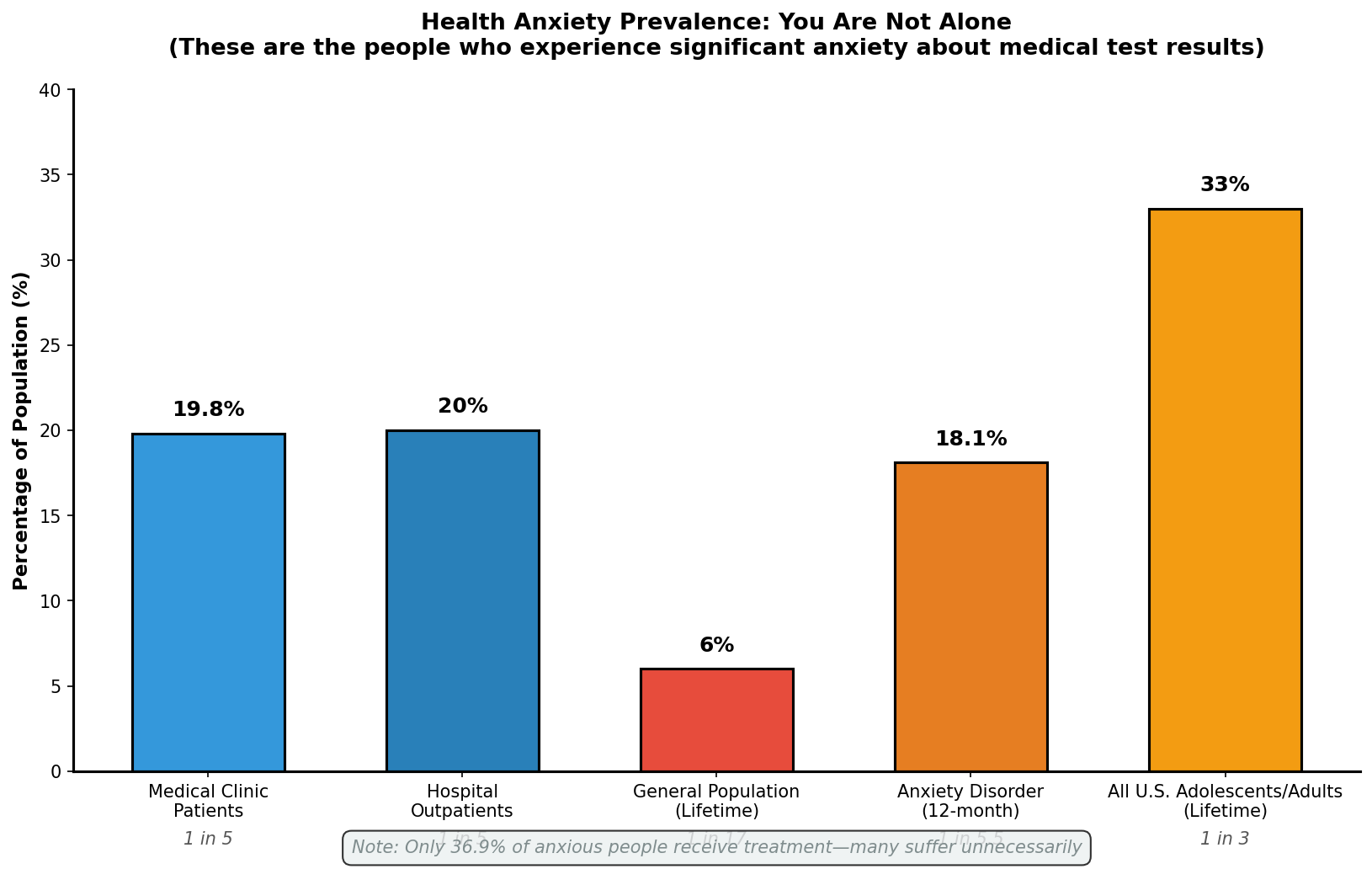 Figure 2: The clinical decision-making process your doctor uses. Notice it involves far more than just looking at whether a number is in range.
Understanding the reasoning behind the results can be reassuring, your doctor looks at patterns, symptoms, medications, lifestyle and history before deciding if something is normal or abnormal.
When Minor Abnormalities Are Expected
Situations where out-of-range results are completely normal and expected:
Dehydration Concentrates Everything
If you were dehydrated when your blood was drawn, multiple values can look artificially elevated: electrolytes get concentrated, haemoglobin rises and some enzymes can appear higher than normal. This is one of the most common reasons for results that look concerning but mean nothing. The solution? Drink water, get retested and the results often normalise.
Collection Problems Happen
Sometimes the blood draw itself causes issues. If red blood cells break open during collection, known as haemolysis, haemoglobin leaks out and affects multiple test results. The laboratory usually flags this by noting the sample was haemolysed and a repeat draw is usually taken.
Fasting Status Changes Everything
Some tests only make sense if you have fasted for 8 to 12 hours beforehand. Glucose and lipid panels are most sensitive to this, so if you were not fasting when needed, the results are meaningless and the doctor will either repeat the test or dismiss the results entirely.
Recent Exercise, Stress or Illness Affect Results
Intense exercise elevates muscle enzymes, acute stress affects multiple hormones, recent illness or vaccination can elevate white blood cells or recent sexual activity can affect urinary values. The doctor will ask about this if they matter more than the actual number.
Medication and Supplement Effects
Nearly every common medication affects at least one laboratory value: blood pressure medications affect electrolytes, antibiotics affect liver enzymes or supplements affect many things. The doctor will know what you are taking and can interpret results accordingly.
Time of Day Changes Values
Some hormones vary dramatically throughout the day. Cortisol is much higher in the morning than evening and blood glucose naturally rises after meals. If your doctor wanted a specific time-of-day measurement but the test was done at a different time, the result might not be useful.
Individual Variation Is Real
Even without any of these factors, healthy people have natural variation in their laboratory values. Your haemoglobin might consistently run 1 gram per decilitre below the population average or your cholesterol might fluctuate by 20 points week to week. One test is a snapshot. Multiple tests over time show your true pattern.
Understanding Health Anxiety
Health anxiety is quite common. About 20% of people seeking medical care report significant health anxiety. That means if there are 100 people in your doctor's waiting room, roughly 20 of them are experiencing substantial worry about their health. When health anxiety meets laboratory results on a patient portal, the anxiety often intensifies. Seeing a number outside the normal range without immediate context from your doctor can spiral into catastrophic thinking.
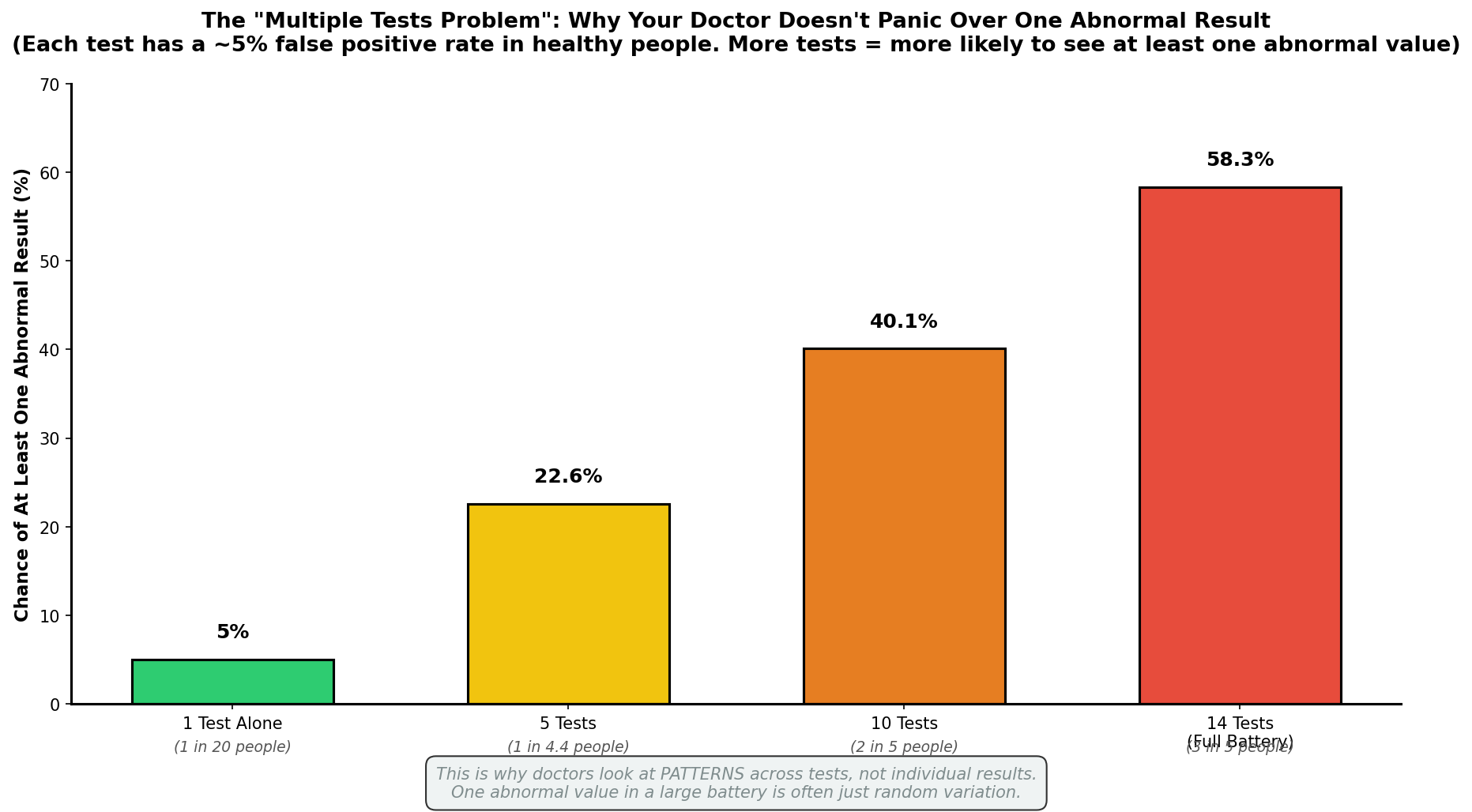 Figure 3: Health anxiety is remarkably common. About 1 in 5 medical patients experience significant health anxiety. You are not unusual or weak for experiencing this.
Talking to your doctor about your test results can help reduce your anxiety. Many people assume that getting normal results will reduce their anxiety, sometimes it does but for people with genuine health anxiety a normal result brings relief for a few days, then new worries can emerge and this cycle can repeat indefinitely. The solution is not more tests, it is addressing the anxiety itself, usually through cognitive behavioural therapy or medication or often through both.
If you recognise this pattern in yourself and find yourself constantly seeking reassurance, if normal results do not relieve your worries, if you are researching diseases online to understand your results, it can be a signal to talk to your doctor about anxiety management strategies.
Practical Strategies: How to Actually Cope With Results
How to handle your results without worrying:
Before Your Test
Ask your doctor what the test is checking for and what kind of result would be concerning. Knowing the difference before you see results reduces the anxiety when they arrive. Research on trusted medical websites: NHS, Mayo Clinic, Harvard Health and Cleveland Clinic all provide clear information about common tests. WebMD, Healthline and similar sites can scare you as they are designed to capture clicks by emphasising worst-case scenarios. Stick with government and hospital websites.
When Results Arrive
First rule: do not panic while reading them for the first time. Stop. Breathe. Put the report down.
Second rule: contact your doctor before spiralling. Your doctor's job is to interpret the results. A quick conversation with your healthcare provider can help you understand the results.
Third rule: do not research your specific values on Google. This is called cyberchondria and it reliably increases anxiety. You will find worst-case scenarios and read about rare diseases that will convince you that you are seriously ill and does not help. If you need to know more, ask your doctor for specific resources or referrals to appropriate specialists.
Managing the Anxiety
If you are experiencing significant health anxiety around your laboratory results, here are evidence-based strategies that actually work:
- Relaxation techniques like deep breathing, meditation or progressive muscle relaxation reduce acute anxiety
- Limiting information seeking is crucial. Once you have talked to your doctor, stop looking for more information. The internet's information about your specific situation will increase anxiety without improving understanding
- Bring support to appointments. If medical anxiety is significant for you, asking a trusted person to come with you to medical appointments or even just to be on the phone while you discuss results provides emotional support
- Tell your doctor about the anxiety explicitly. Do not minimise it. Health anxiety is a real medical issue and your doctor can help
When to Worry
There are results that do warrant concern and you should be able to recognise them. If your doctor calls you directly instead of waiting for an appointment or patient portal message, something significant has been found. Critical results require immediate communication. If your doctor thinks the result is normal, they would not call you directly.
If multiple related tests are abnormal in the same direction, that is worth attention. One abnormal result means almost nothing. Multiple abnormal results pointing toward the same problem means something is worth investigating. If your result is extremely abnormal, not just flagged as high or low and you have symptoms matching the result, it may warrant action. If your doctor recommends follow-up testing or treatment, follow through.
The False Positive: Why You Can't Trust a Single Test Battery
When a complete battery of 14 pulmonary function tests is performed on a healthy person, 24% of healthy subjects will have at least one abnormal result due to random variation alone. That means if you get comprehensive testing with multiple tests performed, you should almost expect to find something slightly abnormal. It does not necessarily mean anything is wrong.
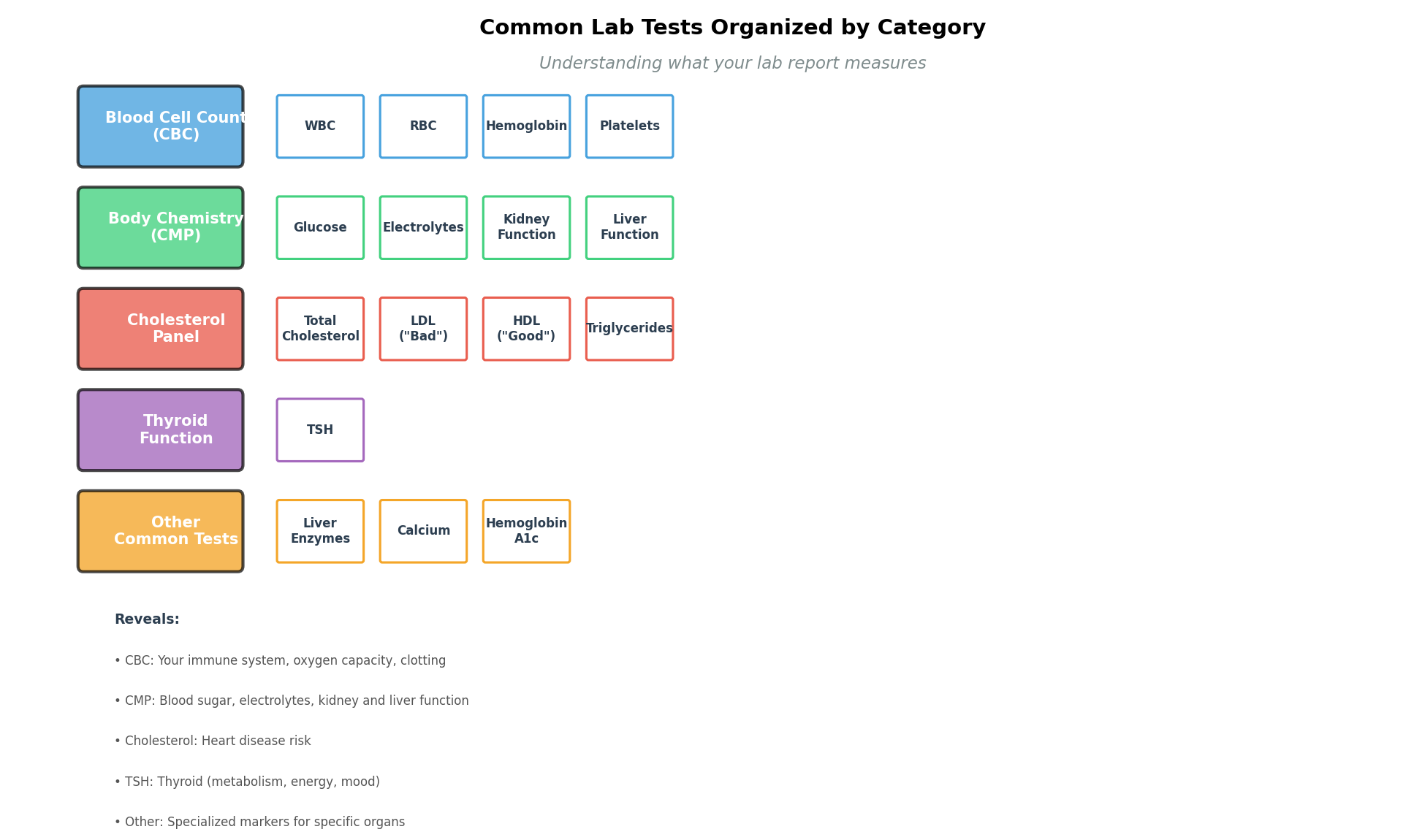 Figure 4: The false positive problem visualised. When you run many tests, abnormal results become statistically likely even in healthy people.
This is why comprehensive panels sometimes feel like they are designed to find problems. When your doctor orders CBC, metabolic panel, liver function tests, thyroid, cholesterol and kidney function all at once, about 30 separate tests are being run and statistically, you should expect a few to be slightly abnormal. Your doctor knows this, they are not ordering 30 tests expecting all 30 to be perfect, they are looking for patterns and significant abnormalities, not counting flagged values.
When Results Truly Matter: The Pattern, Not the Number
So when do laboratory results actually matter? When do they become the basis for treatment decisions? The answer: when there is a pattern, an abnormality is significant, when it aligns with your symptoms and when it changes from your previous baseline.
Let's say your glucose comes back at 105 mg/dL when the normal range is under 100. That is one flagged value, barely outside normal, in a fasting test. Does this change treatment? Probably not. Does it warrant repeat testing? Maybe. Does it mean you have diabetes? Absolutely not. Now let's say your fasting glucose is 105 again three months later and again at the next test. That is a pattern that warrants a conversation about lifestyle changes or possibly testing for prediabetes. The pattern matters.
Similarly, if your liver enzymes are flagged but all other liver markers are normal and you have no symptoms of liver disease, your doctor might just monitor and repeat testing. But if your liver enzymes, bilirubin and albumin are all abnormal and you are experiencing fatigue and nausea, that is a meaningful pattern requiring investigation. The number alone is rarely the story. The pattern is the story.
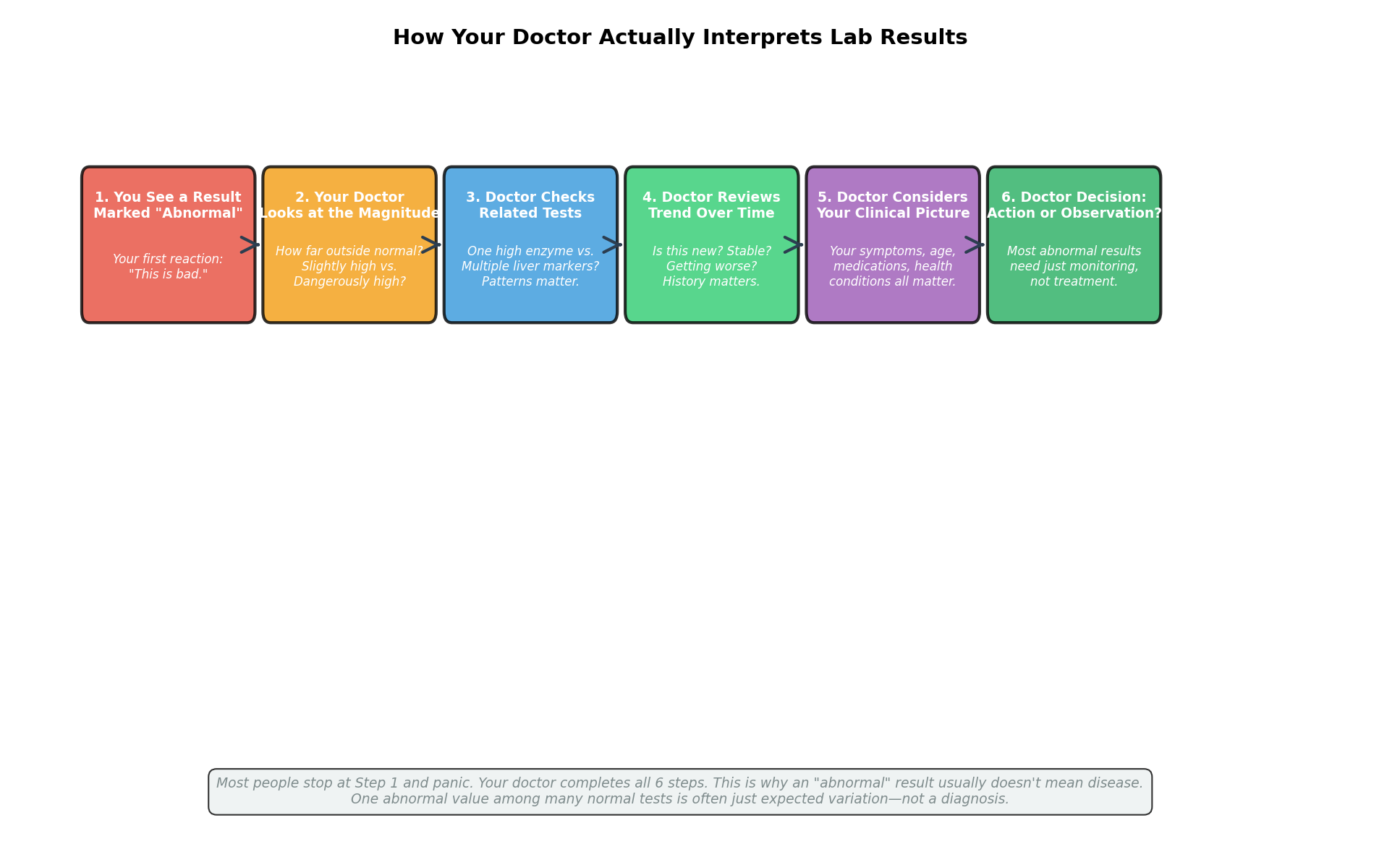
Figure 5: Common tests and what they actually measure. Understanding what each test represents helps you understand why patterns matter more than individual results.
Laboratory-Specific Ranges: Why Your Result Might Be "Normal" at One Hospital and "Abnormal" at Another
The reference range provided by the laboratory is specific to that laboratory. Different laboratories use different equipment, different testing methods and different populations to establish their reference ranges. An audit of laboratories across one region found that testosterone has a lower normal limit ranging from 5.0 to 11.0 nmol/L - more than double the variation. This means the same result could be flagged as abnormal at one laboratory and completely normal at another.
Your doctor accounts for this and they know which laboratory you used. They might compare results between laboratories with context but you should not assume that because a result is flagged at one laboratory, it means the same thing at a different laboratory. If you move or change providers, it is worth mentioning to your new doctor where your previous tests were done.
A Final Word: Understanding Is More Powerful Than Reassurance
The goal of this article is not just to reassure you, though reassurance is part of it. The goal is to give you a framework for understanding laboratory results so that you can interpret them accurately instead of catastrophically.
When you understand that reference ranges are statistical and not absolute, know that 5% of healthy people fall outside those ranges and recognise that your doctor's interpretation considers your entire medical picture, you can see that minor abnormalities without symptoms or patterns usually mean nothing. When you know that your anxiety is common and treatable, and have strategies for coping with the fear that comes with uncertain health information, that is when you can pick up your laboratory report and read it with real understanding instead of panic.
Your laboratory report is not a judgment or a diagnosis, it is a snapshot of one moment in time, interpreted through the lens of your doctor's clinical expertise and knowledge of you personally.
You are going to be okay and your doctor will tell you if you are not.
Further Reading
Understanding Your Laboratory Results and Normal Ranges
- MedlinePlus: How to Understand Your Laboratory Results
- NHS: Understanding Your Blood Test Results
- Harvard Health: What to do when blood test results are not quite "normal"
- Mayo Clinic: Should you worry about "abnormal" laboratory results?
Common Blood Tests and What They Measure
- Cleveland Clinic: Complete Blood Count (CBC) Explained
- Mayo Clinic: Comprehensive Metabolic Panel Explained
- NHS: Liver Function Tests Explained
- American Heart Association: Understanding Cholesterol Levels
Managing Health Anxiety About Test Results
- Harvard Health: Tips to Cope with Medical Test Anxiety
- NHS: Health Anxiety Support and Treatment
- Harvard Health: When Worry About Your Health Becomes a Problem
Your Thyroid, Kidney Function, and Specific Test Interpretation
- Mayo Clinic: TSH Test Explained
- NIDDK: Chronic Kidney Disease and Laboratory Tests
- Cleveland Clinic: Kidney Function Blood Tests
References/Helpful Resources
- National Institutes of Health (NIH) / MedlinePlus. How to Understand Your Lab Results [Internet]. Available from: https://medlineplus.gov/lab-tests/how-to-understand-your-lab-results/
- NHS (National Health Service). Understanding Your Blood Test Results [Internet]. Available from: https://www.nhs.uk/your-nhs/nhs-services/gps/nhs-services-explained/blood-tests/
- Mayo Clinic. Complete Blood Count [Internet]. Available from: https://www.mayoclinic.org/tests-procedures/complete-blood-count/about/pac-20384919
- Cleveland Clinic. Complete Blood Count (CBC): What It Is & Normal Ranges [Internet]. Available from: https://my.clevelandclinic.org/health/diagnostics/4053-complete-blood-count
- Harvard Health Publishing. Your blood work, on the edge of normal [Internet]. Available from: https://www.health.harvard.edu/staying-healthy/your-blood-work-on-the-edge-of-normal
- Mayo Clinic Press. Should you worry about "abnormal" lab results? [Internet]. Available from: https://mcpress.mayoclinic.org/healthy-aging/should-you-worry-about-abnormal-lab-results/
- Asplund K, Wiréhn AB, Anell A, Carlsson P. Interpreting laboratory test results when they are at the borderline of normal ranges. Scandinavian Journal of Primary Health Care. 2015;33(2):113-122.
- Boyd JC, Felder RA. Preanalytical effects and their manifestations in laboratory medicine. American Journal of Clinical Pathology. 2015;144(2):200-214.
- Bellù R, Calandra S, Magni P. Reference intervals: current status, recent developments and future considerations. Clinical Chemistry and Laboratory Medicine. 2018;56(12):1970-1983.
- American Heart Association. What Your Cholesterol Levels Mean [Internet]. Available from: https://www.heart.org/en/health-topics/cholesterol/about-cholesterol/what-your-cholesterol-levels-mean
- CDC (Centers for Disease Control and Prevention). LDL and HDL Cholesterol and Triglycerides [Internet]. Available from: https://www.cdc.gov/cholesterol/about/ldl-and-hdl-cholesterol-and-triglycerides.html
- NIDDK (National Institute of Diabetes and Digestive and Kidney Diseases). Chronic Kidney Disease: Tests and Diagnosis [Internet]. Available from: https://www.niddk.nih.gov/health-information/kidney-disease/chronic-kidney-disease-ckd/tests-diagnosis
- Harvard Health Publishing. Tips to cope with medical test anxiety [Internet]. Available from: https://www.health.harvard.edu/mind-and-mood/tips-to-cope-with-medical-test-anxiety
- NHS (National Health Service). Health Anxiety: Overview, Causes and Treatments [Internet]. Available from: https://www.nhs.uk/mental-health/conditions/health-anxiety/
- National Institute of Mental Health (NIMH). Anxiety Disorders [Internet]. Available from: https://www.nimh.nih.gov/health/topics/anxiety-disorders
- Petrie KJ, Broadbent E. Whither cognitive representations of threat in health anxiety? Journal of Psychosomatic Research. 2012;72(2):101-109.
- Muse K, Hogh P, Drake SA, Jones MP. Psychosocial influences in the treatment of anxiety and health anxiety. Clinical Psychology Review. 2016;44:32-48.
- Rossi EA, Vitali G, Rossi R, Tsilomidis K, Dorato A. Bioanalytical variation and reference intervals in clinical laboratory: The IFCC recommendation. Clinical Chemistry and Laboratory Medicine. 2017;55(11):1595-1608.
- Plebani M. Errors in Clinical Laboratories or Errors in Laboratory Medicine? Clinical Chemistry and Laboratory Medicine. 2006;44(6):750-759.
- Hallworth MJ, Nichols J. Specimen collection and handling. Journal of Medical Biochemistry. 2013;32(3):220-229.
