

How Wearable Technology is Transforming Your Health
You probably walk past dozens of people wearing smartwatches every day, but you might not realise they're essentially wearing a portable health clinic on their wrist. These devices continuously monitor your heart, track your sleep, measure your stress, and even detect dangerous irregular heartbeats. The question isn't whether they work; the question is whether they work for you.
The wearable health technology market is one of the fastest-growing sectors in healthcare, worth an estimated £63 billion globally in 2025 and projected to reach £138 billion by 2030.1 That explosive growth reflects genuine demand from people seeking better health insights. Yet the reality is more nuanced than marketing claims suggest. Some applications have strong clinical evidence; others remain unproven. This article explains what wearables can actually do, which claims are backed by science, and whether you should invest in one.
What Wearables Can Actually Measure
Modern wearable devices pack surprisingly sophisticated sensors into devices you barely notice wearing. Most popular wearables track the same core metrics using similar technology.
Heart rate and heart rate variability form the foundation of wearable health monitoring. Devices use optical sensors that emit green light through your skin and measure how blood flow changes with each heartbeat. This technology, called photoplethysmography, calculates not just your heart rate (beats per minute) but the variation between beats: a metric called HRV that's surprisingly informative about your stress levels, recovery, and nervous system balance.2 Higher HRV generally indicates better stress resilience and recovery capacity.
Sleep tracking works through the same optical sensors plus accelerometers that detect body movement. Devices measure heart rate and HRV patterns throughout the night to estimate sleep stages: light sleep (transitional), deep sleep (body repair), and REM sleep (memory consolidation). The catch? Wearables correctly identify sleep stages only 53-60% of the time compared to clinical sleep studies, which measure brain waves directly. However, they're excellent at tracking total sleep duration and recognising sleep trends.3
Blood oxygen (SpO2) measurement uses red and infrared LEDs to measure how much oxygen is carried in your blood. A reading of 95-100% is normal; below 90% is concerning and can indicate respiratory issues or sleep apnoea. This metric is particularly useful for detecting early warning signs of illness or breathing problems during sleep.4
Step counting and activity tracking rely on accelerometers that detect motion patterns. Modern devices distinguish between walking, running, and other movements with reasonable accuracy. Garmin achieves the highest accuracy at 82.58% for step counting, though fitness trackers average 68.75% accuracy.5 Activity tracking is the most reliable metric wearables offer.
Continuous glucose monitors (CGMs) represent a more advanced category. A tiny sensor inserted under your skin measures glucose levels in your interstitial fluid and wirelessly transmits readings every 1-15 minutes. Modern CGMs have accuracy within 8-10% of laboratory blood tests, making them clinically reliable. Diabetics have used these for years, but increasingly, people without diabetes use them to understand how different foods affect their blood glucose.6
Stress detection derives from heart rate variability analysis. When you're stressed, your heart rate increases and HRV decreases as your nervous system shifts into "fight or flight" mode. Algorithms detect these patterns to estimate stress levels. The limitation? Device estimates are algorithmic approximations, not clinical stress assessments, and the technology sometimes confuses physical exertion with emotional stress.7
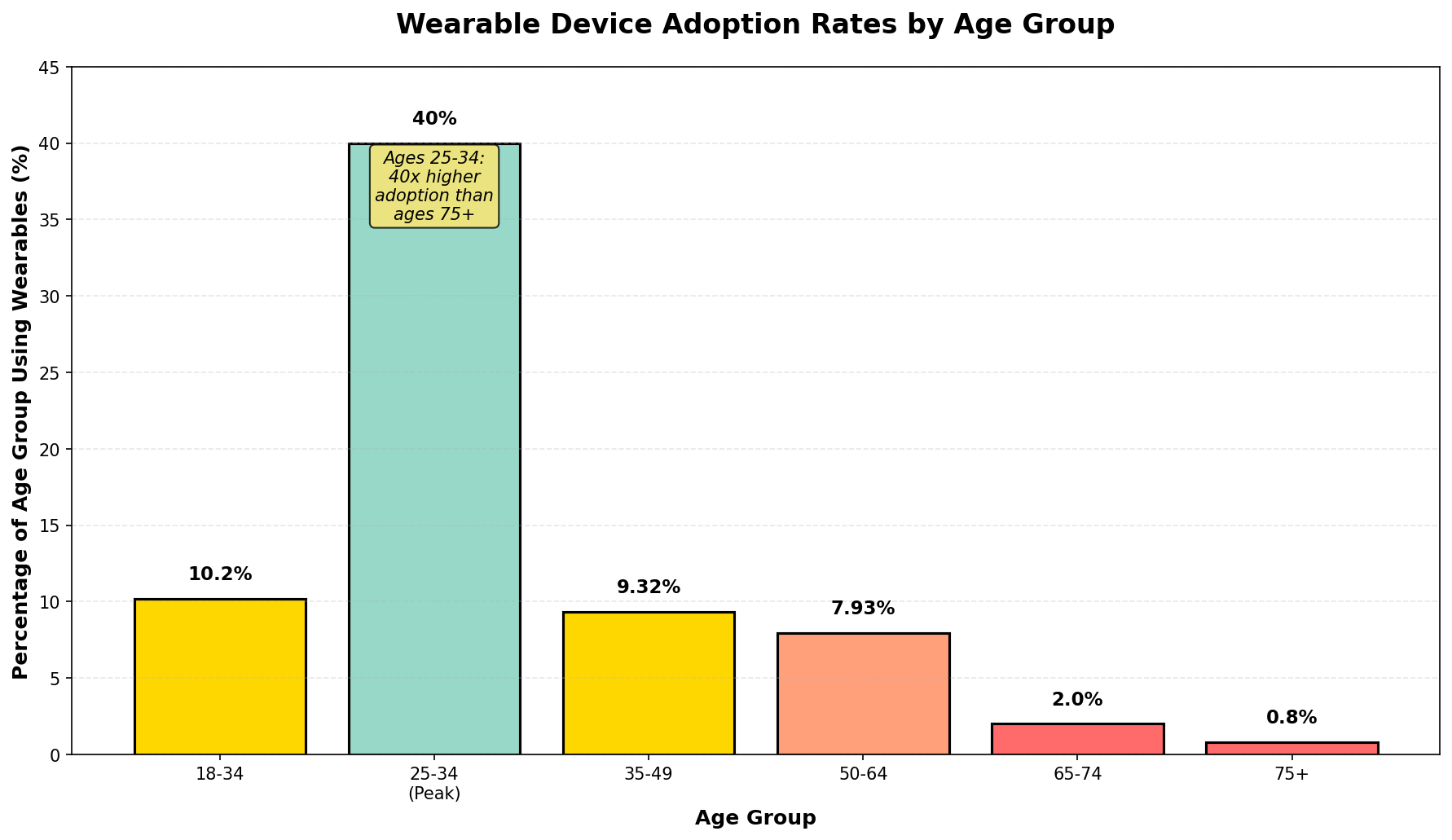 Figure 1: Accuracy varies significantly across metrics. Heart rate and step counting are reliable (75%+ accuracy), while calorie burn estimates and stress scores have wider margins of error. Trust heart data more than stress scores.5
The Market Landscape: Which Devices Dominate
The wearable market is now mainstream, not niche. In 2024, an estimated 590.7 million wearable devices were shipped globally.8 Smartwatches lead the market at 48.5% of revenue (roughly £39 billion in 2024), followed by fitness trackers at 25%, and emerging smart rings at 12%.9
Apple dominates the US smartwatch market with a striking 58% market share, driven by its seamless ecosystem integration with iPhones.10 However, globally, manufacturers like Xiaomi, Samsung, and Fitbit (owned by Google) hold significant positions. For UK consumers, the picture differs slightly, with broader adoption across multiple brands due to better health service integration.
Price stratification is pronounced. Budget options like the Xiaomi Smart Band 10 start at £40, providing basic tracking functionality. Mid-range devices from Fitbit, Garmin, and others sit between £100 and £300, offering the best balance of features and value. Premium smartwatches like the Apple Watch Ultra cost £800 or more, though the price premium reflects ecosystem integration and brand status rather than proportionally better health tracking.11
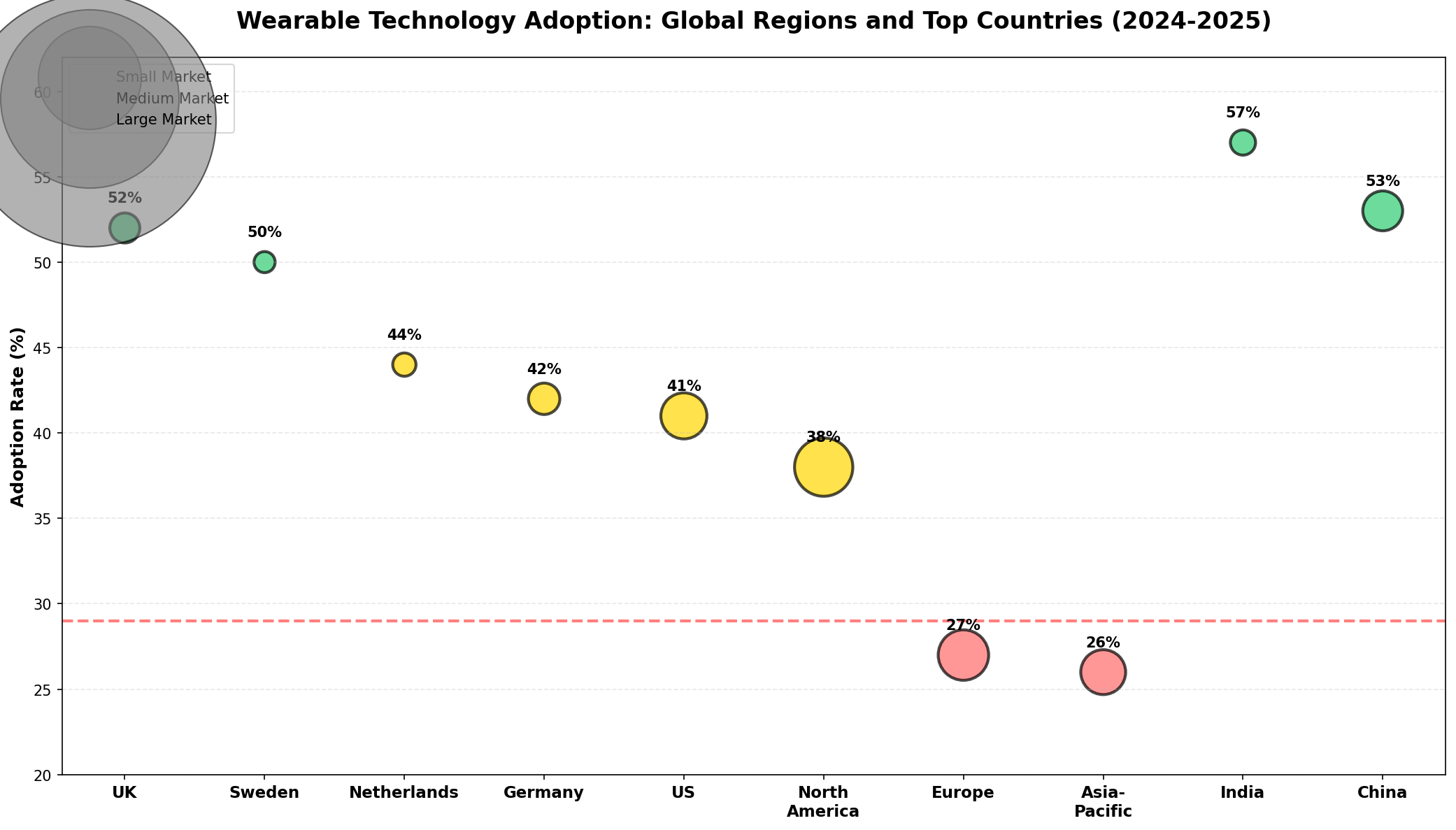 Figure 2: The global wearable market is projected to more than double from £63 billion in 2024 to £138 billion by 2030, growing at 15.9% annually. This growth is roughly 2-3 times faster than traditional consumer electronics, signalling the mainstream acceptance of wearable health technology.1
Who's Actually Using These Devices
Wearable adoption follows distinct age and income patterns. Globally, approximately 29% of consumers own at least one wearable device.12 However, this average masks significant variation.
Ages 25-34 show the highest adoption at 40%, but this drops dramatically with age. People aged 35-49 have 9.32% adoption, dropping further to 7.93% for ages 50-64, then plummeting to 2% for ages 65-74 and just 0.8% for those 75 and older.13 This creates a troubling digital health divide: the people most likely to benefit from continuous health monitoring (older adults) are least likely to use these devices.
Geography creates substantial variation too. The UK leads adoption at 52%, followed closely by Sweden at 50%, Netherlands at 44%, and Germany at 42%. The United States sits at 41%; Asia-Pacific growth is accelerating fastest at 18.9% annually, driven by large younger populations and smartphone penetration.14
Income remains a significant barrier. Households with annual income above £150,000 are 2.27 times more likely to own wearables compared to lower-income groups. Yet despite higher adoption rates among wealthy consumers, middle-income households now represent 41% of global wearable users, suggesting affordability improvements are broadening access.15
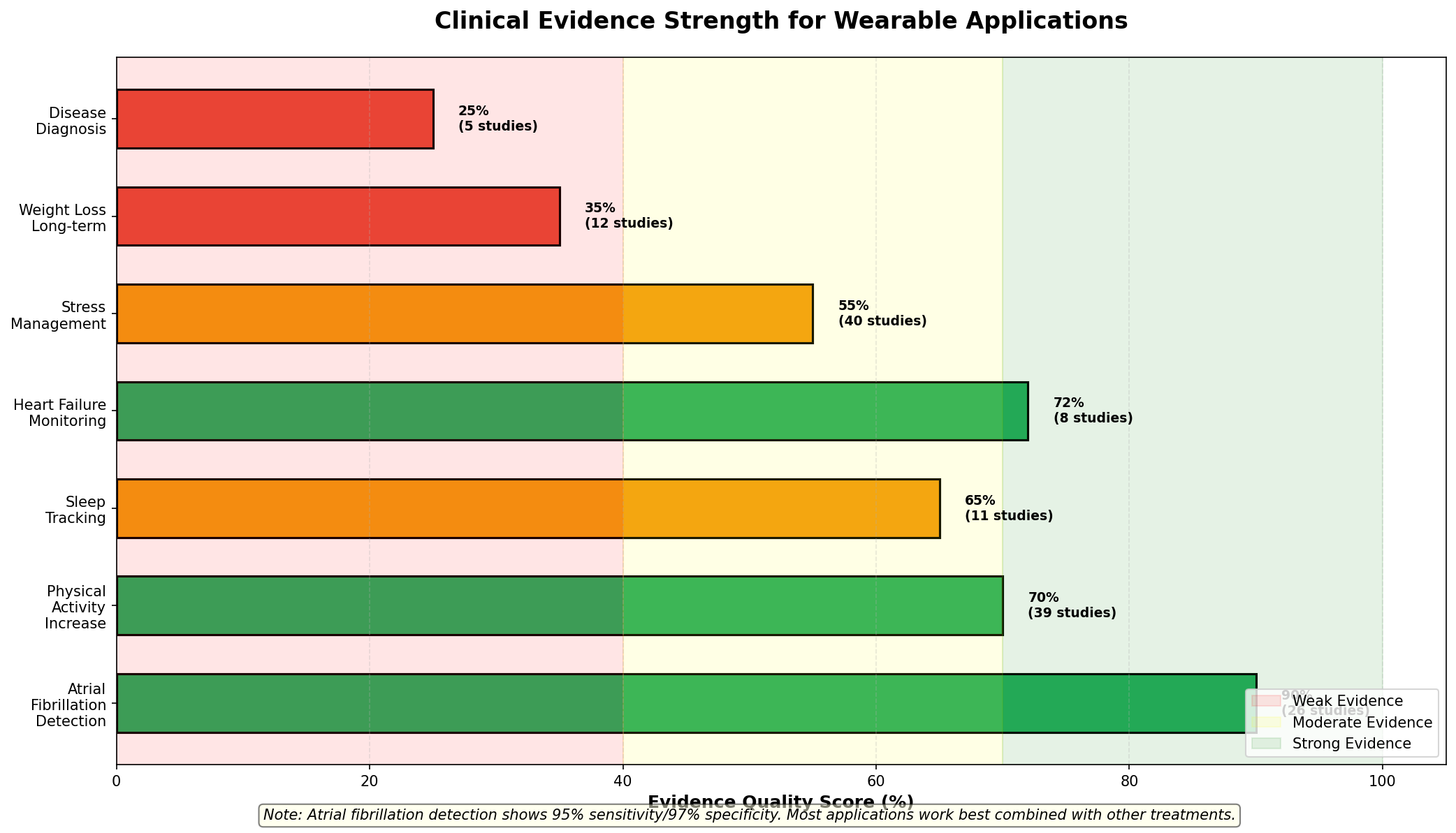 Figure 3: Wearable adoption peaks at ages 25-34 (40%) but drops dramatically for older adults (only 0.8% of those 75+ use healthcare wearables). This creates a digital health divide where older adults with the greatest monitoring needs are least likely to access these tools.13
What Wearables Actually Achieve: The Clinical Evidence
The gap between marketing claims and clinical evidence is substantial. Some wearable applications have strong research backing; others remain largely unproven. Understanding this distinction is crucial before investing.
What Works: Strong Evidence
Atrial fibrillation detection is the most clinically validated wearable application. Atrial fibrillation (an irregular heart rhythm affecting roughly 52.5 million people worldwide) significantly increases stroke risk, yet many people have no symptoms.16 Smartwatch-based detection shows exceptional performance: 95% sensitivity (correctly identifying the condition when present) and 97% specificity (correctly identifying those without it).17
Clinical trials demonstrate real-world impact. In one study, smartwatch groups detected 21 cases of atrial fibrillation after 6 months, compared to only 5 cases in standard care groups. Remarkably, 57% of smartwatch-detected cases were asymptomatic—people with a serious condition they didn't know about.18 This early detection capability potentially prevents strokes before they occur.
Device performance varies, however. In the BASEL Wearable Study of 201 patients, the Apple Watch 6 and Samsung Galaxy Watch 3 both achieved 85% sensitivity and 75% specificity; the Fitbit Sense achieved only 66% sensitivity.19 Not all smartwatches perform equally.
Physical activity increases show consistent, measurable improvements. A systematic review of 39 studies including 163,992 participants, found activity trackers reliably increase daily movement.20 Users gain approximately 40 minutes more walking per day on average. Benefits are sustained over time and observed across different age groups and fitness levels.
The catch? Increased activity doesn't automatically translate to significant long-term weight loss. Short-term interventions (less than 6 months) show modest benefits, averaging around 1 kilogramme weight loss over 5 months, particularly for middle-aged and older adults.21 Long-term weight loss benefits without combined diet intervention remain unclear.
Sleep quality improvements occur simply through tracking. In one study, 70% of people who tracked their sleep reported better sleep after one month, compared to only 40% in a control group that didn't track.22 This isn't necessarily because wearables accurately measure sleep—they don't always. Rather, tracking raises awareness of sleep habits and motivates behavioural changes: earlier bedtimes, better sleep hygiene, reduced evening screen time.
What Shows Promise: Moderate Evidence
Heart failure monitoring shows reduced hospital admissions and improved quality of life when patients use wearables alongside clinical care.23 Continuous monitoring enables early detection of deterioration, potentially preventing emergency hospitalisations.
Stress management yields mixed results. A review of 40 studies found that 78% reported significant stress reduction using wearable-based interventions, though often combined with other treatments like cognitive behavioural therapy.24 Wearables excel at raising awareness of stress patterns but shouldn't be viewed as a standalone treatment.
Mental health support shows modest benefits. Some studies report over 50% reduction in depression symptoms and 24% improvements in life satisfaction, but typically when wearables are combined with professional therapy rather than used alone.25
What Lacks Evidence: Weak or No Support
Long-term weight loss without other interventions shows no clear significant benefit according to rigorous reviews.26 Wearables motivate activity but don't address the dietary changes most important for sustained weight loss.
General disease diagnosis remains largely unvalidated. Of 310 consumer wearables reviewed in research, only 34 (11%) have been validated for even one health outcome, and only 54 validation studies (3.5% of what would be theoretically possible) have been conducted.27 Most wearables make health claims exceeding their clinical evidence.
Stress measurement accuracy is unreliable. Wearable stress scores are algorithmic estimates, not clinical assessments. The technology sometimes conflates physical exertion with emotional stress, and the biological markers measured don't always reflect true psychological stress.28
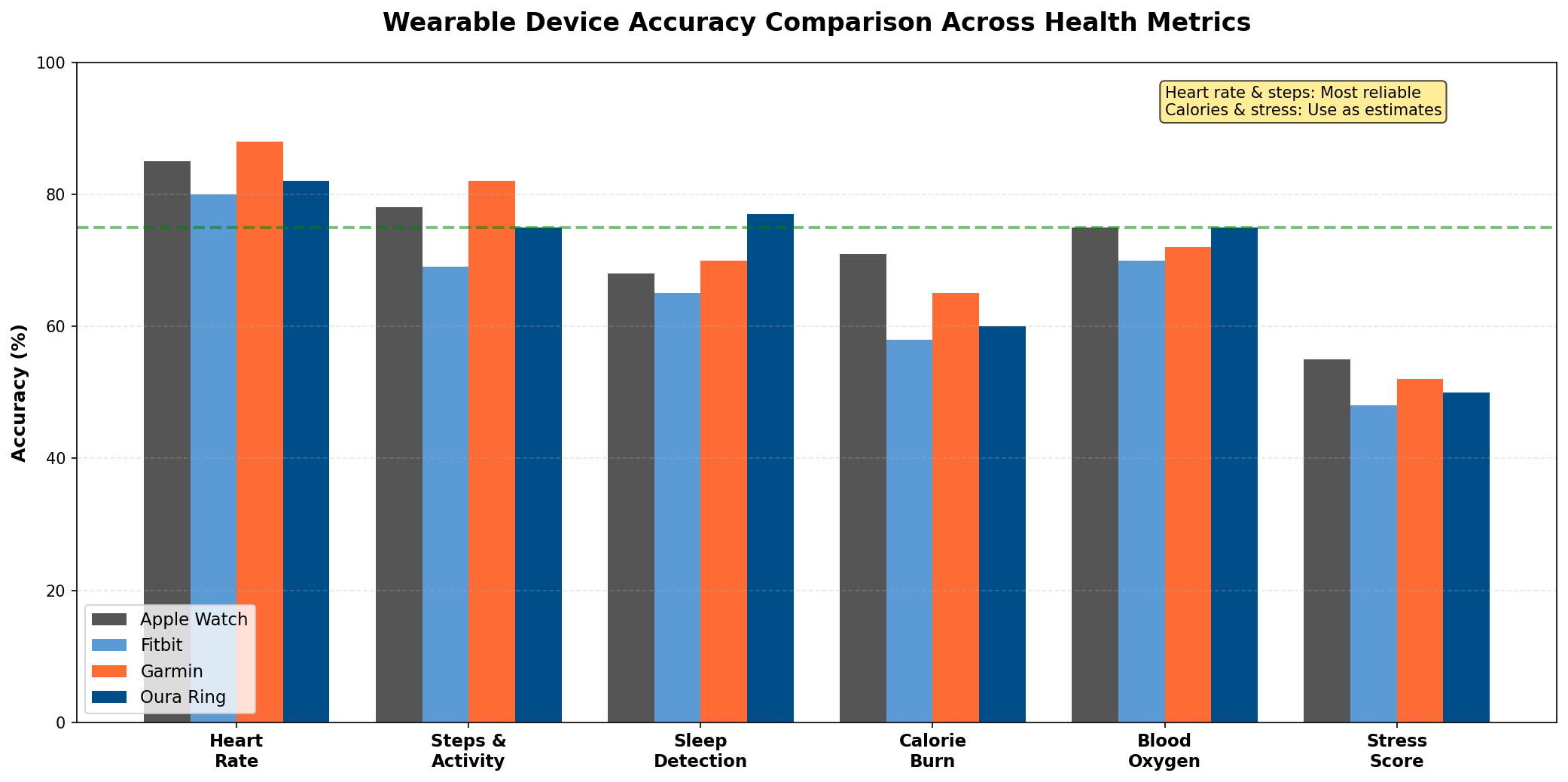 Figure 4: Users report multiple health benefits from wearables, with behavioral motivation (85%), stress awareness (78%), and increased physical activity (74%) topping the list. Weight management benefits are more modest (52%), and clinical outcomes vary depending on the specific application.29
Clinical Evidence Strength: An Honest Assessment
The reality is that wearable research remains immature. Of 80 studies examining wearables outside hospital settings, only 6 (8%) were randomised controlled trials—the gold standard for clinical research.30 The remaining 74 were observational studies, which can show correlation but not prove causation.
Observational research found impressive results: 97% of such studies reported at least one significant health correlation. But this proves surprisingly little. Just because activity increases correlate with wearable use doesn't mean the wearable caused the increase; people interested in health are more likely to buy wearables in the first place.
Major gaps remain in understanding real-world effectiveness. Only 64% of wearable studies reported compliance rates (whether people actually wore the devices), and just 16% asked users whether they found devices easy to use.31 We know wearables can collect data; we're less certain whether people will consistently use them or if they produce lasting health improvements beyond the initial motivation boost.
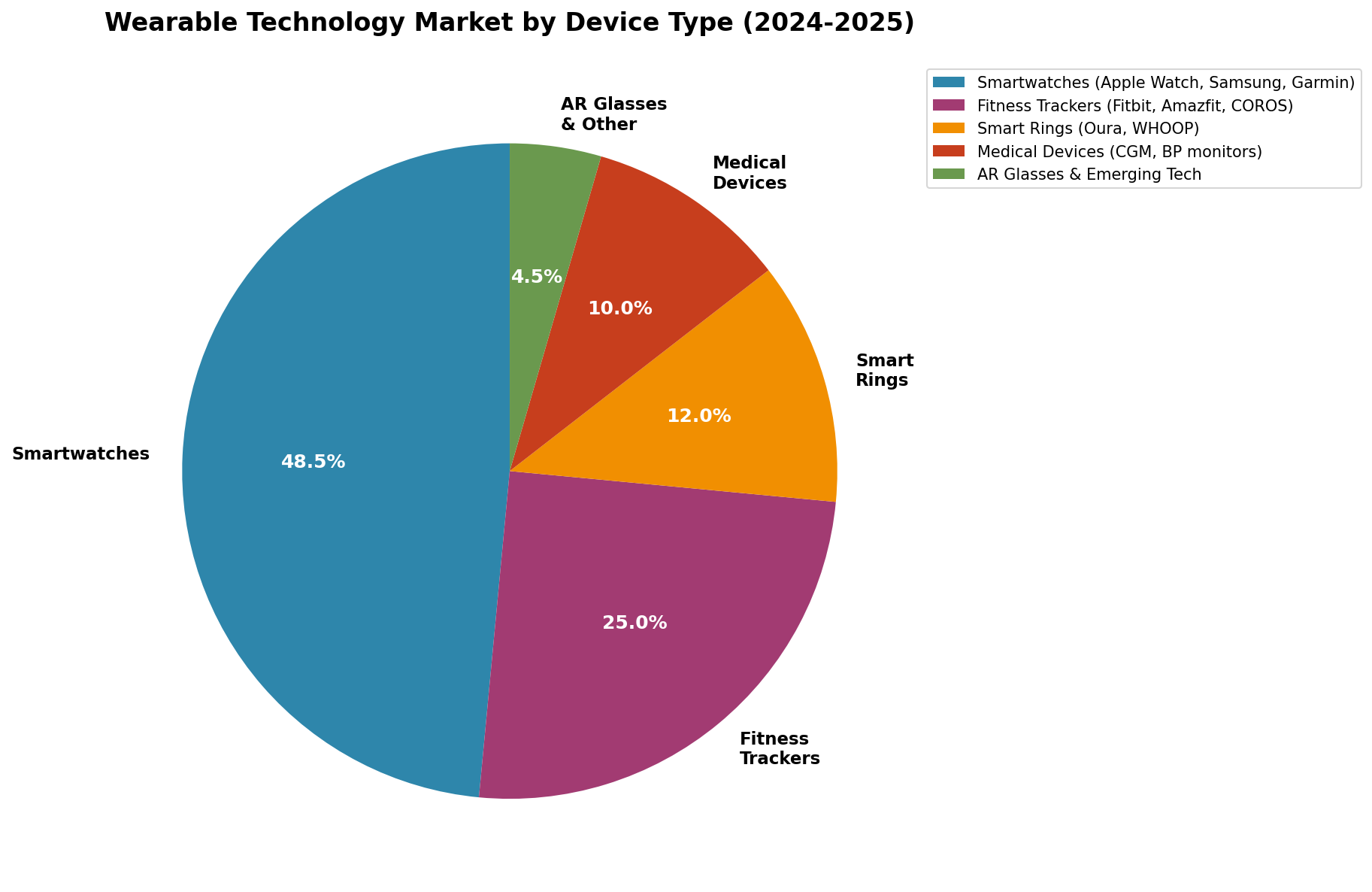 Figure 5: Research evidence varies widely across wearable applications. Atrial fibrillation detection shows strong clinical evidence (95% sensitivity), whilst long-term weight loss has weak evidence. Most consumer wearables lack rigorous clinical validation, with only 11% of devices formally tested for any health outcome.30
Accuracy and Reliability: What You Should Know
Understanding what wearables can't do accurately is as important as knowing what they can.
Calorie burn estimates are notoriously inaccurate. Consumer devices achieve only 56.63% accuracy on average, with margins of error between 27-93%.32 The Apple Watch performs best at 71.02% accuracy; other brands range 50-65%. This is because devices can't account for your individual metabolism, body composition, and genetics. Treat calorie counts as rough estimates, not precise measurements.
Sleep stage detection varies by device. The Oura Ring 3 achieves 76-79.5% accuracy for sleep stage identification, whilst Apple Watch ranges wildly from 50.5% to 86.1%.33 Devices are reliable at detecting "asleep" versus "awake" but less accurate at distinguishing deep sleep from light sleep.
Heart rate is reliable at 75-88% accuracy, making it one of the most trustworthy metrics.34
Blood oxygen measurement varies (70-75% accuracy depending on device), and accuracy can be affected by skin tone, tattoos, wrist position, and individual physiology. Some studies show optical sensors less accurate on darker skin tones, raising equity concerns about whose health data is most reliable.35
Stress scores should be treated with scepticism. They rely on heart rate variability analysis, but HRV is influenced by physical activity, sleep, caffeine, and dozens of other factors unrelated to psychological stress. Devices may flag physical exertion or caffeine intake as "stress."
Several factors consistently affect accuracy across all devices. Devices work better during structured exercise (running, cycling) than casual movement. Proper fit matters—the device must sit snugly on your wrist. Environmental interference can reduce accuracy. And sensor degradation means devices may become less accurate after months or years of continuous use, though research on this is limited.36
Most concerning is the "black box" problem. Manufacturers use proprietary algorithms to calculate results, and most don't disclose their methods. You're trusting company formulas without knowing exactly how results are derived or what assumptions underlie the calculations.
Privacy and Data Security: A Growing Concern
Despite wearables' potential health benefits, privacy concerns are substantial and often ignored. Seventy-four percent of wearable users are concerned about how devices handle personal health data, yet only 58% feel confident that their wearable actually protects that data.37 This 16-percentage-point gap reflects genuine anxiety about data protection.
A 2025 privacy analysis of 17 leading manufacturers found alarming gaps. Seventy-six percent showed high risk for inadequate transparency reporting about data handling. Sixty-five percent failed to disclose security vulnerabilities properly.38 Best performers for privacy include Apple, Google, and Polar. Poorest performers include Xiaomi, Wyze, and Huawei.
The US regulatory environment for consumer wearables remains weak. Even devices collecting medical-grade health data typically fall outside HIPAA (the law protecting medical data), creating a regulatory void.39 Unlike medical devices requiring FDA approval, most consumer wearables face minimal regulatory scrutiny. This means companies have broad discretion over data collection, storage, and sharing practices.
Real-world risks include unauthorised access to sensitive data (location, health metrics), continuous collection creating exposure opportunities, and third-party app access to your health information. When you grant a fitness app permission to read wearable data, that app can potentially access all your information.
Consider who owns your data. If you use an Apple Watch, Apple collects your data. If you use a Fitbit, Google owns that data. Both companies have privacy policies, but policies change, companies merge, and breaches happen. Some users encrypt and retain control; others prefer delegating this responsibility.
Healthcare Integration: The NHS Plans Major Changes
The landscape is shifting from wearables as consumer gadgets to wearables as clinical tools. The UK's NHS 10-Year Health Plan, published in July 2024, mentions wearables 24 times and identifies them as central to future healthcare delivery.40
The NHS explicitly plans to provide wearable devices free to patients in high-need areas by 2028, removing cost barriers. The target is cardiovascular disease monitoring, but diabetes and asthma management trials are already underway, including partnerships with Portsmouth NHS Trust.41 By 2028, remote cardiovascular monitoring via wearables is projected to become standard NHS care.
This represents genuine healthcare transformation. Rather than patients visiting clinics quarterly, doctors can monitor patients continuously and intervene earlier. Hospital burden reduces as remote monitoring replaces routine appointments. Patients gain real-time insights into their health status.
Integration is advancing through the NHS app, which will consolidate wearable data with lab test results and clinical records, giving patients and clinicians a comprehensive health view.42 This requires resolving technical challenges around data standards, security, and interoperability, but the commitment is clear.
Healthcare integration also creates accountability. Medical-grade wearable use requires validation and oversight. As wearables transition from consumer products to clinical tools, manufacturers face more rigorous testing requirements and liability for health claims.
Types of Wearables and How to Choose
Different wearables suit different purposes. Understanding the landscape helps match devices to your needs.
Smartwatches (Apple Watch, Samsung Galaxy Watch, Garmin) combine health tracking with phone features. They're the market leader and offer comprehensive metrics. Apple Watch dominates through ecosystem lock-in, but alternatives provide excellent health tracking without smartphone dependence. Price ranges from £150 to £800 depending on features and materials. Best for people wanting a device that doubles as a watch and health monitor.43
Fitness trackers (Fitbit, Garmin Vivosmart, Amazfit) focus specifically on activity, sleep, and heart health without smartphone features. They're simpler, often more accurate at fitness metrics, and typically more affordable (£50-£250). Best for people wanting dedicated activity tracking without smartphone integration.44
Smart rings (Oura Ring, WHOOP) are the fastest-growing category. Small enough to wear continuously, they track heart rate, HRV, sleep, temperature, and respiratory rate through multiple sensors. They're less obvious than watches and appeal to people wanting seamless monitoring. Price ranges £250-£350 plus monthly subscriptions (£6-£12/month). Best for people wanting comprehensive health metrics in the most discreet form.45
Continuous glucose monitors (Freestyle Libre, Dexcom, Medtronic) are medical devices for blood sugar monitoring. Originally designed for diabetics, they're increasingly used by non-diabetics interested in understanding their metabolic responses to foods. Cost varies; many insurance plans cover for diabetics, whilst self-pay costs range £35-£100 monthly.46
Medical-grade devices include ECG monitors, blood pressure monitors, and specialised cardiac devices that provide clinical-grade measurements. These are typically prescribed by doctors rather than purchased directly.47
For most people starting out, the decision comes down to budget and intended use. If you want comprehensive health tracking with smartphone features, invest in a quality smartwatch (£200-£300 range). If you're specifically interested in activity and sleep, a dedicated fitness tracker offers better value (£100-£150 range). If privacy and discreteness matter, consider smart rings. If budget is limited, £40-£50 buys functional basic tracking.
Who Should Consider Using a Wearable
Wearables suit some people and use cases better than others.
Strong candidates for wearable use:
- People with cardiovascular disease or risk factors for atrial fibrillation (irregular heartbeat) who want continuous monitoring
- Those managing chronic conditions (diabetes, heart disease, sleep apnea) who benefit from detailed data for doctors
- People motivated by data and progress tracking who find gamification helpful for behaviour change
- Anyone seeking to understand personal patterns (does caffeine affect my sleep, does exercise reduce stress)
- Middle-aged and older adults wanting motivation for increased physical activity
- Those interested in preventive health and early warning signs of illness
People who might not benefit:
- Anyone expecting wearables to replace medical care or diagnosis (they can't)
- Those uncomfortable with continuous health data collection or sharing
- People with limited smartphone or tech comfort
- Anyone unable to afford the device plus potential ongoing subscription costs
- Those who lack consistent motivation (remember: 50% abandon devices within 6 months)48
- People preferring privacy and digital minimalism
Honest assessment: Wearables work best when combined with other health strategies (exercise routines, dietary changes, medical treatment) rather than as standalone solutions. They're motivational tools that work brilliantly for data-motivated people but gather dust for others.
Privacy and Data Security: Practical Steps
If you choose a wearable, protecting your data requires active steps.
Choose manufacturers with strong privacy records. Apple, Google, and Polar have more robust privacy protections than others. Research the specific device's privacy policy: check how long data is retained, whether it's shared with third parties, and what encryption protects it.49
Understand what data you're sharing. Most devices sync with companion apps that request broad permissions. Review app permissions carefully and deny unnecessary requests.
Use strong passwords on your wearable account and enable two-factor authentication where available.
Regularly review data sharing settings. Most apps default to sharing more data than necessary. Adjust settings to match your comfort level.
Consider what data you actually need to collect. Some metrics (stress scores, sleep stages) are less reliable and perhaps not worth sharing widely.
Stay informed about security updates. Manufacturers occasionally patch security vulnerabilities. Ensure your device receives updates automatically.
Practical Example: How This Works in Real Life
Understanding wearable utility is easier with concrete examples.
Example 1: Sarah, a 48-year-old wanting to increase activity. She buys a Fitbit Charge (£130) and sets a daily step goal. The device's achievement tracking and friend competitions provide motivation. After three months, she's averaging 8,000 steps daily versus her previous 4,500. She feels noticeably more energetic. Two years later, she's maintained this activity level and lost 5 kilograms, primarily through accumulated lifestyle changes. The wearable was a useful initial motivation tool.50
Example 2: Tom, a 62-year-old with heart palpitations. His GP recommends an Apple Watch for atrial fibrillation screening. Within 2 weeks, the watch detects an irregular rhythm. The ECG reading shows atrial fibrillation, which Tom had no symptoms of. He starts appropriate treatment and prevents potential stroke. The wearable provided genuine medical value.51
Example 3: Marcus, a 35-year-old fitness enthusiast. He buys an Oura Ring (£299 plus £5.99/month subscription) expecting it to optimise his training. He obsessively tracks sleep stages, HRV, and "readiness scores," adjusting training based on device recommendations. After six months, he's anxious about slight HRV variations and unsure whether device readings match how he actually feels. He abandons the wearable, having spent £635 with limited benefit.52
These examples highlight the reality: wearables help some people achieve genuine health improvements and help doctors make better decisions, yet provide limited benefit to others and occasionally create anxiety.
The Bottom Line: What Wearables Can Realistically Do
Wearables have genuinely transformative potential in specific areas and more limited utility in others. This honest assessment should guide your decision.
Wearables excel at:
- Tracking physical activity and increasing daily movement (proven benefit, especially for older adults)
- Detecting atrial fibrillation (95% accuracy, clinically significant)
- Motivating behaviour change through data and gamification (70%+ of users report benefits)
- Providing early warning signs of illness (elevated resting heart rate, dropping oxygen levels, sudden sleep disruption)
- Helping understand personal patterns and optimise individual health
- Supporting chronic disease management when integrated with medical care
Wearables show mixed results for:
- Long-term weight loss (initial motivation helps, but sustainable loss requires diet changes)
- Sleep improvement (tracking raises awareness, but doesn't guarantee better sleep)
- Stress reduction (devices detect stress responses, but measuring stress is complex)
- Mental health support (works best combined with professional treatment)
Wearables don't do:
- Replace medical diagnosis or treatment
- Work equally well for everyone (individual variation is substantial)
- Guarantee lasting use (50% of people abandon devices within 6 months)
- Provide perfect accuracy (trust heart rate data; be sceptical of stress scores)
- Automatically make you healthier without behaviour change
By 2028, NHS integration will normalise wearables in healthcare, removing cost barriers and emphasising clinical applications. This shift from consumer gadgets to medical tools will likely improve both device quality and healthcare outcomes. For now, wearables represent useful tools for motivated individuals seeking health insights, particularly for activity tracking and early warning sign detection.
The decision whether to use a wearable ultimately depends on your priorities, budget, and comfort with continuous health data collection. If behaviour change motivation matters to you, if you value data-driven insights, and if you're willing to integrate wearable data into broader health efforts, wearables can meaningfully contribute to health optimisation. If you prefer analogue health monitoring or view continuous tracking as intrusive, wearables aren't necessary.
The wearable revolution isn't hype. It's real technology solving genuine health problems for real people. But it works best when expectations are realistic and usage is intentional.
Further Reading
Cardiovascular Health and Heart Monitoring
- Atrial Fibrillation Screening in Wearables: Clinical Guidelines
- Using Smartwatches for Heart Rhythm Detection: American Heart Association Guidance
- Wearable Devices in Cardiovascular Medicine: Research Synthesis
Physical Activity and Fitness Tracking
- How Wearable Trackers Increase Daily Movement: Evidence Review
- Activity Trackers for Weight Management: What the Research Shows
- Building Sustainable Exercise Routines with Wearable Technology
Sleep Quality and Sleep Tracking
- Which Wearables Most Accurately Track Sleep Stages
- Using Wearable Sleep Data for Clinical Sleep Studies
- Sleep Tracking for Better Sleep: What Works and What Doesn't
Mental Health and Stress Management
- Using Wearables for Stress Management and Anxiety Reduction
- Wearable Technology for Depression: Clinical Evidence and Limitations
- Heart Rate Variability as a Stress Indicator: Interpretation Guide
Privacy and Security Concerns
- Wearable Privacy Analysis: Which Companies Protect Your Data
- Understanding Wearable Data Security and Encryption
- Regulatory Gaps in Consumer Wearable Technology
Clinical Guidelines and Standards
- NHS Wearable Technology Strategy and Future Integration
- Digital Health Technologies and NICE Standards
- Evidence Standards for Wearable Validation in Healthcare
Device Selection and Comparison
- Best Fitness Trackers 2025-2026: Reviewed and Tested
- Budget-Friendly Wearables That Actually Work
- Smartwatch Comparison: Apple vs. Samsung vs. Garmin
General Health Information
- Mayo Clinic: Understanding Wearable Health Technology
- Cleveland clinic: How Wearables Track Your Health
- UPMC: How Wearable Technology Improves Health Outcomes
References/Helpful Resources
- MarketsandMarkets. Wearable Electronics Market 2025-2030. [Internet]. [cited 2026 Mar 16]. Available from: https://www.marketsandmarkets.com/Market-Reports/wearable-electronics-market-983.html
- Cleveland Clinic. Heart Rate Variability (HRV): What It Is and How You Can Track It. [Internet]. [cited 2026 Mar 16]. Available from: https://my.clevelandclinic.org/health/symptoms/21773-heart-rate-variability-hrv
- PMC/NIH. Accuracy of 11 Wearable, Nearable, and Airable Consumer Sleep Trackers: Prospective Multicenter Validation Study. [Internet]. [cited 2026 Mar 16]. Available from: https://pmc.ncbi.nlm.nih.gov/articles/PMC10654909/
- Garmin. Understanding Pulse Ox on Your Garmin Watch: What Is It and How Does It Work. [Internet]. [cited 2026 Mar 16]. Available from: https://www.garmin.com/en-US/blog/fitness/understanding-pulse-ox-on-your-garmin-watch-what-is-it-and-how-does-it-work/
- University of Mississippi. Study Examines How Well Wearable Tech Tracks Fitness Metrics. [Internet]. [cited 2026 Mar 16]. Available from: https://olemiss.edu/news/2025/06/apple-watch-accuracy-study/index.html
- Cleveland Clinic. Continuous Glucose Monitoring (CGM): What It Is. [Internet]. [cited 2026 Mar 16]. Available from: https://my.clevelandclinic.org/health/articles/continuous-glucose-monitoring-cgm
- MDPI. Using Smartwatches in Stress Management, Mental Health, and Well-Being: A Systematic Review. [Internet]. [cited 2026 Mar 16]. Available from: https://www.mdpi.com/1999-4893/18/7/419
- Grand View Research. Wearable Technology Market Analysis. [Internet]. [cited 2026 Mar 16]. Available from: https://www.grandviewresearch.com/industry-analysis/wearable-technology-market
- Grand View Research. Wearable Technology Market Size. [Internet]. [cited 2026 Mar 16]. Available from: https://www.grandviewresearch.com/industry-analysis/fitness-tracker-market
- Statista. Wearables Market Share by Vendor. [Internet]. [cited 2026 Mar 16]. Available from: https://www.statista.com/statistics/435944/quarterly-wearables-shipments-worldwide-market-share-by-vendor/
- GarageGymReviews. Best Budget Fitness Trackers 2025. [Internet]. [cited 2026 Mar 16]. Available from: https://www.garagegymreviews.com/best-budget-fitness-tracker
- Rock Health. Put a Ring on It: Understanding Consumers' Year-over-Year Wearable Adoption Patterns. [Internet]. [cited 2026 Mar 16]. Available from: https://rockhealth.com/insights/put-a-ring-on-it-understanding-consumers-year-over-year-wearable-adoption-patterns/
- JMIR. Patterns of Ownership and Usage of Wearable Devices in the United States, 2020-2022: Survey Study. [Internet]. [cited 2026 Mar 16]. Available from: https://pmc.ncbi.nlm.nih.gov/articles/PMC11316147/
- Precedence Research. Wearable Technology Market Size Report. [Internet]. [cited 2026 Mar 16]. Available from: https://www.precedenceresearch.com/wearable-technology-market
- ElectroIQ. Wearable Technology Statistics. [Internet]. [cited 2026 Mar 16]. Available from: https://electroiq.com/stats/wearable-technology-statistics/
- NCBI. Global Health Estimates on Atrial Fibrillation Prevalence. [Internet]. [cited 2026 Mar 16]. Available from: https://pmc.ncbi.nlm.nih.gov/articles/PMC12546894/
- JACC. Accuracy of Smartwatches in the Detection of Atrial Fibrillation: A Systematic Review and Diagnostic Meta-Analysis. [Internet]. [cited 2026 Mar 16]. Available from: https://www.jacc.org/doi/10.1016/j.jacadv.2025.102133
- JAMA Network. Use of Wearable Devices in Individuals With or at Risk for Cardiovascular Disease in the US, 2019 to 2020. [Internet]. [cited 2026 Mar 16]. Available from: https://jamanetwork.com/journals/jamanetworkopen/fullarticle/2805753
- Circulation Research. Clinical Validation of 5 Direct-to-Consumer Wearable Smart Devices to Detect Atrial Fibrillation: BASEL Wearable Study. [Internet]. [cited 2026 Mar 16]. Available from: https://www.ahajournals.org/doi/10.1161/CIRCRESAHA.122.322389
- JMIR. Effectiveness of Wearable Trackers on Physical Activity in Healthy Adults: Systematic Review and Meta-Analysis. [Internet]. [cited 2026 Mar 16]. Available from: https://mhealth.jmir.org/2020/7/e15576/
- PubMed. The Efficacy of Wearable Activity Tracking Technology as Part of a Weight Loss Program: A Systematic Review. [Internet]. [cited 2026 Mar 16]. Available from: https://pubmed.ncbi.nlm.nih.gov/28488834/
- PMC/NIH. Effect of Wearables on Sleep in Healthy Individuals: A Randomized Crossover Trial and Validation Study. [Internet]. [cited 2026 Mar 16]. Available from: https://pmc.ncbi.nlm.nih.gov/articles/PMC7849816/
- PMC/NIH. The Role of Wearable Devices in Chronic Disease Monitoring and Patient Care: A Comprehensive Review. [Internet]. [cited 2026 Mar 16]. Available from: https://pmc.ncbi.nlm.nih.gov/articles/PMC11461032/
- PMC/NIH. Wearables for Stress Management: A Scoping Review. [Internet]. [cited 2026 Mar 16]. Available from: https://pmc.ncbi.nlm.nih.gov/articles/PMC10486660/
- PMC/NIH. A Comprehensive Review on Harnessing Wearable Technology for Enhanced Depression Treatment. [Internet]. [cited 2026 Mar 16]. Available from: https://pmc.ncbi.nlm.nih.gov/articles/PMC11374139/
- PubMed. Effectiveness of Wearable Activity Trackers to Increase Physical Activity and Improve Health: A Systematic Review. [Internet]. [cited 2026 Mar 16]. Available from: https://pubmed.ncbi.nlm.nih.gov/35868813/
- PMC/NIH. The Impact of Wearable Technologies in Health Research: Scoping Review. [Internet]. [cited 2026 Mar 16]. Available from: https://pmc.ncbi.nlm.nih.gov/articles/PMC8826148/
- PMC/NIH. Challenges and Recommendations for Wearable Devices in Digital Health. [Internet]. [cited 2026 Mar 16]. Available from: https://pmc.ncbi.nlm.nih.gov/articles/PMC9931360/
- UPMC HealthBeat. How Wearable Tech Improves Health and Fitness Tracking. [Internet]. [cited 2026 Mar 16]. Available from: https://share.upmc.com/2025/05/how-wearable-tech-improves-health-fitness/
- PLOS Digital Health. Wearables Research for Continuous Monitoring of Patient Outcomes: A Scoping Review. [Internet]. [cited 2026 Mar 16]. Available from: https://journals.plos.org/digitalhealth/article?id=10.1371/journal.pdig.0000860
- PMC/NIH. Factors Affecting the Quality of Person-Generated Wearable Device Data. [Internet]. [cited 2026 Mar 16]. Available from: https://pmc.ncbi.nlm.nih.gov/articles/PMC8294465/
- PubMed. Accuracy and Acceptability of Wrist-Wearable Activity-Tracking Devices: Systematic Review. [Internet]. [cited 2026 Mar 16]. Available from: https://pubmed.ncbi.nlm.nih.gov/35060915/
- Oxford Academic. Performance Validation of Six Commercial Wrist-Worn Wearable Sleep-Tracking Devices. [Internet]. [cited 2026 Mar 16]. Available from: https://academic.oup.com/sleepadvances/article/6/2/zpaf021/8090472
- Mayo Clinic. Your Wearable Says Your Heart Rate Variability Has Changed. Now What. [Internet]. [cited 2026 Mar 16]. Available from: https://newsnetwork.mayoclinic.org/discussion/your-wearable-says-your-heart-rate-variability-has-changed-now-what/
- PMC/NIH. Investigating the Accuracy of Blood Oxygen Saturation Measurements in Common Consumer Smartwatches. [Internet]. [cited 2026 Mar 16]. Available from: https://pmc.ncbi.nlm.nih.gov/articles/PMC10337940/
- ScienceDirect. Wearable Technologies for Health Research: Opportunities, Limitations, and Practical Considerations. [Internet]. [cited 2026 Mar 16]. Available from: https://www.sciencedirect.com/science/article/pii/S0889159123002313
- Nature/npj Digital Medicine. Privacy in Consumer Wearable Technologies Study. [Internet]. [cited 2026 Mar 16]. Available from: https://www.nature.com/articles/s41746-025-01757-1
- PMC/NIH. Privacy in Wearables Analysis. [Internet]. [cited 2026 Mar 16]. Available from: https://pmc.ncbi.nlm.nih.gov/articles/PMC12167361/
- MDPI. Privacy Regulations and Loopholes in Consumer Wearable Devices. [Internet]. [cited 2026 Mar 16]. Available from: https://www.mdpi.com/2410-387X/8/2/26
- HTN Health Tech News. Wearable Tech in the NHS's Next Phase of Healthcare Outcomes Acceleration. [Internet]. [cited 2026 Mar 16]. Available from: https://htn.co.uk/2024/10/21/wearable-tech-in-the-nhss-next-phase-of-healthcare-outcomes-acceleration-supporting-patients-with-rare-and-chronic-conditions/
- Osborne Clarke. UK NHS 10-Year Plan Digital Health. [Internet]. [cited 2026 Mar 16]. Available from: https://www.osborneclarke.com/insights/digital-health-suppliers-have-scale-opportunities-delivering-uk-nhs-10-year-plan
- JMIR. Digital Health Technologies and NICE Standards. [Internet]. [cited 2026 Mar 16]. Available from: https://mhealth.jmir.org/2025/1/e67435
- TechAdvisor. Best Budget Smartwatches 2026. [Internet]. [cited 2026 Mar 16]. Available from: https://www.techadvisor.com/article/2507292/best-budget-smartwatch.html
- Wareable. Best Fitness Trackers 2025-2026. [Internet]. [cited 2026 Mar 16]. Available from: https://www.wareable.com/fitness-trackers/the-best-fitness-tracker
- Oura. Smart Ring for Fitness, Stress, Sleep and Health. [Internet]. [cited 2026 Mar 16]. Available from: https://ouraring.com/
- Cleveland Clinic. Understanding Continuous Glucose Monitoring Data. [Internet]. [cited 2026 Mar 16]. Available from: https://my.clevelandclinic.edu/health/articles/continuous-glucose-monitoring-cgm
- NCBI. Wearable Technology and Remote Patient Monitoring. [Internet]. [cited 2026 Mar 16]. Available from: https://pmc.ncbi.nlm.nih.gov/articles/PMC7819828/
- JMIR. Wearable Device Adherence among Insufficiently-Active Young Adults. [Internet]. [cited 2026 Mar 16]. Available from: https://pmc.ncbi.nlm.nih.gov/articles/PMC10902189/
- Help Net Security. Wearable Data Privacy Concerns 2026. [Internet]. [cited 2026 Mar 16]. Available from: https://www.helpnetsecurity.com/2026/01/30/wearable-data-privacy-tech/
- UPMC HealthBeat. How Wearable Tech Improves Health and Fitness Tracking. [Internet]. [cited 2026 Mar 16]. Available from: https://share.upmc.com/2025/05/how-wearable-tech-improves-health-fitness/
- JAMA Network. Clinical Outcomes with Wearable Atrial Fibrillation Screening. [Internet]. [cited 2026 Mar 16]. Available from: https://jamanetwork.com/journals/jamanetworkopen/fullarticle/2805753
- JMIR. Why Users Comply with Wearables: The Role of Contextual Self-Efficacy. [Internet]. [cited 2026 Mar 16]. Available from: https://www.tandfonline.com/doi/full/10.1080/10447318.2020.1819669
