

Your diabetic foot wound won't heal despite months of standard care. Your house was filled with carbon monoxide before you escaped. You suffered a diving accident and are struggling with the bends. Or you're recovering from cancer radiation therapy and experiencing devastating tissue damage years later.
These situations share something in common: hyperbaric oxygen therapy (HBOT) could be life-changing, potentially preventing amputation, saving your brain, or restoring quality of life. But HBOT only works for specific conditions, and it's crucial to understand exactly what it can and cannot do.
This article explains what HBOT treats, why it works for those conditions, how effective it actually is based on clinical evidence, and what you should realistically expect.
What Is Hyperbaric Oxygen Therapy, and Why Does It Work?
Hyperbaric oxygen therapy sounds complicated, but the basic principle is straightforward. You enter a pressurised chamber (either a single-person tube or a larger room-like chamber) and breathe 100 per cent pure oxygen while the pressure inside increases to 2 to 3 times normal atmospheric pressure.
This combination creates something remarkable: oxygen dissolves directly into your blood plasma at concentrations impossible to achieve any other way. Under normal conditions, your blood only carries about 0.3 millilitres of dissolved oxygen per 100 millilitres of blood. In a hyperbaric chamber at therapeutic pressure, which increases to 6 millilitres or more, a 20-fold increase. This dissolved oxygen reaches tissues that normal blood circulation cannot adequately supply, particularly in areas with poor blood flow or infection.
The reason this matters is simple: many diseases create areas of tissue that are starved for oxygen. When tissues don't get enough oxygen, they cannot heal, fight infection, or function normally. HBOT bypasses damaged blood vessels and floods tissues with oxygen directly.
The 14 FDA-Approved Conditions HBOT Actually Treats
The FDA recognises exactly 14 conditions for which HBOT chambers are approved. This is important: insurance typically covers only these conditions. If your condition isn't on this list, you'll likely pay out of pocket.
Here are the major conditions HBOT treats, organised by how common they are and how well they respond to treatment.
Diabetic Foot Ulcers (The Most Common Indication)
This is why most people receive HBOT. Diabetes damages small blood vessels throughout the body, creating wounds on the feet that refuse to heal. These ulcers are the leading cause of amputation in people with diabetes, affecting hundreds of thousands annually.
How effective is it?
The numbers are striking: 46 per cent of HBOT-treated patients achieve complete healing, compared to just 23 per cent receiving standard care alone. For high-grade ulcers (Wagner Grade 3 or higher), the difference becomes dramatic: 78 per cent of HBOT patients healed completely without surgery, versus zero per cent of standard care patients.1
Even more important is amputation prevention. HBOT reduces the amputation rate from 26 per cent down to 11 per cent: cutting amputation risk almost in half.1 When ulcers have concurrent bone infection, the amputation reduction is even more dramatic. This means that for every two to three diabetic patients treated with HBOT instead of standard care alone, one amputation is prevented.
What should you know?
Your chances of success depend heavily on completing the full treatment course. Patients who complete all 40 sessions (over 8 to 10 weeks) reach 74 per cent healing rates. Those who quit early drop to 60 per cent.1 The key is commitment to finishing the course.
HBOT works best when started after initial surgical cleaning of the wound and when the ulcer has been resisting standard treatment for at least 4 weeks. It's an adjunct to standard care, not a replacement for wound management, blood sugar control, and antibiotics when infection is present.
Chronic Bone Infections (Osteomyelitis)
Bone infections are notoriously difficult to treat because antibiotics penetrate bone tissue poorly. Some infections persist despite years of antibiotic therapy, eventually becoming untreatable through medication alone.
How effective is it?
HBOT achieves something remarkable here: 85 per cent cure rates in chronic bone infections that have resisted standard treatment.2 In one 2024 study of chronic foot osteomyelitis, 85 per cent of patients had complete infection eradication. Even better, only 12.5 per cent of successfully treated patients had reinfection, meaning long-term success is durable.2
Long-term follow-up data show 81 to 85 per cent remission rates at 2 to 3 years post-HBOT. One institution tracking patients 34 months after treatment found 89 per cent remained infection-free.2
What should you know?
Bone infections typically require 20 to 60 sessions of HBOT, usually combined with antibiotics and sometimes surgery. The American Heart Association gives HBOT its highest recommendation level for diabetic foot ulcers with osteomyelitis.
Necrotising Soft Tissue Infections (Flesh-Eating Diseases)
These rapidly spreading bacterial infections are medical emergencies. Conditions like necrotising fasciitis and gas gangrene destroy tissue at an alarming speed and kill without aggressive treatment.
How effective is it?
HBOT cuts death risk roughly in half. Studies show mortality of 2 to 23 per cent with HBOT combined with surgery and antibiotics, versus 34 to 66 per cent without HBOT3. In one cohort, HBOT dropped mortality to just 5.8 per cent compared to 15.4 per cent without it.
Beyond survival, HBOT reduces the number of surgeries needed to control the infection. Patients typically require 1.2 surgical debridements (cleanings) with HBOT versus 3.3 without. This matters enormously because each additional surgery means increased trauma and infection risk.3
What should you know?
This is one condition where HBOT is genuinely life-saving, not just healing-promoting. If you're diagnosed with necrotising fasciitis or gas gangrene, HBOT combined with immediate surgical intervention and antibiotics gives you roughly twice the chance of survival.
Carbon Monoxide Poisoning
Exposure to carbon monoxide (from fires, faulty heating systems, or car exhaust) causes immediate poisoning. But beyond the acute crisis, many survivors develop delayed brain damage weeks to months later, causing permanent memory loss, personality changes, and disability.
How effective is it?
HBOT prevents this delayed brain damage with remarkable consistency. In studies comparing HBOT to oxygen-only treatment, 25 per cent of HBOT-treated patients developed cognitive problems versus 46 per cent receiving oxygen alone: a 50 per cent reduction in brain damage.4 This translates to preventing permanent cognitive sequelae in roughly 1 of every 5 severely poisoned patients.
Even if brain damage starts developing after exposure, HBOT can still help patients recover. 72.7 per cent of people with post-carbon monoxide cognitive problems who receive HBOT recover, versus only 25.5 per cent without HBOT.4
What should you know?
Timing is critical. HBOT works best when started within 6 hours of CO exposure, and definitely should begin within 24 hours. The sooner you receive treatment after exposure, the better your cognitive outcomes. Even so, some benefit appears possible with delayed treatment.
Decompression Sickness (The Bends)
Divers who ascend too quickly develop nitrogen gas bubbles in their blood and tissues. These bubbles can block blood vessels, trap nerves, and cause permanent disability or death.
How effective is it?
HBOT is essentially the only effective treatment. 80 to 90 per cent of mild cases (affecting joints and skin) achieve complete recovery.5 For severe cases involving the nervous system, 60 to 80 per cent recover completely. Even patients treated beyond 48 hours after symptom onset recover completely 76 to 78 per cent of the time using the Navy's standard protocol.5
What should you know?
For decompression sickness, HBOT is the standard of care and has been proven effective for decades. Treatment requires multiple sessions, sometimes over several days. This is one condition where HBOT is not experimental or optional; it's the recognised lifesaving treatment.
Radiation-Induced Tissue Damage
Cancer patients who receive radiation therapy to the head, neck, chest, or pelvis sometimes develop severe tissue damage months or years later. Radiation permanently damages blood vessels in irradiated areas, creating zones of poor circulation that can develop painful, non-healing wounds or even dead bone.
How effective is it?
For osteoradionecrosis (dead bone from radiation), HBOT produces symptom improvement in 76.7 to 92.6 per cent of patients, depending on injury type.6 For the upper jaw bone specifically, 85.7 per cent report positive clinical outcomes, with 93.3 per cent showing radiological evidence of bone healing on imaging studies.6
Results depend on how advanced the damage is when treatment starts. Stages 1 and 2 (earlier stages) respond significantly better than advanced stage 3 damage.
What should you know?
HBOT works by stimulating the growth of new blood vessels in radiation-scarred tissue, restoring oxygen supply. Typical treatment requires 30 to 40 sessions. This is one of the clearest examples of HBOT addressing a specific problem: restoring blood flow to tissue that cannot heal because vessels were permanently damaged.
Arterial Gas Embolism (Air Bubbles in Blood Vessels)
Air or gas bubbles can enter blood vessels during diving accidents, medical procedures, or cardiac surgery. These bubbles block blood flow to the brain and vital organs, causing sudden, severe neurological problems or death.
How effective is it?
HBOT is the only established treatment. 78 per cent of 441 patients with arterial gas embolism completely recovered after HBOT.7 Mortality with HBOT is about 4 to 7 per cent, versus 33 to 93 per cent without treatment.
The critical factor is speed: probability of full recovery drops from 65 per cent with immediate HBOT to 30 per cent when delayed 15 hours.7 This is an absolute medical emergency.
What should you know?
This is one condition where every hour of delay dramatically worsens outcomes. HBOT works through simple physics: increased pressure shrinks gas bubbles, and high oxygen allows tissues to survive despite temporary bubbles. If you have a suspected air embolism, emergency HBOT is literally lifesaving.
Sudden Sensorineural Hearing Loss
Sudden hearing loss in one ear without an apparent cause is a medical emergency. Many cases result from a sudden loss of blood flow to the inner ear. Without rapid treatment, the hearing loss often becomes permanent.
How effective is it?
Patients receiving HBOT were 2.5 times more likely to achieve substantial hearing improvement.8 Recovery rates of 55 to 62 per cent are documented, compared to spontaneous recovery rates of 32 to 62 per cent. HBOT appears to provide additional benefit beyond natural recovery.
Timing is critical: treatment within 11 to 14 days of hearing loss onset yields significantly better results than delayed treatment.8 Patients with extremely severe loss (greater than 80 dB) have lower recovery rates even with treatment.
What should you know?
If you suddenly lose hearing in one ear, treat it as an emergency. HBOT combined with steroids offers the best chance of recovering hearing. Wait too long and the opportunity to recover passes.
Air and Gas Embolism
Covered above (arterial gas embolism).
Severe Anaemia Without Transfusion Options
In rare cases where blood transfusions cannot be used (for religious reasons or due to incompatible blood types), HBOT can sustain life by delivering oxygen directly dissolved in blood plasma, without requiring haemoglobin.
Other Approved Conditions
The FDA also approves HBOT for:
- Severe thermal burns (third-degree burns from heat, chemicals, or extreme cold)
- Gas gangrene (a rapidly spreading bacterial infection)
- Compromised skin grafts and flaps (surgical skin transplants with poor blood supply)
- Central retinal artery occlusion (sudden vision loss from blocked blood flow to the retina)
How Effective Is HBOT Overall? What the Evidence Shows
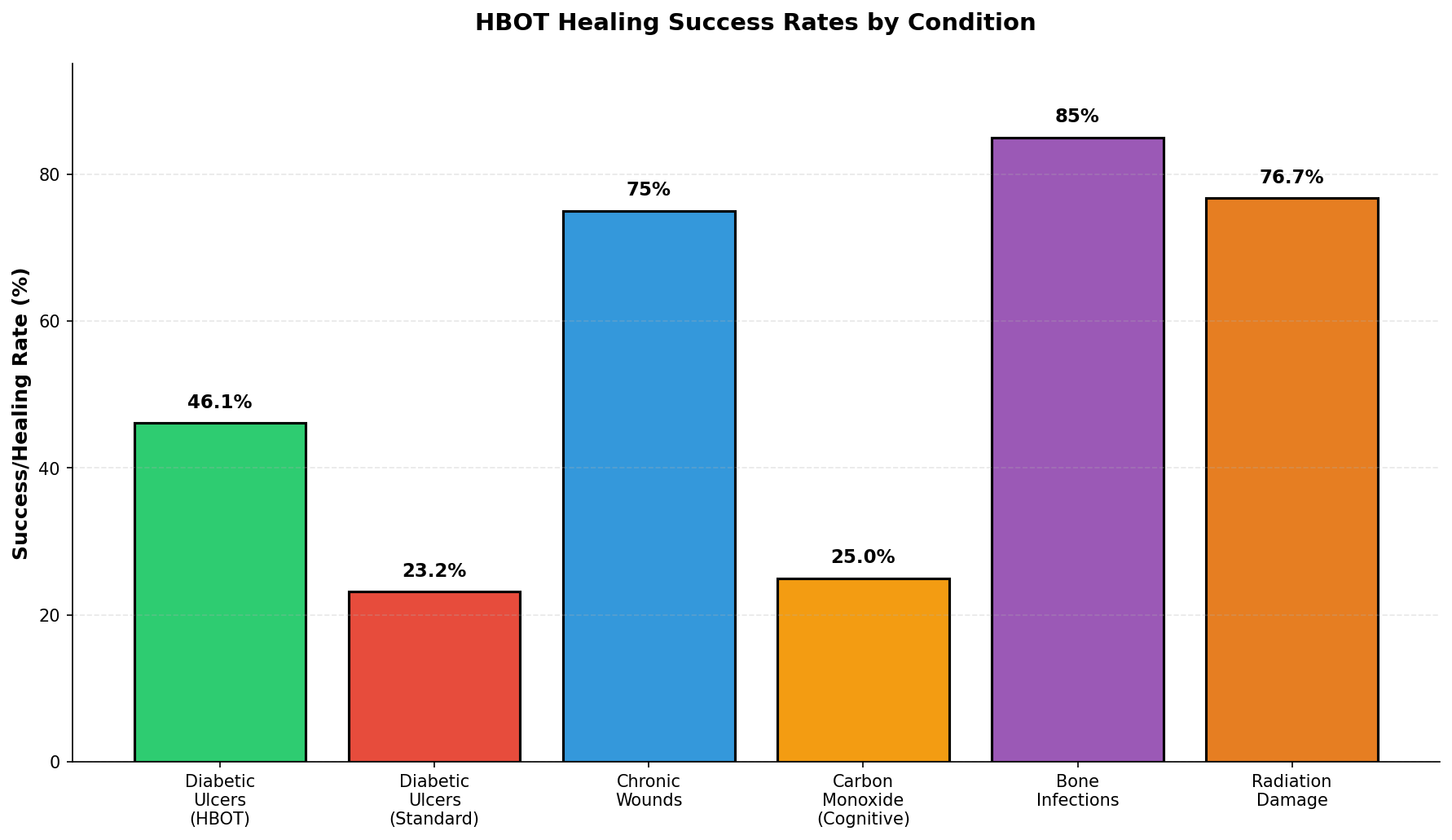 Figure 1: Healing success rates with HBOT compared to standard treatment across major approved conditions. HBOT roughly doubles healing rates for most conditions.1,2,3,4
The headline: HBOT roughly doubles healing and recovery rates for most FDA-approved conditions. Across diabetic foot ulcers, chronic wounds, and bone infections, success rates jump from 23 to 46 per cent with HBOT, or from 25 to 75 per cent for different wound categories.
For conditions where oxygen delivery is the limiting factor (diabetic ulcers, non-healing wounds, bone infections), HBOT provides dramatic benefits. For conditions where other problems predominate (stroke, cancer), evidence remains weak despite decades of research.
HBOT vs. Standard Care: A Head-to-Head Comparison
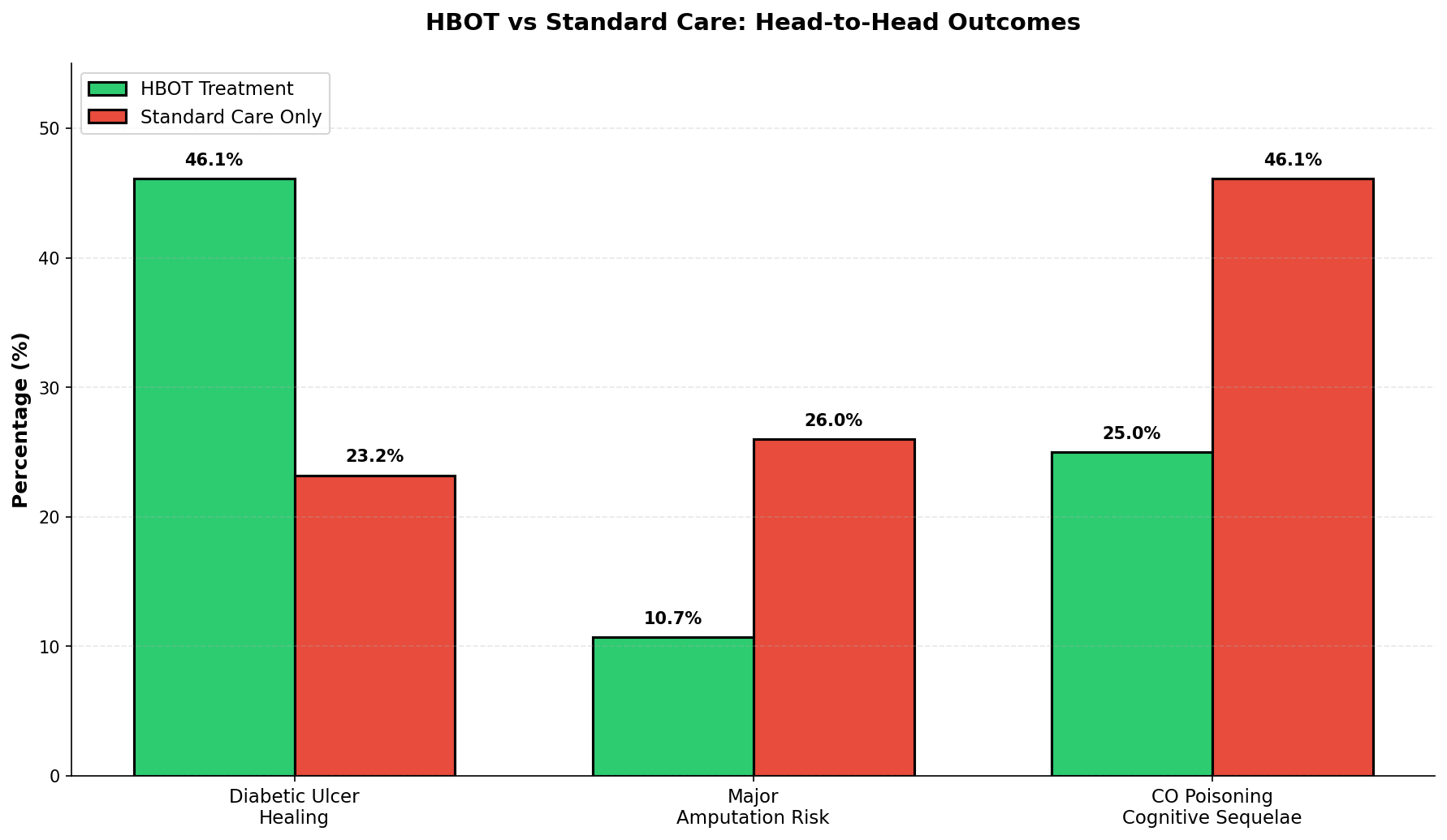
Figure 2: Comparative outcomes showing HBOT's advantage over standard treatment alone for the most common indications. For diabetic ulcers and chronic wounds, HBOT substantially improves complete-healing rates.11
For diabetic foot ulcers specifically:
- Complete healing: 46 per cent with HBOT versus 23 per cent with standard care
- Amputation rate: 11 per cent with HBOT versus 26 per cent with standard care
- Healing acceleration: average 19 days faster with HBOT
For chronic non-healing wounds generally:
- Healing rate: 75 per cent with HBOT across 600,000-plus documented wounds
- Complex wounds: 77.5 per cent healing rate
- Wound area reduction: 35.7 per cent reduction with HBOT versus 2.7 per cent without1
For carbon monoxide poisoning:
- Cognitive sequelae: 25 per cent with HBOT versus 46 per cent with oxygen alone
- Long-term disability: significantly reduced
How HBOT Sessions Actually Work
Understanding what a typical HBOT session involves helps explain why treatment requires multiple sessions over weeks.
What Happens During a Session
You arrive at a hyperbaric centre and undergo a brief medical evaluation. Once cleared, you:
- Remove all metal items, jewellery, and flammable products (all fire hazards in the oxygen-rich chamber)
- Change into provided cotton clothing (only non-synthetic fabrics allowed for safety)
- Enter either a monoplace chamber (a single-person transparent tube where you lie down) or a multiplace chamber (a larger room where multiple patients or attendants can be present)
- The chamber door seals
- Pressure gradually increases (similar to aeroplane cabin pressure changes), taking 5 to 10 minutes. You'll feel ear pressure; trained staff teach you equalisation techniques (yawning, swallowing, the Valsalva manoeuvre)
- Once at target pressure (typically 2.0 to 2.8 atmospheres absolute), you breathe 100 per cent pure oxygen for 60 to 120 minutes
- Depending on the protocol, you might have "air breaks" lasting 5 to 10 minutes, where you breathe regular air, reducing oxygen toxicity risk
- Pressure gradually decreases over 5 to 10 minutes
- You exit the chamber and resume normal activities
Most people describe the experience as relaxing. You can watch television, listen to music, sleep, or read during treatment (depending on chamber type). Immediate side effects are usually none; some experience mild fatigue.
Treatment Schedule
A typical course consists of:
- 20 to 40 sessions for most conditions
- 5 days per week (Monday through Friday), with weekends off
- 90 to 120 minutes per session
- Total duration: 4 to 8 weeks typically
For acute emergencies like carbon monoxide poisoning, treatment might be more intensive (multiple sessions daily). For chronic conditions like diabetic ulcers, the standard 5-day-per-week protocol over 8 to 10 weeks is typical.
What to Expect: Treatment Timeline and Results
Improvement isn't immediate. HBOT works through a progressive process:
Days 1 to 3: Oxygen saturation increases in tissues; you may feel mildly fatigued. Some patients notice their wounds look slightly less swollen.
Days 4 to 7: Growth factors (VEGF, bFGF) begin increasing. New cell activity picks up.
Weeks 2 to 4: New blood vessels visibly begin forming. Wound healing accelerates noticeably. Patients report feeling more energetic as the treatment course progresses.
Weeks 4 to 8: Tissue remodelling accelerates. Wounds show clear healing progress. Collagen deposition strengthens new tissue.
After treatment: Benefits continue for weeks to months as new blood vessels mature and tissue remodelling continues. Final results may improve for months after the last session.
Side Effects and Safety: What's Serious vs. What's Temporary
HBOT has one of the best safety profiles of any medical treatment when protocols are followed. But side effects do occur.
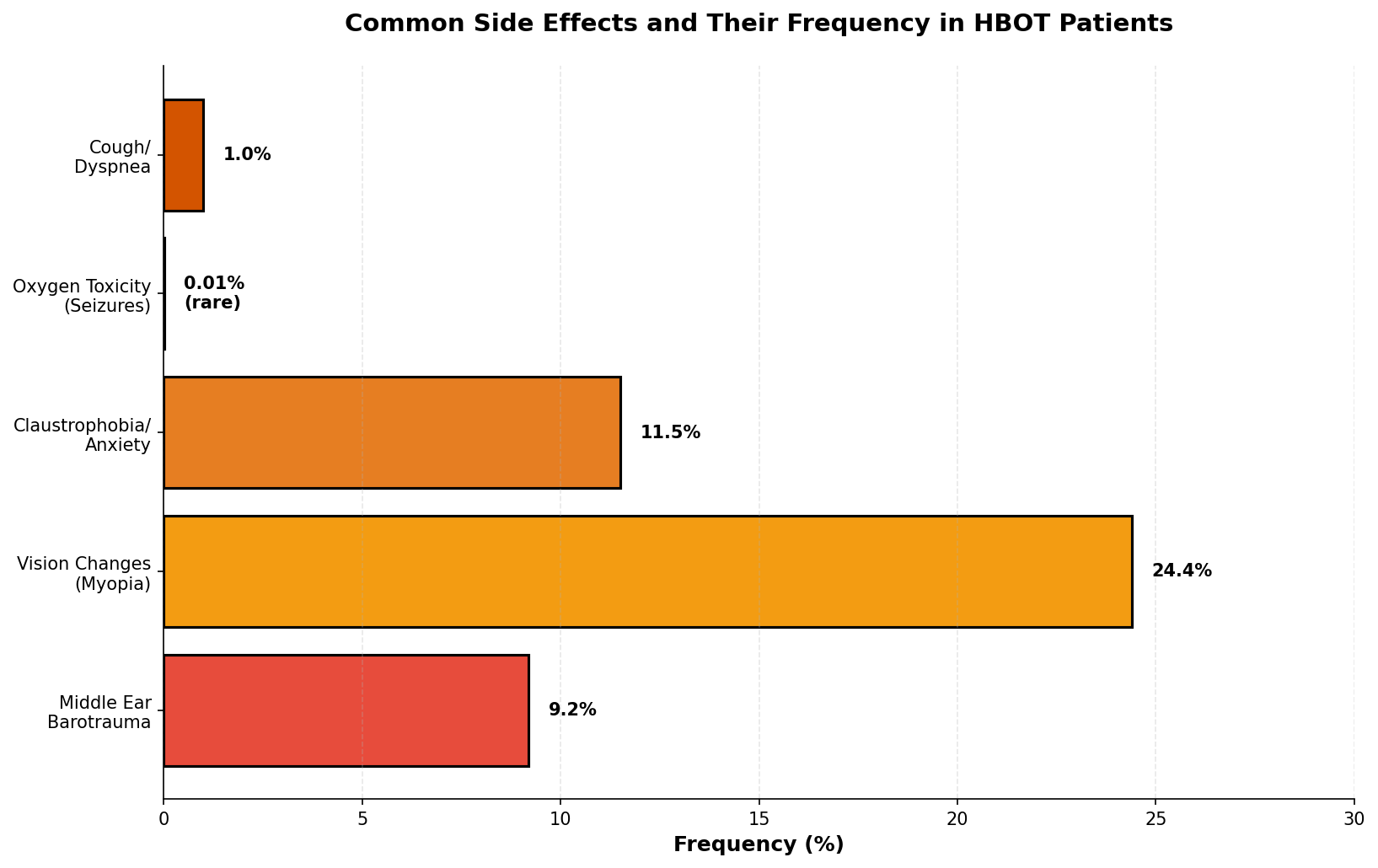 Figure 3: Frequency of side effects from HBOT. Most are mild and temporary, with middle ear barotrauma being the most common.9
Common, Usually Mild Side Effects
Middle Ear Discomfort (Most Common)
Up to 20 per cent of patients experience some ear pressure or pain. This is a pressure-related sensation similar to aeroplane takeoff. Most resolve with equalisation techniques (yawning, swallowing, gentle nose-blowing against a closed nose). Prevention is key: proper training before treatment significantly reduces this problem.9
Temporary Vision Changes
About 24 per cent of patients develop temporary myopia (nearsightedness). Your lens swells slightly from oxygen exposure, shifting your focus. This usually develops after 20 or so sessions and completely reverses 6 to 8 weeks after treatment ends. It's annoying but reversible; many patients simply wear temporary, stronger glasses during treatment.9
Fatigue
Some patients feel mildly tired after sessions. This usually resolves within a few hours. Staying hydrated and getting adequate sleep helps.
Anxiety or Claustrophobia
About 25 per cent of adverse effects involve confinement anxiety, particularly in monoplace chambers (the small tube-like ones). Multiplace chambers (the larger room-like ones) help significantly. Gradual desensitisation and reassurance usually manage this.9
Serious Complications (Rare)
Oxygen Toxicity Seizures
At high pressures and prolonged durations, oxygen becomes toxic to the nervous system, potentially causing seizures. Modern treatment protocols are specifically designed to prevent this. Incidence is only 0.01 per cent per session (1 seizure per 10,000 treatments).9 Seizures are fully reversible; oxygen removal stops them immediately with no permanent brain damage.
Risk factors include uncontrolled diabetes (low blood sugar), fever, certain medications, and brain tumours. Good patient selection eliminates most cases.
Permanent Inner Ear Damage
Extremely rare. Some barotrauma cases cause permanent hearing loss or balance problems if pressure changes aren't managed carefully. This is largely preventable with proper technique and patient training.
Lung Complications
Pulmonary oxygen toxicity is very rare with standard protocols using air breaks. Lung collapse (pneumothorax) is exceptionally rare but requires that the one absolute contraindication be screened: untreated pneumothorax (collapsed lung).
The Bottom Line on Safety
Overall adverse event rates are approximately 30 per cent, but most are mild and temporary (ear pressure, vision changes, fatigue).9 Only about 0.01 to 0.02 per cent of treatments result in serious complications. When compared to the risks of amputation, uncontrolled infection, or permanent brain damage from CO poisoning, HBOT's safety profile is excellent.
Off-Label Uses: What HBOT Is Being Researched For (But Isn't Proven)
Beyond the 14 FDA-approved conditions, some centres offer HBOT for other conditions. It's crucial to understand that evidence for these uses ranges from weak to non-existent.
Conditions Being Investigated But NOT FDA-Approved
Long COVID: Emerging evidence shows improvement in cognitive function, fatigue, psychiatric symptoms, and pain. A registry of 232 patients showed 65 per cent reported clinically relevant quality-of-life improvements.10 However, a 2025 randomised trial showed more modest effects, suggesting placebo effects may play a significant role.
Traumatic Brain Injury: Despite promising theory, no randomised controlled trials show HBOT works better than sham treatment for mild traumatic brain injury. The US Department of Veterans Affairs and Department of Defence recommend against HBOT for mild TBI based on lack of evidence.10
Stroke: Despite 50-plus years of research, clinical trials have been unconvincing. Some evidence suggests HBOT may activate neuroplasticity in chronic stroke, but insufficient evidence exists for routine use.
Autism: One positive randomised trial exists, but results haven't been replicated. Meta-analyses show conflicting results. The FDA has published warnings against misleading claims about HBOT for autism. Current evidence is insufficient to recommend it.10
PTSD: Emerging evidence from a sham-controlled trial in veterans shows potential improvements in brain connectivity and PTSD symptoms. This remains investigational.
The Critical Point
Insurance does not cover off-label HBOT. Treatments for non-FDA-approved conditions require full out-of-pocket payment, typically ranging from $150 to $650 per session. Before pursuing HBOT for any condition not on the FDA list, ask your doctor for evidence of effectiveness and understand you'll pay the full cost yourself.
Insurance Coverage and Cost
What Insurance Covers
Medicare, TRICARE (military insurance), and most private insurance plans cover HBOT for all 14 FDA-approved conditions when:
- Ordered by a physician trained in hyperbaric medicine
- The condition meets specific clinical criteria (e.g., diabetic ulcer with Wagner Grade 3-4 classification)
- Treatment occurs at an accredited facility (UHMS-accredited preferred)
- Prior authorisation is obtained
Medicare typically covers 80 per cent after you meet your deductible. The remaining 20 per cent is your responsibility.
Costs Without Insurance
Per-session costs range from $150 to $650, depending on location and facility type. A typical 40-session course costs $6,000 to $26,000. Some independent clinics charge less; hospital-based programmes charge more; "wellness" centres often charge the most.
14 FDA-Approved Conditions: Full List
For reference, here are all 14 FDA-approved indications:
- Air or gas embolism (bubbles in blood vessels)
- Carbon monoxide poisoning
- Decompression sickness (the bends)
- Diabetic foot ulcers (non-healing wounds in diabetics)
- Necrotising soft tissue infections (flesh-eating disease)
- Chronic refractory osteomyelitis (bone infections)
- Severe thermal burns
- Gas gangrene (Clostridial infection)
- Sudden sensorineural hearing loss
- Central retinal artery occlusion (sudden vision loss)
- Compromised skin grafts and flaps
- Radiation-induced tissue injury (osteoradionecrosis and other radiation damage)
- Severe anaemia (when transfusion unavailable)
- Acute traumatic ischemia (crush injuries)
Why HBOT Works: The Mechanism in Plain Language
Understanding why HBOT works for some conditions but not others clarifies realistic expectations.
The Central Problem: Tissue Hypoxia
All conditions responding well to HBOT share one fundamental problem: tissue hypoxia (oxygen starvation). Whether from diabetes damaging blood vessels, infection destroying circulation, radiation scarring blood vessels, or gas bubbles blocking flow, tissues don't receive enough oxygen.
Oxygen is essential for healing. Collagen synthesis (the structural protein that rebuilds tissue) literally requires oxygen molecules. White blood cells kill bacteria most effectively in high-oxygen environments. Fibroblasts (cells that rebuild tissue) cannot function in low-oxygen conditions.
How HBOT Solves This
HBOT addresses tissue hypoxia through three mechanisms:
- Direct oxygen delivery: Dissolved oxygen in blood plasma reaches even poorly perfused areas where normal haemoglobin-bound oxygen cannot go
- Increased pressure triggers growth factors: Hyperbaric conditions activate HIF-1 and stimulate VEGF production, triggering new blood vessel formation. These new vessels permanently restore circulation after treatment ends
- Enhanced cellular function: Higher oxygen enables collagen synthesis, white blood cell immune functions, and fibroblast activity that are impossible in hypoxic conditions
Why HBOT Doesn't Work for Everything
Conditions respond poorly to HBOT when oxygen delivery isn't the limiting factor. Stroke tissue damage occurs too rapidly; clot removal is the priority, not oxygen delivery. Cancer growth isn't fundamentally oxygen-limited. Autism involves neurodevelopmental factors unrelated to oxygen. This is why decades of research on these conditions show unconvincing results.
HBOT is not a cure-all. It works specifically when tissue hypoxia is the problem and when improved oxygen delivery can solve it.
FDA Conditions by Category: Visual Overview
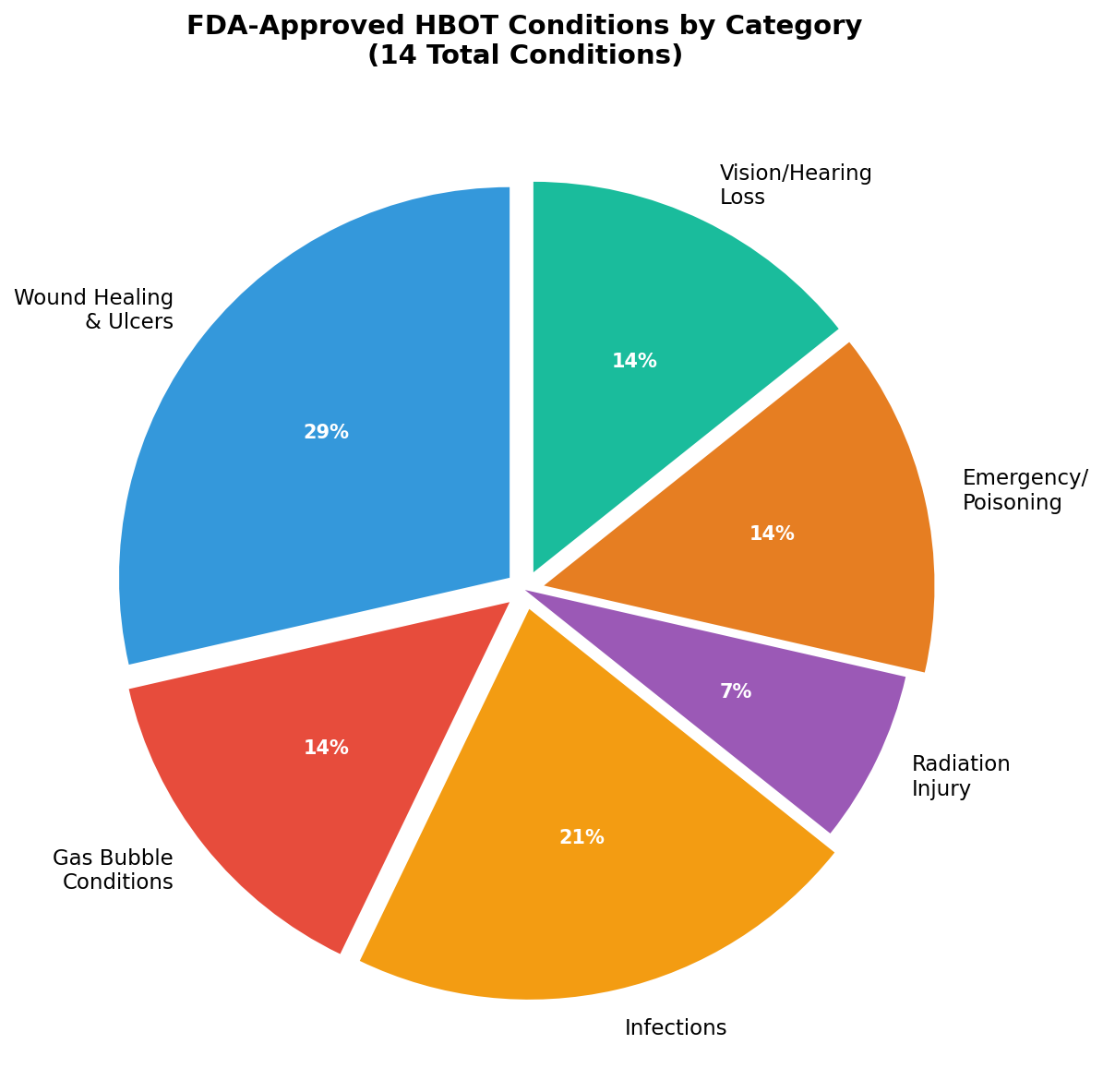 Figure 4: The 14 FDA-approved conditions organised by category, showing the breadth of HBOT applications across different medical specialities.1
Treatment Parameters and Oxygen Delivery: The Numbers
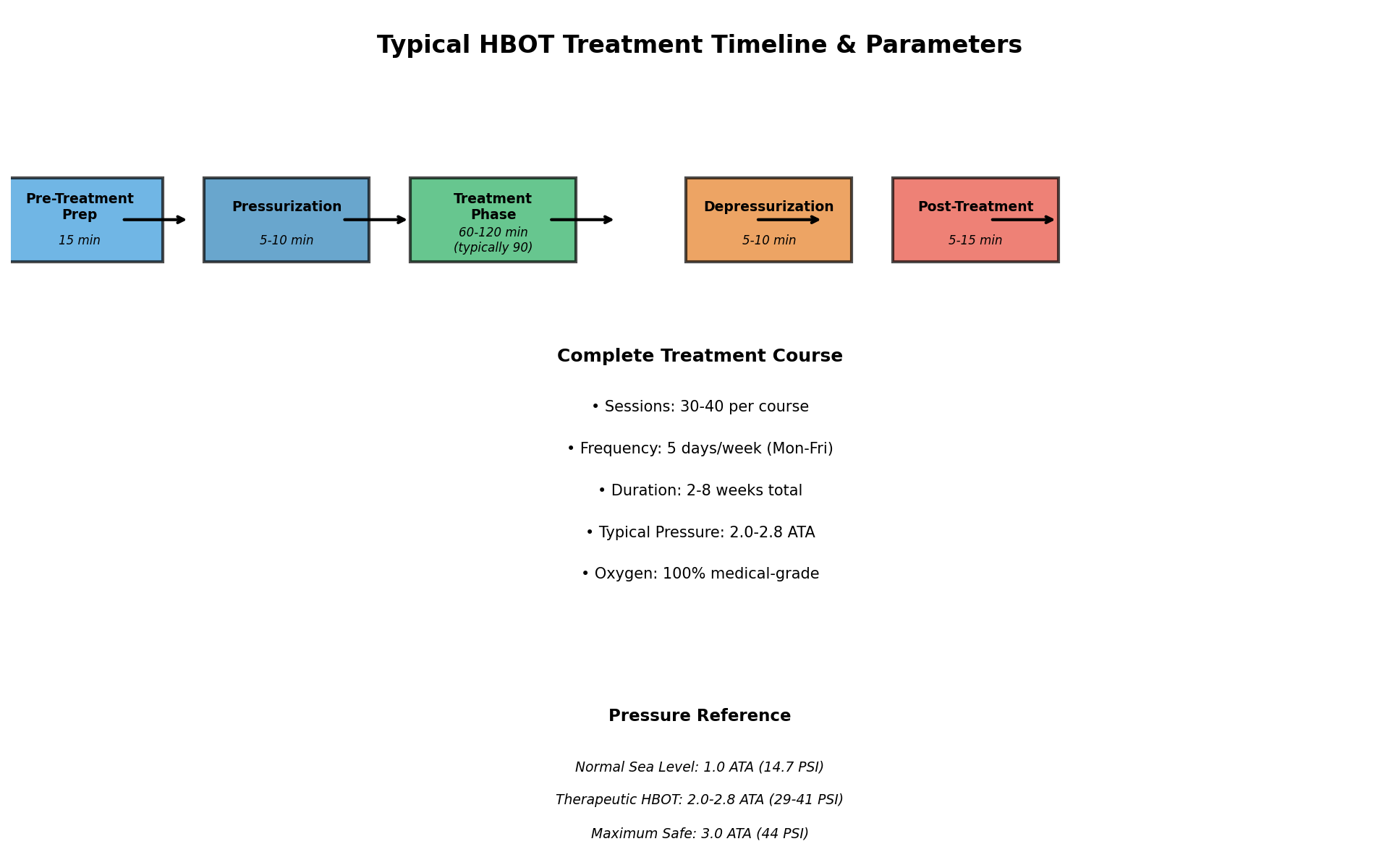 Figure 5: Standard treatment parameters for HBOT across conditions, including typical session duration, pressure, and frequency.1
Understanding the numbers helps explain why HBOT requires multiple sessions and specific protocols:
- Alveolar oxygen pressure at sea level: 100 mmHg
- At 2.0 ATA (typical therapeutic pressure): 1,053 mmHg (10 times higher)
- At 3.0 ATA (higher therapeutic pressure): 2,280 mmHg (23 times higher)
- Dissolved oxygen in plasma at sea level: 0.3 mL per 100 mL blood
- At 2.4 ATA: 6 mL per 100 mL blood (20-fold increase)
- Oxygen penetration distance: HBOT extends diffusion distance from 100-200 micrometres to 400 micrometres, allowing oxygen to reach deeper tissue layers
These dramatic increases in oxygen delivery enable the cellular and tissue changes that drive healing.
Efficacy by Treatment Phase: When Improvements Appear
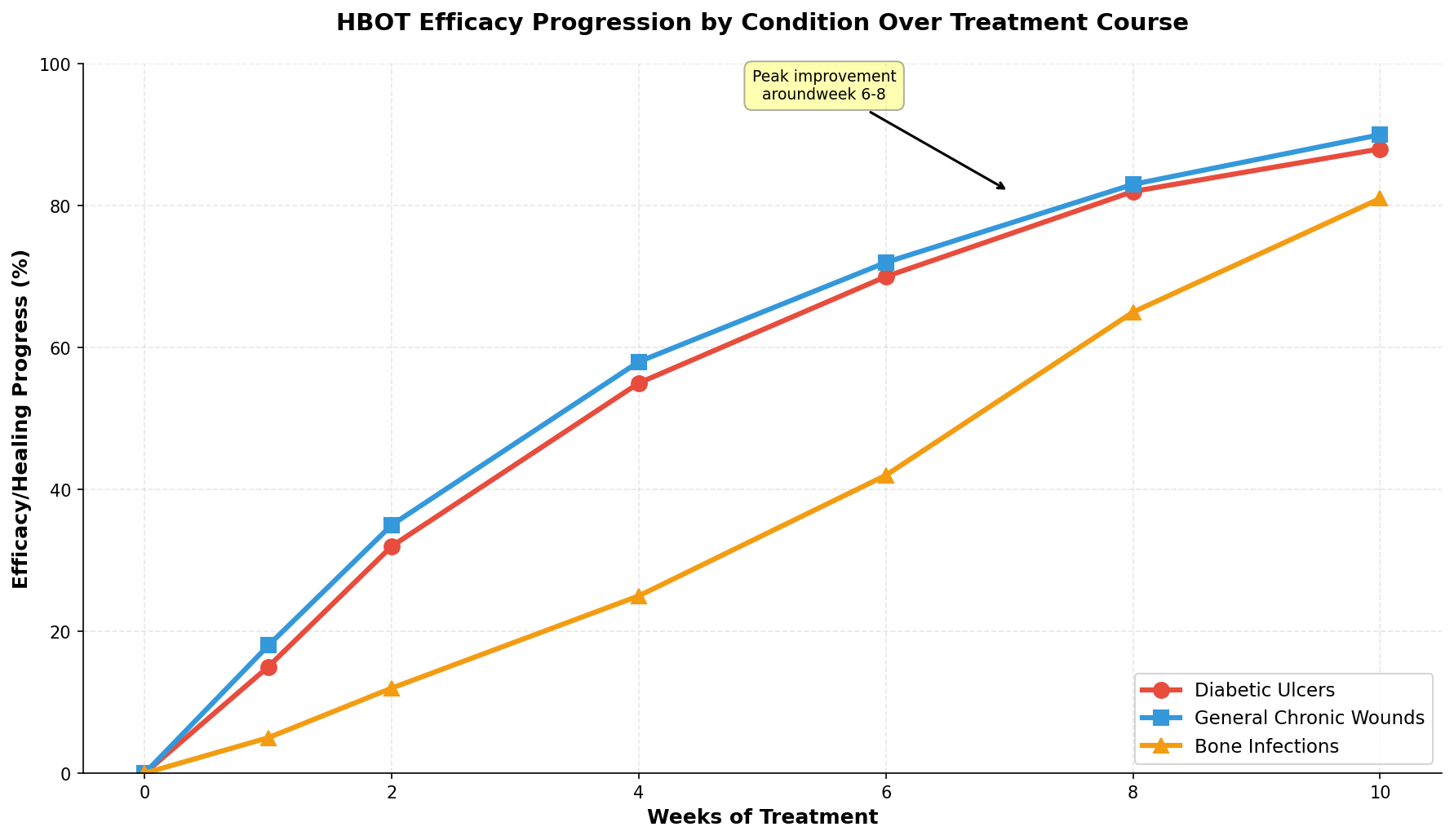 Figure 6: Timeline of clinical improvements across a typical 40-session HBOT course. Wound healing acceleration appears by week 2-3, with maximum benefit typically by week 6-8.1
Oxygen and Pressure Comparisons: What's Different
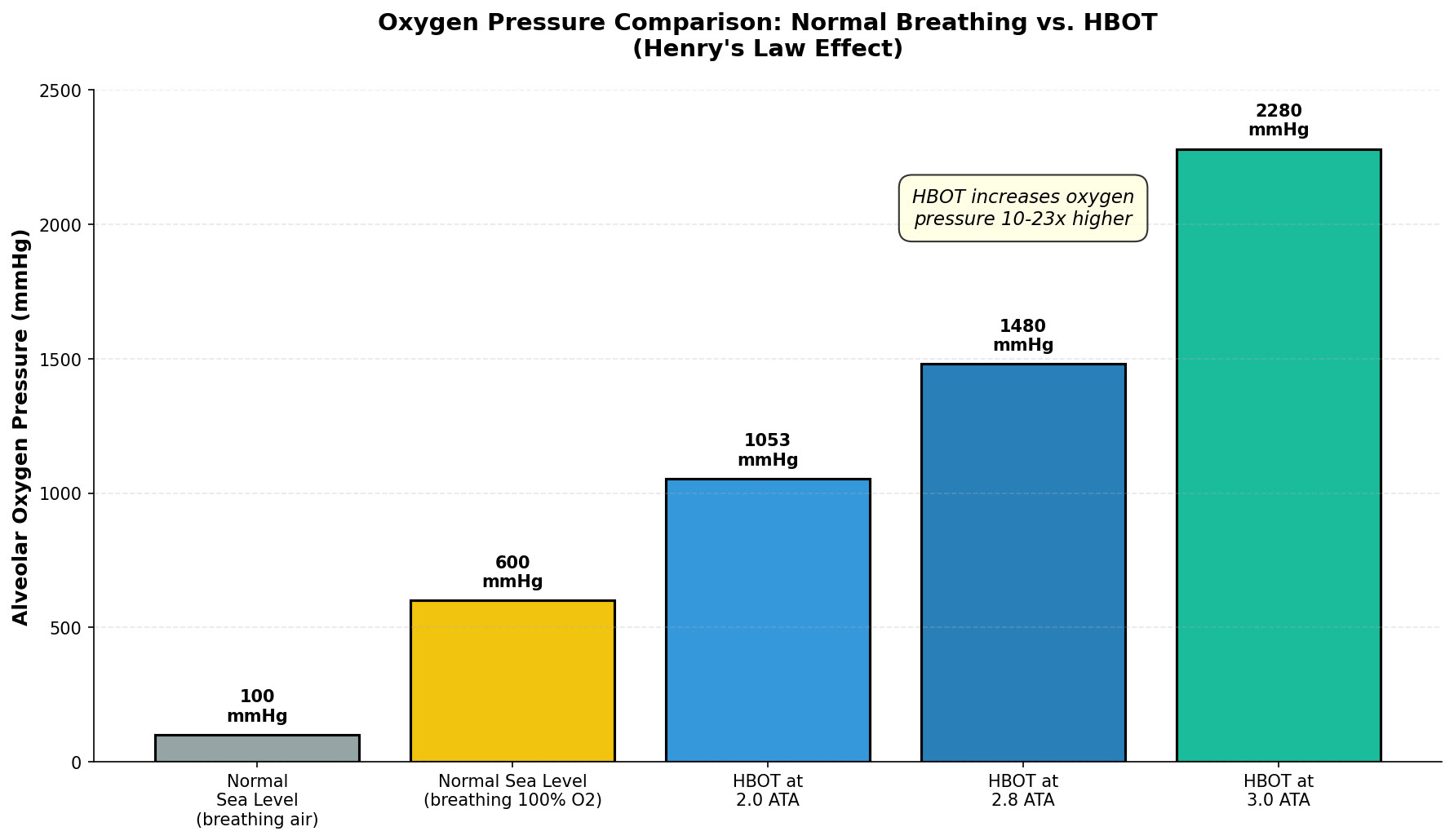 Figure 7: Comparison of oxygen pressures used for different conditions, showing how pressure is tailored to each indication. Carbon monoxide poisoning uses higher pressures; diabetic ulcers use standard therapeutic ranges.1
Key Takeaways: When Should You Consider HBOT?
HBOT Makes Sense When:
- You have one of the 14 FDA-approved conditions
- Standard treatment has failed or is insufficient
- Your doctor specifically recommends it
- You can complete the full treatment course (40 sessions is the typical commitment)
- Oxygen delivery is the limiting factor (as it is in diabetic ulcers, bone infections, and radiation damage)
HBOT Is Unlikely to Help When:
- Your condition isn't on the FDA-approved list (unless you're willing to pay out of pocket for unproven treatment)
- The problem isn't related to oxygen delivery (as in most strokes, cancer, or neurodevelopmental conditions)
- Tissue is already dead (HBOT cannot resurrect dead tissue)
- You cannot commit to completing the full treatment course (benefits require a cumulative effect)
- Your condition has already caused irreversible damage (HBOT prevents further damage more effectively than it reverses established damage)
The Bottom Line
HBOT is not a miracle cure. It's not suitable for everything. But for the specific conditions it treats, it offers genuine life-changing benefits. Diabetic patients who would otherwise lose limbs to amputation keep their feet. Carbon monoxide poisoning survivors avoid permanent brain damage. Bone infections finally resolve. Chronic wounds that have resisted treatment for years heal.
If you have one of these conditions, HBOT is absolutely worth discussing with your doctor. If you have a condition not on the FDA list, ask your doctor for specific evidence of effectiveness before investing time and money in treatment.
Further Reading
Wound Healing and Diabetic Complications
- Journal of Vascular Surgery: Systematic Review of HBOT for Diabetic Foot Ulcers
- Nature Scientific Reports: Efficacy Meta-Analysis for Diabetic Wounds
- Cleveland Clinic: HBOT for Wound Healing
- Johns Hopkins Medicine: Comprehensive HBOT Overview
Acute Life-Threatening Conditions
- New England Journal of Medicine: HBOT for Carbon Monoxide Poisoning
- PubMed: HBOT for Decompression Sickness
- World Journal of Emergency Surgery: HBOT for Necrotising Infections
- Critical Care: HBOT and Arterial Gas Embolism
Bone Infections and Radiation Injury
- SAGE Journals: Chronic Foot Osteomyelitis Outcomes (2024)
- Cochrane Library: HBOT for Late Radiation Tissue Injury
- CA: Cancer Journal for Clinicians: Chronic Radiotherapy-Related Adverse Effects
Safety and Complications
- Frontiers in Medicine: Adverse Effects Systematic Review
- NCBI StatPearls: Hyperbaric Complications
- Johns Hopkins Medicine: Complications of HBOT
- Undersea & Hyperbaric Medical Society: Safety Guidelines
Emerging Research
- Scientific Reports: Long COVID and HBOT
- Interactive Journal of Medical Research: Emerging Indications Registry (2024)
- Frontiers in Neurology: HBOT as Neuromodulatory Therapy
Insurance and Cost Information
- Medicare Coverage Database: HBOT
- Harvard Health: Evidence-Based Uses and Unproven Claims
- FDA: Consumer Updates on HBOT
How HBOT Works
- PMC: HBOT Mechanisms and Efficacy
- PMC: General Overview on HBOT
- Medscape: HBOT Physics and Physiology
- Mayo Clinic: HBOT Overview and Process
References/Helpful Resources
- .Damineni U, Divity S, Gundapaneni SRC, Burri RG, Vadde T. Clinical Outcomes of Hyperbaric Oxygen Therapy for Diabetic Foot Ulcers: A Systematic Review. Cureus. 17(2):e78655. doi:10.7759/cureus.78655 PubMed PMID: 40062051; PubMed Central PMCID: PMC11890413.
- Menekse S. Outcome of Chronic Foot Osteomyelitis Treated With Hyperbaric Oxygen: An Observational Study. Int J Low Extrem Wounds. 2024 Mar;23(1):80–5. doi:10.1177/15347346231217641 PubMed PMID: 38073097.
- Huang C, Zhong Y, Yue C, He B, Li Y, Li J. The effect of hyperbaric oxygen therapy on the clinical outcomes of necrotising soft tissue infections: a systematic review and meta-analysis. World J Emerg Surg. 2023 Mar 25;18:23. doi:10.1186/s13017-023-00490-y PubMed PMID: 36966323; PubMed Central PMCID: PMC10040118
- Liao SC, Shao SC, Yang KJ, Yang CC. Real-world effectiveness of hyperbaric oxygen therapy for delayed neuropsychiatric sequelae after carbon monoxide poisoning. Sci Rep. 2021 Sep 28;11(1):19212. doi:10.1038/s41598-021-98539-y
- Moon RE, Mitchell SJ. Hyperbaric oxygen for decompression sickness. Undersea Hyperb Med. 2021;48(2):195–203. PubMed PMID: 33975411.
- Lin ZC, Bennett MH, Hawkins GC, Azzopardi CP, Feldmeier J, Smee R, et al. Hyperbaric oxygen therapy for late radiation tissue injury. Cochrane Database Syst Rev. 2023 Aug 15;2023(8): CD005005. doi:10.1002/14651858.CD005005.pub5 PubMed PMID: 37585677; PubMed Central PMCID: PMC10426260
- Fakkert RA, Karlas N, Schober P, Weber NC, Preckel B, van Hulst RA, et al. Early hyperbaric oxygen therapy is associated with a favourable outcome in patients with iatrogenic cerebral arterial gas embolism: systematic review and individual patient data meta-analysis of observational studies. Crit Care. 2023 Jul 12;27:282. doi:10.1186/s13054-023-04563-x PubMed PMID: 37434172; PubMed Central PMCID: PMC10337083
- Zhang Y, Zhou Y, Jia Y, Wang T, Meng D. Adverse effects of hyperbaric oxygen therapy: a systematic review and meta-analysis. Front Med. 2023 May 18;10:1160774. doi:10.3389/fmed. 2023.1160774
- Tanaka HL, Rees JR, Zhang Z, Ptak JA, Hannigan PM, Silverman EM, et al. Emerging Indications for Hyperbaric Oxygen Treatment: Registry Cohort Study. Interactive Journal of Medical Research. 2024 Aug 20;13(1):e53821. doi:10.2196/53821
- Kranke P, Bennett MH, Martyn‐St James M, Schnabel A, Debus SE, Weibel S. Hyperbaric oxygen therapy for chronic wounds. Cochrane Database Syst Rev. 2015 Jun 24;2015(6): CD004123. doi:10.1002/14651858.CD004123.pub4 PubMed PMID: 26106870; PubMed Central PMCID: PMC7055586
