

Journaling: What it is It Matters)
Journaling sounds simple: you write down your thoughts and feelings in a notebook. But here's what makes it genuinely powerful: journaling is a scientifically validated mental health tool that helps your brain process emotions, reduce rumination (repetitive negative thinking), and build resilience. It's not self-help advice. It's supported by rigorous clinical research, including randomised controlled trials and meta-analyses from trusted medical institutions.
If you're struggling with anxiety, depression, sleep problems, or stress, journaling offers something rare: a free, accessible intervention that you can do anywhere, anytime, with nothing but pen and paper.
The evidence is compelling. Nearly half of people who try journaling (45 to 51 per cent) experience clinically significant improvements in depression and anxiety symptoms. That's an effectiveness rate that rivals some therapy approaches and medication trials. For something free and accessible, this is remarkable.
The Science Behind Why Journaling Works
Before you start, understanding how journaling actually helps your mental health can make you better at it. The process isn't magic; it works through six specific psychological mechanisms your brain uses to heal and adapt.
Emotional Processing: Getting Feelings Out of Your Head
When you write about your emotions, something crucial happens in your brain. Writing forces you to externalise emotions and organise them into a coherent narrative, which helps your brain categorise and process them more effectively. Rather than having feelings loop chaotically in your mind, you pull them out and examine them on paper.
Research shows that writers who focused on both emotions and the deeper meaning behind them developed greater awareness of positive benefits from stressful events. In other words, describing how you feel is helpful; understanding why you feel that way is even more powerful.
Interrupting Rumination: Breaking the Negative Thought Loop
Rumination is when you get stuck replaying the same worried or depressive thoughts over and over; the anxious loop that keeps you awake at night or trapped in despair during the day. Rumination is one of the strongest predictors of depression relapse, which is why breaking the cycle matters so much.
Journaling interrupts this pattern. Expressive writing showed significant reductions in brooding rumination, a key form of depressive thinking, and treatment benefits at 6-month follow-up were mediated by changes in rumination patterns. Writing creates new neural pathways and breaks automatic negative cycles by forcing your brain to slow down and organise thoughts rather than spiralling.
Cognitive Processing: Making Sense of What Happened
Your brain naturally tries to make sense of stressful events. Journaling accelerates this process by forcing you to articulate what happened and why it matters. When you can integrate a stressful event into your life narrative and find meaning in it, you experience less ongoing distress.
This is why merely venting isn't as helpful as reflection. Processing both the emotions and the meaning creates the strongest benefits. Research shows this combination approach works better than focusing on emotions alone.
Nervous System Regulation: Calming Your Stress Response
Writing activates your brain's ability to regulate the stress response system, including cortisol (your body's main stress hormone). Emotional approach coping through writing improved heart rate variability, indicating a calmer nervous system. This is a physiological change, not just psychological; your body is literally shifting from "fight or flight" mode toward calmer functioning.
Identifying Patterns and Triggers
As journaling reveals your innermost thoughts and patterns, it exposes emotional triggers and automatic negative thinking, making these thoughts visible so you can challenge them. Journaling reveals stress triggers, allowing you to identify and replace negative thoughts with more positive behaviours. You can't change what you don't see. Making patterns visible is the first step.
Building Connection and Reducing Shame
Acknowledging your struggles through journaling (and recognising that others have similar experiences) reduces shame and increases resilience. Isolation and shame worsen mental health conditions, but journaling increases feelings of connectedness. Even writing privately for yourself helps with this; you're acknowledging that your struggles are real and worth your attention.
What the Research Shows: Effectiveness by Condition
Different mental health conditions respond to journaling with varying effectiveness. Here's what the evidence shows:
Depression and Low Mood
People with major depressive disorder showed significant decreases in depression scores immediately after expressive writing, with benefits persisting at 4-week follow-up. The improvements aren't temporary; they last weeks after you stop the journaling sessions.
Gratitude journaling is particularly effective for depression. Psychotherapy clients using gratitude writing reported significantly better mental health outcomes compared to expressive writing and control groups at both 4 weeks and 12 weeks.
Anxiety
All first-year college students demonstrated significant decreases in anxiety over time when using journaling interventions. This "all students" finding is important; it suggests journaling helps broadly, not just for certain personality types.
The impact on real-world functioning is striking. Students who practised expressive writing about stressful experiences showed 19 percentile points higher exam performance than control groups. Writing about anxiety doesn't just make you feel calmer; it actually improves your performance in challenging situations.
Mindfulness-based journaling and structured templates are particularly effective for anxiety. Mindfulness-based interventions show efficacy in reducing anxiety and depression symptom severity across a broad range of people, and consistently outperform non-evidence-based treatments.
Trauma and PTSD
This is where journaling shows some of its most dramatic effects. Women in trauma-writing groups had significantly reduced PTSD symptoms compared with controls, and enhanced writing interventions showed standardised mean differences of -0.81 compared to waiting-list control in trauma survivors, which represents a large clinical improvement.
One of the most striking findings involves your stress hormones: expressive writing greatly attenuated stress hormone (cortisol) responses to trauma-related memories. Your body isn't just feeling better; it's physiologically healing.
Sleep and Physical Health
Participants reported significantly less sleep disturbance, better sleep quality and duration, and less daytime dysfunction after starting expressive writing practices. If anxiety keeps you awake, journaling can improve your sleep architecture.
Beyond mental health, research participants showed fewer mental and physical symptoms for at least 4 months after starting expressive writing practices. Journaling has dual benefits.
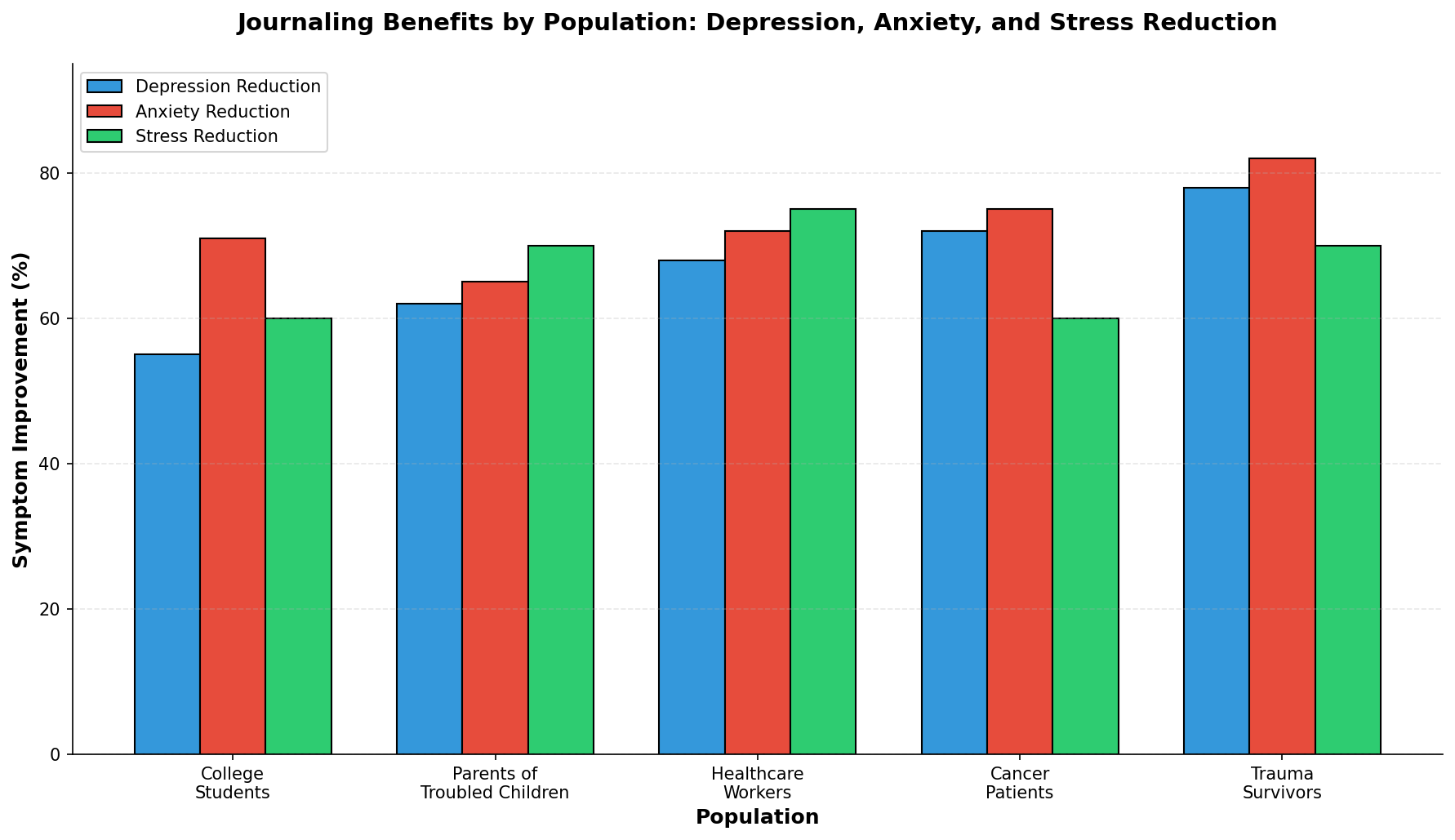 Figure 1: How different mental health conditions respond to journaling. Trauma survivors see the highest improvement rates, though benefits are consistent across anxiety, depression, and stress.
Timeline: When You'll Notice Improvements
One of the most encouraging findings from research is that benefits appear quickly. You won't need to wait months to know if journaling is working.
- Weeks 1-2: Initial Effects Possible immediate mood lift begins. Your brain starts organising thoughts more clearly. You're also building the habit
- Weeks 2-4: Noticeable Changes Stress and anxiety noticeably decrease, sleep quality improves, and you start recognising patterns in your thoughts. After a month, most people feel meaningfully better. Not perfect, but noticeably calmer and more in control
- Weeks 4-8: Significant Improvement Significant reduction in depression and anxiety symptoms, clearer thinking and decision-making, and increased self-awareness about emotional patterns. By 6-8 weeks, you've likely experienced substantial improvement
- Week 8+: Sustained Benefits Sustained improvements in mental health, new perspective on challenges, and built emotional resilience. Long-term journaling creates a protective effect. You handle stress better and bounce back faster from setbacks
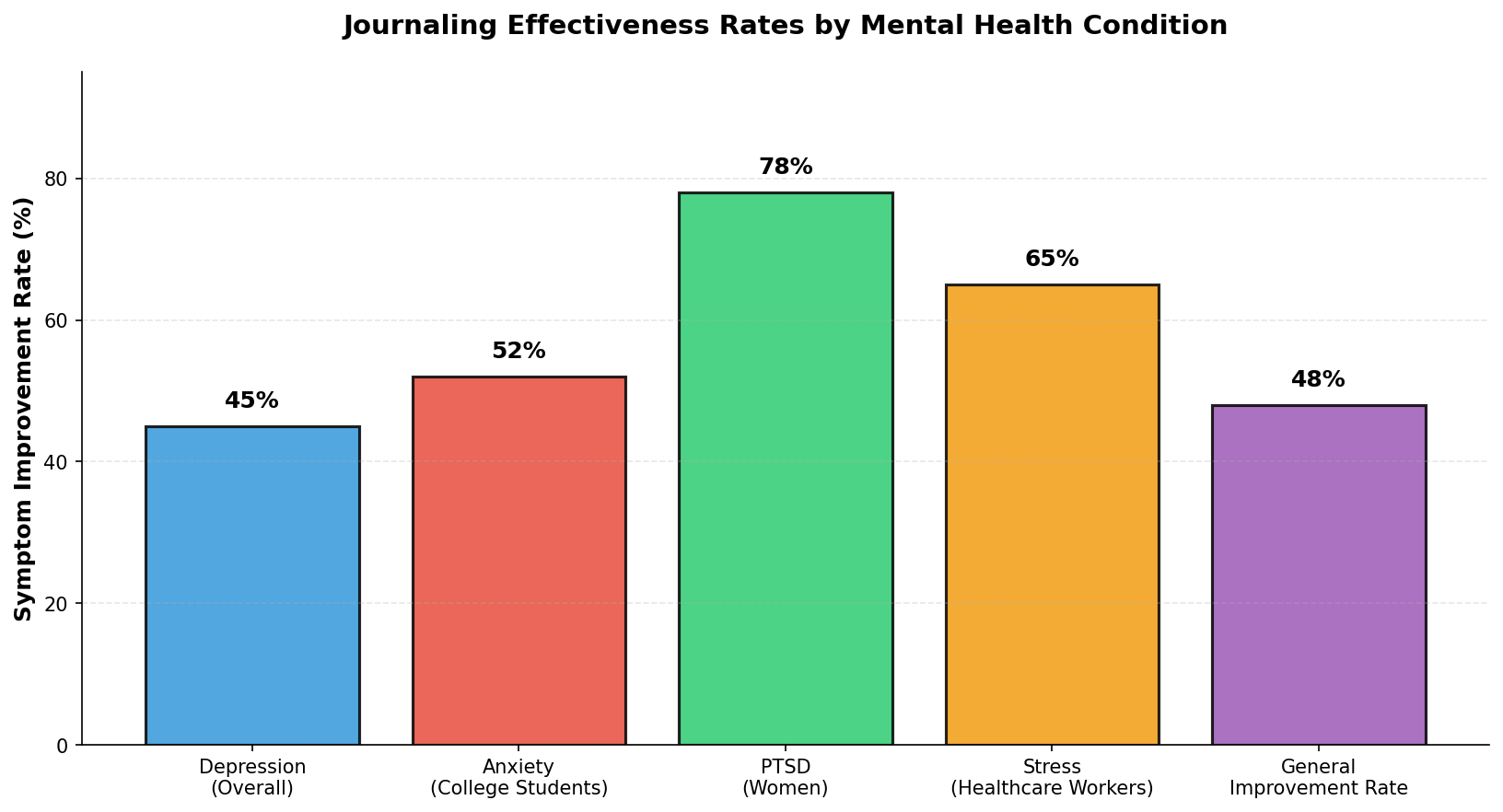 Figure 2: When to expect mental health improvements from journaling. Most people notice changes within the first month and substantial benefits by 6-8 weeks. [2]
Seven Journaling Techniques: Which One Is Right for You?
Research supports multiple journaling approaches. Different techniques work better for different people and different mental health challenges. Here's what the evidence shows about each method.
1. Gratitude Journaling: The Accessible Starting Point
How it works: You write down things you're thankful for, no matter how big or small. Unlike listing positive events, the focus is specifically on appreciation and things that went well.
Practical example: "Today I'm grateful for the warm coffee my partner made, the 15-minute walk in sunshine, and that my presentation went well."
What the research shows:
- Healthcare workers using gratitude journals showed significant reductions in stress levels, anxiety, somatic symptoms (physical stress symptoms), and depression over six weeks
- Advanced cancer patients showed significant improvements in anxiety and depression scores after just 7 days of mindful gratitude journaling
- Participants experience greater feelings of gratitude, better overall mental health, and fewer symptoms of anxiety and depression
Why it works: Gratitude shifts your brain's focus from what's wrong to what's working. Research shows it counteracts the brain's natural negativity bias that developed for survival reasons.
Best for: General wellness, stress reduction, building resilience, low mood.
Recommended practice:
- Frequency: At least 5 times per week or daily
- Duration: 5-10 minutes per session
- Timeline: Minimum 4-6 weeks to see significant shift
2. Expressive/Emotional Writing: Processing What Troubles You
How it works: You honestly write about your deepest thoughts and feelings regarding emotional events, trauma, or stress. You write freely about what troubles you, exploring your emotions without filtering.
Practical example: Writing about a conflict with a friend, including all the hurt, anger, confusion, and sadness you're experiencing.
What the research shows:
- Participants showed significantly greater reductions in anxiety and depressive symptoms compared to control groups
- Self-esteem levels were improved 4 weeks after writing sessions
- Women in trauma-writing groups had significantly reduced PTSD symptoms, depression, and illness-related symptoms compared to controls
Important caveat: Research shows that focusing only on emotions without cognitive processing (reflecting on what the experience means) may temporarily feel worse before improving. The best results come from expressing emotions AND understanding their meaning.
Recommended practice:
- Frequency: 3-4 times per week initially
- Duration: 15-20 minutes per session
- Timeline: Minimum 4 weeks; many studies used 6-12 weeks
- Best approach: Write about feelings, then reflect on what the experience means
3. Mindfulness-Based Journaling: Present-Moment Awareness
How it works: You notice your current thoughts, feelings, and bodily sensations without judgement, then record them. The focus is on observing what's happening right now rather than analysing or changing it.
Practical example: "Right now, I notice my shoulders are tense. My mind keeps jumping to the afternoon meeting. I feel a slight anxiety in my chest. I'm observing these feelings without trying to fix them."
What the research shows:
- Mindfulness-based interventions show efficacy in reducing anxiety and depression symptom severity across a broad range of people
- Consistently outperform non-evidence-based treatments and perform comparably to cognitive-behavioural therapy
- Positive affect journaling showed reduced mental distress and anxiety after 1 month, with less depressive symptoms and greater perceived personal resilience
Why it works: Excessive focus on the past or future is related to depression and anxiety. Mindfulness brings you back to what's actually happening now. Regular practice retrains your brain to notice thoughts and feelings without getting caught up in them.
Recommended practice:
- Frequency: Daily or at least 5 times per week
- Duration: 10-15 minutes
- Timeline: 6-12 weeks to see significant benefits
4. Structured Templates and Worksheets: Guided Thinking
How it works: Structured templates guide your journaling with specific prompts and sections. These might include thought records (identifying thoughts, feelings, and evidence), behavioural activation logs, or daily mood tracking.
Practical template example:
- Situation: What happened?
- Automatic Thought: What went through your mind?
- Emotion: What did you feel? Rate 0-10
- Evidence for/against the thought
- Balanced Thought: A more realistic perspective
- New Emotion: How do you feel now?
What the research shows:
- CBT therapists identify thought records and structured worksheets as most effective supporting materials
- Homework using structured materials increases CBT effectiveness
- Systematic training in structured CBT protocols resulted in significant patient improvements across multiple domains
Why it works: Templates transform journaling from vague emotional dumping into targeted problem-solving. They guide your brain toward healthier thinking patterns and help you identify unhelpful thought patterns.
Recommended practice:
- Frequency: Daily or whenever experiencing distressing emotions
- Duration: 10-20 minutes per entry
- Timeline: Minimum 6-12 weeks of consistent use
5. Stream-of-Consciousness/Free Writing: Unfiltered Expression
How it works: Unstructured, unfiltered writing where you let thoughts flow onto the page without editing, organising, or worrying about grammar. You write continuously for a set time without stopping.
Practical example: "My boss looked annoyed and I immediately thought I did something wrong but maybe she was just tired and why do I always assume it's about me? The thing is, I've worked there for three years and still don't feel confident..."
What the research shows:
- Significant decreases in stress levels, anxiety, somatic symptoms, and depression
- Participants report improved spiritual aspects and sense of healing
- Writers focusing on both cognitions (thoughts) AND emotions developed greater awareness of positive aspects and benefits of stressful events
Why it works: The lack of structure removes self-editing barriers that prevent genuine emotional expression. Continuous writing keeps your analytical mind from interrupting emotional processing.
Important note: Raw emotional venting alone may feel intensifying. Best results come from combining emotional expression with some reflection on its meaning.
Recommended practice:
- Frequency: 3-5 times per week
- Duration: 10-20 minutes of continuous writing
- Timeline: Minimum 6 weeks
6. Reflective Journaling: Learning and Growth
How it works: You look back on experiences, decisions, or events and analyse what happened, why it happened, what you learned, and how it might change your future actions. The focus is on meaning-making and growth.
Practical example: "I handled the conflict with my colleague poorly today. I got defensive instead of listening. I think it's because I felt criticised. Looking back, she was actually trying to help. Next time, I'll try to pause before responding. This taught me that my defensiveness often gets in the way of relationships."
What the research shows:
- Critical reflective journaling provided students with opportunities for self-reflection and self-emancipation, leading to increased motivation for full engagement and increased understanding of others' perspectives
- Supervisees reported increased insight into their own motivations and triggers
- Highly helpful for developing critical thinking skills
Why it works: Reflection creates meaning from experience. Rather than just venting or describing, you're analysing patterns, understanding causes, and planning changes. This active processing builds insight and promotes change.
Best for: Learning from past experiences, personal growth, professional development, processing major life events.
Recommended practice:
- Frequency: 2-4 times per week
- Duration: 15-20 minutes
- Timeline: Ongoing practice; benefits accumulate over weeks and months
7. Positive Writing: Focusing on What Works
How it works: You deliberately write about positive experiences, resources, strengths, and what's going well rather than processing problems. You deliberately note positive aspects, capability, and progress.
Practical example: "Things that went well today: I completed my project on time. A friend checked in on me. I remembered to exercise. One strength I used today was persistence. I handled a setback with more patience than usual."
What the research shows:
- Participants using resource-oriented positive writing showed significantly lower depression scores than control groups
- Increased use of functional emotion regulation strategies
- Improves perception of personal capability and resilience
Why it works: Your brain has a natural negativity bias. Deliberately noting what's working and what you're capable of helps balance this bias and builds emotional resilience.
Recommended practice:
- Frequency: Daily or at least 5 times per week
- Duration: 5-10 minutes
- Timeline: Minimum 4-6 weeks to see significant shift
Choosing Your Technique: Quick Comparison
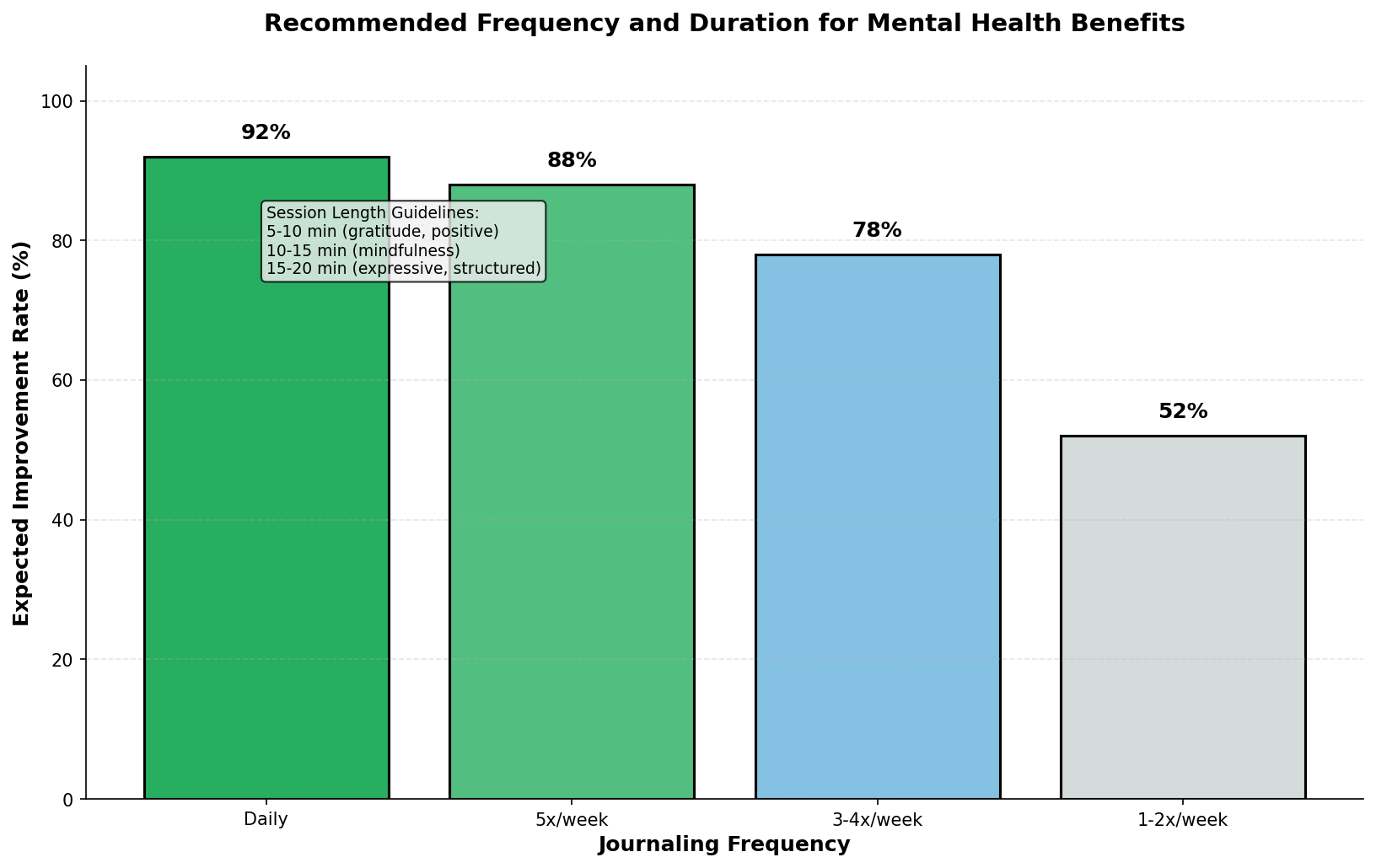 Figure 3: How different journaling techniques compare in effectiveness and time requirements. Structured templates are most effective but require more time, while gratitude journaling requires less time and still delivers strong benefits.
- Best technique for anxiety: Mindfulness-based journaling, structured templates, or expressive writing
- Best technique for depression: Gratitude journaling, positive writing, or reflective journaling
- Best technique for trauma or PTSD: Expressive writing with cognitive processing or reflective journaling
- Best technique for stress management: Gratitude journaling, stream-of-consciousness, or positive writing
- Best technique for general mental health: Any combination works; choose what resonates with you
How to Start: Practical Steps for Beginners
Overcoming the Four Biggest Barriers
Barrier 1: "I Don't Know What to Write"
You don't need to write perfect paragraphs or lengthy reflections. Beginners should start with simple formats:
- Single words or phrases (like "grateful for warm sunshine today")
- Short gratitude lists ("warm cup of coffee," "nice conversation with my daughter")
- Simple observations ("how I felt today," "one thing I noticed")
- Doodles, sketches, drawings, or visual representations
- Poetry, lists, or single sentences
- Photos with captions
Pro tip: Use a template to remove decision fatigue and create routine.
Barrier 2: "I Don't Have the Right Equipment"
You can journal using:
- Plain notebook or blank paper
- Digital options: smartphone, tablet, computer, apps
- Audio recordings on your phone (if writing feels overwhelming)
- Sketches or drawings instead of words
- A hybrid approach mixing different methods
What matters most: Mayo Clinic's evidence-based research recommends paper and pencil for deeper cognitive processing; writing by hand activates more of your brain than typing. However, the best journal is the one you'll actually use consistently.
Barrier 3: "I Don't Have Time"
Start with just 5 minutes and mean it. Give yourself exactly 5 minutes to write something (positive, negative, about the weather, anything). When the 5 minutes is up, stop. This works as a marathon, not a sprint. Journaling doesn't have to happen every day forever; it's a flexible tool, not a strict rule.
Barrier 4: "I'm Worried About Making Mistakes"
There is no "wrong" way to journal. Don't judge your handwriting, grammar, or thoughts. Avoid internal "shoulds": "I should write today," "I should do this particular style." Journal for you, not for anyone else. Messy, emotional, incomplete entries are valid and beneficial.
Setting Up Your Habit: The 3-Week Commitment
Research shows it takes a minimum of 3 weeks to establish a habit. Commit to journaling for at least 3 weeks before deciding if it works for you.
Recommended Starting Frequency and Duration
Based on research evidence:
- For general wellness: Daily or 3-5 times per week
- For anxiety or stress: 15-minute sessions, 3 days per week
- For specific conditions: Adjust based on your needs
The flexibility principle matters: you can journal daily for 5-15 minutes, 3-5 times per week for longer sessions (15-30 minutes), whenever stress gets intense, or in the morning or evening depending on your goals.
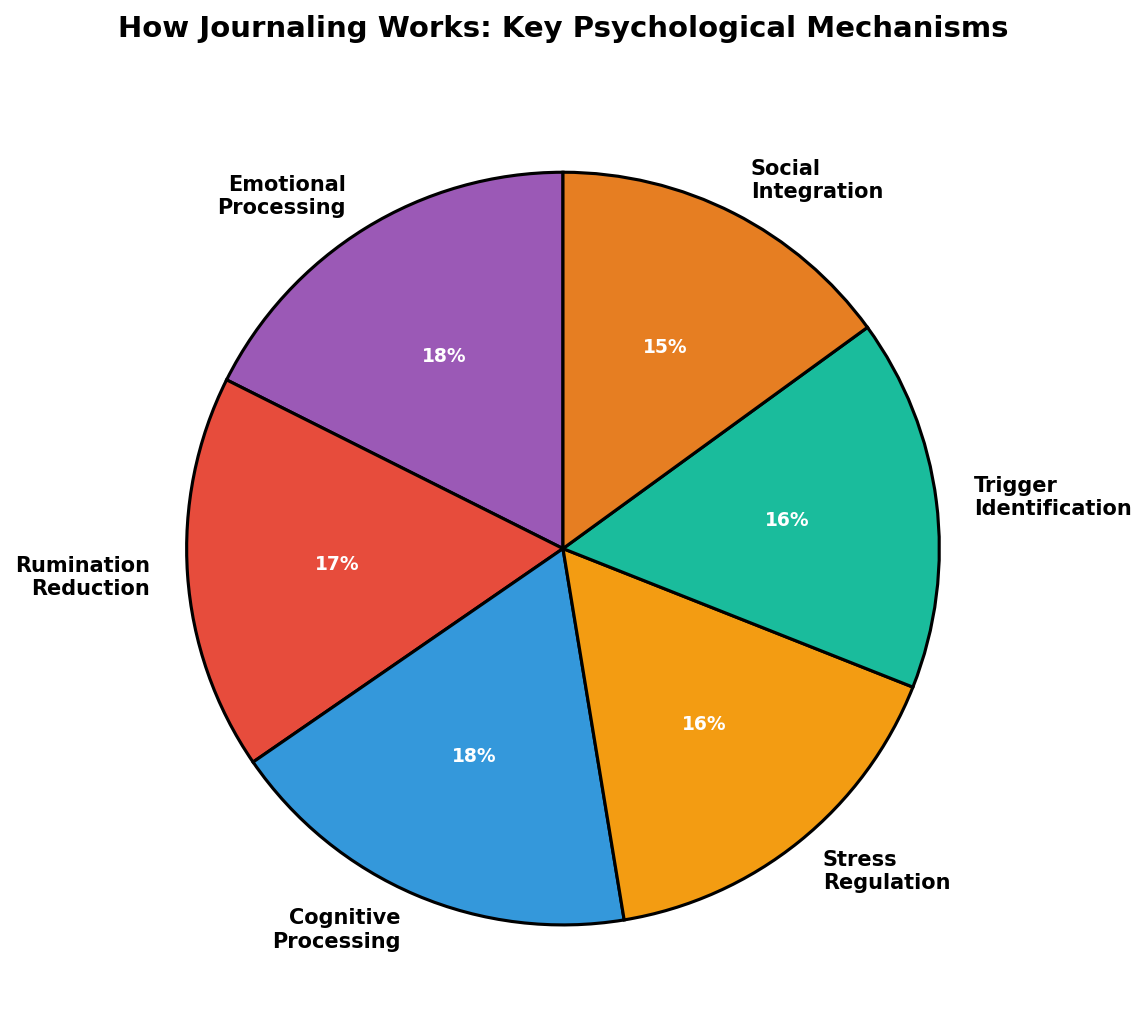 Figure 4: How journaling frequency affects improvement rates. Daily journaling shows the highest improvement rate, but 3-4 times per week still delivers strong benefits. Find the frequency you can sustain long-term.
Timing Recommendations
Evening journaling: Sit down in the evening to write down worries or stressful thoughts. Review this list in the morning to address concerns. This helps prevent racing thoughts before sleep.
Morning journaling: Beginning your day with gratitude or intention practice sets a positive tone. It helps you start with mindfulness and awareness.
When stress hits: Journal immediately when stress becomes intense rather than waiting for a scheduled time. Your recollection and emotional accuracy are better when you write immediately.
Best Practices for Consistency
1. Environment Setup: Create a simple, quiet space that signals "journaling time" to your brain: a comfortable place to sit, minimal distractions (phone on silent if possible), good lighting, and optionally something calming like tea or soft music.
2. Track Immediately: For worries or emotions: write as soon as they arise. For observations: capture things in the moment or right after they happen. For gratitude: record memories while they're fresh.
3. Look for Patterns: At the end of each week, spend 5 minutes looking back at your entries. Identify patterns in your mood, triggers, or thoughts. Notice what situations repeated or what themes emerged.
4. Use a Template (If It Helps): A simple template creates routine and removes decision fatigue. Simple examples:
- Today I'm grateful for: ___
- What I noticed today: ___
- How I felt and why: ___
- One positive thing: ___
- Worry or concern: ___
5. Don't Be Too Hard on Yourself: If you miss days, that's normal; restart without guilt. If you skip a week, that's okay. Journaling is a tool, not a punishment. The goal is consistency over perfection.
6. Use Your Journal as a Planning Tool: Beyond reflection, journaling can help you: get introspective about decisions, plan upcoming events or challenges, work through problems step-by-step, brainstorm solutions, and clarify what matters to you.
Building Momentum: Beyond the First 3 Weeks
Weeks 1-3: Establish the Habit. Focus on consistency, not perfection. Keep entries short and simple. Set a specific time or trigger (after morning coffee, before bed). Don't judge what you write.
Weeks 4-8: Deepen the Practice. Gradually extend entries if you want (5-15 minutes). Start noticing patterns in your reflections. Experiment with different formats or prompts. Review entries weekly to build self-awareness.
Month 2+: Sustain and Adapt. Adjust frequency and duration based on what works. Use journaling to track progress on goals or challenges. Return to it when stress increases. Remember: journaling is a flexible tool that evolves with you.
Addressing Common Barriers: When Journaling Might Not Help
Journaling is powerful, but understanding its limitations helps you use it effectively.
When Journaling Works Best
- As a complement to professional therapy
- For mild to moderate symptoms
- Combined with other coping strategies (exercise, social connection, sleep)
- For ongoing mental health maintenance
- With 3+ sessions per week for 6+ weeks
When You Need Professional Help Instead
Journaling should NOT replace professional treatment for:
- Severe depression or suicidal thoughts
- Acute PTSD or trauma responses requiring specialised trauma therapy
- Severe anxiety disorders significantly impacting daily functioning
- Psychotic symptoms
- Substance use disorders
Important: If you're experiencing severe mental health symptoms, please consult a mental health professional. Journaling works best alongside professional treatment, not instead of it.
When Journaling Might Temporarily Intensify Distress
- Emotion-only focus: Writing only about negative emotions without cognitive processing (reflecting on meaning) can temporarily worsen symptoms. The key is combining emotional expression with reflection
- Acute trauma or crisis: During an immediate crisis, expressive writing about trauma may temporarily elevate distress. In these situations, support groups or professional help may be better options alongside journaling
- Individual variation: Not everyone benefits equally. People high in emotional expressiveness benefit most from expressive writing. Those who tend to suppress emotions may benefit more from journaling. If one approach isn't working, try another
Journaling vs Other Treatments
Research shows that in a randomised trial comparing expressive writing to internet support groups, both showed improvement in depression, anxiety, social support, and life satisfaction with no significant difference between groups. In other words, journaling works as well as connecting with others online for mental health support.
Additionally, mindfulness-based journaling approaches perform comparably to cognitive-behavioural therapy. For certain conditions, journaling alone achieves similar improvements to therapy, though many people benefit most from using both together.
Psychological Mechanisms: Understanding How Journaling Works
Understanding the specific ways journaling helps your mental health can make you better at using it. Here are the six key mechanisms research has identified:
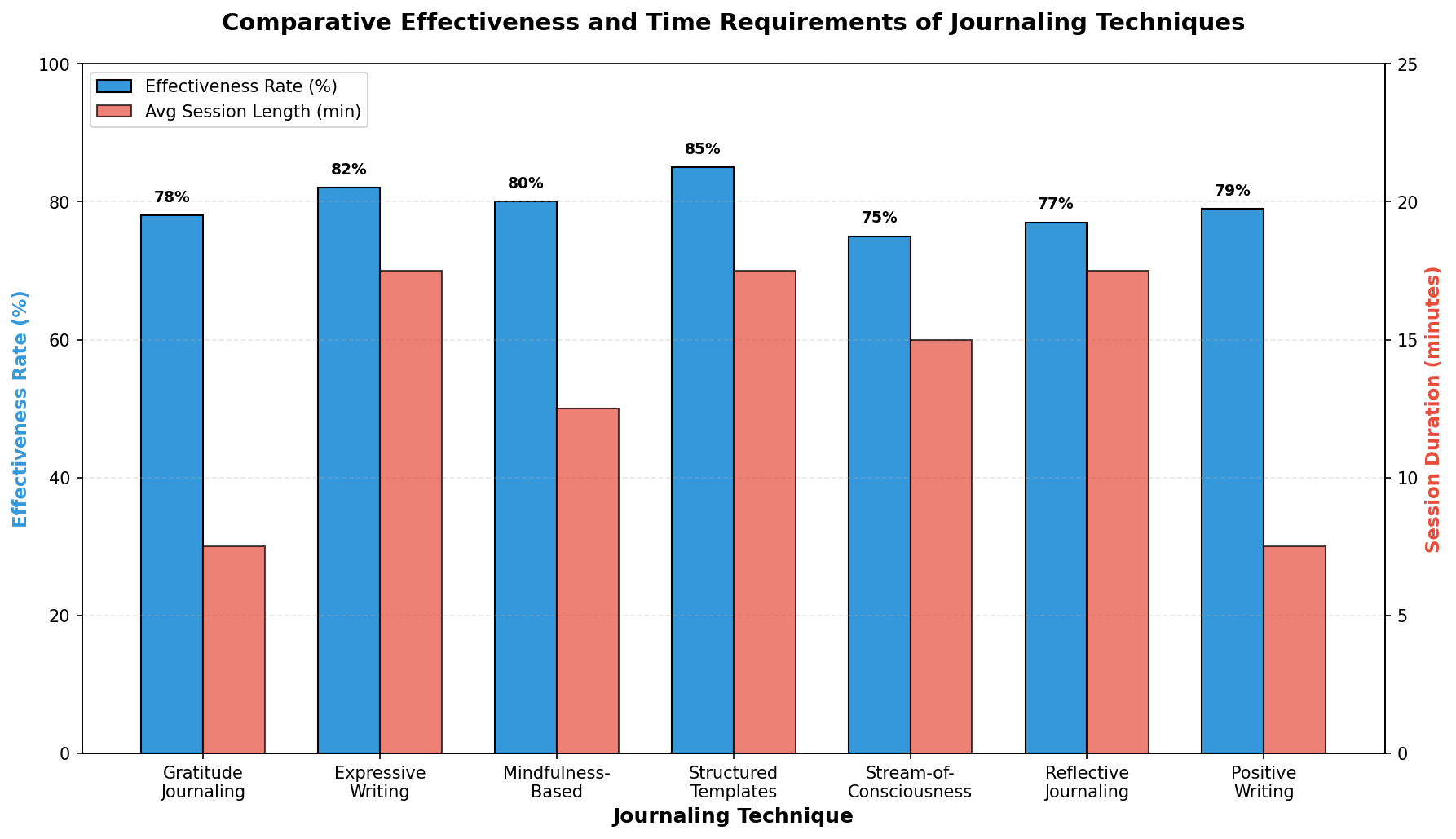 Figure 5: The six psychological mechanisms through which journaling improves mental health. Cognitive processing and emotional processing are the strongest mechanisms, which is why combining reflection with emotional expression works better than venting alone.
- Emotional Processing: Recording emotions allows you to release them in a safe, controlled way rather than having them loop chaotically in your mind
- Reducing Rumination: Breaking automatic negative thought cycles and creating new neural pathways that interrupt repetitive negative thinking
- Cognitive Processing: Forcing you to articulate what happened and why it matters, helping you find meaning in stressful experiences
- Stress Response Regulation: Shifting your nervous system from "fight or flight" mode toward calmer functioning through physiological changes in stress hormones
- Identifying Triggers: Making hidden patterns visible so you can recognise triggers and replace negative thoughts with more positive behaviours
- Social Integration and Connection: Acknowledging your struggles reduces shame and increases resilience through recognition of shared human experience
Key Takeaways
- Journaling is evidence-based: Nearly half of people (45–51 per cent) who try journaling see clinically significant improvements in depression and anxiety. It's supported by rigorous clinical research
- It works through multiple mechanisms: Understanding how journaling works helps you do it more effectively and choose the right technique for your needs
- Start simple and small: You don't need perfect materials, perfect thoughts, or perfect writing. Grab any notebook and write one sentence today
- Commit to 3 weeks minimum: Research shows this is the timeframe needed to establish a habit and determine if journaling helps you
- Consistency beats perfection: 3–4 times per week shows 78 per cent improvement rate vs 92 per cent for daily. Find a frequency you can sustain long-term
- Benefits appear quickly: Most people notice changes within the first month and substantial benefits by 6–8 weeks
- Choose the right technique: Different methods work for different people. If one approach doesn't resonate, try another
- Combine emotional expression with reflection: The most powerful journaling combines getting feelings out with understanding what they mean
- It's particularly powerful for rumination: If you struggle with repetitive negative thoughts, journaling directly targets that mechanism
- Use it alongside other approaches: Journaling works best as part of a broader mental health strategy that includes professional support if needed, exercise, social connection, and other wellness practices
Further Reading
Getting Started with Journaling
- Journaling for Better Mental Health (Oxford Health NHS Foundation Trust)
- Journalling and Practising Gratitude (Wellbeing College, NHS)
- Journaling Discussion (Mayo Clinic Connect)
Understanding the Mental Health Benefits
- Expressive Writing Can Help Your Mental Health (American Psychological Association)
- Stress Management (Mayo Clinic)
- Coping Mechanisms for Stress (Cleveland Clinic)
Specific Journaling Techniques
- Dream Journaling Methods (Cleveland Clinic)
- Caring for Your Mental Health (National Institute of Mental Health)
Building Healthy Habits
- Breaking Bad Habits (Cleveland Clinic)
- Fresh Ideas to Improve Health Habits (Harvard Health Publishing)
- Habit Formation (American Psychological Association)
References/Helpful Resources
- National Institute of Mental Health. Journaling about stressful events: effects of cognitive processing and emotional expression. PubMed. 2003. Available from: https://pubmed.ncbi.nlm.nih.gov/12173682/
- National Institute of Mental Health. Efficacy of journaling in the management of mental illness: a systematic review and meta-analysis. PubMed. 2022;35(4). Available from: https://pubmed.ncbi.nlm.nih.gov/35304431/
- National Institute of Mental Health. Journaling about stressful events: effects of cognitive processing and emotional expression. PubMed. 2003. Available from: https://pubmed.ncbi.nlm.nih.gov/12173682/
- National Institute of Mental Health. Benefits of expressive writing in lowering rumination and depressive symptoms. PubMed. 2006;35(2). Available from: https://pubmed.ncbi.nlm.nih.gov/16942980/
- National Institute of Mental Health. Journaling about stressful events: effects of cognitive processing and emotional expression. PubMed. 2003. Available from: https://pubmed.ncbi.nlm.nih.gov/12173682/
- National Institute of Mental Health. An emotional processing writing intervention and heart rate variability: the role of emotional approach. PubMed. 2016;36(10). Available from: https://pubmed.ncbi.nlm.nih.gov/27082841/
- National Institute of Mental Health. An everyday activity as a treatment for depression: the benefits of expressive writing for people diagnosed with major depressive disorder. PubMed. 2013. Available from: https://pubmed.ncbi.nlm.nih.gov/23790815/
- National Institute of Mental Health. Does gratitude writing improve the mental health of psychotherapy clients? Evidence from a randomised controlled trial. PubMed. 2016;31(3). Available from: https://pubmed.ncbi.nlm.nih.gov/27139595/
- National Institute of Mental Health. Randomised controlled trial assessing the efficacy of expressive writing in reducing anxiety in first-year college students: the role of linguistic features. PubMed. 2020;34(5). Available from: https://pubmed.ncbi.nlm.nih.gov/32998597/
- National Institute of Mental Health. Randomised controlled trial assessing the efficacy of expressive writing in reducing anxiety in first-year college students: the role of linguistic features. PubMed. 2020;34(5). Available from: https://pubmed.ncbi.nlm.nih.gov/32998597/
- National Institute of Mental Health. Mindfulness-based interventions for anxiety and depression. PubMed Central. Available from: https://pmc.ncbi.nlm.nih.gov/articles/PMC5679245/
- National Institute of Mental Health. Expressive writing and post-traumatic stress disorder: effects on trauma symptoms, mood states, and cortisol reactivity. PubMed. 2008;27(6). Available from: https://pubmed.ncbi.nlm.nih.gov/18230238/
- National Institute of Mental Health. Comparative efficacy and acceptability of expressive writing treatments compared with psychotherapy, other writing treatments, and waiting list control for adult trauma survivors: a systematic review and network meta-analysis. PubMed. 2021;52(4). Available from: https://pubmed.ncbi.nlm.nih.gov/33634766/
- National Institute of Mental Health. Expressive writing as a health tool. PubMed. 2019;19(2). Available from: https://pubmed.ncbi.nlm.nih.gov/29189701/
- National Institute of Mental Health. The delayed, durable effect of expressive writing on depression, anxiety and stress: A meta-analytic review of studies with long-term follow-ups. PubMed. 2023;46(1). Available from: https://pubmed.ncbi.nlm.nih.gov/36536513/
- National Institute of Mental Health. Pilot Study on the Impact of Gratitude Journaling or Cognitive Strategies on Health Care Workers. PubMed. 2023;23(2). Available from: https://pubmed.ncbi.nlm.nih.gov/36882351/
- National Institute of Mental Health. Mindful gratitude journaling: psychological distress, quality of life and suffering in advanced cancer: a randomised controlled trial. PubMed. 2021;27(9). Available from: https://pubmed.ncbi.nlm.nih.gov/34244182/
- National Institute of Mental Health. Written emotional disclosure: a controlled study of the benefits of expressive writing homework in outpatient psychotherapy. PubMed. 2008;49(3). Available from: https://pubmed.ncbi.nlm.nih.gov/18815991/
- National Institute of Mental Health. Online Positive Affect Journaling in the Improvement of Mental Distress and Well-Being in General Medical Patients With Elevated Anxiety Symptoms: A Preliminary Randomised Controlled Trial. PubMed. 2019;24(1). Available from: https://pubmed.ncbi.nlm.nih.gov/30530460/
- National Institute of Mental Health. Materials used to support cognitive behavioural therapy for depression: a survey of therapists' clinical practice and views. PubMed. 2019;21(6). Available from: https://pubmed.ncbi.nlm.nih.gov/30507343/
- National Institute of Mental Health. Facilitating student learning with critical reflective journaling in psychiatric mental health nursing clinical education: A qualitative study. PubMed. 2019;31(1). Available from: https://pubmed.ncbi.nlm.nih.gov/30081249/
- National Institute of Mental Health. Maintaining Mental Health Through Positive Writing: Effects of a Resource Diary on Depression and Emotion Regulation. PubMed. 2017;45(2). Available from: https://pubmed.ncbi.nlm.nih.gov/28186634/
- American Psychological Association. Habit Formation. Available from: https://www.apa.org/ed/precollege/topss/lessons/activities/activity-habit-formation.pdf
- National Institute of Mental Health. Direction to an Internet Support Group Compared With Online Expressive Writing for People With Depression And Anxiety: A Randomised Trial. PubMed. 2016;24(5). Available from: https://pubmed.ncbi.nlm.nih.gov/27189142/
