

You've been diagnosed with angina, and now you're wondering what this means for your life, your work, your ability to travel, even your relationships. The good news: angina doesn't mean stopping living. In fact, with the right approach, most people with stable angina can continue working, exercising, travelling, and enjoying their relationships. What changes is how you manage your condition and prevent the chest pain that defines it.
This article answers the questions that matter most: Can I return to work? Will I be able to drive? How much exercise is actually safe? What triggers my angina and what can I do about it? By the end, you'll understand not just what you can do, but why doing these things actually makes you safer and stronger.
What is Angina and Why Understanding It Matters
Stable angina occurs when your heart muscle isn't getting enough oxygen-rich blood during exertion or stress. Unlike a heart attack, angina doesn't cause permanent damage. Your heart muscle becomes temporarily starved of oxygen, causing chest pain or tightness. The pain typically goes away when you rest or use your nitrate medication (usually GTN spray).
The key word is "stable": your symptoms follow a predictable pattern triggered by identifiable factors like exertion, cold weather, stress, or heavy meals. This predictability is actually your advantage. It means you can identify your triggers, manage them, and build gradually back to normal activities.
About 3-4% of UK adults have angina, and prevalence increases significantly with age. If you're aged 65-74, your risk is substantially higher (up to 16% in men and 10% in women). But across all ages, people with well-controlled angina live full, active lives.
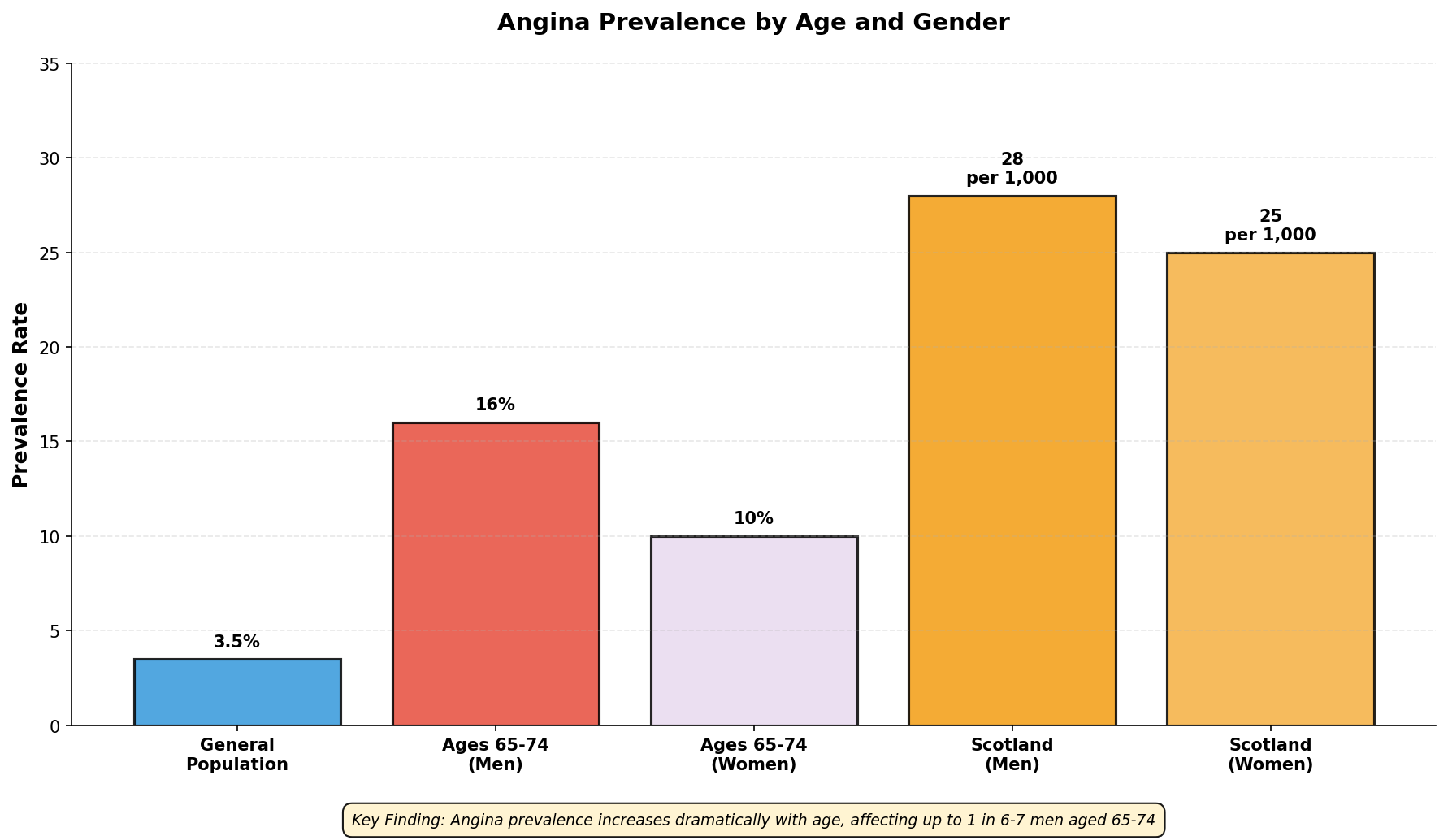 Figure 1: Angina prevalence increases significantly with age, affecting up to 1 in 6-7 men aged 65-74. Data from UK prevalence studies.
Understanding Your Angina Triggers
Before you can manage angina effectively, you need to understand what triggers it. Different triggers affect different people, but research shows five main culprits:
- Physical exertion (most common trigger)
- Cold weather (2.4 times higher cardiac mortality in winter)
- Emotional stress (especially in women)
- Heavy meals (particularly high-carbohydrate or fatty foods)
- Sudden temperature changes
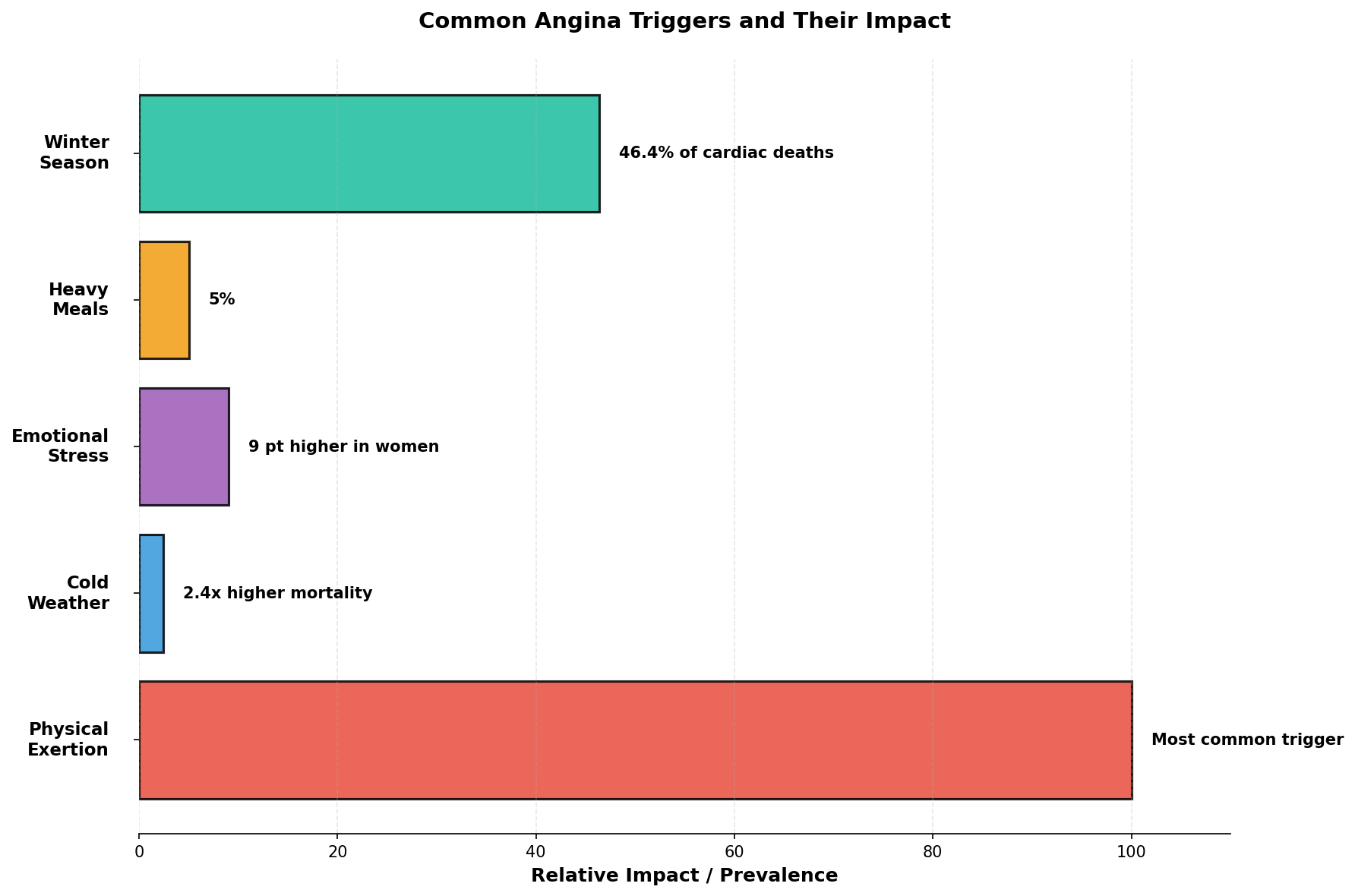 Figure 2: Physical exertion is the most common trigger, but winter cold and emotional stress carry significant risk. The seasonal pattern explains why cardiac deaths peak in winter months.
Cold Weather: A Significant Winter Risk
Winter isn't just uncomfortable for people with angina; it's genuinely risky. Cold air causes your blood vessels to constrict (narrow), and your heart works harder to pump blood through these narrowed vessels. Winter accounts for 46.4% of all annual cardiac deaths, and death rates are 2.4 times higher in winter than summer.
What this means practically: in cold months, take extra precautions. Wear warm clothing when going outside. Use your GTN spray before stepping into cold air if you know you'll be exerting yourself. Keep your home comfortably warm. And if you live somewhere with harsh winters, be particularly vigilant during the coldest months.
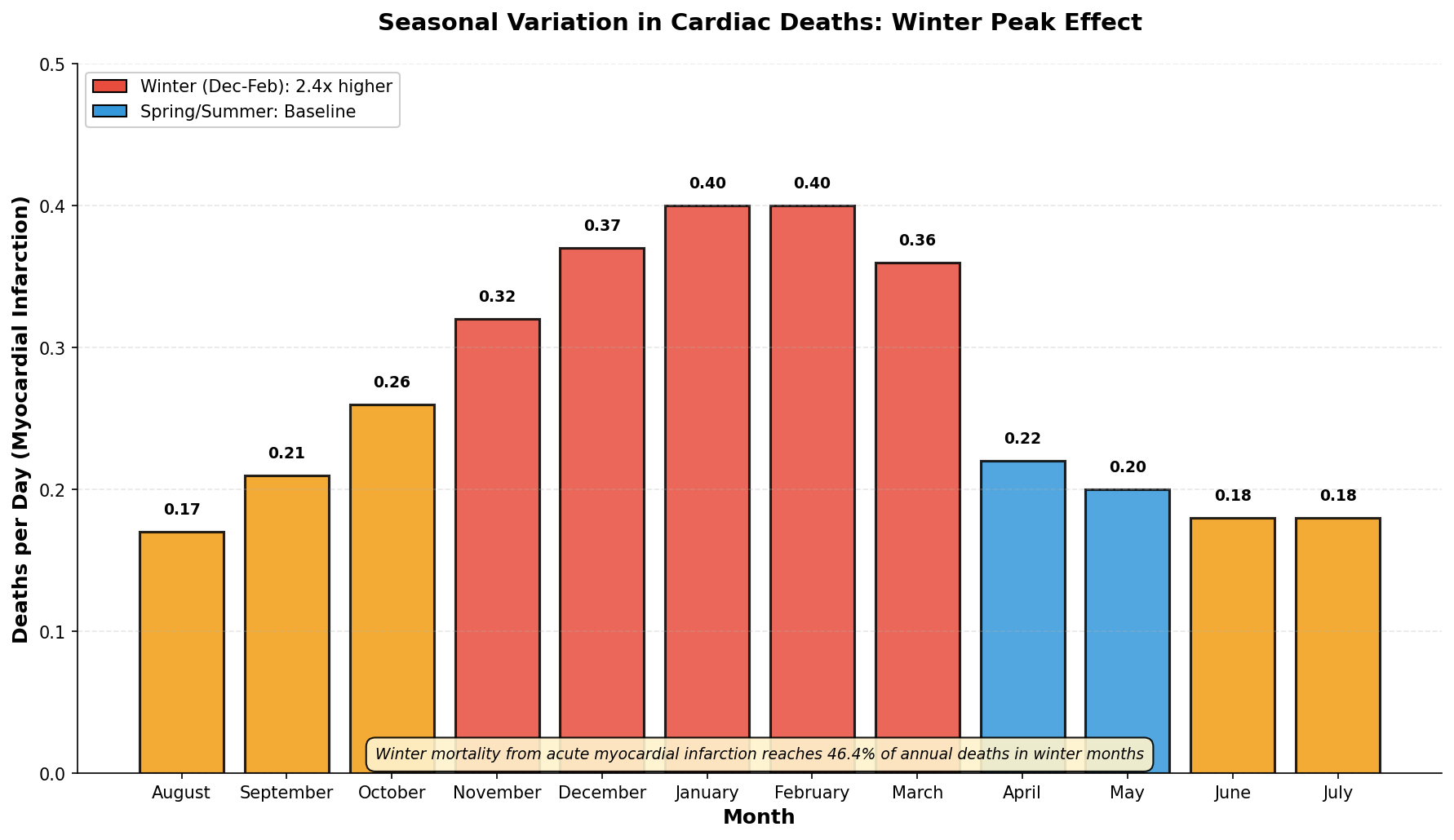 Figure 3: Winter months show dramatically elevated cardiac mortality, peaking in December-January. This seasonal pattern is why winter preparation is medically important.
Physical Exertion: The Safe Approach
Physical exertion is your most common trigger, but here's the crucial counterintuitive fact: avoiding all exertion actually makes your risk worse. People who exercise regularly have approximately 50 times lower risk of sudden cardiac events with exertion compared to sedentary individuals. Structured, supervised exercise is protective, not dangerous.
The key is exercising at the right intensity. Your healthcare team should perform an exercise test to establish your "angina threshold": the point at which chest pain starts. Safe exercise happens below this threshold.
Exercise intensity can be thought of in three zones:
- Light intensity (50-69% maximum heart rate): Light walking, gentle household chores
- Moderate intensity (60-80% maximum heart rate): Brisk walking, light jogging, sexual activity
- High intensity (70-85% maximum heart rate): Competitive sports, vigorous exercise
The safety rule is simple: exercise intensity should be set at least 10 beats per minute below your angina threshold. This means you can exercise safely without triggering chest pain.
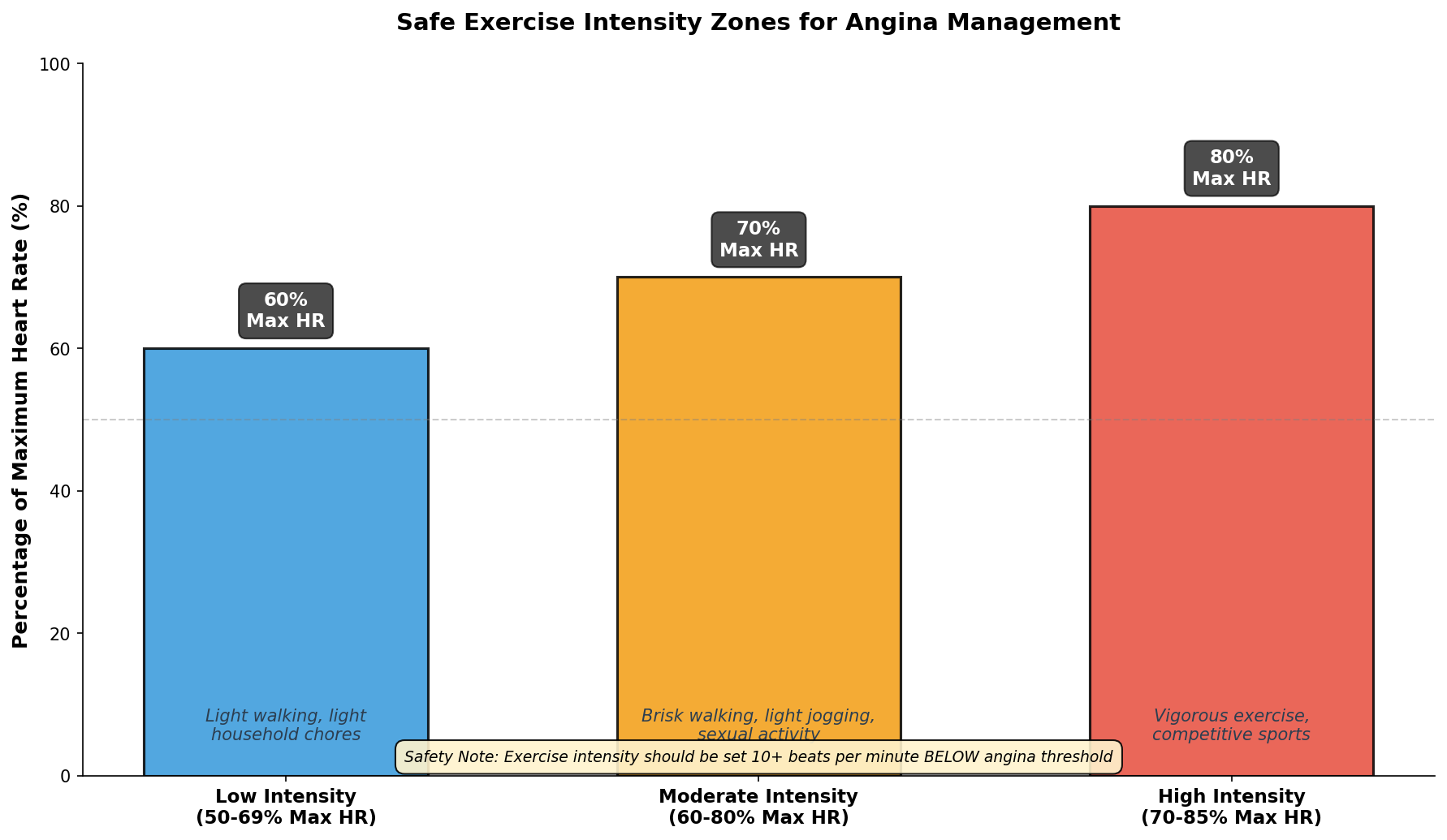 Figure 4: Three intensity zones guide safe exercise. The most effective zone for most people is 60-80% of maximum heart rate, comfortably below the angina threshold. The "talk test" helps gauge intensity: you should breathe harder but still be able to hold a conversation.
Emotional Stress: A Powerful but Often Overlooked Trigger
Stress is far more than an inconvenience; it's a genuine physiological trigger of angina. When you're emotionally stressed, your sympathetic nervous system activates, releasing stress hormones that increase your heart rate and blood pressure. In people with pre-existing coronary artery disease, stress can trigger coronary artery spasm, temporarily squeezing the vessels that supply your heart.
Women are particularly vulnerable to stress-induced ischemia. Women with angina have nearly double the probability of developing stress-induced chest pain compared to men. This isn't about being "more anxious"; it reflects actual physiological differences in how blood vessels respond to stress hormones.
This matters because it means stress management isn't optional; it's medical treatment. Mindfulness, exercise, support groups, and counselling aren't luxuries. They're as important as your medication.
Heavy Meals: Timing and Composition Matter
Eating a large meal increases your heart's workload. The carbohydrate component of meals accelerates your heart rate and blood pressure response. Large, fatty meals trigger inflammation and elevate blood lipids (fats), compounding the stress on your heart.
Practically, this means: eat smaller, frequent meals rather than three large ones. Avoid large meals before planned exercise or exertion. If you do eat a substantial meal, wait 1-2 hours before strenuous activity. A light snack eaten an hour before exercise causes minimal problems, but a heavy meal significantly worsens angina.
Safe Exercise and Cardiac Rehabilitation: The Evidence
Here's what research consistently shows: a structured 12-week cardiac rehabilitation programme can be as effective as invasive procedures like stent placement for many angina patients. And unlike surgery, rehabilitation has no recovery period and produces sustained improvements.
What Actually Happens During Rehabilitation
Cardiac rehabilitation isn't just "exercise class". It includes:
- Patient education about your heart, your condition, and risk factors
- Individualised exercise prescription based on your symptom-limited exercise test
- Medication optimisation to manage your blood pressure, cholesterol, and other risk factors
- Psychological support to address anxiety and depression
- Nutritional counselling for a heart-healthy diet
- Stress management training
Most programmes run 3 times per week for 8-12 weeks, with sessions lasting 30-60 minutes. Each session typically includes a 5-10 minute warm-up, 20-30 minutes of aerobic exercise, a 5-10 minute cool-down with stretching, and education or counselling.
The Benefits: Numbers That Matter
Cardiac rehabilitation reduces all-cause mortality by 53% among people who participate. That's a truly remarkable figure. It means that if you attend a rehabilitation programme, your overall risk of dying from any cause in the next few years is roughly cut in half compared to people who don't participate.
Beyond mortality:
- Cardiac-related mortality decreases by 57%
- 74% of participants become angina-free within 12 weeks
- An additional 9% improve from limiting angina to mild symptoms
- Quality of life improves significantly across all domains: physical function, mental health, social activities, vitality, and general wellbeing
Importantly, these benefits aren't temporary. People who maintain regular exercise at home continue seeing improvements months and years after completing the programme.
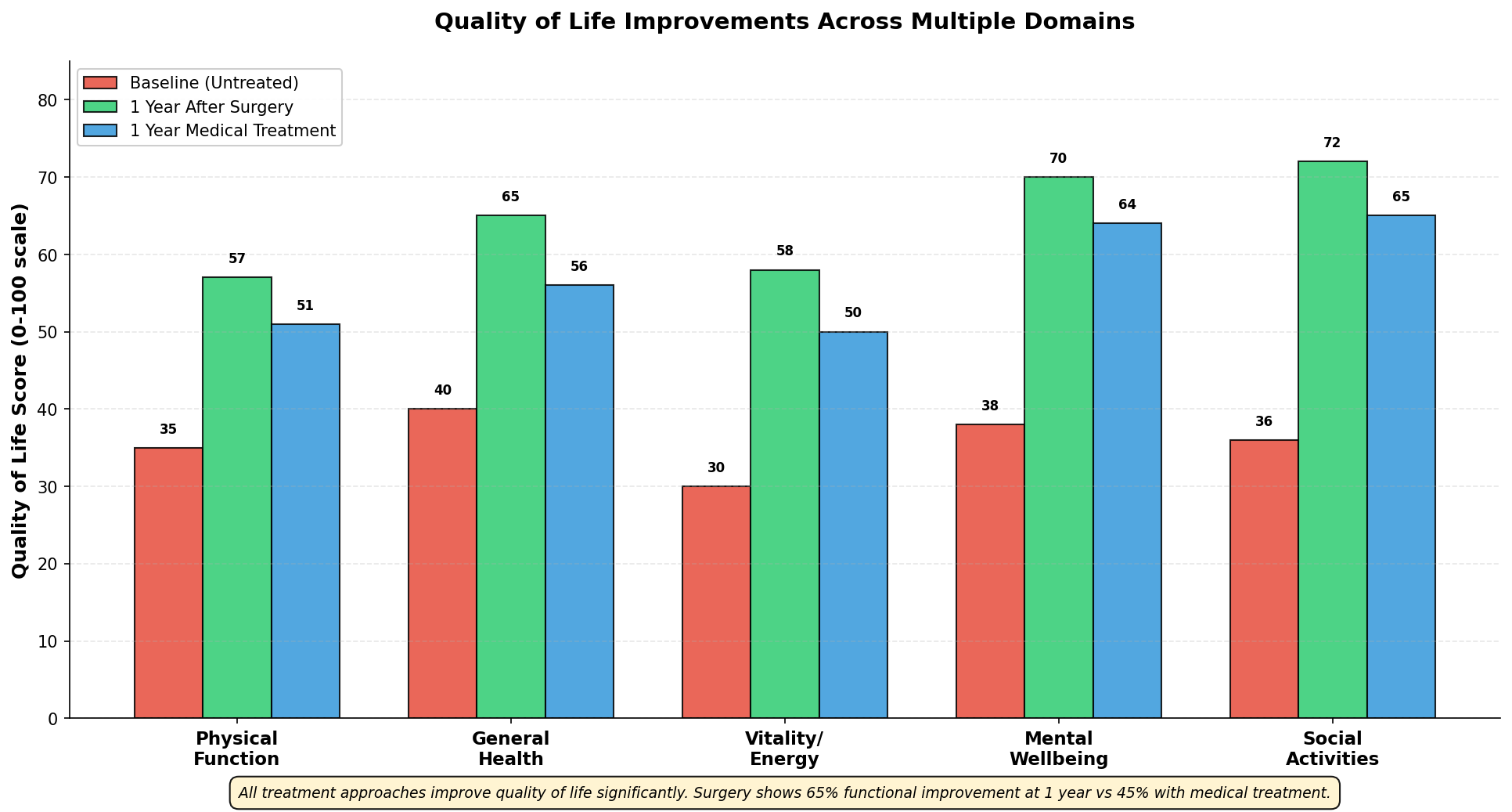 Figure 5: Treatment of any kind improves quality of life, but surgery shows slightly greater functional improvement (65% vs 45%) at one year. Both surgical and medical approaches significantly improve mental wellbeing and social activities.
What Types of Exercise are Safe?
Safe aerobic activities for angina include:
- Walking (continuous, moderate pace)
- Cycling (stationary or outdoor)
- Swimming (low-impact, good for joint health)
- Dancing (rhythmic, controlled movements)
- Rowing (controlled intensity)
Once you're aerobically stable, resistance training (weightlifting, strength exercises) is also safe, provided you have good heart function and no current symptoms at rest.
Activities to avoid: intense static activities like heavy weight lifting, press-ups, or heavy digging. These create sudden spikes in blood pressure that can trigger angina.
The Simple Test for Exercise Intensity
You don't need to wear a heart rate monitor or use complex calculations. The "talk test" works: during exercise, you should feel warmer and breathe harder than usual, but you should still be able to carry on a conversation. If you can't talk, you're exercising too hard. If you're not breathing any harder, you're not working hard enough.
Starting Your Own Exercise Programme
If you're beginning exercise without formal rehabilitation (though rehabilitation is strongly recommended):
- Get clearance from your GP and ideally an exercise stress test to establish safe intensity
- Start slowly: 10-15 minutes initially, three times weekly
- Gradually increase duration to 30 minutes per session
- Choose aerobic activities you enjoy
- Use GTN spray 5-15 minutes before planned exertion to prevent angina
- If angina occurs during exercise, rest briefly, use GTN if needed, then resume at lower intensity once symptoms settle
- Track your progress: you should find you can do more over weeks without triggering pain
Important: progression means increased duration and intensity, not pain. If you consistently trigger angina with a particular activity, adjust the intensity downward and progress more slowly.
Managing Triggers: Day-to-Day Strategies
Creating a Trigger Diary
NHS guidance recommends keeping a simple diary of:
- When angina occurs
- What triggered the episode (activity level, meal, weather, stress level)
- Severity and duration
- What relief measures you used (rest, medication, stress relief)
- How quickly the pain resolved
Over 2-4 weeks, patterns emerge. You'll notice, for example, that cold air consistently triggers symptoms, or that heavy meals before activity cause problems. This personalised information allows you to prevent episodes rather than just treating them after they happen.
Cold Weather Protection
- Wear warm clothing when going outside, particularly a scarf or balaclava to warm the air before it reaches your lungs
- Use GTN spray before going outside on cold days if you'll be active
- Avoid very rapid transitions from warm to cold environments
- Consider indoor activities on particularly cold days
- Keep your home adequately heated
- Be extra cautious during December, January, and February
Managing Stress
- Exercise regularly: Physical activity is one of the most effective stress management tools. Aim for 30 minutes of moderate activity at least 3 times weekly.
- Sleep adequately: Poor sleep increases cardiovascular risk. Target 7-9 hours nightly.
- Practise mindfulness or relaxation: Even 10 minutes daily of deep breathing, meditation, or progressive muscle relaxation reduces stress hormones and blood pressure.
- Build social support: Talking to friends, family, or support groups about your condition reduces psychological stress and improves coping.
- Consider counselling: If anxiety or depression is affecting your wellbeing, professional support is valuable.
Dietary Adjustments for Angina
Heart-healthy eating supports angina management:
- Eat smaller, frequent meals rather than large ones
- Focus on Mediterranean diet patterns: plenty of fruit, vegetables, whole grains, fish, and beans
- Limit saturated fat, added sugar, and salt
- Avoid large meals before anticipated exertion
- Limit alcohol: maximum 14 units weekly (about 6-7 glasses of wine)
- If you smoke, stopping is the single most important change you can make
Returning to Work: What You Need to Know
The straightforward answer: you can usually continue working with stable angina. But adjustments may be necessary depending on your job.
General Employment
If your job doesn't involve strenuous physical work, you'll typically be able to continue without significant modifications. Keep your GTN medication with you at all times in case an episode occurs at work.
Physical Work and Heavy Lifting
If your job involves heavy lifting, strenuous physical labour, or sustained high exertion, discuss modifications with your employer. You may be able to:
- Reduce heavy lifting or have colleagues assist with strenuous tasks
- Take more frequent breaks
- Rearrange duties to focus on less physically demanding aspects
- Work flexibly on especially cold days
Returning to Work After a Procedure
If you've had an angioplasty or other cardiac procedure, the timeline is:
- After angiogram: Generally can drive and do light duties within 3 days
- After angioplasty: Can return to light duties within 7 days, return to normal activities within 1-2 weeks as wound heals
- Avoid heavy lifting and strenuous activity until your healthcare team confirms it's safe (typically 2-4 weeks post-procedure)
Tracking Your Progress
Research shows impressive recovery timelines. Cardiac rehabilitation participants show:
- 30% able to resume normal activity within 3 days of angiogram
- 55% with increased comfort within 2-4 weeks of starting rehabilitation
- 75% with measurable functional improvement by mid-rehabilitation
- 74% angina-free by the end of 12-week rehabilitation
- 95% with sustained functional gains at 12+ weeks
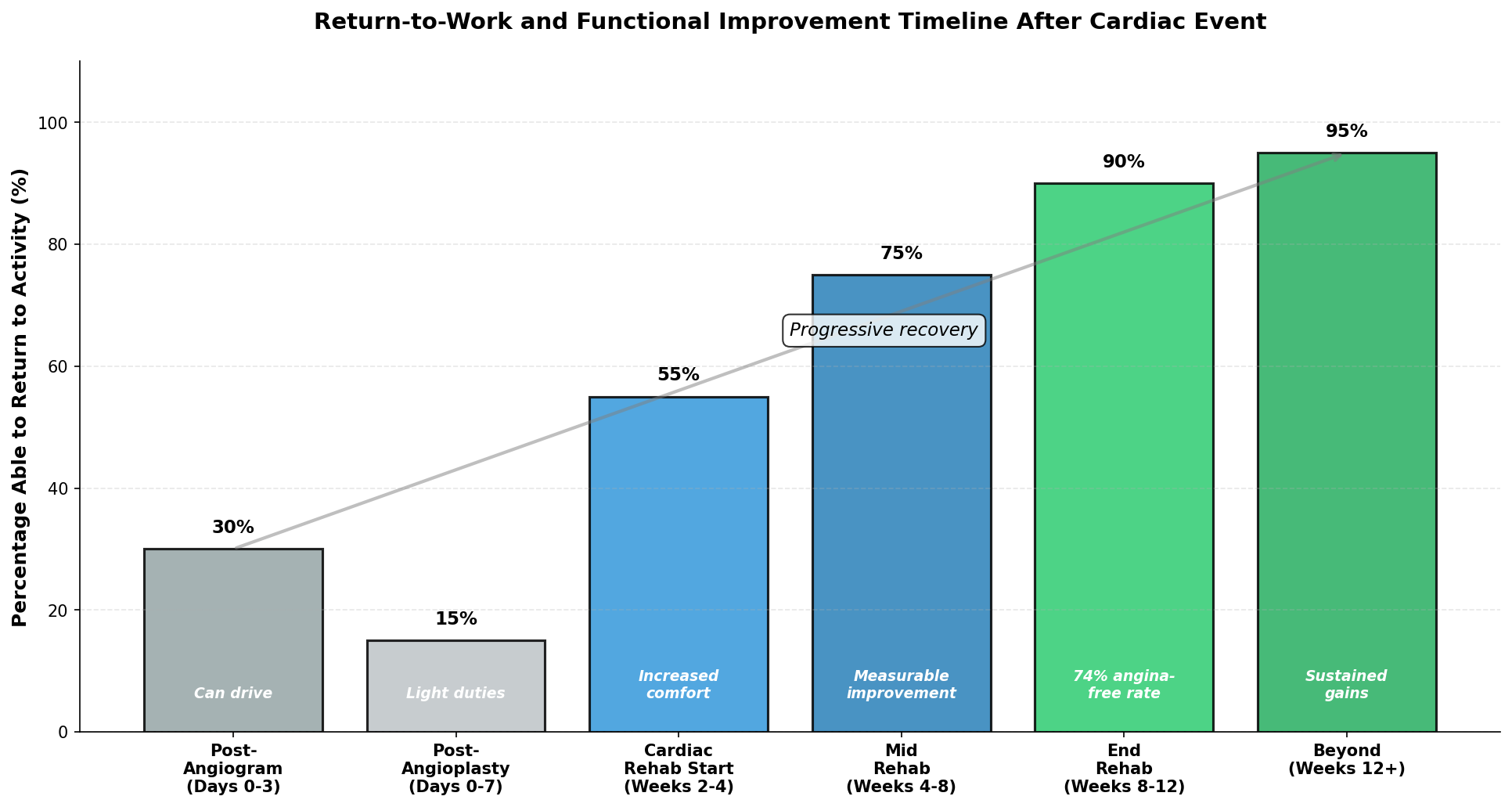 Figure 6: Recovery follows a predictable timeline. Functional improvements accelerate during weeks 4-12 of rehabilitation, with 74% of participants becoming angina-free by the end of the programme.
When to Contact Your GP
Inform your GP if:
- Symptoms increase in severity or frequency
- You need GTN spray more often than usual
- You cannot do the same amount of work or activity as before
- You develop new symptoms
DVLA Driving Rules: Know Your Obligations
Car and Motorcycle Drivers (Group 1 License)
Good news: you can continue driving with stable angina. You do NOT need to notify the DVLA.
Critical restriction: You must stop driving immediately if angina occurs:
- At rest
- While driving
- With emotion alone
If any of these happens, you cannot drive again until you have satisfactory symptom control confirmed by your doctor.
Practical advice:
- Keep GTN spray easily accessible while driving
- Stop for breaks during long journeys
- Avoid driving if you feel unwell
- Reschedule longer drives to warm weather when possible
Professional Drivers (HGV, LGV, and Bus Drivers; Group 2 License)
Restrictions are significantly stricter:
- You MUST notify the DVLA
- You cannot drive while experiencing symptoms
- If symptoms continue, your licence will be revoked
- You can regain your licence only if you have no angina for at least 6 weeks and meet medical test requirements
Practical Driving Strategies
- Stop and rest during long journeys (every 1-2 hours)
- Avoid driving in severe cold or heat
- Use GTN spray before driving if you anticipate exertion (e.g., during a stressful commute)
- Keep medications in your car
- Ensure your car is comfortable (good ventilation, comfortable seating, easy-to-operate controls)
Travel Considerations: Exploring with Confidence
Having angina doesn't mean staying home, but travel requires sensible preparation.
General Travel Preparation
Medication planning:
- Bring all your regular medications plus extra (in case of travel delays)
- Pack medications in your carry-on bag, not checked luggage
- Keep medications in original labelled containers
- Have a list of your medications and doses
Destination preparation:
- Research medical facilities at your destination
- Understand what your travel health insurance covers
- Check opening hours and contact details for local hospitals or clinics
- Discuss your travel plans with your healthcare provider
Flying with Stable Angina
The key consideration is oxygen levels. Aircraft cabins have lower oxygen pressure than ground level, which means your heart has to work harder. For some people, this increases angina risk.
Individual needs vary significantly. Some people may need:
- Compression stockings to prevent blood clots
- Additional oxygen during flight (arrange with your airline in advance)
- Fluid restriction or alcohol avoidance
- More frequent movement to prevent stiffness and blood clots
A small number of people with severe angina may not be medically cleared to fly. Your healthcare provider can assess your individual risk and advise whether flying is safe for you, and what precautions you might need.
Monitor yourself during air travel for:
- Shortness of breath or unusual breathlessness
- Chest pain or pressure
- Palpitations (heart racing or irregular beats)
- Severe fatigue
Any of these could indicate your condition is changing and warrant medical attention.
Driving During Travel
On road trips, pace yourself. Stop and rest every 1-2 hours. Break journeys into manageable daily distances rather than driving for 8+ hours. Avoid driving in extreme cold.
Ground Transport
Train and coach travel are usually comfortable options if you prefer not to drive. Buses and trains allow you to move around and stretch, reducing the risk of blood clots from prolonged immobility.
Sexual Activity and Relationships
Here's what you need to know: people with stable angina who are optimally treated are NOT at significantly increased cardiovascular risk during sexual intercourse. Sexual activity is equivalent to light-to-moderate physical exercise.
The risk of a heart attack during sexual activity is extremely low, even in people with coronary artery disease.
Most People Can Enjoy Normal Sexual Lives
Unless you have severe angina or chronic heart failure (which applies only to a minority), your sexual relationships should not be constrained by your diagnosis, provided you receive appropriate medical advice.
If you develop coital angina (angina triggered during sexual activity):
- Use GTN spray 5-15 minutes before sexual activity to prevent symptoms
- Have your medication easily accessible
- If angina occurs, rest and use your medication
- Discuss this with your healthcare provider; medication adjustments may help
Important: Medication Interactions
If you experience erectile dysfunction and are considering sildenafil (Viagra) or similar medications:
Do NOT take sildenafil if you use ANY form of nitrates:
- Oral nitrates
- Topical nitrates (patches)
- Sublingual nitrates (GTN spray, including occasional use)
The combination can cause a dangerous drop in blood pressure.
Your healthcare provider can assess whether sildenafil is appropriate for you and whether safer alternatives exist. The key is having this conversation before using erectile dysfunction medications.
Living Well with Angina: Long-Term Coping Strategies
Building Confidence Gradually
Many people find that anxiety about angina is worse than the condition itself. Each successful activity without symptoms builds confidence. Start with short activities you know you can manage, succeed, then gradually extend your range.
If an episode occurs, it's not a setback; it's information. What triggered it? What relieved it? Can you prevent it next time by adjusting timing, intensity, or environmental factors?
The Medication Reality
Short-acting nitrates (GTN spray) are not a failure or a sign you're "overdoing it". They're a tool. Using GTN before planned exertion prevents angina from happening in the first place. This isn't "giving in"; it's smart management that allows you to do more.
Quality of Life Matters
Research shows that treatment of angina significantly improves not just physical function, but also mental health, social activities, and overall life satisfaction. The goal isn't just surviving with angina; it's thriving despite it.
All treatment approaches (medical management, cardiac rehabilitation, or interventional procedures) improve quality of life meaningfully.
Staying Motivated for Long-Term Change
The habits that prevent angina (regular exercise, heart-healthy eating, stress management, adequate sleep) also prevent heart attacks and improve overall health. You're not making these changes "because of angina"; you're making them because they allow you to live a longer, healthier, fuller life.
Support and Community
Connect with others living with angina. Support groups (in-person or online) reduce isolation and provide practical advice from people with real experience. Many cardiac rehabilitation programmes include peer support components.
When to Seek Medical Help
Contact Your GP
Seek advice from your healthcare provider if:
- Your angina symptoms increase in severity or frequency
- You need GTN spray more often than usual
- Angina begins occurring at rest or with emotion alone
- Angina doesn't resolve after rest or GTN spray
- You develop new symptoms or any concerns
Emergency Care (Call 999)
Seek emergency care if:
- You have severe chest pain lasting more than 15 minutes despite GTN use
- You experience symptoms suggesting a heart attack: severe pain, sweating, breathlessness, nausea
- You have any doubt about whether this is angina or something more serious
In all cases of doubt, it's safer to seek emergency assessment than to assume it's "just angina".
Final Thoughts
Living with angina is manageable. You can work, exercise, travel, and enjoy relationships. What changes is that you become more aware of your body, more intentional about managing risk factors, and more proactive about preventing episodes rather than just treating them.
Research consistently shows that people who engage in cardiac rehabilitation have dramatically better outcomes than those who don't. If your healthcare provider recommends it, participating in a rehabilitation programme is genuinely one of the most important things you can do for your long-term health.
The numbers are compelling. Cardiac rehabilitation reduces your mortality risk by more than half. It allows you to do more physically. It improves your mental health and quality of life. And the benefits persist for years if you maintain the habits you build.
You have more control over your angina than you might think. By understanding your triggers, exercising safely, managing stress, and working with your healthcare team, you're not just managing a condition; you're building a longer, healthier life.
Further Reading
Understanding Angina
- NHS Angina: Overview and Symptoms
- British Heart Foundation: Angina Causes, Symptoms and Treatments
- Mayo Clinic: Angina Symptoms and Causes
Cardiac Rehabilitation and Exercise
- NHS Cardiac Rehabilitation
- British Heart Foundation: Exercising with Angina
- NICE Guidelines for Stable Angina Management
Returning to Work and Driving
Travel and Lifestyle
Managing Triggers and Lifestyle
Mental Health and Stress Management
- British Heart Foundation: Emotional Wellbeing and Heart Conditions
- Mayo Clinic: Stress Management for Heart Health
Helpful Resources
- NHS. Angina [Internet]. [cited 2025 Jan]. Available from: https://www.nhs.uk/conditions/angina/
- NICE. Stable angina: management and monitoring (CG126) [Internet]. [cited 2025 Jan]. Available from: https://www.nice.org.uk/guidance/cg126/
- British Heart Foundation. Angina: causes, symptoms and treatments [Internet]. [cited 2025 Jan]. Available from: https://www.bhf.org.uk/informationsupport/conditions/angina
- Mayo Clinic. Angina: symptoms and causes [Internet]. [cited 2025 Jan]. Available from: https://www.mayoclinic.org/diseases-conditions/angina/symptoms-causes/syc-20369373
- Cleveland Clinic. Stable angina: causes and treatment [Internet]. [cited 2025 Jan]. Available from: https://my.clevelandclinic.org/health/diseases/21847-stable-angina
- American Heart Association. Cold weather and cardiovascular disease [Internet]. [cited 2025 Jan]. Available from: https://www.heart.org/en/health-topics/consumer-healthcare/what-is-cardiovascular-disease/cold-weather-and-cardiovascular-disease
- DVLA. Car or motorcycle drivers with heart conditions: when you need to tell us about your condition (INF188) [Internet]. [cited 2025 Jan]. Available from: https://www.gov.uk/government/publications/car-or-motorcycle-drivers-with-heart-conditions
- National Institutes of Health. Cardiac rehabilitation after myocardial infarction and coronary events [Internet]. [cited 2025 Jan]. Available from: https://pubmed.ncbi.nlm.nih.gov/42502748/
- National Institutes of Health. Multicomponent cardiac rehabilitation and cardiovascular outcomes [Internet]. [cited 2025 Jan]. Available from: https://pubmed.ncbi.nlm.nih.gov/34355130/
- National Institutes of Health. Exercise-based cardiac rehabilitation in stable coronary artery disease: systematic review and meta-analysis [Internet]. [cited 2025 Jan]. Available from: https://pubmed.ncbi.nlm.nih.gov/42395080/
- National Institutes of Health. Comparison of exercise-based rehabilitation and interventional therapy in stable angina pectoris [Internet]. [cited 2025 Jan]. Available from: https://pubmed.ncbi.nlm.nih.gov/39206053/
- National Institutes of Health. Seasonal variation in mortality from myocardial infarction [Internet]. [cited 2025 Jan]. Available from: https://pubmed.ncbi.nlm.nih.gov/16394282/
- National Institutes of Health. Mental stress-induced myocardial ischaemia in women [Internet]. [cited 2025 Jan]. Available from: https://pubmed.ncbi.nlm.nih.gov/29224740/
- National Institutes of Health. Post-prandial angina: physiological mechanisms and risk factors [Internet]. [cited 2025 Jan]. Available from: https://pubmed.ncbi.nlm.nih.gov/9014981/
- National Institutes of Health. Cardiac rehabilitation in older populations: long-term outcomes [Internet]. [cited 2025 Jan]. Available from: https://pubmed.ncbi.nlm.nih.gov/19555836/
