

When someone receives a diagnosis of histiocytosis, the first concern is always survival. But after the initial treatment phase, the real work of long-term management begins. This article explores what happens after diagnosis, how patients are monitored, why reactivation occurs, and how to maintain the best possible quality of life whilst living with or having survived this rare disorder.
What Is Histiocytosis and Why Long-Term Management Matters
Histiocytosis is a rare family of disorders where immune cells called histiocytes accumulate abnormally in body tissues. The most common form, Langerhans cell histiocytosis (LCH), affects approximately 1 to 9 children per million each year globally, making it genuinely rare. Yet the impact on patients and families is significant, which is why understanding long-term management is essential.
Modern medicine has transformed histiocytosis dramatically. While patients in the 1950s had only a 57% chance of survival, today nearly 9 out of 10 adults survive for at least 5 years, and over 95% of children in developed countries with access to specialised care survive in the long term. But survival is only part of the story. What matters equally is what comes next: managing the condition, preventing reactivation, and navigating the physical and emotional effects that often persist long after active treatment ends.
The key insight that changes everything: your first response to treatment within the first 6 weeks is the most powerful predictor of long-term outcomes. This is why doctors schedule early imaging assessments and adjust treatment aggressively based on that early response.
Understanding Your Disease Type and Risk Category
Not all histiocytosis is created equal. Your prognosis and monitoring needs depend heavily on which organs are involved and how extensive your disease is at diagnosis.
Single-System Disease (Localised)
Single-system disease means the histiocytosis is limited to one organ system or even one anatomical site. This is the best-case scenario. For example it could be only Bone-limited or skin-limited disease.
Patients with truly localised disease often have excellent long-term prognosis with normal life expectancy. For these patients, the question shifts quickly from "will I survive?" to "what do I need to monitor going forward?"
Multisystem Disease (Multiple Organ Involvement)
When histiocytosis affects more than one organ system, the clinical picture becomes more complex. Some organ involvement poses higher risk than other, for example Lymph node involvement, kidney and liver. Multisystem involvement needs more intensive treatment and surveillance.

Figure 1: Multiple organs and organ systems that are involved in Histiocytosis. Key features of Erdheim-Chester disease.
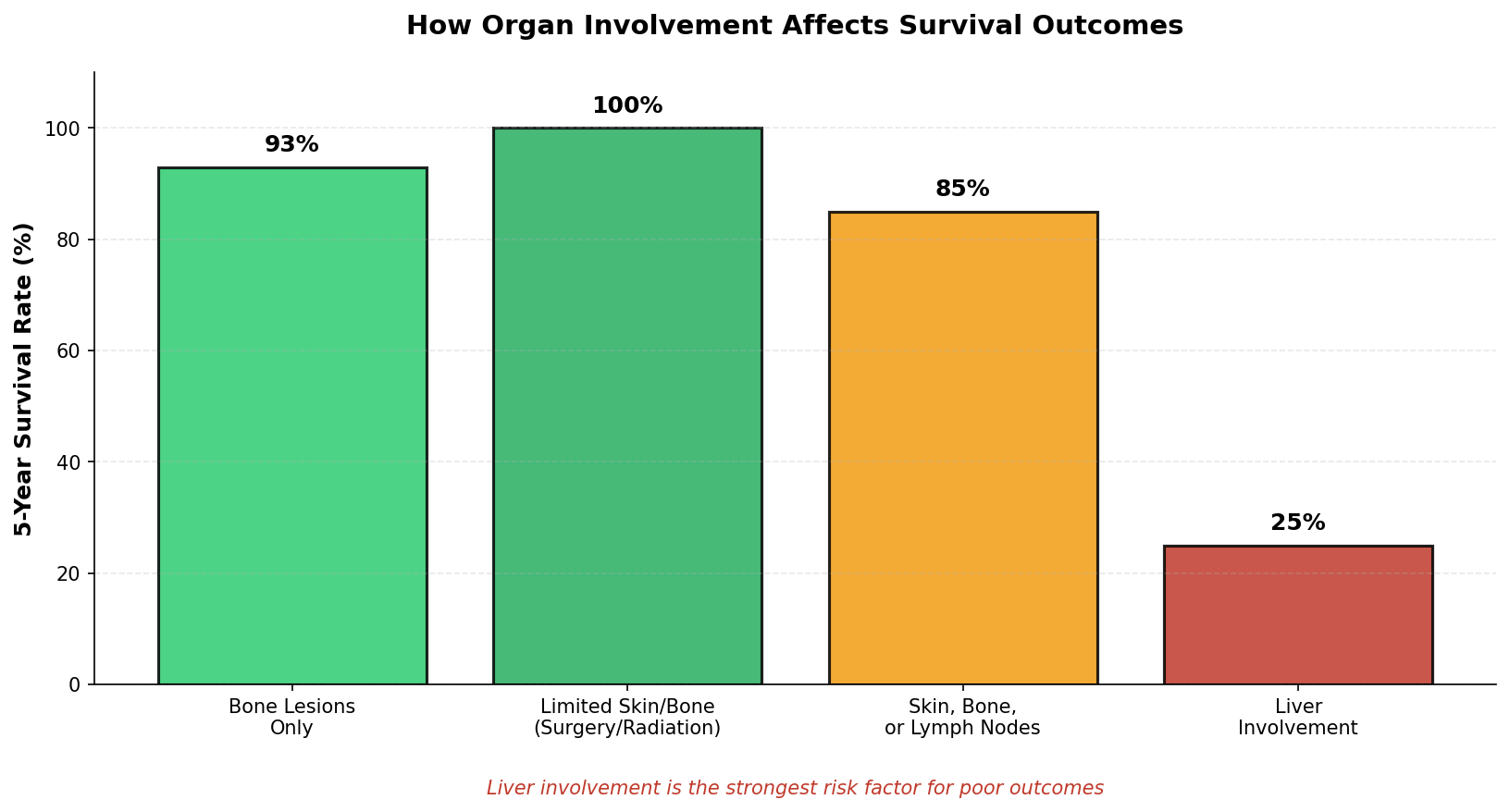 Figure 2: Multiple organs and organ systems that are involved in histiocytosis. Key features of Langerhans cell histiocytosis.

Figure 3: Multiple organs and organ systems that are involved in Histiocytosis. Key features of Rosai-Dorfman disease (RDD).
The Critical First Six Weeks: Early Response Assessment
Here's what changed the game in histiocytosis management: recognising that your response to treatment in the first 6 weeks tells your doctors almost everything they need to know about your long-term outcome.
Why Early Assessment Matters
Within 6 weeks of starting treatment, your medical team will perform imaging assessments to determine how your disease is responding. This isn't just routine checking. This determines whether your treatment is working and whether adjustments are needed.
What Happens If Early Response Isn't Ideal
If you're not showing good response at 6 weeks, your doctors will intensify therapy. This might mean:
- Higher doses of chemotherapy
- Adding additional drugs to your regimen
- Switching to different treatment approaches
- Considering clinical trials with newer agents
The key is that early identification allows intervention before disease becomes more aggressive. This is why you should never hesitate to ask your team how your mid-treatment assessment went and what it means for your specific situation.
Treatment Approaches: From Standard Chemotherapy to Precision Medicine
Histiocytosis treatment has evolved from one-size-fits-all chemotherapy to increasingly personalised approaches based on your specific genetic mutations.
Standard Chemotherapy Regimens
Vinblastine-based therapy remains a first-line option for many patients, particularly those with bone-limited disease. Typical dosing includes vinblastine given weekly initially, then every 3 weeks for about a year, often combined with prednisone.
For more aggressive disease or refractory cases, intensified chemotherapy regimens have proven more effective than historical approaches. These might include combinations of vincristine, cyclophosphamide, and doxorubicin.
Response rates: 81-82% complete remission rates in children with intensified regimens for multisystem disease.
The Game-Changer: Genetic Mutation Testing and Targeted Therapy
This is where modern histiocytosis treatment has fundamentally changed. Approximately 75% of LCH patients have specific genetic mutations (BRAF V600E or MAP2K1) that drive their disease. These mutations can now be targeted with precision medicine drugs.
MEK inhibitors (particularly trametinib and other agents) specifically target these mutations:
- 94% response rate in patients with refractory (chemotherapy-resistant) disease
- Median treatment duration: 4.3 years in published series
- Particularly effective for CNS-risk disease
Combined approaches: Some centres now use targeted therapies combined with conventional chemotherapy, achieving 94.1% overall response rates.
Recent development of immunotherapy drugs called checkpoint inhibitors and living drugs called CART cells Ipilimumab (Yervoy), the first FDA-approved checkpoint inhibitor and Chimeric antigen receptor (CAR) T cells, which were approved by FDA in 2017,(These “living drugs” use genetically engineered versions of a person’s own immune cells to find and fight cancer) have revolutionised the treatment in patients with Histiocytosis.
The implications are profound: if your disease doesn't respond to standard chemotherapy, genetic testing can identify a specific mutation, and you may be a candidate for targeted therapy. This has transformed what once would have been considered "treatment-resistant" disease into something manageable.
Other Effective Treatment Options
Cladribine (a specialised chemotherapy drug) that is preferred by experts as monotherapy.
- Response rate: 75-90% (both frontline and salvage scenarios)
- Median duration of response: 3 years
- Often used for adult multisystem disease or relapsed patients
Radiotherapy:
- Complete remission rate: 77-100% with single system disease
- Particularly effective for unifocal bone lesions
- Allows sparing of systemic chemotherapy in selected cases
Active surveillance: For very limited disease (especially unifocal bone lesions), some patients may be monitored initially without immediate systemic chemotherapy, particularly if surgical or local radiation options are available.
The Importance of Early Molecular Testing
If you have a new diagnosis of histiocytosis, ask whether your disease has been tested for BRAF and MAP2K1 mutations. This information should guide your treatment plan. Cell-free DNA testing (a blood test) can detect these mutations non-invasively with nearly perfect sensitivity in high-risk disease, so biopsy isn't always necessary.
Monitoring and Surveillance: What to Expect
Once your disease responds to initial treatment, you'll transition to a monitoring and surveillance phase. This is where ongoing management prevents relapse and catches problems early.
Imaging Surveillance Strategy
Your imaging surveillance will be individualised based on your disease type and treatment response.
PET/CT scanning is the gold standard for comprehensive disease assessment:
- Highly sensitive for detecting bone lesions, soft tissue involvement, and residual disease
- Excellent for detecting early treatment response
- Used for initial staging, response assessment, and follow-up surveillance
- Limitations: less sensitive for pulmonary disease
MRI is essential for monitoring CNS (brain and spinal cord) involvement
- Especially important if you had hypothalamic-pituitary involvement (which causes diabetes insipidus)
- Detects brain lesions much better than other imaging
- Required for monitoring neurological complications
Frequency: After you achieve best response, imaging frequency is individualised. Rather than a rigid schedule, your team adjusts based on your specific situation. Some patients need frequent imaging (every 3-6 months initially), while others transition to annual assessments as disease remains stable.
Biomarker Monitoring: Beyond Imaging
Imaging alone isn't enough anymore. Advanced biomarkers can detect disease recurrence before imaging changes appear.
Circulating cell-free DNA (cfDNA):
- Non-invasive blood test that tracks BRAF V600E mutations
- Can detect disease burden and monitor treatment response
- May provide earlier warning of recurrence than imaging
- Particularly valuable for patients with BRAF-mutant disease
Neurofilament light (NFL) protein:
- Biomarker for detecting CNS neurodegeneration
- Can be measured in cerebrospinal fluid or plasma
- Allows screening for late neurological complications that occur years after apparent cure
- Especially important given that neurodegenerative histiocytosis can be devastating but preventable with early intervention
Endocrine Monitoring
If you had any involvement of the hypothalamic-pituitary region (indicated by diabetes insipidus, growth problems, or hormonal abnormalities), you'll need ongoing endocrine monitoring. This typically includes:
- Regular assessment of growth and development (in children)
- Thyroid hormone levels
- Pituitary hormone panels
- Monitoring for diabetes insipidus
- Annual or biannual visits with an endocrinologist
The critical point: endocrine complications may persist even after your histiocytosis is cured, so lifelong monitoring is necessary.
Understanding Reactivation and Relapse Risk
One of the most important conversations to have with your medical team involves realistic discussion of reactivation risk.
The Reactivation Numbers You Should Know
Reactivation means your disease becomes active again after a period of remission. This is fundamentally different from not responding to initial treatment.
Single-system disease reactivation: If you have truly localised disease and achieve remission, relapse is lower.
Reactivations of SS-LCH (skin, bone, other) include:
- Wait and watch approach
- Local therapy including irradiation (as above)
- Bisphosphonates for bony disease (as above)
- Chemotherapy
Multisystem disease reactivation: is more common. The most common reactivation sites involve bone, middle ear, skin and hypothalamus (Diabetes Insipidus).
Risk Factors for Reactivation
Certain characteristics increase your risk of experiencing reactivation:
- Multiple bone involvement (vs. single bone)
- Multisystem disease extent
- Poor initial response to therapy
- Presence of BRAF V600E mutations (associated with higher relapse risk)
- CNS-risk lesion location
- Prolonged active disease course
Understanding your specific risk factors helps you and your team decide on monitoring intensity.
When Reactivation Occurs
Reactivation can occur:
- Within months of completing treatment
- Years later, when you thought the disease was behind you
- Even in patients with excellent initial responses
The unpredictability is why ongoing surveillance matters, even when you feel completely well.
Salvage Therapy and Second-Line Treatment
If reactivation occurs, don't interpret this as treatment failure. Salvage therapy (treatment for relapsed disease) has excellent success rates: over 70% of patients who relapse achieve remission with second-line therapy.
Common salvage approaches include:
- Alternative chemotherapy regimens (e.g., switching to cladribine if initially treated with vinblastine)
- Targeted MEK inhibitor therapy (if BRAF/MAP2K1 mutant)
- Intensified chemotherapy
- Combination approaches
- In CNS involvement, cytarabine may be added to 2-CDA (both drugs cross the blood-brain barrier
- Tyrosine kinase inhibitors (imatinib)
- Most aggressive course of disease hematopoietic stem cell transplant
- Clofarabine has been effective for refractory childhood LCH
The critical point: relapse doesn't mean your prognosis is hopeless. It means your treatment needs to change, and modern options exist.
Long-Term Complications: The Hidden Burden of Histiocytosis
Here's the reality that many newly diagnosed patients don't fully appreciate: survival isn't the only outcome that matters. Quality of life during and after treatment is equally important.
Overall Morbidity Burden
Morbidity in LCH is due to the recurrence of the disease multiple times after treatment, as patients with single-system disease and low-risk multisystem disease do not usually die of LCH. The most common long-term effect is long-term sequelae caused by underlying disease and/or treatment.
Endocrine Complications (Most Common)
Hypothalamic-pituitary dysfunction affects 50% of multisystem LCH survivors is common. This is the single most common long-term complication.
Growth hormone deficiency is the most frequently affected hormone, requiring 79%.
- Regular monitoring through childhood and adolescence
- Possible hormone replacement therapy
- Coordination with an endocrinologist
Diabetes insipidus is a distinct complication affecting some patients:
Causes extreme thirst and urination
- Requires lifelong management with medications
- Increases with the presence of craniofacial bone lesions or prolonged active disease
Other endocrine effects: Thyroid dysfunction (hypothyroidism), pituitary hormone deficiencies and hypogonadism in some patients.
The key message: endocrine monitoring should be part of your long-term follow-up indefinitely, not just during childhood.
Neurological and Cognitive Effects
Cognitive dysfunction occurs in 20% of multisystem LCH survivors; approximately 1 in 5 patients. This can range from subtle learning difficulties to more significant cognitive impairment. Early identification allows educational support and intervention.
Cerebellar involvement occurs by 40%, causing problems with balance, coordination, and fine motor skills. These effects can be severely disabling.
Neurodegenerative LCH: This is a rare but devastating late complication that can occur years (even decades) after apparent disease remission. Patients thought to be cured can develop progressive neurological decline involving cerebellar dysfunction (ataxia), cognitive deterioration, memory problems and progressive disability.
While rare, this unpredictable complication is why:
- Lifelong neurological surveillance is recommended
- Plasma neurofilament light testing should be considered as a screening tool
- Any new neurological symptoms should be immediately reported to your care team
Mental Health and Psychological Effects
One in three patients with histiocytosis experience anxiety or depression. One in seven experience moderate to severe psychological symptoms. These aren't trivial statistics; they reflect the substantial emotional burden of living with and surviving this disease.
Risk factors for mental health problems include:
- Financial burden: Cost of treatment and ongoing care is a major driver of anxiety and depression
- Symptom severity: More aggressive disease correlates with greater psychological burden
- Employment status: Patients who are unemployed or retired report significantly more depression than fully employed patients
- Quality of life impact: The cascade from physical complications → functional limitations → psychological distress is well-documented
The message: mental health screening and support should be routine parts of your follow-up care, not afterthoughts.
Other Long-Term Complications
Oral and periodontal disease (particularly in adult patients with oral involvement):
- Oral involvement cases
- Causes gingival bleeding, pain, and periodontal damage
- Leads to negative quality of life impact in affected patients
- Requires specialised dental care and multidisciplinary approach
Secondary malignancies:
- The survivors may develop a secondary cancer
- Associated malignancies include Hodgkin's lymphoma, non-Hodgkin's lymphoma, thyroid carcinoma
- Radiation and chemotherapy increase risk
- Long-term cancer surveillance is recommended
Fractures and bone health: Some patients experience bone complications from disease or treatment.
Other sequelae: Hearing loss, vision problems, skin changes, and other complications can occur depending on disease location.
Overall Quality of Life Impact
Over 50% of multisystem LCH survivors report adversely affected quality of life. This isn't just statistical; it affects how people work, engage in relationships, participate in activities, and see their future.
Worst-case scenarios: some survivors face such severe complications that independent adult life becomes difficult. This is why aggressive management of long-term complications is essential; preventing or treating these consequences early can dramatically improve life quality.
Practical Long-Term Management Strategies
Building Your Multidisciplinary Care Team
Optimal long-term management requires coordination across multiple specialities:
- Primary care physicians
- Pediatric surgeons
- Transplant surgeons
- Pathologists
- Pediatric radiation oncologists
- Pediatric medical oncologists and haematologists
- Ophthalmologists
- Rehabilitation specialists
- Pediatric oncology nurses
- Social workers
- Child-life professionals
- Psychologists
- Nutritionists
Monitoring Schedule After Remission
A realistic long-term monitoring framework includes:
Imaging and biomarker assessment:
- Initial frequency (first 1-2 years post-remission): Every 3-6 months
- Intermediate period (years 2-5): Every 6-12 months
- Long-term (5+ years): Annual or as clinically indicated
- Adjust frequency based on disease type and response pattern
Clinical assessments:
- Multidisciplinary team visits: At least annual, more frequently if complications present
- Neurology screening: Consider annually if CNS-risk disease; ongoing surveillance for neurodegenerative complications
- Endocrine monitoring: Annual minimum; more frequently if documented dysfunction
- Mental health screening: Routine at each visit; formal assessment recommended annually
Biomarker testing (if applicable):
- Cell-free DNA monitoring (for BRAF-mutant disease): Per your oncologist's recommendations
- Neurofilament light testing: Consider as part of CNS screening, especially if CNS-risk disease
Self-Management and Lifestyle
Beyond medical monitoring, several lifestyle factors influence long-term outcomes:
Symptom awareness: Know your body. Any new symptoms (unusual pain, neurological changes, hormonal symptoms) should prompt immediate evaluation.
Treatment adherence: If you're on long-term medications (e.g., for diabetes insipidus or hormone replacement), adherence is critical.
Preventive health: Maintain general health through appropriate screening, vaccinations, and preventive care (adjusted based on your treatment history).
Mental health prioritisation: Regular screening for anxiety and depression; don't wait for symptoms to become severe before seeking support.
Financial planning: The cost of histiocytosis treatment and follow-up can be substantial. Accessing financial assistance programs, exploring insurance options, and planning ahead reduces stress.
Fertility and reproductive planning: Depending on your treatment, fertility may be affected. Discuss this openly with your oncology team if relevant.
Living Well with Histiocytosis: Moving Forward
For Recently Diagnosed Patients
Focus on early response. Your first 6 weeks of treatment are disproportionately important. Work closely with your team, attend all appointments, and understand your early response assessment results. This single piece of information tells you more about your likely outcome than any other factor.
Understand your disease type and what it means for your monitoring. Single-system disease? Your risk is low. Multisystem disease? You'll need intensive surveillance for years, possibly indefinitely. Know your risk so you can be proactive.
Ask about genetic testing. Understanding your mutation status opens the door to precision medicine approaches if needed.
For Long-Term Survivors
Your survival is a triumph, but your journey doesn't end with treatment completion. Commit to long-term multidisciplinary follow-up, even when you feel completely well. Complications can emerge silently, and early detection makes an enormous difference.
Prioritize mental health screening. One in three of you experiences anxiety or depression. This isn't weakness or failure; it's a predictable consequence of living through serious illness. Seeking support is part of comprehensive care.
Manage complications proactively. Half of you will experience significant lasting effects. Aggressive management of endocrine problems, cognitive issues, and physical complications prevents cascade effects that multiply disability.
Connect with others. Patient advocacy organizations like the Histiocyte Society (founded by and for patients and families) offer resources, support networks, and practical information. You're not alone in this journey.
Hope and Innovation
The landscape of histiocytosis treatment has changed more in the last decade than in the previous five decades combined. Genetic understanding has enabled precision medicine. Targeted therapies offer hope where chemotherapy failed. Improved monitoring techniques detect problems earlier.
For patients with refractory or relapsed disease, 94% response rates to targeted therapy represent a revolution. Children diagnosed today have prospects their parents couldn't have imagined.
References/Helpful Resources
- Mayo Clinic. Histiocytosis Clinic in Minnesota - Overview [Internet]. Mayo Clinic. 2021 [cited 2026 Aug 1]. Available from: https://www.mayoclinic.org/departments-centers/histiocytosis-clinic-minnesota/overview/ovc-20566040
- Goyal G, Young JR, Koster MJ, Tobin WO, Vassallo R, Ryu JH, et al. The mayo clinic histiocytosis working group consensus statement for the diagnosis and evaluation of adult patients with histiocytic neoplasms: erdheim-chester disease, langerhans cell histiocytosis, and rosai-dorfman disease. Mayo Clinic Proceedings [Internet]. 2019 Oct [cited 2026 Aug 1];94(10):2054–71. Available from: https://www.sciencedirect.com/science/article/pii/S0025619619302733
- Memorial Sloan Kettering Cancer Center (MSK) - National Cancer Institute [Internet]. www.cancer.gov. 2012 July [cited 2026 Aug 1]. Available from: https://www.cancer.gov/research/infrastructure/cancer-centers/find/memorialsloankettering
- Girschikofsky M, Arico M, Castillo D, Chu A, Doberauer C, Fichter J, et al. Management of adult patients with langerhans cell histiocytosis: recommendations from an expert panel on behalf of euro-histio-net. Orphanet Journal of Rare Diseases. 2013;8(1):72.
- Young JR, Johnson GB, Murphy RC, Go RS, Broski SM. 18F-FDG PET/CT in Erdheim–Chester Disease: Imaging Findings and Potential BRAF Mutation Biomarker. Journal of Nuclear Medicine [Internet]. 2017 Nov 2 [cited 2026 Aug 1];59(5):774–9. Available from: https://jnm.snmjournals.org/content/59/5/774.long
- Le Louet S, Brunaud C, Barkaoui M, Chevallier A, Chalard F, Mansuy L, et al. Neurofilament as a biomarker of neurodegeneration in childhood Langerhans cell histiocytosis: a feasibility study on 273 patients. British journal of haematology [Internet]. 2026 June [cited 2026 Aug 1];208(6):2113–23. Available from: https://pubmed.ncbi.nlm.nih.gov/41937433/
- Minkov M, Steiner M, Pötschger U, Aricò M, Braier J, Donadieu J, et al. Reactivations in multisystem langerhans cell histiocytosis: Data of the international LCH registry. The Journal of Pediatrics [Internet]. 2008 June 27 [cited 2026 Aug 1];153(5):700–5.e2. Available from: https://www.sciencedirect.com/science/article/abs/pii/S0022347608003879
- Pollono D, Rey G, Latella A, Rosso D, Chantada G, Braier J. Reactivation and risk of sequelae in langerhans cell histiocytosis. Pediatric blood & cancer [Internet]. 2007 [cited 2026 Aug 1];48(7):696–9. Available from: https://pubmed.ncbi.nlm.nih.gov/17252574/
- Langerhans Cell Histiocytosis Treatment (PDQ®) - NCI [Internet]. www.cancer.gov. 2009 Apr [cited 2026 Aug 1]. Available from: https://www.cancer.gov/types/langerhans/hp/langerhans-treatment-pdq
- Nanduri VR, Pritchard J, Levitt G, Glaser AW. Long term morbidity and health related quality of life after multi-system Langerhans cell histiocytosis. European Journal of Cancer. 2006 Oct;42(15):2563–9.
- PDQ Pediatric Treatment Editorial Board. Langerhans cell histiocytosis treatment (pdq®) [Internet]. ncbibooks. National Cancer Institute (US); 2009 [cited 2026 Aug 2]. Available from: https://www.ncbi.nlm.nih.gov/books/nbk65799/
