

Nearly 140 lung cancer cases are diagnosed in the UK every single day. What makes this number alarming isn't just the sheer volume, but a cruel fact: three-quarters of those people will already have advanced disease by the time they learn they have cancer. Most never saw it coming. They had no symptoms until their cancer had already spread.
For employers, this represents both a challenge and an unexpected opportunity. Your workforce includes people at significant risk who don't realise they can be screened before symptoms ever develop. The NHS Lung Cancer Screening Programme now offers eligible employees a free, low-radiation CT scan that takes 30 minutes and delivers results in 4 weeks. For those who participate, the impact is transformative: early detection increases survival rates by up to 13 times compared to late-stage diagnosis.
This article explains what you need to know about the NHS Lung Cancer Screening Programme, why early detection matters so profoundly, and how you can encourage your staff to participate in what may be the most life-saving preventive health initiative available to them.
Why Lung Cancer Is Usually Found Too Late
To understand why screening matters, you first need to grasp the central problem: lung cancer is silent.
Unlike some cancers that announce themselves with obvious symptoms, lung cancer often progresses for months or years without causing any signs at all. Approximately 87% of patients only experience symptoms after their cancer has advanced to late stages. By the time someone notices a persistent cough or unexplained weight loss, the disease has often already spread through the lungs and beyond.
This creates a cruel paradox. People assume symptoms would alert them to danger. In reality, waiting for symptoms means waiting far too long.
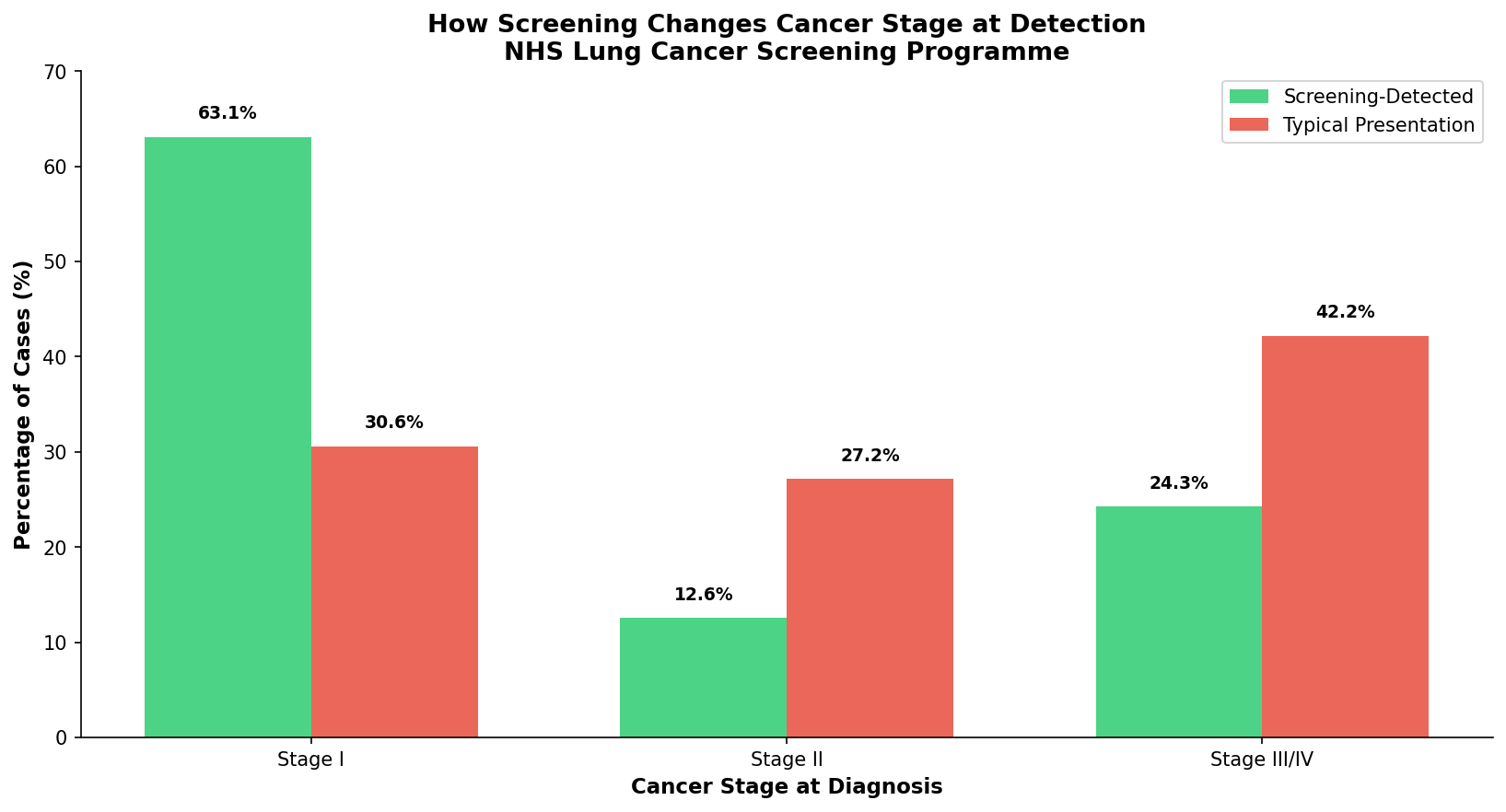 Figure 1: How screening shifts cancer stage at diagnosis. Without screening, patients present with advanced-stage disease; with screening, most cancers are caught at early, treatable stages.
When patients finally do develop symptoms and seek help, the path to diagnosis is frustratingly slow. The diagnostic delay chain looks like this:
- First symptom to GP appointment: 14 days (median)
- GP to specialist referral: 16 days (median)
- Referral wait and specialist consultation: 23 days (median)
- Total from symptom to diagnosis: 138 days minimum, often extending to 6 months or longer
During those months, cancer continues spreading. By the time treatment begins, 35% of patients arrive at their diagnosis through emergency presentations: they learn they have cancer in an emergency department when the disease is most advanced and least treatable.
The statistics paint a stark picture: approximately 75% of patients have stage III or IV disease (advanced cancer that has spread) at the time of diagnosis. Only about 29% of lung cancer cases are caught at early stages without screening.
The Survival Impact: Why Stage Matters Most
The stage at diagnosis is the single most important predictor of survival. The difference is staggering.
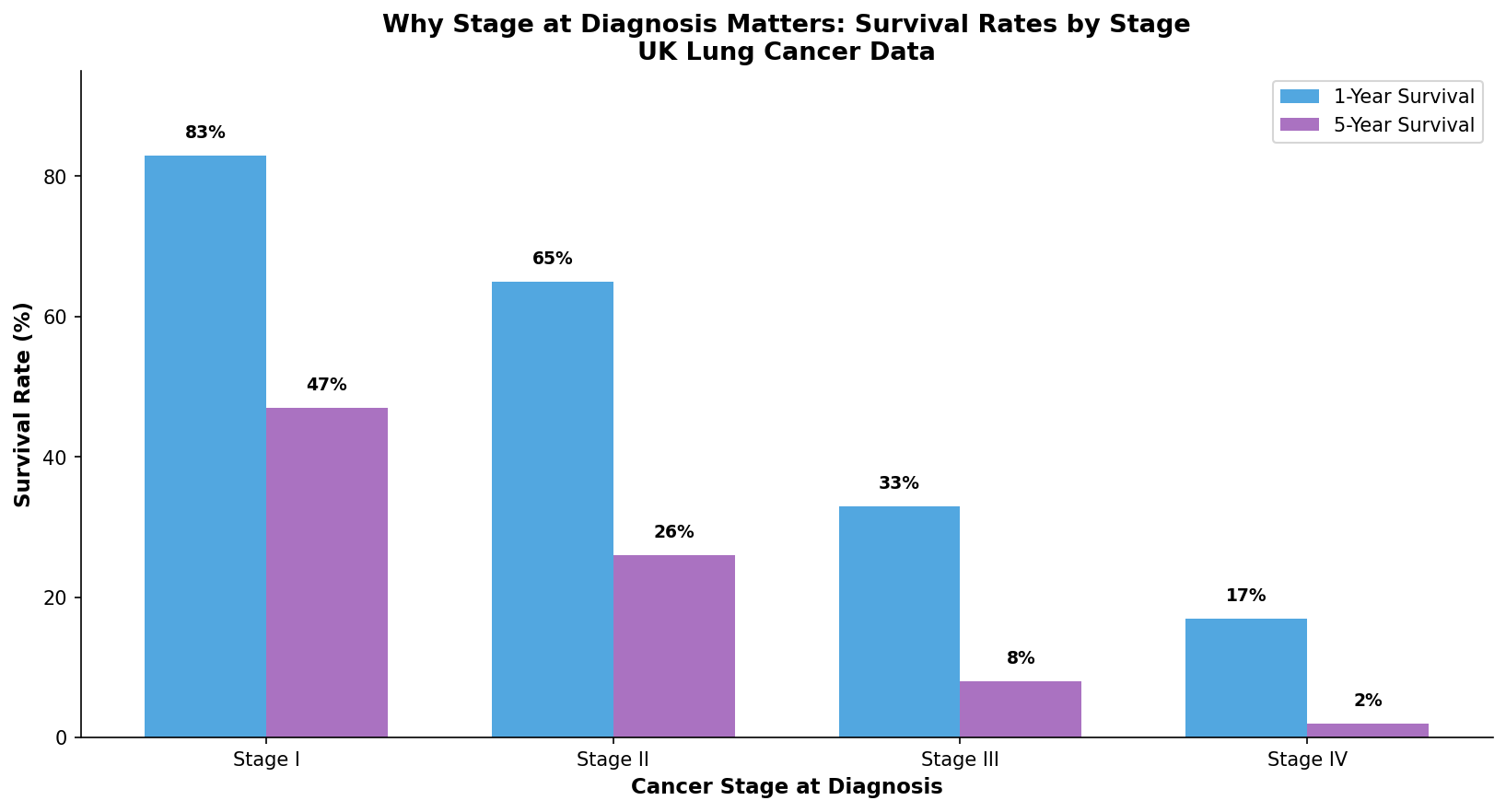 Figure 2: Five-year survival varies dramatically by stage. Stage I patients have roughly 47% five-year survival; stage IV patients have only 2%. This 23-fold difference is why early detection is absolutely critical.
| Cancer Stage | 1-Year Survival | 5-Year Survival |
|---|---|---|
| Stage I (localised) | 81-85% | 47% |
| Stage II | ~49-55% | 26% |
| Stage III | ~33% | 8% |
| Stage IV (metastatic/spread) | 15-19% | 2% |
For stage I patients caught early, roughly 1 in 2 survive 5 years or longer. For stage IV patients, only 1 in 50 do. This isn't a difference of percentages; it's a difference between life and death for the majority of people diagnosed.
Patients with localised early-stage disease have survival rates 5 to 40 times higher than those diagnosed with distant metastatic disease. This is why screening before symptoms appear is so transformative.
The NHS Lung Cancer Screening Programme: How It Works
The NHS Lung Cancer Screening Programme, also called Targeted Lung Health Checks, represents a fundamental shift in how the UK approaches lung cancer. Rather than waiting for patients to develop symptoms, the programme actively invites high-risk people for screening to catch cancer in its earliest, most treatable stages.
Who Is Eligible?
The programme targets people aged 55-74 with a significant smoking history. Specifically:
- Age: 55-74 years old
- Smoking requirement: Current smokers or former smokers who quit within the last 15 years
- Pack-year threshold: At least 20 pack-years of smoking history (one pack-year equals smoking one pack of 20 cigarettes daily for one year)
For context, approximately 15-16% of the UK population still smokes, and many more are former smokers. This means a meaningful proportion of your workforce may be eligible; particularly employees in their late 50s through early 70s.
Former smokers remain at elevated lung cancer risk for up to 20 years after quitting. The risk doesn't disappear immediately; it gradually decreases over time. An employee who quit smoking 10 years ago is still at significantly elevated risk and would benefit from screening.
The Screening Process: Step by Step
The NHS screening programme is deliberately designed to be straightforward and low-burden for participants.
Step 1: Invitation and Initial Contact Eligible employees receive an invitation letter or phone call from the NHS. When the programme reaches your region and GP practice determines, invitations are sent to all eligible patients. The NHS then contacts the employee within 14 days of invitation.
Step 2: Telephone Risk Assessment (15-20 minutes) A specialist nurse or trained screener calls to assess the individual's lung cancer risk using validated risk assessment tools. The call covers:
- Current breathing and lung health
- Detailed smoking history (how long, how many cigarettes daily, when they quit)
- Personal and family medical history
- Occupational exposures
- Symptoms (cough, breathlessness)
- Medications and health conditions
This assessment determines whether the individual would benefit from CT scanning and helps identify those at highest risk.
Step 3: Low-Dose CT Scan (30 minutes) If the risk assessment indicates benefit, the employee is offered an appointment for a low-dose computed tomography (LDCT) scan. This is far less radiation than a standard CT scan: approximately the radiation equivalent of background exposure over 1–3 years. The scan produces detailed images of the lungs to detect early signs of cancer or other abnormalities.
Step 4: Results and Follow-Up (2-4 weeks) Results are sent to the patient and their GP within 2-4 weeks. If no concerns are identified, the patient is offered another screening check in 2 years. If abnormalities are found, the GP discusses next steps, which might include additional imaging, specialist consultation, or referral for further investigation.
Programme Results: What the Data Shows
Since the NHS Lung Cancer Screening Programme began in 2019 as a pilot (Targeted Lung Health Checks), the results have been impressive:
- Over 10,600 lung cancers detected as of March 2025
- 75.7% of screen-detected cancers caught at early stages (I or II) compared to only 29% without screening
- 63% detected at stage I (versus 30.6% in typical presentations)
- 83% of detected cancers are surgical candidates: meaning they can be treated with surgery, the most effective treatment for early lung cancer
- 85% of detected cancers are adenocarcinoma, the most common and most treatable type of lung cancer
The programme has successfully shifted the entire distribution of cancer stages toward earlier, more treatable disease. When screening works as intended, most participants receive reassuring results; those with cancer get the best possible prognosis.
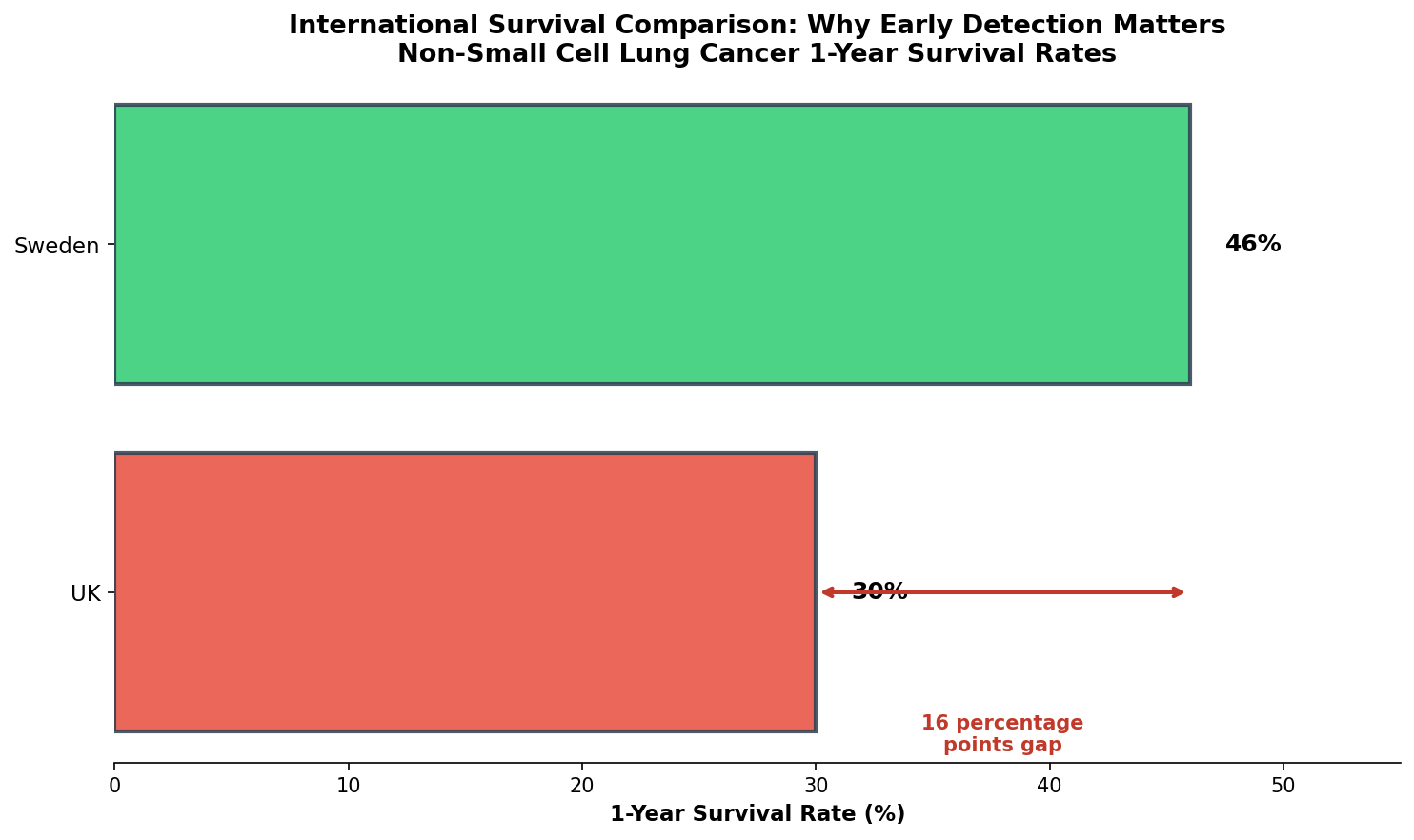 Figure 3: The UK historically lags behind countries like Sweden in one-year lung cancer survival (30% vs. 46%). The NHS Lung Cancer Screening Programme aims to close this gap through early detection.
Why Screening Saves Lives: The Survival Numbers
The evidence for screening effectiveness is robust. Multiple large studies have demonstrated substantial survival improvements.
Screening reduces lung cancer mortality by 18-21%. This means that for every group of roughly 130 at-risk people screened over 10 years, one death from lung cancer is prevented. That single life represents a family member, a colleague, an employee with hopes and plans and value beyond measure.
The survival advantage is even more striking when comparing early-stage screening-detected cancers to late-stage disease:
- People diagnosed at stages I-II are 13 times more likely to survive 5 years compared to those diagnosed at stage III-IV
- 10-year overall survival for screening participants: 86.9% versus 81.3% in matched unscreened controls: a difference of 5.6 percentage points sustained over a decade
These aren't marginal improvements. This is the difference between being likely to see your grandchildren graduate and being unlikely to see them finish primary school.
The Employer Advantage: Why Screening Benefits Your Business
From an employer's perspective, lung cancer screening offers multiple tangible benefits.
Workforce Health and Retention
Your employees aged 55-74 represent accumulated experience, institutional knowledge, and maturity. Early cancer diagnosis enables treatment while people retain work capacity. Late-stage diagnosis often coincides with permanent job loss and disability benefits: financially devastating for the employee and creating turnover costs for you.
Employees treated for early-stage cancer often continue working during and after treatment. Those diagnosed with stage IV disease frequently cannot work during intensive chemotherapy, radiation, or hospice care. By enabling early detection, you protect both employee wellbeing and workforce stability.
Healthcare Cost Savings
The economic case for screening is compelling. Screen-detected cases reduce treatment costs by 56% compared to late-stage detection. Early-stage cancer treatment is less intensive, requires shorter hospital stays (70% shorter on average), and allows faster recovery.
Consider the cost difference:
- Late-stage lung cancer treatment: extensive chemotherapy, radiation, hospitalizations, palliative care
- Early-stage lung cancer treatment: often surgery alone, minimal additional therapy, faster return to work
For employers paying for employee health insurance or contributing to NHS costs, supporting screening creates direct cost savings.
Productivity and Presenteeism
Early detection isn't just about treatment outcomes; it's about maintaining workforce productivity. Employees undergoing intensive late-stage cancer treatment experience significant productivity loss. Those receiving early-stage treatment experience much shorter disruptions and faster return to full capacity.
The net effect: earlier detection reduces both direct healthcare costs and indirect productivity losses.
Screening Uptake: Why It Varies and How to Improve It
Understanding screening uptake is critical because simply offering screening doesn't guarantee participation. How you structure the invitation dramatically affects whether people actually attend.
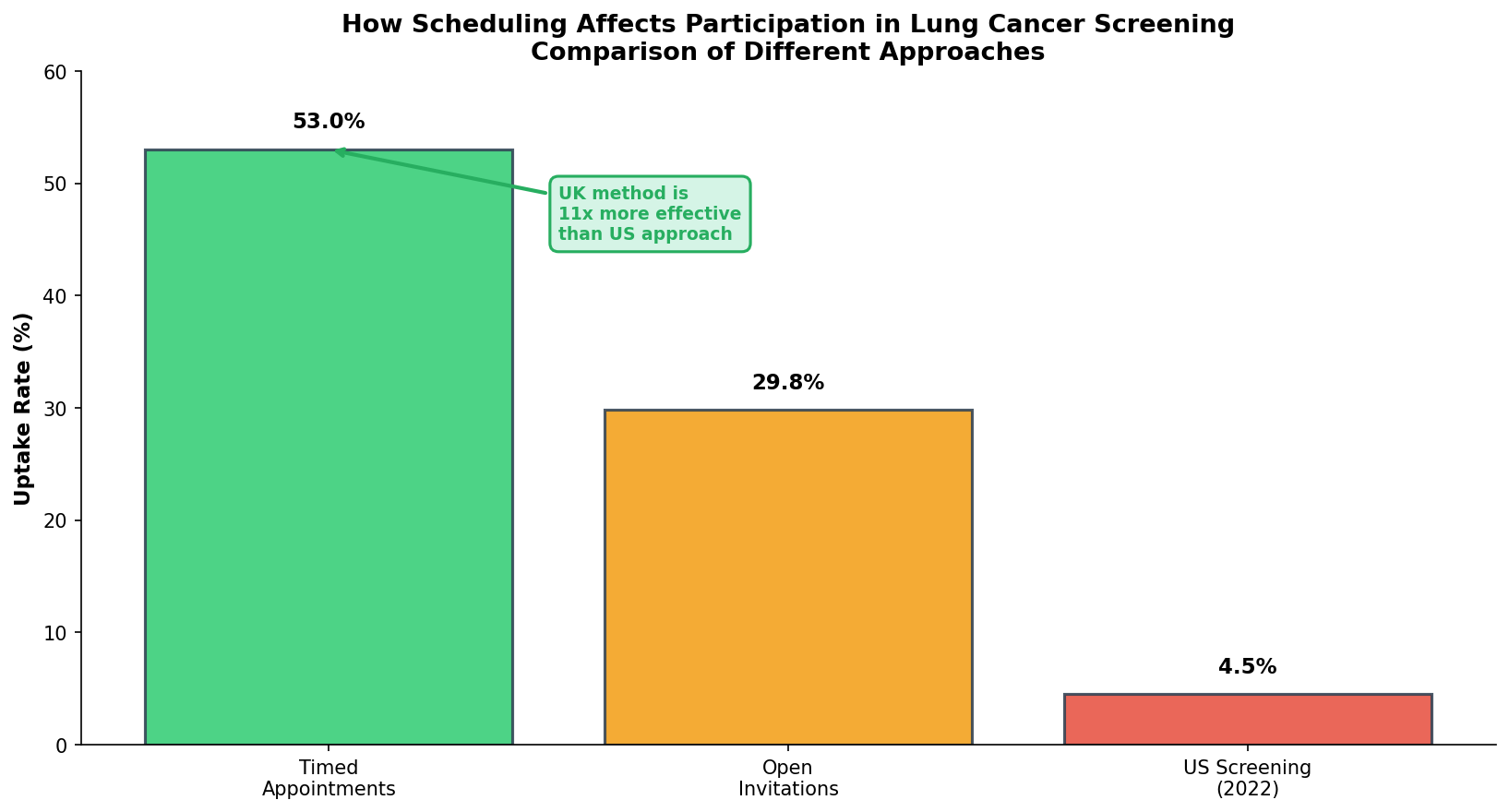 Figure 4: The NHS approach of offering timed appointments dramatically increases participation compared to open invitations or typical US approaches.
Current Uptake Rates
The NHS reports:
- Timed appointments (NHS standard): 53% uptake
- Open invitations: 29.8% uptake
- US approach (opt-in): 4.5% uptake
The difference between timed appointments and open invitations is stark: offering a specific appointment time roughly doubles participation. This isn't a small effect; this is the difference between screening 530 out of 1,000 eligible employees versus 298.
Why People Don't Participate: Common Barriers
Despite the simplicity and benefit of screening, several barriers prevent participation:
Work schedule conflicts. Employees with inflexible shifts, multiple jobs, or demanding professional responsibilities struggle to find time for appointments.
Fear and stigma. Some former smokers feel shame about their smoking history and avoid health screening altogether. They fear judgment or worry that screening will confirm their worst fears.
Lack of awareness. Many eligible employees don't know the screening programme exists or don't understand why they should participate.
Transport and time barriers. Childcare responsibilities, lack of transport, or distance to screening centres create practical obstacles.
Health inequalities. Ethnic minorities and people with lower socioeconomic status have substantially lower screening uptake rates despite similar eligibility.
Privacy concerns. Some employees worry about workplace wellness programmes sharing personal health information with HR or management.
Evidence-Based Strategies to Improve Uptake
Research on workplace health programmes identifies several strategies that demonstrably increase screening participation:
1. Management Support and Visible Leadership Commitment
Employees in organisations with strong management support are 39% more likely to participate in biometric screening. This isn't a small difference; the effect is powerful and measurable.
When senior leadership visibly supports screening (whether through promoting the programme, participating themselves, or allowing generous time off), employees notice. They understand that the organisation genuinely values their health.
2. On-Site Screening
Bringing screening to the workplace is significantly more effective than asking employees to attend external facilities. Mobile LDCT units that visit your workplace eliminate travel barriers and reduce time away from work.
International examples support this approach. The French LUCSO programme screened 1,941 workers with occupational exposure, detecting 57 cases of lung cancer (2.94%), with 82% detected at early stages I or II. The high detection rate was partly attributable to workplace-based screening delivery.
3. Flexible Appointment Scheduling
Offering Saturday morning appointments, early morning slots, and lunch-time screening times accommodates employees with varying work schedules. Flexibility removes barriers for those with inflexible duties.
4. Paid Time Off for Screening
Explicitly allowing employees to attend screening on paid time off (rather than expecting them to use personal time) significantly increases participation. Frame it as organisational investment in health, not an employee favour.
5. Culturally Adapted Communication
Tailor messaging for different employee groups. Use multiple languages if relevant. Employ health literacy principles:
- Limit key messages to 1-3 main points and repeat them consistently
- Use narratives and real stories of people who benefited from early detection rather than relying solely on statistics
- Frame messages positively ("Early detection saves lives") rather than fear-based ("Don't die from lung cancer")
- Verify understanding by asking employees to explain what they've learned
- Address concerns directly: If fear is a barrier, acknowledge it and explain what to expect; if privacy is a concern, explain data protections
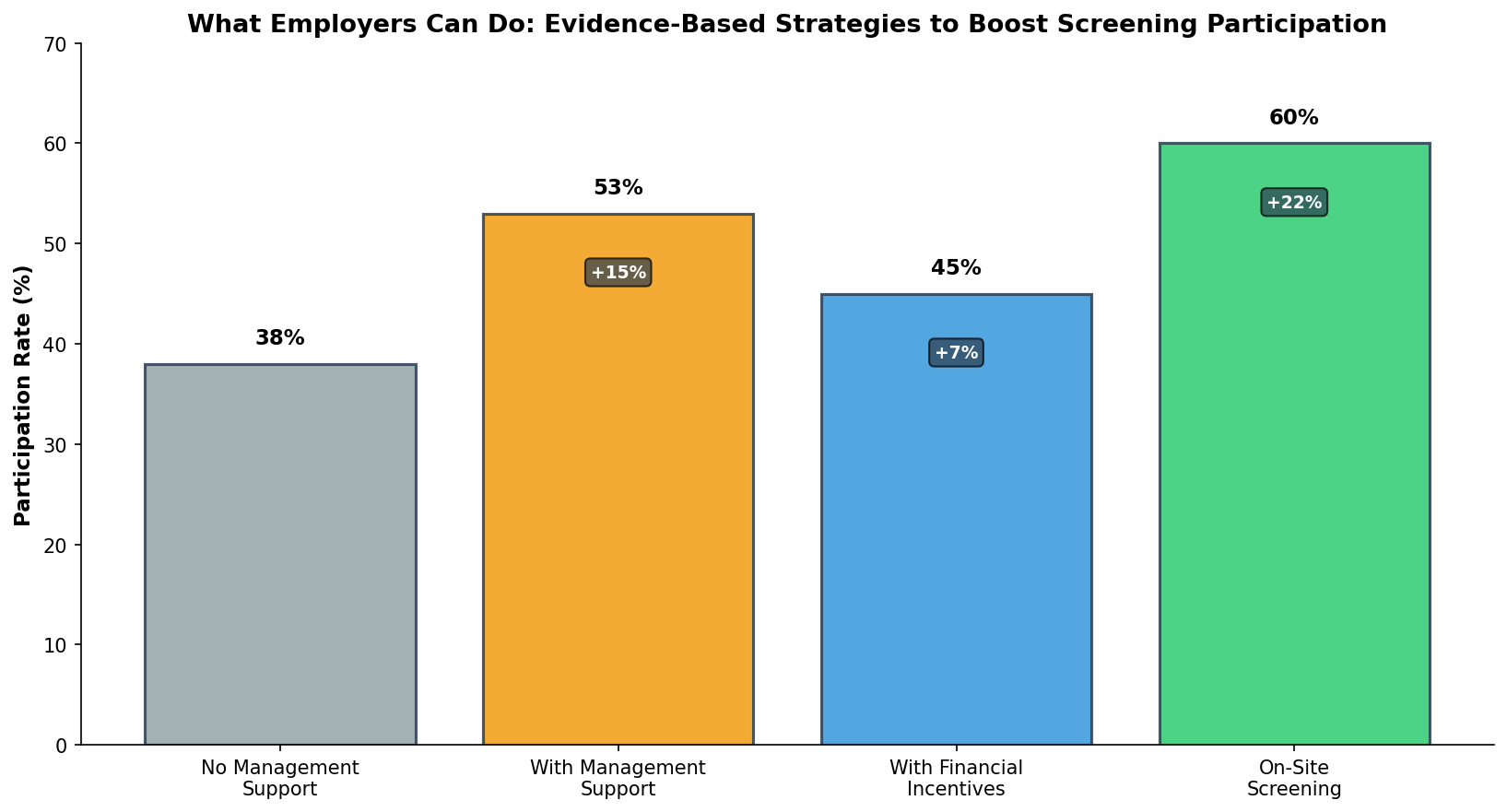 Figure 5: Multiple workplace strategies work together to increase screening participation. Management support combined with on-site options can reach 60% uptake.
6. Financial Incentives (Used Thoughtfully)
Financial incentives show modest but meaningful effects. Gift vouchers, travel reimbursement, or wellness incentives increase participation by 2-3 percentage points on average. They shouldn't be your only strategy, but they can be useful components of a multi-faceted approach.
7. Occupational Health Integration
If your organisation employs people in high-risk occupations (firefighters, construction workers, those exposed to asbestos or silica dust), frame screening as occupational health surveillance. Employees in these roles often have elevated risk awareness and higher willingness to participate (95% of firefighters expressed willingness in research studies).
The Economic Impact: Building the Business Case
If you're considering whether to invest in supporting lung cancer screening, the economic evidence supports action.
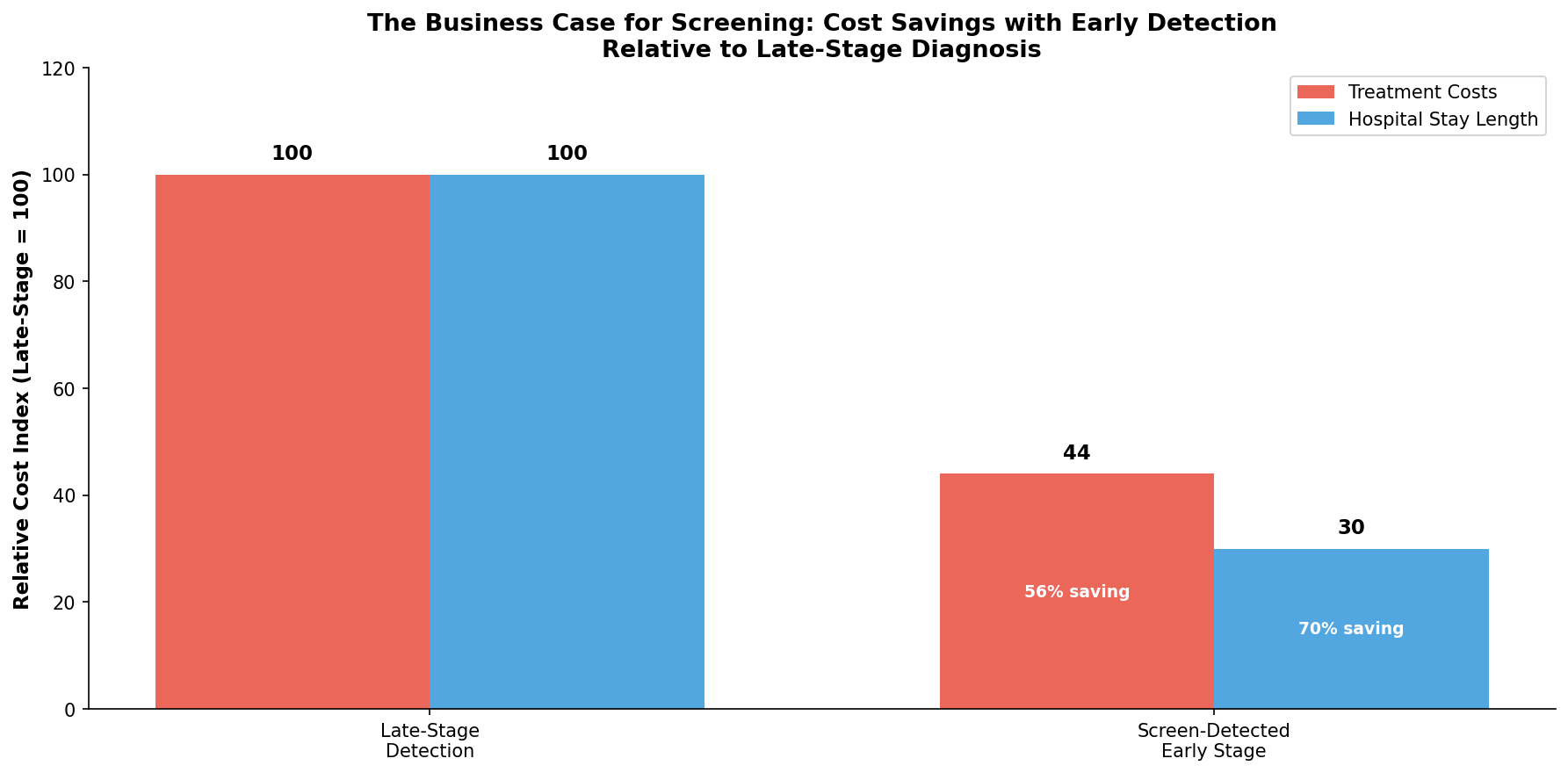 Figure 6: Early-stage cancer detected through screening dramatically reduces treatment costs and hospital stays compared to late-stage diagnosis.
Treatment Costs
Screen-detected early-stage lung cancer costs approximately 44% as much to treat as late-stage disease. This isn't speculation; it's documented in healthcare economic research comparing actual treatment costs.
Early-stage lung cancer often requires surgery alone. Late-stage disease requires prolonged chemotherapy, radiation therapy, supportive care, and often ongoing treatment despite limited efficacy.
Hospital Stay Reduction
Hospital stays are 70% shorter for early-stage patients compared to late-stage patients. This translates to faster recovery, fewer complications, and quicker return to work.
Indirect Costs and Productivity
Beyond direct healthcare costs, consider indirect costs: employee disability leave, temporary staffing, reduced productivity, early retirement on disability, and lost institutional knowledge. Early detection allows employees to continue working; late diagnosis often ends employment.
Return on Investment
For a medium-sized organisation with several hundred employees in the 55-74 age range, supporting screening participation represents a relatively modest investment compared to potential healthcare savings and retained productivity. Given that screening prevents one death per 130 people screened over 10 years, the human impact is profound, and the economic case is solid.
Specific Cost Scenario
Consider an employer with 500 employees aged 55-74, of which approximately 15-16% smoke or recently quit (75-80 people):
- Screening programme cost: Roughly £50-100 per participant (modest fee, often covered by NHS)
- Participants (assuming 53% uptake with timed appointments): ~40 people
- Expected early cancers detected: 1-2 cases
- Treatment cost savings (per early case detected): £25,000-50,000+ compared to late-stage treatment
- Net savings: Significant and measurable
Practical Implementation: Getting Started
If you're considering implementing or supporting lung cancer screening in your workplace, here are practical steps:
1. Identify Your Eligible Population
Review your workforce demographics. Employees aged 55-74 with a smoking history (current or former smokers who quit within the last 15 years) are eligible. This information can be gathered through occupational health records, voluntary employee surveys, or health risk assessments.
2. Find Out Your Regional Status
Check which NHS regions have active Targeted Lung Health Checks programmes. As of 2024-2025, the programme is active in multiple regions and expanding toward 100% national coverage by 2028/2029. Visit www.england.nhs.uk or contact your local NHS integrated care board to learn the status in your area.
3. Partner with Occupational Health Services
If your organisation has occupational health services, work with them to integrate lung cancer screening into health surveillance. If not, approach your local NHS occupational health providers or regional screening centres.
4. Develop a Participation Strategy
Based on the evidence presented above, design a multi-faceted approach:
- Secure visible management support and communication
- Ensure employees receive timed appointments (not open invitations)
- Allow generous paid time off
- Consider on-site screening if possible
- Tailor communication for your workforce
- Address specific barriers (transport, childcare, schedule)
5. Communicate Clearly
Use plain language. Explain:
- Why screening matters (75% present with advanced disease without it)
- Who should participate (age 55-74 with smoking history)
- What the process involves (phone call, low-dose CT scan, results in 4 weeks)
- Why early detection matters (13-fold survival advantage)
- What happens next (treatment plans if abnormalities found)
6. Measure and Monitor
Track participation rates, screening results, and any outcomes over time. This data demonstrates the value of your investment and informs future adjustments.
Key Takeaways for Employers
- The problem is real and measurable: Three-quarters of lung cancer patients present with advanced disease. Waiting for symptoms means waiting far too long.
- Screening works: The NHS Lung Cancer Screening Programme has detected over 10,600 cancers with 76% caught at early, treatable stages; dramatically better than the 29% early-stage detection rate without screening.
- Stage at diagnosis is everything: Early detection increases survival from 2% (stage IV) to 47% (stage I); a 23-fold difference.
- Your employees are at risk: Current and former smokers aged 55-74 in your workforce are eligible and would benefit, but most don't know screening is available.
- Evidence-based strategies work: Management support, timed appointments, flexible scheduling, on-site screening, and clear communication significantly increase participation.
- The business case is strong: Early detection reduces treatment costs by 56%, hospital stays by 70%, and enables faster return to work.
- You can make a difference: By promoting awareness and removing barriers to screening, you enable your employees to access the single most important preventive health intervention for reducing lung cancer deaths.
The opportunity is clear. Your employees deserve to know that screening for lung cancer is now available. They deserve the chance to catch cancer early if it develops, when survival rates are high and treatment is most effective. You have the power to help make that happen.
Further Reading
NHS Screening Programme and Clinical Guidance
- NHS England Lung Health Checks Programme
- NICE Guidance on Lung Cancer
- NICE Recommendations on Suspected Cancer Pathway
Understanding Lung Cancer and Risk Factors
- Cancer Research UK Lung Cancer Statistics
- NHS Lung Cancer Symptoms and Information
- National Cancer Institute Lung Cancer Overview
Workplace Health and Screening Implementation
- CDC Workplace Health Promotion
- AHRQ Communication Strategies for Health
- Mayo Clinic Workplace Cancer Screening
Screening Effectiveness and Outcomes
- NICE and NHS Implementation Guidance
- PubMed - Lung Cancer Screening Research
- Cochrane Library Systematic Reviews
Occupational Health and High-Risk Populations
- UK Occupational Health Surveillance Guidance
- International Occupational Lung Cancer Screening Programmes
- Firefighter Lung Health and Screening
Helpful Resources
- NHS England. Targeted Lung Health Checks Programme [Internet]. [cited 2025]. Available from: https://www.england.nhs.uk/
- National Institute for Health and Care Excellence. Lung cancer: diagnosis and management. Pathways guidance [Internet]. [cited 2025]. Available from: https://pathways.nice.org.uk/pathways/lung-cancer
- National Institute for Health and Care Excellence. Suspected cancer: recognition and referral. NG12 guidance [Internet]. [cited 2025]. Available from: https://www.nice.org.uk/guidance/ng12/
- Cancer Research UK. Lung cancer incidence statistics [Internet]. [cited 2025]. Available from: https://www.cancerresearchuk.org/health-professional/cancer-statistics/statistics-by-cancer-type/lung-cancer/incidence
- NHS. Lung cancer: symptoms [Internet]. [cited 2025]. Available from: https://www.nhs.uk/conditions/lung-cancer/symptoms/
- Wakelee HA, Gomez SL, Slattery ML, et al. Lung cancer incidence in never smokers. Journal of Clinical Oncology. 2007;25(5):472-478.
- Aberle DR, DeMello S, Berg CD, et al. Results of the two incidence screenings in the National Lung Screening Trial. New England Journal of Medicine. 2013;369(10):920-931.
- Oudkerk M, Liu S, Heuvelmans MA, et al. Lung cancer screening using low-dose computed tomography. New England Journal of Medicine. 2020;382(6):503-513.
- Manser RL, Dodd M, Martel G. Screening for lung cancer. Cochrane Database of Systematic Reviews. 2019;6(6):CD001991.
- Public Health England. Implementation of the NHS England Lung Cancer Screening Programme over 5 years. Implementation Science. 2024;19:62.
- National Institute for Health Care Excellence. Recommendations on workplace health screening. NG13 guidance [Internet]. [cited 2025]. Available from: https://www.nice.org.uk/guidance/ng13/chapter/recommendations
- Centers for Disease Control and Prevention. Workplace health promotion [Internet]. [cited 2025]. Available from: https://www.cdc.gov/workplacehealthpromotion/
- Agency for Healthcare Research and Quality. Communication strategies for health literacy [Internet]. [cited 2025]. Available from: https://www.ahrq.gov/health-literacy/improve/precautions/tool4a.html
- Svedsater H, Jaén Márquez E, Papachristou N, et al. A systematic review and meta-analysis of the effectiveness of workplace cancer screening interventions. PLOS ONE. 2024;19(1):e0293890.
- Abdelrahman A, Duquette J, Dupont P, et al. Organized lung cancer screening of subjects occupationally exposed to lung carcinogens: LUCSO study. Occupational Medicine. 2024;74(5):268-276.
- Gould MK, Huang BZ, Tammemägi MC, et al. Recent trends in the identification of candidates for lung cancer screening and perceived barriers to screening in the United States. JAMA Network Open. 2023;6(2):e229844.
- Petty TL, Harbison S. Newer concepts in the screening and management of lung cancer in the workplace. Occupational Medicine. 2006;56(2):92-100.
- Blum JD, Dasey JM. Employment consequences of lung cancer diagnosis. Chest. 2011;139(4):814-820.
- Cleveland Clinic. Why lung cancer doesn't have to be the deadliest cancer [Internet]. [cited 2025]. Available from: https://health.clevelandclinic.org/why-lung-cancer-doesnt-have-to-be-the-deadliest-cancer
- National Cancer Institute. Lung cancer screening [Internet]. [cited 2025]. Available from: https://www.cancer.gov/
