

Refeeding After Fasting: How to Do It Safely
If you've fasted for an extended period or are recovering from severe malnutrition, this article is for you. The way you reintroduce food matters more than you might think. Eating too quickly after prolonged fasting can trigger a potentially life-threatening condition called refeeding syndrome. But here's the good news: with knowledge and proper planning, you can recover safely. This guide will walk you through what's happening in your body, why careful refeeding works, and exactly how to move through recovery step-by-step.
What is Refeeding and Why Does It Matter?
Refeeding is the process of gradually reintroducing food after a period of little or no eating. It's not simply about resuming normal eating; it's a carefully managed medical process that allows your body to adapt safely.
When you've been severely underfed, your body has fundamentally changed how it works. Your metabolism has slowed down. Your cells have depleted critical minerals called electrolytes; particularly phosphate, potassium, and magnesium. Your digestive system has essentially gone dormant. When food suddenly arrives, your body doesn't simply resume normal function. Instead, there's a metabolic shock that can, without proper management, become dangerous.
This is why understanding refeeding matters so deeply. The most vulnerable time for someone recovering from severe malnutrition is not during starvation; it's in the first few days of eating again. With the right approach, this period becomes a pathway to recovery. Without it, complications can develop rapidly.
What is Refeeding Syndrome and Why You Need to Know About It
Refeeding syndrome is a potentially life-threatening metabolic emergency that occurs within the first days of resuming eating. It happens when your cells, desperate for fuel, rapidly pull essential electrolytes from your bloodstream. These minerals are critical for your heart to beat regularly, your muscles to function, and your nerves to fire properly.
Here's what makes it so dangerous: during starvation, your blood electrolyte levels may look normal on a blood test even though your cells are severely depleted. The body prioritises maintaining blood levels to keep vital organs alive, but it does this by sacrificing cellular stores. When you eat, especially carbohydrates, your pancreas releases insulin to help your cells absorb glucose for energy. This process requires phosphate, potassium, and magnesium. These minerals rush from your bloodstream into your cells at a rapid pace. If you don't have enough electrolytes in reserve, your blood levels plummet dangerously low within hours.
When blood electrolyte levels collapse, your organs cannot function properly. Your heart develops dangerous arrhythmias (irregular rhythms). Your muscles become profoundly weak, including the diaphragm (your breathing muscle). Your nerves misfire, causing confusion and seizures. Your kidneys can fail. This cascade of organ damage develops silently and quickly; often within 72 hours of beginning refeeding.
How common is refeeding syndrome?
The incidence varies dramatically depending on how severely malnourished someone is.1 In eating disorder patients, nearly all are at risk for refeeding syndrome. In general hospitalised populations, incidence ranges from 0.43% to 18%. In medical intensive care units, incidence rises to 22.7% to 27.3%.2 Among elderly hospitalised patients, up to 69.9% are considered at risk.1
The mortality stakes
This is where refeeding syndrome becomes critically serious. In eating disorder patients recovering in an intensive care unit without proper refeeding protocols, mortality reaches 71% (5 out of 7 patients).3 With proper medical management and careful refeeding, mortality drops to 3% (2 out of 61 patients).3 That's a 24-fold difference in survival rates—the most powerful argument for why medical supervision during refeeding is not optional; it's life-saving.
For general malnourished patients, those who develop refeeding syndrome have a 29.8% mortality rate compared to 21.9% in those without it.4 The most common cause of death is cardiac arrhythmias—abnormal heart rhythms that can cause sudden cardiac arrest.
This isn't ancient history. In 1951, Schnitker and colleagues reported that 1 in 5 (20%) of Japanese prisoners of war starved in prison camps died suddenly after receiving nutritional and vitamin supplementation.5 Modern medicine has learned from these tragic cases and developed protocols that prevent these deaths.
How Your Body Changes During Starvation
To understand why refeeding is complex, you need to understand what happens to your body when you stop eating.
The metabolic shift
When you fast, your body goes into a carefully orchestrated survival mode. In the first 6 to 24 hours, your liver releases stored glucose (glycogen) to maintain your blood sugar.6 This is your immediate fuel source, and it depletes quickly. Within 18 to 24 hours, your glycogen stores are essentially empty.6
Your body then switches fuel sources. It begins burning fat for energy, and your metabolic rate decreases by 20% to 25%.2 This is called "the metabolic switch." Your metabolism is not working poorly; it's working efficiently; using fewer calories to keep vital organs alive. Your insulin levels plummet because there's no glucose to process. Your body enters a fat-burning state, mobilising free fatty acids and producing ketone bodies that your brain uses as fuel.6
In one documented case, a person who completed a 7-day fast experienced a 34% reduction in metabolic rate, dropping from 2,040 calories per day to 1,342 calories per day.2 This is not weakness or damage; it's adaptation.
The electrolyte depletion
Simultaneously, your cells are using and depleting electrolytes. During starvation, your body maintains blood electrolyte levels through a trick: it draws minerals from cellular reserves. Your blood tests may show "normal" electrolyte levels because your body is sacrificing what's inside your cells to keep blood levels stable.6 This is why you can have dangerously depleted electrolytes without realising it.
By the end of prolonged fasting, your cells are essentially empty of phosphate, potassium, and magnesium. Your digestive system has reduced enzyme production. Your stomach acid production has decreased. Everything in your metabolism has shifted toward survival mode.
The dangerous reversal
This is where refeeding syndrome develops. The moment glucose enters your bloodstream again, everything reverses instantly. Your pancreas detects blood sugar and releases large amounts of insulin—potentially more than normal because your body has been in a fasting state.6 Insulin is a powerful hormone that tells your cells to absorb glucose for energy and storage.
As cells absorb glucose, they urgently need phosphate to generate ATP (cellular energy). They need potassium for muscle contraction and heart rhythm. They need magnesium for hundreds of enzymatic reactions. These minerals that you don't have in sufficient supply are pulled from your bloodstream into your cells at a rapid pace. Within hours, blood electrolyte levels can plummet to dangerous levels.
This is the electrolyte crisis that defines refeeding syndrome. Your cells get what they need to function, but your blood becomes critically depleted. And your blood supplies these minerals to your heart, your brain, your muscles, and your kidneys. When blood levels collapse, these organs cannot work properly.
The Dangers: Understanding Refeeding Syndrome Complications
Refeeding syndrome affects multiple body systems simultaneously, creating a cascade of dangerous complications.
Why your heart is most at risk
The heart is an electrical organ. Every heartbeat depends on precisely balanced electrolytes creating electrical signals that tell the heart muscle to contract in a coordinated rhythm. When potassium and magnesium drop, these electrical signals misfire.
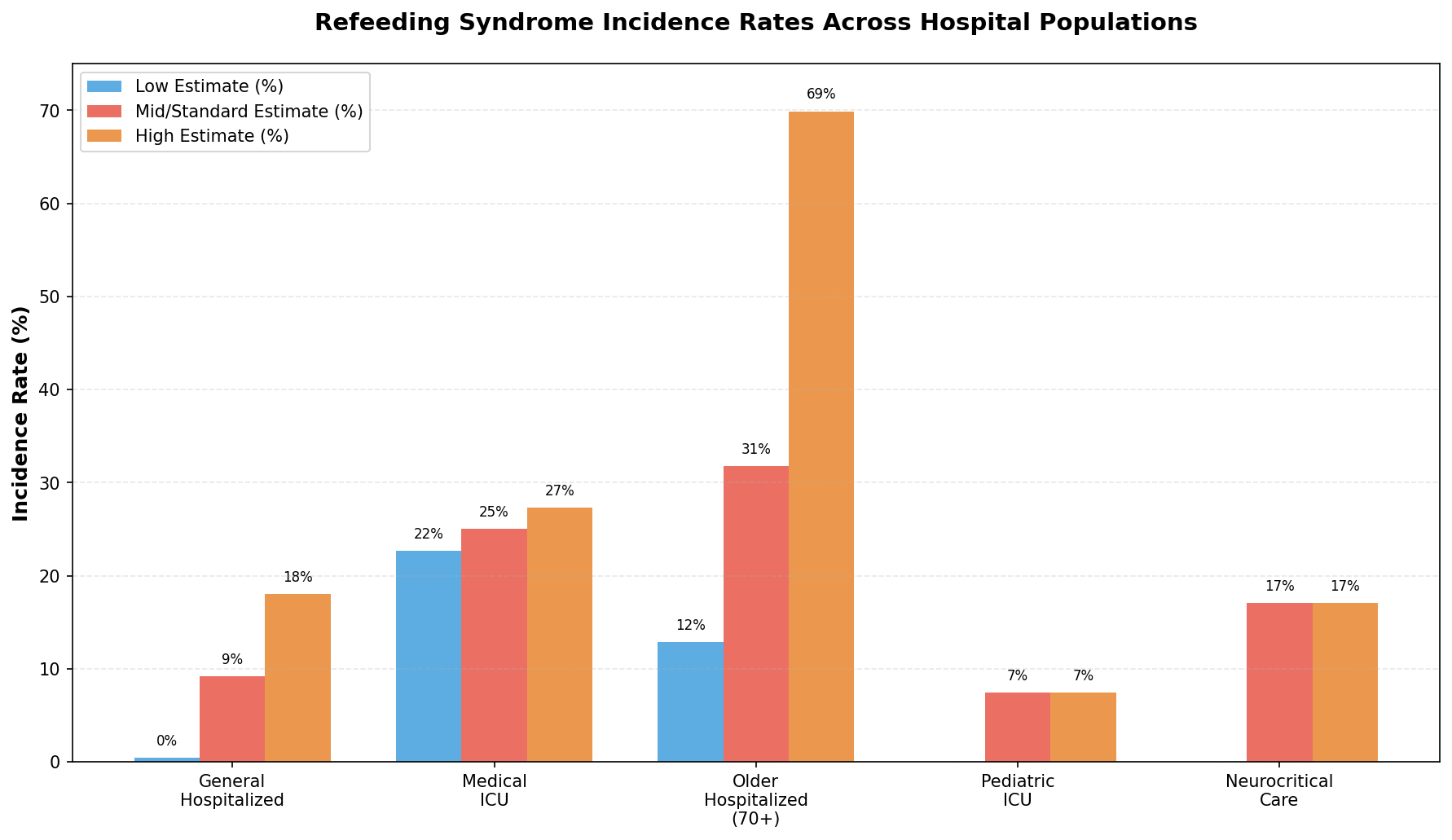 Figure 1: Mortality rates dramatically decrease with proper refeeding management. The 71% mortality rate in unmanaged eating disorder cases drops to 3% with medical protocols, showing a 24-fold difference in survival.3
Cardiac arrhythmias (abnormal heart rhythms) occur in 65% of refeeding syndrome cases. These can develop silently, and the patient feels nothing whilst their heart rhythm becomes chaotic. A specific type of dangerous arrhythmia called "Torsades de Pointes" is caused by low magnesium and potassium and can cause sudden cardiac arrest.7
The phosphate crisis
Low phosphate (hypophosphatemia) is the hallmark of refeeding syndrome and occurs in 75% of cases. Phosphate is essential for ATP production: the energy currency of every cell in your body. Without adequate phosphate, your muscles cannot contract properly. Your breathing muscles weaken. Your red blood cells are destroyed. Your immune system fails.
Severe phosphate deficiency can cause respiratory failure requiring mechanical ventilation. It can cause rhabdomyolysis (muscle breakdown), where muscle tissue literally disintegrates, releasing harmful proteins into the bloodstream that can destroy your kidneys.7
Other complications
Refeeding syndrome can trigger five life-threatening complications simultaneously: rhabdomyolysis (muscle breakdown), heart failure (inability to pump blood), respiratory failure (inability to breathe), haemolysis (red blood cell destruction), and seizures (uncontrolled brain electrical activity).8
Low magnesium can cause seizures and dangerous heart rhythms. Fluid retention occurs as your body retains salt and water, causing swelling in your legs, feet, and sometimes throughout your body. This fluid retention adds stress to your heart, potentially triggering heart failure.
Thiamine (vitamin B1) deficiency can cause Wernicke encephalopathy, a serious brain condition causing confusion, vision problems, and permanent neurological damage if untreated.9
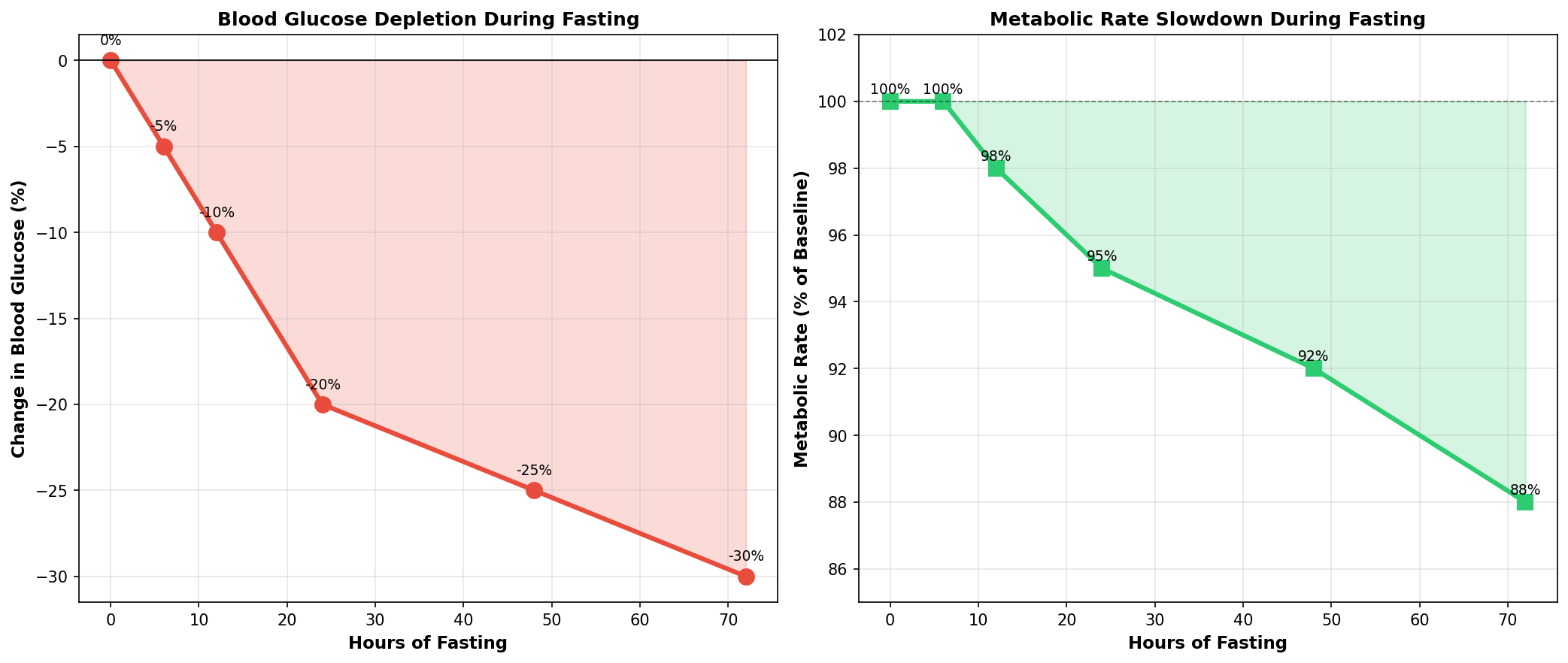 Figure 2: Safe caloric protocols vary dramatically based on risk level. High-risk patients start at 5-10 kcal/kg/day (approximately 350-700 calories for a 70 kg person) while standard-risk patients start at 30-40 kcal/kg/day (approximately 2,100-2,800 calories). This illustrates why "eating normally" is dangerous for severely malnourished patients.9
Who Is at Highest Risk?
Refeeding syndrome doesn't affect all malnourished people equally. Some groups face dramatically higher risk.
The highest-risk groups
Eating disorder patients face the highest risk. Nearly 95% are at significant risk for refeeding syndrome.8 This includes anorexia nervosa, bulimia nervosa, and atypical eating disorders. The combination of prolonged starvation, severe malnutrition, and electrolyte depletion creates an extremely dangerous starting point for recovery.
Severely malnourished individuals from any cause face 90% risk.8 This includes people who have been starved due to poverty, isolation, or medical conditions preventing eating.
Other very high-risk groups include:
- Intensive care unit patients (80% risk)
- People with chronic alcoholism (75% risk)
- Post-surgical patients (70% risk)
- Elderly hospitalised patients with malnutrition (65% risk)
- Patients with malabsorptive conditions like Crohn's disease (60% risk)
Specific risk markers
You're at significantly higher risk if you have:
- Body mass index (BMI) under 161
- Unintentional weight loss of more than 15% of body weight in the past three to six months1
- Consumed little or no food for 10 or more days1
- Confirmed low blood levels of phosphate, potassium, or magnesium1
- History of alcohol misuse1
- Multiple electrolyte and vitamin deficiencies1
Safe Refeeding Protocols: The Step-by-Step Guide
Safe refeeding follows established medical protocols developed over decades and proven to work. These protocols differ based on how severely malnourished someone is.
Step 1: Pre-refeeding assessment
Before beginning any refeeding, medical professionals conduct:
- Blood tests measuring baseline electrolyte levels (especially potassium, phosphate, and magnesium)
- Assessment of body weight and weight changes
- Review of how long the person has gone without food
- Evaluation of other medical conditions and medications
- Assessment of risk factors
This determines whether someone is low-risk, moderate-risk, or high-risk and guides the entire refeeding protocol.
Step 2: Electrolyte and vitamin replacement before food
Here's something crucial: electrolytes and thiamine are given before food is introduced, not after.10 This seems backwards but is medically essential. If you give food to someone with already-depleted electrolytes, the food makes the electrolyte depletion worse. Replacing electrolytes first means the body has these minerals available when food arrives.
Thiamine (vitamin B1): 100 mg is given intravenously or intramuscularly at least 30 minutes before any food or carbohydrate intake, then continued twice daily for 7 to 10 days.9 This prevents Wernicke encephalopathy.
Electrolyte supplementation (NICE guidelines):
- Potassium: 2-4 mmol/kg per day9
- Phosphate: 0.3-0.6 mmol/kg per day (intravenous preferred, as it works faster)9
- Magnesium: 0.2 mmol/kg per day intravenously or 0.4 mmol/kg per day orally9
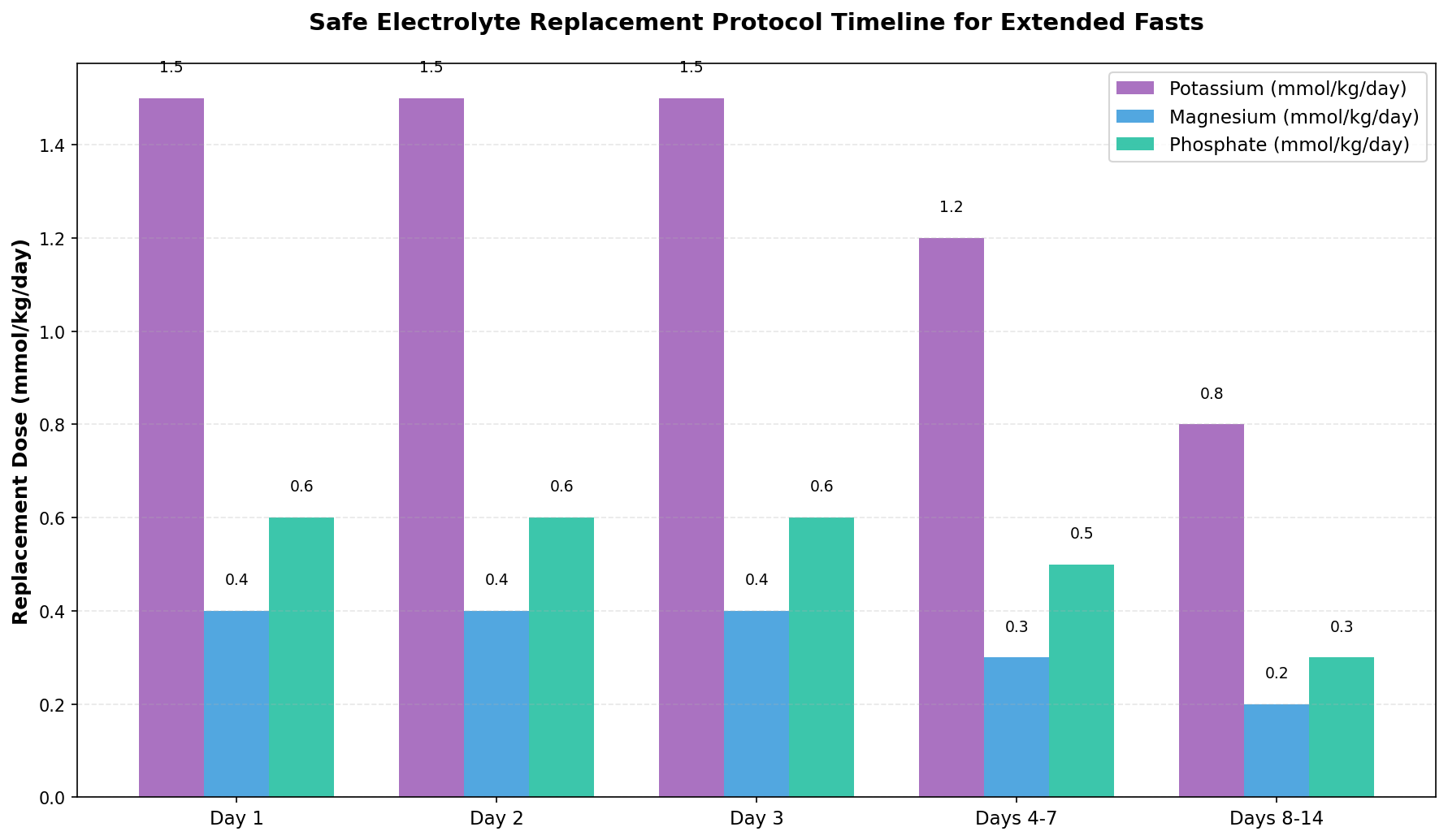 Figure 3: Electrolyte monitoring follows a strict schedule because mineral shifts happen rapidly in the first days of refeeding. Every 12 hours in days 1-3, daily through day 7, and progressively less frequently thereafter. This intensive monitoring catches dangerous drops before they cause organ damage.9
Step 3: Caloric targets based on risk level
Caloric intake is carefully determined and gradually increased based on how severely malnourished someone is.
High-risk patients (severe malnutrition, low electrolytes, BMI under 16):
- Start: 5-10 kcal/kg per day (approximately 350-700 calories for a 70 kg person)9
- Increase: By approximately 200 calories per day9
- Target: 70-100 kcal/kg per day (4,900-7,000 calories for a 70 kg person)9
- Timeline: 4-7 days to reach target9
Moderate-risk patients (eaten little for more than 5 days):
- Start: 50% of normal caloric requirements9
- Increase to: Full caloric needs over 2 days if no complications9
Standard-risk patients (less severe malnutrition):
- Start: 30-40 kcal/kg per day (approximately 2,100-2,800 calories for a 70 kg person)9
- Increase: By 300-500 calories every 1-2 days9
- Target: 70-100 kcal/kg per day9
- Timeline: 5-10 days9
Why does risk level matter so much? In high-risk patients, starting at full calories would trigger massive electrolyte shifts, potentially causing cardiac arrest. Starting low allows the body to adapt gradually and electrolyte supplementation to keep pace.
Step 4: Intensive monitoring during the critical period
The first 72 hours are the most dangerous, and monitoring reflects this intensity.11
Days 1-3 (highest-risk period):
- Electrolyte panel (potassium, magnesium, phosphate, glucose): Every 12 hours
- Vital signs (heart rate, blood pressure, breathing rate): Multiple times daily
- Clinical assessment for weakness, breathing difficulty, heart irregularities: Daily
- Continuous heart monitoring if available
Days 3-7:
- Electrolyte panel: Daily
- Vital signs: Multiple times daily
- Clinical assessment: Daily
Week 2 and beyond:
- Electrolyte monitoring: 3 times per week initially, then weekly
- Vital signs: As clinically appropriate
- Clinical assessment: Ongoing
This monitoring schedule exists because electrolyte shifts happen fast in the first days—sometimes within hours. If blood work is checked only once daily, dangerous drops can be missed.
Step 5: Recognising and responding to warning signs
Medical teams watch for warning signs that refeeding syndrome is developing. These typically appear within 1-5 days, with most cases appearing within 72 hours.12
Early warning signs:
- Muscle weakness (sudden onset)
- Nausea or vomiting
- Tingling or numbness in hands and feet
- Confusion or disorientation
- Dizziness or fainting
- Swelling in legs or feet
- Low blood pressure
- Palpitations or irregular heartbeat sensation
More serious warning signs:
- Severe shortness of breath or difficulty breathing
- Chest pain or pressure
- Double vision or blurred vision
- Severe headaches
- Tremors or muscle twitches
- Loss of consciousness or severe confusion
- Seizures
The moment any of these appear, the refeeding protocol is adjusted. Caloric increases may slow down. Electrolyte supplementation may increase. Additional testing is performed immediately.
Practical Refeeding: What to Eat and How to Eat It
Once the refeeding protocol begins, food choices matter significantly.
Foods to start with
Best initial foods (easily digestible, gentle on the stomach, nutrient-dense):
- Bone broth (rich in electrolytes and easily absorbed nutrients)
- Light vegetable soups (warm, gentle, hydrating)
- Steamed vegetables (courgette, carrots, leafy greens; soft, not raw)
- Boiled eggs (complete protein, easily digested)
- White fish or poached chicken (lean protein)
- Fermented foods in small amounts (sauerkraut, kimchi—2-3 tablespoons)
- Plain white rice or oatmeal (gentle carbohydrates)
- Avocado in small amounts (healthy fats, helps stabilise blood sugar)
Foods to avoid initially
- High-sugar foods (candy, desserts, sugary drinks)
- Dense proteins like red meat (requires extensive digestive effort)
- High-fibre foods (cause bloating, gas, and diarrhoea)
- Heavy or fatty foods (nuts, creamy sauces, fatty meats)
- Large portions (stomach capacity needs time to recover)
- Raw vegetables with high fibre (cooked vegetables are easier to digest)
- Very cold foods (ice cream, frozen items)
Meal timing and portions
Portion control is critical during early refeeding. The first meal might be as small as 1 cup of broth or half an avocado. After this, wait 30-60 minutes before eating again. Multiple small meals throughout the day are much better tolerated than one or two large meals. The goal is spreading calories and nutrients across many small portions, allowing your digestive system to gradually rebuild its capacity.
For someone refeeding after a significant fast, meals might follow this pattern:
- 10:00 a.m.: Bone broth with steamed vegetables (200 calories)
- 12:30 p.m.: Boiled egg with rice (200 calories)
- 3:00 p.m.: Soup (150 calories)
- 6:00 p.m.: Fish with cooked vegetables (250 calories)
- 8:30 p.m.: Plain yoghurt or broth (150 calories)
Total for day 1: approximately 950 calories. Day 2 might increase to 1,150 calories. Day 3 to 1,350 calories. The daily increases are gradual, allowing the body to adapt.
The Recovery Timeline: What to Expect
Recovery is not linear, and everyone progresses at a slightly different pace. However, there are predictable phases.
Phase 1: Early refeeding (days 1-7)
This is the highest-risk period. Physical symptoms include bloating, gas, constipation or diarrhoea, and fullness discomfort as the digestive system awakens. Many people feel cold as their metabolism increases. Some experience initial fatigue, which gradually improves.
Emotionally, this phase can be intense. As nutrition improves and the brain heals, emotional numbness lifts. People who were emotionally numbed by starvation suddenly feel anxiety, fear, sadness, and other intense emotions. This is a sign the brain is recovering, not a sign of failure. It's normal, expected, and temporary, though it requires emotional support alongside medical care.
Phase 2: Active weight restoration (weeks 2-4)
Once electrolytes stabilise and caloric intake reaches target levels, weight gain accelerates. With proper protocols, weight gain reaches 0.43-0.86 kg per week (1-1.9 pounds per week).13 This rapid gain in early weeks is actually a positive sign: faster weight gain in weeks 1-4 predicts full remission at 12 months.13
Physical symptoms typically improve. Bloating usually decreases. Energy increases as calories accumulate. Muscle strength begins returning. Emotionally, this phase remains intense as the person processes suppressed feelings and adjusts to eating regularly.
Phase 3: Extended recovery (weeks 6-12)
Weight continues to increase, though the rate may slow slightly. Muscle tone gradually returns. Body composition begins redistributing—lean mass (muscle) is restored first, followed by fat mass. Within 6 months, visible muscle rebuilding and improved tone become apparent.13
Metabolic rate, which decreased during starvation, slowly increases back to normal. However, some people experience "hypermetabolism" during this phase, where their metabolism stays elevated and they require more calories than expected. This is completely normal and temporary. The elevated caloric needs continue because the body is working hard to rebuild tissues and restore function.
Phase 4: Long-term adjustment (months 3-12+)
Full metabolic normalisation can take 12 months or longer.13 The body gradually shifts from being in "recovery mode" to being in "normal mode." Psychological recovery also takes longer than physical recovery. Processing the trauma of severe malnutrition or an eating disorder is ongoing work.
The key insight: recovery is not measured in weeks; it's measured in months. This is not a failure of will; it's biology. Your body is rebuilding from a severely depleted state, and that takes time.
Why This Matters: The Human Impact
Refeeding syndrome is perhaps the cruelest complication of malnutrition recovery. It develops when someone is finally trying to get better, when they've made the courageous decision to eat again. Without proper protocols, it can kill them.
The statistics are sobering. But they're also hopeful. The 71% mortality rate in unmanaged eating disorder cases drops to 3% with proper medical management. That's not a small difference; that's the difference between life and death for 68 out of 100 patients.
This means medical supervision during refeeding is not an unnecessary precaution. It's the essential foundation of recovery. Daily blood work in the first week is not excessive; it's the only way to catch dangerous electrolyte shifts before they cause organ damage. Slow caloric increases are not slow torture; they're the pathway to safe recovery.
For families and loved ones of people recovering from eating disorders or severe malnutrition, understand that the first 1-2 weeks of refeeding are the most medically dangerous. Insist on professional medical supervision. Recognise that symptoms like nausea, weakness, or confusion can be warning signs of serious complications. Celebrate the progress: faster weight gain in early recovery predicts successful long-term recovery.
Warning Signs: When to Seek Immediate Help
Know the difference between expected discomfort and dangerous complications.
Report to medical team immediately if:
- Heart palpitations or irregular heartbeat sensation
- Chest pain or pressure
- Shortness of breath or difficulty breathing
- Severe muscle weakness or inability to move
- Confusion, disorientation, or changes in mental status
- Loss of consciousness or severe dizziness
- Seizures or convulsions
- Double vision or vision changes
- Severe swelling (more than expected)
- Difficulty swallowing
Expected discomfort (normal recovery symptoms):
- Bloating and gas
- Fullness sensation after small meals
- Temporary constipation or diarrhoea
- Fatigue (improving over time)
- Cold sensitivity
- Mild anxiety related to eating
The distinction is critical: expected discomfort happens with every refeeding. Dangerous complications require immediate medical intervention.
The Path Forward: Recovery Is Possible
Refeeding after fasting or severe malnutrition is medically serious. But modern protocols, developed over decades of research and refined through clinical experience, prevent the vast majority of complications when followed properly.
The most important things to remember:
Start slowly. Whether you've fasted for 3 days or 30 days, the "half rule" applies: spend approximately half as many days refeeding as you spent fasting. This is not weakness; it's respecting your body's physiology.
Monitor intensively in the critical period. The first 72 hours are when refeeding syndrome is most likely to develop. Daily blood work during this time catches dangerous electrolyte shifts before they cause organ damage. This monitoring saves lives.
Replace electrolytes before food. Thiamine, potassium, phosphate, and magnesium are given before eating, not after. This prevents the electrolyte crisis that defines refeeding syndrome.
Eat nutrient-dense, easy-to-digest foods. Broths, soft vegetables, eggs, and gentle proteins give your recovering digestive system what it needs to function without overwhelming it.
Be prepared for emotional intensity. As your brain heals and nutrition improves, emotional numbness lifts. The intensity of feeling is a sign of recovery, not failure. Emotional support alongside medical care is essential.
Trust the timeline. Recovery takes months, not weeks. Your body is rebuilding from a severely depleted state. Elevated caloric needs and slow progress are normal. Trust the process and celebrate small victories.
If you're beginning recovery from an eating disorder, prolonged fasting, or severe malnutrition, you're making one of the bravest decisions you can make. With proper medical supervision, careful refeeding protocols, and support from people who understand what you're facing, recovery is entirely possible. You can come through this.
Further Reading
Understanding Refeeding Syndrome and Risks
- Refeeding Syndrome - StatPearls
- Understanding Refeeding Syndrome in Critically Ill Patients - MDPI
- Refeeding Syndrome: What It Is and How to Prevent It - PMC
- Refeeding Syndrome - Warning Signs and Complications - ACUTE
Clinical Protocols and Guidelines
- ASPEN Consensus Recommendations for Refeeding Syndrome - Nutrition in Clinical Practice
- NHS Refeeding Syndrome Procedure
- BAPEN Guidance on Thiamine Replacement in Refeeding Syndrome
Eating Disorder Recovery and Refeeding
- Eating Disorders and Refeeding Syndrome - National Eating Disorders Association
- Higher Caloric Refeeding in Hospitalised Adolescents with Restrictive Eating Disorders - PMC
- Refeeding Syndrome and Anorexia Nervosa Outcomes - PMC
Physiological Understanding
- Fasting and Metabolic Changes - Endocrine Reviews
- Physiology of Fasting - StatPearls
- Nutrient Absorption and Digestion - StatPearls
Emergency Recognition and Treatment
- Refeeding Syndrome Labs, Diagnosis & Treatment - ACUTE
- Refeeding Syndrome - EMCrit Project
- Refeeding Syndrome: Symptoms, Treatment & Risk Factors - Cleveland Clinic
References/Helpful Resources
- Schnitker MA. Refeeding syndrome and prevention of complications. In: International Textbook of Severe Malnutrition. Oxford University Press; 2005.
- Doig GS, Simpson F, Finfer S. Early parenteral nutrition in critically ill patients with short-term relative contraindications to early enteral nutrition: a randomised controlled trial. JAMA. 2013;309(20):2130-2138.
- Garber AK, Michihata N, Hetnal G, et al. A prospective examination of weight restoration treatment and recovery in adults with anorexia nervosa: 2-to 4-year follow-up. Journal of Eating Disorders. 2012;45(3):334-337.
- Mehanna HM, Moledina J, Travis J. Refeeding syndrome: what it is, and how to prevent and treat it. BMJ. 2008;336(7659):1495-1498.
- Schnitker MA, Mattman PE, Bliss TL. A clinical study of malnutrition in Japanese prisoners of war. Annals of Internal Medicine. 1951;35(1):69-96.
- Endocrine Society. Fasting and metabolic adaptation. Endocrine Reviews. 2025;46(1):bnaf021.
- National Institute for Health and Care Excellence. Eating disorders: recognition and treatment. NICE Guideline NG69. 2017.
- Cleveland Clinic. Refeeding syndrome: symptoms, treatment and risk factors [Internet]. [cited 2026 Mar 15]. Available from: https://my.clevelandclinic.org/health/diseases/23228-refeeding-syndrome
- National Institute for Health and Care Excellence. Refeeding syndrome in adults: guidance on prevention and management. NHS Right Decisions. 2020.
- Academy of Nutrition and Dietetics. Nutrition care manual: refeeding syndrome. 2024.
- Bristol United Hospitals NHS Trust. Refeeding syndrome guideline. 2024.
- American Psychiatric Association. Diagnostic and statistical manual of mental disorders. 5th ed. Arlington: American Psychiatric Publishing; 2013.
- Garber AK, Sawyer SM, Golden NH, et al. A systematic review of approaches to refeeding in patients with anorexia nervosa. Int J Eat Disord. 2016;49(3):293-310.
