

Feel a sudden tightness in your chest? Have you noticed your chest pain is changing? Understanding the difference between stable and unstable angina could save your life. Thousands of people in the UK experience chest pain from coronary artery disease, but what separates a manageable condition from a medical emergency comes down to one crucial distinction: is the pain predictable or is it new and dangerous?
This article explains what you need to know about both types of angina, how to recognise the warning signs, when to use your GTN spray, and most importantly, when to call 999.
What is Stable Angina?
Stable angina is chest pain or discomfort caused by your heart not getting enough oxygen-rich blood. The difference from unstable angina is simple: it follows a predictable pattern.
How Stable Angina Works
Imagine your coronary arteries (the blood vessels supplying your heart) have developed a fixed, narrow section from fatty deposits. When your heart has to work harder, it demands more oxygen. But that narrowed section can't deliver fast enough, causing pain.
This narrowing has been there for months or years and doesn't change day to day. So your body develops a consistent pattern: the same trigger produces the same pain, which relieves the same way every time.
What Triggers It
Stable angina strikes predictably during activities that make your heart work harder:
- Walking uphill or climbing stairs
- Strenuous exercise or heavy exertion
- Walking in cold weather
- Emotional stress
- Heavy meals
- Sexual activity
What It Feels Like
The pain or discomfort in stable angina typically feels like:
- Pressure, heaviness, squeezing, or tightness across your chest
- A sensation of a heavy weight sitting on your chest
- Pain radiating down your left shoulder and arm
- Pain spreading to your jaw, neck, or teeth
- Shortness of breath accompanying the discomfort
- Occasionally feels like indigestion or gas
How Long Does It Last?
One of the defining features: it goes away quickly. Stable angina attacks typically last 5 minutes or less. More importantly, the pain relieves either with rest (stopping the activity and sitting down) or with GTN spray within minutes.
How Common is It?
Around 1.2 million men and over 900,000 women in the UK have stable angina. This is the most common form of heart-related chest pain, affecting roughly 5% of men and 4% of women. It's serious, but it's also manageable.
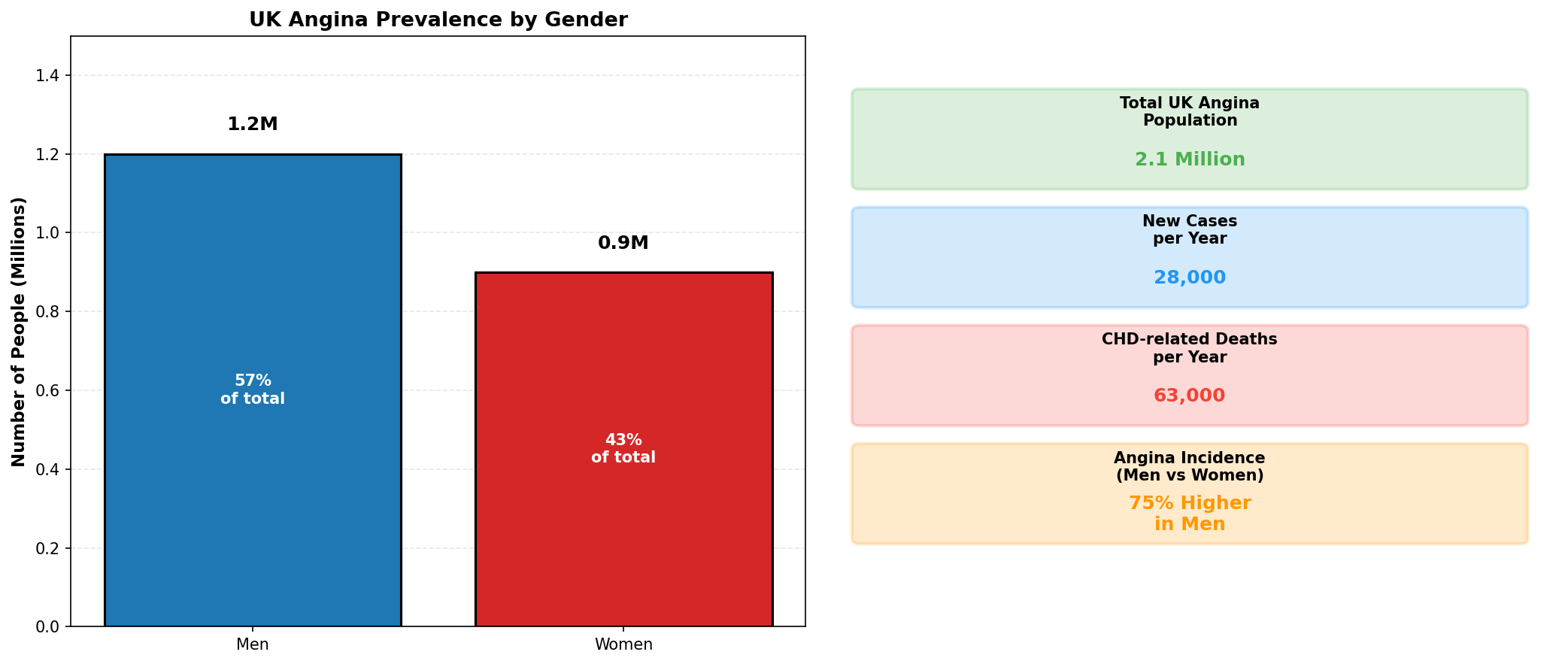 Figure 1: UK prevalence of stable angina in men and women. Nearly 2.1 million people in the UK live with stable angina, making it one of the most common heart conditions.
What is Unstable Angina?
Unstable angina is different. It's dangerous. It's a medical emergency.
The Key Difference
Unstable angina means something is changing. Your arteries have developed a problem that's getting worse right now, in real time. An atherosclerotic plaque (a fatty deposit) has ruptured, triggering blood clot formation. Unlike the fixed narrowing in stable angina, this is a dynamic, unpredictable situation.
Three Ways It Presents
Unstable angina can develop in three distinct patterns:
- New chest pain you've never had before: First time experiencing chest pain (within the last few weeks)
- Accelerating pattern: Your existing stable angina has suddenly worsened, happens more frequently, or strikes with less exertion than it used to
- Resting pain: Pain that occurs at rest, especially at night or early morning, often lasting longer than 15 minutes
The Danger
Here's what makes it an emergency: 25% of people with untreated unstable angina develop a heart attack within three months. Some develop one within days. This isn't a condition to manage at home; it requires hospital admission and intensive treatment.
How Unstable Differs From Stable
| Feature | Stable Angina | Unstable Angina |
|---|---|---|
| Onset | Long-standing, predictable pattern | New, sudden, or recently worsening |
| Triggers | Clear and predictable (exercise, stress) | No clear triggers; may occur at rest |
| Duration | 5 minutes or less | Often 15 minutes or longer |
| Pain relief | Stops with rest or GTN spray | May not respond to rest or medication |
| Pattern | Exactly the same each time | Changing, unpredictable, worsening |
| Heart attack risk (3 months) | Low and manageable | Up to 25% without prompt treatment |
| Medical action needed | Ongoing medication and monitoring | Call 999 immediately |
Recognising the Warning Signs
Your ability to spot unstable angina could prevent a heart attack. Here are the red flags that demand emergency action.
Call 999 If You Experience:
- New chest pain: Especially if you've never had chest pain before
- Your stable angina has changed: It's worse, more severe, happens more often, lasts longer, or occurs with less exertion
- Chest pain at rest: Pain strikes while you're sitting down, relaxing, or sleeping
- Unexpected, unpredictable chest pain: Pain that surprises you, not the familiar pattern you're used to
- Pain that doesn't stop with rest: You rest for several minutes, but the pain continues
- Pain that doesn't respond to GTN spray: You take your first dose (2 sprays under the tongue), wait 5 minutes, but the pain persists
- Chest pain lasting longer than 15 minutes: Especially if you've taken GTN without relief
- Associated warning symptoms: Severe shortness of breath, dizziness or feeling faint, profuse sweating, nausea, or pain spreading to your jaw, teeth, or upper belly
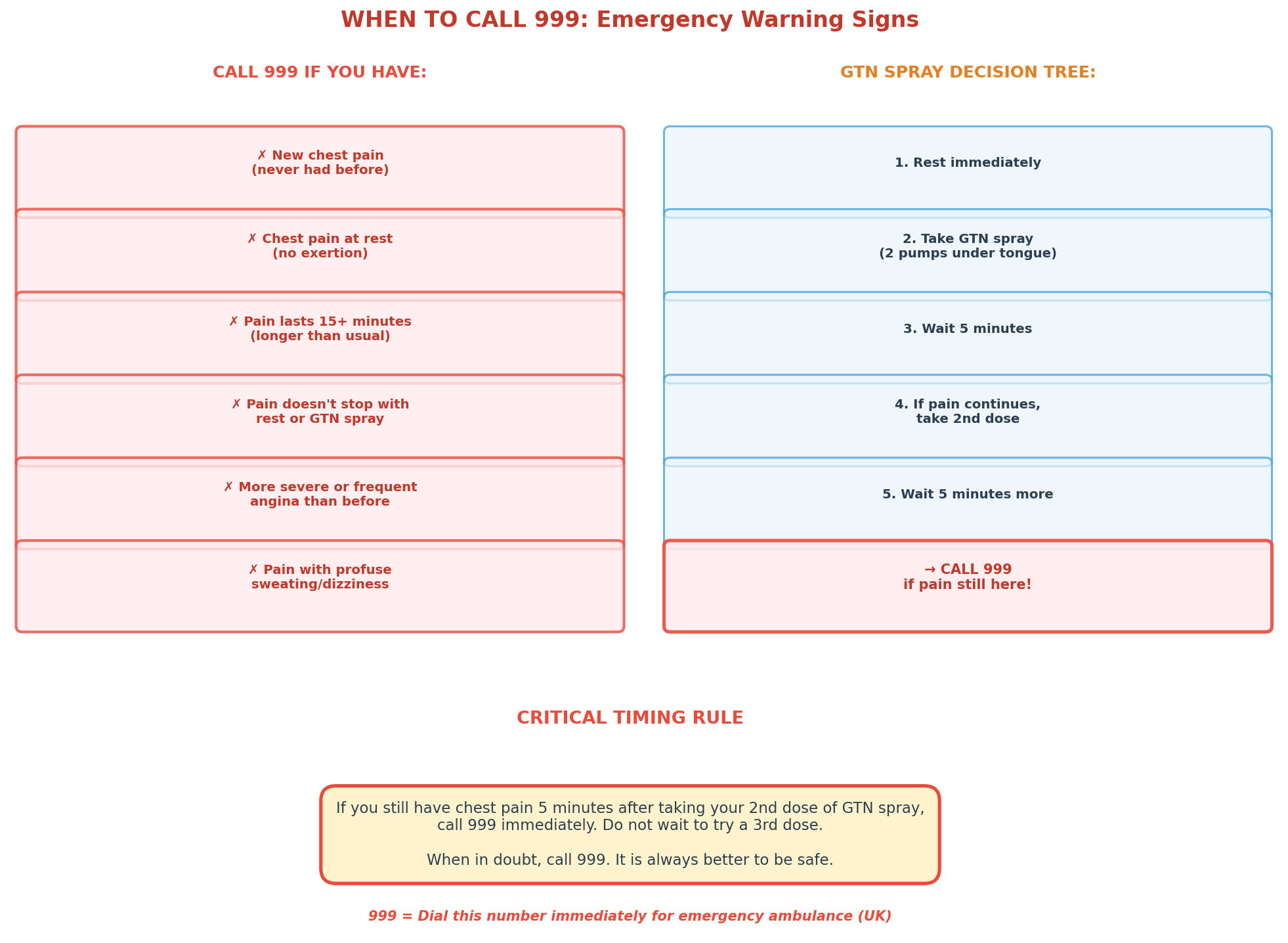 Figure 2: Key warning signs that indicate unstable angina. Any of these symptoms warrant immediate emergency action.
The Decision: Is It Safe to Wait?
Simple rule: When in doubt, call 999. If you're unsure whether your chest pain is stable or unstable, don't try to figure it out at home. Paramedics are trained to assess chest pain and can provide emergency care. Never drive yourself to hospital if you suspect unstable angina.
What is GTN Spray and How Does It Work?
If you have angina, you've been prescribed GTN (glyceryl trinitrate) spray. Understanding how to use it correctly is essential.
How GTN Works
GTN spray acts within seconds because it's absorbed rapidly through the tissue under your tongue. Here's what it does:
- Relaxes and widens your blood vessels, especially those supplying your heart
- Decreases how hard your heart must work, reducing its oxygen demand
- Improves blood flow to the heart muscle
- Works within approximately 5 minutes
Using GTN Spray During an Angina Attack: Step-by-Step
The protocol is straightforward, and it's critical to follow it exactly:
- Stop what you're doing and rest immediately: Sit down or rest against a solid surface
- Spray one pump into the air: This "primes" the spray nozzle to ensure proper dosing
- Lift your tongue and spray 2 pumps under your tongue: Place the canister under your tongue and press the spray button twice
- Wait 5 minutes: Let the medication work. The pain should ease or resolve
- If pain continues after 5 minutes, take a second dose: Spray 2 more pumps under your tongue
- Wait another 5 minutes: See if this second dose brings relief
- If pain STILL continues, take a third dose: Spray 2 more pumps under your tongue
- Wait another 5 minutes
The Critical Rule: Call 999 After 3 Doses
If pain persists 5 minutes after your second dose of GTN, call 999 immediately. Do not wait for the third dose if the pain is severe or worsening. Three doses of GTN within 15 minutes is the absolute maximum you should attempt at home.
If you've taken 3 doses with 5-minute intervals between them and pain remains, this is not a typical stable angina attack. You need emergency hospital assessment.
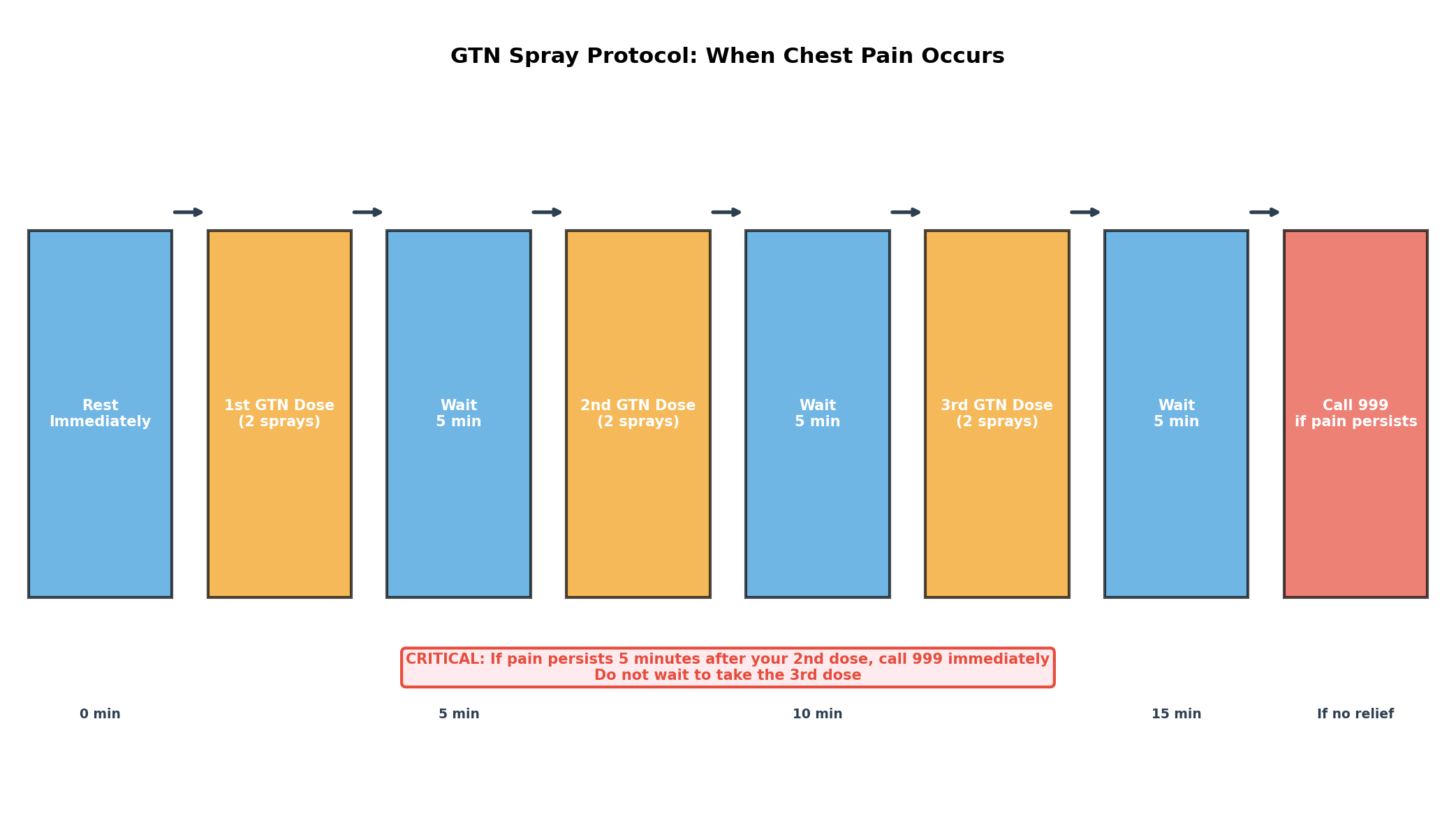 Figure 3: Step-by-step guide to using GTN spray correctly. The 5-minute wait between doses is essential, as is knowing when to call 999.
Preventive Use of GTN
You can also use GTN spray before activities you know trigger angina. Spray 2 pumps under your tongue 5 minutes before climbing stairs, walking uphill, or any physical exertion you anticipate. This "prophylactic" use helps prevent angina attacks during predictable situations. Ask your doctor if this approach is right for your situation.
Important: Check Your Expiry Date
GTN spray expires and becomes less effective over time. Check the expiry date on your canister regularly and replace it as your pharmacist directs. Keep your GTN spray with you at all times if you have angina.
When to Call 999: The Emergency Action Plan
This is the most important section of this article. These are the situations that absolutely demand emergency care.
Call 999 Immediately If:
- You have new chest pain (especially if you've never had it before)
- Your stable angina has changed (worse, more frequent, longer-lasting, triggered by less activity)
- Chest pain doesn't stop after resting for several minutes
- Chest pain continues 5 minutes after taking GTN spray
- You've needed to use GTN spray more frequently than usual
- You experience severe shortness of breath, dizziness, profuse sweating, nausea, or pain spreading to your jaw or arm
- The chest pain feels different or more severe than your usual angina
- You have any doubt about what's happening
If Pain Worsens During These Steps
Call 999 immediately if pain is getting worse at any point, even if you haven't completed the GTN protocol. Severe, worsening pain is the signal to get emergency help now, not in 15 minutes.
Important: Don't Drive Yourself
Never drive yourself to hospital if you suspect unstable angina. Call for an ambulance. Paramedics can provide emergency treatment and monitor you during transport. If you're alone, ring 999 and explain your symptoms. If someone is with you, ask them to call 999 while you rest.
Treatment and Management: Stable vs Unstable
The way these two conditions are treated reflects their different levels of danger.
Treating Stable Angina
Long-term management of stable angina has three components: medications, lifestyle changes, and regular monitoring.
First-line medications typically include beta-blockers (which slow your heart rate and reduce how hard it works) or calcium channel blockers (which widen your blood vessels and improve blood flow).
Additional medications usually include statins (to lower cholesterol), low-dose aspirin (to prevent blood clots), and sometimes ACE inhibitors (which further protect your heart and widen blood vessels).
Research shows that long-term nitrate therapy reduces angina attacks by 2-3 episodes per week, substantially improving quality of life for many patients.
When medications are optimised, most people with stable angina can control symptoms and live active lives. If symptoms remain uncontrolled despite medication, your doctor may recommend coronary angiography (imaging of your heart arteries) to determine whether angioplasty or bypass surgery might help.
Treating Unstable Angina
Unstable angina treatment is far more aggressive because the goal is preventing a heart attack in the next few days.
Immediate treatment in hospital includes:
- Aspirin (blood clot prevention)
- Injectable anticoagulation (blood thinners like heparin)
- Powerful antiplatelet medications (drugs that prevent platelets from clumping and forming clots)
- Medications to slow your heart rate and reduce its workload
- High-intensity statins to stabilise plaque in your arteries
- Oxygen (if needed)
- Close monitoring in a coronary care unit
Early invasive strategy is standard: within 48-72 hours, doctors perform coronary angiography to visualise your blocked arteries. If indicated, they may perform percutaneous coronary intervention (PCI/angioplasty, often with stent placement) or coronary artery bypass surgery to restore blood flow.
This aggressive approach significantly reduces the risk of heart attack. Early invasive treatment in high-risk unstable angina patients reduces major adverse cardiac events substantially, making the difference between recovery and catastrophe.
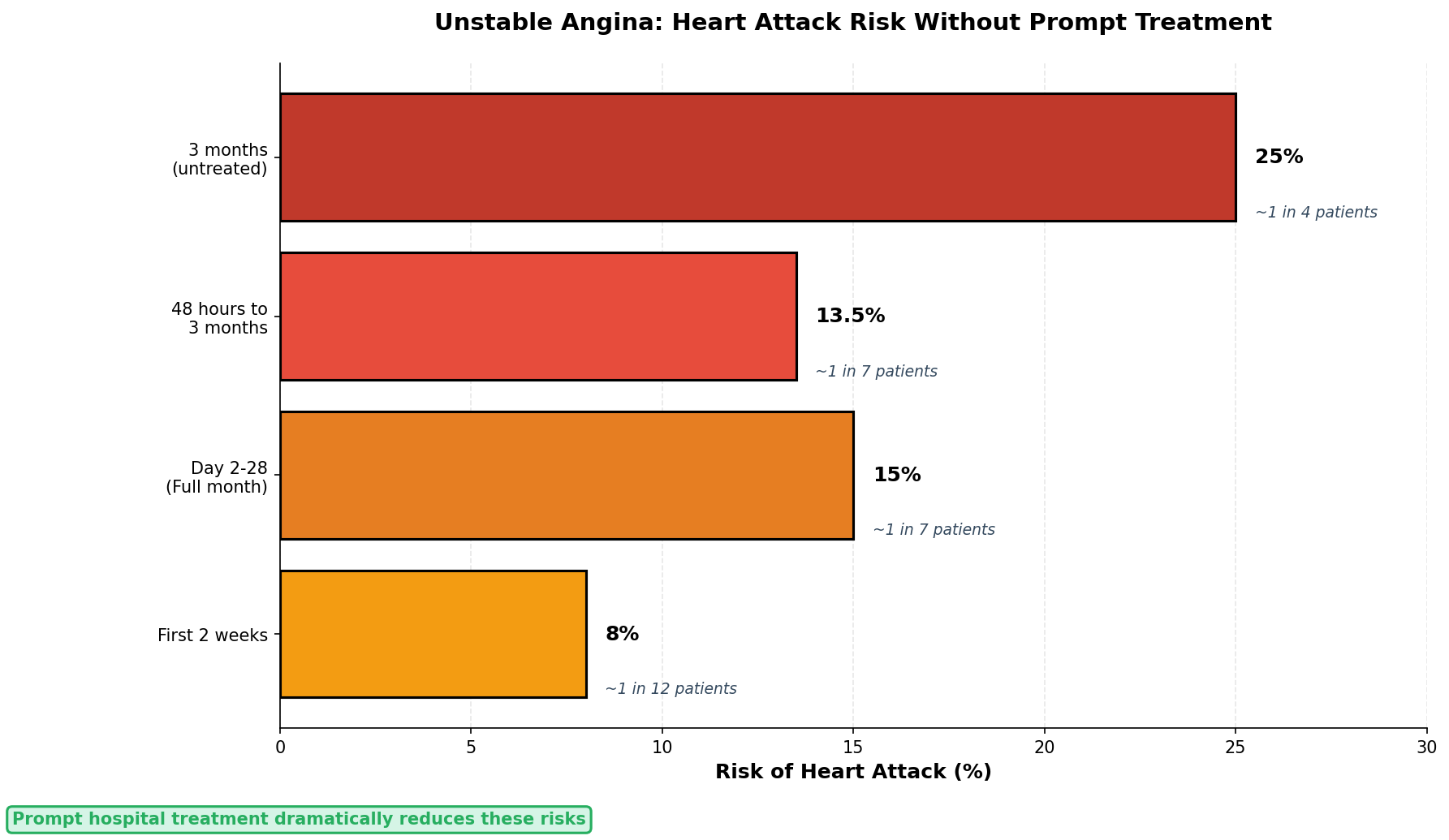 Figure 4: Risk of heart attack within different timeframes after unstable angina onset. This illustrates why urgent treatment is essential; each week of delay increases risk.
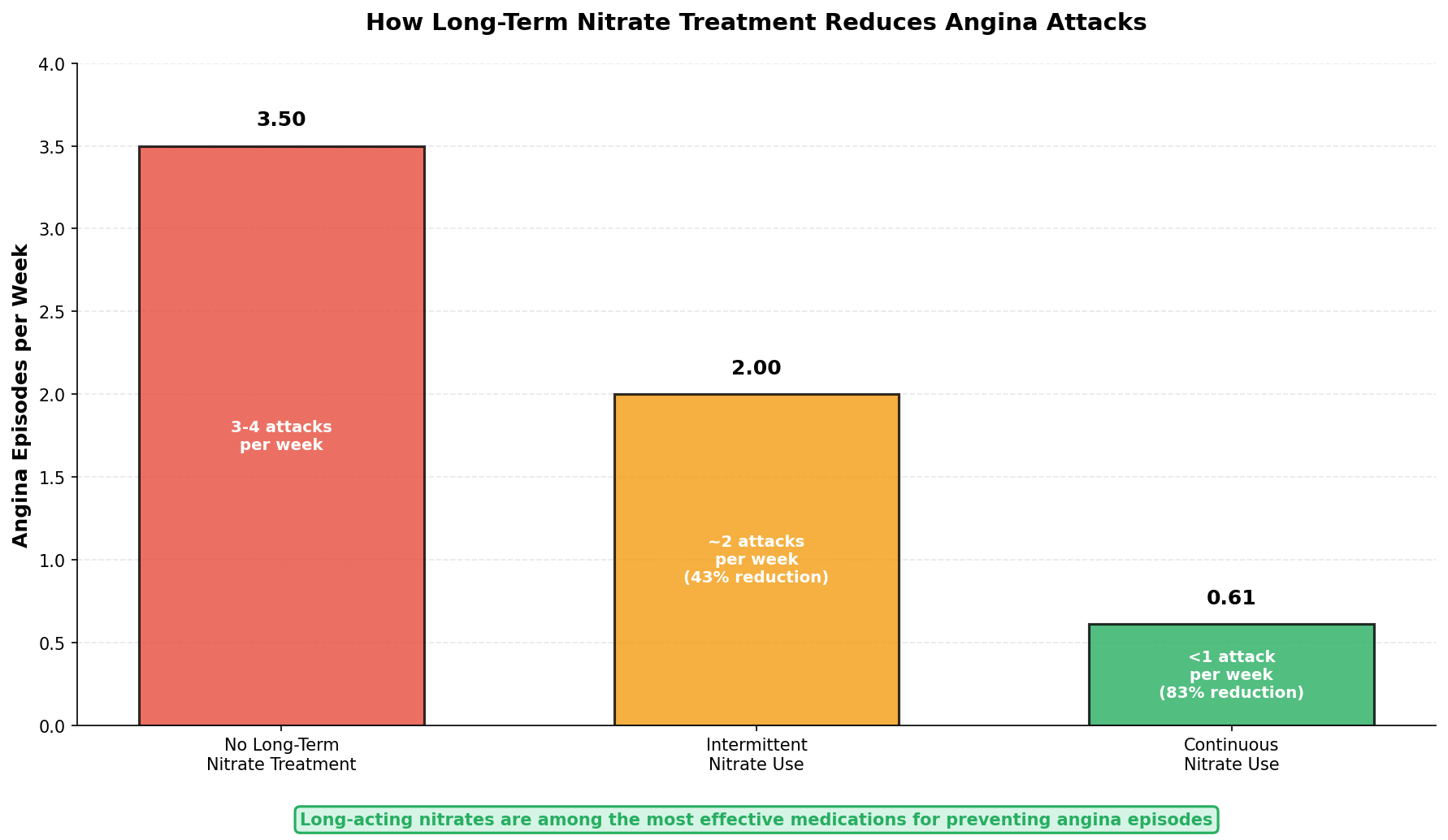 Figure 5: How long-term nitrate therapy reduces the frequency of angina attacks in stable angina patients. Research shows both continuous and intermittent dosing reduce attack frequency.
Lifestyle Strategies for Both Types
Whether you have stable or unstable angina, lifestyle changes significantly improve outcomes and reduce future risk.
Quit Smoking
This is non-negotiable. Smoking narrows arteries, worsens angina, and dramatically increases heart attack risk. If you smoke, quitting is the single most important protective step you can take.
Eat a Healthy Diet
Choose foods lower in saturated fat and embrace a Mediterranean-style eating pattern. Importantly, eat smaller, more frequent meals rather than large meals, as big meals increase your heart's workload during digestion and can trigger angina.
Exercise Regularly
Regular physical activity actually increases your "anginal threshold" (the level of exertion you can do before symptoms occur). This improves your quality of life and functional capacity. Aim for 150 minutes of moderate-intensity aerobic exercise weekly (walking, cycling, swimming are good options). Start gradually and check with your doctor before beginning any new exercise programme.
Maintain a Healthy Weight
Excess weight forces your heart to work harder. Weight loss in overweight individuals significantly reduces angina symptoms.
Control Blood Pressure and Cholesterol
Take your blood pressure medications regularly and monitor your levels. Take your statin medication as prescribed and have cholesterol checked regularly. These medications protect your heart and reduce future risk.
Manage Stress
Stress triggers angina in many people. Relaxation techniques (deep breathing, mindfulness, meditation) and regular physical activity help manage stress effectively. Cardiac rehabilitation programmes offer structured support.
Know Your Personal Triggers
Learn which activities trigger your angina. If you have stable angina, avoid these triggers when possible, or use preventive GTN spray before anticipated activity as recommended by your doctor. Common triggers include strenuous exercise (especially in cold weather), emotional stress, large meals, and sexual activity.
Summary: What You Need to Know
Stable angina and unstable angina are two very different conditions requiring different responses.
Stable angina is chest pain triggered by exertion or stress that relieves with rest or GTN spray. It indicates coronary artery disease but is manageable with medication and lifestyle changes. It's serious and requires ongoing medical care, but it's not immediately life-threatening.
Unstable angina is a medical emergency. It's new, worsening, unpredictable, or doesn't respond to rest and GTN. It means a blood clot is forming in your arteries and a heart attack may follow. It demands immediate hospital treatment.
The ability to distinguish between them could save your life. Use GTN spray for stable angina as directed, but don't hesitate to call 999 if pain doesn't respond or if anything feels wrong.
When in doubt, call 999. It's always better to be safe.
Further Reading
Symptoms and Recognition
- Angina Symptoms – NHS
- Recognising Angina – British Heart Foundation
- Chest Pain Symptoms – Mayo Clinic
- Unstable Angina Warning Signs – Cleveland Clinic
Using GTN Spray and Emergency Response
- How to Use GTN Spray – NHS
- GTN Spray Patient Information – Frimley Health NHS Foundation Trust
- When to Call for Emergency Care – British Heart Foundation
- Acute Coronary Syndrome – NICE Guidance
Medications and Treatment
- Stable Angina Treatment – NICE Clinical Guideline 126
- Medications for Angina – NHS
- Understanding Your Heart Medications – American Heart Association
- Beta-Blockers Explained – British Heart Foundation
Lifestyle and Prevention
- Exercising with Angina – British Heart Foundation
- Lifestyle Management for Heart Health – NHS
- Cardiovascular Health Guidelines – American Heart Association
- Smoking Cessation – NHS
General Information
- Understanding Angina – British Heart Foundation
- Heart Disease Statistics UK – British Heart Foundation
- Acute Coronary Syndrome – Cleveland Clinic
Helpful Resources
- American Heart Association. Types of heart medications [Internet]. [cited 2025 January]. Available from: https://www.heart.org/en/health-topics/heart-attack/treatment-of-a-heart-attack/cardiac-medications
- British Heart Foundation. Angina information and support [Internet]. [cited 2025 January]. Available from: https://www.bhf.org.uk/informationsupport/conditions/angina
- British Heart Foundation. Cardiovascular disease statistics UK factsheet [Internet]. [cited 2025 January]. Available from: https://www.bhf.org.uk/-/media/files/for-professionals/research/heart-statistics/bhf-cvd-statistics-uk-factsheet-jan26.pdf
- Cleveland Clinic. Acute coronary syndrome [Internet]. [cited 2025 January]. Available from: https://my.clevelandclinic.org/health/diseases/22910-acute-coronary-syndrome
- Cleveland Clinic. Stable angina [Internet]. [cited 2025 January]. Available from: https://my.clevelandclinic.org/health/diseases/21847-stable-angina
- Cleveland Clinic. Unstable angina [Internet]. [cited 2025 January]. Available from: https://my.clevelandclinic.org/health/diseases/21744-unstable-angina
- Frimley Health NHS Foundation Trust. Guidelines for use of glyceryl trinitrate (GTN) spray [Internet]. [cited 2025 January]. Available from: https://www.fhft.nhs.uk/patients-and-visitors/patient-information-library/guidelines-use-glyceryl-trinitrate-gtn-spray
- Mayo Clinic. Angina symptoms and causes [Internet]. [cited 2025 January]. Available from: https://www.mayoclinic.org/diseases-conditions/angina/symptoms-causes/syc-20369373
- National Institute for Health and Care Excellence. Acute coronary syndromes: management. NG185. London: National Institute for Health and Care Excellence; 2020.
- National Institute for Health and Care Excellence. Stable angina: management and diagnostic testing. CG126. London: National Institute for Health and Care Excellence; 2011.
- NHS. Angina: overview [Internet]. [cited 2025 January]. Available from: https://www.nhs.uk/conditions/angina/
- NHS. Glyceryl trinitrate (GTN): how and when to take [Internet]. [cited 2025 January]. Available from: https://www.nhs.uk/medicines/glyceryl-trinitrate-gtn/how-and-when-to-take-glyceryl-trinitrate-gtn/
- NHS. Angina: symptoms [Internet]. [cited 2025 January]. Available from: https://www.nhs.uk/conditions/angina/symptoms/
- NHS Remedy BNSSG. Angina clinical guidance [Internet]. [cited 2025 January]. Available from: https://remedy.bnssg.icb.nhs.uk/adults/cardiology/angina/
- National Heart, Lung, and Blood Institute. Coronary artery disease [Internet]. [cited 2025 January]. Available from: https://www.nhlbi.nih.gov/health-topics/coronary-artery-disease
- PubMed/National Centre for Biotechnology Information. Antiplatelet therapy in acute coronary syndromes. PMID: 18611368
- PubMed/National Centre for Biotechnology Information. Current management of unstable angina: TACTICS-TIMI 18 Trial. PMID: 14727969
- PubMed/National Centre for Biotechnology Information. Immediate and late prognosis in medically treated unstable angina. PMID: 2290262
- PubMed/National Centre for Biotechnology Information. Managing unstable angina and non-ST elevation myocardial infarction. PMID: 20669821
- PubMed/National Centre for Biotechnology Information. Medical treatment of acute coronary syndrome. PMID: 12749148
- PubMed/National Centre for Biotechnology Information. Nitrates for stable angina: systematic review. PMID: 20557963
- PubMed/National Centre for Biotechnology Information. Pathophysiology of acute coronary syndromes. PMID: 10342131
- PubMed/National Centre for Biotechnology Information. Pathophysiology of stable angina pectoris. PMID: 23016715
- PubMed/National Centre for Biotechnology Information. Relation between clinical presentation in unstable vs stable angina. PMID: 8362768
- PubMed/National Centre for Biotechnology Information. Stable coronary syndromes pathophysiology. PMID: 29030424
