

Chances are you have seen tea tree oil advertised as a cure-all remedy for everything from acne to athlete's foot to wound infections. The claims can be alluring, especially when you are dealing with a skin problem that will not go away. But is tea tree oil actually as effective as it is marketed to be? The answer is more nuanced than a simple yes or no. Some uses have genuine scientific support; others rest on weak evidence or anecdotal experience. And some actually come with serious safety risks that rarely get mentioned.
This article cuts through the marketing to tell you exactly what the science shows: what tea tree oil can realistically help with, when it is genuinely useful, and what precautions matter most. You will understand why concentration is critical, how storage affects its safety, and when you absolutely should not use it.
How Tea Tree Oil Actually Works
Tea tree oil (from the Australian plant Melaleuca alternifolia) is far more complex than most people realise. It is not a single active ingredient like aspirin or ibuprofen. Instead, it contains approximately 100 different chemical compounds that work together.
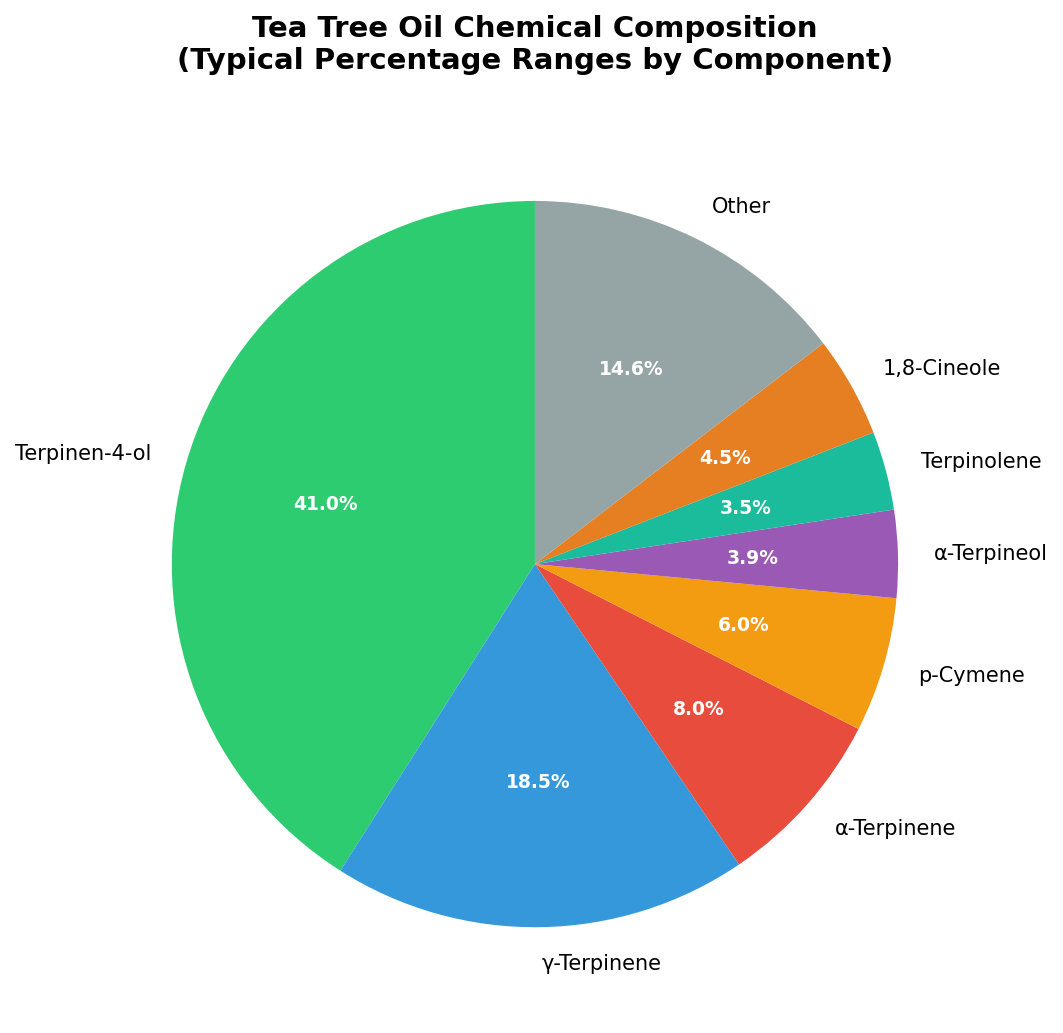 Figure 1: The major chemical components in tea tree oil. Terpinen-4-ol, the main active compound, comprises 37-44% of the oil. The remaining compounds work synergistically to enhance overall effectiveness. Percentages are based on averages of ranges.
The dominant compound is terpinen-4-ol, followed by gamma-terpinene and several minor contributors. What is crucial is that the mixture performs better than any of its components. This synergistic action (where components enhance each other's effectiveness) explains why isolating individual compounds in laboratory studies does not necessarily mean that commercial products will be less effective.
The Three Main Mechanisms
Tea tree oil attacks pathogens (bacteria, fungi, viruses) through three simultaneous mechanisms, which is why bacteria struggle to develop resistance to it:
Cell membrane disruption. The terpene compounds damage the protective membranes surrounding bacteria and fungal cells, allowing contents to leak out. Imagine popping a balloon; the cell leaks its contents and dies. This mechanism has been directly observed under electron microscopy, showing cells shrinking, developing irregular shapes, and rupturing.
Energy production shutdown. Beyond membrane damage, tea tree oil disables cells' ability to produce ATP (their energy currency). Without energy, cells cannot maintain integrity, synthesise new proteins, or reproduce. This is why even cells that initially survive the membrane attack eventually die from energy depletion.
Inflammatory response reduction. Terpinen-4-ol specifically suppresses the inflammatory mediators that your immune system produces in response to infection. It reduces production of TNF-alpha, interleukins, and prostaglandins: the chemical signals that cause redness, swelling, and discomfort. This is why tea tree oil helps with inflammatory skin conditions beyond simply killing the bacteria involved.
This multi-pronged approach explains why tea tree oil can be effective against drug-resistant bacteria such as MRSA (methicillin-resistant Staphylococcus aureus). Because it attacks multiple pathways simultaneously, bacteria cannot develop single-point resistance.
Medical Uses and Evidence Quality
Tea tree oil's effectiveness varies dramatically by condition. Some uses rest on strong clinical evidence; others are more hopeful than proven. Understanding this distinction matters because using an ineffective treatment delays actual medical care.
Acne: Strong Evidence
If you are considering tea tree oil for acne, the evidence most clearly supports its use.
A 2007 study showed that 5% tea tree oil gel is 3.55 to 5.75 times more effective than a placebo in reducing acne lesions. For context: if a placebo helps 10 people, tea tree oil helps 36-58 people. This qualifies as a strong therapeutic effect in dermatology research.
Additionally, one study showed that 5% tea tree oil performs as well as 5% benzoyl peroxide, the standard acne treatment. The advantage? Tea tree oil may cause less skin irritation than benzoyl peroxide. The disadvantage? It works more slowly. For someone whose skin reacts poorly to benzoyl peroxide, tea tree oil may offer similar benefits.
Clinical trials of varying durations showed significant improvement in mild-to-moderate acne with minimal side effects at the 5% concentration. The evidence here comes from multiple randomised controlled trials across the years with consistent positive results, making this the strongest use case for tea tree oil.
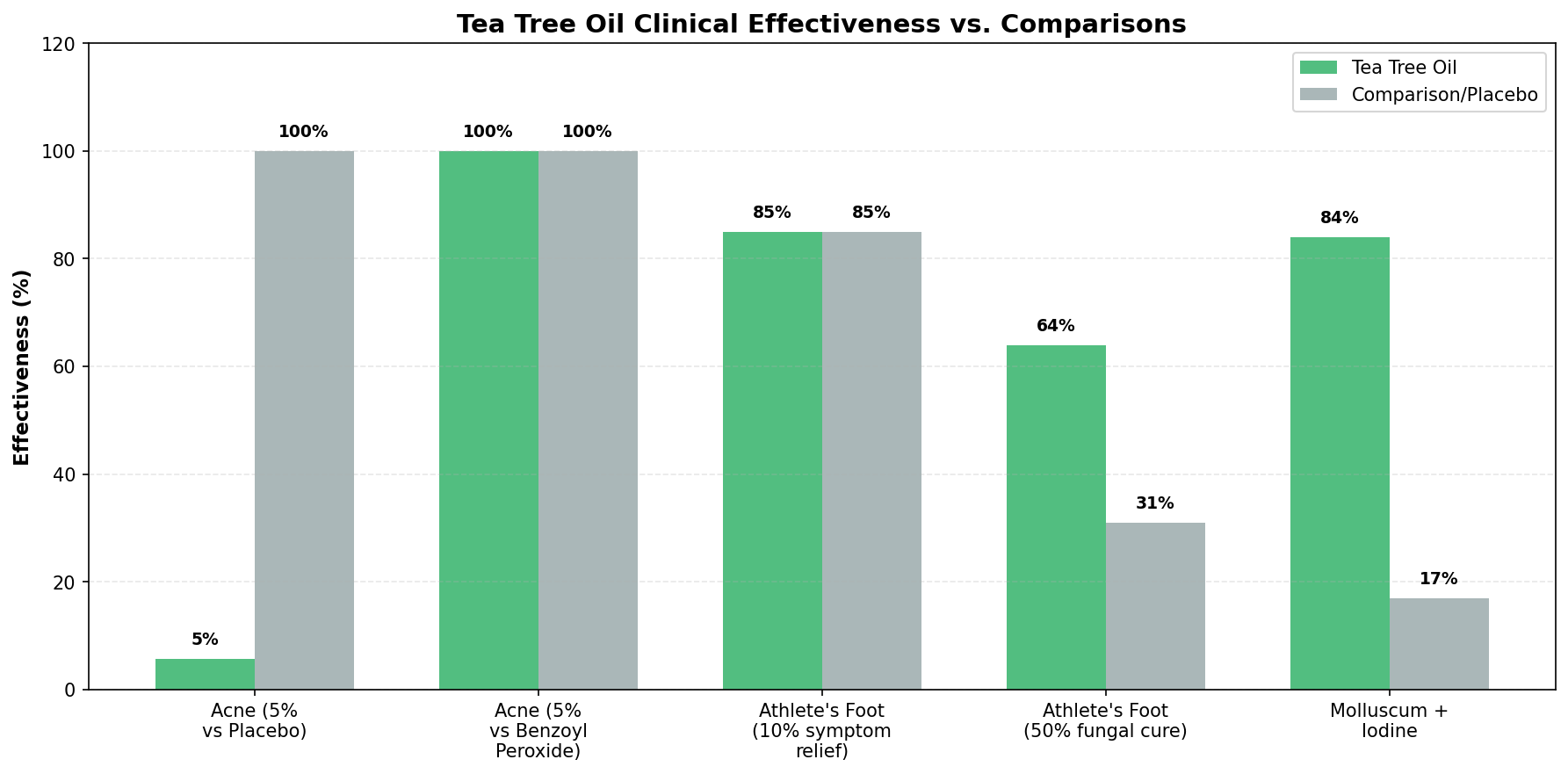 Figure 2: Tea tree oil demonstrates the strongest effectiveness for acne treatment, performing comparably to benzoyl peroxide. Effectiveness varies significantly by condition and concentration. Percentages rounded to the nearest whole number.
Athlete's Foot: Moderate Evidence (Concentration Dependent)
This is where concentration becomes absolutely critical to understanding effectiveness.
One study found that for symptom relief (10% concentration), 85% reduction in itching and discomfort, matching the effectiveness of tolnaftate, a standard over-the-counter treatment. However, only 30% of people achieved an actual fungal cure. You feel better, but the fungus may return.
For actual fungal elimination (25-50% concentration): 64% mycological cure rate (6 in 10 people got rid of the fungus) compared with 31% in the placebo group. This is significantly better than a placebo but still inferior to standard prescription antifungals, which achieve significantly higher cure rates. The trade-off: higher concentrations substantially increase the risk of skin irritation.
Laboratory studies show tea tree oil can inhibit fungal growth at very low concentrations (0.004–0.25%), but these findings do not translate directly to clinical effectiveness, as skin barriers, penetration challenges, and other factors reduce real-world efficacy.
The practical decision: If your primary goal is to stop the itching, use a 10% concentration and accept that fungal recurrence is possible. If you want to actually eliminate the fungus, use a 25–50% concentration and be prepared for a higher risk of irritation. This represents genuine value, though not a complete replacement for prescription treatment.
Nail Fungus (Onychomycosis): Weak Evidence Alone
The research here is discouraging. Tea tree oil alone shows minimal clinical evidence for treating nail fungus. While laboratory tests show it inhibits nail-fungus organisms at concentrations above 0.04-0.07%, this does not translate into a clinical cure when applied topically to nails.
When combined with prescription antifungal medications, results improve significantly. 80% cure rate after 16 weeks when combined with 2% butenafine (a synthetic antifungal), versus 0% with placebo. However, this is a combination therapy; the beneficial effect comes from the added prescription medication, not tea tree oil alone.
Bottom line: Not recommended as a standalone treatment. Only consider it as an adjunct (addition) to prescription antifungal medications.
Molluscum Contagiosum (Viral Skin Lesions): Weak Alone, Moderate With Iodine
Molluscum contagiosum causes small, firm, pearl-like bumps on the skin and is common in children.
Tea tree oil alone achieved only minimal results: One small trial showed that 16.7% of children (3 of 18) showed >90% reduction in lesions with tea tree oil monotherapy. That is disappointing.
However, when combined with iodine, 84% of children (16 of 19) achieved >90% reduction in lesions. That is a dramatic difference. The combination approach outperformed tea tree oil alone by a factor of five.
Clinical implication: If considering treatment for molluscum in children, combination formulations (tea tree oil with iodine) show promise. Tea tree oil alone is insufficient.
Psoriasis: Weak Evidence
Here is where enthusiasm runs ahead of evidence. Terpinen-4-ol (tea tree oil's main component) has potent anti-inflammatory properties in laboratory studies. In petri dishes, it reduces inflammatory markers. However, no strong evidence from clinical trials exists in patients with psoriasis.
One study examined a tea tree oil-based emulgel combined with curcumin and found faster symptom resolution than with a standard gel, but this is a small study of a specialist formulation. Review articles describe tea tree oil as "cost-efficient and effective" for psoriasis, but these are commentary pieces, not evidence-based conclusions.
Status: Not recommended as primary psoriasis treatment. The laboratory promise has not translated into proven clinical benefit.
Other Skin Conditions
Contact dermatitis: One clinical trial showed tea tree oil reduced allergic contact dermatitis by 40.5%, outperforming zinc oxide by 17.4% and clobetasone butyrate by 23.5%. This represents legitimate anti-inflammatory benefit, though the evidence base is limited to a small number of studies.
Blepharitis (eye inflammation) and Demodex-related conditions: Double-blind randomised trials show effectiveness for chronic blepharitis, particularly for Demodex mites. Tea tree oil formulations demonstrate effective parasite-killing and anti-inflammatory effects. However, a critical safety warning: an off-label 50% concentration can cause corneal epithelial defects (damage to the eye surface). Only use in properly formulated eye products, never pure oil or high concentrations on the eye itself.
Wound healing: Tea tree oil is effective as an adjunctive (additional) therapy for treating infected chronic wounds, particularly against Staphylococcus aureus, and there is limited evidence in treating bone infections (osteomyelitis). However, this is not a primary treatment; use only under professional medical care for chronic or infected wounds.
Periodontal disease (gum health): A meta-analysis found a lack of strong evidence to support the beneficial effects of tea tree oil for gum health. The antimicrobial and anti-inflammatory properties are present, but clinical translation for gum disease treatment remains unproven.
Safety, Concentration, and Precautions
This is where understanding concentration becomes essential. Tea tree oil's safety profile is not simply "safe" or "unsafe": it is concentration-dependent, with clear tiers of risk.
A safe dose depends on concentration, formulation, and the location of application. Low concentrations that have been properly formulated are generally well tolerated, but irritation and allergic contact dermatitis can still occur. Clinical studies typically use 5% concentration for acne, and between 10% and 50% for fungal skin infections. Higher concentrations for fungal skin infections carry a higher risk of irritation and should be used with caution.
Tea tree oil should never be swallowed, and undiluted oil should not be applied directly to the skin, eyes or mucous membranes (nose and mouth). Use in the eye area should be limited to properly formulated products due to the risk of corneal damage. In cases of chronic wounds, skin infections, and nail fungus, tea tree oil should only be used under professional guidance.
Adverse Reactions: What Actually Happens
When side effects do occur (remembering that most people using properly diluted products experience none), here is what typically happens:
Contact dermatitis (an allergic skin reaction) is the most common, with symptoms including burning, itching, redness, scaling, and dryness. Severe allergic reactions occur in a small number of cases. However, it is reassuring to know that most people who use 1-5% tea tree oil experience no side effects.
One documented case involved a severe eczematous eruption on the foot and leg, with reactions spreading to the thigh, both lower limbs, trunk, and upper limbs. This represents a severe reaction in a particularly susceptible individual.
Oxidation and Storage: Why Freshness Matters
Here is a critical fact few people realise: improper storage dramatically increases the risk of allergies and irritation.
Tea tree oil undergoes photooxidation (light-induced degradation) within days to several months when stored improperly. When this happens, the oil produces degradation products including peroxides, epoxides, and endoperoxides. These breakdown products are moderate to strong skin sensitisers, meaning they are much more likely to trigger allergic reactions than fresh oil.
Think of it this way: old or poorly stored tea tree oil becomes more allergenic, not less. The oxidised product triggers allergies more readily than the original oil.
How to store properly:
- Use dark or opaque containers (amber or dark glass bottles are ideal)
- Keep the container tightly sealed; minimise air contact
- Store in cool locations away from heat
- Replace the product every 6-12 months, sooner if you notice any degradation
Signs of degradation to watch for:
- Unusual odour (changes from the characteristic tea tree scent)
- Discoloration
- Visible particles or cloudiness
- Product older than 6-12 months with improper storage
Critical Warning: Oral Ingestion and Toxicity
This is where the safety discussion becomes serious. Tea tree oil is toxic if swallowed, even in small amounts.
Human cases documented:
A 4-year-old boy ingested a small amount of tea tree oil and became ataxic (unable to control movement) within 30 minutes. The situation progressed rapidly to unresponsiveness, requiring emergency intubation by paramedics. A 17-month-old who ingested less than 10 mL of undiluted oil developed ataxia and drowsiness lasting up to 3 days.
Symptoms of oral toxicity:
- Central nervous system depression
- Confusion and disorientation
- Loss of coordination (ataxia)
- Inability to walk properly
- Muscle weakness and tremors
- Potential coma in severe cases
Symptoms can rapidly appear after ingestion and may last for days.
Animal toxicity data:
Between 2002 and 2012, 443 documented cases of tea tree oil toxicosis occurred in dogs and cats, primarily from concentrated (100%) oil. Symptoms matched those in humans: CNS depression, muscle weakness, loss of coordination, and tremors. The fact that there are this many veterinary cases emphasises the real danger to household pets and children.
What you must do:
- Never leave tea tree oil products where children or pets can access them
- Store securely; treat it with the same caution you would use for medications
- If accidental ingestion occurs (in anyone), contact poison control or emergency services immediately
- Keep poison control number handy (UK: 111; US: 1-800-222-1222)
This is not a theoretical risk. Real children have required emergency medical care. Real pets have suffered serious poisoning. This demands serious attention to storage and access control.
Special Populations: Who Should Be Cautious
Young Children (Under 5 Years)
No safety data exist on the use of tea tree oil in nursing mothers or infants. Combined with the high toxicity risk from accidental ingestion, this population requires special care.
Children can develop contact sensitisation to tea tree oil, even from diluted formulations. If using any tea tree oil product on a child, do so only under medical supervision, keep it away from the child's hands and mouth, and store it securely out of reach.
Pregnancy and Breastfeeding
Topical tea tree oil products appear safe during pregnancy and breastfeeding based on available evidence, but safety data remain limited. The critical point: pregnant women often self-prescribe aromatherapy oils without informing their healthcare providers. If you are pregnant and considering tea tree oil, inform your doctor.
Avoid oral/ingested tea tree oil during pregnancy due to CNS depression risk to the foetus.
Eczema and Highly Sensitive Skin
Tea tree oil is contraindicated (should not be used) in people with eczema or highly sensitive skin. These individuals are at higher risk of burning, stinging, and contact dermatitis, even with diluted formulations.
Known Allergies or Sensitivities
If you have previously had an allergic reaction to tea tree oil, avoid all products containing it. You may also experience cross-reactivity with other essential oils that share similar monoterpene profiles.
How to Use Tea Tree Oil Safely
If you have decided that tea tree oil is appropriate for your situation, here is how to use it correctly:
Before You Start
- Identify the concentration: Purchase products labelled with concentration; home users should not exceed 5%
- Patch test: Apply a small amount of the diluted product to your inner arm or behind your ear; wait 24-48 hours for any allergic reaction before using on larger areas
- Consult your doctor: Inform your healthcare provider if you are pregnant, breastfeeding, or taking medications
- Avoid if sensitive: Do not use if you have eczema, very sensitive skin, or known essential oil allergies
During Use
- Never ingest tea tree oil; keep it away from your mouth
- Always use properly diluted products (1-5% concentration)
- Wash your hands after application (unless you are treating your hands)
- Avoid contact with eyes; if contact occurs, rinse immediately with water for several minutes
- Keep the product away from children and pets; store securely
- Apply only the smallest amount needed to the affected areas
- Follow product instructions for frequency, typically 1-2 times daily
If Irritation Develops
Discontinue use immediately if you experience:
- Spreading redness or increased irritation
- Burning or stinging that does not resolve quickly
- Rash, hives, or signs of allergic reaction
- Swelling of the face, lips, or throat
Drug Interactions to Know About
Vancomycin (antibiotic): Reduced efficacy has been observed in some cases when combined with tea tree oil. Other cases show enhanced effects. Due to a lack of clear consensus, avoid concurrent topical use in the same area unless under medical supervision.
Ketoconazole (antifungal): Tea tree oil may enhance ketoconazole's penetration and retention through the skin. This is potentially beneficial for fungal infections and can be used together, but do so under medical guidance.
Most other medications show no documented interactions with topically applied tea tree oil.
Understanding the Evidence Strength
Scientific evidence comes in tiers. Not all evidence is equally reliable:
Strong evidence means multiple high-quality randomised controlled trials with consistent positive results. Recommendations based on strong evidence can be confidently embraced.
Moderate evidence means good clinical trials and supporting data. These uses are reasonable to consider, though with appropriate caution.
Weak evidence means limited clinical trials, small sample sizes, or mostly laboratory studies. These uses require further research before confident recommendations can be made.
Very weak evidence means only laboratory findings or a theoretical basis. Not appropriate for clinical recommendation.
For tea tree oil:
- Acne: Strong evidence supports consideration as an alternative to benzoyl peroxide
- Athlete's foot: Moderate evidence, particularly at 10% concentration for symptom relief and 25-50% for fungal cure
- Molluscum + iodine combination: Weak-to-moderate evidence
- Nail fungus alone: Weak evidence (strong evidence only when combined with prescription medications)
- Psoriasis: Very weak evidence (laboratory only)
- Periodontal disease: Very weak evidence (insufficient clinical support)
This hierarchy matters because it should influence your decision-making. Using a remedy with strong evidence means you have a genuine reason to expect benefit. Using one with very weak evidence means you are hoping based on a theoretical possibility rather than a proven reality.
The Bottom Line
Tea tree oil is not the cure-all some marketing suggests, nor is it entirely without merit. It is a botanical product with genuine antimicrobial and anti-inflammatory properties that works well for specific conditions and under specific circumstances.
Strong candidates for tea tree oil use:
- Mild-to-moderate acne (5% gel, comparable effectiveness to benzoyl peroxide)
- Athlete's foot symptom relief (10% concentration)
- Athlete's foot fungal cure (25-50% concentration, accepting higher irritation risk)
- Molluscum contagiosum in children (combined with iodine, not alone)
Not appropriate for:
- Nail fungus as a standalone treatment
- Primary treatment for psoriasis
- Use in children under 5 without medical supervision
- Any ingestion
- Application to the eyes in high concentrations (use only in formulated eye products)
Safety essentials:
- Concentration matters: 5% is the safe baseline for home use
- Fresh oil matters: always store in dark bottles in cool conditions; replace yearly
- Never ingest tea tree oil; toxicity risk is real and serious
- Patch test before wider application
- Discontinue use if irritation develops
- Keep securely away from children and pets
Tea tree oil has a genuine role in dermatology, but that role is narrower and more specific than popular culture suggests. Understanding exactly what the evidence shows (rather than relying on assumptions) allows you to make informed choices about whether it is right for your particular situation. And that is what genuinely good healthcare decisions are built on: evidence, not enthusiasm.
Helpful Resources
Understanding Tea Tree Oil's Mechanisms
- How tea tree oil disrupts bacterial cell membranes
- The anti-inflammatory effects of terpinen-4-ol
- Synergistic interactions between tea tree oil components
Clinical Evidence for Acne Treatment
- Comparative efficacy of tea tree oil versus benzoyl peroxide
- 12-week pilot study of tea tree oil gel for acne
- Systematic review of tea tree oil efficacy and tolerability
Fungal Infection Treatment
- Tea tree oil treatment for athlete's foot
- Higher concentration tea tree oil for tinea pedis
- Combination therapy approaches for fungal infections
Safety, Storage, and Adverse Effects
- Comprehensive toxicity review of tea tree oil
- Storage degradation and allergic sensitisation
- Paediatric ingestion case reports and toxicity
Special Uses and Evidence
- Tea tree oil for molluscum contagiosum with iodine
- Eye care and blepharitis formulations
- Wound healing and infected wound management
References/Helpful Resources
- Carson CF, Hammer KA, Riley TV. Melaleuca alternifolia (Tea Tree) Oil: a Review of Antimicrobial and Other Medicinal Properties. Clinical Microbiology Reviews [Internet]. 2006 Jan [cited 2026 May 14];19(1):50–62. Available from: https://www.ncbi.nlm.nih.gov/pmc/articles/PMC1360273/
- Bassolé IHN, Juliani HR. Essential Oils in Combination and Their Antimicrobial Properties. Molecules [Internet]. 2012 Apr 2 [cited 2026 May 14];17(4):3989–4006. Available from: https://pmc.ncbi.nlm.nih.gov/articles/PMC6268925/
- Cox SD, Mann CM, Markham JL, Bell HC, Gustafson JE, Warmington JR, et al. The mode of antimicrobial action of the essential oil of Melaleuca alternifolia (tea tree oil). Journal of Applied Microbiology [Internet]. 2001 Dec 25 [cited 2026 May 14];88(1):170–5. Available from: https://academic.oup.com/jambio/article-abstract/88/1/170/6721378?redirectedFrom=fulltext
- Cox S, Mann C, Markham J, Gustafson J, Warmington J, Wyllie S. Determining the Antimicrobial Actions of Tea Tree Oil. Molecules [Internet]. 2001 Jan 16 [cited 2026 May 14];6(12):87–91. Available from: https://pmc.ncbi.nlm.nih.gov/articles/PMC6236410/
- Carson CF, Mee BJ, Riley TV. Mechanism of Action of Melaleuca alternifolia (Tea Tree) Oil on Staphylococcus aureus Determined by Time-Kill, Lysis, Leakage, and Salt Tolerance Assays and Electron Microscopy. Antimicrobial Agents and Chemotherapy [Internet]. 2002 Jun 1 [cited 2026 May 14];46(6):1914–20. Available from: https://journals.asm.org/doi/10.1128/aac.46.6.1914-1920.2002
- Nazzaro F, Fratianni F, De Martino L, Coppola R, De Feo V. Effect of Essential Oils on Pathogenic Bacteria. Pharmaceuticals [Internet]. 2013 Nov 25 [cited 2026 May 14];6(12):1451–74. Available from: https://www.ncbi.nlm.nih.gov/pmc/articles/PMC3873673/
- Deyno S, Mtewa AG, Abebe A, Hymete A, Makonnen E, Bazira J, et al. Essential oils as topical anti-infective agents: A systematic review and meta-analysis. Complementary Therapies in Medicine [Internet]. 2019 Dec [cited 2026 May 14];47:102224. Available from: https://www.sciencedirect.com/science/article/abs/pii/S0965229919312683?via%3Dihub
- Jooya A, Siadat A, Iraji F, Enshaieh S. The efficacy of 5% topical tea tree oil gel in mild to moderate acne vulgaris: A randomized, double-blind placebo-controlled study. Indian Journal of Dermatology, Venereology and Leprology [Internet]. 2007 [cited 2026 May 14];73(1):22. Available from: https://pubmed.ncbi.nlm.nih.gov/17314442/
- Bassett IB, Barnetson RSC, Pannowitz DL. A comparative study of tea‐tree oil versus benzoylperoxide in the treatment of acne. Medical Journal of Australia [Internet]. 1990 Oct [cited 2026 May 14];153(8):455–8. Available from: https://onlinelibrary.wiley.com/doi/abs/10.5694/j.1326-5377.1990.tb126150.x
- Nascimento T, Gomes D, Simões R, Maria Graça Miguel. Tea Tree Oil: Properties and the Therapeutic Approach to Acne—A Review. Antioxidants (Basel) [Internet]. 2023 Jun 12 [cited 2026 May 14];12(6):1264–4. Available from: https://www.mdpi.com/2076-3921/12/6/1264
- Kairey L, Agnew T, Esther Joy Bowles, Barkla BJ, Wardle J, Romy Lauche. Efficacy and safety of Melaleuca alternifolia (tea tree) oil for human health—A systematic review of randomized controlled trials. Frontiers in Pharmacology [Internet]. 2023 Mar 24 [cited 2026 May 14];14. Available from: https://www.ncbi.nlm.nih.gov/pmc/articles/PMC10080088/
- Malhi HK, Tu J, Riley TV, Kumarasinghe SP, Hammer KA. Tea tree oil gel for mild to moderate acne; a 12 week uncontrolled, open-label phase II pilot study. The Australasian Journal of Dermatology [Internet]. 2016 Mar 21 [cited 2026 May 14];58(3):205–10. Available from: https://www.ncbi.nlm.nih.gov/pubmed/27000386
- Ernst E, Huntley A. Tea tree oil: a systematic review of randomized clinical trials [Internet]. www.ncbi.nlm.nih.gov. Centre for Reviews and Dissemination (UK); 2000 [cited 2026 May 14]. Available from: https://www.ncbi.nlm.nih.gov/books/NBK68347/
- Tong MM, Altman PM, Barnetson RStC. TEA TREE OIL IN THE TREATMENT OF TINEA PEDIS. Australasian Journal of Dermatology [Internet]. 1992 Dec [cited 2026 May 14];33(3):145–9. Available from: https://onlinelibrary.wiley.com/doi/10.1111/j.1440-0960.1992.tb00103.x
- Satchell AC, Saurajen A, Bell C, Barnetson RS. Treatment of interdigital tinea pedis with 25% and 50% tea tree oil solution: A randomized, placebo-controlled, blinded study. Australasian Journal of Dermatology [Internet]. 2002 Aug [cited 2026 May 14];43(3):175–8. Available from: https://onlinelibrary.wiley.com/doi/abs/10.1046/j.1440-0960.2002.00590.x
- Hammer KA. In vitro activity of Melaleuca alternifolia (tea tree) oil against dermatophytes and other filamentous fungi. Journal of Antimicrobial Chemotherapy [Internet]. 2002 Aug 1 [cited 2026 May 14];50(2):195–9. Available from: https://academic.oup.com/jac/article-abstract/50/2/195/808053?redirectedFrom=fulltext&login=false
- Scientific Committee on Consumer Safety. SCCS/1681/25 Final version [Internet]. 2025 Oct [cited 2026 May 14]. Available from: https://health.ec.europa.eu/document/download/827f8a57-c6f2-4d6d-9bbd-2ef12384ffbf_en?filename=sccs_o_303.pdf&
- Marcos-Tejedor F, González-García P, Mayordomo R. Solubilization in vitro of tea tree oil and first results of antifungal effect in onychomycosis. Enfermedades infecciosas y microbiologia clinica (English ed) [Internet]. 2021 Jul [cited 2026 May 14];39(8). Available from: https://www.sciencedirect.com/science/article/abs/pii/S2529993X21001489
- Syed TA, Qureshi ZA, Ali SM, Ahmad S, Ahmad SA. Treatment of toenail onychomycosis with 2% butenafine and 5% Melaleuca alternifolia (tea tree) oil in cream. Tropical Medicine and International Health [Internet]. 1999 Apr [cited 2026 May 14];4(4):284–7. Available from: https://onlinelibrary.wiley.com/doi/10.1046/j.1365-3156.1999.00396.x
- Badri T, Gandhi GR. Molluscum Contagiosum [Internet]. PubMed. Treasure Island (FL): StatPearls Publishing; 2023 [cited 2026 May 14]. Available from: https://www.ncbi.nlm.nih.gov/books/NBK441898/
- Markum E, Baillie J. Combination of essential oil of Melaleuca alternifolia and iodine in the treatment of molluscum contagiosum in children. Journal of drugs in dermatology : JDD [Internet]. 2012 Mar [cited 2026 May 14];11(3):349–54. Available from: https://jddonline.com/articles/combination-of-essential-oil-of-emmelaleuca-alternifoliaem-and-iodine-in-the-treatment-of-molluscum-S1545961612P0349X/?
- Hart PH, Brand C, Carson CF, Riley TV, Prager RH, Finlay-Jones JJ. Terpinen-4-ol, the main component of the essential oil of Melaleuca alternifolia (tea tree oil), suppresses inflammatory mediator production by activated human monocytes. Inflammation Research [Internet]. 2000 Nov 1 [cited 2026 May 14];49(11):619–26. Available from: https://pubmed.ncbi.nlm.nih.gov/11131302/
- Km Reena, Mittal S, Faizan M, Jahan I, Rahman Y, Khan R, et al. Enhancement of Curcumin’s Anti-Psoriatic Efficacy via Formulation into Tea Tree Oil-Based Emulgel. Gels [Internet]. 2023 Dec 13 [cited 2026 May 14];9(12):973–3. Available from: https://pmc.ncbi.nlm.nih.gov/articles/PMC10743130/
- Wallengren J. Tea tree oil attenuates experimental contact dermatitis. Archives of Dermatological Research [Internet]. 2010 Sep 24 [cited 2026 May 14];303(5):333–8. Available from: https://link.springer.com/article/10.1007/s00403-010-1083-y
- Capasso L, Abbinante G, Coppola A, Salerno G, De Bernardo M. Recent Evidence of Tea Tree Oil Effectiveness in Blepharitis Treatment. Prakash G, editor. BioMed Research International [Internet]. 2022 Jul 30 [cited 2026 May 14];2022:1–6. Available from: https://pmc.ncbi.nlm.nih.gov/articles/PMC9356889/
- Savla K, Le JT, Pucker AD. Tea tree oil for Demodex blepharitis. Cochrane Database of Systematic Reviews [Internet]. 2020 Jun 20 [cited 2026 May 14]; Available from: https://pmc.ncbi.nlm.nih.gov/articles/PMC7388771/
- Tharmarajah B, Coroneo MT. Corneal Effects of Tea Tree Oil. Cornea [Internet]. 2021 Jun 1 [cited 2026 May 14];Publish Ahead of Print(10). Available from: https://journals.lww.com/corneajrnl/abstract/2021/10000/corneal_effects_of_tea_tree_oil.23.aspx
- Halcón L, Milkus K. Staphylococcus aureus and wounds: a review of tea tree oil as a promising antimicrobial. American Journal of Infection Control [Internet]. 2004 Nov 1 [cited 2026 May 14];32(7):402–8. Available from: https://pubmed.ncbi.nlm.nih.gov/15525915/
- Zhang C, Liu B, Hu J, Zhao L, Zhao H. The Effect of Local Application of Tea Tree Oil Adjunctive to Daily Oral Maintenance and Nonsurgical Periodontal Treatment: A Systematic Review and Meta-Analysis of Randomised Controlled Studies. Oral Health & Preventive Dentistry [Internet]. 2024 Jun 12 [cited 2026 May 14];22:b5458585. Available from: https://pmc.ncbi.nlm.nih.gov/articles/PMC11619907/
- Hammer KA, Carson CF, Riley TV, Nielsen JB. A review of the toxicity of Melaleuca alternifolia (tea tree) oil. Food and Chemical Toxicology [Internet]. 2006 May [cited 2026 May 14];44(5):616–25. Available from: https://pubmed.ncbi.nlm.nih.gov/16243420/
- Mayo Clinic. Tea tree oil [Internet]. Mayo Clinic. 2023 [cited 2026 May 14]. Available from: https://www.mayoclinic.org/drugs-supplements-tea-tree-oil/art-20364246
- DermNet. Allergic contact dermatitis to essential oils | DermNet NZ [Internet]. dermnetnz.org. 2020 [cited 2026 May 14]. Available from: https://dermnetnz.org/topics/allergic-contact-dermatitis-to-essential-oils
- Ambrogio F, Foti C, Cazzato G, Edoardo Mortato, Mazzoccoli S, Anna Paola De, et al. Spreading Allergic Contact Dermatitis to Tea Tree Oil in an Over-the-Counter Product Applied on a Wart. Medicina-lithuania [Internet]. 2022 Apr 19 [cited 2026 May 14];58(5):561–1. Available from: https://pmc.ncbi.nlm.nih.gov/articles/PMC9146230/
- HAUSEN B. Degradation products of monoterpenes are the sensitizing agents in tea tree oil. American Journal of Contact Dermatitis [Internet]. 1999 Jun [cited 2026 May 15];10(2):68–77. Available from: https://pubmed.ncbi.nlm.nih.gov/10357714/
- de Groot AC, Schmidt E. Tea tree oil: contact allergy and chemical composition. Contact Dermatitis [Internet]. 2016 May 13 [cited 2026 May 15];75(3):129–43. Available from: https://onlinelibrary.wiley.com/doi/10.1111/cod.12591
- MORRIS MC, DONOGHUE A, MARKOWITZ JA, OSTERHOUDT KC. Ingestion of tea tree oil (Melaleuca oil) by a 4-year-old boy. Pediatric Emergency Care [Internet]. 2003 Jun [cited 2026 May 15];19(3):169–71. Available from: https://journals.lww.com/pec-online/abstract/2003/06000/ingestion_of_tea_tree_oil__melaleucaoil__by_a.8.aspx
- Del Beccaro MA. Melaleuca oil poisoning in a 17-month-old. Veterinary and Human Toxicology [Internet]. 1995 Dec 1 [cited 2026 May 15];37(6):557–8. Available from: https://pubmed.ncbi.nlm.nih.gov/8588296/
- Khan SA, McLean MK, Slater MR. Concentrated tea tree oil toxicosis in dogs and cats: 443 cases (2002–2012). Journal of the American Veterinary Medical Association [Internet]. 2014 Jan [cited 2026 May 15];244(1):95–9. Available from: https://avmajournals.avma.org/view/journals/javma/244/1/javma.244.1.95.xml
- Zambello A, Caroppo F, Belloni Fortina A. Tea tree oil contact sensitization in children. Contact Dermatitis [Internet]. 2020 Sep 17 [cited 2026 May 15];84(2):139–40. Available from: https://www.ovid.com/journals/codr/abstract/10.1111/cod.13699~tea-tree-oil-contact-sensitization-in-children?redirectionsource=fulltextview
- National Institutes of Child Health And Human Development. Tea Tree Oil [Internet]. Nih.gov. National Institute of Child Health and Human Development; 2024 [cited 2026 May 15]. Available from: https://www.ncbi.nlm.nih.gov/books/NBK50188
- Vaou N, Stavropoulou E, Voidarou C, Tsigalou C, Bezirtzoglou E. Towards Advances in Medicinal Plant Antimicrobial Activity: A Review Study on Challenges and Future Perspectives. Microorganisms [Internet]. 2021 Sep 27 [cited 2026 May 15];9(10):2041. Available from: https://pmc.ncbi.nlm.nih.gov/articles/PMC8541629/
- Tosun MN, Taylan G, Demirel Zorba NN. Antibacterial and antibiofilm activities of some plant essential oils and synergistic effects of cinnamon essential oil with vancomycin against Clostridioides difficile : in vitro study. Letters in Applied Microbiology [Internet]. 2022 Jun 5 [cited 2026 May 15];5(3). Available from: https://academic.oup.com/lambio/article-abstract/75/3/598/6989339?redirectedFrom=fulltext
- Hammer KA, Carson CF, Riley TV. Effects of Melaleuca alternifolia (Tea Tree) Essential Oil and the Major Monoterpene Component Terpinen-4-ol on the Development of Single- and Multistep Antibiotic Resistance and Antimicrobial Susceptibility. Antimicrobial Agents and Chemotherapy [Internet]. 2011 Nov 14 [cited 2026 May 15];56(2):909–15. Available from: https://aac.asm.org/content/56/2/909
- Wróblewska M, Szymańska E, Winnicka K. The Influence of Tea Tree Oil on Antifungal Activity and Pharmaceutical Characteristics of Pluronic® F-127 Gel Formulations with Ketoconazole. International Journal of Molecular Sciences [Internet]. 2021 Oct 20 [cited 2026 May 15];22(21):11326. Available from: https://www.ncbi.nlm.nih.gov/pmc/articles/PMC8582737/
- CDC. Chapter 7: GRADE Criteria Determining Certainty of Evidence [Internet]. ACIP GRADE Handbook for Developing Evidence-based Recommendations. 2024 [cited 2026 May 15]. Available from: https://www.cdc.gov/acip-grade-handbook/hcp/chapter-7-grade-criteria-determining-certainty-of-evidence/index.html
- NICE. 3 Evidence | NICE health technology evaluations: the manual | Guidance | NICE [Internet]. Nice.org.uk. NICE; 2022 [cited 2026 May 15]. Available from: https://www.nice.org.uk/process/pmg36/chapter/evidence-2?
