

Colorectal cancer is one of the most preventable cancers, and the reason is simple: most colorectal cancers don't happen overnight. They usually develop slowly from tiny growths called polyps, and this progression typically takes 10 to 15 years. That long timeline is your opportunity. Colonoscopy screening detects polyps before they ever have a chance to become cancer, and when a polyp is removed, cancer prevention is essentially complete. This article explains exactly how that works; what polyps are, how they develop, why they matter, and how colonoscopies save lives.
What Are Polyps and Why Should You Care?
A polyp is a small growth that develops on the lining of your colon or rectum. Think of it as an abnormal tissue growth, like a wart in your bowel. Most polyps don't cause symptoms, which is why you can have them without realising. According to research, between 20% and 40% of adults over 50 will have at least one polyp detected during a colonoscopy screening. By age 70, that number jumps to over half of all people.
The critical distinction is this: not all polyps are dangerous. Some will never turn into cancer. Others have a genuine potential to progress to cancer if left alone. Your gastroenterologist's job during colonoscopy is to identify which polyps matter and remove them before any transformation happens.
The Different Types of Polyps and Their Cancer Risk
Not all polyps carry the same level of risk. Knowing the difference helps explain why some findings require close follow-up while others do not.
Adenomatous Polyps (the Main Concern)
Adenomatous polyps cause the greatest clinical concern because they can transform into cancer. Research shows that the risk depends heavily on size:
- Small polyps (less than 1 cm): Only 1.3% contain cancer
- Medium polyps (1–2 cm): About 9.5% contain cancer
- Large polyps (2 cm or larger): Nearly 46% contain cancer
This is a crucial finding: polyps measuring 2 centimetres or larger have a substantially higher likelihood of containing cancer than smaller polyps. Size truly matters when it comes to cancer risk.
Sessile Serrated Lesions and Hyperplastic Polyps
Beyond traditional adenomas, there are other polyp types with distinct cancer potential. Sessile serrated lesions (a particular type of serrated polyp) follow a different molecular pathway to cancer. These lesions are clinically significant because they tend to develop on the right side of the colon, where they are sometimes harder to detect. Sessile serrated lesions, especially if they are 10 millimetres or larger, carry real cancer risk and require prompt removal.
Hyperplastic polyps were once thought to be completely benign, but research has refined this understanding. Although most hyperplastic polyps do not progress to cancer, their presence is associated with an increased risk of developing adenomas in the future, suggesting they warrant careful monitoring.
How Polyps Form and Develop: The Timeline to Cancer
Understanding how polyps develop helps explain why screening prevents cancer.
The Initial Formation
Polyp formation begins with disruption of the colon's lining, followed by proliferation of abnormal tissue. Over time, this tissue grows larger and more complex. Remarkably, this entire process (from normal tissue to a full adenomatous polyp) happens silently. Most people experience no symptoms at any stage.
The Adenoma-Carcinoma Sequence: A 10 to 15 Year Window
The transformation of a polyp to cancer follows a well-documented pathway called the adenoma-carcinoma sequence. Here's the timeline:
Normal tissue → Early polyp → Advanced polyp → Cancer
This progression typically takes 10–15 years or longer. Some polyps progress faster (particularly serrated polyps, which may progress in just a few years), while others progress slowly. Importantly, not every polyp will progress to cancer; some remain stable or even shrink.
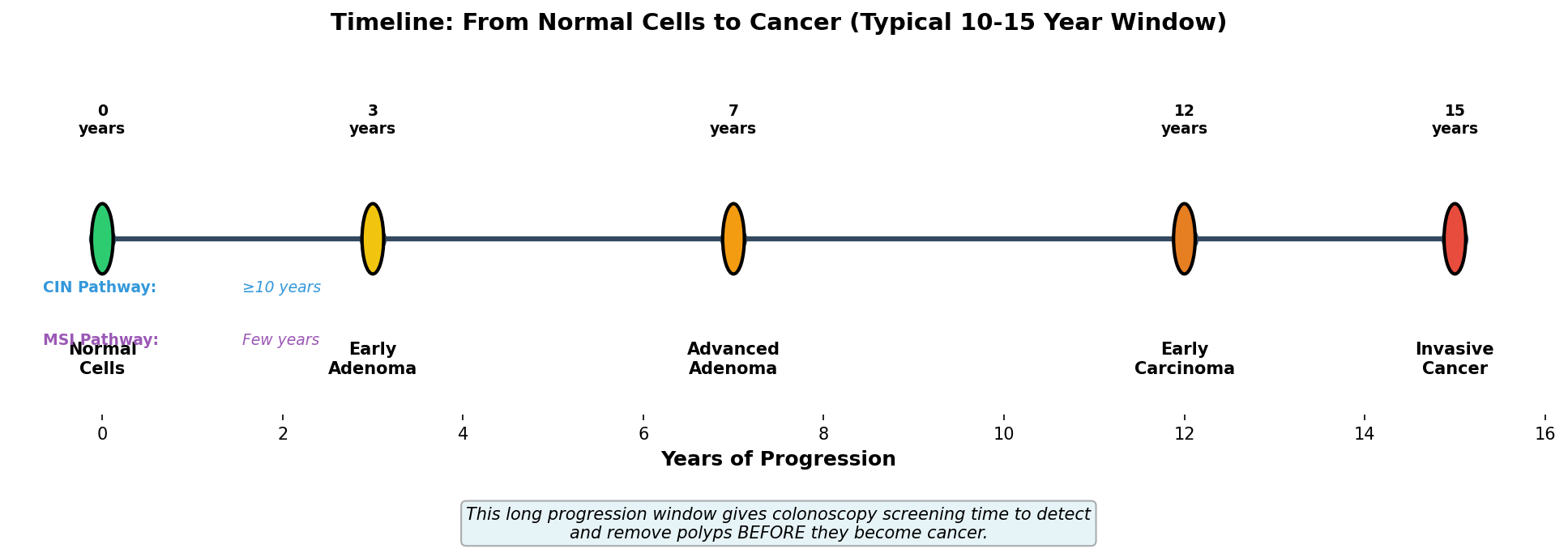 Figure 1: How adenomatous polyps progress to cancer over approximately 10 to 15 years, providing a critical window for detection and removal.
The long progression window is the entire reason colonoscopy screening works. Screening can detect polyps years (even a decade) before they could possibly become cancer.
Growth Rates Tell the Story
Different polyp types grow at remarkably different rates, and this growth rate predicts which polyps are most dangerous:
- Advanced adenomas (high-risk polyps): Grow about 178% in volume per year
- Non-advanced adenomas (lower-risk polyps): Grow about 33% in volume per year
- Non-neoplastic polyps: Actually shrink slightly (about 3% per year)
A polyp that is doubling in size annually is a high-risk lesion and demands removal. Smaller polyps may grow slowly and remain at low risk for years.
Polyp Prevalence: How Common Are They?
Polyps are far more common than most people realise. Understanding your own risk is a valuable context for screening decisions.
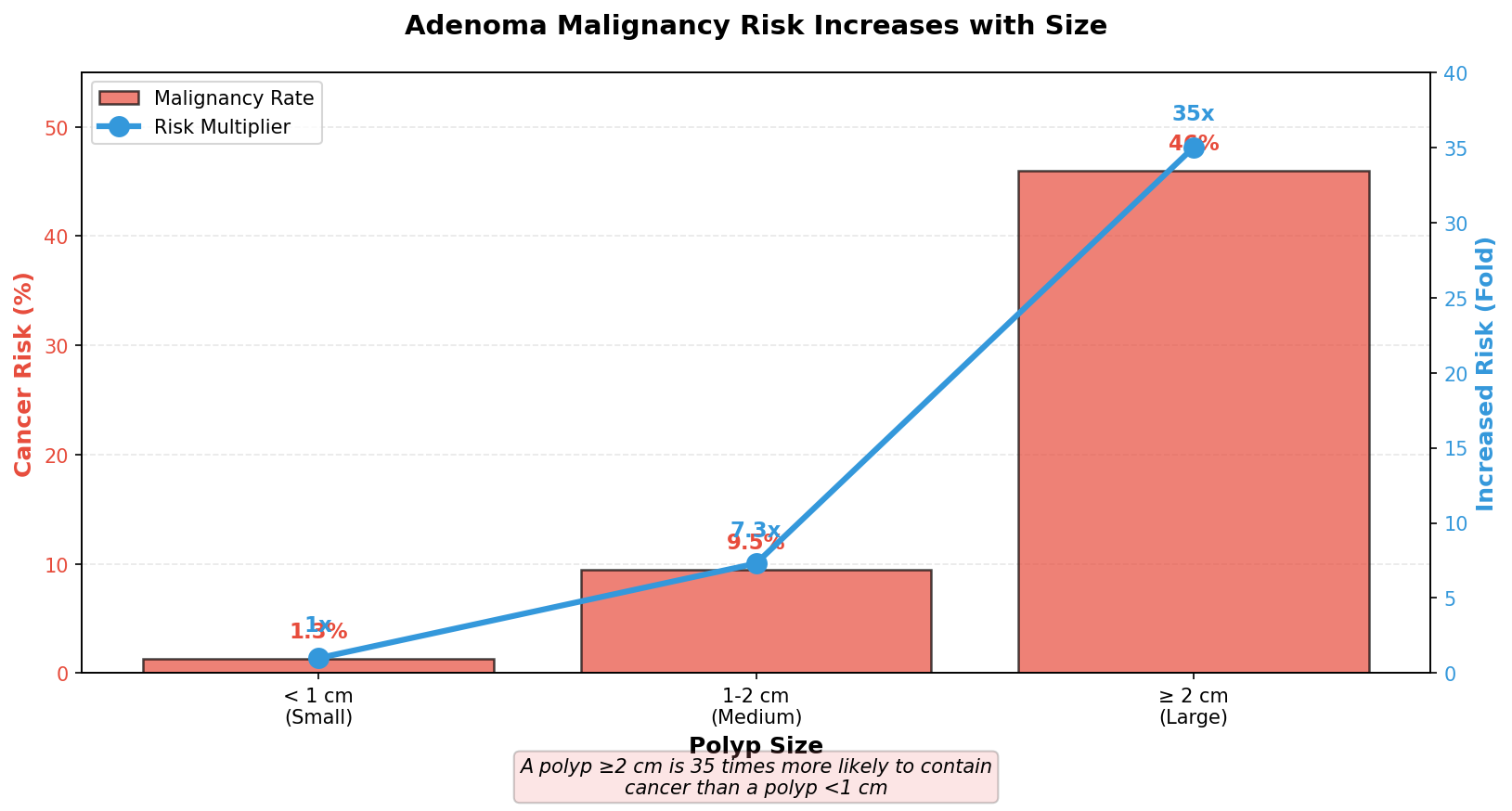 Figure 2: Polyp detection rates rise dramatically after age 50, with more than half of people over 70 having at least one polyp. Data from population screening studies.
The numbers tell a striking story:
- Ages 50–59: 21% to 28% have detectable polyps
- Ages 60–69: 41% to 45% have detectable polyps
- Ages 70+: 53% to 58% have detectable polyps
In fact, in one hospital-based study, approximately 77% of patients with colorectal polyps had neoplastic polyps. The message is clear: polyps are normal and increasingly common with age, which is exactly why screening starting at age 45 (or 50 in some guidelines) has become standard.
How Colonoscopies Detect Polyps
A colonoscopy is straightforward: a physician inserts a long, flexible tube called a colonoscope through the rectum into the colon. The tube has a light and camera, allowing the doctor to visualise the entire colon's lining. The procedure typically takes 20–30 minutes.
What Colonoscopy Can Do
During the procedure, polyps found can be removed immediately through polypectomy (polyp removal). No separate surgery is needed. Most polyps are removed during the same colonoscopy appointment where they are found, which is extraordinarily efficient. For example, adenomas make up roughly 66% of all precancerous polyps detected, and nearly all can be removed right away.
Adenoma Detection Rates: A Quality Metric
One of the most important measures of colonoscopy quality is the adenoma detection rate (ADR): the percentage of screening colonoscopies in which the doctor detects and documents at least one adenoma.
Current benchmarks are:
- Men: Greater than 25% adenoma detection rate
- Women: Greater than 15% adenoma detection rate
In the United States, actual performance has been improving. Recent data shows an average adenoma detection rate of 36.8% overall, with men at 44% and women at 31%. These figures exceed the recommended targets in many programmes, suggesting colonoscopy quality is generally high.
Why does adenoma detection rate matter so much? Every 1% increase in adenoma detection rate reduces the risk of interval colorectal cancer (cancer found between screenings) by approximately 3%, and reduces fatal interval cancer risk by 5%. This demonstrates that higher-quality colonoscopy directly translates to better cancer prevention.
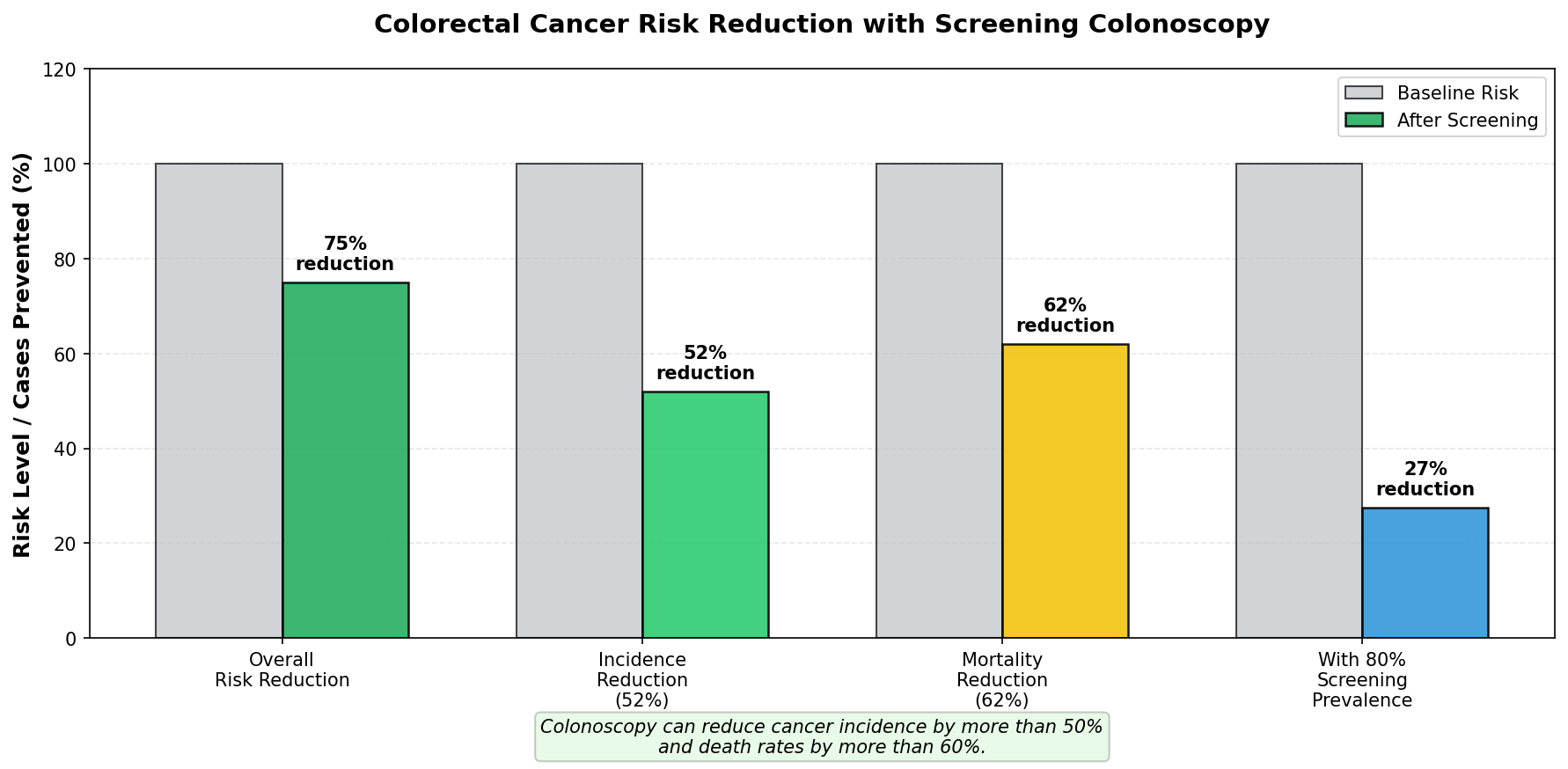 Figure 3: Adenoma detection rates are consistently higher in men than women across all age groups, reflecting both biological differences and potential screening technique variations.
Artificial Intelligence Improving Detection
Recent advances in artificial intelligence are further boosting colonoscopy effectiveness. AI-assisted detection systems have achieved 95% sensitivity and 98% specificity in detecting polyps. When AI assistance is used, the adenoma miss rate drops from 36% down to just 16%—a dramatic 65% reduction in missed polyps. This technology represents the next frontier in cancer prevention.
How Polyp Removal Prevents Cancer: The Prevention Mechanism
This is the essential insight: a polyp cannot become cancer if it has been removed.
Here's why colonoscopy is so powerful:
The Prevention Window
Most colorectal cancers develop through the adenoma-carcinoma sequence, which takes years to progress. Colonoscopy screening:
- Detects polyps in the early stages, often decades before malignancy
- Removes the polyp completely, eliminating any possibility of cancer development
- Provides surveillance, catching any recurrent polyps before they transform
The Cancer Risk by Polyp Type
Research quantifies the cancer risk for different polyp types over a 10-year period:
|
Polyp Type |
10-Year Cancer Risk |
|
Hyperplastic polyps |
1.6% |
|
Sessile serrated polyps |
2.5% |
|
Tubular adenomas |
2.7% |
|
Tubulovillous adenomas |
5.1% |
|
High-grade dysplasia adenomas |
5.5% |
Overall, approximately 5% to 10% of adenomatous polyps will progress to cancer if left untreated. The risk is real but also manageable with screening.
The Evidence: How Much Cancer Does Colonoscopy Actually Prevent?
The evidence is compelling. Research from major studies including the National Polyp Study, Swedish record-linkage studies, and international cohort studies consistently demonstrates that polypectomy prevents colorectal cancer:
- 69% to 90% reduction in expected colorectal cancer cases after polypectomy
- 53% reduction in colorectal cancer mortality with colonoscopic polypectomy
- 62% relative risk reduction in mortality across meta-analyses of screening studies
To put this in real terms: if colonoscopy screening achieved 80% coverage of eligible populations, colorectal cancer cases could be reduced by 22% and deaths by 33% by 2030.
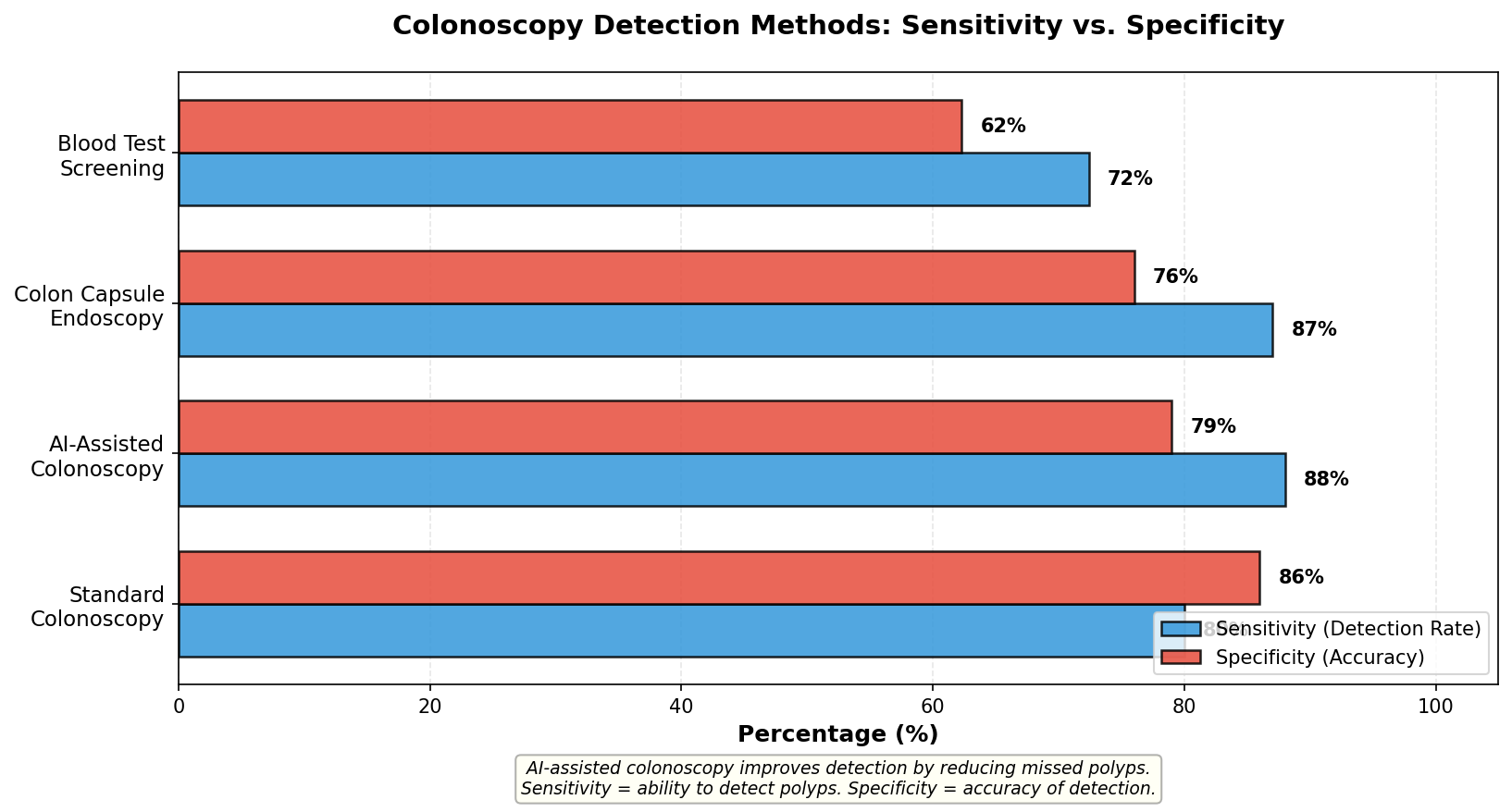 Figure 4: Colonoscopy screening reduces colorectal cancer incidence and mortality by 60% to 90% across major studies, making it one of the most effective cancer prevention tools available.
Surveillance After Polyp Removal: What Happens Next?
Removing a polyp is not always the end of the story. Most patients require a follow-up colonoscopy to ensure no new polyps develop and no polyps were missed during the initial exam.
Surveillance Intervals Based on Risk
Based on 2020 UK guidelines, surveillance intervals depend on what was found:
Low-Risk Patients (Extended Intervals):
- Normal colonoscopy or 1–2 small adenomas
- Recommended interval: 7–10 years
- These patients can return to standard screening intervals
High-Risk Patients (Shorter Intervals):
- Two or more premalignant polyps with at least one being "advanced" (10 mm or larger, serrated, or high-grade dysplasia)
- Five or more premalignant polyps of any size
- One non-pedunculated polyp 20 mm or larger
- Recommended interval: 3 years
The reasoning is straightforward: high-risk findings indicate greater likelihood of future polyp development, so closer monitoring catches new polyps before they progress.
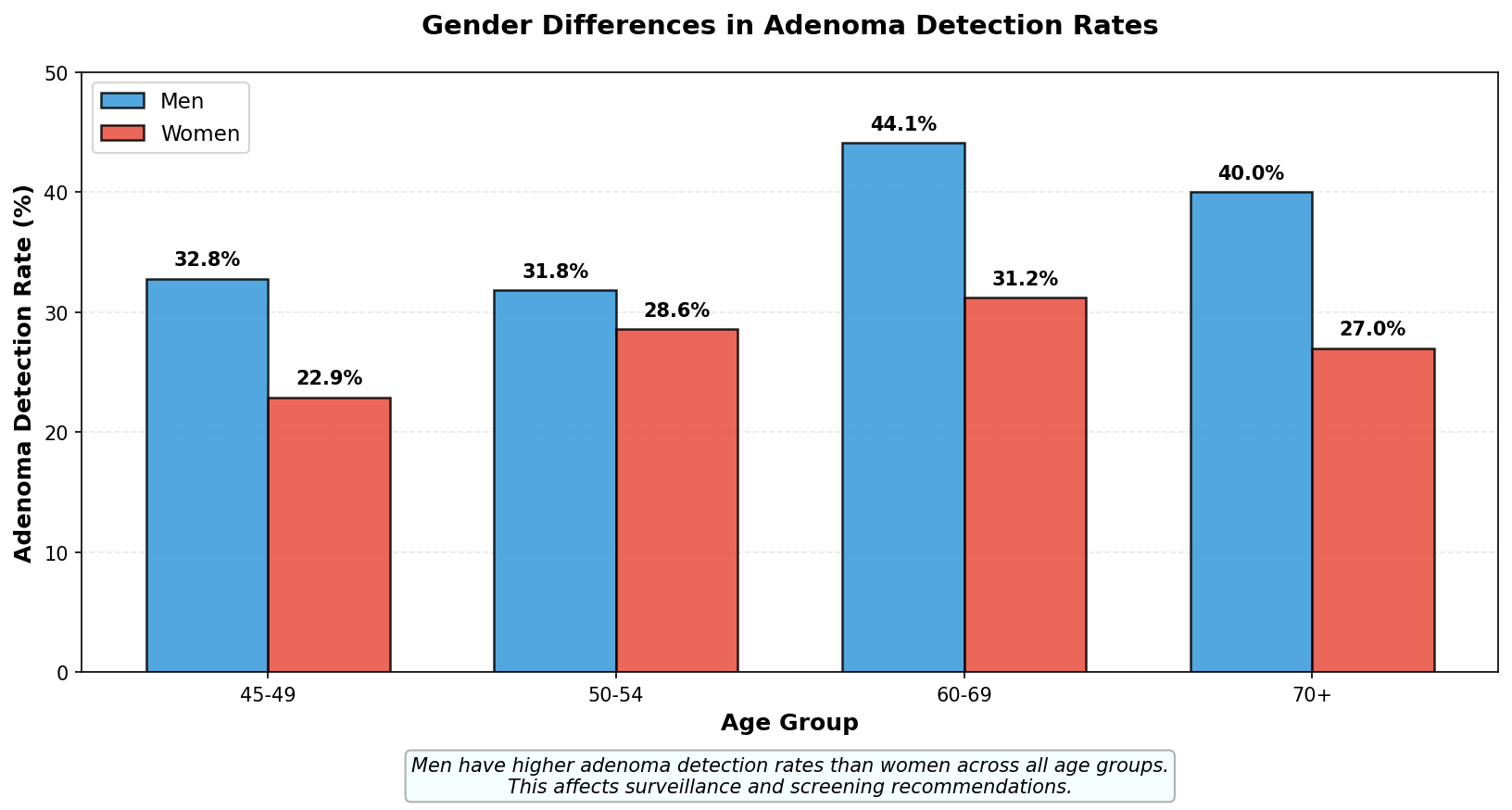 Figure 5: Surveillance timing following polypectomy depends on initial findings, with high-risk polyps requiring 3-year follow-up and low-risk findings permitting 7- to 10-year intervals.
Polyp Recurrence Rates
Reassuringly, most patients remain polyp-free or develop only small polyps:
- 70.9% of patients have no adenomas detected at follow-up
- 6% of patients have advanced adenomas on follow-up
- Only 1.8% of patients develop cancer at the polypectomy site itself
These numbers reflect why follow-up is effective: most patients do not develop new polyps, and those who do are caught early through surveillance.
Risk Factors: Who Develops Polyps?
Understanding your personal risk helps inform screening decisions and lifestyle choices.
Age and Sex
Age is the single strongest risk factor for polyp development. As noted above, prevalence increases dramatically after 50. Sex also matters: men have approximately 30% to 40% higher adenoma detection rates than women. This is not fully explained and may reflect both biological differences and differences in polyp morphology.
Modifiable Risk Factors
Several lifestyle factors increase polyp risk:
- Smoking: A history of more than 15 pack-years (approximately 15 cigarettes daily for 15 years) significantly increases adenoma risk. Both former and current smokers carry elevated risk
- Alcohol consumption: Associated with increased risk of all polyp types, particularly serrated polyps
- Diet: Red meat intake and obesity (BMI 30 or higher) are associated with increased polyp risk
- Physical inactivity: Sedentary lifestyle increases risk of both polyps and colorectal cancer
The implication is hopeful: reducing smoking, limiting alcohol, improving diet, and increasing physical activity can all reduce polyp risk.
Family History
Having a parent or sibling with colorectal cancer or polyps increases your own risk and may warrant earlier screening or more frequent follow-ups.
When Should You Start Screening?
Current Screening Recommendations
Age 45–49: Screening is recommended for average-risk individuals starting at age 45. Research shows adenoma detection in this age group is about 28.5%, indicating that polyps are already common in this younger population. Starting at 45 is now standard guidance.
Age 50 and Older: Screening is recommended for all average-risk adults. This is the age when polyp prevalence increases most sharply.
Continuing to Age 75: Screening generally continues until around age 75–80, depending on individual health and prior screening results.
Screening Intervals for Average Risk
If colonoscopy is normal:
- Next screening in 10 years
This 10-year interval is based on the knowledge that adenomas typically take many years to progress to cancer, so a long interval is safe.
Higher-Risk Individuals
Those with a family history of colorectal cancer, a personal history of polyps, inflammatory bowel disease, or genetic syndromes may need earlier or more frequent screening. Your doctor will individualise recommendations based on your specific situation.
Polyp Removal Techniques: How Polyps Are Removed
Different polyps require different removal methods depending on size, shape, and location.
Small Polyps (Less Than 10 mm)
Most small polyps are removed by cold snare polypectomy (mechanical removal without heat) or hot snare polypectomy (mechanical removal with thermal energy). These are quick, effective, and have low complication rates.
Medium Polyps (10 to 20 mm)
These often require endoscopic mucosal resection (EMR), a technique in which the polyp and surrounding tissue are lifted with saline injection, then snared and removed in one piece. This ensures complete removal and allows pathological examination of the entire specimen.
Large Polyps (Greater Than 20 mm)
Large polyps may require endoscopic submucosal dissection (ESD), an advanced technique that allows the removal of very large lesions in a single piece whilst minimising complications.
The key point: modern endoscopic techniques allow removal of nearly all polyps without major surgery.
Safety: Understanding Colonoscopy Risks
Colonoscopy is very safe. Serious complications are rare:
Perforation (bowel puncture):
- Occurs in approximately 1 in 1,000–1,400 colonoscopies
- Elderly patients (age 65+) have higher rates: about 7.8 per 10,000 colonoscopies
- Can usually be managed with observation or minimally invasive repair
Post-Colonoscopy Bleeding:
- Occurs in about 1.6 per 1,000 colonoscopies
- More common than perforation but usually minor and self-limited
- Elderly patients again have higher rates: about 23.5 per 10,000 colonoscopies
For most people, the risk of a serious complication is extraordinarily low, while the benefit of cancer prevention is enormous. The risk-benefit calculation overwhelmingly favours screening.
Long-Term Outcomes: What Happens After Polypectomy?
For patients with polyps that are removed, long-term outcomes are excellent.
Survival Rates
- 95% five-year survival rate for patients with malignant colonic polyps who undergo polypectomy
- 100% five-year survival in surveillance colonoscopy patients with inflammatory bowel disease (compared to just 74% in non-surveillance patients)
The importance of surveillance becomes apparent from this comparison: catching cancers through surveillance when they are early-stage dramatically improves survival.
Why Detection Matters So Much
Early detection of cancer through colonoscopy surveillance dramatically improves outcomes:
- Advanced colorectal cancer has a 5-year survival as low as 10%
- Early-stage cancer detected through colonoscopy has 5-year survival of 90% or higher
This 80-percentage-point difference between early and advanced cancers illustrates the absolute critical importance of screening.
The Bottom Line: Why Colonoscopies Prevent Cancer
A colonoscopy prevents colorectal cancer through a straightforward mechanism:
- Polyps are common, especially after age 50. About one in three to one in two adults will have at least one detected
- Polyps are slow to transform, typically taking 10–15 years to become cancer, providing a large detection window
- Colonoscopy reliably finds polyps in the early stages before malignancy develops
- Removal is simple, done during the same procedure without major surgery
- Prevention is essentially complete once a polyp is removed
- Surveillance catches recurrent polyps, preventing any new polyps from progressing to cancer
The evidence is conclusive: colonoscopy screening reduces colorectal cancer incidence by 60% to 90% and mortality by similar magnitudes. This makes it one of the most effective cancer prevention tools available in modern medicine.
If you are 45 or older (or have risk factors warranting earlier screening), a colonoscopy appointment could be the single most valuable health decision you make this year. The procedure is safe, effective, and potentially life-saving.
Further Reading
Screening and Prevention
- Colorectal Cancer Prevention - National Cancer Institute
- Colorectal Cancer Screening Guidelines - USPSTF
- Colorectal Cancer Awareness and Prevention - CDC
Colonoscopy Procedures and Technique
- Colonoscopy Procedure Overview - Mayo Clinic
- How to Read Colonoscopy Results - Mayo Clinic
- Understanding Your Colonoscopy Report - Johns Hopkins Medicine
Polyps and Cancer Risk
- Colon Polyps: Diagnosis and Treatment - Mayo Clinic
- Colorectal Polyps and Risk Factors - StatPearls/NIH
- Cancer Risk Assessment - National Cancer Institute
Quality Metrics and Modern Technology
- Adenoma Detection Rate and Colonoscopy Quality - PubMed/NIH
- Artificial Intelligence in Colonoscopy - Research Summary
Long-Term Outcomes and Surveillance
- Colorectal cancer prevention: colonoscopic surveillance in adults with ulcerative colitis, Crohn's disease or adenomas - NICE
- Post-polypectomy and post-colorectal cancer resection surveillance guidelines - British Society of Gastroenterology
- Colon Cancer Prevention Through Early Detection - Cleveland Clinic
- Surviving Colorectal Cancer: Follow-Up Care - Harvard Health
References/Helpful Resources
- National Institutes of Health. Colorectal Polyps and Polyposis Syndromes. StatPearls [Internet]. [cited 2026 Jun 01]. Available from: https://www.ncbi.nlm.nih.gov/books/NBK430761/
- PubMed. Cause, Epidemiology, and Histology of Polyps and Pathways to Colorectal Cancer [Internet]. [cited 2026 Jul 02]. Available from: https://pmc.ncbi.nlm.nih.gov/articles/PMC9924026/
- National Cancer Institute. Colorectal Cancer Prevention [Internet]. [cited 2026 Jun 01]. Available from: https://www.cancer.gov/types/colorectal/hp/colorectal-prevention-pdq
- PubMed. Prevalence of diverse colorectal polyps and risk factors for colorectal carcinoma in situ and neoplastic polyps [Internet]. [cited 2026 Jul 02]. Available from: https://pubmed.ncbi.nlm.nih.gov/38632639/
- National Institutes of Health. Adenoma Detection Rate as Quality Metric [Internet]. PubMed. [cited 2026 Jun 01]. Available from: https://pubmed.ncbi.nlm.nih.gov/35230641/
- National Institutes of Health. Evaluation Efficacy of Artificial Intelligence Polyp Detection [Internet]. PubMed Central. [cited 2026 Jun 01]. Available from: https://pmc.ncbi.nlm.nih.gov/articles/PMC12618418/
- National Institutes of Health. Cancer Risk Following Polypectomy [Internet]. PubMed Central. [cited 2026 Jun 01]. Available from: https://www.ncbi.nlm.nih.gov/pmc/articles/PMC8588296/
- Harvard Health Publishing. How Well Do Colonoscopies Prevent Colorectal Cancer [Internet]. [cited 2026 Jun 01]. Available from: https://www.health.harvard.edu/blog/how-well-do-colonoscopies-prevent-colorectal-cancer-what-you-need-to-know-202210182834
- PubMed. Prevention of colorectal cancer by colonoscopic polypectomy. The National Polyp Study Workgroup [Internet]. [cited 2026 Jul 02]. Available from: https://pubmed.ncbi.nlm.nih.gov/8247072/
- U.S. Preventive Services Task Force. Final Recommendation Statement: Colorectal Cancer Screening [Internet]. [cited 2026 Jun 01]. Available from: https://www.uspreventiveservicestaskforce.org/uspstf/document/RecommendationStatementFinal/colorectal-cancer-screening
- Centers for Disease Control and Prevention. Colorectal Cancer Awareness [Internet]. [cited 2026 Jun 01]. Available from: https://www.cdc.gov/cancer/features/colorectal-cancer.html
- SEER Cancer Statistics. Colorectal Cancer Stat Facts [Internet]. National Cancer Institute. [cited 2026 Jun 01]. Available from: https://seer.cancer.gov/statfacts/html/colorect.html
- Mayo Clinic. Colonoscopy [Internet]. [cited 2026 Jun 01]. Available from: https://www.mayoclinic.org/tests-procedures/colonoscopy/about/pac-20393569
- Mayo Clinic. How to Read Colonoscopy Results [Internet]. [cited 2026 Jun 01]. Available from: https://www.mayoclinic.org/tests-procedures/colonoscopy/in-depth/how-to-read-colonoscopy-results/art-20591770
- Mayo Clinic. Colon Polyps: Diagnosis and Treatment [Internet]. [cited 2026 Jun 01]. Available from: https://www.mayoclinic.org/diseases-conditions/colon-polyps/diagnosis-treatment/drc-20352881
- Johns Hopkins Medicine. Colonoscopy [Internet]. [cited 2026 Jun 01]. Available from: https://www.hopkinsmedicine.org/health/treatment-tests-and-therapies/colonoscopy
- Cleveland Clinic. Don't Give Up on Screening Colonoscopy [Internet]. [cited 2026 Jun 01]. Available from: https://consultqd.clevelandclinic.org/dont-give-up-on-screening-colonoscopy
