

Toxoplasmosis During Pregnancy: Current Guidelines and Recommendations
If you're pregnant and have heard about toxoplasmosis, you might feel anxious. Should you get rid of your cat? Stop eating rare steak? Demand screening from your doctor? Let me start by giving you the most important fact: your actual risk of infection is low, and even if you do get infected, treatment can prevent most complications in your baby. Understanding the real science behind toxoplasmosis will help you take sensible precautions without unnecessary panic.
This guide explains what toxoplasmosis is, why it matters in pregnancy, how to reduce your risk realistically, what to do if you're diagnosed, and what international guidelines actually recommend. The goal is to give you the information you need to have an informed conversation with your doctor about whether screening makes sense for you.
What Is Toxoplasmosis and Why Does It Matter in Pregnancy?
Toxoplasmosis is a parasitic infection caused by a microscopic organism called Toxoplasma gondii. Most people infected with it never realise they have it. The infection usually doesn't cause noticeable symptoms (or causes only mild, flu-like ones), and the body's immune system keeps it in check.1
In non-pregnant people, toxoplasmosis is generally harmless. But if you acquire a fresh infection during pregnancy, there's a risk that the parasite could cross the placenta and infect your developing baby. This is called "congenital toxoplasmosis"; it's the reason pregnancy changes the picture.2
Here's what makes this serious: most infected babies appear completely normal at birth. The problem is that 90% of infected babies don't show obvious problems when they're born, but many develop complications months or years later. These can include vision loss, hearing problems, seizures, and developmental delays. Without treatment, about 70-90% of infected children eventually develop some kind of problem.3
The good news: with modern treatment, most of these complications can be prevented or minimised. A year of medication can give a child with congenital toxoplasmosis a much better chance at normal development.
How Transmission Actually Works: Understanding Real Risk vs. Internet Fear
Let's start with what you probably already worry about: your cat. While toxoplasmosis is associated with cats, the actual transmission risk from cat exposure is much lower than most pregnant women believe.
The Three Routes to Infection
1. Undercooked or raw meat (the biggest risk)
This is the leading cause of toxoplasmosis in pregnant women. When infected animals are slaughtered, the parasite remains in muscle tissue. If you eat undercooked beef, lamb, pork, venison, or game meat, you could ingest the parasite. Research shows that 30-63% of human infections come from eating undercooked or cured meat; pork is responsible for about 41% of cases in the United States.4
This includes:
- Rare or medium-rare steaks
- Raw or undercooked ground beef
- Undercooked pork chops
- Raw or cured meats (salami, prosciutto, raw sausage, dry-cured ham)
- Undercooked game meat
2. Cat faeces exposure (lower risk than people think)
Here's what actually happens: cats only shed the parasite if they're infected with it. An outdoor cat who hunts rodents or eats raw meat might become infected. Once infected, the cat sheds parasites in faeces for only about 2 weeks.5 The parasites then need 1-5 days in the environment to become infectious. Daily cat litter cleaning essentially eliminates the risk.6
The bottom line: eating undercooked meat poses more risk than cat exposure. If you have a healthy indoor cat, live with someone who changes the litter daily, or change the litter daily yourself with gloves, your risk from cat exposure is minimal.7
3. Unwashed vegetables and soil contact
Contaminated soil can harbour the parasite's eggs, which remain infectious for months. Eating unwashed vegetables or handling soil without gloves during gardening can transmit infection. Unpasteurised milk can also carry the parasite.8
The Pregnancy Paradox: Why Timing Matters
Here's something that surprises many people: the risk of transmitting infection to your baby actually increases as pregnancy progresses, but the severity of disease decreases. This is called the "pregnancy paradox".9
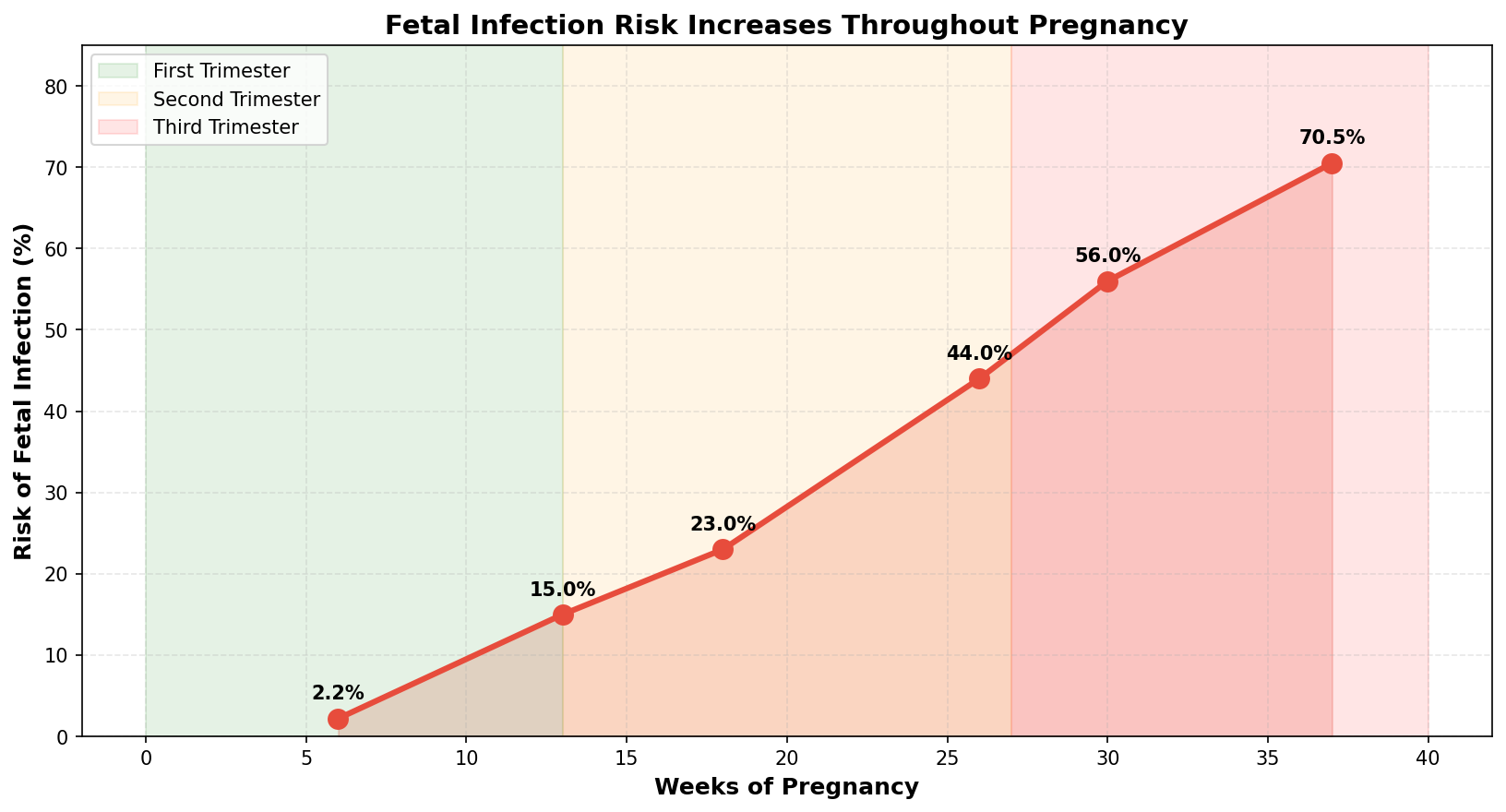 Figure 1: Transmission risk from mother to baby increases dramatically as pregnancy advances, but infected babies born late in pregnancy typically have milder disease.1
|
Timing |
Transmission Risk |
Typical Disease Severity |
|
Before 6 weeks |
2.2% |
More severe if it happens |
|
13 weeks |
6% |
Moderate severity |
|
18 weeks |
23% |
Increasing severity |
|
30 weeks |
56% |
Becoming mild |
|
Third trimester (37 weeks) |
60-81% |
Usually mild |
What this means for you: If you get infected very early in pregnancy, there's a small chance your baby will be infected; but if infected, the problems tend to be more serious. If you get infected late in pregnancy, it's much more likely to pass to your baby, but the baby usually has milder problems.10 Neither scenario is ideal, which is why prevention is your best tool.
How Common Is Infection During Pregnancy?
In the United States, 0.2% to 1.0% of pregnant women acquire acute toxoplasmosis during pregnancy. This translates to approximately 1 in 100 to 1 in 500 pregnant women getting infected. While this sounds low, with roughly 4 million babies born annually in the US, this means 400-4,000 babies could be born with congenital toxoplasmosis each year.11
Your personal risk depends on several factors:
- Your dietary habits (how often you eat undercooked meat)
- Your geographic location
- Your socioeconomic status (people with less access to safe food handling education have higher risk)
- Your gardening and outdoor activities
- How you handle food safety
Symptoms and Diagnosis: The Hidden Infection Problem
Do Infected Pregnant Women Even Know?
Here's the unsettling part: about 80% of people with acute toxoplasmosis experience no symptoms or have such mild symptoms they don't notice them. You could be carrying an active infection and feel completely well.12
If symptoms do develop, they typically appear 1-3 weeks after exposure and resemble a mild flu:
- Fever (usually low-grade)
- Fatigue and weakness
- Headache
- Muscle and joint aches
- Sore throat
- Swollen lymph nodes (especially in the neck)
Symptoms usually resolve within 1-4 weeks, though they can sometimes persist for months.13
This symptom absence is exactly why screening and prevention education matter so much: you could be transmitting the infection to your baby without realising you're sick.
How Toxoplasmosis Is Diagnosed
If you're being screened or have symptoms, doctors use three main approaches:
Blood tests (serology): This is the starting point. Tests look for antibodies to Toxoplasma:
- IgM antibodies indicate recent infection
- IgG antibodies indicate past or chronic infection
- Avidity testing helps distinguish between recent and past infection14
If you test positive on your first screen, your doctor will likely repeat the test in 2-3 weeks and perform avidity testing to confirm whether this is a recent infection.
Amniocentesis with PCR (if fetal infection suspected): If serology suggests you have a recent infection, the gold standard test for fetal infection is amniocentesis (taking a sample of amniotic fluid) combined with PCR testing for the parasite's DNA.
This test is highly accurate: sensitivity is 97.4%; it catches the infection 97.4% of the time if it's actually present.15 However, it's only performed:
- Not before 18 weeks of gestation (risk of false negatives)
- At least 4 weeks after suspected maternal infection (allows time for parasite to reach amniotic fluid)16
Ultrasound: Doctors may look for signs of fetal infection like intracranial calcifications, hydrocephalus (fluid in the brain), microcephaly, or growth restriction.
Newborn screening: Even if maternal diagnosis is missed, 96% of infected babies are identified through newborn screening blood tests; they are not identified through physical examination.17 This is why routine newborn screening is so important: most infected babies look completely normal.
What Happens to Infected Babies: The Critical Data
This is where the stakes become clear. Let's look at what happens to babies who are born with congenital toxoplasmosis:
The Numbers at Birth
90% of infected babies have no symptoms at birth and appear completely healthy.18 They pass physical examinations. Doctors don't suspect infection. Parents don't realise their baby has been infected.
But here's the critical finding: these apparently healthy babies need treatment because 70-90% of untreated infected children develop problems over time.19
What Complications Develop Without Treatment
The complications of untreated congenital toxoplasmosis affect primarily the eyes and brain:
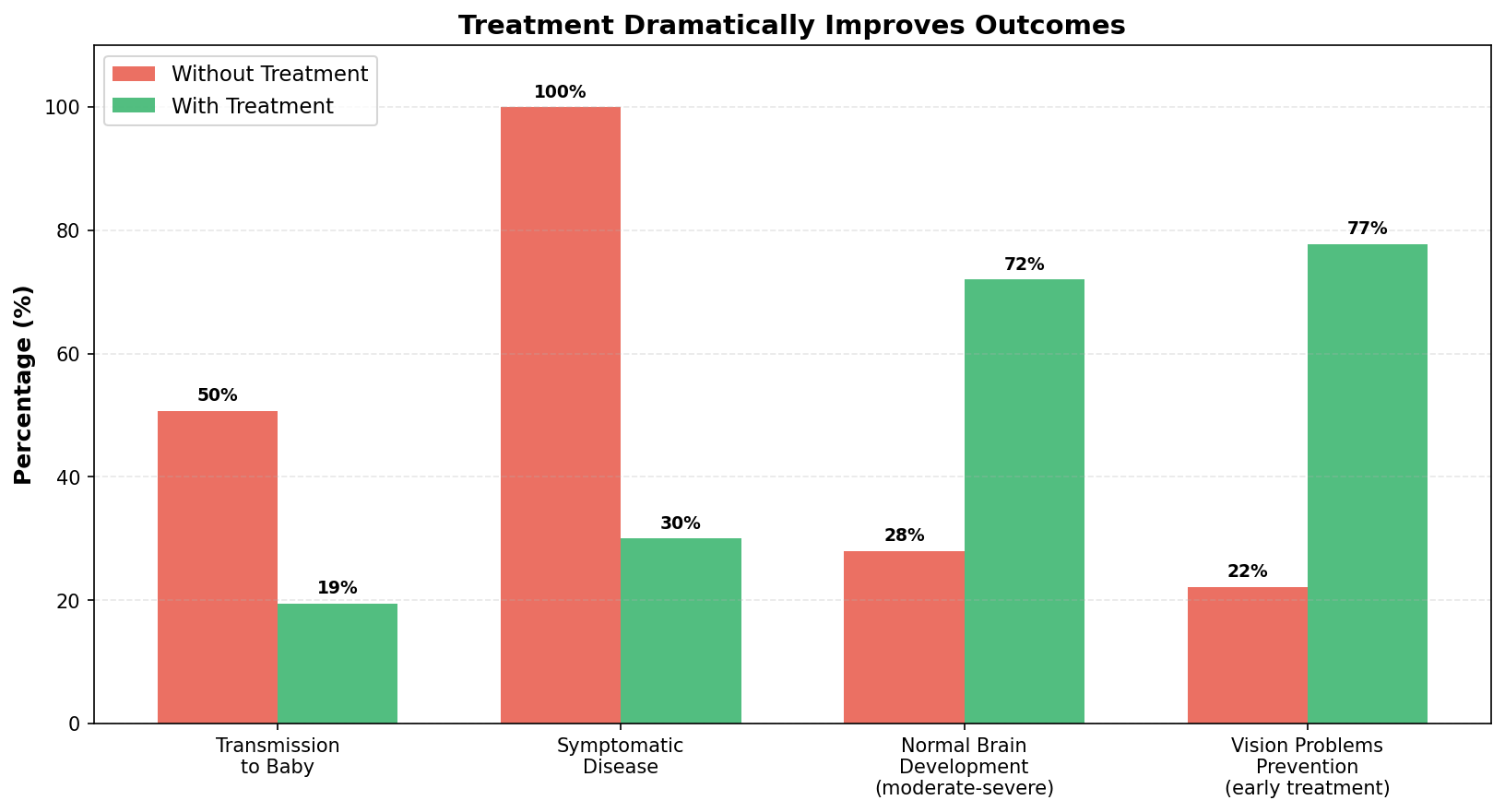 Figure 2: Without treatment, untreated congenital toxoplasmosis causes complications including eye damage (most common), brain problems, seizures, hearing loss, and developmental delays.3
Eye problems (most common):
- 55.5% of infected babies develop retinochoroiditis (inflammation of the eye), often causing permanent vision loss in one eye20
- 4-27% develop significant vision loss or blindness
- 77.8% of untreated patients develop new eye damage after the first year of life; the infection keeps causing damage even years later21
Brain problems:
- 27.7% have intracranial calcifications (calcium deposits in the brain)
- 27.7% have hydrocephalus (fluid buildup in the brain)
- Seizures develop in some children
- Intellectual disability occurs in 1-2% of cases
- Developmental delays
Other complications:
- Hearing loss in 11.1% of cases
- Premature birth in up to 50% of infected babies
- Liver and spleen enlargement
The crucial insight: the infection doesn't necessarily cause immediate damage. Instead, complications appear months or years later; this is why newborn screening and early treatment are essential.
What Treatment Can Do: The Transformative Impact
Now here's where the outlook shifts dramatically. Treatment changes everything.
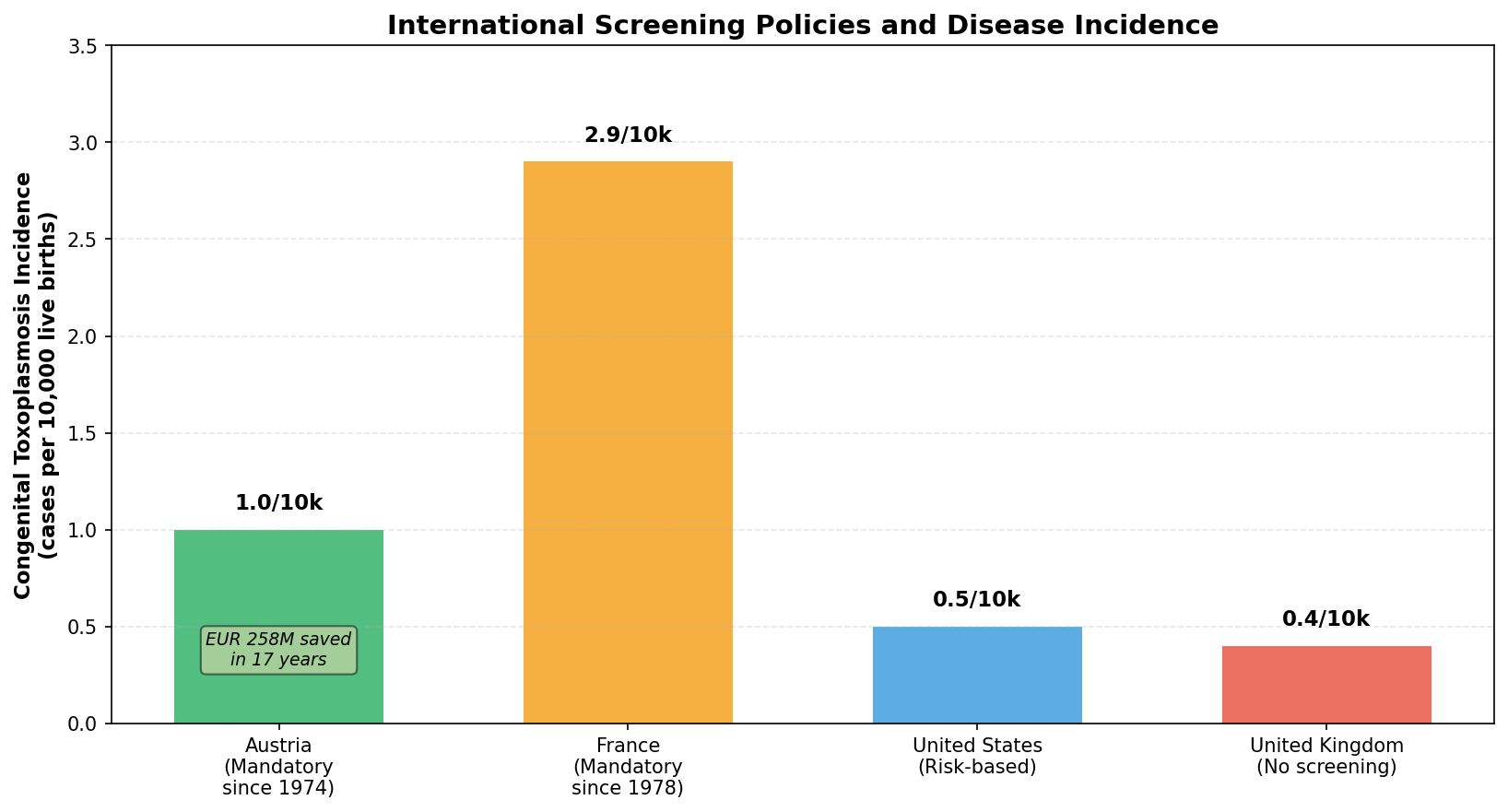 Figure 3: Treatment reduces mother-to-child transmission by 60%, symptomatic disease by 70%, and enables children with moderate-to-severe brain disease at birth to achieve normal development in 72% of cases.2
Treatment Impact by the Numbers
|
Outcome |
Without Treatment |
With Treatment |
Improvement |
|
Mother-to-child transmission rate |
50.7% (1 in 2) |
19.5% (1 in 5) |
60% reduction |
|
Symptomatic disease in infected baby |
100% will suffer |
30% will suffer |
70% reduction |
|
Normal cognitive development (even with brain disease at birth) |
28% |
72%+ |
Nearly 3x better |
|
Prevention of vision problems (early treatment) |
22.2% |
77.8% |
3.5x more successful |
What this means: If you're diagnosed with toxoplasmosis during pregnancy and receive treatment, the chance of your baby being infected drops from about 50% to about 20%. And even if your baby does get infected, treatment can prevent most complications.22
Outcomes for Infected Newborns with Treatment
For babies actually born with congenital toxoplasmosis, a full year of medication produces remarkable results:
- 100% of infected babies without brain disease at birth achieve normal cognitive, neurologic, and hearing outcomes23
- 72% of babies born with moderate to severe brain disease achieve normal or near-normal outcomes24
- Overall, 79% of treated children have normal cognitive development by one year of age25
Even more specifically:
- Early treatment (before 2 months of age) prevents vision loss in 77.8% of cases, compared to only 22.2% when treatment is delayed26
- With early treatment, hearing loss is preventable: there are no cases of severe sensorineural hearing loss in children treated early27
The Timing Factor: Why Early Detection Matters
One critical finding changed how doctors approach this: treatment started within 3 weeks of infection is 52% more effective than treatment started 8 or more weeks later.28 This is why screening programs that catch infection early have better outcomes.
This explains why countries with universal screening (like Austria and France) have better outcomes than countries without routine screening.
Current Treatment Guidelines and Medication Options
If you're diagnosed with toxoplasmosis during pregnancy, your treatment depends on when you're diagnosed and whether fetal infection is confirmed.
Early Pregnancy (Before 18 Weeks) with No Fetal Infection Confirmed
Medication: Spiramycin
- Dose: 1 gram (3 million IU) three times daily (3g/day total)
- Duration: Continues through pregnancy or until fetal infection status is confirmed
- Safety: No known birth defects; safe throughout pregnancy29
Why spiramycin first? It prevents the parasite from crossing the placenta to infect your baby, but it doesn't cross the placenta well enough to treat an already infected foetus. Starting with spiramycin is safer because pyrimethamine (the more effective drug for treating infected foetuses) is potentially teratogenic (can cause birth defects) in early pregnancy.30
Late Pregnancy (After 18 Weeks) or Confirmed Fetal Infection
Medication: Triple therapy combination
If foetal infection is confirmed at any point, or if you're diagnosed late in pregnancy, treatment switches to a more powerful combination:
- Pyrimethamine: 25-50mg daily (sometimes up to 100mg/day in some protocols)
- Sulfadiazine: 1 gram every 8 hours (3g/day total)
- Folinic acid (leucovorin): 15-50mg daily or twice weekly31
This combination is more effective at treating an infected foetus because it crosses the placenta better and penetrates foetal tissues more effectively.32
Critical Requirements with Treatment
If you're taking these medications, several things are important:
Folinic acid is mandatory. Pyrimethamine can suppress your bone marrow (reducing blood cell production); folinic acid protects against this without reducing the drug's effectiveness.33 Think of it as the safety net.
Blood cell count monitoring is essential. You'll need a complete blood count (CBC) at baseline and then every 1-2 weeks while taking pyrimethamine to ensure your blood cells aren't being suppressed.34
Hydration matters. You should drink at least 2 litres of fluid per 24 hours to prevent crystals from forming in your urine.35
Continue folinic acid for one week after stopping pyrimethamine to ensure bone marrow recovery.36
Side Effects: What to Expect
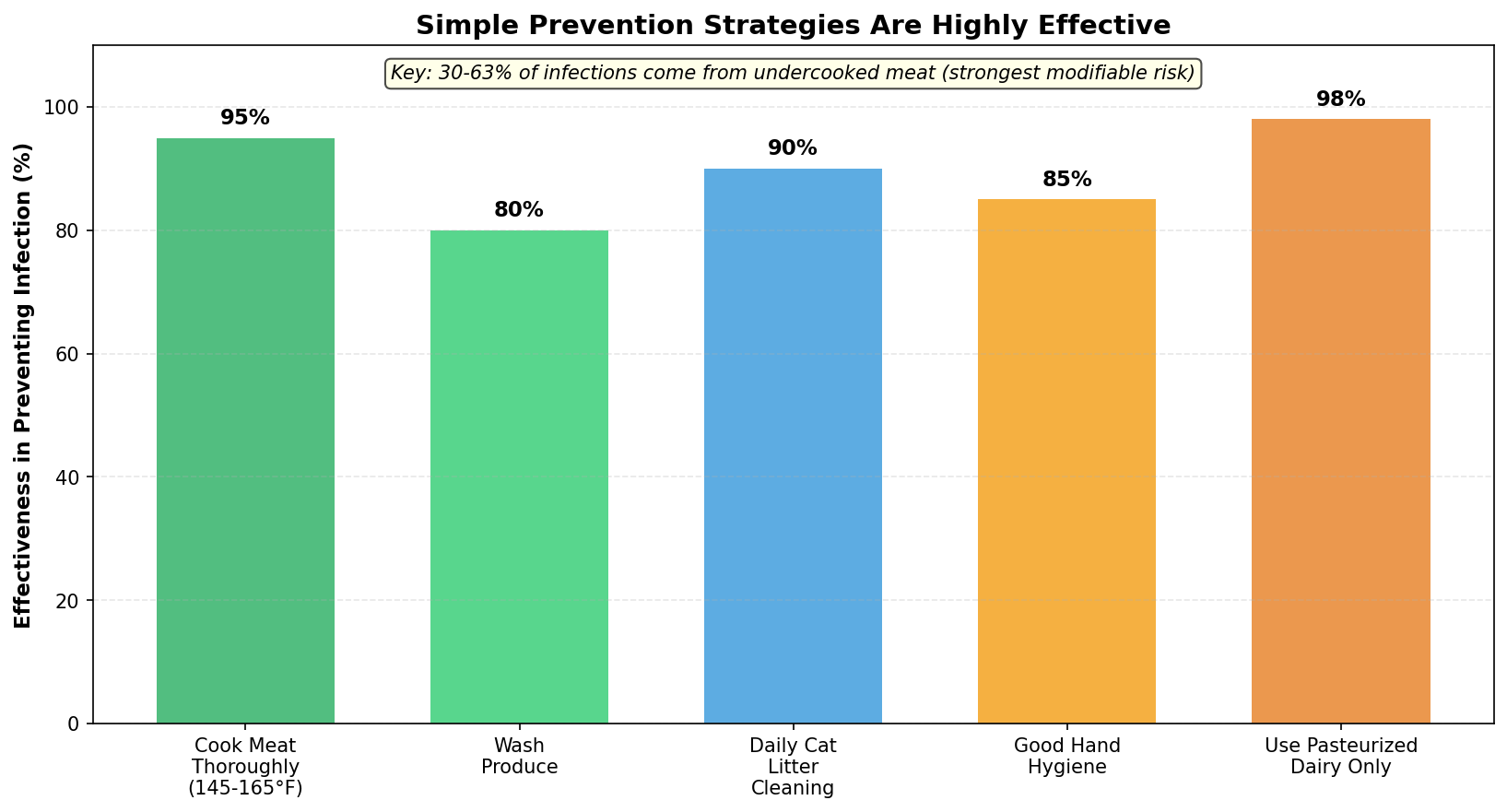 Figure 4: Side effect rates for each medication used to treat toxoplasmosis in pregnancy, with spiramycin being gentlest and sulfadiazine causing the most GI upset. All side effects are reversible.4
Spiramycin side effects (mild):
- Nausea and loss of appetite (mild gastro-intestinal upset in about 15% of patients)
- Generally very well tolerated37
Pyrimethamine side effects (moderate, reversible):
- Bone marrow suppression in about 12% of patients (detected by blood tests, not symptoms you'll feel)
- This is reversible: blood counts return to normal when medication stops
- Folinic acid significantly reduces this risk38
Sulfadiazine side effects (common but manageable):
- Gastro-intestinal upset (nausea, appetite loss) in about 50% of patients
- Allergic reactions ranging from mild skin rashes to, rarely, Stevens-Johnson syndrome
- Crystalluria (crystals in urine) prevented by adequate hydration39
Important: All side effects are reversible. They stop when medication ends. None cause permanent damage.40
Prevention Strategies That Actually Work
Now for the part you can control. Prevention is highly effective, and it's much simpler than you might think.
Food Safety: The Highest Priority
Cooking meat thoroughly is your most important prevention step because undercooked meat is responsible for 30-63% of infections.41
Cook all meat to safe internal temperatures:
- Beef, pork, lamb, venison: 160-165°F (71-74°C) internal temperature
- Poultry: 165°F (74°C)
- Use a food thermometer in the thickest part; don't rely on colour or texture42
This means: no rare steaks, no undercooked hamburgers, no medium-rare pork chops while you're pregnant.
Avoid these high-risk meat products:
- Raw or undercooked pâté
- Raw sushi or sashimi
- Cured meats (salami, prosciutto, dry-cured ham)
- Dry-cured sausage
- Raw eggs (in foods like homemade mayonnaise, hollandaise, or cookie dough)43
Freezing meat: While freezing at 0°F (-18°C) for at least 24 hours can reduce infectivity, it's not 100% reliable. Freezing should only be followed by proper cooking.44
Produce and Food Handling
- Wash all raw fruits and vegetables thoroughly under running water before eating
- Peel vegetables when possible
- Keep raw meat separate from produce and ready-to-eat foods when shopping and storing
- Use separate cutting boards for raw meat and produce
- Wash hands, cutting boards, countertops, utensils, and cutlery thoroughly with soap and hot water after handling uncooked meat45
Dairy Products
- Use only pasteurised milk and dairy products
- Avoid unpasteurised (raw) milk and cheeses made from unpasteurised milk46
Cat Safety (Less Risky Than People Think)
- Have someone else change the cat litter if possible
- If you must change it: wear disposable gloves and change it daily (before parasites become infectious)
- Wash hands thoroughly with soap and warm water afterward
- Keep cats indoors (prevents hunting infected prey)
- Feed cats only commercial canned or dry food, never raw meat47
Key point: A healthy indoor cat fed commercial food, with litter changed daily, poses minimal risk.
Gardening and Outdoor Safety
- Wear gloves when gardening or doing outdoor activities that involve soil contact
- Wash hands thoroughly with soap and warm water after outdoor activities
- Wash hands before eating or food preparation
- Cover outdoor sandboxes to prevent cats from using them as litter boxes48
Hand Hygiene: The Universal Prevention
- Wash hands after using the bathroom
- Wash hands after changing nappies
- Wash hands before handling or eating any food
- Wash hands after contact with pets, farm animals, or animal faeces
- Wash hands after any soil contact49
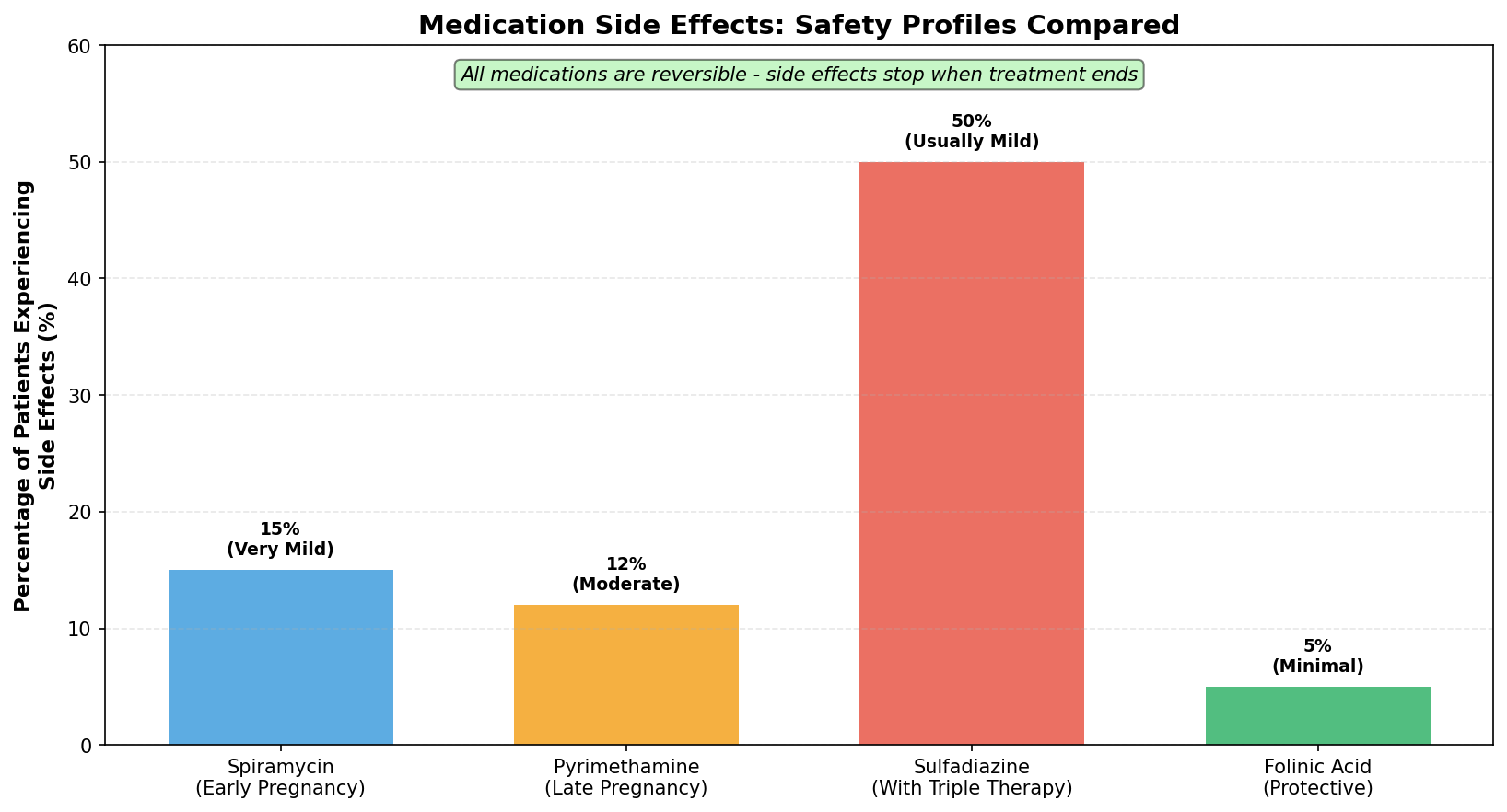 Figure 5: Simple prevention strategies are 80-98% effective, with cooking meat thoroughly being the most important.5
International Screening Recommendations and Guidelines
One of the most confusing aspects of toxoplasmosis in pregnancy is that different countries recommend completely different approaches to screening. This isn't because some countries are wrong; it's because the cost-benefit analysis differs based on disease prevalence and healthcare systems.
Who Screens Everyone: Austria and France
Austria has screened all pregnant women since 1974. France began in 1978. Both countries have achieved remarkable results:
- Austria: Lowest congenital toxoplasmosis rate in Europe (1.0 per 10,000 live births) and saved EUR 258 million between 1992 and 200850
- France: 78% of all confirmed EU congenital toxoplasmosis cases are detected in France (150 of 192 European cases in 2021) because of active screening51
Other countries with mandatory screening include Belgium, Greece, Slovakia, and Slovenia.52
Who Doesn't Offer Routine Screening: United States and United Kingdom
The United States (ACOG/CDC) and United Kingdom (RCOG) do not recommend universal screening for all pregnant women. Why? The decision is based on cost-benefit analysis:
United States approach:
- Routine universal screening not recommended for low-risk pregnant women
- Screening is offered only to pregnant women considered at risk for primary infection
- Risk-based approach: identify women with specific risk factors and screen them53
- Rationale: Low incidence (0.5 per 10,000 live births) makes universal screening less cost-effective
United Kingdom approach:
- Antenatal screening for toxoplasmosis is not offered in pregnancy
- Last formal review in 2011 concluded no evidence that benefits outweigh concerns
- Rationale: Low prevalence in UK population; concerns about test accuracy and management burden54
Canada: Similar to the US; uses risk-based screening for high-risk women only.55
Who Should Be Screened?
Even in countries without universal screening, certain women should be tested:
You should be screened if you:
- Have risk factors (eating undercooked meat, poor food hygiene, living in high-prevalence areas)
- Are immunosuppressed (HIV-positive, especially with CD4 count under 100)
- Have ultrasound findings suggesting TORCH infection (intracranial calcifications, microcephaly, hydrocephalus, growth restriction)
- Have symptoms suggestive of acute infection (fever, swollen lymph nodes)
- Have known exposure to acute toxoplasmosis56
All pregnant women should:
- Receive prevention education counseling on food safety and pet handling57
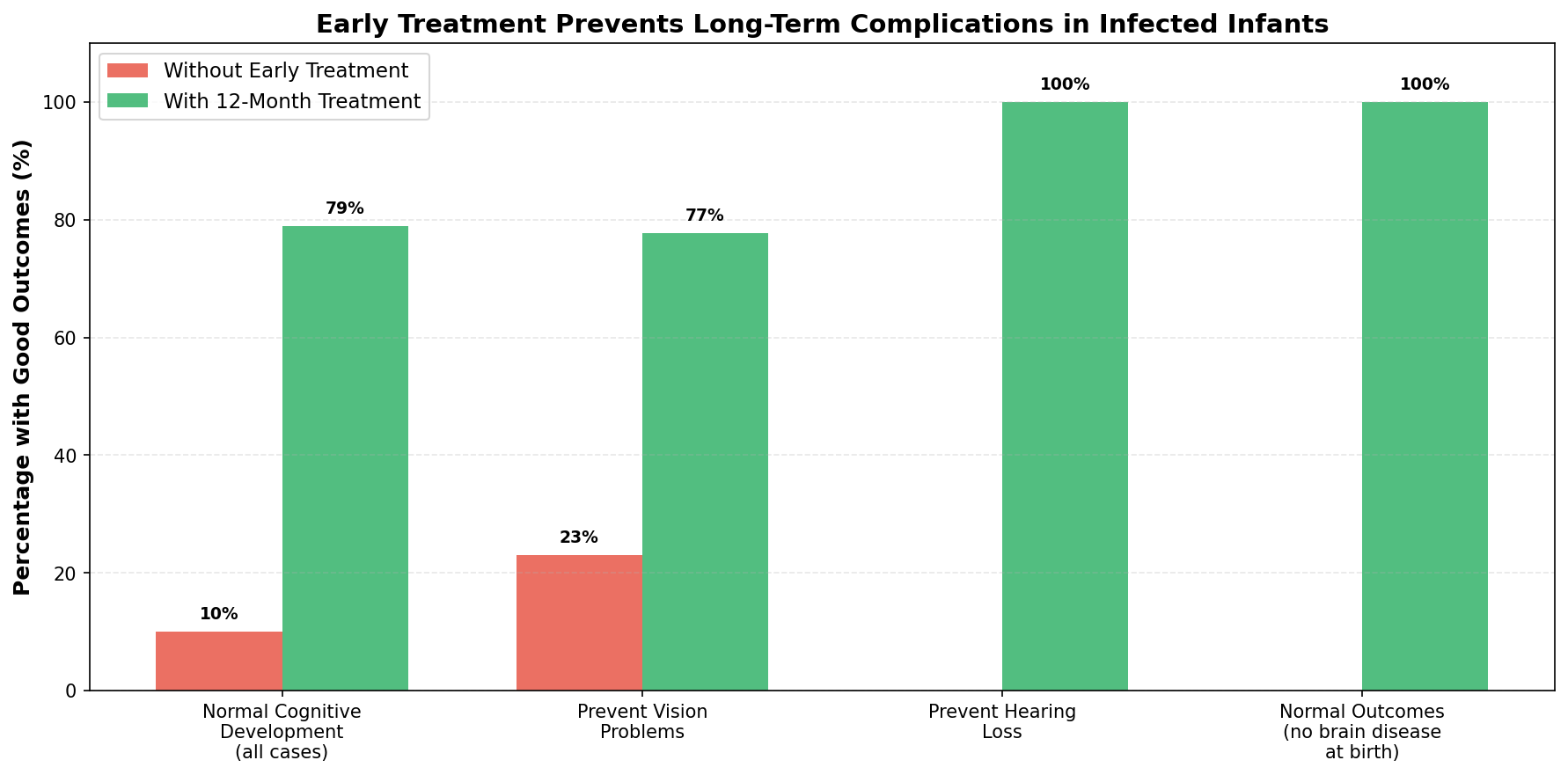 Figure 6: Countries with mandatory screening programs detect more cases and save money through prevented complications, while risk-based approaches work well in low-prevalence countries.6
What to Expect: A Step-by-Step Overview
If You're Concerned and Want Testing
- Talk to your obstetrician/gynaecologist about your specific risk factors
- Ask whether serological testing makes sense for you
- If you're seronegative (no past infection), discuss prevention and whether repeat testing during pregnancy is recommended
- If you're seropositive (past infection), you're immune and don't need to worry about fetal infection58
- If testing suggests recent infection, follow-up testing and potentially amniocentesis will be discussed
If You're Diagnosed with Acute Infection
- Detailed counseling about transmission risk based on gestational age
- Start appropriate medication (spiramycin or triple therapy)
- Regular monitoring for side effects
- Amniocentesis with PCR at 18+ weeks if fetal infection status unclear
- Fetal ultrasounds to look for signs of infection
- Careful follow-up after delivery with newborn screening and postnatal management
If Your Baby is Born with Congenital Toxoplasmosis
Your baby will receive:
- Triple therapy (pyrimethamine + sulfadiazine + folinic acid) for 12 months
- Regular paediatric follow-up
- Eye examinations (initial and ongoing; lifelong eye checks are recommended)
- Developmental assessments
- Hearing evaluation and monitoring59
FAQs
Should I get rid of my cat if I'm pregnant?
No. If your cat is indoors, fed commercial food, and someone changes the litter daily (or you change it daily with gloves), your cat poses minimal risk. The bigger risk is undercooked meat. Keep your cat if you wish to.60
Does being pregnant mean I need screening?
Not necessarily. In the US and UK, universal screening is not recommended. Talk to your doctor about your specific risk factors. If you eat undercooked meat regularly, travel to endemic areas, garden frequently, or have other risk factors, screening might make sense. Prevention counseling should be offered to all pregnant women.61
If I get infected, will my baby definitely have problems?
No. Even if you get infected, the chance of transmitting to your baby depends on when you're infected. And even if your baby is infected, treatment is highly effective. With treatment, most infected children develop normally.62
Is treatment safe during pregnancy?
Spiramycin is very safe throughout pregnancy. Triple therapy is safe in later pregnancy and when fetal infection is confirmed, because the benefit (treating fetal infection) outweighs the risk (pyrimethamine is potentially teratogenic). All side effects are reversible. Careful monitoring ensures safety.63
What if my doctor wants to test me but I'm not at risk?
That's okay. Testing isn't harmful. If you're seronegative (no past infection), it shows you need to be careful about prevention. If you're seropositive (past infection), it confirms you're immune and don't need to worry.64
I ate rare steak before I knew I was pregnant. Should I worry?
Most people eat undercooked meat without getting infected. Your risk was higher than it is now that you know about toxoplasmosis, but one exposure is unlikely to have caused infection. Worry less about what has already happened; focus on prevention going forward.65
How long does treatment last if I'm infected?
If you're pregnant and diagnosed, you'll take medication through delivery. Spiramycin continues through pregnancy. Triple therapy continues until birth. If your baby is born with congenital toxoplasmosis, medication continues for 12 months.66
Can treatment prevent all complications?
Not all, but most. Treatment significantly reduces transmission and prevents the majority of serious complications. Some children may still experience ocular recurrences (eye involvement) later in life, which is why lifelong eye monitoring is recommended. But the outcome is dramatically better than without treatment.67
Are there any foods I absolutely can't eat while pregnant?
Cook all meat thoroughly. Avoid raw meat products and unpasteurised dairy. That covers the high-risk items. Wash produce. Otherwise, normal pregnancy diet guidelines apply.68
What's the most important thing I can do to prevent toxoplasmosis?
Cook meat thoroughly. This single step prevents about 95% of food-related infections and is responsible for 30-63% of all infections in pregnant women. It's the single most important prevention strategy.69
The Bottom Line: What Every Pregnant Woman Should Know
Here's what matters:
- Your actual risk is low. Only 0.2-1% of pregnant women in the US get infected during pregnancy. That's 1 in 100 to 1 in 500 women
- Most infections don't cause symptoms. You could be infected and feel fine. This is why prevention and screening (if you have risk factors) matter
- 90% of infected babies appear normal at birth. But without treatment, 70-90% develop problems later. This "hidden infection" is why newborn screening exists
- Treatment is transformative. If you're diagnosed, treatment reduces transmission by 60% and helps infected babies develop normally in 72% of cases, even if they're born with brain disease
- Prevention is simple and effective. Cook meat thoroughly, wash produce, practice good hand hygiene, avoid raw meat products. These straightforward steps reduce your risk dramatically
- Cats are lower risk than you think. Undercooked meat is a much bigger risk than living with a cat. You don't need to get rid of your pet
- Early detection changes outcomes. If you are diagnosed, early treatment started within 3 weeks of infection is 52% more effective than delayed treatment
- Different countries have different approaches, and both work. Some countries screen everyone; others screen only high-risk women. Both approaches prevent complications. Choose the approach that fits your risk factors and anxiety level
If you're pregnant, talk to your obstetrician/gynaecologist about whether screening makes sense based on your specific risk factors. Review the prevention strategies. Don't panic, but do take reasonable precautions. Modern medicine has excellent tools to prevent congenital toxoplasmosis complications if infection does occur.
Further Reading
Understanding Toxoplasmosis Basics
- CDC: Toxoplasmosis Information
- MedlinePlus: Congenital Toxoplasmosis
- March of Dimes: Toxoplasmosis in Pregnancy
- Cleveland Clinic: Toxoplasmosis
Pregnancy-Specific Information
Prevention and Food Safety
- CDC: Preventing Toxoplasmosis
- FDA: Toxoplasma Food Safety for Moms to Be
- Minnesota Department of Health: Toxoplasmosis Prevention
Screening and Diagnosis
- Current and Emerging Techniques for Diagnosis of Toxoplasmosis in Pregnancy
- Prenatal Diagnosis of Congenital Toxoplasmosis with PCR
Treatment Guidelines
- ACOG Practice Bulletin: Toxoplasmosis in Pregnancy
- Treatment Protocols for Gestational and Congenital Toxoplasmosis: Systematic Review and Meta-Analysis
- Maternal and Congenital Toxoplasmosis: Recommendations from French Working Group
Outcomes and Long-Term Effects
- Long-Term Outcomes in Children with Congenital Toxoplasmosis: A Systematic Review
- Congenital Toxoplasmosis: The State of the Art
International Screening Policies
- UK National Screening Committee: Toxoplasmosis Screening Decision
- ECDC Surveillance Report: Congenital Toxoplasmosis
- Society of Obstetricians and Gynaecologists of Canada: Toxoplasmosis in Pregnancy
Newborn Screening and Early Detection
- HRSA: Newborn Screening for Congenital Toxoplasmosis
- American Academy of Pediatrics: Diagnosis, Treatment, and Prevention of Congenital Toxoplasmosis
Patient Support and Resources
- Toxoplasmosis: A Timeless Challenge for Pregnancy
- Global Seroprevalence of Toxoplasma gondii in Pregnant Women
References/Helpful Resources
- Toxoplasmosis and pregnancy (PMC). Available from: https://pmc.ncbi.nlm.nih.gov/articles/PMC4046541/
- Congenital Toxoplasmosis: The State of the Art. Frontiers in Pediatrics. Available from: https://www.frontiersin.org/journals/pediatrics/articles/10.3389/fped.2022.894573/full
- Long-Term Outcomes in Children with Congenital Toxoplasmosis: A Systematic Review. MDPI Pathogens. 2022. Available from: https://pmc.ncbi.nlm.nih.gov/articles/PMC9610672/
- Exposure to Toxoplasma gondii Through Consumption of Raw or Undercooked Meat and Undercooked, Unwashed, or Underprocessed Produce and Fecal Contamination. PubMed. Available from: https://pubmed.ncbi.nlm.nih.gov/33202167/
- Toxoplasmosis in Pregnancy: Clinical Aspects & Health Risks. Research Notes. 2026.
- Toxoplasmosis Prevention and Screening in Pregnancy: International Guidelines. Research Notes. 2026.
- CDC: Preventing Toxoplasmosis. Centers for Disease Control and Prevention. Available from: https://www.cdc.gov/toxoplasmosis/prevention/index.html
- Sources of Toxoplasma Infection in Pregnant Women: European Multicentre Case-Control Study. PMC. Available from: https://pmc.ncbi.nlm.nih.gov/articles/PMC27431/
- Congenital Toxoplasmosis: The State of the Art. Frontiers in Pediatrics. 2022. Available from: https://www.frontiersin.org/journals/pediatrics/articles/10.3389/fped.2022.894573/full
- Toxoplasma gondii Infection in Pregnancy: Mother-to-Child Transmission Risk Estimates. PMC. Available from: https://pmc.ncbi.nlm.nih.gov/articles/PMC4046541/
- Congenital Toxoplasmosis: StatPearls. NCBI Bookshelf. Available from: https://www.ncbi.nlm.nih.gov/books/NBK545228/
- Toxoplasmosis in Pregnancy: Clinical Aspects & Health Risks. Research Notes. 2026.
- Current and Emerging Techniques for Diagnosis of Toxoplasmosis in Pregnancy: A Narrative Review. PMC. 2023. Available from: https://pmc.ncbi.nlm.nih.gov/articles/PMC11671817/
- Prenatal Diagnosis of Congenital Toxoplasmosis Using PCR. New England Journal of Medicine. 1994. Available from: https://www.nejm.org/doi/full/10.1056/NEJM199409153311102
- Current and Emerging Techniques for Diagnosis of Toxoplasmosis in Pregnancy. PMC. 2023. Available from: https://pmc.ncbi.nlm.nih.gov/articles/PMC11671817/
- Neonatal Serologic Screening and Early Treatment for Congenital Toxoplasma gondii Infection. New England Journal of Medicine. 1994. Available from: https://www.nejm.org/doi/full/10.1056/NEJM199406303302604
- Toxoplasmosis in Pregnancy: Clinical Aspects & Health Risks. Research Notes. 2026.
- Long-Term Outcomes in Children with Congenital Toxoplasmosis. MDPI Pathogens. 2022. Available from: https://www.mdpi.com/2076-0817/11/10/1187
- Treatment Protocols for Gestational and Congenital Toxoplasmosis: A Systematic Review and Meta-Analysis. MDPI Microorganisms. 2024. Available from: https://www.mdpi.com/2076-2607/13/4/723
- Neonatal Serologic Screening and Early Treatment for Congenital Toxoplasma gondii Infection. NEJM. 1994. Available from: https://www.nejm.org/doi/full/10.1056/NEJM199406303302604
- Treatment Protocols for Gestational and Congenital Toxoplasmosis. MDPI. 2024. Available from: https://www.mdpi.com/2076-2607/13/4/723
- Congenital Toxoplasmosis: Treatment, Outcome, and Prevention. UpToDate. Available from: https://www.uptodate.com/contents/congenital-toxoplasmosis-treatment-outcome-and-prevention
- Treatment Protocols for Gestational and Congenital Toxoplasmosis. MDPI. 2024. Available from: https://www.mdpi.com/2076-2607/13/4/723
- Maternal and Congenital Toxoplasmosis: Diagnosis and Treatment Recommendations of a French Multidisciplinary Working Group. PMC. 2019. Available from: https://pmc.ncbi.nlm.nih.gov/articles/PMC6470622/
- Toxoplasmosis in Pregnancy: Treatment Guidelines, Medications, and Effectiveness. Research Notes. 2026.
- Comparison of adverse reactions of spiramycin versus pyrimethamine/sulfadiazine treatment of toxoplasmosis in pregnancy. Frontiers in Medicine. 2023. Available from: https://www.tandfonline.com/doi/full/10.1080/14767058.2023.2215377
- Toxoplasmosis in Pregnancy: Treatment Guidelines. Research Notes. 2026.
- Exposure to Toxoplasma gondii Through Consumption of Raw or Undercooked Meat. PubMed. Available from: https://pubmed.ncbi.nlm.nih.gov/33202167/
- Toxoplasmosis Screening and Prevention in Pregnancy: Guidelines. Research Notes. 2026.
- Toxoplasmosis in Pregnancy: Clinical Aspects & Health Risks. Research Notes. 2026.
- Scientists say freezing steak tartare can decrease Toxoplasma infections. Food Safety News. Available from: https://www.foodsafetynews.com/2019/05/scientists-say-freezing-steak-tartare-can-decrease-toxoplasma-infections/
- Toxoplasmosis Screening and Prevention in Pregnancy. Research Notes. 2026.
- Austria's Prenatal Screening Program for Toxoplasmosis. PLOS Neglected Tropical Diseases. Available from: https://journals.plos.org/plosntds/article?id=10.1371/journal.pntd.0005648
- ECDC Surveillance Report: Congenital Toxoplasmosis Annual Report 2021. European Centre for Disease Prevention and Control. Available from: https://www.ecdc.europa.eu/sites/default/files/documents/congenital-toxoplasmosis-annual-epidemiological-report-2021.pdf
- Toxoplasmosis Screening and Prevention in Pregnancy: International Guidelines. Research Notes. 2026.
- ACOG Practice Bulletin: Cytomegalovirus, Parvovirus B19, Varicella Zoster, and Toxoplasmosis in Pregnancy. American College of Obstetricians and Gynecologists. 2015. Available from: https://www.acog.org/clinical/clinical-guidance/practice-bulletin/articles/2015/06/cytomegalovirus-parvovirus-b19-varicella-zoster-and-toxoplasmosis-in-pregnancy
- UK National Screening Committee: Toxoplasmosis Screening Decision. Available from: https://view-health-screening-recommendations.service.gov.uk/toxoplasmosis/
- Society of Obstetricians and Gynaecologists of Canada: Toxoplasmosis in Pregnancy. JOGC. Available from: https://www.jogc.com/article/S1701-2163(18)30499-7/abstract
- Toxoplasmosis Screening and Prevention in Pregnancy: Guidelines. Research Notes. 2026.
- Treatment Protocols for Gestational and Congenital Toxoplasmosis. MDPI. 2024. Available from: https://www.mdpi.com/2076-2607/13/4/723
- Toxoplasmosis Screening and Prevention in Pregnancy. Research Notes. 2026.
- Ibid.
- Treatment Protocols for Gestational and Congenital Toxoplasmosis. MDPI. 2024. Available from: https://www.mdpi.com/2076-2607/13/4/723
- Toxoplasmosis in Pregnancy: Treatment Guidelines. Research Notes. 2026.
- Toxoplasmosis Screening and Prevention in Pregnancy. Research Notes. 2026.
- Toxoplasmosis in Pregnancy: Treatment Guidelines. Research Notes. 2026.
- Congenital Toxoplasmosis: Treatment, Outcome, and Prevention. UpToDate. Available from: https://www.uptodate.com/contents/congenital-toxoplasmosis-treatment-outcome-and-prevention
- Toxoplasmosis Screening and Prevention in Pregnancy. Research Notes. 2026.
- Exposure to Toxoplasma gondii Through Consumption of Raw or Undercooked Meat. PubMed. Available from: https://pubmed.ncbi.nlm.nih.gov/33202167/
