

When Your Hair Suddenly Starts Falling Out
You reach for your hairbrush, and it comes back full. Your shower drain is clogged. Your pillow has a small nest of hair on it every morning. If any of this sounds familiar, you may be dealing with a condition called telogen effluvium, and there is good news buried in that mouthful of a name: it is almost always temporary.
Telogen effluvium (TE for short) is the most common cause of sudden, all-over hair thinning in adults. Unlike pattern baldness, it does not damage your hair follicles, it does not leave scars, and it does not typically cause permanent bald spots. Around 95% of people with acute TE recover completely, often without any medication at all.
The catch? The trigger that caused your hair to fall out probably happened two to three months before you noticed the shedding. That gap alone causes enormous confusion and anxiety, because most people cannot connect the dots between "the flu I had in April" and "the hair loss I have in July." This article walks you through what is really happening, what could have set it off (including some triggers you might not expect), how doctors diagnose it, what treatments actually help, and what recovery looks like.
What Telogen Effluvium Actually Is
Every hair on your scalp is on its own life cycle. At any given moment, most of your hairs are busy growing, a small number are getting ready to rest, and a modest slice are already resting before falling out to make room for new hairs. Normally, about 85 to 90% of your hair follicles are actively growing, while 10 to 15% are in the resting (or "telogen") phase. Shedding 50 to 100 hairs a day is normal.
Telogen effluvium happens when something disrupts that balance. A large batch of hairs that should have kept growing for years gets an abrupt "stop" signal and enters the resting phase early. Nothing dramatic happens right away. Then, about two to three months later, those resting hairs all fall out together, sometimes at rates of up to 300 hairs a day.
The key word here is reactive. Your hair follicles are not diseased or destroyed. They are reacting to something else that happened in your body or your life. Once that "something" is identified and resolved, the follicles start producing hair again, usually within a year.
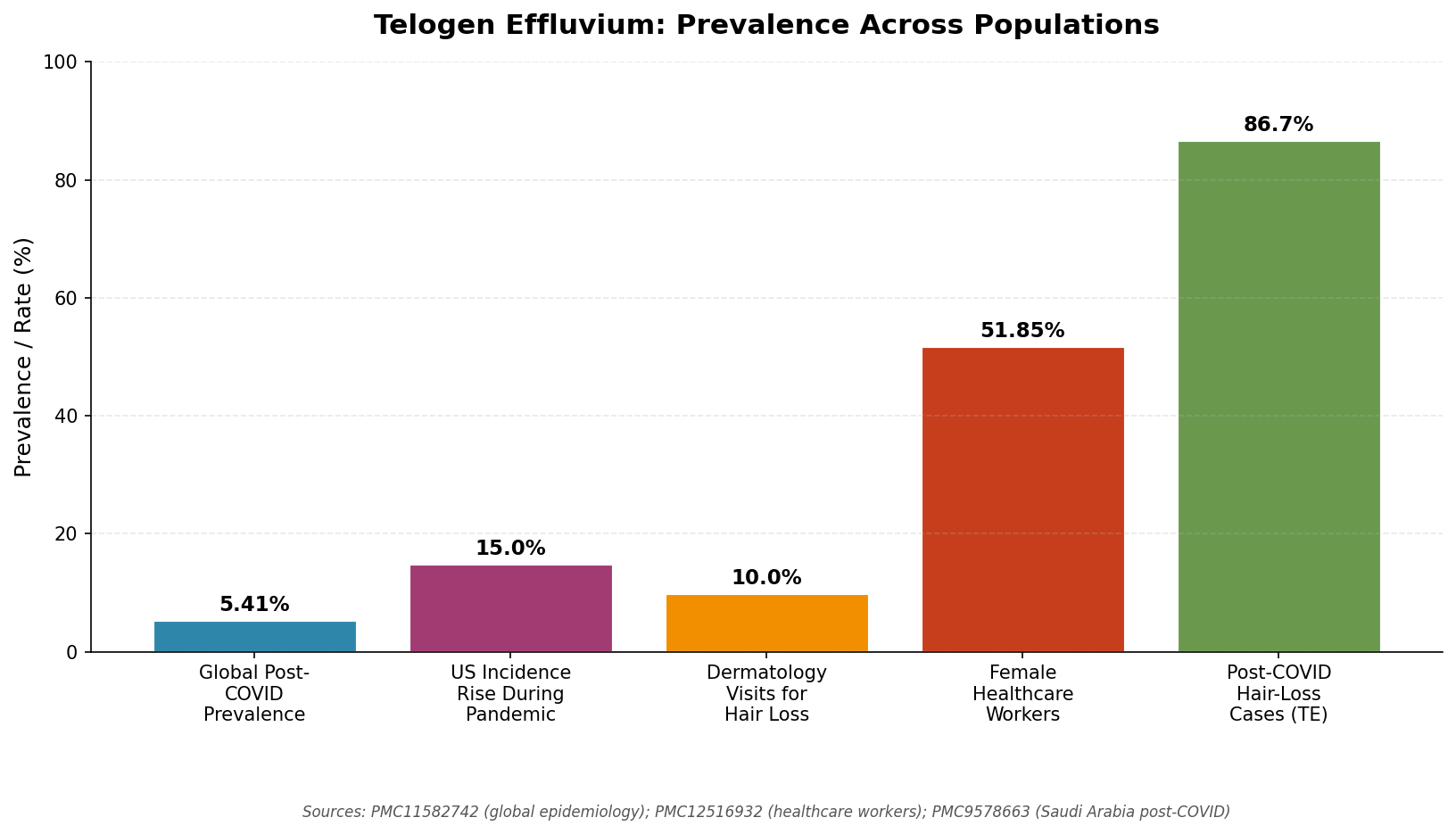 Figure 1: The classic telogen effluvium timeline. Notice the silent gap between the triggering event and the moment shedding actually begins. Data drawn from NIH StatPearls and NHS clinical guidance.
How Common Is It?
TE is genuinely common, but hard to pin down statistically because so many people ride it out without ever seeing a doctor. What we do know:
- Global prevalence sits around 5.4% after the COVID-19 pandemic, up from about 3.4% before it, according to a systematic review of 90 studies from 26 countries
- Hair-loss visits climbed to nearly 10% of all dermatology outpatient appointments during the pandemic in some regions
- Around 25% of people who had COVID-19 subsequently developed TE
- Among new mothers, over 90% experience some degree of postpartum shedding, most of which is a form of telogen effluvium
Women are diagnosed far more often than men, partly because postpartum hormonal changes are one of the biggest triggers, and partly because women tend to notice and worry about hair loss sooner. In one large review of 2,851 female patients, the average age was 26, and 83.5% were between 18 and 45.
The Two to Three Month Delay Explained
This is the single most confusing part of TE, so it deserves a plain-language answer. Why do you feel fine now, but only start losing hair months after the trigger?
Think of your hair cycle like a queue. When a stressor hits (an illness, a surgery, a psychological shock), it pushes many hairs out of the growing queue and into the resting queue. But being in the resting queue is a job in itself; it lasts about three months. Only when those hairs finish their resting period do they actually let go and fall out.
So the trigger flips a switch, but the visible consequence is queued up for later. Practically, this means: if you noticed heavy shedding in November, look back at what was going on in August or September, not what is happening in November itself. Many patients blame their current stress on what happened months earlier.
The Usual Suspects (and the Unexpected Ones)
Here is where it gets interesting, because the list of things that can trigger TE is much longer than most people realise.
Emotional and Physical Stress
Severe stress, whether a bereavement, divorce, job loss, or major life upheaval, is the most commonly identified trigger. Stress hormones (particularly cortisol) and inflammatory signals disrupt the growth cycle directly. In one study of children with TE, 67% had an identifiable trigger, most often emotional stress or a febrile illness.
High Fever, Infection, and COVID-19
Any illness that spikes your temperature above 39°C can push hair follicles into resting mode. That was known long before 2020, but COVID-19 turbo-charged the trend. Post-COVID TE often shows up faster than classical TE (around 7 to 8 weeks after infection rather than 12), likely because of the systemic inflammation and cytokine surge that comes with the illness.
Childbirth
Pregnancy floods the body with oestrogen, which keeps hairs in the growth phase far longer than usual. That is why hair often looks luxurious in the third trimester. After birth, oestrogen drops sharply, and all those "extra" hairs enter the resting phase at roughly the same time. Postpartum shedding typically starts around 3 months after delivery, peaks at 5 months, and settles by around 8 months.
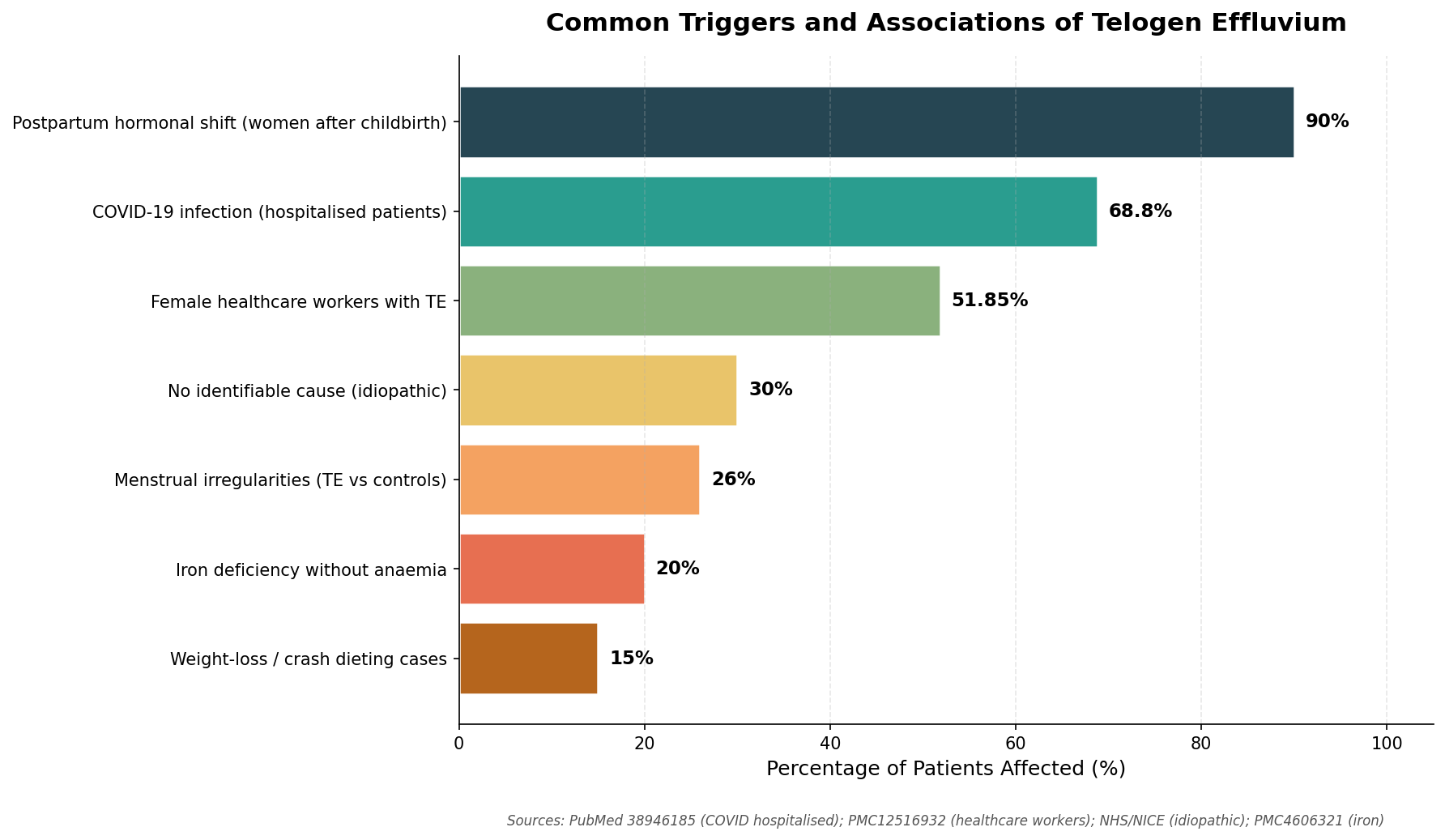 Figure 2: Frequency of documented triggers in telogen effluvium cases. Postpartum, febrile illness (including COVID-19), and psychological stress top the list. Data compiled from PubMed reviews and Cleveland Clinic patient education materials.
Nutritional Shortfalls
Nutritional deficiencies are one of the most fixable causes. In the big retrospective study of 2,851 TE patients, 46.5% had low ferritin (iron stores) and 29.5% had outright iron deficiency. Vitamin D was significantly lower in TE patients than in controls in another study (mean 13 ng/mL versus 34 ng/mL). Vitamin B12, zinc, and protein deficiency can all contribute too. Crash dieting is a particularly common (and often overlooked) trigger, because the hair matrix is one of the most metabolically demanding tissues in your body and does not tolerate sudden caloric restriction well.
Thyroid Problems
Both an underactive thyroid (hypothyroidism) and an overactive one (hyperthyroidism) can cause TE. In one study of 500 female TE patients, 30% turned out to be hypothyroid and 20% hyperthyroid. Hypothyroidism tends to produce the more severe hair loss of the two. Because thyroid issues can be silent for months, hair shedding is sometimes the first clue.
Medications You Might Not Suspect
This is often the biggest surprise. A wide range of common prescriptions can trigger TE, usually within two to four months of starting the drug. The list includes:
- Beta-blockers (propranolol, atenolol, metoprolol)
- ACE inhibitors (captopril, enalapril)
- Antidepressants, particularly SSRIs like sertraline and fluoxetine
- Anticonvulsants such as valproic acid (12 to 28% incidence) and carbamazepine
- Retinoids like isotretinoin (used for acne)
- Anticoagulants (heparin, warfarin)
- Oral contraceptives, especially when stopping them
- Some antifungals and cancer therapies
If your shedding started roughly three months after a new prescription, mention it to your doctor. TE from medications is almost always reversible once the drug is changed or discontinued.
Surgery and Anaesthesia
Any major surgery is a well-documented trigger, thanks to the combined blow of physical stress, blood loss, and general anaesthesia. Even bariatric surgery has earned its own name in the medical literature: "Bar SITE" (Bariatric Surgery-Induced Telogen Effluvium).
Autoimmune and Chronic Conditions
Autoimmune conditions like lupus, dermatomyositis, and Hashimoto's thyroiditis can all trigger TE. So can chronic inflammatory conditions such as inflammatory bowel disease. The mechanism, in most cases, involves inflammatory signals (particularly type I interferons) that suppress the growth phase.
Weight Loss
Losing weight quickly, whether through crash diets, illness, or surgery, is a well-recognised trigger. Interestingly, the culprit seems to be caloric restriction itself rather than the weight loss, meaning even weight-loss efforts that seem healthy can set off TE if calories drop too fast.
Smoking
Nicotine accumulates in hair follicles and disrupts both the growth cycle and hair pigmentation. A systematic review confirmed smoking as an independent factor associated with hair shedding.
How Doctors Diagnose It
Diagnosis is mostly clinical. A dermatologist will take a careful history (asking about illnesses, medications, births, weight changes, and stress in the past six months) and examine your scalp. Typical diagnostic tools include:
- Hair pull test: the doctor gently tugs a small section of hair. If more than about 10% (or roughly 4 or more hairs) come out per pull, that suggests active TE
- Serial shedding count: collecting shed hairs over 24 hours; more than 100 telogen hairs per day confirms TE
- Trichoscopy: a magnified view of the scalp, which typically looks normal in TE (a helpful clue in itself, because pattern baldness shows follicle miniaturisation)
- Trichogram or biopsy: more than 20 to 25% of follicles in the telogen phase on a hair sample supports the diagnosis, and 25 to 50% on biopsy confirms it
- Blood tests: ferritin, full blood count, vitamin D, vitamin B12, and thyroid function are the standard screen. Zinc, copper, and selenium may be added in complex cases
Treatments That Actually Help
Here is the reassuring headline: for acute TE, the treatment is often "identify the trigger, remove it, and wait". About 95% of people recover on their own. That said, several options can speed things up or help when the cause is chronic.
Address the Root Cause
Absolutely nothing works as reliably as fixing the underlying trigger. That might mean switching a medication, treating a thyroid problem, correcting an iron or vitamin D deficiency, addressing an eating pattern, or getting mental health support for chronic stress.
Nutritional Correction
If bloodwork confirms a deficiency, targeted replacement often helps. In one study, oral vitamin D therapy raised serum levels from 13 to 38 ng/mL over three months, with corresponding symptom improvement. All 18 patients with iron deficiency without anaemia who took oral iron in another study reported that their hair loss stopped. The important caveat: supplementing without a confirmed deficiency does not seem to help, and can occasionally cause other problems.
Topical Minoxidil (5%)
Minoxidil is the most-studied pharmacologic option. In a 24-week open-label trial, patients using twice-daily 5% topical minoxidil gained about 12 additional hairs per square centimetre by week 4, with around 70% showing less shedding meaningfully.
Low-Dose Oral Minoxidil
For persistent or COVID-related TE, low-dose oral minoxidil has been used off-label. A retrospective series of 69 patients found the median time to resolution was 93 days.
Platelet-Rich Plasma (PRP)
PRP involves drawing a small amount of your blood, spinning it to concentrate the platelets, and injecting them into the scalp. A meta-analysis found it modestly effective for female hair loss, and combining it with microneedling or minoxidil can enhance results.
Multi-Nutrient Supplements
Supplements containing zinc, biotin, iron, B-complex, and amino acids have shown benefit in some studies over about 180 days, but again, only when deficiency exists or is likely.
Corticosteroids
Occasionally used in select cases where inflammation is a significant driver, though they are not routinely recommended for straightforward TE.
CNPDA and Laser Therapy
A newer topical formulation known by the acronym CNPDA (caffeine, niacinamide, panthenol, dimethicone, and an acrylate polymer) is being studied as a supportive topical option. Low-level laser therapy (including the 675-nm diode laser) is under investigation as an adjuvant treatment; early data is promising but limited.
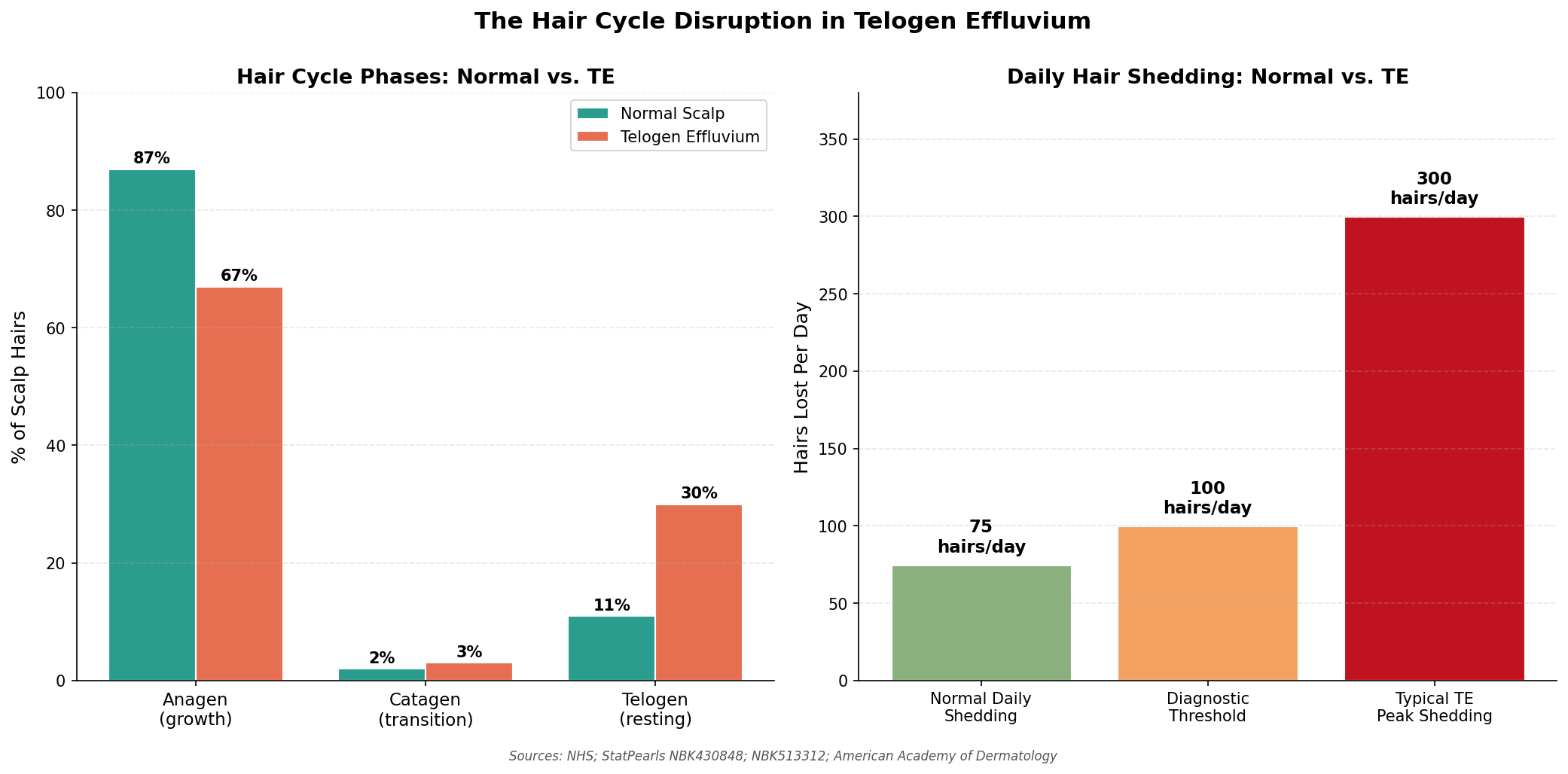 Figure 3: How different management approaches affect recovery. Most acute cases resolve within a year even without medication; targeted treatment for confirmed deficiencies or with topical minoxidil can shorten the shedding phase. Data synthesised from PubMed clinical trials and NHS clinical guidance.
What Recovery Actually Looks Like
Recovery varies by the type of TE you have, but the overall picture is genuinely encouraging.
- Acute TE: full recovery typically within 12 months, with shedding tapering off in the first 3 to 6 months
- Postpartum TE: usually resolves by about 8 months after delivery, sometimes stretching to a year
- Post-COVID TE: median duration of active shedding of around 2 months, with most people back to normal within 6 to 12 months
- Chronic TE (over 6 months): may fluctuate over years, but crucially does not progress to permanent baldness. Long-term follow-up of chronic TE patients over 7 years showed no visible reduction in hair density and no follicle miniaturisation
One important nuance: "recovery" often means shedding stops well before you can see thick regrowth in the mirror. Hair grows only about 1 cm per month, so a full cosmetic restoration of length can take another 6 to 12 months on top of the shedding stopping. Short "baby hairs" appearing at your hairline are a very good sign, even if they feel painfully slow.
The Emotional Toll Is Real
Even though TE is medically benign, the psychological impact can be substantial. Many patients (particularly women) describe severe anxiety, disrupted sleep, and a persistent focus on their hair as the first thing they notice on waking. Studies report increased depression, decreased self-esteem, and social withdrawal in TE patients. Chronic TE, in particular, severely impairs quality of life.
A common but underappreciated symptom is trichodynia, a burning, tingling, or aching sensation on the scalp that often accompanies TE and correlates with anxiety and depression.
Doctors are increasingly recognising that dismissing this as "just hair" makes things worse. Reassurance, education, and, where needed, mental health support are considered first-line treatment, not add-ons. If your GP or dermatologist is not taking your concerns seriously, it is entirely reasonable to seek a second opinion.
The Bottom Line
Telogen effluvium is scary in the moment, and the two to three month delay between trigger and shedding can make it feel impossible to explain. But the underlying story is genuinely reassuring: your follicles are intact, your hair will almost certainly grow back, and the timeline, while frustrating, is finite. Focus on identifying and addressing whatever set it off (whether that is an illness, a nutritional gap, a medication, a hormonal shift, or a period of intense stress), give your body 6 to 12 months, and prioritise gentleness with yourself along the way.
Further Reading
If you want to explore specific aspects of telogen effluvium in more depth, the resources below are grouped by topic so you can go straight to what you need.
Understanding the Condition
- Telogen Effluvium overview (Cleveland Clinic)
- Hair loss information (NHS)
- Telogen Effluvium (Harvard Health)
Triggers and Causes
- Stress and hair loss: are they related? (Mayo Clinic)
- Telogen Effluvium: A Review of the Literature (NIH/PMC)
- Culprits of Medication-Induced Telogen Effluvium (PubMed)
COVID-19 and Post-Illness Hair Loss
- Global epidemiology of TE after COVID-19 (NIH/PMC)
- Post-COVID Telogen Effluvium: 113 Cases Retrospective Study (NIH/PMC)
Treatment and Recovery
- Do you have hair loss or hair shedding? (American Academy of Dermatology)
- Use of 5% Topical Minoxidil Application for Telogen Effluvium (NIH/PMC)
- Oral Vitamin D Treatment in Patients with Telogen Effluvium (NIH/PMC)
Emotional Impact and Support
- Management of Telogen Effluvium during COVID-19: Psychological Implications (NIH/PMC)
- Significant impact of telogen effluvium on quality of life (PubMed)
References/Helpful Resources
- Hughes EC, Syed HA, Saleh D. Telogen Effluvium. In: StatPearls [Internet]. Treasure Island (FL): StatPearls Publishing; 2026 [cited 2026 Jul 23]. Available from: http://www.ncbi.nlm.nih.gov/books/NBK430848/ PubMed PMID: 28613598. Available from: https://www.ncbi.nlm.nih.gov/books/NBK430848/
- Malkud S. Telogen Effluvium: A Review. J Clin Diagn Res. 2015 Sep;9(9): WE01–3. doi:10.7860/JCDR/2015/15219.6492 PubMed PMID: 26500992; PubMed Central PMCID: PMC4606321. Available from: https://pmc.ncbi.nlm.nih.gov/articles/PMC4606321/
- Asghar F, Shamim N, Farooque U, Sheikh H, Aqeel R. Telogen Effluvium: A Review of the Literature. Cureus. 12(5):e8320. doi:10.7759/cureus.8320 PubMed PMID: 32607303; PubMed Central PMCID: PMC7320655. Available from: https://www.ncbi.nlm.nih.gov/pmc/articles/PMC7320655/
- Rebora A. Telogen effluvium: a comprehensive review. Clin Cosmet Investig Dermatol. 2019 Aug 21;12:583–90. doi:10.2147/CCID.S200471 PubMed PMID: 31686886; PubMed Central PMCID: PMC6709511. Available from: https://pmc.ncbi.nlm.nih.gov/articles/PMC6709511/
- Cline A, Jacobs AK, Fonseca M, Wu J, Asrani F, Safai B, et al. Race, ethnicity, and comorbidities are critical factors in the diagnosis of telogen effluvium during the COVID-19 pandemic. J Am Acad Dermatol. 2021 Jul;85(1):209–11. doi:10.1016/j.jaad.2021.03.099 PubMed PMID: 33839211; PubMed Central PMCID: PMC8027097. Available from: https://pubmed.ncbi.nlm.nih.gov/33839211/
- Jeon JJ, Kim YH, Kang H, Ha MC, Jung SW, Son H, et al. Global epidemiology of telogen effluvium after the COVID-19 pandemic: A systematic review and modelling study. JAAD Int. 2024 Sep 24;18:24–6. doi:10.1016/j.jdin.2024.08.018 PubMed PMID: 39582806; PubMed Central PMCID: PMC11582742. Available from: https://pmc.ncbi.nlm.nih.gov/articles/PMC11582742/
- Karakoyun Ö, Ayhan E, Yıldız İ. Retrospective Review of 2851 Female Patients With Telogen Effluvium: A Single‐Center Experience. J Cosmet Dermatol. 2025 Feb;24(2):e70037. doi:10.1111/jocd.70037 PubMed PMID: 39950230; PubMed Central PMCID: PMC11826290. Available from: https://www.ncbi.nlm.nih.gov/pmc/articles/PMC11826290/
- Zhang D, LaSenna C, Shields BE. Culprits of Medication-Induced Telogen Effluvium, Part 1. Cutis. 2023 Dec;112(6):267–71. doi:10.12788/cutis.0910 PubMed PMID: 38290075. Available from: https://pubmed.ncbi.nlm.nih.gov/38290075/
- Zhang D, LaSenna C, Shields BE. Culprits of Medication-Induced Telogen Effluvium, Part 2. Cutis. 2024 Jan;113(1):11–4. doi:10.12788/cutis.0919 PubMed PMID: 38478950. Available from: https://pubmed.ncbi.nlm.nih.gov/38478950/
- Whiting DA. Chronic telogen effluvium. Dermatol Clin. 1996 Oct;14(4):723–31. doi:10.1016/s0733-8635(05)70398-3 PubMed PMID: 9238330. Available from: https://pubmed.ncbi.nlm.nih.gov/9238330/
- Sinclair R. Chronic telogen effluvium: a study of 5 patients over 7 years. J Am Acad Dermatol. 2005 Feb;52(2 Suppl 1):12–6. doi:10.1016/j.jaad.2004.05.040 PubMed PMID: 15692504. Available from: https://pubmed.ncbi.nlm.nih.gov/15692504/
- Ohyama M, Irisawa R, Uchiyama M, Mori M, Aoki K, Ueda Y, et al. Use of 5% Topical Minoxidil Application for Telogen Effluvium: An Open‐Label Single‐Arm Clinical Trial. J Dermatol. 2025 Sep;52(9):1351–9. doi:10.1111/1346-8138.17844 PubMed PMID: 40599040; PubMed Central PMCID: PMC12411807. Available from: https://pmc.ncbi.nlm.nih.gov/articles/PMC12411807/
- Villarreal-Villarreal CD, Boland-Rodriguez E, Mares-Custodio D, Asz-Sigall D, Molina-de la Garza JF, Saceda-Corralo D, et al. Low-Dose Oral Minoxidil as Treatment for COVID-19-Related Telogen Effluvium: Results From a Retrospective Series of 69 Patients. Actas Dermosifiliogr. 2026 May;117(5):104569. doi:10.1016/j.ad.2025.104569 PubMed PMID: 41418904. Available from: https://pubmed.ncbi.nlm.nih.gov/41418904/
- El-Tatawy RA, Gheida S, Soliman GAM, Ismail M. Oral Vitamin D Treatment in Patients with Telogen Effluvium: Clinical and Dermoscopic Evaluation. Int J Trichology. 2023;15(5):183–90. doi:10.4103/ijt.ijt_92_22 PubMed PMID: 39170090; PubMed Central PMCID: PMC11335050. Available from: https://pmc.ncbi.nlm.nih.gov/articles/PMC11335050/
- Tamer F, Yuksel ME, Karabag Y. Serum ferritin and vitamin D levels should be evaluated in patients with diffuse hair loss prior to treatment. Postepy Dermatol Alergol. 2020 Jun;37(3):407–11. doi:10.5114/ada.2020.96251 PubMed PMID: 32792884; PubMed Central PMCID: PMC7394174. Available from: https://pmc.ncbi.nlm.nih.gov/articles/PMC7394174/
- Yuan J, He Y, Wan H, Gao Y. Effectiveness of platelet‐rich plasma in treating female hair loss: A systematic review and meta‐analysis of randomised controlled trials. Skin Res Technol. 2024 Aug 23;30(8):e70004. doi:10.1111/srt.70004 PubMed PMID: 39177365; PubMed Central PMCID: PMC11342464. Available from: https://pmc.ncbi.nlm.nih.gov/articles/PMC11342464/
- Durusu Turkoglu IN, Turkoglu AK, Soylu S, Gencer G, Duman R. A comprehensive investigation of biochemical status in patients with telogen effluvium: Analysis of Hb, ferritin, vitamin B12, vitamin D, thyroid function tests, zinc, copper, biotin, and selenium levels. J Cosmet Dermatol. 2024 Dec;23(12):4277–84. doi:10.1111/jocd.16512 PubMed PMID: 39107936; PubMed Central PMCID: PMC11626366. Available from: https://pmc.ncbi.nlm.nih.gov/articles/PMC11626366/
- Abrantes TF, Artounian KA, Falsey R, Simão JCL, Vañó-Galván S, Ferreira SB, et al. Time of onset and duration of post-COVID-19 acute telogen effluvium. J Am Acad Dermatol. 2021 Oct;85(4):975–6. doi:10.1016/j.jaad.2021.07.021 PubMed PMID: 34302903; PubMed Central PMCID: PMC8294706. Available from: https://pmc.ncbi.nlm.nih.gov/articles/PMC8294706/
- Chhabra N, George CA, Ganguly S. Telogen Effluvium Following Coronavirus Disease-2019 Infection: A Retrospective Study of 113 Cases. Int J Trichology. 2025;17(1):32–5. doi:10.4103/ijt.ijt_38_22 PubMed PMID: 40654560; PubMed Central PMCID: PMC12252012. Available from: https://pmc.ncbi.nlm.nih.gov/articles/PMC12252012/
- Mysore V, Parthasaradhi A, Kharkar R, Ghoshal A, Ganjoo A, Ravichandran G, et al. Expert consensus on the management of Telogen Effluvium in India. Int J Trichology. 2019;11(3):107–12. doi:10.4103/ijt.ijt_23_19 PubMed PMID: 31360038; PubMed Central PMCID: PMC6580807. Available from: https://pmc.ncbi.nlm.nih.gov/articles/PMC6580807/
- Rivetti N, Barruscotti S. Management of telogen effluvium during the COVID‐19 emergency: Psychological implications. Dermatol Ther. 2020;33(4):e13648. doi:10.1111/dth.13648 PubMed PMID: 32445237; PubMed Central PMCID: PMC7267137. Available from: https://pmc.ncbi.nlm.nih.gov/articles/PMC7267137/
- Fişek Izci N, Aksoy B, Aktaş E. Significant impact of telogen effluvium on quality of life, depression, anxiety and stress: a prospective case-control study. Eur J Dermatol. 2025 Aug 1;35(4):300–6. doi:10.1684/ejd.2025.4931 PubMed PMID: 40965527. Available from: https://pubmed.ncbi.nlm.nih.gov/40965527/
- Babadjouni A, Pouldar Foulad D, Hedayati B, Evron E, Mesinkovska N. The Effects of Smoking on Hair Health: A Systematic Review. Skin Appendage Disord. 2021 Jun;7(4):251–64. doi:10.1159/000512865 PubMed PMID: 34307472; PubMed Central PMCID: PMC8280411. Available from: https://pmc.ncbi.nlm.nih.gov/articles/PMC8280411/
- National Health Service. Hair loss [Internet]. [cited 2026 Jul 14]. Available from: https://www.nhs.uk/symptoms/hair-loss/
- Cleveland Clinic. Telogen Effluvium: Symptoms, Causes, Treatment and Regrowth [Internet]. [cited 2026 Jul 14]. Available from: https://my.clevelandclinic.org/health/diseases/24486-telogen-effluvium
- Mayo Clinic. Stress and hair loss: Are they related? [Internet]. [cited 2026 Jul 14]. Available from: https://www.mayoclinic.org/healthy-lifestyle/stress-management/expert-answers/stress-and-hair-loss/faq-20057820
- Harvard Health Publishing. Telogen Effluvium A to Z [Internet]. [cited 2026 Jul 14]. Available from: https://www.health.harvard.edu/a_to_z/telogen-effluvium-a-to-z
- American Academy of Dermatology. Do you have hair loss or hair shedding? [Internet]. [cited 2026 Jul 14]. Available from: https://www.aad.org/public/diseases/hair-loss/insider/shedding
