

Your heart needs a constant supply of oxygen-rich blood to function properly. Angina occurs when the blood vessels feeding your heart cannot deliver enough oxygen, causing chest pain or discomfort that signals something is seriously wrong with your circulation. Understanding what angina is, why it happens, and which type you might be experiencing can help you manage the condition and work effectively with your healthcare team.
How Your Heart Gets Its Blood Supply
Your heart is a muscle that pumps blood throughout your body, and like any muscle, it needs oxygen to work. The coronary arteries are the blood vessels that deliver this oxygen-rich blood directly to the heart muscle. When these arteries become narrowed or blocked, the heart doesn't get enough oxygen, especially during periods when it's working harder (like during exercise or stress).
This insufficient oxygen supply is called myocardial ischaemia. When the heart muscle is starved of oxygen, it responds with pain: that's angina.
The Root Cause: Coronary Artery Disease
Angina is almost always caused by coronary artery disease, which develops through a process called atherosclerosis. Over time, fatty deposits and cholesterol build up on the inner walls of the coronary arteries, forming plaque. This plaque hardens and narrows the arteries, restricting blood flow.
Consider the arteries like water pipes: if they get clogged with debris, less water can flow through. The more narrowing that develops, the more restricted the blood flow becomes.
The severity of narrowing matters significantly:
- 80% narrowing: Your arteries can no longer deliver enough extra blood when your heart needs it (like during exercise)
- 90% narrowing: Even at rest, your heart struggles to get sufficient blood
- Critical blockage with blood clots: Blood flow may become dangerously inadequate even when you're sitting still
Why Angina Happens: The Supply-Demand Problem
Angina develops when there's an imbalance between what your heart muscle needs and what it's actually receiving. This happens in two main ways:
Increased demand without increased supply. During physical exertion or emotional stress, your heart must work harder and therefore needs more oxygen. The narrowed arteries cannot deliver this extra blood, creating an oxygen shortage.
Fixed supply becomes inadequate. If your arteries are severely narrowed, they may not deliver enough blood even for normal daily activities, causing pain at rest or with minimal exertion.
How Common Is Angina?
Angina affects approximately 1.5 to 1.7% of the population in the United States. That translates to roughly 4.5 million Americans aged 40 and older who have been diagnosed with angina. The condition becomes increasingly common with age.
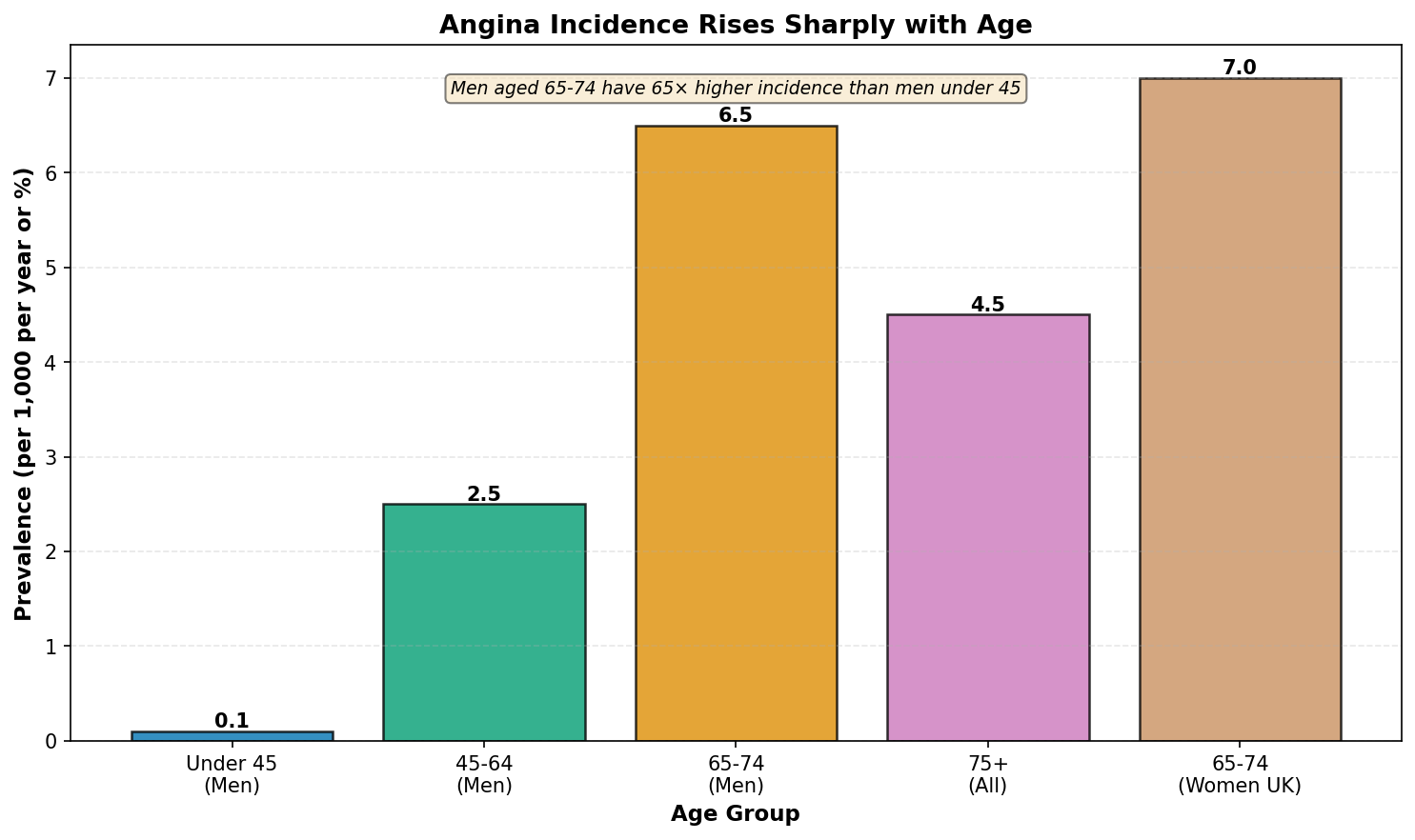 Figure 1: Angina prevalence by age group. Men experience angina at younger ages than women; after age 75, more than 4.5% of the population has angina.
In the United Kingdom, between 6 and 16 per cent of men and 3 to 10 per cent of women aged 65 to 74 years experience angina. Around 23,000 people present with new anginal symptoms to UK healthcare services annually.
Who's Most at Risk?
Several factors increase your likelihood of developing angina:
- Age: Risk increases dramatically after age 45 in men and after age 55 in women
- High blood pressure: Uncontrolled hypertension significantly increases risk
- High cholesterol: Elevated LDL cholesterol accelerates plaque formation
- Smoking: Particularly in younger adults, smoking is a strong risk factor
- Diabetes: People with diabetes have substantially higher angina risk
- Physical inactivity: Sedentary lifestyle increases cardiovascular disease risk
- Obesity: Excess weight increases the heart's workload
- Socioeconomic factors: Unemployed individuals show approximately double the angina prevalence of the general population
Understanding the Different Types of Angina
Not all angina is the same. There are three main types, and distinguishing between them is critical because they have very different implications for your health and treatment options.
Stable Angina: Predictable and Manageable
Stable angina is the most common type. Think of it as a warning light that comes on under predictable circumstances.
What it feels like: Chest pain, pressure, tightness, squeezing, or heaviness, usually in the centre of your chest. The discomfort often radiates to your left arm, shoulders, back, neck, or jaw. You may also experience shortness of breath, nausea, or fatigue.
The pattern: Episodes occur reliably during the same level of physical activity or stress. You might know, for example, that climbing two flights of stairs always triggers angina, or that rushing to catch a bus will cause chest pain. This predictability helps you manage daily life.
How long it lasts: Episodes typically last about 5 minutes and resolve quickly with rest or medication (usually a nitroglycerin spray).
Why it happens: Fixed blockages in your coronary arteries cannot deliver extra blood when your heart demands it during exertion or stress.
The outlook: Stable angina indicates coronary artery disease, but it has a relatively favourable prognosis. Annual mortality in stable angina patients is about 1 to 2 per cent per year among well-managed patients. Many people live productively with stable angina for years with proper treatment.
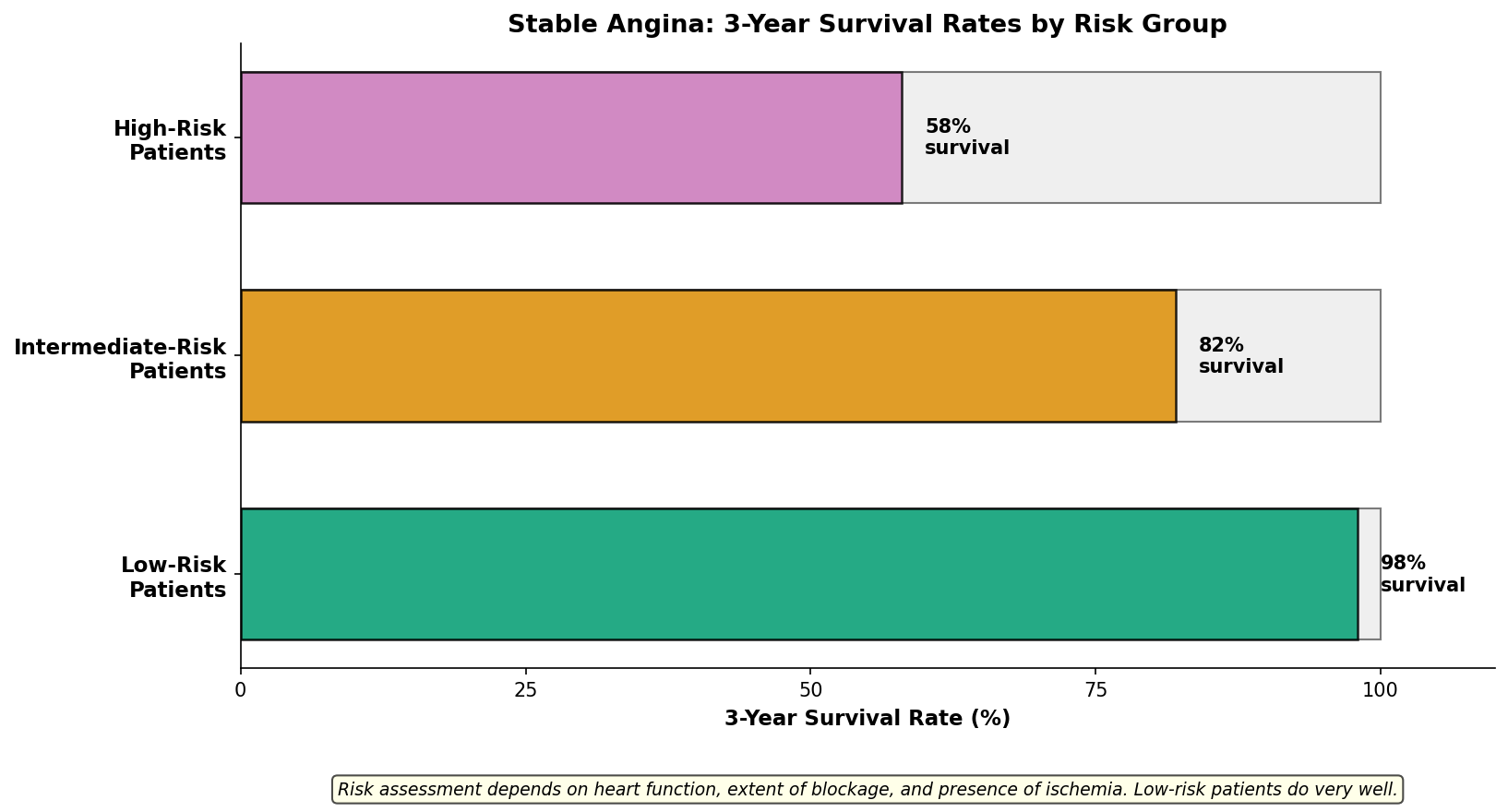 Figure 2: Long-term survival in stable angina patients varies based on risk factors and heart function. Low-risk patients have 98% survival at 3 years.
Unstable Angina: A Medical Emergency
Unstable angina is fundamentally different from stable angina and requires emergency medical evaluation. This type signals that your condition is deteriorating dangerously.
How it differs from stable angina: Unstable angina occurs suddenly, often without warning and frequently at rest or during minimal activity. The pain pattern changes: either you're experiencing angina for the first time, or your previously stable angina has suddenly worsened, becoming more frequent or more severe.
Examples of unstable patterns:
- New-onset angina (occurring for the first time within the last 4 weeks)
- Accelerated angina (stable angina that abruptly becomes more frequent, more intense, or triggered by less exertion)
- Pain occurring at rest and lasting longer than 15 minutes
- Angina developing after a heart attack
Why it's more serious: Unstable angina typically involves rupture of atherosclerotic plaque inside the artery, followed by blood clot formation. Unlike the fixed blockage in stable angina, this situation is actively unstable and can worsen suddenly. Your heart is in danger because a heart attack could happen within hours or days.
The risk: About 25 per cent of unstable angina patients progress to a full heart attack within 3 months without aggressive treatment. Mortality at 30 days is low (0.5 to 0.7%), but the non-fatal heart attack rate within 28 days is approximately 10%, and high-risk patients face even higher risks.
Why it requires emergency care: Unstable angina is a medical emergency. If you experience angina at rest, new-onset chest pain, or sudden worsening of existing angina, seek emergency care immediately. Doctors need to perform tests to rule out a heart attack and determine your risk, then initiate intensive monitoring and treatment.
Microvascular Angina: When Normal Arteries Have Problems
Microvascular angina is fundamentally different from stable and unstable angina. Standard tests may show no blockages in your major coronary arteries, yet you have genuine angina symptoms and genuine evidence of inadequate blood flow.
The difference: Your heart has two circulation systems. The large coronary arteries are like major highways, whilst the tiny capillaries feeding the heart muscle are like local roads. In microvascular angina, the capillaries are dysfunctional: they cannot expand properly when your heart needs more blood, and they may constrict excessively.
What it feels like: Chest pain described as heaviness, tightness, pressure, or squeezing, similar to other angina types. Episodes typically last 15 to 20 minutes or longer (longer than typical stable angina). Associated symptoms often include sweating, nausea, dizziness, stomach pain, shortness of breath, and unusual fatigue.
Why the diagnosis matters: Doctors diagnose microvascular angina when you have genuine angina symptoms and evidence of insufficient blood flow (ischaemia), but your coronary angiogram shows no major blockages. This can cause confusion because standard tests appear normal, yet the problem is real.
A critical gender difference: Women are 5 times more likely than men to have normal coronary arteries when presenting with angina symptoms. This makes microvascular angina significantly more common in women, yet it's often overlooked because diagnostic approaches were historically designed for men. Women with smaller blood vessels are particularly susceptible.
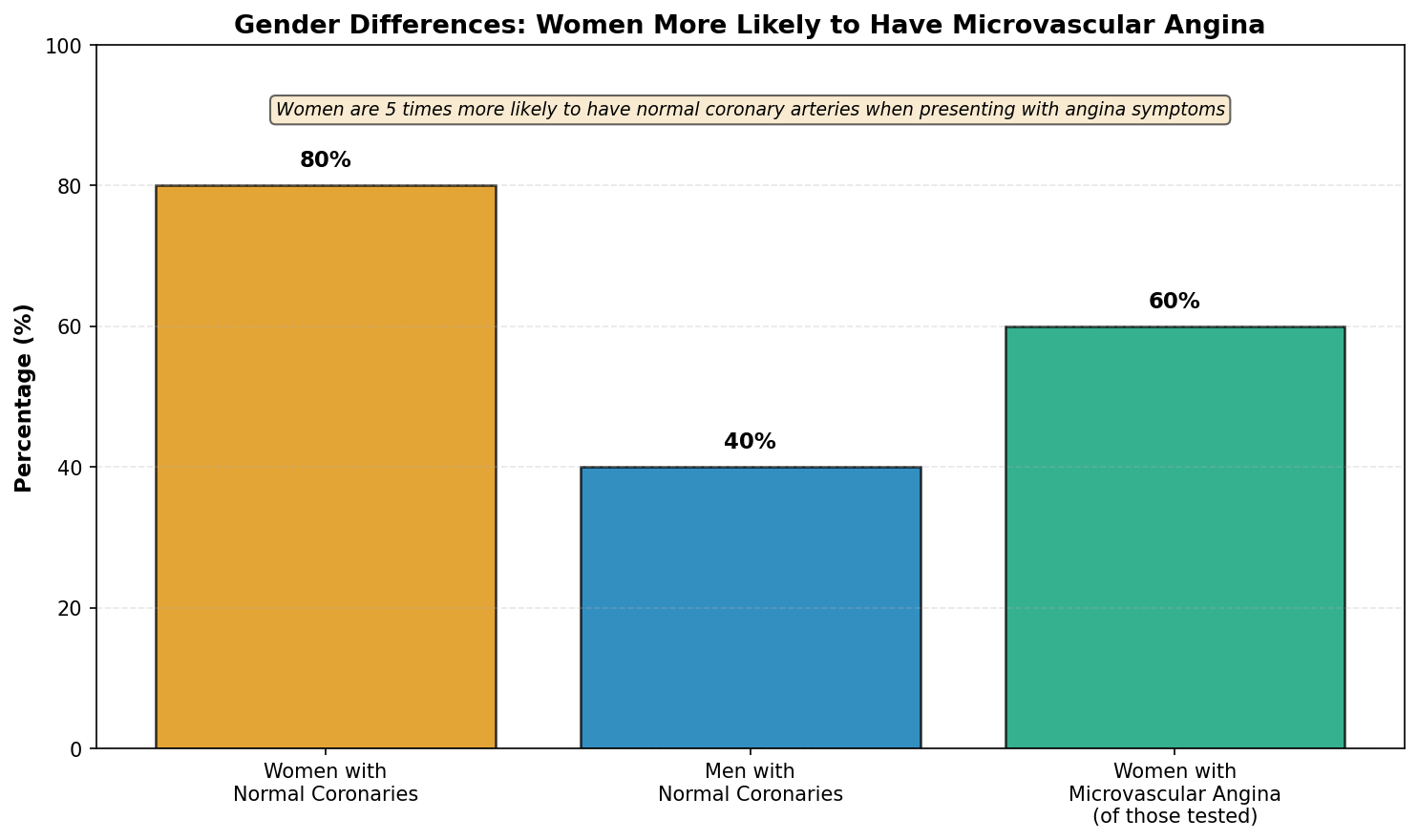 Figure 3: Women with suspected angina are far more likely to have normal coronary arteries or microvascular dysfunction than men. This reflects both physiological differences and diagnostic bias.
The outlook: The prognosis is more complex than previously believed. If you have "pure" microvascular angina (completely normal coronary arteries with no other heart disease), the long-term outlook is generally excellent. However, if you have microvascular angina combined with other conditions like high blood pressure, diabetes, or prior heart disease, your cardiovascular risk is substantially higher.
Comparing the Three Types
The following table summarises the key differences between the three angina types:
| Feature | Stable Angina | Unstable Angina | Microvascular Angina |
|---|---|---|---|
| How it starts | Predictable, triggered by exertion | Sudden, at rest or minimal activity | Triggered by stress or exertion |
| How long it lasts | About 5 minutes | Longer, often 20+ minutes | 15-20+ minutes |
| Predictability | Highly predictable | Unpredictable, escalating | May be unpredictable |
| Response to rest/medication | Stops quickly with rest or nitrates | May not respond quickly | May take longer to resolve |
| Risk of heart attack | Low (1-3% annually) | High (25% within 3 months without treatment) | Low in "pure" cases; higher with comorbidities |
| Underlying cause | Fixed coronary artery blockage | Plaque rupture/narrowing with clots | Dysfunction in tiny blood vessels |
| How common in women vs men | Similar rates | Similar rates | 5 times more common in women |
Typical and Atypical Symptoms
Most people with angina experience classic chest symptoms: pressure, tightness, squeezing, or heaviness in the centre of the chest, often spreading to the left arm, shoulders, back, neck, or jaw.
However, some people experience angina differently. These variations are no less legitimate; they're simply different presentations of the same underlying condition:
- Sharp, stabbing pain rather than pressure or heaviness
- Shortness of breath as the primary symptom, with little or no obvious chest discomfort
- Gastrointestinal symptoms: nausea, belching, or indigestion without clear chest pain
- Extreme fatigue or tiredness as the main symptom
- Multiple concurrent symptoms: sweating, dizziness, or nausea alongside chest discomfort
Modern research shows that men and women experience largely similar angina presentations; historically, women's symptoms were unfairly labelled "atypical," which led to misdiagnosis and delayed treatment.
When to Seek Help
All chest pain should be evaluated by a healthcare professional. Even if you're uncertain whether symptoms are angina or something less serious, get them checked. Your doctor needs to determine:
- Whether symptoms represent angina or another condition
- What type of angina you have (stable vs. unstable)
- The underlying cause and severity
- Your individual risk profile
Managing Angina: Treatment and Outlook
Modern treatment has transformed angina from a condition that severely limited life into one that most people manage effectively. The goal is to reduce symptoms, prevent heart attacks, and maintain quality of life.
Immediate Symptom Relief
Nitroglycerin is the standard emergency medication for angina episodes. It works by relaxing blood vessels and widening your arteries, allowing more blood to reach the heart. Most people find that taking nitroglycerin spray when symptoms first appear stops the episode within a few minutes.
Long-Term Medications
Most people with angina require multiple medications working together:
- Beta-blockers: Reduce how hard and fast your heart works, lowering oxygen demand
- Calcium channel blockers: Relax blood vessels, particularly helpful for spasm-related angina
- Long-acting nitrates: Improve blood flow over hours (though tolerance develops, so a nitrate-free period is needed daily)
- Statins: Reduce cholesterol and slow plaque progression
- ACE inhibitors or ARBs: Help blood vessels function better and protect the heart
- Aspirin: Prevents blood clots
- Ranolazine: Added when exercise tolerance remains limited despite other medications
Interventional Procedures
If medications don't adequately control symptoms, two main procedures can help:
Coronary angioplasty with stents (PCI): A catheter with a balloon is threaded to the blockage, inflated to widen the artery, and a metal mesh stent is left in place to keep the artery open. This is less invasive than surgery and allows faster return to work (typically 1 to 2 weeks).
Coronary artery bypass surgery (CABG): The surgeon grafts a vein or artery to create a new route around the blockage. This is more invasive but more effective at preventing long-term angina recurrence. Recovery takes 6 to 12 weeks.
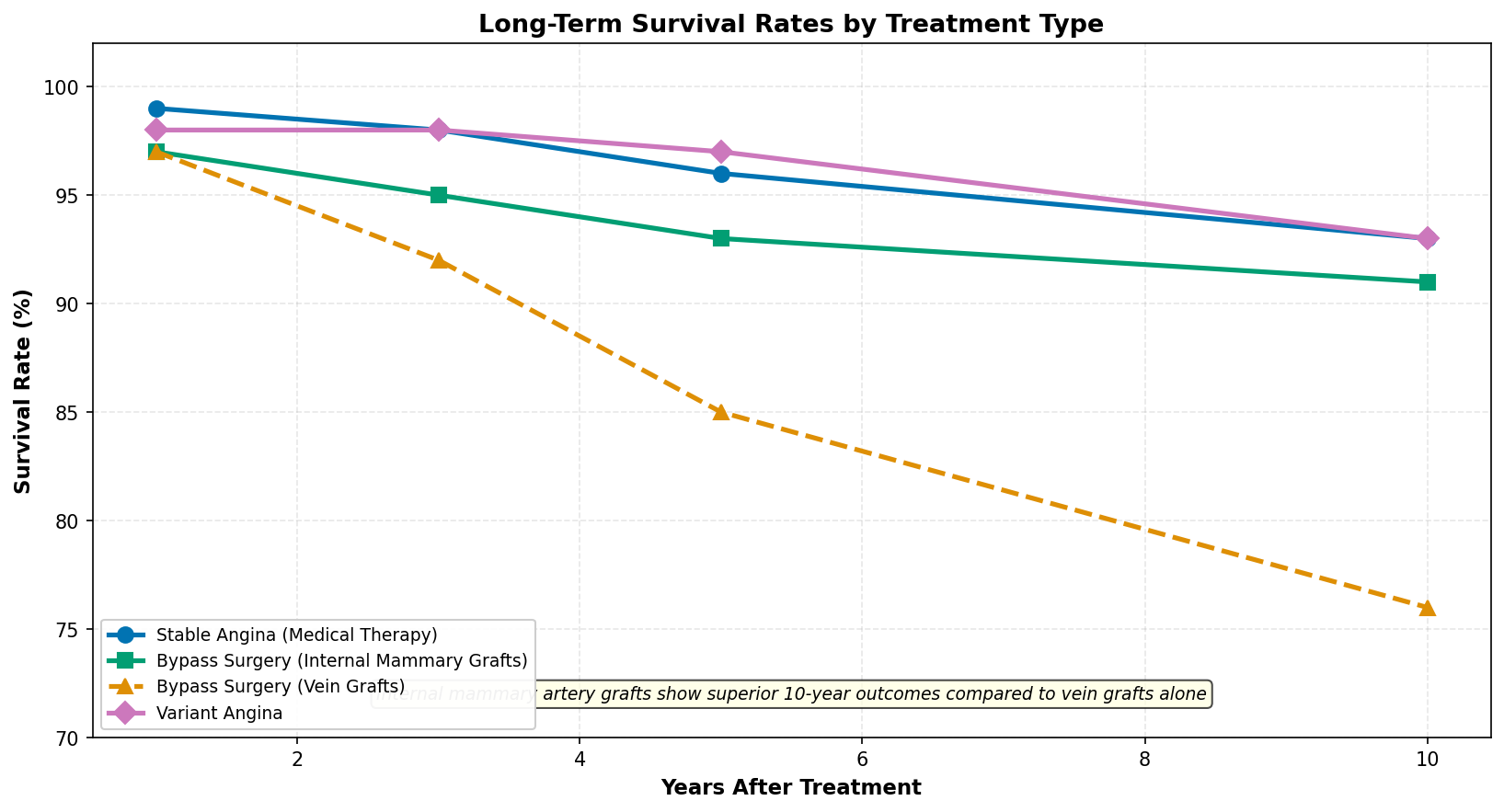 Figure 4: Long-term survival rates differ by treatment approach. Internal mammary artery grafts show better 10-year survival (91%) compared to vein grafts alone (76%).
Lifestyle Changes: The Foundation
Perhaps most importantly, lifestyle modifications form the foundation of angina management:
- Regular exercise: Paradoxically, supervised exercise reduces angina frequency even though activity can trigger episodes. Cardiac rehabilitation programmes significantly improve exercise tolerance and quality of life
- Heart-healthy diet: Mediterranean diet or similar approaches reduce cholesterol and plaque progression
- Smoking cessation: One of the most effective preventive strategies, with benefits beginning quickly
- Weight management: Reducing weight decreases heart workload
- Stress management: Meditation, relaxation techniques, and stress-reduction programmes reduce frequency and severity
- Good sleep: Quality sleep correlates with overall cardiovascular health
- Blood pressure control: Essential for reducing progression
- Diabetes management: Good control reduces angina frequency
- Cholesterol management: Statins are first-line therapy
What to Expect: Quality of Life and Realistic Outcomes
With modern treatment, most people with angina manage symptoms effectively and maintain good quality of life. However, it's realistic to understand what changes may occur:
Activity limitations may occur initially: some patients experience shorter exercise tolerance, reduced leisure-time physical activity, and lower fitness. These typically improve significantly with exercise rehabilitation.
Return to work: After angioplasty, return to work is typically 1 to 2 weeks. After bypass surgery, it's usually 6 to 12 weeks.
Long-term prognosis: This depends on your individual risk factors and disease severity:
- Low-risk patients (minimal risk factors, normal heart function): annual mortality about 1 to 2 per cent
- High-risk patients (multiple risk factors, abnormal cardiac function): annual mortality about 3 to 4 per cent
With proper treatment and lifestyle adherence, most patients live well for many years. Early intervention, aggressive risk factor control, and medication compliance significantly improve outcomes.
The Bottom Line
Angina is a serious warning signal, but it's not a heart attack and doesn't cause permanent heart damage itself. It indicates that your heart is not getting enough oxygen, creating a critical opportunity for intervention before a heart attack occurs.
Understanding which type of angina you have matters tremendously. Stable angina is manageable with medication and lifestyle changes, whereas unstable angina requires emergency evaluation. Microvascular angina requires a different diagnostic and treatment approach, particularly in women.
If you experience chest pain, particularly new chest pain or a change in your angina pattern, seek medical evaluation immediately. Modern treatments (medications, procedures, and lifestyle modifications) can restore adequate blood flow and dramatically improve your prognosis and quality of life.
Further Reading
Understanding Angina and Coronary Artery Disease
- Angina Symptoms and Causes: Mayo Clinic
- Angina Diagnosis and Treatment: Mayo Clinic
- Angina Pectoris Overview: American Heart Association
- Stable Angina: Causes and Treatment: Cleveland Clinic
- Coronary Artery Disease Explained: Cleveland Clinic
Types of Angina
- Unstable Angina Overview: Cleveland Clinic
- Microvascular Angina and Coronary Microvascular Disease: Cleveland Clinic
- Microvascular Angina Information: American Heart Association
- Vasospastic (Prinzmetal) Angina: Cleveland Clinic
Treatment and Management
- Angina Treatment Options: Mayo Clinic
- Angina Symptoms, Diagnosis and Treatments: Harvard Health Publishing
- Living with Angina: NHS
- Treating Persistent Angina: Harvard Health Publishing
Risk Factors and Prevention
- Angina Causes and Risk Factors: National Heart, Lung, and Blood Institute
- Living with Stable Angina: Harvard Health Publishing
Helpful Resources
- National Institutes of Health. Angina [Internet]. MedlinePlus; [cited 2026 Nov 03]. Available from: https://medlineplus.gov/angina.html
- Mayo Clinic. Angina: Symptoms and Causes [Internet]. Mayo Foundation for Medical Education and Research; [cited 2026 Nov 03]. Available from: https://www.mayoclinic.org/diseases-conditions/angina/symptoms-causes/syc-20369373
- Mayo Clinic. Angina: Diagnosis and Treatment [Internet]. Mayo Foundation for Medical Education and Research; [cited 2026 Nov 03]. Available from: https://www.mayoclinic.org/diseases-conditions/angina/diagnosis-treatment/drc-20369378
- Cleveland Clinic. Stable Angina: Causes and Treatment [Internet]. Cleveland Clinic Foundation; [cited 2026 Nov 03]. Available from: https://my.clevelandclinic.org/health/diseases/21847-stable-angina
- Cleveland Clinic. Angina: Symptoms and Causes [Internet]. Cleveland Clinic Foundation; [cited 2026 Nov 03]. Available from: https://my.clevelandclinic.org/health/diseases/21489-angina
- Cleveland Clinic. Coronary Artery Disease: Symptoms and Treatment [Internet]. Cleveland Clinic Foundation; [cited 2026 Nov 03]. Available from: https://my.clevelandclinic.org/health/diseases/16898-coronary-artery-disease
- Cleveland Clinic. Microvascular Angina: Signs, Treatment and Prognosis [Internet]. Cleveland Clinic Foundation; [cited 2026 Nov 03]. Available from: https://my.clevelandclinic.org/health/diseases/21052-microvascular-coronary-disease
- Cleveland Clinic. Vasospastic (Prinzmetal) Angina: Symptoms and Treatment [Internet]. Cleveland Clinic Foundation; [cited 2026 Nov 03]. Available from: https://my.clevelandclinic.org/health/diseases/21867-prinzmetal-angina
- American Heart Association. Angina (Chest Pain) [Internet]. American Heart Association, Inc; [cited 2026 Nov 03]. Available from: https://www.heart.org/en/health-topics/heart-attack/angina-chest-pain
- American Heart Association. Angina Pectoris (Stable Angina) [Internet]. American Heart Association, Inc; [cited 2026 Nov 03]. Available from: https://www.heart.org/en/health-topics/heart-attack/angina-chest-pain/angina-pectoris-stable-angina
- American Heart Association. Microvascular Angina [Internet]. American Heart Association, Inc; [cited 2026 Nov 03]. Available from: https://www.heart.org/en/health-topics/heart-attack/angina-chest-pain/microvascular-angina
- Harvard Health Publishing. Angina: Symptoms, Diagnosis and Treatments [Internet]. Harvard Medical School; [cited 2026 Nov 03]. Available from: https://www.health.harvard.edu/heart-health/angina-symptoms-diagnosis-and-treatments
- Harvard Health Publishing. Living with Stable Angina [Internet]. Harvard Medical School; [cited 2026 Nov 03]. Available from: https://www.health.harvard.edu/heart-health/living-with-stable-angina
- Harvard Health Publishing. Treating Persistent Angina [Internet]. Harvard Medical School; [cited 2026 Nov 03]. Available from: https://www.health.harvard.edu/heart-health/treating-persistent-angina
- Harvard Health Publishing. Women's Heart Symptoms Not So Different After All [Internet]. Harvard Medical School; [cited 2026 Nov 03]. Available from: https://www.health.harvard.edu/womens-health/womens-heart-symptoms-not-so-different-after-all
- National Health Service. Angina: Symptoms [Internet]. NHS England; [cited 2026 Nov 03]. Available from: https://www.nhs.uk/conditions/angina/symptoms/
- National Health Service. Angina: Living With [Internet]. NHS England; [cited 2026 Nov 03]. Available from: https://www.nhs.uk/conditions/angina/living/
- National Heart, Lung, and Blood Institute. Angina: Causes [Internet]. National Institutes of Health, US Department of Health and Human Services; [cited 2026 Nov 03]. Available from: https://www.nhlbi.nih.gov/health/angina/causes
- Maddox TM, Stanislawski MA, Grunwald GK, et al. Prevalence of angina pectoris. NHIS Database Analysis. PubMed. 2024;40438860.
- Kontos MC, Azevedo RB, Cannon CP, et al. Prevalence of angina and use of medical therapy among US adults: nationally representative estimate. Circulation. 2020;142(15):1501-1503.
- Filintowitz R, Roth GA, Huffman MD, et al. Trends and sociodemographic disparities in circulatory disease prevalence in the United States. National Health Interview Survey Database. 2019-2022. PMC. 2024;12664273.
- Bejan-Angoulvant T, Angoulvant D, Cohen-Solal A. Prevalence of angina among primary care patients with coronary artery disease. PMC. 2021;8185599.
- Hemingway H, Langenberg C, Damant J, et al. Prevalence of angina in women versus men: systematic review and meta-analysis of international variations across 31 countries. PLOS Medicine. 2008;5(3):e76.
- De Backer TL, Vercammen J, Bogaerts K, et al. Large artery stiffness is an independent predictor of long-term cardiovascular mortality in patients with coronary artery disease. European Journal of Cardiovascular Prevention and Rehabilitation. 2002;9(5):426-432.
- Pepine CJ, Ferdinand KC, Shaw LJ, et al. Emergence of nonobstructive coronary artery disease: a patient and provider perspective. JAMA Cardiology. 2018;3(6):477-485.
- Spertus JA, Winder JA, Dewhurst TA, et al. Development and evaluation of the Seattle Angina Questionnaire: a new functional status measure for coronary artery disease. Journal of the American College of Cardiology. 1995;25(2):333-341.
- Hiatt WR, Regensteiner JG, Hargarten ME, et al. Benefit of exercise conditioning for patients with peripheral arterial disease. Circulation. 1990;81(2):602-609.
- Dunstan DW, Barr EL, Healy GN, et al. Television viewing time and mortality: the Australian Diabetes, Obesity and Lifestyle Study (AusDiab). Circulation. 2010;121(3):384-391.
- Oldridge NB, Guyatt GH, Fischer ME, et al. Cardiac rehabilitation after myocardial infarction. Journal of the American Medical Association. 1988;260(7):945-950.
- Ades PA, Pashkow FJ, Nestor JR. Cost-effectiveness of cardiac rehabilitation after myocardial infarction. Journal of Cardiopulmonary Rehabilitation. 1997;17(4):222-231.
