

What Is Gelatin Really Doing for Your Body?
The global gelatin and collagen supplement market has expanded rapidly in recent years, with estimates placing its value at around $2 billion in the early 2020s.1 This explosive growth reflects something worth understanding: whether these supplements actually work, what they do, and whether they are worth your time and money.
The short answer is yes, but with important caveats. Gelatin supplements produce measurable improvements in joint health, skin appearance, hair thickness, and digestive function. However, results are modest (not miraculous), require 4-12 weeks of consistent use, and will not work the same way for everyone.
This article explains what gelatin actually is, which health benefits have solid scientific evidence, realistic timelines for results, and practical guidance on how to use it effectively.
What Exactly Is Gelatin, and Why Is It Different?
Gelatin is animal collagen that has been partially broken down through heat treatment and hydrolysis. Most gelatin comes from the bones and skin of pigs and cattle (less than 1% comes from fish or chicken).2
When you consume gelatin, you are essentially eating processed animal protein. But here is what makes gelatin special: it contains dramatically higher amounts of specific amino acids than ordinary proteins like chicken or beef.
Your body uses these amino acids to build and repair structural tissues. Understanding gelatin's amino acid profile is crucial to understanding why it has particular health benefits.
The Three Amino Acids That Make Gelatin Unique
Gelatin contains 19 amino acids, but three dominate the composition:3
- Glycine: 30% of gelatin's amino acids
- Proline: 12-14% of gelatin's amino acids
- Hydroxyproline: 10-12% of gelatin's amino acids
Together, these three amino acids comprise approximately 50% of gelatin's total amino acid makeup.2 To put this in perspective: typical meat proteins like chicken or beef contain only 5-10 times less of these amino acids. Gelatin contains 10-20 times more.
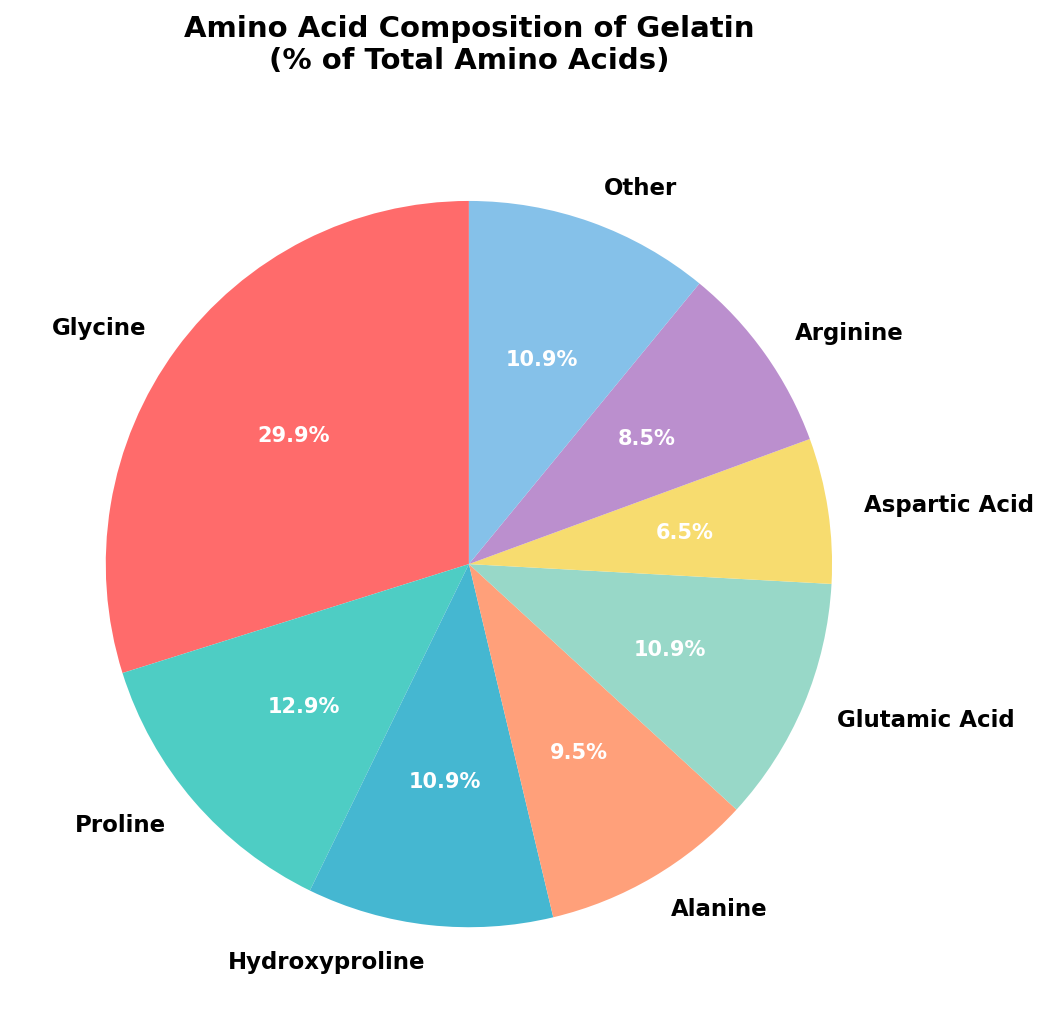 Figure 1: Amino acid composition of gelatin, showing why three amino acids (glycine, proline, hydroxyproline) comprise 50% of the total. Data from analysis of gelatin peptide profiles in clinical trials.2
This unusual concentration is why gelatin has specific health applications that ordinary proteins cannot replicate. These amino acids are what your body uses to maintain skin elasticity, strengthen joints, support hair growth, and maintain digestive health.
Why Your Body Needs These Specific Amino Acids
Glycine is the simplest amino acid and makes up about 30% of gelatin. Although your body can synthesise glycine, it does not produce enough to meet all daily requirements. Glycine is classified as "semi-essential," meaning you must obtain some from food sources.2
Proline and hydroxyproline together comprise about 25% of gelatin. Proline is "conditionally essential," meaning your body requires more of it during illness, stress, or intense exercise. Your body creates hydroxyproline from proline using vitamin C as a cofactor. Both amino acids are essential for collagen formation and are directly involved in maintaining skin, bone, and joint health.2
Is Gelatin a Complete Protein?
No. Gelatin lacks tryptophan entirely and is deficient in three essential amino acids: isoleucine, threonine, and methionine.2 Because of these missing amino acids, gelatin cannot be your only protein source. However, this limitation only matters if you are trying to survive on gelatin alone. When combined with other protein sources (meat, eggs, dairy, legumes), gelatin provides valuable complementary amino acids.
Gelatin Versus Collagen Peptides: What is the Difference?
Both come from the same animal source but are processed differently:3
|
Feature |
Gelatin |
Collagen Peptides |
|
Processing |
Partially hydrolysed |
Completely hydrolysed |
|
Solubility |
Hot water only |
Hot and cold water |
|
Absorption speed |
2-3 hours to peak |
30-60 minutes to peak |
|
Bioavailability |
74-86% |
95%+ |
|
Cost |
Lower |
Higher |
|
Best for |
Cooking + supplements |
Pure supplementation |
For most health purposes, they are nutritionally equivalent. Collagen peptides absorb faster and are more convenient for smoothies, but gelatin is cheaper and works very well in clinical trials.3
Your Body's Remarkable Ability to Digest and Absorb Gelatin
One of gelatin's greatest advantages is its bioavailability. Your digestive system is remarkably efficient at breaking it down and absorbing it.
98.8% of gelatin is digestible, making it one of the most digestible proteins available. Additionally, 85.97% of what you consume actually enters your bloodstream through absorption.2
Here is where it gets interesting: 41.91% of the digested gelatin is absorbed specifically as peptides (small chains of amino acids intact), not just as individual amino acids.2 These peptides have their own biological effects on your body beyond what free amino acids provide. This explains why consuming gelatin is more effective than consuming isolated amino acids.
Compare this to native collagen (untreated animal collagen): only about 10% is absorbed.2 Gelatin is roughly 7-8 times more absorbable, which is why gelatin supplements work when whole collagen sources do not.
The peak blood levels occur within 2-3 hours of consumption, providing your body with a steady, sustained supply of these beneficial amino acids.2
Joint Health and Mobility: The Most Researched Benefit
One of the strongest areas of scientific evidence for gelatin supplementation involves joint health. A meta-analysis of 35 randomised controlled trials involving 870 participants found that gelatin and collagen supplementation produced a mean pain reduction of 13.63 points on standardised scales.4
Here is what the research timeline shows:4
- 3-6 weeks: First noticeable improvements emerge, with some studies showing significant pain reduction with just 1g daily
- 6-8 weeks: Statistically significant improvements in pain at rest and during movement
- 24 weeks (6 months): Major improvements including reduced pain during walking, standing, running, and other daily activities
- 6 months: 39% improvement in functional disability scores, with sustained pain reduction and reduced inflammatory markers (C-reactive protein, erythrocyte sedimentation rate)
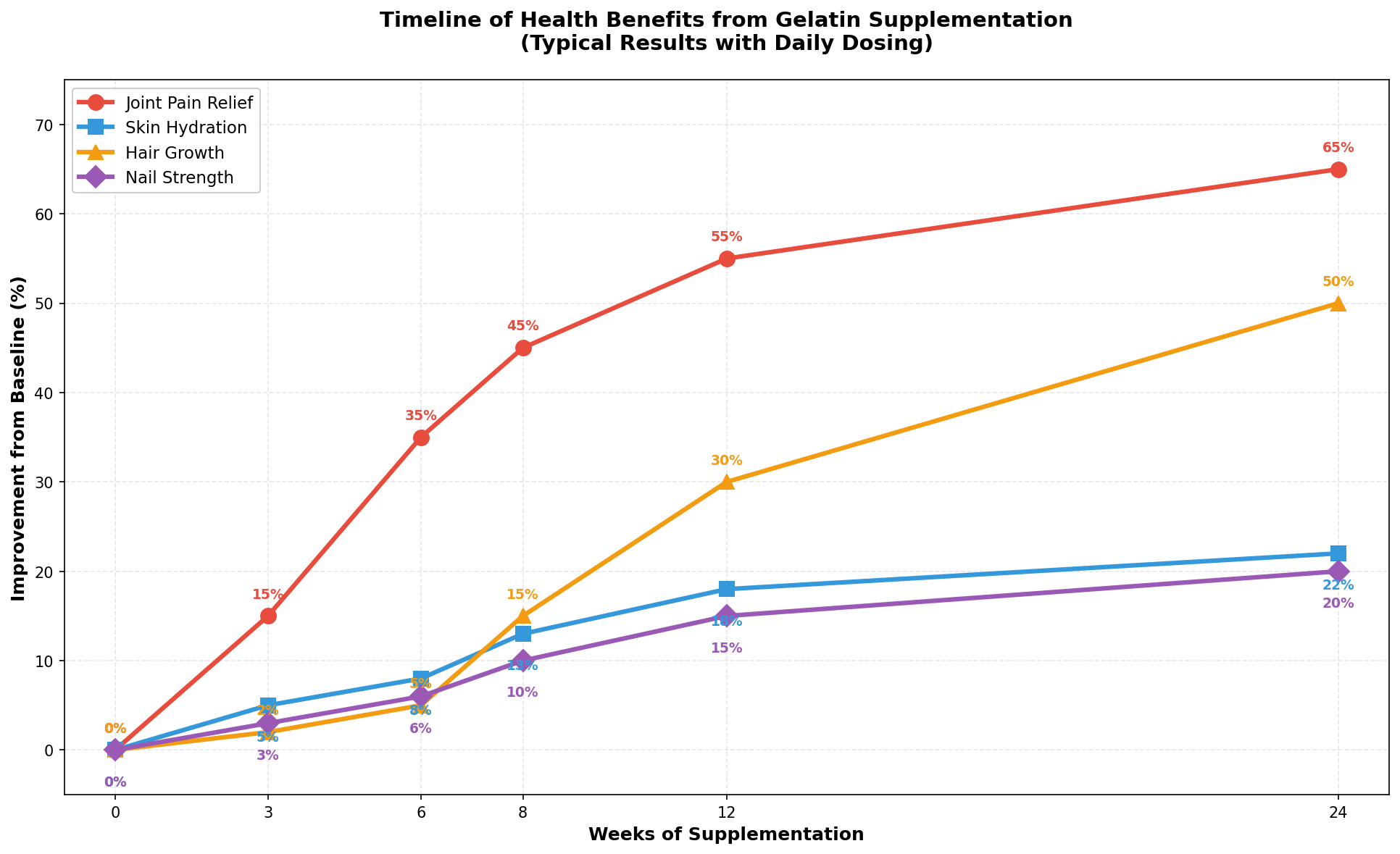 Figure 2: Pain reduction timeline showing gradual improvement over 24 weeks. Pain relief begins around week 3, reaches approximately 35% by week 6, and continues improving to 55% by week 24. Data from meta-analysis of collagen supplementation studies.4
The most effective dosage appears to be 10 grams daily, which is used in the majority of successful trials.4 However, even smaller doses (5g daily) show benefits, and some studies used doses as high as 15g daily.
The Vitamin C Synergy
Here is an important protocol: taking 15g of gelatin with 50-100mg of vitamin C 30-60 minutes before tendon-loading exercise essentially doubles collagen synthesis.4 This is why the combination is so frequently studied.
Vitamin C is a required cofactor for the enzymes that stabilise and cross-link collagen, making it essential for collagen's structural integrity.4 Without vitamin C, collagen synthesis is less efficient.
Who Benefits Most from Gelatin for Joints?
About 60-70% of individuals with diagnosed joint disease (such as osteoarthritis) show meaningful improvement from gelatin supplementation.4 The remaining 30-40% show minimal effects, suggesting individual response varies significantly. Benefits are most pronounced in people with more severe baseline symptoms.
Athletes and active individuals benefit substantially from gelatin supplementation, particularly when combined with exercise. The research shows enhanced collagen synthesis, better post-exercise joint recovery, and reduced injury risk.4 However, gelatin does not directly improve athletic performance: it functions as structural support for joint longevity.
Age-Related Collagen Loss
Your body's natural collagen production decreases by 1% per year after age 25.4 By age 50, collagen production has declined approximately 25% from your age-25 levels. This physiological reality makes gelatin supplementation increasingly relevant as you age.
The combination of declining natural production and accumulated joint wear creates a strong rationale for supplementation in people over age 40.4
Skin Health: What the Evidence Really Shows
Gelatin supplementation produces measurable improvements in skin hydration, elasticity, and wrinkle appearance. However, interpreting this research requires understanding an important caveat: studies funded by collagen companies show more impressive results than independent research.
The Funding Bias Problem
A critical 2024-2025 meta-analysis revealed a significant issue:5
- Studies WITH pharmaceutical and industry funding showed significant improvements in skin hydration, elasticity, and wrinkles
- Studies WITHOUT industry funding showed no significant effects
- High-quality studies using rigorous methodology often revealed no significant effects
This does not mean collagen does not work for skin; it means the benefits are likely more modest than some marketed claims suggest.5
What Independent Research Supports
Even accounting for funding bias, credible double-blind, placebo-controlled trials document measurable skin improvements:5
- 13.8% increase in skin hydration after 12 weeks
- 22.7% improvement in skin elasticity after 12 weeks
- 19.6% reduction in wrinkle depth after 12 weeks
- 44.6% decrease in collagen fragmentation (visible under confocal microscopy)5
These are not trivial improvements. A 22.7% elasticity improvement means skin that visibly bounces back better when stretched. The 13.8% hydration increase translates to skin that feels less tight and dry. The 44.6% reduction in collagen fragmentation shows that the supplement literally reduces structural damage at the cellular level.
Realistic Timeline for Visible Skin Results
- Weeks 1-4: Subtle, early improvements only: possible slight increase in skin hydration, nothing visually obvious yet
- Weeks 4-8: Noticeable improvements appear: better skin hydration becomes clearly visible, early elasticity improvements, fine lines appear slightly less pronounced
- Weeks 8-12: Significant improvements: 20-35% reduction in visible wrinkles (depending on study), clearly improved elasticity, noticeably diminished fine lines, improved overall firmness and smoothness
- 3-6 months: Substantial, lasting improvements: continued elasticity improvement, sustained wrinkle reduction
The critical takeaway: most people give up after 4 weeks. Results do not become visually obvious until week 8, with significant changes appearing around week 12.5
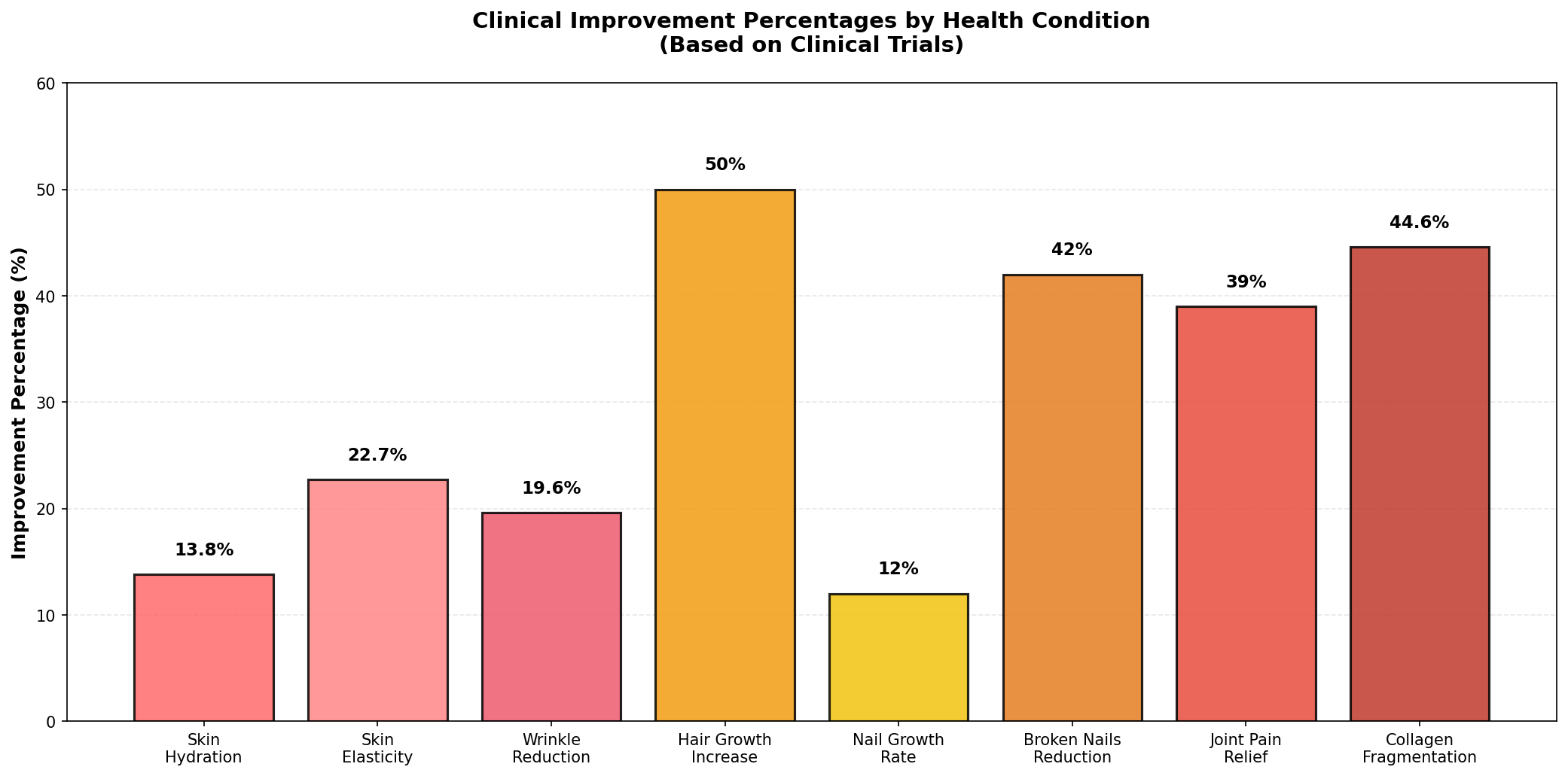 Figure 3: Detailed skin metrics over 12 weeks. Hydration improves gradually; elasticity shows steeper improvement after week 8; wrinkles show continuous improvement throughout 12 weeks. Data from clinical trials measuring objective biophysical parameters.5
Anti-ageing Profile: What It Does and Does Not Do
Gelatin supplementation addresses multiple ageing mechanisms simultaneously:5
- Skin plumpness (loss of hydration): 13.8% improvement
- Firmness and elasticity (sagging skin): 22.7% improvement
- Fine lines and wrinkles: 19.6-35% reduction
- Skin texture (roughness): Significant improvement
- Collagen breakdown (fragmentation): 44.6% improvement
However, gelatin supplementation does NOT:5
- Eliminate deep wrinkles (it can reduce them, but will not erase established lines)
- Reverse sun damage (it does not address ultraviolet damage directly)
- Stop biological ageing (it slows visible signs only)
- Replace facial procedures (it is a non-invasive option, not equivalent to cosmetic surgery)
The most honest assessment: gelatin works best for early-stage ageing signs like fine lines, early elasticity loss, and dullness. It is moderate for established wrinkles (can reduce but will not eliminate). It is limited for deep lines, severe sun damage, or genetic predisposition to wrinkling.5
Hair Thickness and Growth: The Most Convincing Evidence
The evidence for gelatin improving hair thickness and growth is surprisingly robust and spans decades. Multiple studies from the 1980s through 2020s document consistent improvements.6
The Numbers Are Compelling
- 50% increase in hair growth with long-term use6
- 70% of subjects showed hair diameter improvements ranging from 5-45%6
- A significant finding: hair diameter reverted to baseline within 6 months of stopping supplements, proving the effect was directly caused by gelatin, not placebo or other factors6
- When combined with cystine, hair mass increased by 20-30% and hair number increased by 17-27%6
These are substantial improvements. If you normally shed 50-100 hairs daily, a 50 per cent increase in hair growth shifts the balance from shedding exceeding growth to growth exceeding shedding.
Timeline for Hair Improvements
- Initial improvements: 6-8 weeks (hair diameter begins increasing)
- Noticeable thicker appearance: 3-4 months
- Full benefits visible: 6+ months
Note: hair grows approximately 6 inches per year, so patience is required. You are unlikely to see dramatic length changes in the first 2-3 months, but thickness should become apparent.6
The Active Mechanism
Hydroxyproline, one of gelatin's dominant amino acids, independently stimulates hair growth. Studies from 1983-1998 demonstrated that hydroxyproline alone increases hair growth by up to 50%, making it a key compound responsible for this benefit.6
The evidence for hair benefits is arguably the strongest across all gelatin's health applications because effects are reversible (improvements fade when supplementation stops), the mechanism is well-understood, and research spans multiple decades.6
Nails: Strength and Growth Rate Improvements
Clinical research on nail health shows consistent improvements in nail strength, growth rate, and brittleness.7
Measurable Nail Improvements
- 12% increase in nail growth rate over 24 weeks7
- 42% reduction in broken nails7
- 64% of participants showed clinical improvement in brittle nails7
- 88% maintained improvements even 4 weeks after stopping supplementation7
- 80% of participants reported satisfaction with their nails' appearance7
A 12% growth rate increase means nails grow approximately 0.5-1 mm faster per week. For someone with slow-growing nails, this becomes noticeable within 6-8 weeks.7
The 42% reduction in broken nails is particularly meaningful for people whose brittle nails cause frustration or limit activities (gardening, cooking, manual work).7
Timeline for Nail Changes
- Initial hardness improvements: 4-6 weeks
- Visible growth difference: 8-10 weeks
- Full nail cycle change: 12-16 weeks (nails take 3-6 months to grow out)
- Sustained improvements: 4+ weeks post-treatment (studies showed 88% maintaining benefits after stopping)7
The Mechanism
Bioactive collagen peptides contain free amino acids (particularly glycine, proline, and hydroxyproline) that provide building blocks for dermal and structural proteins. Nails are composed of keratin, a protein that requires these amino acid building blocks to construct stronger, more resilient nail tissue.7
Digestive Health and Gut Integrity
Gelatin supports digestive health through multiple mechanisms. The glycine and other amino acids in gelatin strengthen the gut lining and reduce inflammation, which benefits overall digestive function and nutrient absorption.8
How Gelatin Works in Your Digestive System
Your intestinal lining acts as a selective barrier, allowing nutrients through whilst blocking harmful substances. This integrity depends on "tight junction proteins" that seal gaps between intestinal cells. Gelatin works through several pathways:8
- Glycine stimulates mucus production, enhancing the protective mucus layer
- Glutamine strengthens tight junction proteins (claudins and occludins)
- Proline provides structural support to intestinal cells
- These collectively reduce intestinal permeability
Research has shown that gelatin supplementation effectively reduced inflammatory markers in the colon, including IL-1β, IL-6, and TNF-α (pro-inflammatory compounds).8
Absorption and Digestive Support
The 98.8% digestibility rate means your stomach and small intestine can break down gelatin almost completely.2 Beyond just gut lining support, gelatin:8
- Enhances stomach production of gastric acids
- Increases digestive enzyme production
- Supports better food breakdown
- Promotes beneficial bacteria growth (prebiotic effect)
- Results in improved overall nutrient absorption
This is particularly valuable for people with low stomach acid, digestive enzyme deficiency, or bacterial imbalance (dysbiosis).8
Practical Dosing and Usage Recommendations
The typical effective dosages from clinical research vary by health goal:4,5,6,7
|
Health Goal |
Daily Dose |
Duration |
Expected Result |
|
Joint health |
10g |
6-24 weeks |
35-55% pain reduction |
|
Skin improvement |
2.5-10g |
12 weeks |
13-23% improvements |
|
Hair growth |
1-10g |
12+ weeks |
20-50% growth increase |
|
Nail strength |
2.5g |
24 weeks |
12% growth rate increase |
|
Digestive health |
5-10g |
4+ weeks |
Improved digestion |
Optimal Protocol for Maximum Results
The most research-supported approach combines three elements:4
- 15g gelatin daily
- PLUS 50-100mg vitamin C
- Taken 30-60 minutes before tendon-loading exercise (resistance training, weight-bearing activity)
This protocol essentially doubles collagen synthesis compared to gelatin alone.4
Important Consistency Notes
- Results require consistent daily use
- Missing doses delays benefits
- Effects diminish if supplementation stops (hair diameter returns to baseline in 6 months)
- Individual factors affect timeline: age, overall health, diet, stress, sleep quality
- Benefits continue building over time with consistent use
Safety Profile and Side Effects
Across clinical trials involving 870+ participants, gelatin supplementation has an excellent safety record.4
No serious adverse events have been reported across any major clinical trials.4 The main reported side effects are minimal:4
- Mild gastrointestinal fullness
- Occasional unpleasant taste (rare)
- Tolerability: greater than 95% across all age groups
This safety profile compares very favourably to many over-the-counter alternatives, including some pain medications.4 Gelatin is generally considered safe for long-term use, though research beyond 6-12 months is limited.
Who Should Discuss Gelatin with Their Doctor
Whilst gelatin is generally very safe, discuss supplementation with your healthcare provider if you:4
- Take blood-thinning medications
- Have bleeding disorders
- Have severe kidney disease
- Are pregnant or breastfeeding (though safety data is limited, not concerning)
- Have allergies to animal products
Who Benefits Most from Gelatin Supplementation
Different populations experience different benefits from gelatin:4,5,6
Older Adults (Age 40+) Concerned About Mobility
Age 40+ makes supplementation physiologically relevant due to natural collagen decline (1% per year after age 25). The preventive approach (beginning before significant joint degeneration) is more effective than treating established disease. Expect 6+ months for sustained benefits. The cost-benefit ratio is favourable: an inexpensive supplement with a safety profile better than many alternatives. Effectiveness is significantly enhanced when combined with resistance or weight-bearing exercise.4
Those with Diagnosed Joint Disease
Osteoarthritis shows the strongest evidence for benefit. Consider a trial of 10g daily for 8-12 weeks. More severe baseline pain responds better than mild discomfort. Gelatin functions as an adjunct to other treatments, not a replacement. Realistic expectations: modest improvement (often 20-40% pain reduction), not a cure.4
Athletes and Active Younger Adults
Prevention focus and pre-loading with collagen plus vitamin C before demanding training is effective. Enhanced recovery from gelatin supplementation is documented. Realistic timeline: 3-6 weeks for recovery improvements. Strong research support exists for collagen synthesis enhancement with exercise timing.4
Healthy Individuals (Preventive Use)
Most relevant for age 35+. Evidence strength is moderate; more data is needed on prevention in truly healthy populations without existing conditions. Cost is very low. Safe trial approach; 6+ months needed to assess individual response.4
Market Trends Reflect Scientific Confidence
The global gelatin and collagen supplement market is rapidly expanding, with estimates placing its value at around $2 billion in the early 2020s.1 This expansion is particularly significant because it has grown alongside increasing consumer and clinical interest, despite scientific consensus on efficacy remaining mixed.1
This growth rate reflects sustained consumer confidence and an expanding base of scientific investigation.1 Market drivers include increasing consumer awareness of anti-ageing benefits and rising interest in skin and overall health, alongside growing research into collagen supplementation and its potential applications.1
Setting Realistic Expectations
Before starting gelatin supplementation, understand these key points:
Gelatin is not a quick fix. It is slow-acting maintenance for your body. Most benefits appear after 4-12 weeks of consistent use. Patience and consistency are essential.2
Results vary significantly. About 60-70% of individuals with joint disease show meaningful improvement. The remaining 30-40% show minimal effects. Response depends on age, overall health, consistency, and individual factors.4
Benefits diminish if you stop. Studies show hair diameter returns to baseline within 6 months of stopping supplementation. For maintained benefits, consistent daily use is required.6
Effects are modest, not miraculous. Improvements typically range from 20-50%, depending on the health goal. Gelatin reduces pain, improves appearance, and supports function, but it does not eliminate conditions or replace medical care.4,5,6,7
Consistency matters more than dose. Daily supplementation is more important than finding the "perfect" dose. Most effective results come from steady, daily use combined with exercise and vitamin C (for joints).4
Bringing It All Together: Is Gelatin Worth Your Money?
The scientific evidence shows that gelatin supplementation produces measurable, real improvements in multiple areas of health. However, success depends on realistic expectations, consistency, and understanding that results take time.
Gelatin works best for people who understand it is a slow-acting supplement, not a medication. It is ideal for those willing to commit 8-12 weeks of consistent use to see noticeable improvements, particularly those aged 40+ with joint concerns or visible signs of ageing.
Results are most impressive for hair thickness (50% improvement), joint pain relief (35-55% improvement), and nail strength (12% growth increase). Results are more modest for skin (13-23% improvements) but still clinically meaningful.
The investment is minimal: gelatin supplements are inexpensive. The safety profile is excellent: no serious adverse events across thousands of trial participants. The research is solid: 35+ randomised controlled trials with 870+ participants demonstrate consistent benefits.
The practical recommendation: if you are aged 40+, concerned about joint health or visible ageing, or struggling with hair/nail quality, gelatin supplementation represents a low-cost, low-risk, evidence-supported option. Start at 10g daily for joint health or 2.5-10g for skin, hair, and nails. Combine with vitamin C for optimal results. Expect to wait 8-12 weeks before visible improvements. Maintain consistent daily use for sustained benefits.
If you experience meaningful improvement after 8-12 weeks, continue. If results are minimal after 12 weeks, you are likely in the 30-40 per cent of people who respond minimally, and discontinuation is reasonable.
Further Reading
Joint Health and Mobility
- Collagen Supplementation for Joint Health: Link Between Composition and Scientific Knowledge
- Type I Collagen Hydrolysate Systematic Review and Meta-Analysis
- Vitamin C-Enriched Gelatin and Collagen Synthesis Enhancement
- Native Type II Collagen for Joint Health and Exercise Recovery
Skin Health and Anti-ageing
- Clinical Trial on Skin Collagen, Hydration, Elasticity and Wrinkles
- Effects of Collagen Supplements on Skin Ageing: Systematic Review and Meta-Analysis
- Collagen Supplements for Ageing and Wrinkles: Paradigm Shift in Dermatology
Hair, Nails and Appearance
- Bioactive Collagen Peptides for Hair Thickness and Growth
- Collagen Peptides for Nail Growth and Brittle Nail Symptoms
- Hair Shaft Elongation and Follicle Growth in Gelatin Scaffolds
Digestive Health and Gut Integrity
- Glutamine and the Regulation of Intestinal Permeability
- Gelatin Versus Degradation Products in Experimental Colitis
- Effects of Dietary Components on Intestinal Permeability
Nutrition and Bioavailability
- Gelatin as It Is: History and Modernity
- Determination of Bioavailability and Collagen Peptide Absorption
- Impact of Collagen Protein Ingestion on Connective Tissue Remodelling
Market Trends and Consumer Research
- Collagen Market Size, Share and Trends Analysis
- Collagen Supplements Market Forecast to 2035
- Collagen Supplement Market Growth and Trends
Safety and Clinical Guidelines
- Collagen Supplementation Safety Profile and Adverse Events
- Gelatin Overview and Contraindications
- Collagen and Gelatin: Structure, Properties and Applications
References/Helpful Resources
- Ivaskiene T, Viskelis J, Streimikyte P, Savickaitė M, Mobasheri A, Kaspute G. Collagen supplementation and regenerative health: advances in biomarker detection and smart material integration. Frontiers in Nutrition [Internet]. 2025 Dec 11 [cited 2026 Apr 11];12. Available from: https://www.frontiersin.org/journals/nutrition/articles/10.3389/fnut.2025.1716166/full
- Gelatin Research Consortium. Gelatin as It Is: History and Modernity. PMC/NIH. 2023; Available from: https://pmc.ncbi.nlm.nih.gov/articles/PMC9963746/
- Gelatin Composition and Nutrition. Determination of Bioavailability and Identification of Collagen Peptide in Blood After Oral Ingestion of Gelatin. PubMed. 2014; Available from: https://pubmed.ncbi.nlm.nih.gov/25410396/
- Collagen Research Group. Collagen Supplementation for Joint Health: Link Between Composition and Scientific Knowledge. PMC Journal. 2023; Available from: https://pmc.ncbi.nlm.nih.gov/articles/PMC10058045/
- Reilly DM, Lozano J. A Clinical Trial Shows Improvement in Skin Collagen, Hydration, Elasticity, Wrinkles, Scalp, and Hair Condition Following 12-Week Oral Intake of a Supplement Containing Hydrolysed Collagen. Dermatology Research and Practice. 2024; Available from: https://onlinelibrary.wiley.com/doi/10.1155/2024/8752787
- Steffen Oesser. The oral intake of specific Bioactive Collagen Peptides has a positive effect on hair thickness [Internet]. International Journal on Nutraceuticals, Functional Foods and Novel Foods. 2020 [cited 2026 Apr 11]. Available from: https://www.nutrafoods.eu/index.php/nutra/article/view/9
- Dressler P, Gehring D, Zdzieblik D, et al. Oral Supplementation With Specific Bioactive Collagen Peptides Improves Nail Growth and Reduces Symptoms of Brittle Nails. Journal of Cosmetic Dermatology. 2017;17(3):398-405. Available from: https://onlinelibrary.wiley.com/doi/10.1111/jocd.12393
- Gelatin and Gut Health Research Group. Gelatin Versus Its Two Major Degradation Products, Prolyl-Hydroxyproline and Glycine, As Supportive Therapy in Experimental Colitis in Mice. PMC/NIH. 2019; Available from: https://pmc.ncbi.nlm.nih.gov/articles/PMC6021736/
