

You roll up your sleeve, feel the brief pinch of a needle, and watch a small tube fill with your blood. Then it disappears into a basket, and a few days later a result lands in your patient portal: green ticks, red flags, numbers you don't quite understand. What happens in between?
That "in between" is one of the most sophisticated, high-volume operations in modern medicine. Mayo Clinic Laboratories alone processes around 40,000 samples a day and runs more than 26 million tests a year. Every single one moves through a carefully choreographed journey designed to catch disease early, often before you feel a thing.
This article walks through that journey from start to finish: what screening tests actually are, how labs process your sample, what the numbers on your report really mean, and the most important question of all, what you should do when you finally get the result.
Screening Tests Aren't Just "Any Blood Test"
A screening test has a very specific job. The NHS defines it as a way of identifying apparently healthy people who may have an increased risk of a particular condition. The NIH puts it even more plainly: screening tests are done in people without any symptoms, to find disease as early as possible when treatment usually works best.
That distinction matters. If you go to the doctor with chest pain and get a heart workup, that's diagnostic testing. If you go for your annual physical and your blood pressure is checked even though you feel fine, that's screening. The American Heart Association captures why this is so important: "High blood pressure usually has no symptoms so it can't be detected without being measured."
Most screening tests fall into one of four categories:
- Blood samples (cholesterol, glucose, PSA)
- Excretory sample such as urine and stool sample (detect bacteria growth)
- Biopsy (detect anything wrong in body tissue)
- Imaging (mammograms, ultrasound, low-dose CT for lung cancer)
- Physical examination (blood pressure, BMI)
- Cell samples (Pap smears, cervical swabs)
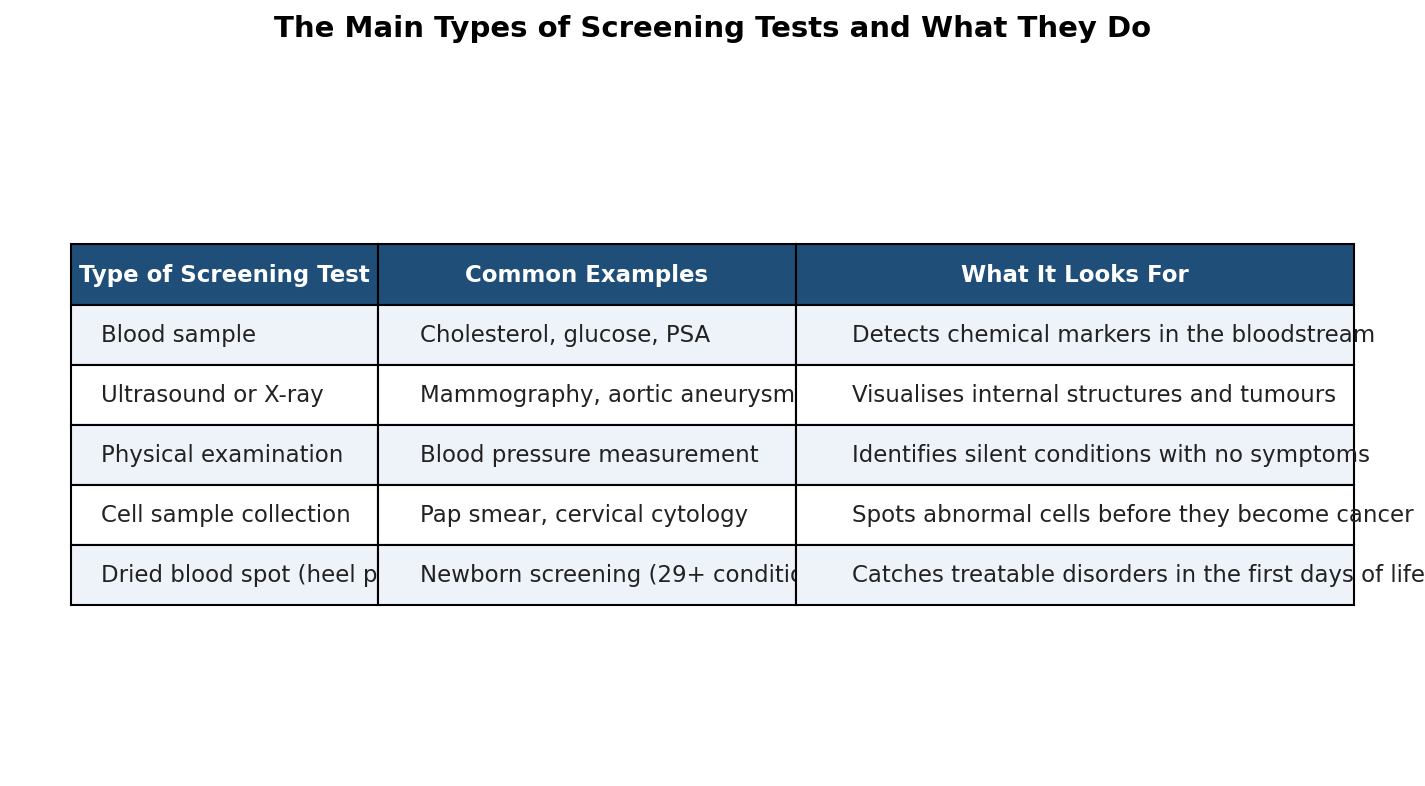 Figure 1: The main categories of screening tests used in adult and newborn medicine. Data compiled from NHS, USPSTF, and CDC screening guidelines.
The reason this matters to you, as a reader between 25 and 65, is that you are almost certainly in the prime window for several recommended screenings: blood pressure (all adults), cholesterol (20+), colorectal cancer (45 to 75), cervical cancer, breast cancer (typically from 40 to 50 depending on guidelines), and lung cancer if you have a significant smoking history.
Why Screening Actually Works: The Numbers Are Real
Sceptics often ask whether screening genuinely saves lives, or whether it just creates worry. The data, drawn from decades of population studies, is striking.
- Pap screening has reduced cervical cancer incidence and mortality by more than 50% over the last 40 years
- Modern mammography programmes can reduce breast cancer mortality by more than 40%
- Screening colonoscopy is associated with a 67% reduction in risk of death from colorectal cancer, with one meta-analysis showing a 73% mortality reduction for 10-yearly colonoscopy
- If US screening rates rose by just 10 percentage points across the three major cancers, an estimated 1,300 breast cancer deaths, 3,400 cervical cancer deaths, and 11,000 colorectal cancer deaths could be prevented
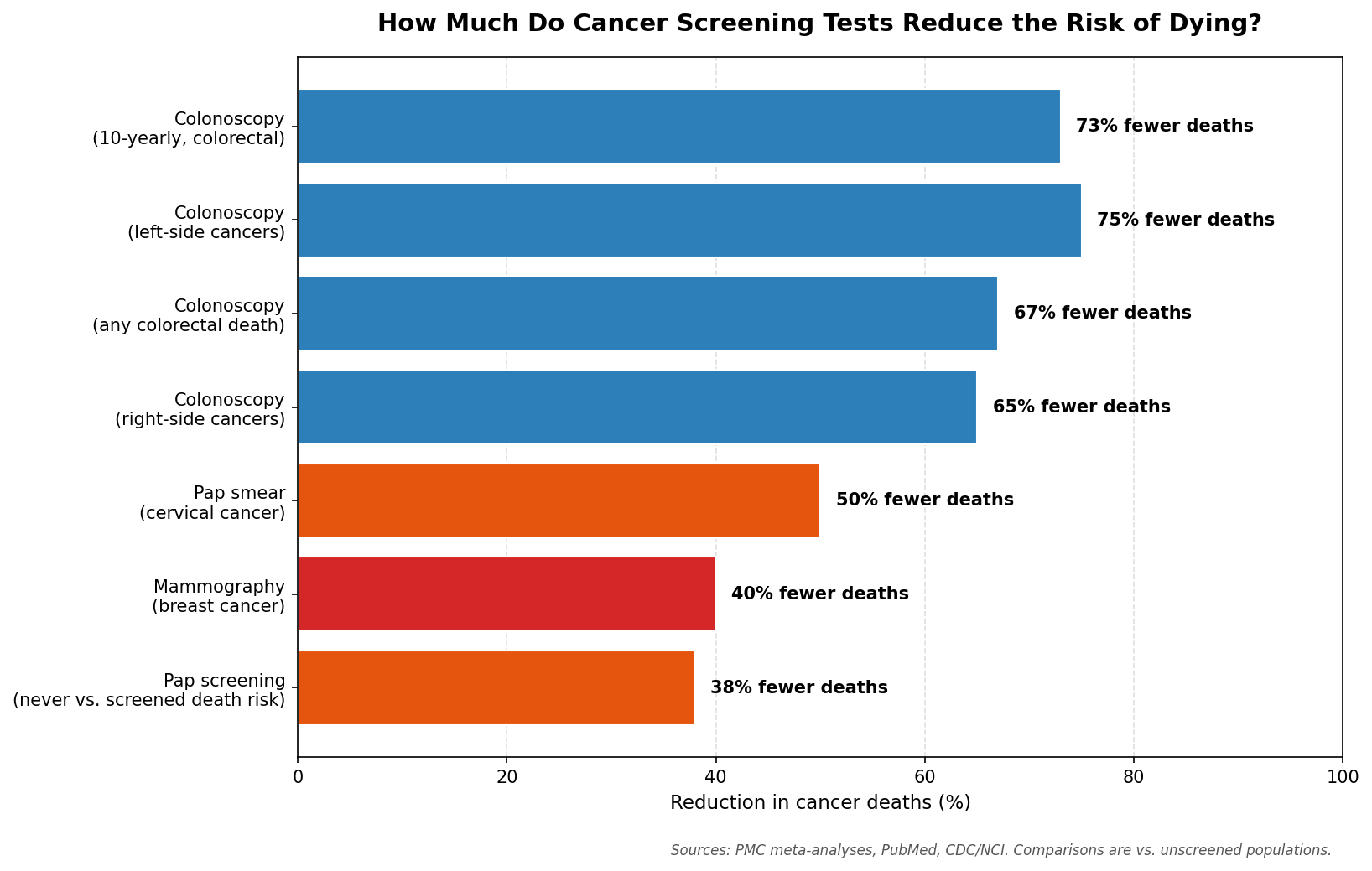 Figure 2: How major cancer screening programmes reduce death rates. Data from CDC, NCI, and PubMed meta-analyses.
Newborn screening is arguably the public health success story of the last half-century. Every year, about 4 million US babies are screened for at least 29 conditions via a heel-prick blood spot, with participation rates above 99.9%. Roughly 12,500 newborns a year are diagnosed early; for many, treatment begins before any symptoms appear at all.
The Hidden Journey: What Happens After You Leave the Clinic
Here is the part most people never see. From the moment your blood leaves your arm, it enters a three-phase pipeline, and the quality of each phase determines whether your result is right.
Phase 1: Pre-analytical covers everything before the testing machine. Collection, labelling, transport, registration. It sounds boring, but up to 70% of all laboratory errors happen here, not in the testing itself. Between 60% and 90% of unexpected or erroneous results trace back to pre- or post-analytical problems, while only 10 to 15% come from the actual analyser.
Phase 2: Analytical is the measurement itself. Your sample is loaded onto highly automated equipment that compares your blood to known control samples. If the controls fail their checks, all patient results pause until the issue is fixed.
Phase 3: Post-analytical interpretation, sign-off by a lab manager, and reporting to your doctor (and now, you).
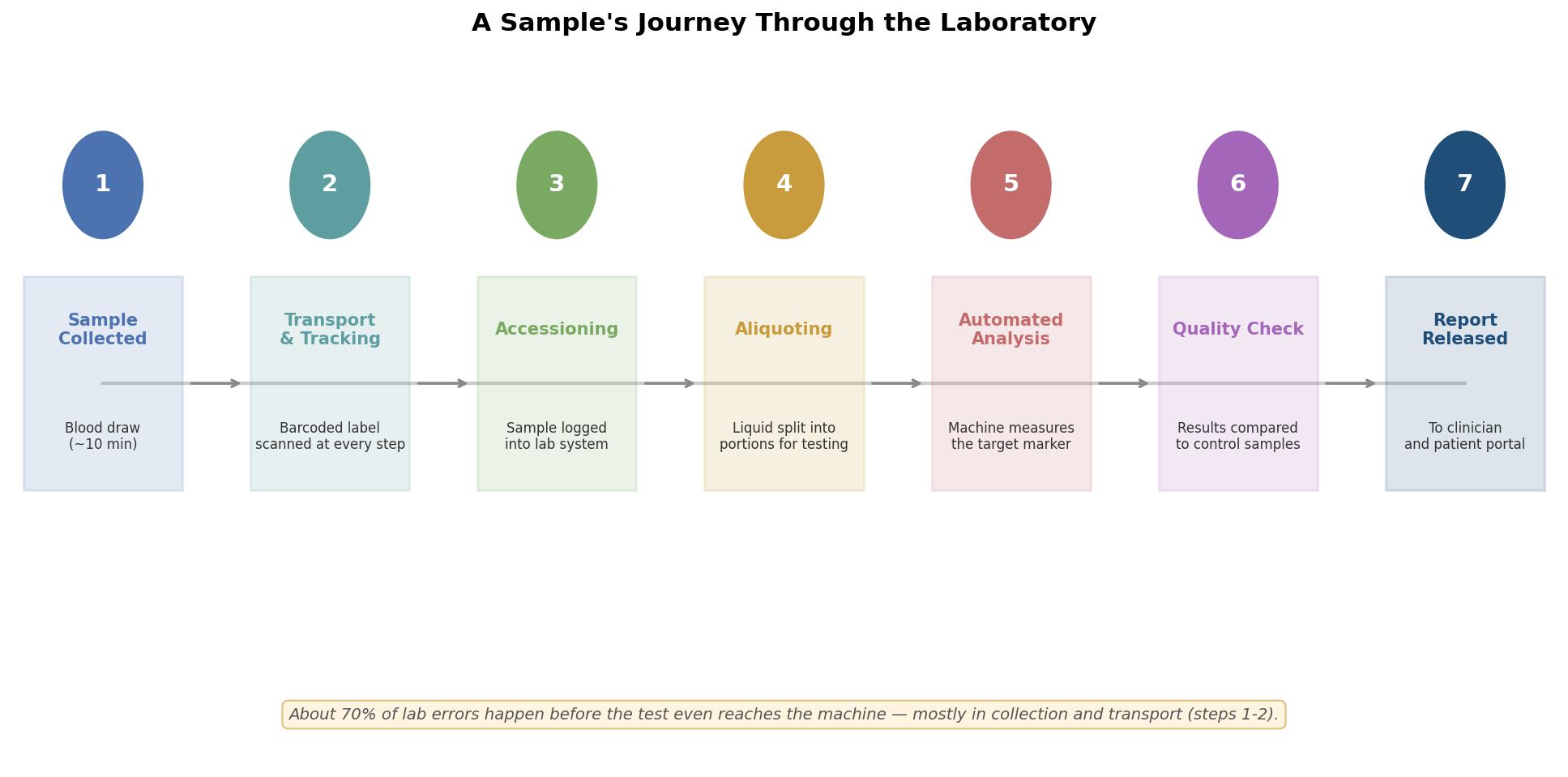 Figure 3: The three phases of laboratory testing, with the proportion of errors occurring in each. Data from PubMed studies on laboratory error rates.
Inside a modern lab like Mayo Clinic's, your sample is barcoded the moment it arrives, scanned at every movement, sometimes split into smaller portions (called aliquots), and routed automatically by sorting machines to whichever workstation needs it. High-throughput flow cytometers can screen 50,000 wells per day. Automation isn't a luxury; it's what makes affordable, accurate, population-wide screening possible.
Why Your Sample Sometimes Gets Rejected
If you've ever been asked to come back for another blood draw, you probably worried something was wrong. Usually, it isn't.
Across millions of samples, the most common reasons for rejection are mundane and very human:
- Clotted blood: 67% of rejections
- Insufficient volume: 8%
- Cancelled test requests: 6%
- Improper volume more broadly: about 42% in some studies
- Undue clotting: about 33%
A redraw almost always means the original sample was unusable, not that the lab found something alarming.
The Invisible Quality Net
Behind every result is a global safety system most patients never hear about.
In the US, the Clinical Laboratory Improvement Amendments (CLIA) require every lab testing human specimens to be certified, with more rigorous rules for more complex tests. The CDC runs the world's only laboratory dedicated to ensuring the quality of newborn screening, manufacturing about 1 million reference dried blood spots every year to keep labs nationwide accurate.
Labs also participate in External Quality Assessment, where samples of known but undisclosed content are slipped into routine testing to verify performance. The UK NHS, ISO 15189 international accreditation, and equivalent programmes elsewhere create overlapping checks on every link in the chain.
How Fast Should Your Results Come Back?
Turnaround time varies enormously by what's being tested and how urgent it is.
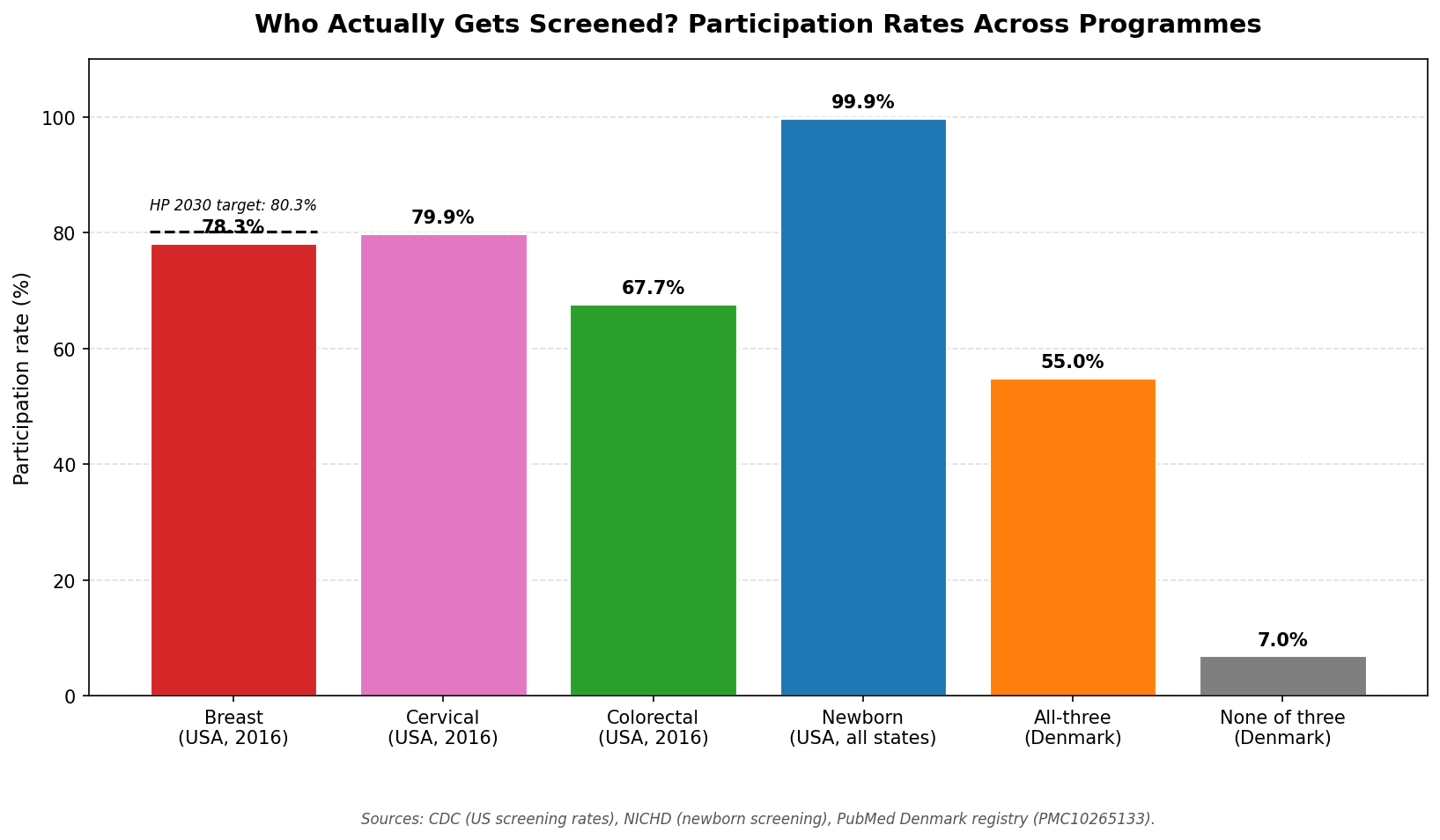 Figure 4: Typical turnaround times for screening and lab tests. Data from NHS, PubMed turnaround studies, and newborn screening quality programmes.
A few rules of thumb:
- STAT (urgent) hospital tests can return in under an hour. Emergency potassium results in 90% of cases coming back within 69 minutes; emergency haemoglobin within 55 minutes
- Routine NHS blood tests typically take 2 to 5 working days, with most GPs receiving results within 72 hours
- Newborn screening in top-performing US states gets time-critical results back within 5 days of life, and the best programmes return 95% of all results within 9 days
If your doctor calls within an hour or two of a blood draw, it's almost certainly because the lab triggered a "critical value" protocol, a built-in safety net for results so abnormal they need immediate attention. Best-practice hospitals notify these within 30 minutes by phone with a verbal read-back. Secure text messaging can cut that to under 3 minutes.
A phone call doesn't mean catastrophe. It means the system worked.
The New Reality: You See Results Before Your Doctor
Since the 21st Century Cures Act Information Blocking Rule took effect in April 2021, US patients receive lab and imaging results immediately, often before their doctor has read them.
The numbers are striking:
- Before the rule: 18.5% of reports were first accessed by patients
- After: 44.0%
- Median time from finalised report to first patient access dropped from 45 hours to 5.5 hours, an 8-fold acceleration
This is mostly good. But it means a 45-year-old can open the portal at 11pm on a Saturday and see a red "out of range" flag with no context whatsoever.
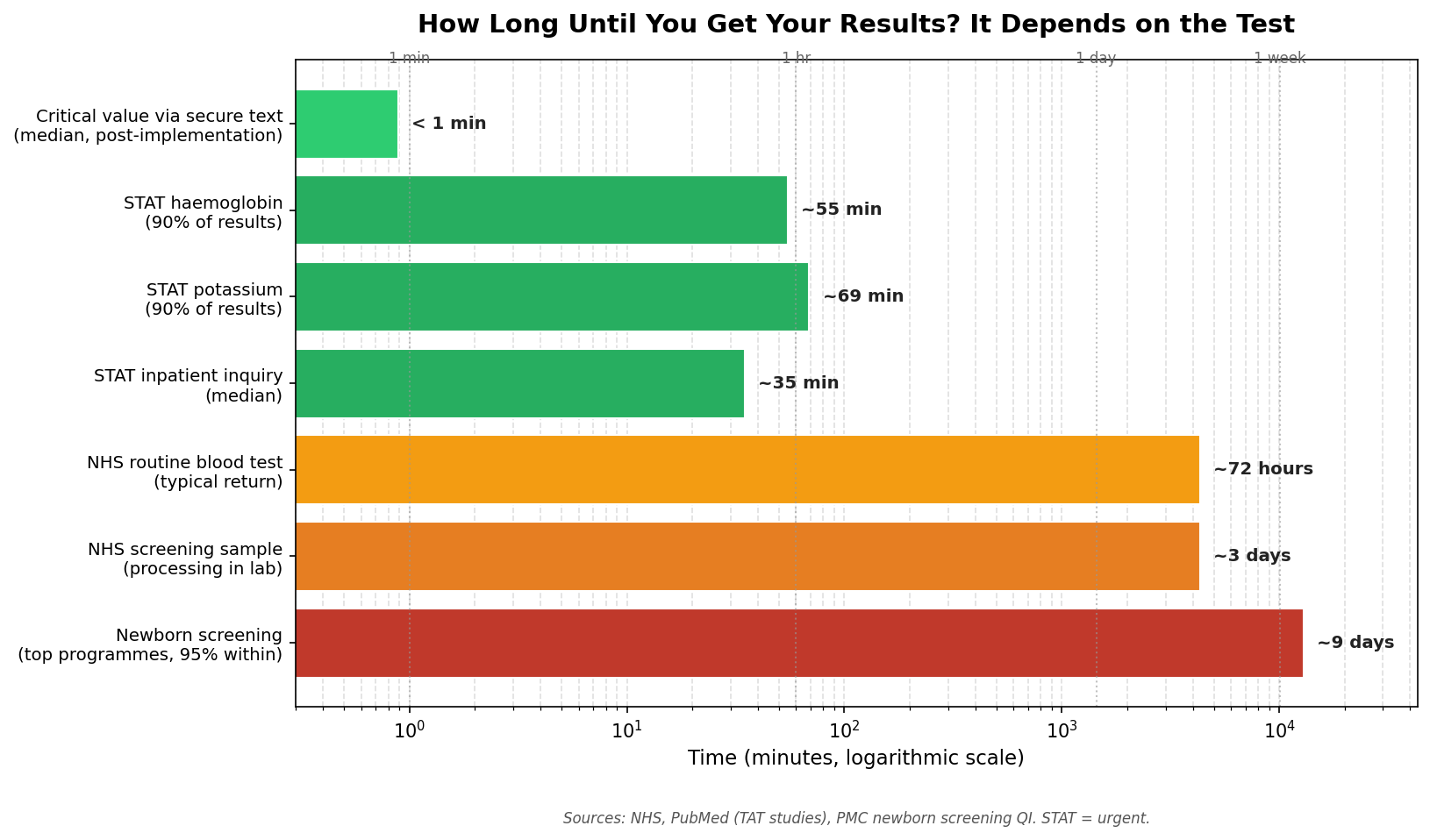 Figure 5: How patient access to lab results changed after the Cures Act Information Blocking Rule. Data from PubMed studies on portal access.
What "Out of Range" Actually Means
This is where many people panic unnecessarily. A reference range is a statistical construct: it's defined as the values that fall between the 2.5th and 97.5th percentiles of healthy individuals. By definition, 5% of completely healthy people will have at least one result outside the normal range on any given test.
A normal value doesn't predict present or future health; it just shows where most healthy people sit. And reference ranges vary between labs and analysers, so the same number can be flagged at one facility and not at another.
Two more concepts are worth knowing because they shape what your result actually means:
- Sensitivity is a test's ability to catch disease when it's there (true positives)
- Specificity is its ability to correctly clear people who don't have it (true negatives)
For screening, specificity matters most, because most people tested are healthy. Even a small false-positive rate generates a lot of worried, well people. That's why HPV tests, which are highly sensitive (94.6%) but less specific than Pap tests, catch more disease but also produce more follow-ups that turn out to be nothing.
Reading Your Report Without Panicking
Here's how to approach a result you don't fully understand:
- An "out of range" flag is not a diagnosis. It's an invitation for context
- Look at the trend. A single high cholesterol number means less than a steady upward trend over years
- Ask for frequencies, not percentages. People understand "8 out of 1,000" much more clearly than "0.8%". You're allowed to ask your doctor to reframe
- Don't compare across labs. Reference ranges differ between facilities
- Wait for clinical interpretation before searching online. Most "abnormal" flags resolve into something benign or easily managed
Health numeracy strongly affects what people understand. In one study, 77% of higher-numeracy patients correctly identified an abnormal haemoglobin A1c, but only 38% of lower-numeracy patients did. You aren't expected to be a statistician; you're entitled to ask clear questions.
The Weakest Link: Follow-Up
Here is the uncomfortable truth screening data reveals. The biggest gap in modern screening isn't accuracy; it's what happens after an abnormal result.
Figure 6: Follow-up completion rates for abnormal cancer screening results across different settings. Data from PubMed PROSPR Consortium and California public hospital studies.
- Breast follow-up after abnormal screening: 96.8% in well-resourced systems.
- Cervical follow-up: 76.2%
- Colorectal follow-up: 76.3%
- But in California public hospitals, only 42% of patients with abnormal stool tests completed colonoscopy follow-up, and only 64% of patients with high-risk breast findings got the recommended biopsy
- In one study of 241 patients with abnormal screens, 51% did not complete follow-up. The strongest predictor? 17% simply believed they didn't need it
Communication failures contribute too:
- A 7.1% failure rate to inform patients of clinically significant outpatient results, across 5,400+ records
- Delays in diagnosis are the fastest-growing type of malpractice claim, and one-quarter involve failure to follow up test results
- Inside the VA's electronic record system, 18% of abnormal imaging and 10% of abnormal lab results went unacknowledged by providers
The single most powerful question you can ask after any screening result is: "What's the next step?" And then make sure that next step happens.
What You Should Actually Do When Results Land
Here is a practical checklist for the moment a result lands in your inbox.
- Take a breath. Anxiety is normal: 85% of patients waiting for imaging report anxiety, and most false-positive anxiety resolves within 6 months
- Don't interpret in isolation. Wait for the clinician's note or call
- If you see a critical-looking flag and nothing comes within 24 to 48 hours, contact your practice. Patients expect imaging results within 1 to 3 days and reasonably call by day 5; that's appropriate
- Confirm the follow-up plan in writing. Either through the portal or a written note. Vague verbal plans get lost
- Put the next test on your calendar before you leave the appointment. Don't rely on the practice to remind you
- If you have a family history or risk factor, mention it before screening. This changes how results are interpreted (predictive value depends heavily on prevalence in your group)
The Bottom Line
A screening test is not a single moment. It's a long chain that starts with a needle and ends with a decision you make at your kitchen table when you read the result.
Modern labs are extraordinary. They process tens of thousands of samples a day under barcode tracking, automated sorting, internal quality control, external proficiency testing, and national accreditation. The science behind screening has cut cervical cancer mortality in half, mammography mortality by 40%, and colorectal cancer deaths by two-thirds.
But the system is only as strong as its weakest link, and increasingly that link is follow-up. An abnormal result is not the end of the journey; it's the beginning of the most important conversation you'll have with your doctor. The patients who do best aren't the ones who avoid abnormal results, they're the ones who act on them.
You don't need to understand every reference range or every percentile. You just need to know enough to ask the right question: "What does this mean for me, and what happens next?" That single sentence is, statistically, the most powerful screening tool of all.
Further Reading
Understanding Screening Tests
- NHS: NHS Screening
- NIH InformedHealth: Benefits and Risks of Screening Tests
- CDC: Are You Up to Date on Your Preventive Care?
- Johns Hopkins Medicine: Screening Tests for Common Diseases
Cancer Screening Recommendations
- USPSTF: Colorectal Cancer Screening
- USPSTF: Lung Cancer Screening
- National Cancer Institute: What Cancer Screening Statistics Really Tell Us
How Labs Work
- NHS: Blood Tests
- Mayo Clinic News Network: The Specimen's Journey to the Laboratory
- Johns Hopkins Medicine: Blood Test
Understanding Your Results
- Mayo Clinic Press: Should You Worry About Abnormal Lab Results?
- NIH/NCBI: Sensitivity, Specificity, and Predictive Values
Quality Standards and Safety
Newborn Screening
References/Helpful Resources
- National Health Service. NHS Screening [Internet]. [cited 2026 May 29]. Available from: https://www.nhs.uk/tests-and-treatments/nhs-screening/
- National Health Service. Blood Tests [Internet]. [cited 2026 May 29]. Available from: https://www.nhs.uk/tests-and-treatments/blood-tests/
- Oxford University Hospitals NHS Foundation Trust. Clinical Biochemistry Turnaround Times [Internet]. [cited 2026 May 29]. Available from: https://www.ouh.nhs.uk/biochemistry/tests/turnaround-times/
- National Institutes of Health, InformedHealth. Benefits and risks of screening tests [Internet]. [cited 2026 May 29]. Available from: https://www.ncbi.nlm.nih.gov/books/NBK279418/
- National Institutes of Health, InformedHealth. Advantages and disadvantages of screening tests [Internet]. [cited 2026 May 29]. Available from: https://www.ncbi.nlm.nih.gov/books/NBK611896/
- National Institutes of Health, InformedHealth. What is overdiagnosis? [Internet]. [cited 2026 May 29]. Available from: https://www.ncbi.nlm.nih.gov/books/NBK430655/
- National Center for Biotechnology Information. Health Screening (StatPearls) [Internet]. [cited 2026 May 29]. Available from: https://www.ncbi.nlm.nih.gov/books/NBK436014/
- National Center for Biotechnology Information. Overview on Ordering and Evaluation of Laboratory Tests (StatPearls) [Internet]. [cited 2026 May 29]. Available from: https://www.ncbi.nlm.nih.gov/books/NBK570615/
- Centers for Disease Control and Prevention. Use of Cancer Screening Tests, United States, 2023. Prev Chronic Dis. 2025. Available from: https://www.cdc.gov/pcd/issues/2025/25_0139.htm
- Centers for Disease Control and Prevention. Are You Up to Date on Your Preventive Care? [Internet]. [cited 2026 May 29]. Available from: https://www.cdc.gov/chronic-disease/prevention/preventive-care.html
- Centers for Disease Control and Prevention. CLIA Overview [Internet]. [cited 2026 May 29]. Available from: https://www.cdc.gov/clia/php/about/index.html
- Centers for Disease Control and Prevention. About Newborn Screening Laboratories [Internet]. [cited 2026 May 29]. Available from: https://www.cdc.gov/newborn-screening/php/about/index.html
- Centers for Disease Control and Prevention. CDC Provides Quality Assurance for Newborn Screening [Internet]. [cited 2026 May 29]. Available from: https://www.cdc.gov/newborn-screening/featurestory/quality-assurance-for-newborn-screening.html
- Centers for Disease Control and Prevention. Health and Economic Benefits of Colorectal Cancer Interventions [Internet]. [cited 2026 May 29]. Available from: https://www.cdc.gov/nccdphp/priorities/colorectal-cancer.html
- National Cancer Institute. What Cancer Screening Statistics Really Tell Us [Internet]. [cited 2026 May 29]. Available from: https://www.cancer.gov/about-cancer/screening/research/what-screening-statistics-mean
- National Cancer Institute. Cervical Cancer Screening (PDQ) [Internet]. [cited 2026 May 29]. Available from: https://www.cancer.gov/types/cervical/hp/cervical-screening-pdq
- US Preventive Services Task Force. Colorectal Cancer Screening [Internet]. [cited 2026 May 29]. Available from: https://www.uspreventiveservicestaskforce.org/uspstf/document/RecommendationStatementFinal/colorectal-cancer-screening
- US Preventive Services Task Force. Lung Cancer Screening [Internet]. [cited 2026 May 29]. Available from: https://www.uspreventiveservicestaskforce.org/uspstf/recommendation/lung-cancer-screening
- US Preventive Services Task Force. Shared Decision Making About Screening [Internet]. [cited 2026 May 29]. Available from: https://www.uspreventiveservicestaskforce.org/uspstf/about-uspstf/methods-and-processes/shared-decision-making-about-screening-and-chemoprevention
- Eunice Kennedy Shriver National Institute of Child Health and Human Development. Newborn Screening [Internet]. [cited 2026 May 29]. Available from: https://www.nichd.nih.gov/health/topics/newborn
- Mayo Clinic News Network. The specimen's journey to the laboratory [Internet]. [cited 2026 May 29]. Available from: https://newsnetwork.mayoclinic.org/discussion/the-specimens-journey-to-the-laboratory-refined-processes-unwavering-care/
- Mayo Clinic Press. Should you worry about abnormal lab results? [Internet]. [cited 2026 May 29]. Available from: https://mcpress.mayoclinic.org/healthy-aging/should-you-worry-about-abnormal-lab-results/
- Johns Hopkins Medicine. Blood Test [Internet]. [cited 2026 May 29]. Available from: https://www.hopkinsmedicine.org/health/treatment-tests-and-therapies/blood-test
- Johns Hopkins Medicine. Screening Tests for Common Diseases [Internet]. [cited 2026 May 29]. Available from: https://www.hopkinsmedicine.org/health/treatment-tests-and-therapies/screening-tests-for-common-diseases
- American Heart Association. Heart-Health Screenings [Internet]. [cited 2026 May 29]. Available from: https://www.heart.org/en/health-topics/consumer-healthcare/what-is-cardiovascular-disease/heart-health-screenings
- Plebani M. Errors in clinical laboratories or errors in laboratory medicine? Clin Chem Lab Med. 2006. Available from: https://pubmed.ncbi.nlm.nih.gov/16729864/
- Lippi G, et al. Managing pre- and post-analytical phases of the total testing process. PubMed. Available from: https://pubmed.ncbi.nlm.nih.gov/22259773/
- Da Rin G. Pre-analytical workstations: a tool for reducing laboratory errors. PubMed. Available from: https://pubmed.ncbi.nlm.nih.gov/19302988/
- Types and Frequencies of Pre-Analytical Errors in Clinical Laboratories. PubMed. Available from: https://pubmed.ncbi.nlm.nih.gov/31532088/
- Pre-analytical errors management: a 5-year study. PubMed. Available from: https://pubmed.ncbi.nlm.nih.gov/24969918/
- Newborn Screening Timeliness Quality Improvement. PMC. Available from: https://www.ncbi.nlm.nih.gov/pmc/articles/PMC7117765/
- Internal Quality Controls in the Medical Laboratory. PMC. Available from: https://pmc.ncbi.nlm.nih.gov/articles/PMC11475633/
- External Quality Assessment: Best Practice. PubMed. Available from: https://pubmed.ncbi.nlm.nih.gov/24621574/
- Critical Results in Laboratory Medicine. PubMed. Available from: https://pubmed.ncbi.nlm.nih.gov/39245958/
- Reporting Clinical Laboratory Critical Values (College of American Pathologists). PubMed. Available from: https://pubmed.ncbi.nlm.nih.gov/31933321/
- Improving Critical Value Notification through Secure Text Messaging. PubMed. Available from: https://pubmed.ncbi.nlm.nih.gov/33042600/
- Quality Tools for Critical Alerts Process Improvements. PMC. Available from: https://pmc.ncbi.nlm.nih.gov/articles/PMC9763056/
- Critical Value Notification Variables. PMC. Available from: https://pmc.ncbi.nlm.nih.gov/articles/PMC4310845/
- Sensitivity, specificity, positive and negative predictive value. PubMed. Available from: https://pubmed.ncbi.nlm.nih.gov/15668851/
- Sensitivity, Specificity, and Predictive Values. PMC. Available from: https://pmc.ncbi.nlm.nih.gov/articles/PMC5701930/
- Defining laboratory reference values and decision limits. PMC. Available from: https://www.ncbi.nlm.nih.gov/pmc/articles/PMC3739683/
- Normalization of Reference Ranges. PMC. Available from: https://pmc.ncbi.nlm.nih.gov/articles/PMC12168664/
- Effectiveness of screening colonoscopy in reducing the risk of death from right and left colon cancer. PubMed. Available from: https://pubmed.ncbi.nlm.nih.gov/27733426/
- Effectiveness of Colorectal Cancer Screening on All-Cause and CRC-Specific Mortality Reduction. PMC. Available from: https://www.ncbi.nlm.nih.gov/pmc/articles/PMC10093633/
- Increasingly strong reduction in breast cancer mortality due to screening. PMC. Available from: https://www.ncbi.nlm.nih.gov/pmc/articles/PMC3065280/
- Effect of Pap smears on long-term survival of cervical cancer patients. PMC. Available from: https://www.ncbi.nlm.nih.gov/pmc/articles/PMC9943631/
- Screening and overdiagnosis: public health implications. PMC. Available from: https://pmc.ncbi.nlm.nih.gov/articles/PMC5804493/
- Communication of laboratory data and diagnostic test results. PMC. Available from: https://pmc.ncbi.nlm.nih.gov/articles/PMC4973713/
- Enhancing Patient Understanding of Laboratory Test Results. PMC. Available from: https://pmc.ncbi.nlm.nih.gov/articles/PMC11347896/
- Numeracy and literacy predict ability to identify out-of-range test results. PubMed. Available from: https://pubmed.ncbi.nlm.nih.gov/25135688/
- Improving patient understanding of prenatal screening tests. PMC. Available from: https://www.ncbi.nlm.nih.gov/pmc/articles/PMC10429283/
- Impact of immediate release on patient portal viewing. PubMed. Available from: https://pubmed.ncbi.nlm.nih.gov/37520309/
- Patient Access of Radiology Reports After Cures Act. PubMed. Available from: https://pubmed.ncbi.nlm.nih.gov/38534191/
- Impact of notification policy on patient-before-clinician review. PubMed. Available from: https://pubmed.ncbi.nlm.nih.gov/37403329/
- Waiting for Radiology Test Results: Patient Expectations. PubMed. Available from: https://pubmed.ncbi.nlm.nih.gov/29132998/
- Effects of false-positive results in breast screening. PubMed. Available from: https://pubmed.ncbi.nlm.nih.gov/22067696/
- Consequences of false-positive screening mammograms. PubMed. Available from: https://pubmed.ncbi.nlm.nih.gov/24756610/
- Patient Perceptions on Follow-Up of Abnormal Cancer Screening. PubMed. Available from: https://pubmed.ncbi.nlm.nih.gov/39424768/
- Evaluating Screening Participation in PROSPR Consortium. PMC. Available from: https://pmc.ncbi.nlm.nih.gov/articles/PMC7073922/
- Extent of Follow-Up on Abnormal Cancer Screening. PubMed. Available from: https://pubmed.ncbi.nlm.nih.gov/35641722/
- Timeliness of abnormal mammography follow-up. PMC. Available from: https://pmc.ncbi.nlm.nih.gov/articles/PMC3966312/
- Follow-up to abnormal cancer screening tests: multilevel context. PMC. Available from: https://pmc.ncbi.nlm.nih.gov/articles/PMC4191903/
- Notification of abnormal lab test results in EMR. PubMed. Available from: https://pubmed.ncbi.nlm.nih.gov/20193832/
- Frequency of missed test results. PMC. Available from: https://www.ncbi.nlm.nih.gov/pmc/articles/PMC1891295/
- Agency for Healthcare Research and Quality (PSNet). Frequency of failure to inform patients of clinically significant outpatient test results [Internet]. [cited 2026 May 29]. Available from: https://psnet.ahrq.gov/issue/frequency-failure-inform-patients-clinically-significant-outpatient-test-results
