

If you have been treated for peptic ulcers more than once, told your results are "normal," and yet still feel unwell, you are not alone. Thousands of people spend years on acid-suppressing medication without ever getting a satisfying answer. In a small but significant number of those cases, the real culprit is not a common ulcer at all. It is a rare tumour called a gastrinoma, quietly driving a condition known as Zollinger-Ellison Syndrome (ZES).
ZES is not simply "bad peptic ulcer disease." It is an entirely different underlying problem that produces ulcers as one of its symptoms. Understanding the difference matters enormously, because the treatments diverge, the stakes are higher, and the diagnosis is routinely missed for five years or more.
This article explains what ZES is, why it is so easily confused with ordinary peptic ulcers, how doctors tell them apart, what treatment looks like, and what the long-term outlook means for patients and families.
What Is Zollinger-Ellison Syndrome?
ZES is caused by one or more small tumours, called gastrinomas, that grow in the pancreas or the upper part of the small intestine (the duodenum). These tumours produce excessive amounts of a hormone called gastrin. Gastrin's normal job is to signal the stomach to produce acid for digestion. In ZES, that signal never switches off.
The result is a constant, overwhelming flood of stomach acid. Where a healthy person produces roughly 1 to 5 milliequivalents of acid per hour, a person with untreated ZES may produce 41 milliequivalents per hour on average (sometimes more than ten times the normal rate). That acid burns through the protective lining of the gut, creating ulcers that are severe, numerous, and resistant to standard treatments.
ZES is rare: it affects an estimated 0.5 to 2 people per million per year. Yet because it looks so much like ordinary peptic ulcer disease (a condition affecting 5 to 10% of the population over a lifetime), it is frequently overlooked.
What It Feels Like: Symptoms That Overlap With Common Ulcers
The symptoms of ZES are, at first glance, almost indistinguishable from ordinary peptic ulcer disease. That is precisely why misdiagnosis is so common.
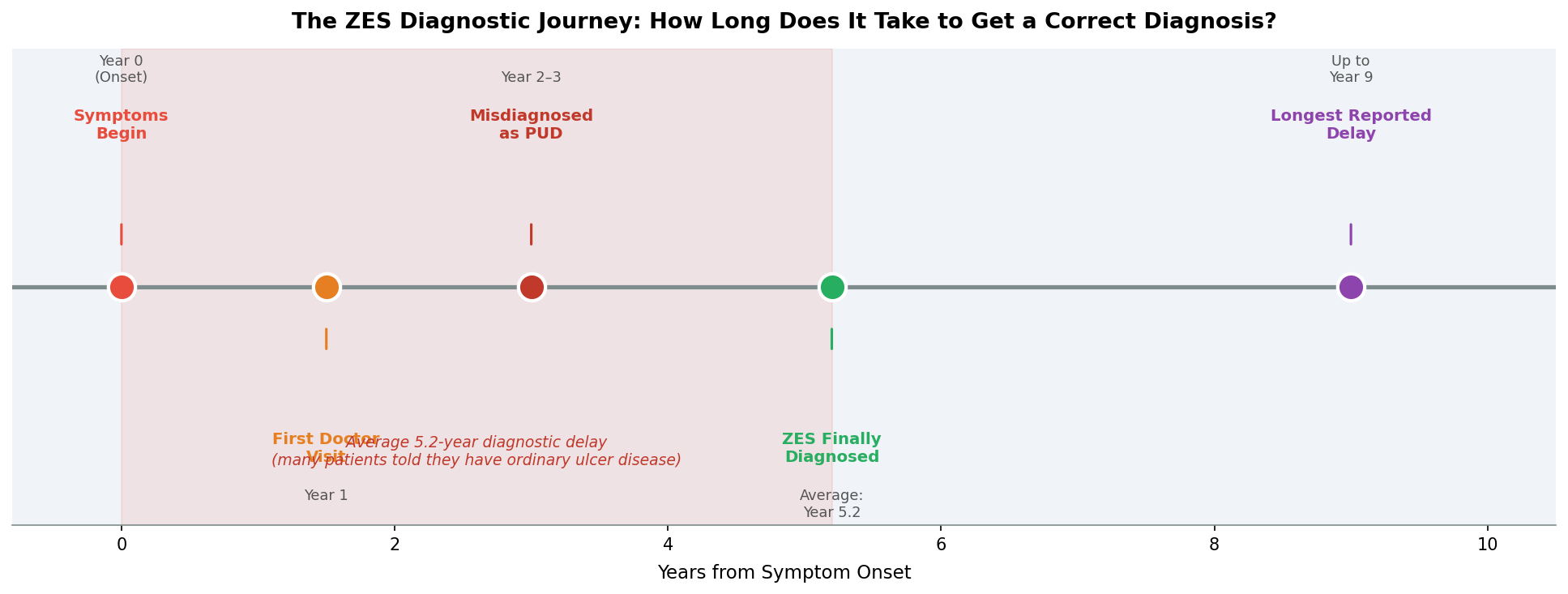
Figure 1: Symptom frequencies in ZES patients from a large NIH prospective study of 261 patients. Abdominal pain and diarrhoea dominate, but the overlap with common ulcer symptoms explains the high misdiagnosis rate.
Abdominal pain and heartburn are present in the vast majority of ZES patients. Nausea and vomiting are common. On their own, these symptoms point directly to ordinary peptic ulcer disease (the much more common condition caused by Helicobacter pylori bacteria or painkiller use).
But there are three features that, in combination, should alert both patient and doctor that something more unusual may be happening:
- Pain and diarrhoea affects 55% of ZES patients, far more than in ordinary peptic ulcer disease, where diarrhoea is unusual
- Ulcers that return quickly after treatment ends, or that fail to heal on standard doses of acid-blocking medication
- Ulcers appearing in unusual locations, deeper in the small intestine than standard ulcers typically reach
Weight loss, fatigue, and nausea occur in more severe or longstanding cases. Up to 29% of ZES patients have no visible ulcer at the time of diagnosis at all, making the condition even harder to pin down.
Why the Stomach Goes into Overdrive: The Biology Behind ZES
To understand why ZES causes such extreme symptoms, it helps to understand how stomach acid is normally controlled.
After a meal, cells in the stomach wall release gastrin into the bloodstream. Gastrin travels to acid-producing cells (called parietal cells) and tells them to secrete hydrochloric acid. Once the stomach becomes acidic enough, the gastrin signal switches off; this is a self-regulating loop that keeps acid at useful but not damaging levels.
In ZES, the gastrinoma tumour lives outside the stomach, usually in the duodenum (70 to 90% of cases) or the pancreas (10 to 30%). Because the tumour is not subject to the stomach's normal feedback mechanism, it secretes gastrin continuously, around the clock, regardless of whether a person is eating or fasting.
The consequences cascade through the digestive system:
- Parietal cells in the stomach receive a relentless acid-production signal
- Over time, the stomach physically grows more acid-producing tissue
- The massive acid load overwhelms the protective mucous lining of the gut, causing ulcers
- Excess acid flooding into the small intestine inactivates the pancreatic enzymes needed for digestion, causing malabsorption and chronic diarrhoea
- Acid washing back up into the oesophagus causes severe reflux and, in some patients, oesophageal damage
Approximately 60% of gastrinomas are malignant (cancerous). Many grow slowly, but the tumour is still the primary threat to life.
About 20 to 30% of ZES cases are linked to an inherited condition called Multiple Endocrine Neoplasia Type 1 (MEN1), in which tumours form in multiple hormone-producing glands. The remainder are sporadic, with no identifiable inherited cause.
Why ZES Gets Mistaken for Ordinary Ulcers: Year After Year
The diagnostic delay in ZES is striking. The average time from first symptoms to correct diagnosis is five to six years. In some series, patients have lived with symptoms for a median of nine years before anyone made the right call. And the first correct diagnosis is made by the referring doctor in only 3% of cases.
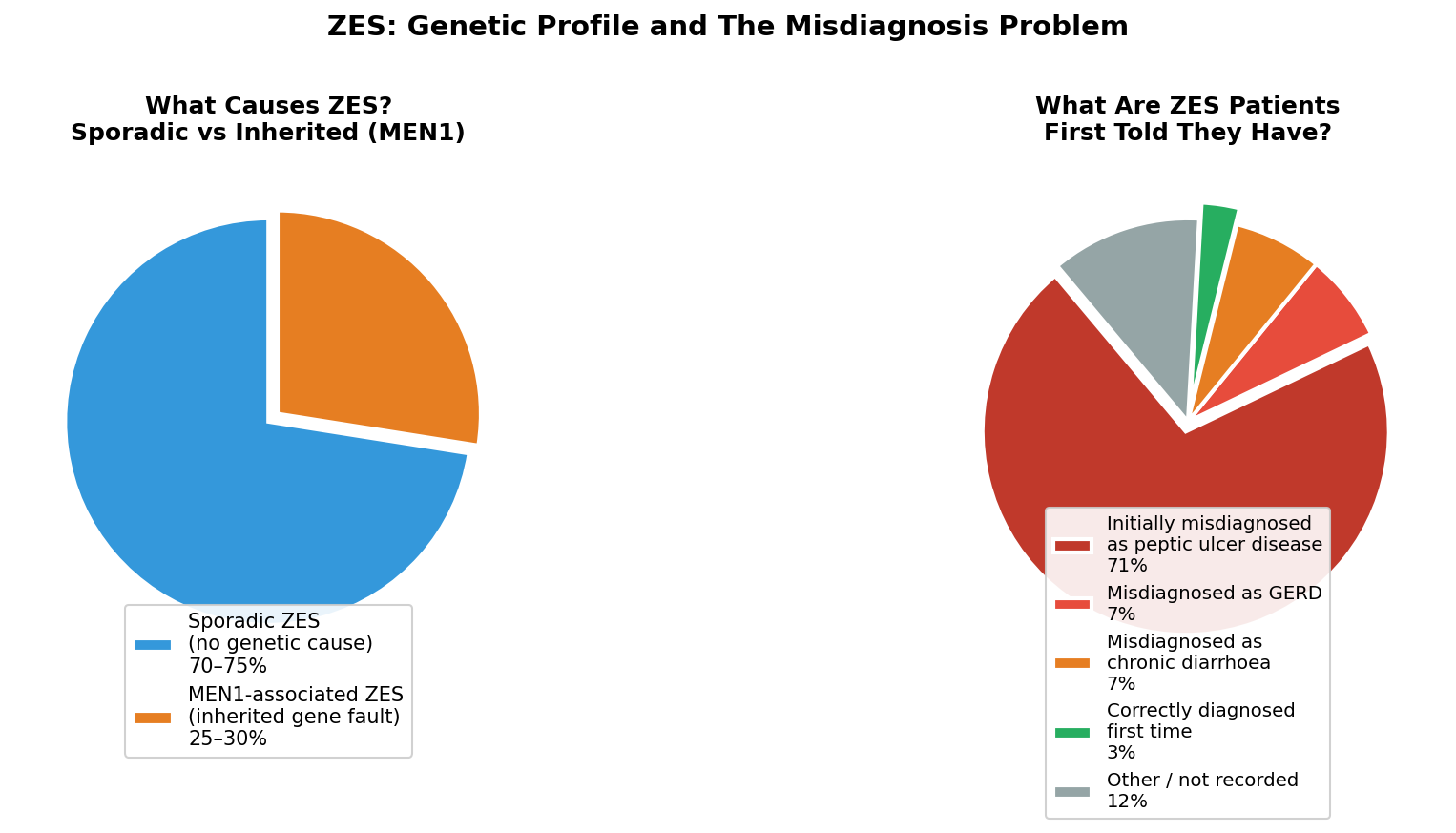 Figure 2: This timeline illustrates how ZES typically progresses from early symptoms through misdiagnosis phases to eventual correct diagnosis. The average diagnostic window spans five to six years, during which patients cycle through standard ulcer treatments without resolution.
Why does this happen? Several forces work together to obscure the diagnosis:
ZES is 1,000 times rarer than ordinary peptic ulcer disease. Doctors are trained to think first of common conditions, and appropriately so. When a patient presents with stomach pain and a gastric ulcer, the overwhelming probability is H. pylori infection or NSAID use. Both can be confirmed quickly and treated effectively.
Acid-blocking drugs (PPIs) partially relieve ZES symptoms. Medications like omeprazole reduce acid production and temporarily ease pain, making patients and doctors feel the problem is under control. The underlying tumour continues to grow undetected.
The most sensitive diagnostic blood test is easily confused. Fasting serum gastrin (the hormone level that is elevated in ZES) is also raised by PPI use, H. pylori infection, kidney disease, and several other common conditions. Around two-thirds of ZES patients have gastrin levels that overlap with people who do not have ZES at all, meaning a moderately elevated gastrin reading alone proves nothing.
Ironically, the widespread use of PPIs has made the diagnostic problem worse. PPIs are effective at suppressing symptoms, but they also raise gastrin levels in people who do not have ZES. A doctor looking at a mildly elevated gastrin in a patient on omeprazole is likely to attribute it to the drug rather than a tumour.
The Red Flags That Should Prompt Further Investigation
Certain patterns, taken together, should prompt a doctor to investigate ZES rather than continuing to treat presumed ordinary peptic ulcer disease:
- Peptic ulcers with no identifiable cause (no H. pylori, no NSAID use)
- Ulcers that recur quickly after stopping treatment, or that fail to heal with standard doses
- Ulcers in unusual locations: the distal duodenum or jejunum (further into the small intestine than typical)
- Multiple ulcers appearing simultaneously
- Peptic ulcer disease occurring alongside chronic diarrhoea (a highly specific combination)
- Diarrhoea that improves when acid-suppressing medication is increased
- Peptic ulcers occurring with kidney stones (nephrolithiasis) or high blood calcium (hypercalcaemia), which can signal the MEN1 syndrome
- Severe or rapidly progressing gastro-oesophageal reflux disease that does not respond to standard treatment
How Doctors Confirm the Diagnosis
Distinguishing ZES from ordinary peptic ulcer disease requires a stepwise series of tests, each building on the last.
Step 1: Fasting serum gastrin (blood test). The first step is measuring gastrin levels in the blood after an overnight fast, ideally after stopping PPIs for at least a week under medical supervision. A gastrin level more than ten times the upper limit of normal, combined with a confirmed acidic stomach (pH of 2 or below), is highly suspicious for ZES. A normal result essentially rules ZES out; only 0.3 to 3% of ZES patients have normal fasting gastrin.
Step 2: Secretin stimulation test (confirmatory). This is the gold-standard test for confirming ZES. A drug called secretin is injected into a vein, and gastrin levels are measured at intervals over the next 30 minutes. In healthy people and in those with ordinary ulcers, secretin suppresses gastrin. In ZES, the opposite happens: gastrin surges. A rise of 120 pg/mL or more is diagnostic, with 94% sensitivity and 100% specificity in NIH prospective studies. Despite its reliability, fewer than 5% of ZES cases diagnosed between 2013 and 2024 used this test, a gap driven by limited access to secretin, the complexity of stopping PPIs safely, and the absence of acid measurement facilities in many hospitals.
Step 3: Endoscopy. A camera passed through the mouth into the stomach and upper intestine reveals characteristic findings in ZES that ordinary peptic ulcer disease does not produce like multiple ulcers in 75%, and ulcers in the third portion of the duodenum in 14% (a location almost never seen in ordinary PUD).
Step 4: Tumour localisation imaging. Once biochemical tests confirm ZES, the next challenge is finding the tumour. Gastrinomas are typically smaller than 1 cm in diameter, making them difficult to detect with standard CT or MRI scans (which find only 30 to 50% of small gastrinomas). Newer imaging technology, particularly 68Ga-DOTATATE PET/CT, uses a radioactive tracer that binds to receptors on gastrinoma cells, lighting up tumours with superior sensitivity. Endoscopic ultrasound, in which a miniaturised ultrasound probe is passed into the gut, is particularly effective for small lesions close to the pancreas.
Treatment: Controlling the Acid, Removing the Tumour
Treatment in ZES has two distinct goals that must be pursued simultaneously: suppress the excess acid to protect the gut, and address the tumour itself.
Proton pump inhibitors (PPIs): the acid-control cornerstone. PPIs block the final step in stomach acid production. In ZES, they must be used at doses far higher than for ordinary ulcers. Where a standard omeprazole dose for a common ulcer is 20 mg once daily, ZES patients may require 80 to 240 mg of pantoprazole per day in divided doses. The treatment target is to reduce acid output below 10 milliequivalents per hour (or below 5 in patients with oesophageal disease). Modern PPIs achieve this in virtually all ZES patients, and long-term use has been shown safe and effective for 15 years or more in this population. Before PPIs became available in the late 1980s, ZES often required total removal of the stomach. That surgery is now essentially obsolete.
Surgery: the only curative option. For patients without evidence of spread to the liver, surgical exploration to find and remove the gastrinoma is the recommended approach. Immediate biochemical cure (confirmed by gastrin levels returning to normal after surgery) is achieved in roughly 44% of sporadic ZES patients after surgery and reoperations. Long-term cure beyond six months is maintained in approximately 30% of the patients.
For MEN1-associated ZES, standard surgery rarely cures the condition because the genetic syndrome causes multiple tumours to form across the pancreas and duodenum. A more extensive operation (pancreaticoduodenectomy, sometimes called the Whipple procedure) achieves long-term cure in approximately 80% of carefully selected MEN1 patients, but carries significant surgical complexity.
When the tumour has already spread. Many ZES patients have liver metastases at the time of diagnosis. Options for advanced disease include:
- Somatostatin analogues (octreotide, lanreotide): drugs that inhibit tumour hormone secretion and stabilise tumour growth in approximately 50% of patients with malignant gastrinoma
- Targeted therapies including everolimus and sunitinib
- Liver-directed treatments such as embolisation or ablation of metastatic deposits
- Liver resection in selected patients (5-year survival of 60 to 80% following complete resection)
- Cytoreductive surgery to reduce tumour bulk even without achieving a complete cure
- Chemotherapy for higher-grade tumours
Prognosis: What to Expect
The long-term picture in ZES is nuanced, and better than many patients initially fear, particularly when caught before spreading to the liver.
The data show a counterintuitive pattern: MEN1-associated ZES, despite being a genetic syndrome, carries better long-term outcomes than sporadic ZES. Patients with MEN1 tend to be diagnosed younger often through family surveillance programmes that catch tumours when they are smaller and have not yet spread.
The primary driver of death in ZES is no longer acid-related disease; PPIs now control that effectively in virtually all patients. The primary threat is tumour spread, particularly to the liver. Patients whose gastrinoma has not reached the liver at diagnosis have markedly better outcomes than those in whom metastatic liver disease is already present.
What this means in practice: catching ZES before widespread metastatic disease develops is the single most impactful thing that can happen for a patient's prognosis. This is why the five-year diagnostic delay is not just frustrating; it is clinically consequential.
What This Means for You
If you or someone close to you has been treated repeatedly for peptic ulcers without a lasting response, it is worth knowing the warning signs that distinguish ZES from ordinary ulcer disease. No single symptom is definitive, but the combination of recurring ulcers, chronic diarrhoea, and failure to respond to standard treatment deserves a thorough evaluation.
A blood test for gastrin levels is a straightforward starting point. If that test is elevated, the secretin stimulation test can confirm or rule out ZES with very high accuracy. An endoscopy revealing thickened stomach folds and ulcers in unusual locations adds important evidence. These are not esoteric or difficult investigations; they simply require a clinician to consider ZES as a possibility.
ZES is rare. But its rarity is precisely the reason it gets missed, and missing it has real consequences. The tumour keeps growing while symptoms are managed with medication, until the window for a curative surgical outcome may narrow.
The key message from all available evidence is this: early, accurate diagnosis transforms outcomes. The diagnostic tools exist. The treatments work. The challenge is making sure that patients with the right pattern of symptoms are investigated before years have passed.
Further Reading
Understanding Zollinger-Ellison Syndrome
- Zollinger-Ellison Syndrome Overview: NIDDK (NIH)
- Zollinger-Ellison Syndrome Symptoms and Causes: Mayo Clinic
- Zollinger-Ellison Syndrome: Cleveland Clinic
- Zollinger-Ellison Syndrome: Johns Hopkins Medicine
Diagnostic Methods
- Zollinger-Ellison Syndrome Diagnosis and Treatment: Mayo Clinic
- Gastrinoma: StatPearls (NCBI Bookshelf)
Peptic Ulcer Disease and H. Pylori
MEN1 and Genetic Syndromes
References/Helpful Resources
- Aamar A, Madhani K, Virk H, Butt Z. Zollinger-Ellison Syndrome: A Rare Case of Chronic Diarrhea. Gastroenterol Res [Internet]. 2016 [cited 2026 July 29]; 9(6):103–4. Available from: http://www.gastrores.org/index.php/Gastrores/article/view/734.
- Xie X, Ren K, Zhou Z, Dang C, Zhang H. The global, regional and national burden of peptic ulcer disease from 1990 to 2019: a population-based study. BMC Gastroenterol [Internet]. 2022 [cited 2026 July 29]; 22(1):58. Available from: https://bmcgastroenterol.biomedcentral.com/articles/10.1186/s12876-022-02130-2.
- Roy PK, Venzon DJ, Shojamanesh H, Abou-Saif A, Peghini P, Doppman JL, et al. Zollinger-Ellison syndrome. Clinical presentation in 261 patients. Medicine (Baltimore). 2000; 79(6):379–411.Available from: https://pubmed.ncbi.nlm.nih.gov/11144036/
- Sarkeshikian SS, Ghadir MR. A 41-Year-Old Man with Two Types of Metachronous Peptic Ulcer Complication due to Zollinger-Ellison Syndrome—Regression of Pancreatic Primary after Chemoembolization of Hepatic Metastases: A Case Report. Case Reports in Medicine [Internet]. 2011 [cited 2026 July 29]; 2011:1–5. Available from: http://www.hindawi.com/journals/crim/2011/156937/.
- Helbing A, Menon G, Karanchi H. Gastrinoma. In: StatPearls [Internet]. Treasure Island (FL): StatPearls Publishing; 2026 [cited 2026 July 29]. Available from: http://www.ncbi.nlm.nih.gov/books/NBK441842/.
- Gibril F, Jensen RT. Zollinger-Ellison syndrome revisited: Diagnosis, biologic markers, associated inherited disorders, and acid hypersecretion. Curr Gastroenterol Rep [Internet]. 2004 [cited 2026 July 29]; 6(6):454–63. Available from: http://link.springer.com/10.1007/s11894-004-0067-5.
- Jensen RT, Ramos-Alvarez I, Norton JA. Current Medical Controversies in Zollinger–Ellison Syndrome. Biomedicines [Internet]. 2025 [cited 2026 July 30]; 13(12):3051. Available from: https://www.ncbi.nlm.nih.gov/pmc/articles/PMC12730841/.
- Shah I, Vyas N, Kadkhodayan KS. Zollinger Ellison Syndrome in a Patient with Multiple Endocrine Neoplasia Type 1: A Classic Presentation. Case Reports in Gastrointestinal Medicine [Internet]. 2019 [cited 2026 July 29]; 2019:1–4. Available from: https://www.hindawi.com/journals/crigm/2019/9605769/.
- Ito T, Igarashi H, Jensen RT. Zollinger-Ellison syndrome: Recent advances and controversies. Curr Opin Gastroenterol [Internet]. 2013 [cited 2026 July 30]; 29(6):650–61. Available from: https://www.ncbi.nlm.nih.gov/pmc/articles/PMC5555311/.
- Grobmyer SR, Vogel SB, McGuigan JE, Copeland EM, Hochwald SN. Reoperative Surgery in Sporadic Zollinger-Ellison Syndrome: Longterm Results. Journal of the American College of Surgeons [Internet]. 2009 [cited 2026 July 29]; 208(5):718–22. Available from: https://journals.lww.com/00019464-200905000-00014.
- Kong W, Albers MB, Manoharan J, Goebel JN, Kann PH, Jesinghaus M, et al. Pancreaticoduodenectomy Is the Best Surgical Procedure for Zollinger–Ellison Syndrome Associated with Multiple Endocrine Neoplasia Type 1. Cancers [Internet]. 2022 [cited 2026 July 30]; 14(8):1928. Available from: https://www.mdpi.com/2072-6694/14/8/1928.
