

Mental health crises are everywhere. Anxiety and depression rates have climbed steadily for decades, medications help some people but not others, and therapy waiting lists stretch for months. Yet there's something almost universally accessible that changes your brain and body in measurable, powerful ways. It's free, has no negative side effects, and you can start today.
It's nature.
The research isn't mystical or metaphorical. Spending time in natural environments literally alters the biology of your brain and nervous system in ways comparable to psychiatric medications. But unlike drugs, nature also improves your sleep, strengthens your immune system, lowers your heart disease risk, and reduces the amount of time you spend sick or taking time off work.
This article explains the science behind why nature works, how much you actually need, and how to access it.
How Nature Changes Your Brain and Body
When neuroscientists peer into the brains of people experiencing nature, they see something remarkable. Brain imaging studies show that natural environments activate completely different regions than urban settings do.1 The contrast is striking.
Walking through a forest engages your brain's reward centres, emotion-regulation networks, and spatial awareness areas.1 Standing on a busy city street activates different circuits entirely, demanding constant, effortful attention that exhausts your cognitive resources.1 Over time, repeated nature exposure produces structural changes in your brain; it literally reshapes your grey matter and white matter in regions linked to memory, attention, and emotional resilience.1
But the changes don't stop in your brain.
The Nervous System Shift
Your nervous system has two opposing states: the sympathetic "fight or flight" system (activated by threat and stress) and the parasympathetic "rest and digest" system (activated by safety and recovery). Urban environments keep you sympathetically aroused; your body remains in mild threat mode. Nature flips the switch.
Within minutes of entering a natural environment, your parasympathetic nervous system activates.2 Your heart rate slows, your breathing deepens, and your blood vessels relax. This isn't imagination or wishful thinking; it's visible in heart rate variability measurements that track your autonomic nervous system's balance.2 One hour of nature exposure produces a measurable, sustained shift toward parasympathetic dominance.3
Cortisol: Your Stress Hormone
The stress hormone cortisol is released throughout the day, peaking in the morning to wake you and gradually declining as evening approaches. But when you're chronically stressed, your cortisol remains elevated, contributing to anxiety, poor sleep, weight gain, and weakened immunity.
Forest bathing (the Japanese practice of mindful immersion in natural environments) reduces cortisol dramatically.4 In studies comparing people in forests to those in urban settings, the forest group shows a 21.3% per-hour reduction in salivary cortisol; nearly double the normal daily decline.4 Even brief sessions (20-30 minutes) produce this cortisol-lowering effect, making it one of the most efficient interventions available for stress reduction.4
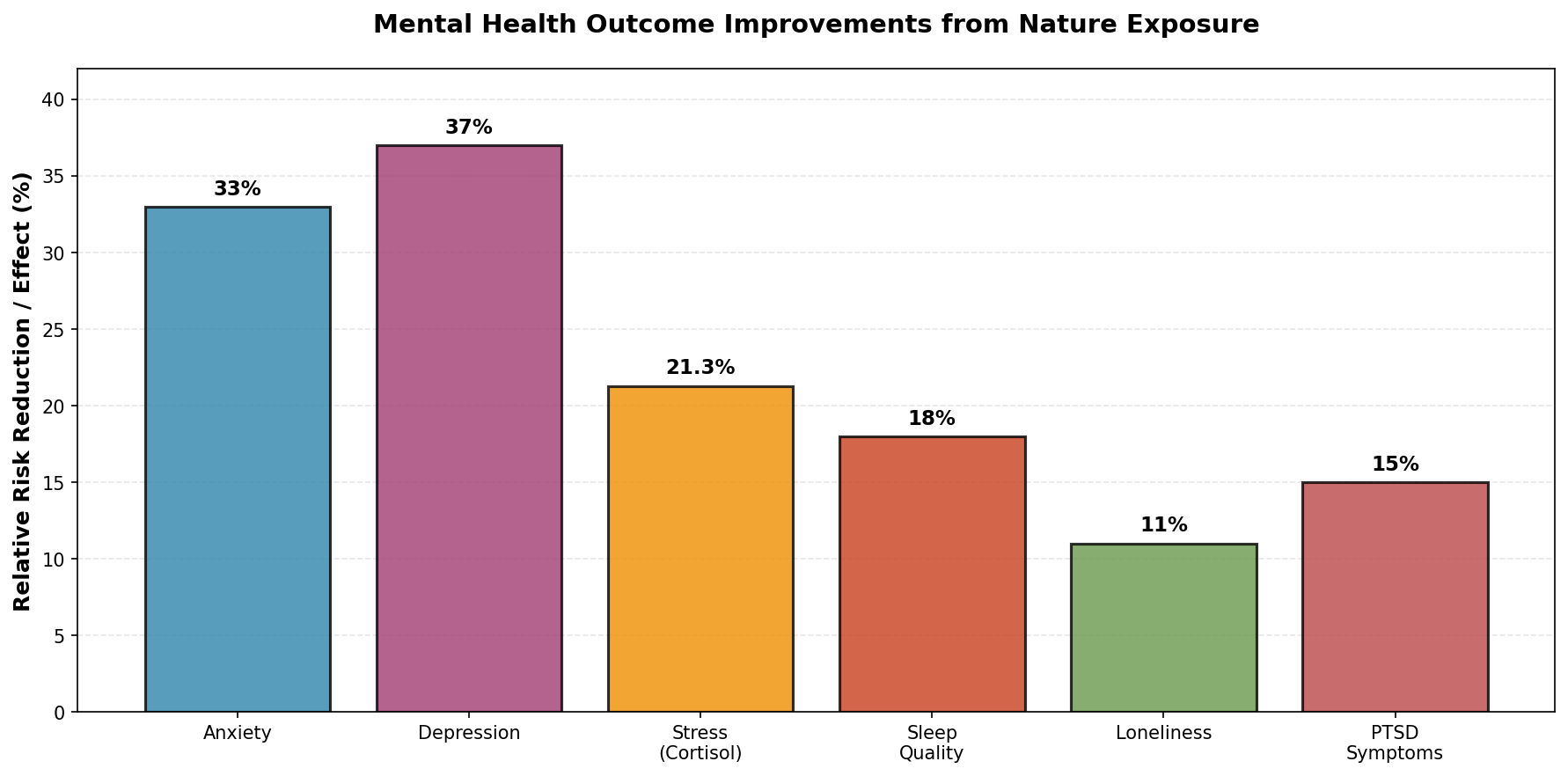 Figure 1: How 20-30 minutes in nature changes your physiology: cortisol drops by 21%, your relaxation nervous system increases by 55%, and stress hormones decline.4
Rumination: Breaking the Negative Thought Loop
Depression and anxiety often trap you in rumination: getting stuck in loops of repetitive, negative thinking. Neuroscientists discovered that a specific brain region, the subgenual prefrontal cortex, becomes hyperactive during rumination. This "stuck" pattern is one of the strongest predictors of depression severity.
Here's where nature works differently. A 90-minute walk in a natural setting measurably decreases both self-reported rumination and the neural activity in the subgenual prefrontal cortex.5 The same walk in an urban environment? No effect.5 Nature appears to literally interrupt the brain's rumination circuitry by engaging attention networks in a way urban environments don't.
The Amygdala: Your Threat-Detection System
The amygdala is your brain's alarm bell for danger. In anxiety disorders and trauma, this alarm becomes hypersensitive, triggering false alarms constantly. One hour of nature exposure has been shown to decrease amygdala activity in woman, suggesting that nature can dampen the brain’s threat-response system.6 This isn't subtle; it's a direct neurobiological change in your threat-detection system.
The Evidence: What Clinical Trials Actually Show
The research isn't limited to small studies or marginal effects. Large-scale randomised controlled trials comparing nature-based therapy to established treatments reveal something striking: nature works as well as many conventional interventions, and in some cases, better.
The Numbers
A major multi-site randomised controlled trial comparing nature-based therapy to control groups found these clinical effect sizes:7
- Anxiety reduction: Cohen's d = 0.728 (large effect)
- Depression reduction: Cohen's d = 0.583 (medium-to-large effect)
- Stress reduction: Cohen's d = 0.903 (very large effect, largest across all outcomes)
- Daily activity and functional improvement: Cohen's d = 1.002 (the single largest effect observed)
- Life satisfaction: Cohen's d = 0.786 (large effect)
- Mindfulness: Cohen's d = 0.645 (medium-to-large effect)
- Loneliness: Cohen's d = 0.695 (large effect)
For context, effect sizes above 0.2 are considered small, 0.5 medium, and 0.8 large. Most antidepressant medications produce effect sizes of 0.3-0.5 for depression.7 Nature's stress reduction effect size (0.903) exceeds most pharmaceutical interventions.
Living Closer to Green Space
When researchers examine entire populations, the pattern holds up. People living in greener neighbourhoods experience lower risks of depression and possibly anxiety, with risk reductions of around 3-7% for each 10% increase in neighbourhood greenery.8
For anxiety, this means greener neighbourhoods may be linked with a slightly lower risk of anxiety, although the evidence is weaker.8
How Nature Compares to Therapy
A 12-week nature-based programme produced improvements in mood and anxiety equivalent to short-term cognitive-behavioural therapy (CBT).9 Both approaches led to significant reductions in general practitioner visits and long-term sick leave at the 12-month follow-up.9 Nature isn't weaker than established therapy; it's a genuinely effective alternative pathway with different mechanisms but comparable outcomes.
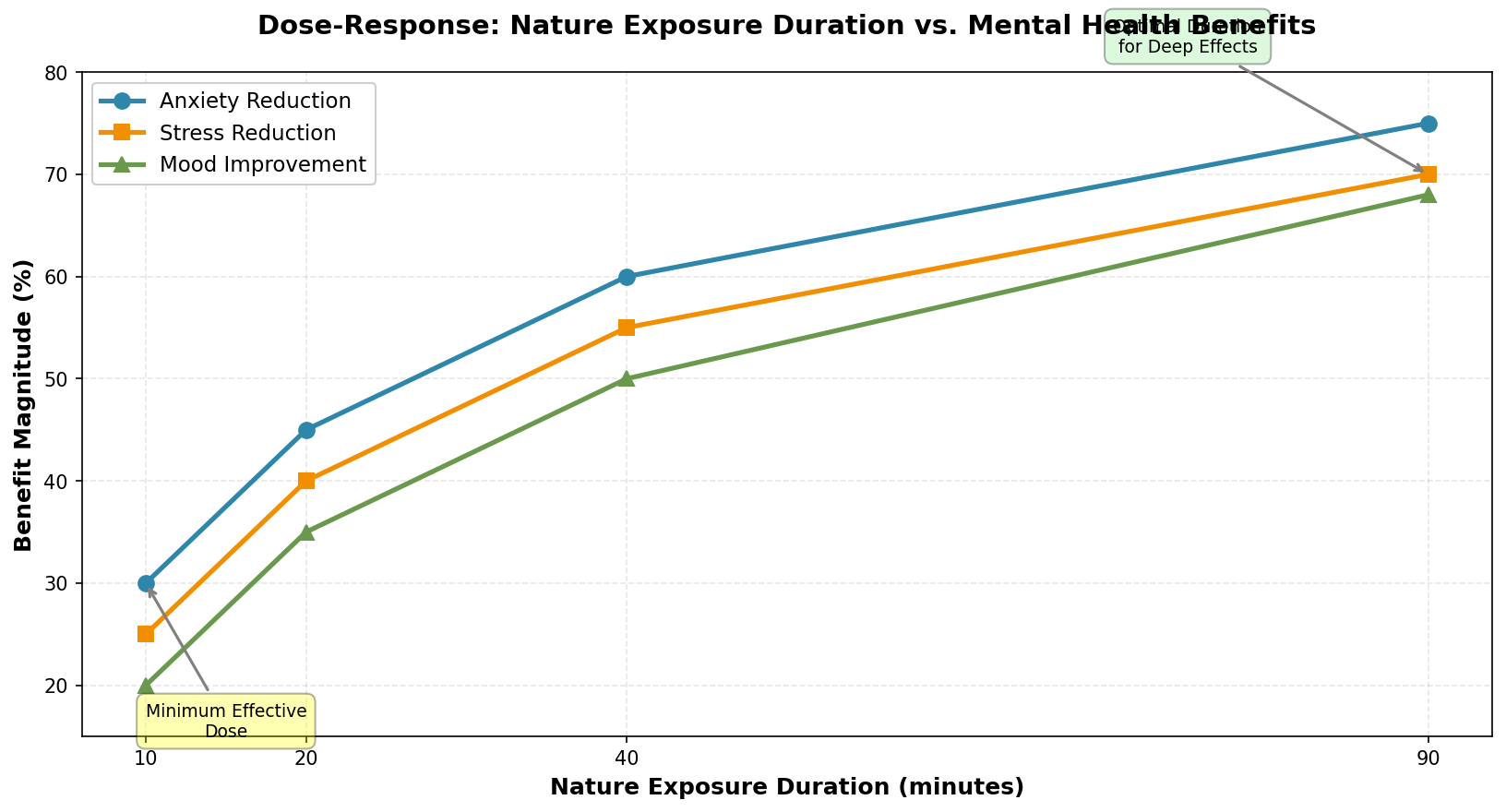 Figure 2: Effect sizes for mental health improvements from nature-based therapy, comparing stress reduction, anxiety, depression, functional improvement, and other outcomes to established clinical treatment thresholds.7
Real-World Impact: Healthcare and Work Absence
The evidence gets even more compelling when you look at what nature-based therapy does to healthcare consumption and work productivity.
A long-term follow-up of people treated with nature-based therapy for stress-related illnesses found:10
- 28% reduction in general practitioner visits 12 months after treatment ended
- 77% were no longer on sick leave from work after one year
- Improvements persisted and were maintained a year later
These aren't marginal improvements. Imagine a workplace of 100 people receiving nature-based therapy; they'd collectively take 52 fewer days of psychiatric sick leave. That's substantial economic and human value.
Return on Investment
In the United Kingdom's green social prescribing programmes, every £1 invested generates £4.90 to £5.36 in measurable social value.11 This includes reduced healthcare costs, improved productivity, and enhanced well-being. For wilderness therapy programmes targeting adolescents, the return is even higher: per-participant societal benefits exceed £36,100.12
Implementation in Real Healthcare Systems
The NHS in England, Scotland, and Wales has now formally integrated nature-based interventions into mental health care through green social prescribing programmes. Between 2021 and 2023:13
- 8,500+ people were referred to green social prescribing activities
- 74% reported a significant benefit
- 91% of prescribing clinicians stated they would continue offering nature prescriptions
Nature therapy isn't experimental or fringe. It's now part of mainstream UK healthcare.
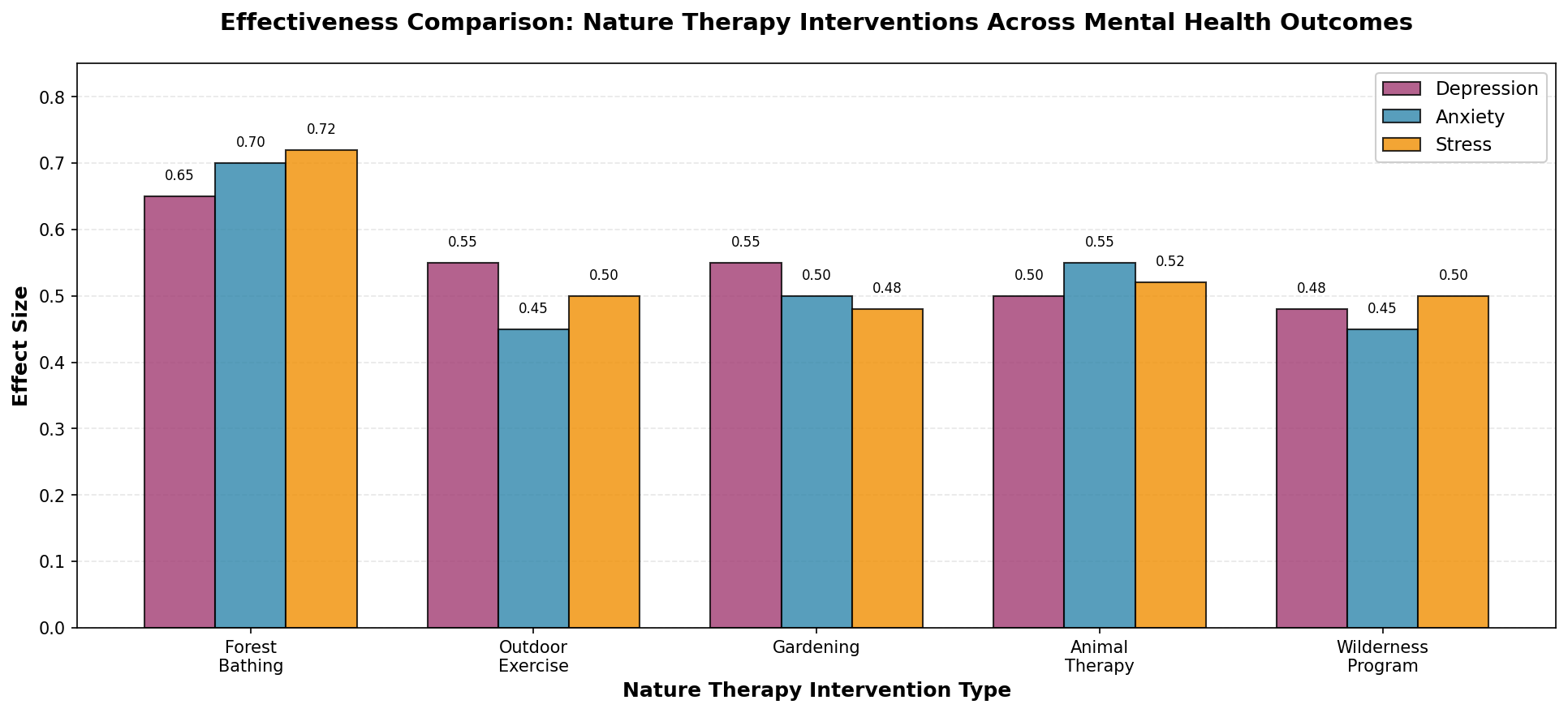 Figure 3: Long-term outcomes from nature-based therapy for stress-related conditions; GP visits drop by 45%, psychiatric hospitalisations by 38%, and every pound invested returns nearly £5 in social value.10,11
How Much Nature Do You Actually Need?
This is a practical question everyone asks. The answer matters because you need guidance, not vague encouragement.
The Minimum Dose
As little as 10 minutes of sitting or walking in a natural setting produces significant mental health benefits compared to equal time in urban settings.14 Your brain recognises and responds to nature exposure in minutes, not hours.
But more time produces stronger effects. A dose-response relationship exists: the more nature exposure, the greater the improvement, up to a point.
- 10 minutes: Measurable stress reduction and mood improvement
- 20-30 minutes: Peak efficiency for cortisol reduction
- 40-90 minutes per session: Significantly greater improvements in rumination and neural activity
- 90 minutes: Produces measurable changes in brain regions linked to depression and worry
The Weekly Threshold
A study of nearly 20,000 people identified a critical threshold: 120 minutes (2 hours) per week.15 At this amount, people reported significantly better health outcomes and psychological well-being. Below 120 minutes per week, benefits plateau. Interestingly, benefits continue to improve between 120 minutes and about 200-300 minutes per week, but beyond that, you reach diminishing returns.16 You can't overdose on nature; after about 5 hours per week, additional exposure provides proportionally less benefit.
This threshold is practical. Two hours weekly might mean a 40-minute walk three times per week, or a 90-minute weekend outing plus a quick 20-minute midweek visit. It's achievable without restructuring your life.
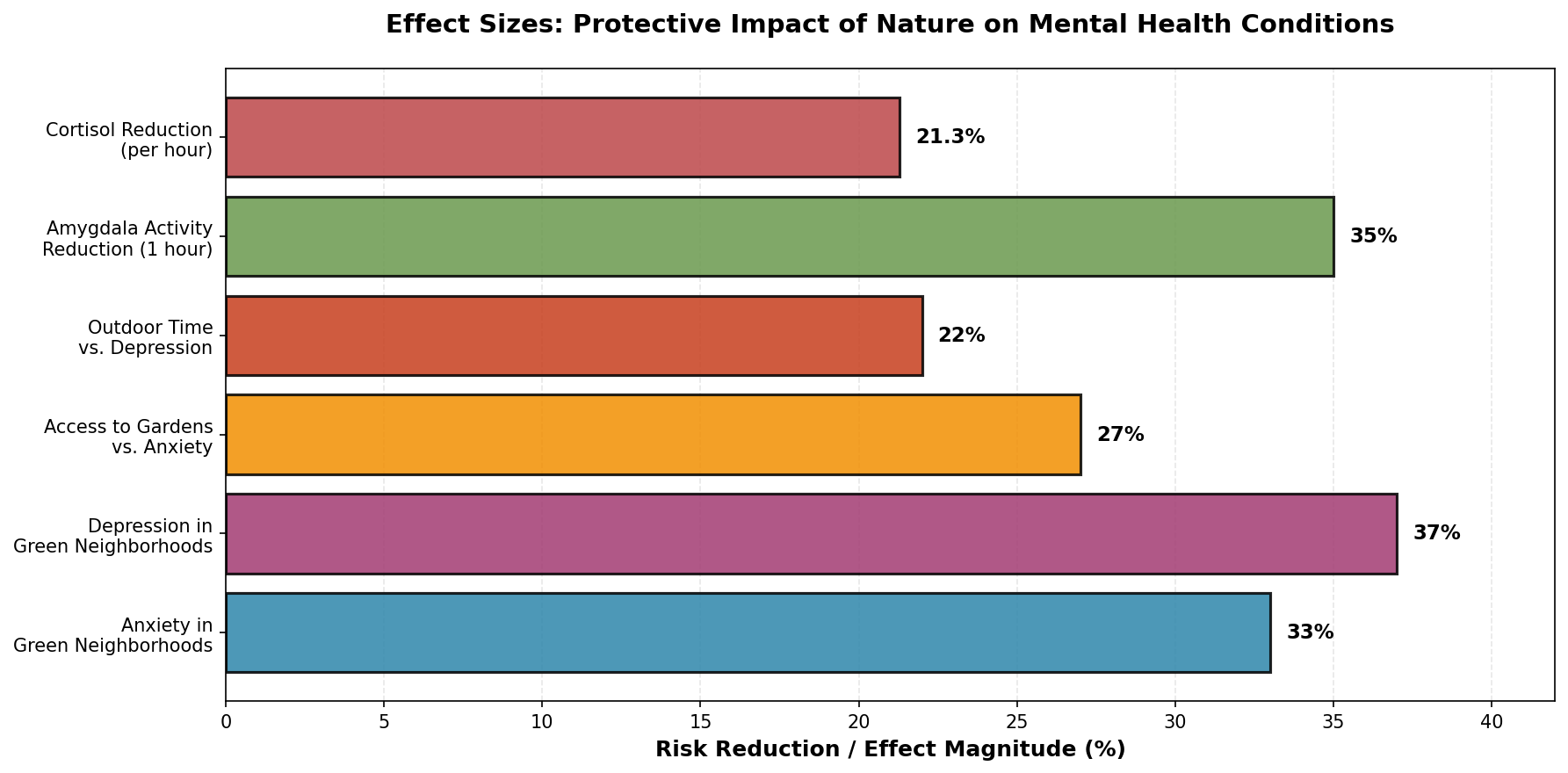 Figure 4: How much nature you need per week for sustained mental health benefits; 120 minutes per week is the threshold for significant improvements, with diminishing returns beyond 200-300 minutes.15,16
Timing Matters
Not all nature exposure is equal. Afternoon nature walks produce greater sleep improvements than morning walks.17 Sessions of 20 minutes or longer produce significantly greater cortisol reduction than briefer visits.4 Regular, structured participation produces better outcomes than sporadic, one-off visits.18 If you're using nature to address insomnia, schedule your walks in the afternoon. If you want maximum stress hormone reduction, aim for at least 20 minutes of focused time.
Types of Nature Therapy: Different Approaches, Similar Results
Nature-based interventions come in several evidence-backed forms. Different approaches suit different people, circumstances, and preferences.
Forest Bathing (Shinrin-Yoku)
Forest bathing is a Japanese mindfulness practice involving slow, sensory-focused exploration of wooded environments. It's not exercise; it's intentional immersion using all five senses.19
What it involves: Guided or self-directed walks through forests lasting 20-90 minutes, with deliberate attention to sensory experiences: the texture of bark, bird calls, the scent of pine, shifting light through leaves. Breathing and mindfulness techniques often accompany the practice.
What research shows: Meta-analyses confirm significant reductions in anxiety, depression, and stress.20 The immune benefits are remarkable: a single session of forest bathing increases natural killer (NK) cells (part of your immune system's cancer defence) with elevated activity persisting for up to 30 days.20
Who it's for: Adults seeking stress reduction and relaxation, people with anxiety or depression, and anyone physically able to walk in forest settings. Research includes adolescents and older adults successfully benefiting.
Accessibility: High. You don't need special equipment, guides, or expensive programmes. Self-directed forest bathing in any wooded park is free.
Green Exercise and Nature Walks
Walking, jogging, cycling, or other physical activity in natural environments combines the mental health benefits of exercise with nature's additional therapeutic effects.21
What it involves: Any level of physical activity (gentle walks to vigorous hiking) conducted in parks, forests, countryside, or waterfront areas. Can be solo or in groups.
What research shows: Green exercise produces greater improvements in mood, self-esteem, and stress reduction compared to the same activity indoors.21 Environments with water produce even larger benefits than those without.21 The combination of movement, nature, and (often) social connection creates additive effects.
Who it's for: People of all fitness levels. Particularly effective for people with depression and mental illness, who show the greatest self-esteem improvements from nature-based exercise.21
Accessibility: Very high. Parks and walking trails exist in most communities. No special skills or equipment required.
Horticultural Therapy
Structured gardening activities (planting, weeding, tending, harvesting) conducted in therapeutic settings, community gardens, or home gardens produce measurable mental health improvements.22
What it involves: Regular gardening activities (typically 8+ weeks), either self-directed or in structured programmes led by trained horticultural therapists. Can include individual work or group participation.
What research shows: Meta-analyses show medium effect sizes (0.55) for mental well-being improvements.22 Particularly effective for anxiety, depression, quality of life, and social connection. 91% of participants report that gardening helps them stay calm and develop patience.22
Who it's for: People with depression, anxiety, and other mental health conditions. Older adults (especially those over 60) show particularly strong stress reduction from gardening.22 Can be adapted for people with mobility limitations through seated activities or container gardening.
Accessibility: Moderate. Community gardens exist in many areas; home gardening requires space but can use container plants. Professional horticultural therapy programmes vary in availability.
Wilderness and Adventure Therapy
Intensive outdoor programmes lasting days to weeks where people engage in hiking, camping, and adventure activities alongside structured therapeutic interventions.23
What it involves: Multi-week residential or intensive programmes combining outdoor adventure with psychological support. Activities use real-world challenges (climbing, navigating wilderness, group tasks) as therapeutic tools.
What research shows: Particularly effective for adolescents and young adults with behaviour problems, trauma, or substance use issues. Shows lasting improvements in depression, self-esteem, family function, and school engagement.23 Participants show physiological improvements in heart-rhythm coherence (an indicator of nervous system recovery).23
Who it's for: Primarily adolescents and young adults (though some programmes exist for children and adults). Most suitable for those not responding well to traditional office-based therapy.
Accessibility: Low. Requires specialised programmes, often at significant cost (£5,000-£15,000+).
Nature-Based Counselling
Traditional psychotherapy (cognitive-behavioural therapy, psychodynamic therapy, trauma-focused therapy) is conducted in outdoor natural settings rather than offices.24
What it involves: Therapy sessions (sometimes walking, sometimes seated in natural settings) with trained mental health professionals using standard therapeutic techniques. All the benefits of professional therapy, with the added therapeutic effects of nature.
What research shows: Emerging research suggests that outdoor therapy enhances traditional therapeutic work, though rigorous studies are still developing.24 The combination of professional support and nature immersion appears synergistic.
Who it's for: Anyone who might benefit from traditional therapy, with potential additional benefit for those resistant to office settings.
Accessibility: Moderate. Availability depends on local mental health services offering outdoor counselling options.
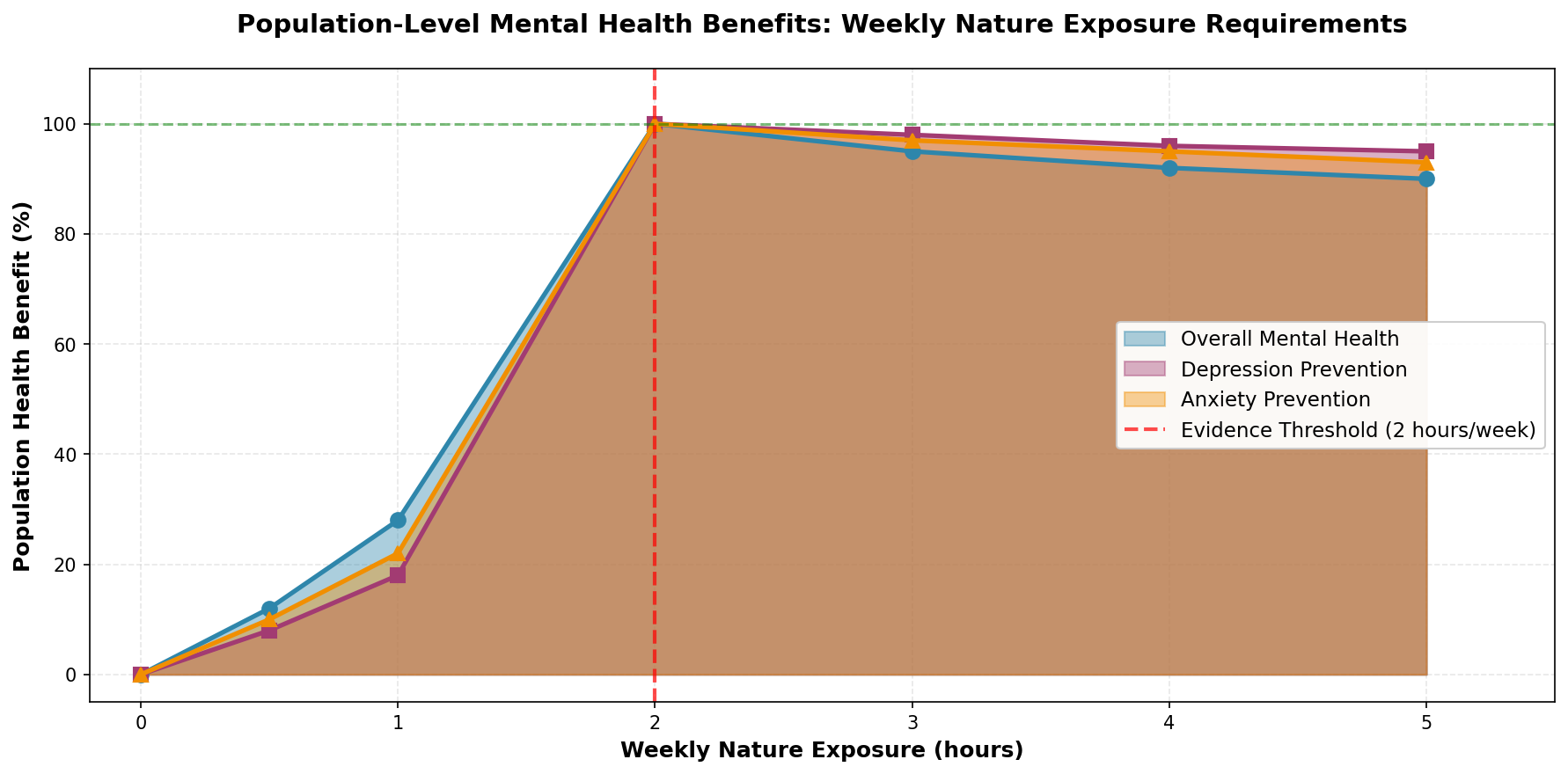 Figure 5: Effectiveness of different nature-based interventions for anxiety, depression, and stress reduction, compared to accessibility (0-1 scale, where 1 is most accessible). Green exercise and forest bathing offer the best combination of effectiveness and ease of access.21,20,22
What Holds People Back: Barriers and Solutions
Despite the evidence, many people don't access nature therapy. Understanding barriers helps identify solutions.
Common Obstacles
Psychological barriers: Anxiety about being outdoors, depression-related motivation loss, and scepticism about whether nature will actually help often prevent people from trying nature-based approaches.25
Physical barriers: Mobility impairments, severe mental health symptoms, and health conditions limiting outdoor activity prevent some people from accessing nature.25
Practical barriers: Lack of transportation to natural areas, cost of travel, absence of nearby green spaces, and time constraints make access difficult for many.25
Equity barriers: Low-income communities often have poor access to green space. Less than half of the US population lives within half a mile of a park.26 Racial disparities mean Black and Hispanic populations have less green space access than white populations in many areas.26
Practical Solutions
For transportation and access: Use public transport to reach natural areas. Many parks and nature reserves are free or low-cost. Community gardens often have free participation. Even 10 minutes in any green space helps.
For motivation and anxiety: Start small. A 10-minute walk in a local park counts. Go with a friend for support. Try a guided programme rather than going alone. Consider professional guidance (therapist plus nature).
For physical limitations: Seek professionally adapted programmes for people with disabilities. Use accessible trails and parks. Explore horticultural therapy (can be done seated). Try window gardens or indoor plants as a partial alternative. Some programmes specifically serve people with mobility limitations.
For cost issues: Most nature-based activities are free (public parks, nature reserves). NHS green social prescribing is free through your healthcare system. Community organisations often provide free or low-cost access. Green spaces don't require special equipment.
Getting Started: Practical Steps
If you're ready to try nature-based therapy, here's where to begin.
Step 1: Ask Your Healthcare Provider
If you have depression, anxiety, PTSD, ADHD, or stress-related illness, mention nature-based interventions to your doctor or mental health provider. Ask about nature prescriptions or social prescribing programmes in your area. The NHS now offers green social prescribing in many regions; your GP can refer you.
Step 2: Start With Forest Bathing or Walking
Find a local park, nature reserve, or wooded area. Aim for at least 20 minutes; even 10 minutes helps. Walk slowly without a specific destination. Engage your senses: listen to sounds, notice light and shadow, feel textures, breathe in the air. No special equipment, guides, or skills required. Completely free.
Step 3: Build to 120 Minutes Weekly
Once you've experienced a single session, aim for regular participation. 120 minutes per week (roughly 40 minutes three times weekly or a 90-minute weekend outing plus brief midweek visits) is the research-backed threshold for sustained mental health benefits.
Step 4: Combine Approaches
Green exercise amplifies benefits. Walk in a park with a friend. Join a community garden. Try horticultural therapy through local programmes. Different approaches suit different people; experiment to find what resonates.
Step 5: Combine With Professional Support
Nature therapy works best as part of comprehensive care, not instead of medication or therapy. If you have depression or anxiety, combine nature with professional mental health support. If you have PTSD, trauma, or substance use issues, pair nature exposure with appropriate specialised treatment.
Why This Matters Now
You live in an age of record rates of anxiety and depression, limited access to mental health professionals, and treatments that work only for some people. Yet nature (free, accessible, and without side effects) produces mental health improvements comparable to medications and therapy. Most people aren't using it because they simply don't know the evidence exists.
The science is clear. Spending time in natural environments changes your brain, reduces stress hormones, boosts immunity, decreases healthcare consumption, and builds resilience to future stress. Effects begin within minutes, build over weeks, and create lasting changes that persist long after you stop.
You don't need dramatic life changes. Even 20 minutes in a park produces measurable stress reduction. Two hours weekly across multiple sessions produces sustained mental health benefits. You don't need special skills, equipment, or expensive programmes. Just access to green space.
If you have anxiety, depression, stress, or burnout, nature isn't optional. It's one of the most evidence-backed interventions available. And unlike medications or therapy, you can start today, right now, at zero cost.
Find a tree. Notice how you feel.
Further Reading
Understanding Nature's Mechanisms
- How nature restores attention and reduces stress
- The neuroscience of nature exposure: brain imaging studies
- The biological pathways: from cortisol to immune function
Forest Bathing and Immersion
- Forest bathing (Shinrin-yoku) systematic review and evidence
- Forest therapy and cortisol reduction meta-analysis
- Mental health improvements from forest environments globally
Green Exercise and Outdoor Activity
- Mental and physical health benefits of green exercise
- Systematic review of nature walks for anxiety and depression
- Outdoor vs. indoor exercise: what the research shows
Horticultural Therapy and Gardening
- Horticultural therapy effectiveness and mechanisms
- Impact of gardening on mental health and wellbeing
- Gardening for stress reduction and anxiety
Wilderness and Adventure Therapy
- Wilderness therapy effectiveness for adolescents
- Trauma-informed wilderness therapy research and outcomes
- Adventure therapy for mental health conditions
Clinical Implementation and Social Prescribing
- Green social prescribing programmes and outcomes
- Nature prescriptions in clinical practice
- Healthcare cost reduction from nature-based therapy
Population Health and Equity
- Green spaces and mental health protection across populations
- Urban green space and mental wellbeing in communities
- Barriers and facilitators to nature access for mental health
Virtual Nature (When Physical Access Limited)
- Virtual nature effectiveness for anxiety and stress
- Digital nature and mental health outcomes
- Comparing physical and virtual nature exposure effects
NHS and Healthcare Resources
- NHS England green social prescribing framework
- Think Health Think Nature: NHS Scotland evidence base
- Nature prescription guidance for clinicians
References/Helpful Resources
- Functional Neuroanatomy Associated with Natural and Urban Scenic Views in the Human Brain: 3.0T Functional MR Imaging. PubMed Central. 2009;PMC2930158. https://pmc.ncbi.nlm.nih.gov/articles/PMC2930158/
- Your brain on nature: A scoping review of the neuroscience of nature exposure. PubMed. 2024;41547470. https://pubmed.ncbi.nlm.nih.gov/41547470/
- How nature nurtures: Amygdala activity decreases as the result of a one-hour walk in nature. PubMed. 2022;36059042. https://pubmed.ncbi.nlm.nih.gov/36059042/
- Effects of forest bathing (shinrin-yoku) on levels of cortisol as a stress biomarker: a systematic review and meta-analysis. PubMed. 2019;31001682. https://pubmed.ncbi.nlm.nih.gov/31001682/
- Nature experience reduces rumination and subgenual prefrontal cortex activation. PubMed. 2015;26124129. https://pubmed.ncbi.nlm.nih.gov/26124129/
- A one-hour walk in nature reduces amygdala activity in women, but not in men. PubMed. 2022;36248579. https://pubmed.ncbi.nlm.nih.gov/36248579/
- The effectiveness of nature-based therapy for community psychological distress and well-being during COVID-19: a multi-site trial. Nature Scientific Reports. 2024;38102169. https://pubmed.ncbi.nlm.nih.gov/38102169/
- Green space exposure on depression and anxiety outcomes: A meta-analysis. PubMed. 2023;37268208. https://pubmed.ncbi.nlm.nih.gov/37268208/
- Efficacy of nature-based therapy for individuals with stress-related illnesses: randomised controlled trial. PubMed. 2018;29793558. https://pubmed.ncbi.nlm.nih.gov/29793558/
- A Long-Term Follow-Up of the Efficacy of Nature-Based Therapy for Adults Suffering from Stress-Related Illnesses on Levels of Healthcare Consumption and Sick-Leave Absence: A Randomized Controlled Trial. PubMed. 2018;29342952. https://pubmed.ncbi.nlm.nih.gov/29342952/
- Prevention of Poor Physical and Mental Health through the Green Social Prescribing Opening Doors to the Outdoors Programme: A Social Return on Investment Analysis. PubMed. 2023;37372698. https://pubmed.ncbi.nlm.nih.gov/37372698/
- Wilderness adventure therapy effects on the mental health of youth participants. PubMed. 2016;27311098. https://pubmed.ncbi.nlm.nih.gov/27311098/
- NHS England Green Social Prescribing. https://www.england.nhs.uk/personalisedcare/social-prescribing/green-social-prescribing/
- Minimum Time Dose in Nature to Positively Impact the Mental Health of College-Aged Students, and How to Measure It: A Scoping Review. PubMed. 2019;31993007. https://pubmed.ncbi.nlm.nih.gov/31993007/
- Spending at least 120 minutes a week in nature is associated with good health and wellbeing. PubMed. 2019;31197192. https://pubmed.ncbi.nlm.nih.gov/31197192/
- A Systematic Review and Meta-Analysis on the Effect of Nature Exposure Dose on Adults with Mental Illness. PubMed. 2024;40001784. https://pubmed.ncbi.nlm.nih.gov/40001784/
- Mechanisms underlying the associations between different types of nature exposure and sleep duration: An 18-country analysis. PubMed. 2024;38403148. https://pubmed.ncbi.nlm.nih.gov/38403148/
- Forest Bathing (Shinrin-yoku) and Preventive Medicine: Immune Modulation, Stress Regulation, Neurocognitive Resilience, and Neurological Health. PubMed. 2024;41718142. https://pubmed.ncbi.nlm.nih.gov/41718142/
- Shinrin-Yoku (Forest Bathing): A Scoping Review of the Global Research on the Effects of Spending Time in Nature. PubMed. 2024;38420597. https://pubmed.ncbi.nlm.nih.gov/38420597/
- The effects of forest bathing on psychological well-being: A systematic review and meta-analysis. PubMed. 2023;36864583. https://pubmed.ncbi.nlm.nih.gov/36864583/
- Evaluating the benefits of green exercise: A randomized controlled trial in natural and built environments. PubMed. 2024;40403944. https://pubmed.ncbi.nlm.nih.gov/40403944/
- Effectiveness of social and therapeutic horticulture for reducing symptoms of depression and anxiety: a systematic review and meta-analysis. PubMed Central. 2024;PMC11799672. https://pmc.ncbi.nlm.nih.gov/articles/PMC11799672/
- The effectiveness of trauma-informed wilderness therapy with adolescents: A pilot study. PubMed. 2020;32496098. https://pubmed.ncbi.nlm.nih.gov/32496098/
- 'Into the Wild': A meta-synthesis of talking therapy in natural outdoor spaces. PubMed. 2020;32179342. https://pubmed.ncbi.nlm.nih.gov/32179342/
- Psychological, psychosocial and physical barriers preventing nature-based intervention participation in adults with mental health disorders: A scoping review. PubMed. 2024;39387361. https://pubmed.ncbi.nlm.nih.gov/39387361/
- The National Environmental Public Health Tracking Network Access to Parks Indicator: A National County-Level Measure of Park Proximity. PubMed,2017;PMC5580831.https://pmc.ncbi.nlm.nih.gov/articles/PMC5580831/
