

If you've ever wondered why your doctor's screening recommendations seem to shift every few years, you're not alone. Last decade, age 50 was the magic number for colorectal cancer screening; now it's 45. Mammograms were recommended against for women in their 40s, then cautiously reconsidered, then recommended again. Prostate cancer screening went from standard practice to "not recommended," then to "discuss it individually."
These changes aren't random fluctuations driven by medical trends or corporate interests. They're the result of a rigorous, methodical process that's far more deliberate than most people realise. Understanding how medical guidelines actually evolve will help you see that changing recommendations reflect careful scientific review and expert consensus, not medical indecision.
Why Medical Evidence Keeps Changing
Medical guidelines change for three fundamental reasons: accumulating research evidence from large clinical trials, technological breakthroughs that make new detection methods possible, and epidemiological shifts showing disease patterns are changing.
Take colorectal cancer as an example. In 2018, the American Cancer Society lowered the recommended screening age from 50 to 45 years. This wasn't a caprice; it reflected a concerning epidemiological trend. Colorectal cancer rates in adults under 50 are rising, and studies have shown that early detection in younger adults improves outcomes and reduces mortality. The evidence was compelling enough that the US Preventive Services Task Force followed with the same recommendation just two years later.
Similarly, lung cancer screening guidelines shifted dramatically after the National Lung Screening Trial published its results. When researchers compared low-dose CT scans with traditional chest X-rays for high-risk smokers, CT scans caught cancers earlier, prevented more deaths, and justified the risks of the screening. This evidence became so robust that in 2021, the USPSTF didn't just recommend screening; they actually lowered both the age threshold (from 55 to 50) and the smoking history requirement (from 30+ pack-years to 20+ pack-years), meaning more people became eligible.
Another driver is technology itself. Cervical cancer screening has transformed over recent decades as new tests have become available. The traditional Pap smear, while revolutionary when introduced, is being replaced by human papillomavirus (HPV) testing, which is more accurate at identifying women who truly need follow-up. Because HPV-vaccinated populations have lower cervical disease rates, screening strategies need adjustment: screening can now start later (age 25 instead of 21) and happen less frequently (every 3-5 years instead of 1-2 years). The vaccination itself changed the disease landscape, requiring guideline adjustments.
How Medical Consensus Actually Gets Built
Behind every major guideline revision is a deliberate, multi-phase process that typically takes 2-3 years and involves dozens of experts, researchers, clinicians, and patient advocates.
The Eight-Step Guideline Development Process
When a major guideline needs updating, here's what actually happens:
- Topic selection and scoping identify which recommendations need guidelines and define the target audience and clinical questions
- Working group formation assembles diverse experts, clinicians, researchers, and stakeholders to bring different perspectives to the table
- Systematic literature search casts a wide net across medical databases to find all relevant research studies
- Critical appraisal evaluates each study's quality and potential biases, not treating all research as equally reliable
- Evidence synthesis summarises findings across multiple studies using standardised methods
- Recommendation formulation develops specific, actionable recommendations grounded in the synthesised evidence
- External review and validation bring in peer reviewers and stakeholder feedback before publication
- Publication and dissemination of the final guideline to clinicians and the public
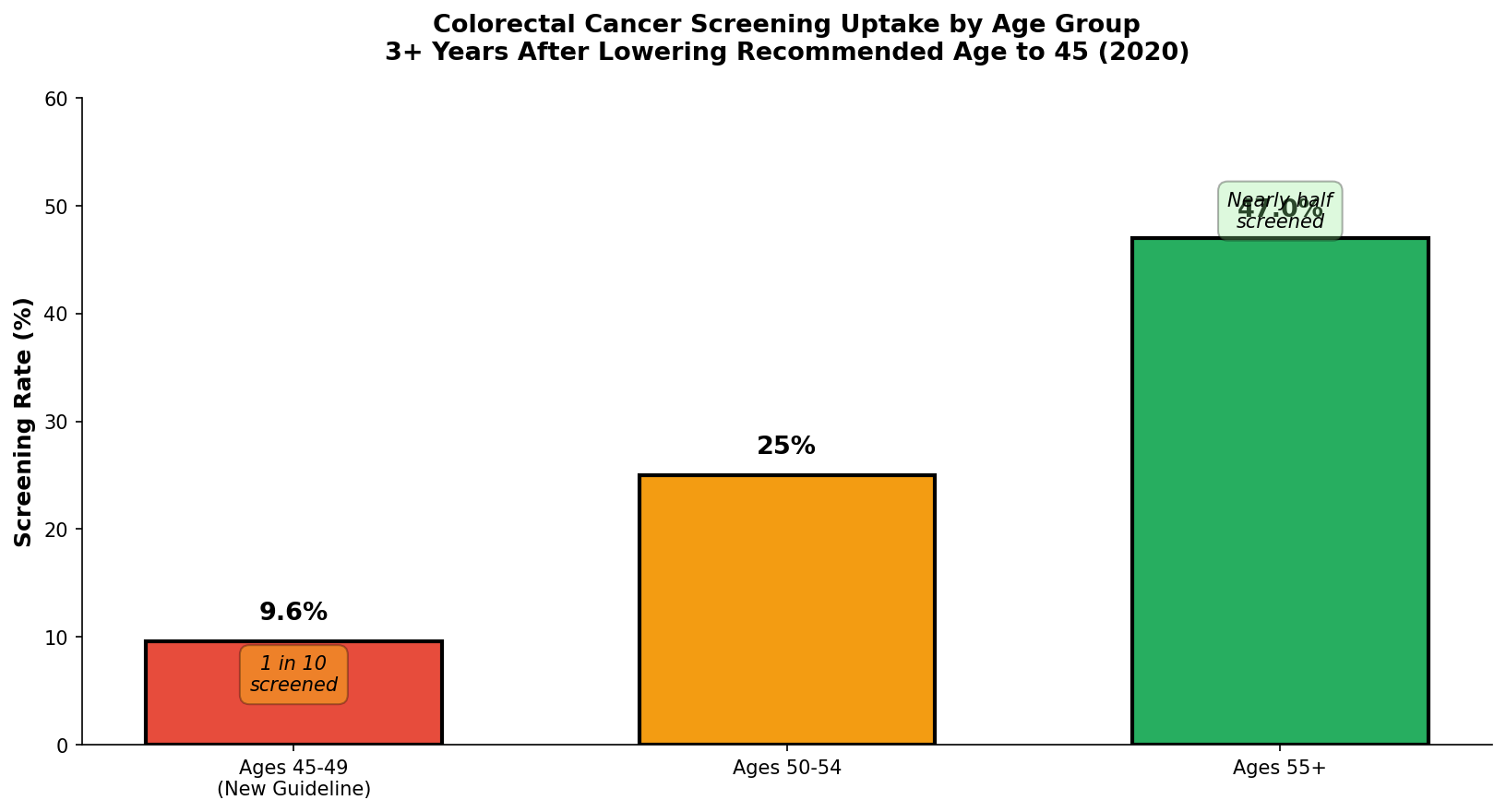 Figure 1: Major screening guidelines have shifted multiple times over the past 15 years as evidence accumulated and technology advanced. Each change reflects new research evidence, epidemiological shifts, or technological breakthroughs.
The Evidence Hierarchy: Not All Research Is Equal
You might think researchers simply gather all available studies and tally them up, but it's much more sophisticated than that. Medical evidence follows a strict hierarchy, with some study types providing far stronger evidence than others.
At the top sit systematic reviews and meta-analyses, which use explicit methods to search for, evaluate, and combine findings across multiple studies. These sit at the apex because they're comprehensive and transparent about their methodology.
Below that are randomised controlled trials (RCTs), where researchers randomly assign people to receive a treatment or a control, eliminating many sources of bias. RCTs provide strong evidence when well-designed.
Observational studies (tracking what happens in real-world settings without random assignment) come next. They're useful, but can't account for all the variables that might influence outcomes.
At the bottom are case reports and expert opinions, used only when higher-quality evidence doesn't exist.
The GRADE system (Grades of Recommendation, Assessment, Development, and Evaluation) formalises this hierarchy. Used by over 50 organisations worldwide, GRADE evaluates evidence quality across five key domains: risk of bias, consistency of results across studies, precision (are confidence intervals narrow enough to inform practice?), directness (does the evidence actually answer the question we're asking?), and publication bias (are there unpublished negative studies skewing the picture?).
This standardised approach has measurable benefits. When organisations use GRADE's structured methodology, different reviewers assess evidence quality much more consistently (inter-rater reliability of 0.66-0.72) compared to informal expert judgment. This means recommendations are reproducible, not dependent on which particular expert happens to be in the room.
Building Consensus When Certainty Is Elusive
Developing guidelines isn't about waiting for absolute certainty (which rarely exists). It's about synthesising expert judgment when uncertainty remains.
Three principal consensus methods are used. The Delphi Technique involves iterative rounds of structured questionnaires where experts rate items on standardised scales until consensus emerges. The Nominal Group Technique uses structured meetings where experts independently generate ideas, discuss collectively, and vote. Consensus Development Conferences bring diverse experts together for formal convenings on contentious topics.
These methods work. One expert panel on behavioural emergency treatments achieved 83% consensus on treatment options using the Delphi approach. Another study on updated treatment options reached 78% consensus using a 9-point rating scale.
Quality Assurance: Ensuring Guidelines Are Trustworthy
Once a guideline is drafted, it undergoes rigorous quality appraisal using the AGREE II instrument (Appraisal of Guidelines for Research and Evaluation), currently the most validated tool worldwide for assessing guideline methodological quality.
AGREE II evaluates guidelines across six quality domains:
- Scope and Purpose: Are the objective, population, and clinical questions clearly defined?
- Stakeholder Involvement: Did the development involve target users (clinicians, patients, managers)?
- Rigour of Development: Was there a systematic evidence search, critical appraisal, evidence synthesis, and consideration of both benefits and harms?
- Clarity and Presentation: Is the language clear, the recommendations specific, and navigation easy?
- Applicability: Were barriers to implementation and cost implications considered?
- Editorial Independence: Are competing interests disclosed, and is the guideline free from commercial influence?
Each criterion is rated on a 7-point scale, providing transparency about which guidelines meet the highest standards and which have gaps.
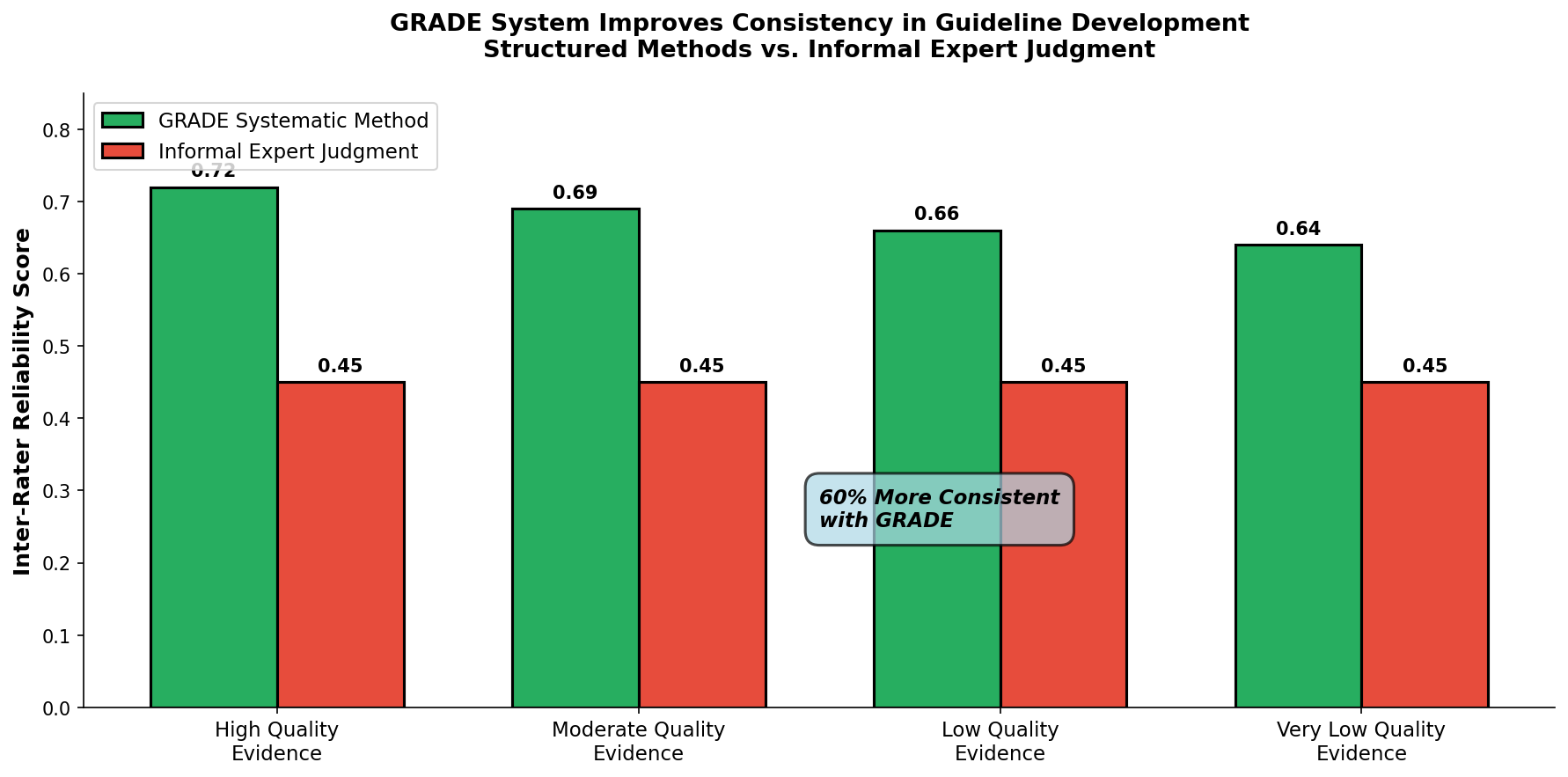 Figure 2: Structured methodology (GRADE system) produces significantly more consistent evidence assessments across different reviewers compared to informal expert judgment, demonstrating that transparent, systematic processes lead to more reliable guidelines.
From Guidelines to Real-World Practice
Here's where things get complicated. Publishing a guideline and implementing it in real clinical practice are entirely different challenges.
Provider Adherence: The Implementation Gap
Studies reveal substantial gaps between what guidelines recommend and what clinicians actually do. For cervical cancer screening, only 22% of physicians fully adhered to the 2009 ACOG guidelines for women aged 21-29 years, with 49% demonstrating inconsistent practice. That was seven years after the guidelines were published. For breast cancer screening, 65-92% of doctors recommend starting mammography at age 40, contradicting USPSTF guidance.
Implementation doesn't happen overnight. When the USPSTF lowered the colorectal cancer screening age to 45 in 2021, screening rates in the new target age group (45-49) remained at just 9.6% more than three years after the guideline update, compared to 47% in adults over 55. The guideline was clear, but implementation lagged dramatically.
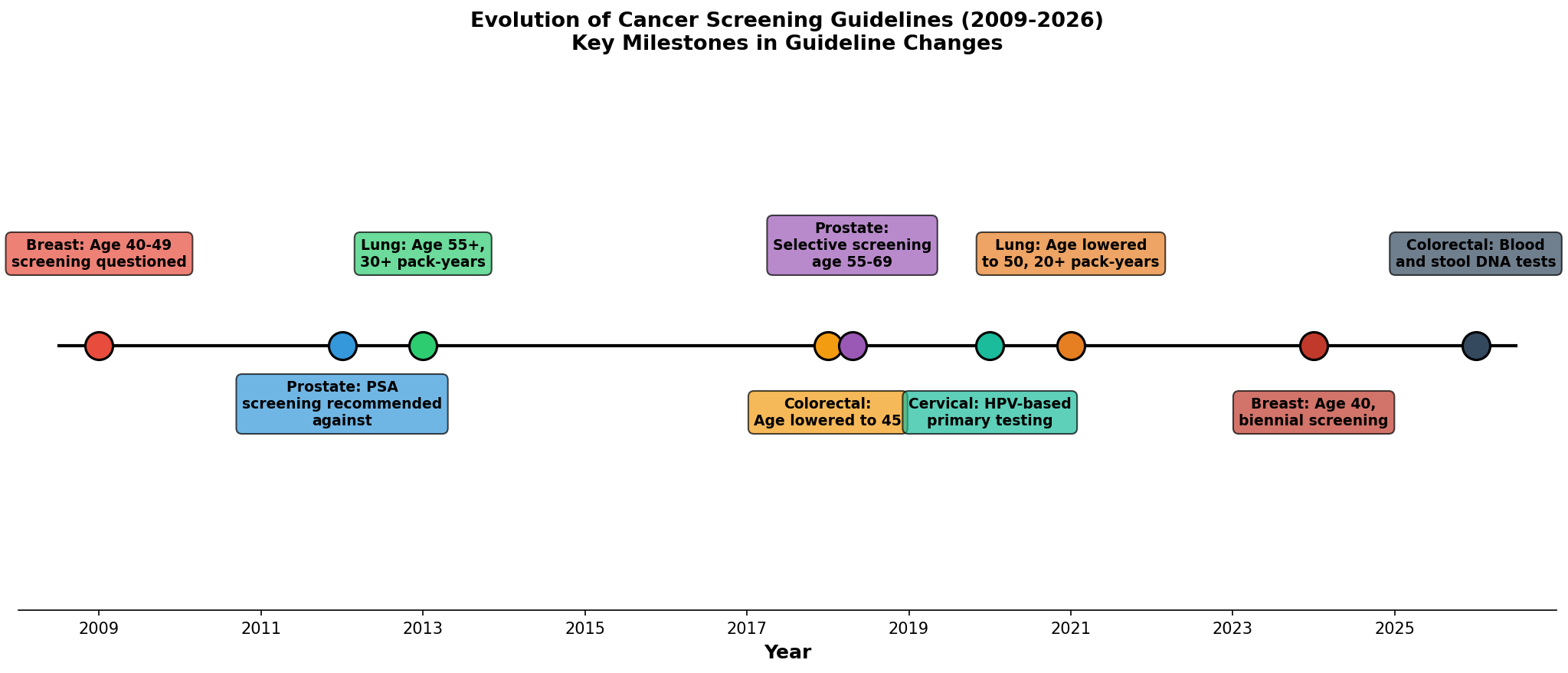 Figure 3: Provider adherence to screening guidelines varies widely depending on cancer type and guideline clarity. Some organisations achieve 90%+ adherence, whilst others struggle below 50%, reflecting substantial implementation barriers.
Why Clinicians Struggle to Implement New Guidelines
Provider-level barriers are substantial. Up to one-third of doctors don't even know current lung cancer screening guidelines. Only 53% report being very familiar with USPSTF recommendations. Many couldn't recall the exact eligibility criteria, even when generally aware of screening guidelines.
Beyond knowledge gaps, competing demands create real pressures. Time constraints are significant: providers report 16.8% cite lack of time as a barrier to implementing new screening protocols. Concerns about false positives causing unnecessary procedures (cited by 18.9% of providers) also slow adoption. Some providers worry about malpractice risk if they don't screen, or fear missing disease when implementing de-intensified screening intervals.
Then there are logistical failures. The top barrier to lung cancer screening utilisation? Electronic health record (EHR) systems are failing to automatically notify providers about eligible patients. 54.7% of facilities reported this as a major barrier. When the technology designed to help implement guidelines actually creates obstacles, adoption suffers.
System-Level Barriers: The Resource Question
Guidelines often don't account for the infrastructure costs of implementation. When the USPSTF lowered the colorectal cancer screening age to 45, it was epidemiologically sound. But community health centres faced a 23% increase in screening demand without proportional funding increases. One implementation study found that introducing a single guideline required 18,131 person-hours and cost $1,587,139 for 286 persons, or roughly $5 per primary care visit. These hidden costs often surprise healthcare systems.
Patient-Level Barriers: The Communication Challenge
Patients often don't understand why recommendations change. When multiple organisations issue different guidance (breast cancer screening starting at age 40, 45, or 50, depending on which guideline you follow), confusion is inevitable.
Research on communication quality shows substantial gaps. Few studies examine how physicians explain changing recommendations to patients so that they actually understand. Providers report a lack of time for adequate discussions about benefits and harms. The result: patients don't grasp why their doctor is recommending something different from what they heard five years ago.
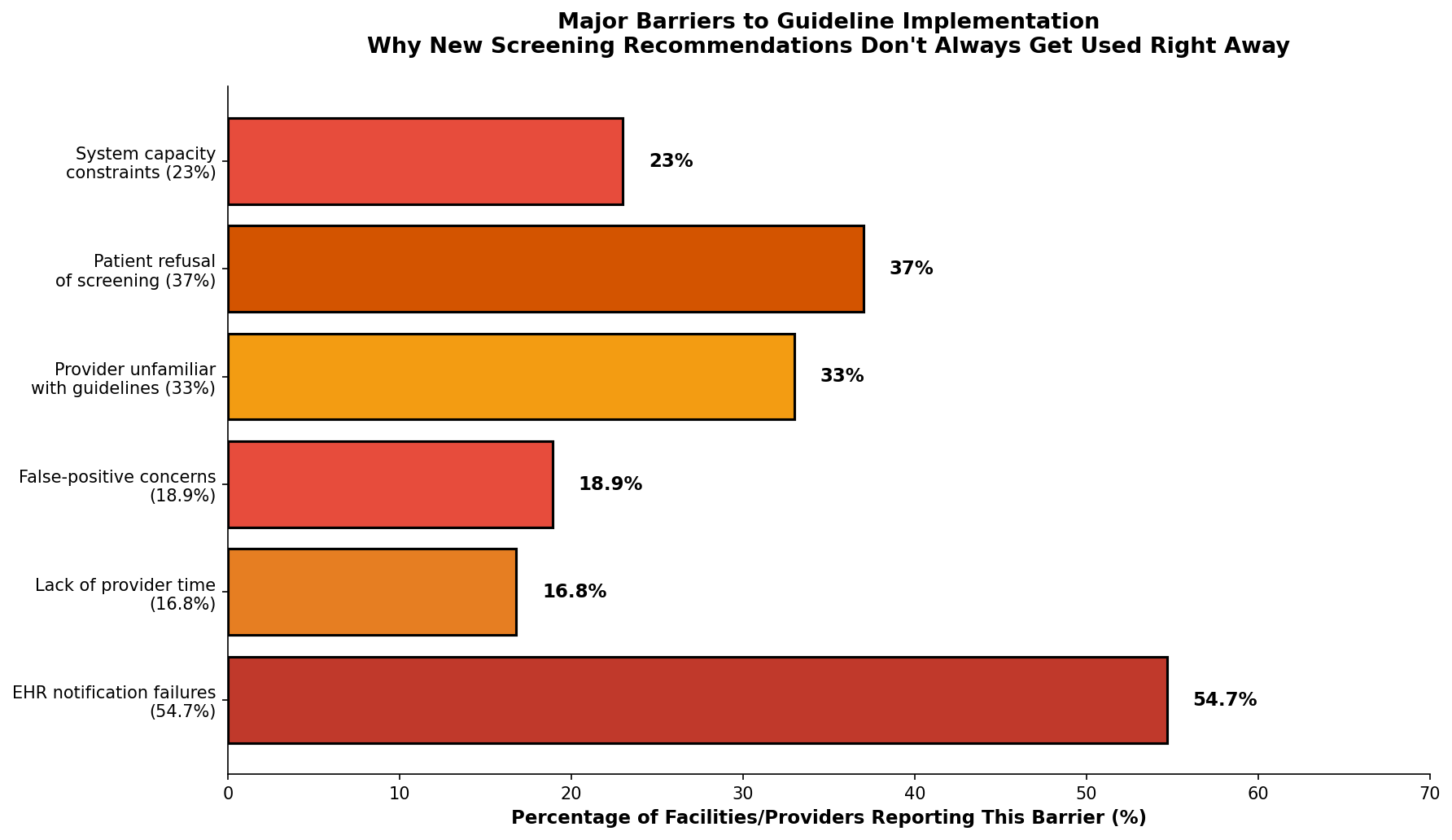 Figure 4: Guideline implementation faces multi-level barriers. System-level failures (like EHR automation gaps), provider knowledge gaps, and patient confusion all contribute to implementation delays of 3-7+ years.
Real-World Examples: How Guidelines Translate to Clinical Practice
Colorectal Cancer Screening: The Age Lowering
In 2018-2020, major organisations recommended lowering the colorectal cancer screening age from 50 to 45. The evidence was compelling: rising early-onset rates in younger adults meant that earlier screening would catch more cancers when they're most treatable.
But here's what actually happened: Screening rates for the newly eligible 45-49 age group remained at just 9.6% over three years, compared to 47% in those over 55. Healthcare systems weren't prepared for the surge. EHR systems weren't configured to identify and notify newly eligible patients. Community health centres lacked capacity. Patient awareness lagged months or years behind the guideline publication.
Yet when screening was performed, it worked: more colorectal cancers were being detected early in younger adults. The guideline was evidence-based and effective, but implementation required infrastructure changes that took years to materialise.
Cervical Cancer Screening: Multiple Changes, Multiple Barriers
Cervical cancer screening has undergone perhaps the most dramatic transformation, with guideline changes in 2009, 2013, 2020-2021, and 2026. The shift from Pap tests to HPV testing, longer screening intervals, and new patient-collected testing options all represent improvements grounded in evidence.
But implementation has been persistently poor. Seven years after the 2009 ACOG guidelines, provider adherence was still only 22-49%. When the 2020 American Cancer Society guidelines recommended HPV-based primary testing, researchers found that "few clinicians are following" the new approach, despite over 50% saying they'd change practice if supported by evidence and professional endorsement.
Why? Provider barriers included a lack of professional organisation endorsement in some cases, logistical concerns about new workflows, and fear of missing disease. Patients who were confused about changing recommendations from different organisations delayed adoption further.
Breast Cancer Screening: The Communication Problem
Breast cancer screening recommendations exemplify the confusion guideline changes can create. Different organisations recommend different starting ages (40, 45, or 50), different screening intervals, and different approaches to clinical breast exams. Research specifically notes that breast cancer guideline differences "have resulted in confusion among the public and providers."
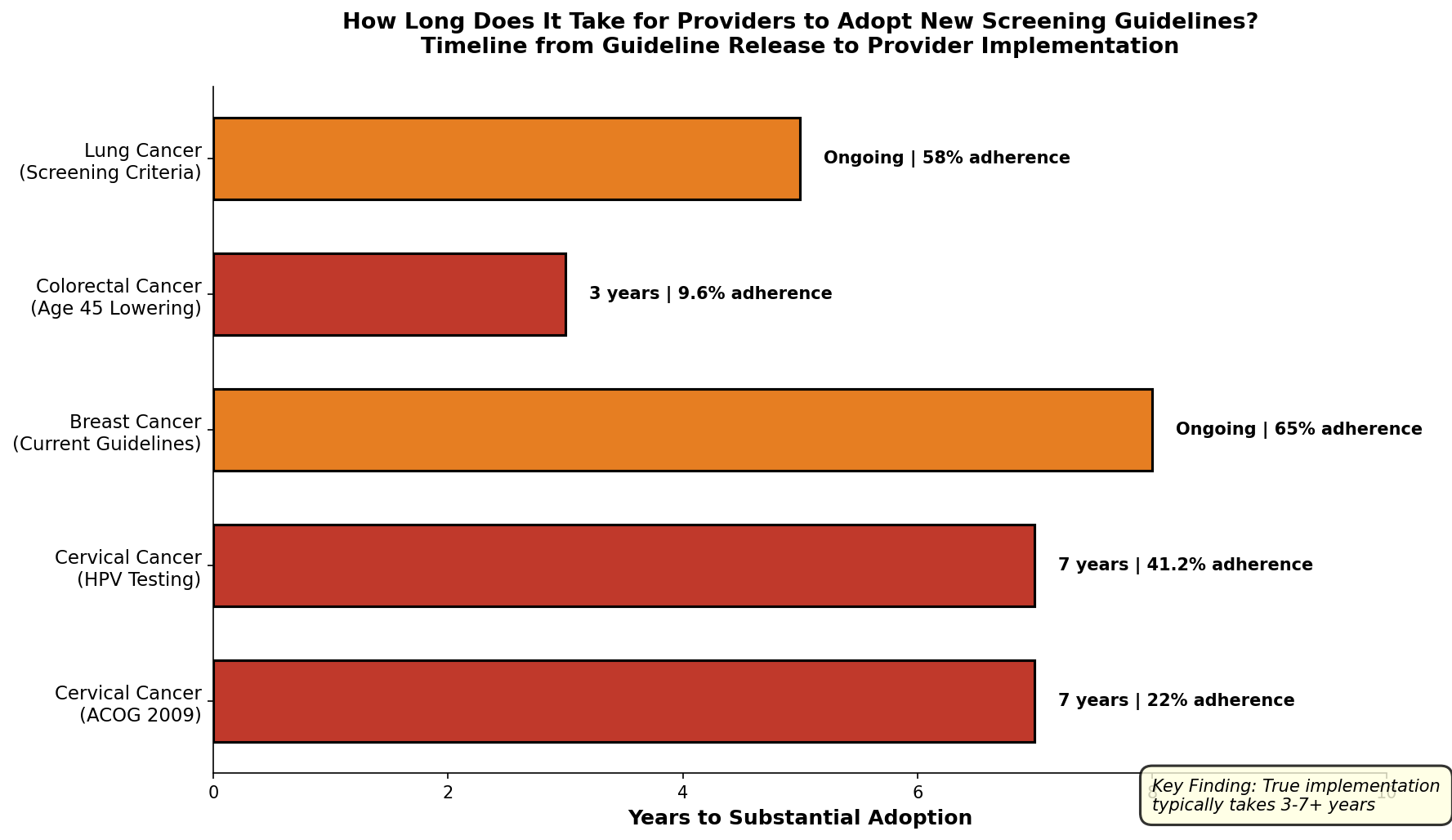 Figure 5: True implementation of new screening guidelines typically takes 3-7+ years post-publication. Early adoption rates are substantially lower, with adherence improving only as awareness spreads, systems adapt, and professional endorsement aligns.
Why This Matters: Understanding the Real Trade-offs
Many guideline changes reflect not just new evidence, but shifting understanding of the balance between benefits and harms. Prostate cancer screening illustrates this clearly.
In 2012, the USPSTF recommended against routine PSA (prostate-specific antigen) screening based on evidence that benefits were outweighed by harms. The research showed that screening detects some cancers, but many are slow-growing and would never have caused death. The result: unnecessary biopsies causing bleeding, infection, and psychological distress; overtreatment with side effects; and false positives (occurring in more than 15% of men screened).
By 2018, the picture had evolved. Updated analysis suggested that for men aged 55-69, screening might prevent approximately 1.3 prostate cancer deaths per 1,000 men screened over about 13 years. This modest benefit might be worthwhile for some men but not others, depending on individual values about screening risks. The recommendation shifted to: discuss screening individually, sharing both potential benefits and documented harms.
This wasn't indecision. It was acknowledging medical reality: screening involves trade-offs, and the optimal choice depends on individual preferences. A man prioritising cancer prevention differently from another perfectly rational man, and guidelines should reflect this.
The Role of Patient Engagement and Conflicting Interests
Modern guidelines increasingly recognise that effective screening involves informed patients, not just clinical directives. Stakeholder engagement now typically includes patients and caregivers as active participants, not just consultants.
This is crucial because guidelines profoundly influence treatment decisions affecting millions of people. Research documents that authors' financial, intellectual, and professional conflicts of interest may influence recommendations. The best-practice approach is transparent disclosure of all conflicts (financial, intellectual, professional, personal) with management proportional to conflict severity.
Some organisations excel at this. The American College of Chest Physicians is described as transparent in all steps and thorough in managing conflicts. But significant gaps remain: many guideline organisations lack publicly available conflict-of-interest policies, and rates of public disclosure of conflict information remain unacceptably low.
The principle emerging in best practice is that transparent disclosure with proportional management is preferable to excluding everyone with conflicts. Otherwise, you'd eliminate most practising clinicians from guideline development, replacing clinical experience with pure research methodology.
The Science Behind Consensus
Consensus doesn't mean unanimous agreement or absolute certainty. It means: transparent agreement on the best available evidence despite uncertainty, with explicit acknowledgement of evidence limitations through GRADE quality ratings. Recommendations are proportional to certainty (strong recommendations when evidence is robust; conditional recommendations when uncertainty exists). Reasoning is documented so clinicians understand the rationale.
This matters because it prevents guidelines from becoming dogma. When a guideline says "we recommend this based on moderate-quality evidence," everyone understands that new research might change things. When it says "we strongly recommend based on high-quality evidence," there's justification for stronger confidence.
Guidelines also require systematic updating. There's no universal standard for how often updates happen. Some organisations review every 3-5 years. Others update only when major new evidence emerges. Delays between publication and update initiation vary from 1 to 10+ years. This is an area where medical guideline development could improve: more systematic, scheduled updating would ensure recommendations stay current.
What Changing Guidelines Really Mean
When your doctor says your screening recommendations have changed, they're responding to evidence, not fashion. The process behind that change involved:
- Months or years of systematic searching for relevant research
- Critical appraisal of study quality, not treating all evidence equally
- Synthesis of findings using a standardised methodology applied consistently
- Formal consensus-building among diverse experts
- Rigorous quality assessment using validated instruments
- Stakeholder engagement, including patient and clinician input
- Transparent management of financial and intellectual conflicts of interest
Are guidelines perfect? No. Implementation lags behind evidence. Systems aren't always ready to support new recommendations. Provider knowledge gaps delay adoption. Patient confusion undermines uptake. Professional disagreement sometimes persists. But the underlying process is far more rigorous and deliberate than public perception suggests.
The changing recommendations you've experienced aren't reflections of medical indecision. There's evidence that medical science takes new information seriously, updates guidelines when evidence warrants, and increasingly recognises that optimal screening involves informed patients discussing risks and benefits, not blanket recommendations imposed from above.
Further Reading
Guideline Development Process and Methodology
- GRADE Guidelines: Rating the Quality of Evidence
- Development and Validation of AGREE II Appraisal Instrument
- Consensus Development Methods: A Review of Best Practice
- Developing Clinical Practice Guidelines: Comprehensive Guide to Evidence, Outcomes, and Synthesis
Specific Cancer Screening Guidelines
- USPSTF Breast Cancer Screening Recommendation
- USPSTF Colorectal Cancer Screening Recommendation
- USPSTF Prostate Cancer Screening Recommendation
- USPSTF Lung Cancer Screening Recommendation
- ACOG Updates on Cervical Cancer Screening
- American Cancer Society Colorectal Cancer Guidelines Update (2026)
Evidence Synthesis and Systematic Reviews
- Hierarchy of Evidence Within the Medical Literature
- Systematic Review or Meta-Analysis: Their Place in Evidence Hierarchy
- A Simple Guide to Systematic Reviews and Meta-Analyses
Guideline Implementation and Real-World Impact
- Factors Influencing Uptake of Changes to Clinical Preventive Guidelines
- Provider Attitudes and Screening Practices Following Changes in Guidelines
- Barriers and Strategies in Guideline Implementation: Scoping Review
- The Influence of Patient-Provider Communication on Cancer Screening
Stakeholder Engagement and Patient Involvement
- Key Issues for Stakeholder Engagement in Guideline Development
- Recommendations for Patient Engagement in Guideline Development Panels
- Stakeholder Involvement: How to Do It Right
Conflict of Interest in Guidelines
- ACCP Evidence-Based Guideline Development: Transparent Approach to Conflict of Interest
- Nondisclosure of Financial Interest in Clinical Practice Guideline Development
- Policies on Conflicts of Interest in Health Care Guideline Development
References/Helpful Resources
- U.S. Preventive Services Task Force (USPSTF). Standards for Guideline Development [Internet]. [cited 2025 Jan 15]. Available from: https://www.uspreventiveservicestaskforce.org/uspstf/about-uspstf/methods-and-processes/standards-guideline-development
- Balshem H, Helfand M, Schünemann HJ, et al. GRADE guidelines: 3. Rating the quality of evidence. J Clin Epidemiol. 2011;64(4):401-406. Available from: https://pubmed.ncbi.nlm.nih.gov/21208779/
- AGREE Collaboration. Development and validation of an international appraisal instrument for assessing the quality of clinical practice guidelines: the AGREE project. Qual Saf Health Care. 2003;12(1):18-23. Available from: https://pubmed.ncbi.nlm.nih.gov/12571340/
- Institute of Medicine (US) Committee to Advise the Public Health Service on Clinical Practice Guidelines, Field MJ, Lohr KN, eds. Clinical Practice Guidelines: Directions for a New Program. Washington (DC): National Academies Press (US); 1990. Available from: https://pubmed.ncbi.nlm.nih.gov/25144032/
- Schünemann HJ, Wiercioch W, Etxeandia I, et al. Guidelines 2.0: systematic development of a comprehensive checklist for a successful guideline enterprise. CMAJ. 2014;186(3):E123-E142. Available from: https://pmc.ncbi.nlm.nih.gov/articles/PMC3928232/
- National Health Service (NHS). NICE Guidance [Internet]. [cited 2025 Jan 15]. Available from: https://www.nice.org.uk/guidance
- Centers for Disease Control and Prevention (CDC). Standards Required for the Development of CDC Evidence-Based Guidelines. MMWR Suppl. 2022;71(4):1-46.
- National Cancer Institute (NCI). Cancer Statistics [Internet]. [cited 2025 Jan 15]. Available from: https://progressreport.cancer.gov
- American Cancer Society. Colorectal cancer screening: An update to the American Cancer Society guideline, 2026[Internet]. [cited 2026 May 27]. Available from: https://pressroom.cancer.org/colorectal-cancer-screening-guideline-update-2026
- Domecq JP, Prutsky G, Elraiyah T, et al. Patient engagement in research: a systematic review. BMC Health Serv Res. 2014;14:89. Available from: https://pmc.ncbi.nlm.nih.gov/articles/PMC3938901/
- Alonso-Coello P, Oxman AD, Moberg J, et al. GRADE Evidence to Decision (EtD) frameworks: a systematic and transparent approach to making well informed healthcare choices. 2: Clinical practice guidelines. BMJ. 2016;353:i2089. Available from: https://pubmed.ncbi.nlm.nih.gov/27365494/
- Schünemann HJ, Fretheim A, Oxman AD. Improving the use of research evidence in guideline development: 9. Grading evidence and recommendations. Health Res Policy Syst. 2006;4:21. Available from: https://pmc.ncbi.nlm.nih.gov/articles/PMC1697807/
- Burgers JS, Cluzeau FA, Hanna SE, Hunt C, Grol R. Characteristics of high-quality guidelines: evaluation of 86 clinical guidelines developed in ten European countries and Canada. Int J Technol Assess Health Care. 2003;19(1):148-157. Available from: https://pubmed.ncbi.nlm.nih.gov/12701947/
- Campbell SM, Braspenning J, Hutchinson A, Marshall M. Research methods used in developing and applying quality indicators in primary care. Qual Saf Health Care. 2002;11(4):358-364. Available from: https://pubmed.ncbi.nlm.nih.gov/12468698/
- US Preventive Services Task Force. Cervical Cancer: Screening [Internet]. [cited 2025 Jan 15]. Available from: https://www.uspreventiveservicestaskforce.org/uspstf/recommendation/cervical-cancer-screening
- National Institute for Health and Care Excellence (NICE). Developing NICE Guidance: the manual [Internet]. [cited 2025 Jan 15]. Available from: https://www.nice.org.uk/process/pmg20
- Mayo Clinic. Medical Diseases & Conditions [Internet]. [cited 2025 Jan 15]. Available from: https://www.mayoclinic.org/diseases-conditions
- Picker. Picker Principles of Person Centred Care. [Internet]. [cited 2026 Jun 25]. Available from: https://www.picker.org/about-picker/picker-principles-person-centred-care
- Thorlund K, Imberger G, Walsh M, et al. The number of patients and events required to limit the risk of overestimation of intervention effects in meta-analysis: a simulation study. PLoS One. 2011;6(10):e25491. Available from: https://pubmed.ncbi.nlm.nih.gov/22028777/
