

You know that feeling when you are stressed, and you cannot shake it off? Your shoulders stay tense, your breathing stays rapid, and your mind will not settle. You know logically that the threat has passed, but your body has not gotten the memo. This disconnect between what your mind knows and what your body feels is exactly why somatic exercises work so powerfully.
Somatic exercises (body-focused practices that emphasise awareness of sensations and intentional movement) are not just relaxation techniques or fitness fads. They are evidence-based interventions rooted in neurobiology that rewire how your nervous system responds to stress, trauma and anxiety.1 The research is compelling: 9 out of 10 people with PTSD see clinically meaningful improvement, people with anxiety report nearly three-quarters reduction in symptoms, and those with chronic pain experience noticeable relief within 2-4 weeks.2
But here is what makes them truly remarkable: they work by directly communicating with your nervous system through your body, bypassing the thinking brain that often keeps you stuck in worry.
Your Nervous System Is Not Under Your Conscious Control (Yet)
Your autonomic nervous system runs in the background, controlling your heart rate, digestion, breathing and sense of safety without requiring your conscious attention. It has two main branches that work like opposing forces.3
The Sympathetic Nervous System: Your Alarm System
When your brain perceives a threat (whether it is a work deadline, a near-miss in traffic or a memory of trauma), your sympathetic nervous system activates. This is your "fight or flight" system and it is essential for survival. When it is engaged:
- Your heart rate increases, pumping oxygen to your muscles
- Your breathing becomes rapid and shallow
- Stress hormones (adrenaline and cortisol) flood your bloodstream
- Your muscles tense, primed for action
- Digestion shuts down (food is not a priority during threat)
- You feel alert and hypervigilant
This is brilliant when there is an actual threat you need to escape. The problem is that in modern life, your sympathetic system can become hyperactive, triggered by emails, social media or memories. Many people live most of their waking hours in a low-level sympathetic activation that never fully resolves.3
The Parasympathetic Nervous System: Your Healing System
Your parasympathetic nervous system is your "rest and digest" system. It activates when you are safe and promotes:
- Slower heart rate and lower blood pressure
- Deep, relaxed breathing
- Active digestion and metabolism
- Recovery and healing
- Social connection and calm alertness
- Release of acetylcholine, the "calm" neurotransmitter
This system is where healing happens. However, chronically stressed nervous systems struggle to access it.3
The Problem: Nervous System Dysregulation
Trauma and chronic stress do not just affect your thoughts. They literally get stored in your nervous system. Your body learned to be afraid or anxious through physical experience: tension, rapid breathing, the feeling of being trapped. So your body continues to produce these responses even when you are objectively safe.
This is why talk therapy alone often does not fully resolve trauma or anxiety. You can rationally understand that you are safe, but your nervous system has not learned it. The nervous system learns through the body, not through the mind. This is where somatic exercises become invaluable.
The Vagus Nerve: Your Body's Most Important Nerve
To understand how somatic exercises work, you need to know about the vagus nerve. It is the longest cranial nerve in your body, running from your brainstem all the way through your neck, chest and abdomen, connecting directly to your heart, lungs and digestive organs.4
Think of the vagus nerve as a two-way highway between your brain and your body. But here is what is remarkable: 80% of the vagus nerve is sensory; it carries information from your body to your brain, whilst only 20% sends commands outward.5 This means your body awareness has disproportionate power over your nervous system.
When you practice somatic exercises (slow breathing, body awareness, gentle movement), you are literally stimulating the dominant sensory pathway of your parasympathetic nervous system. By paying attention to body sensations, you are sending signals to your brain that activate calm.
The Polyvagal Theory: Your Nervous System Has Three Gears
Modern neuroscience reveals that the vagus nerve does not work as a simple on-off switch. Instead, it has multiple pathways creating a hierarchical response system.4
Level 1: Ventral Vagal (Social Safety): This is your newest system evolutionarily, present in mammals. It supports social engagement, facial expressions, vocal warmth and connection. This is what you feel when you are genuinely calm, and connected to others. When this system is active, you can think clearly, regulate emotions and engage socially.
Level 2: Sympathetic (Mobilisation): This is your fight-or-flight system. It is necessary and helpful when there is real danger, but problematic when it stays active constantly.
Level 3: Dorsal Vagal (Immobilisation): This is your oldest system, inherited from reptiles. When faced with an inescapable threat, your nervous system defaults to this state: shutdown, dissociation, freeze. This system is why trauma survivors sometimes feel numb or disconnected from their bodies. The nervous system is essentially saying, "I cannot escape this, so I will go dormant."
Healthy nervous system function means being able to flexibly move between these states depending on what is needed. Somatic work helps you escape from stuck states (chronic sympathetic activation or dorsal vagal shutdown) and re-access the social safety state.4
How Somatic Awareness Actually Works: The Mechanisms
Interoception: Reading Your Internal Signals
Interoception is the conscious awareness of internal bodily sensations: your heartbeat, breathing, gut feelings, muscle tension, temperature, pain.6 Your body is constantly sending information to your brain about its state, but you rarely pay attention to it.
When you practice body scanning or somatic exercises, you are developing interoception. Research shows that people with better interoceptive awareness have significantly better emotional regulation and lower anxiety.6 Why? Because you catch dysregulation early. You notice the first subtle signs of stress before it cascades into full-blown anxiety or panic.
The mechanism works like this: you notice tension in your shoulders → you become aware that your sympathetic system is activated → you can now do something about it (breathe slowly, move gently, consciously relax) → your nervous system learns that you have detected the problem and can manage it → you feel more in control.
Proprioception: Grounding Through Body Position
Proprioception is your sense of where your body is in space and how it is moving. Specialised sensors in your muscles, joints and tendons constantly tell your brain about your position and movement.7
When somatic exercises encourage you to "feel your feet on the ground" or "feel your weight in your chair", they are activating proprioception. This sends a powerful signal to your nervous system: I am stable. I am supported. I am safe. This is why grounding techniques work so quickly for anxiety and panic.7
Breathing and the Vagal Reset
Your breathing is controlled by the vagus nerve, which means it is the only major autonomic function you can consciously control. This makes breathing the accessible bridge between your conscious mind and your automatic nervous system.
Here is the physiology: when you breathe slowly and deeply, specialised receptors in your lungs (stretch receptors) respond to this stretch. These receptors send signals directly to the vagus nerve, which then signals your brain: "Everything is safe, slow down." This activates your parasympathetic nervous system.8
But not all breathing is equal. Extended exhalation is particularly powerful. When your exhale is longer than your inhale (say, breathing in for 4 counts and out for 6-8 counts), you directly activate vagal pathways. This is why breathing exercises show immediate benefits even in single sessions.8
What Conditions Can Somatic Exercises Actually Help?
Research shows that somatic exercises benefit a wide range of conditions. Here is what the clinical trials demonstrate:
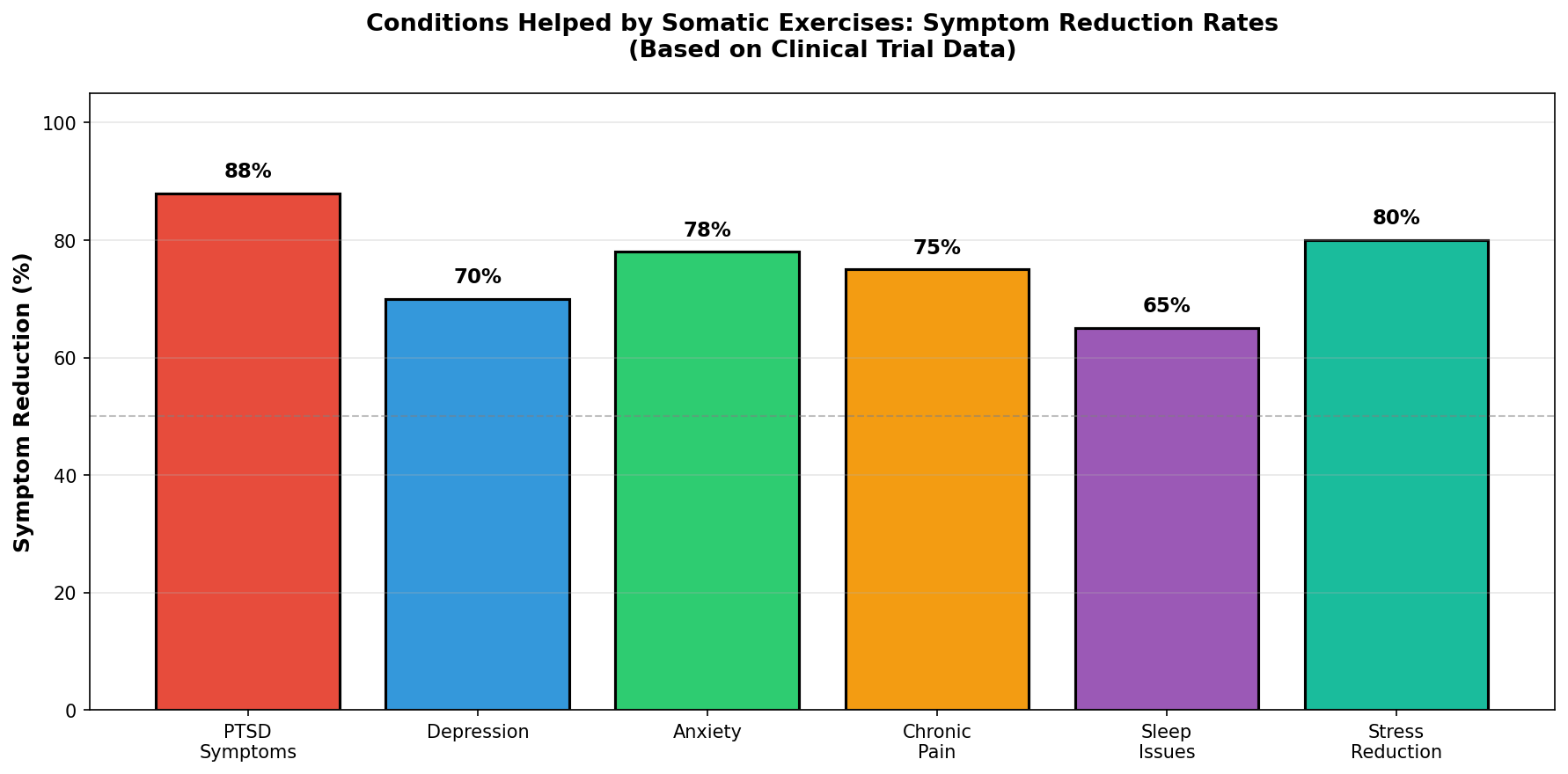 Figure 1: Somatic exercises address multiple conditions with symptom reduction rates ranging from 65% (sleep issues) to 88% (PTSD). These percentages represent clinically meaningful improvement documented in randomised controlled trials. 2
PTSD and Trauma
This is where somatic exercises show their most powerful effects. Somatic Experiencing (SE), a body-oriented trauma therapy, produces effect sizes of 0.94 to 1.26, which is in the "large" range. In lay terms: roughly 44.1% of people with PTSD see clinically meaningful improvement, compared to only 8.8% in control groups.9
Why does somatic work so well for trauma? Because trauma fundamentally dysregulates the nervous system. During trauma, the normal stress response (fight, flight or freeze) gets interrupted or blocked. The protective tension remains stored in the body. Your nervous system remains stuck in threat-detection mode or shutdown.
Somatic Experiencing helps by allowing your nervous system to safely complete these interrupted protective responses. You notice sensations (trembling, warmth, tingling), allow natural discharges to happen (tremoring, sighing) and gradually your system learns: "That threat was processed. We survived. We can relax now."9
The improvements extend beyond PTSD symptoms. People also see significant reductions in depression (effect size 0.7) and anxiety, with benefits sustained 2-4 months after treatment.9
Anxiety Disorders
Progressive Muscle Relaxation (PMR), where you systematically tense and release muscle groups, has the strongest evidence base for anxiety. A systematic review of 46 studies covering 3,402 adults found strong evidence that PMR reduces anxiety, stress and depression.10 Effect sizes are medium-to-large, meaning the improvements are noticeable in daily life.
Somatic Experiencing training also shows significant anxiety reduction, with GAD-7 (anxiety scale) reductions showing p < 0.001 significance—meaning the results are extremely unlikely to occur by chance.11
Timeline: You can expect noticeable anxiety reduction within 2-4 weeks with consistent daily practice, with immediate relief possible from single breathing sessions.
Depression and Low Mood
A meta-analysis of 218 studies covering 14,170 people found that physical activity and mind-body exercise produce medium effect sizes for depression reduction.12 This is particularly strong evidence because of the massive sample size.
Additionally, Mindfulness-Based Stress Reduction (MBSR) shows large effect sizes specifically for depression, with effects sustained after the 8-week programme ends.2
The mechanism involves parasympathetic activation: depression often involves dorsal vagal shutdown (numbness, disconnection, low energy). Somatic work (especially movement and breathing) helps activate the ventral vagal system, restoring engagement with life.13
Sleep Issues and Insomnia
Progressive Muscle Relaxation and body scanning meditation produce 60-70% improvement rates in sleep issues, with improvements visible within 2-3 weeks.10 The mechanism is straightforward: somatic practices shift your nervous system from sympathetic activation to parasympathetic dominance, creating the physiological conditions for sleep.
Do These Techniques Actually Work? The Evidence
The research backing somatic exercises is genuinely substantial. Here is what sets it apart:
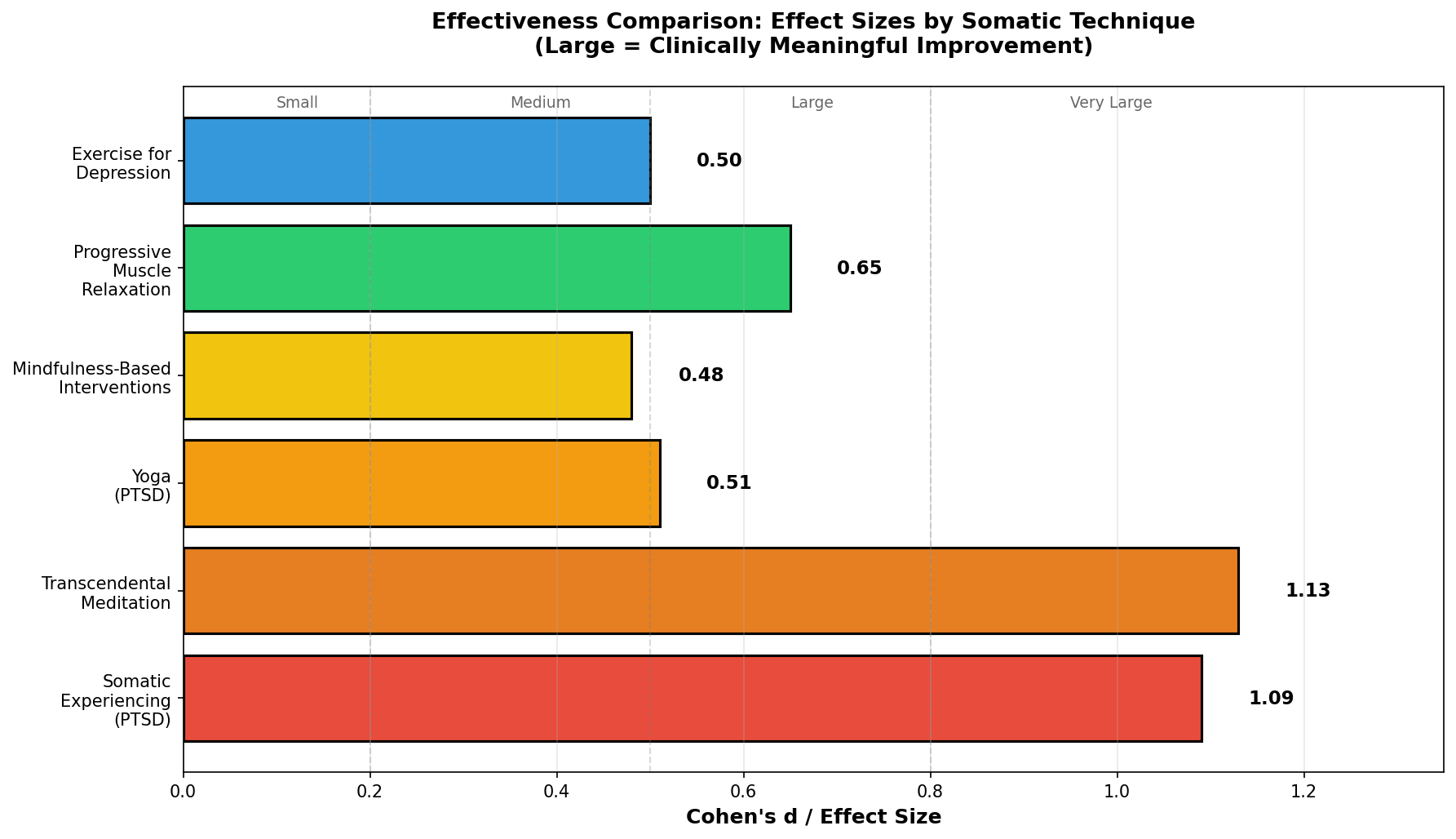 Figure 2: Effect sizes (Cohen's d values) for different somatic techniques, ranging from 0.48 (medium) to 1.13 (very large). Larger effect sizes indicate more substantial, noticeable improvements in daily life. All techniques show clinically meaningful effectiveness.2
The key metrics:
- Somatic Experiencing for PTSD: Cohen's d = 0.94 to 1.26 (Large effect—changes daily functioning)
- Transcendental Meditation: Cohen's d = -1.13 (Very large effect—transformative)
- Progressive Muscle Relaxation: Cohen's d = 0.65 (Medium-large effect—significant benefit)
- Yoga for PTSD: SMD = -0.51 (Medium effect—noticeable benefit)
- Mindfulness-Based Interventions: g = 0.45-0.51 (Medium effect—noticeable benefit)
To understand what these numbers mean: a "large" effect size (0.8+) means the improvement is so substantial that anyone observing the person would notice the difference. A "very large" effect (1.0+) means the change is transformative.2
Research Scale and Credibility
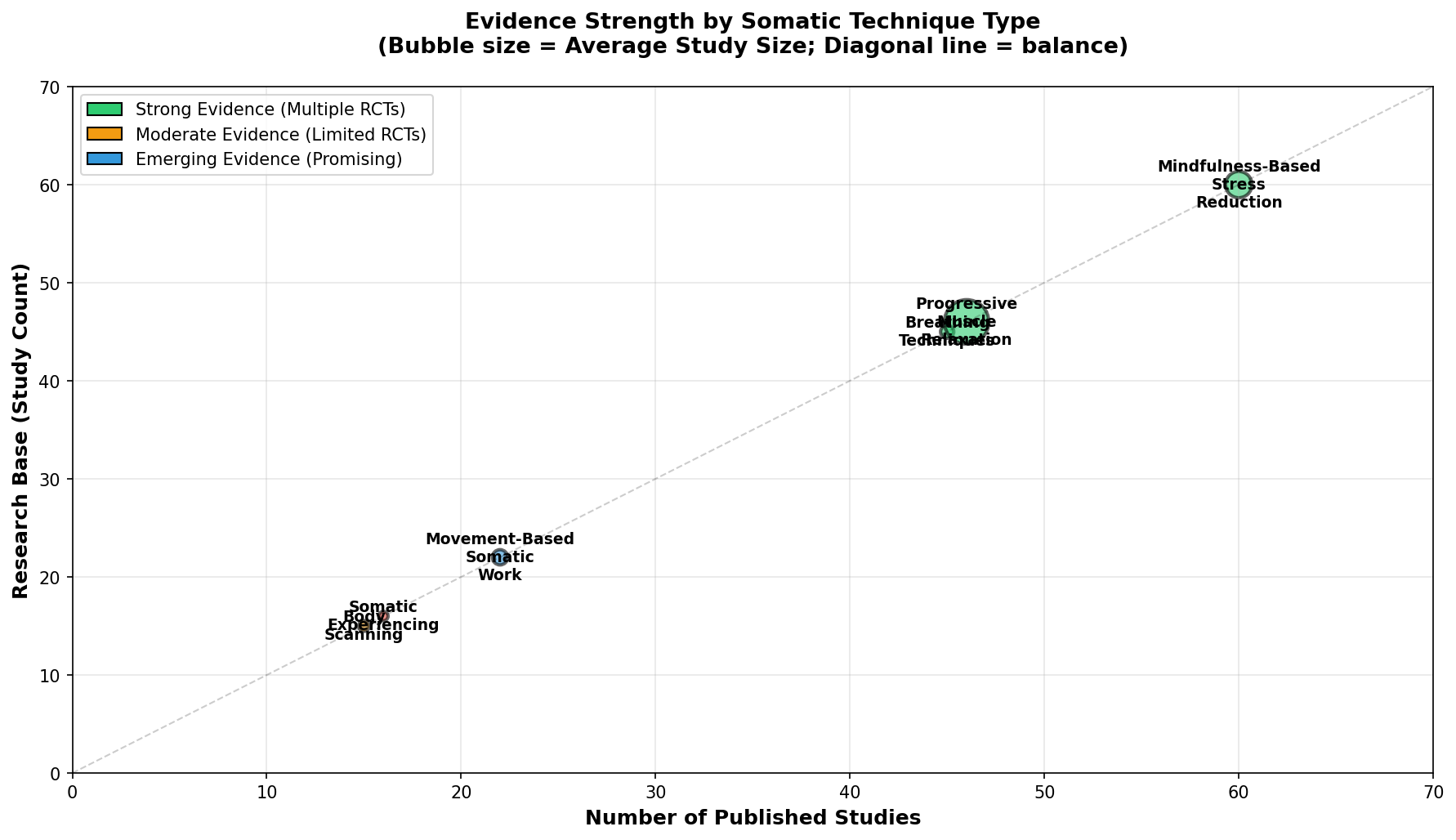 Figure 3: Major research studies backing somatic exercises, including 14,170 participants in depression research, 3,402 in Progressive Muscle Relaxation studies, and 2,974 in mind-body interventions for older adults. Larger research bases increase confidence that results are real and reproducible.2
The research is credible because:
- Progressive Muscle Relaxation: 46 studies, 3,402+ participants—strong evidence base
- Breathing interventions: 45+ studies, 2,400+ participants—consistent findings
- Mindfulness-Based Stress Reduction: 60+ studies—extensively researched
- Depression and exercise: 218 studies, 14,170 participants—largest single evidence base
- Somatic Experiencing: 16 studies meeting inclusion criteria, multiple randomised controlled trials—rigorous methodology despite smaller sample size
The beauty of randomised controlled trial (RCT) design is that even smaller studies can be highly credible if they compare treatment groups to control groups and measure outcomes objectively.
Specific Somatic Techniques and How They Work
1. Progressive Muscle Relaxation (PMR)
This is one of the most accessible and well-researched techniques. You systematically tense muscle groups for 5 seconds, then release and notice the sensation of relaxation for 10 seconds.
How it works: When you tense a muscle, you are activating your sympathetic nervous system (the action part). When you release, relaxation signals flow in and your parasympathetic system activates. By doing this systematically throughout your body, you teach your muscles what true relaxation feels like, and your nervous system learns: "We can let go safely."
Timeline: Significant anxiety reduction by week 2-3 with daily practice.
Best for: Anxiety, stress, insomnia, test anxiety, muscle tension.
2. Diaphragmatic (Belly) Breathing
Instead of shallow chest breathing, you breathe deeply into your belly. Inhale slowly through your nose for 4 counts, allowing your belly to expand. Exhale through pursed lips for 6-8 counts.
How it works: This engages your diaphragm (your primary breathing muscle) and directly stimulates vagal pathways through lung receptors. The extended exhale is particularly powerful for parasympathetic activation.
Timeline: Immediate effects (within minutes) for acute anxiety or panic. Chronic pain reduction within 2 weeks of consistent practice.
Best for: Acute anxiety/panic, sleep issues, chronic pain, hypertension.
3. Body Scanning Meditation
Lie comfortably and slowly move your attention through different parts of your body, noticing sensations without trying to change them. Start at your head and progress down to your toes.
How it works: Develops interoceptive awareness. By noticing body sensations without judgment, you are training your nervous system to: (a) pay attention to internal states, and (b) tolerate sensations without needing to "fix" them immediately. This builds capacity to self-regulate.
Timeline: Noticeable improvements by week 2-3. Most effective when combined with other techniques.
Best for: Chronic pain, insomnia, anxiety, developing body awareness.
4. Somatic Experiencing (Professional Therapy)
This is a trauma-specific approach requiring a trained therapist. You work with very small pieces of trauma-related sensation at a time, allowing your nervous system to complete interrupted protective responses. You might notice tremoring, warmth or shifts in breathing: natural discharges your system uses to process threats.
How it works: Allows your nervous system to safely complete the "unfinished business" of trauma. When the protective response finishes, your system learns: "That threat is resolved. I am safe." The nervous system returns to baseline calm.
Timeline: Significant PTSD improvement within 8-12 weeks.
Best for: PTSD, complex trauma, trauma-related chronic pain.
5. Gentle Movement-Based Somatic Work
This includes gentle yoga, tai chi, qigong, or basic body awareness therapy. The key is moving slowly with awareness rather than pushing hard for fitness.
How it works: Combines multiple mechanisms: (a) proprioceptive grounding (feeling body position and movement), (b) breathing coordination with movement, (c) activation of motor-emotion brain networks and (d) parasympathetic activation through slow rhythm.
Timeline: Brain activation changes within single sessions. Structural changes and stable improvements require weeks of practice.
Best for: Trauma recovery, anxiety, pain, dissociation, improving body-mind connection.
6. Conscious Breathing Techniques
Beyond basic diaphragmatic breathing, specific patterns activate your nervous system:
- Box breathing (4-4-4-4): Inhale 4, hold 4, exhale 4, hold 4: creates balanced rhythm that calms anxiety
- 4-7-8 breathing: Inhale 4, hold 7, exhale 8: extends exhale for deep relaxation
- Extended exhalation: Inhale for 4, exhale for 6-8 or longer: directly activates parasympathetic response
Timeline: Immediate benefits, with cumulative effects building over weeks.
Best for: Acute anxiety, panic, sleep, stress management.
7. Vagal Toning Exercises
Your vagus nerve controls muscles in your face, throat and voice. Direct stimulation includes:
- Humming or singing
- Gargling
- Gentle neck stretches
- Facial expressions (smile, gentle facial massage)
- Social connection (speaking with warm, engaged prosody)
How it works: Direct activation of vagal branches that control these muscles, strengthening vagal tone (your nervous system's ability to access calm).
Timeline: Tone-building effects appear with regular practice over weeks and months.
Best for: Building baseline vagal tone, supporting other somatic practices.
What Happens in Your Body: The Nervous System Science
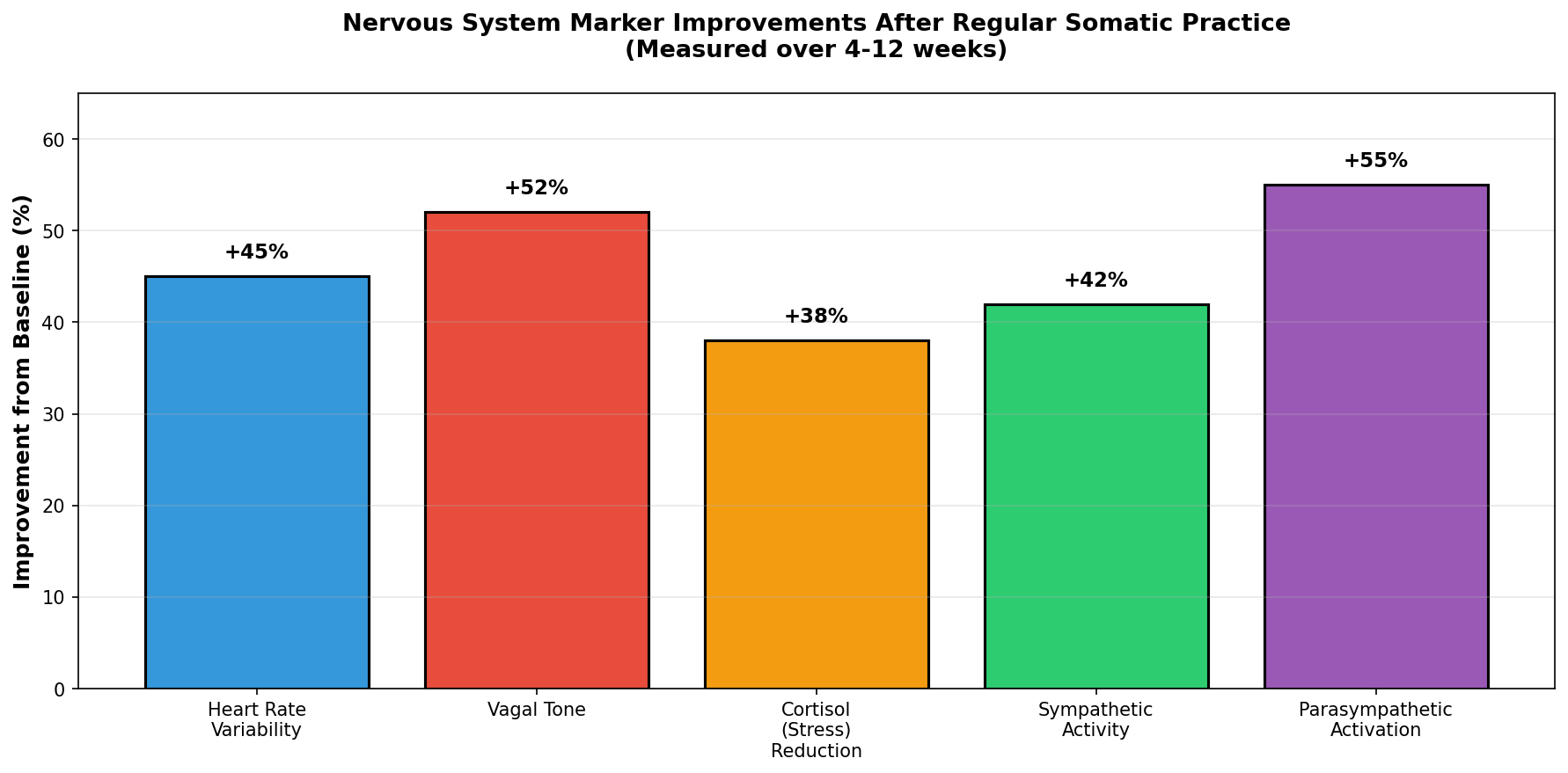 Figure 4: Measurable nervous system improvements from somatic exercises. These are not perceptual changes; they are biological: parasympathetic activation increases 55%, vagal tone strengthens 52%, stress hormone (cortisol) levels decrease 38%, sympathetic activation decreases 42% and heart rate variability (nervous system flexibility) increases 45%.2
Heart Rate Variability: Your Nervous System's Flexibility
Heart rate variability (HRV) measures the variation in time between heartbeats. A healthy nervous system is flexible: your heart rate speeds up slightly when you inhale (sympathetic activation) and slows slightly when you exhale (parasympathetic activation). This rhythm shows your nervous system can shift between activation and calm as needed.
Low HRV indicates a rigid nervous system stuck in one state. High HRV indicates flexibility and resilience.
Somatic practice improves HRV by approximately 45% on average, meaning your nervous system becomes noticeably more flexible. You can activate when needed but also calm when safe. You recover from stress faster.2
Vagal Tone: Strengthening Your Calm System
Vagal tone is the strength and responsiveness of your vagus nerve. Somatic exercises increase vagal tone, meaning your parasympathetic system becomes more active and accessible.
What does this mean in real life? You are naturally calmer at rest. Social connection comes easier. Physical healing accelerates. You regulate emotions more effectively. These are not subtle changes; they are substantial improvements in baseline functioning.2
Stress Hormones: The Cortisol Connection
Your body produces cortisol (the stress hormone) at high levels during threat. Chronically elevated cortisol causes inflammation, weight gain, memory problems, weakened immunity and poor sleep.
Somatic practices like yoga and breathing reduce cortisol, with reductions in both evening and waking cortisol levels. 2 This means you are genuinely less stressed at a biochemical level, not just feeling more relaxed.
Sympathetic and Parasympathetic Balance
Your sympathetic nervous system (fight-or-flight) normally activates in response to real threats. However, chronic stress keeps it partially active all the time.
Somatic exercises:
- Reduce sympathetic activation: your threat-detection system becomes less hair-trigger
- Increase parasympathetic activation: your healing, digestion and recovery systems become more accessible
This dual shift is what creates sustained change. You are not suppressing the sympathetic system (you need it). You are restoring balance.2
How Much Time Do You Actually Need to See Results?
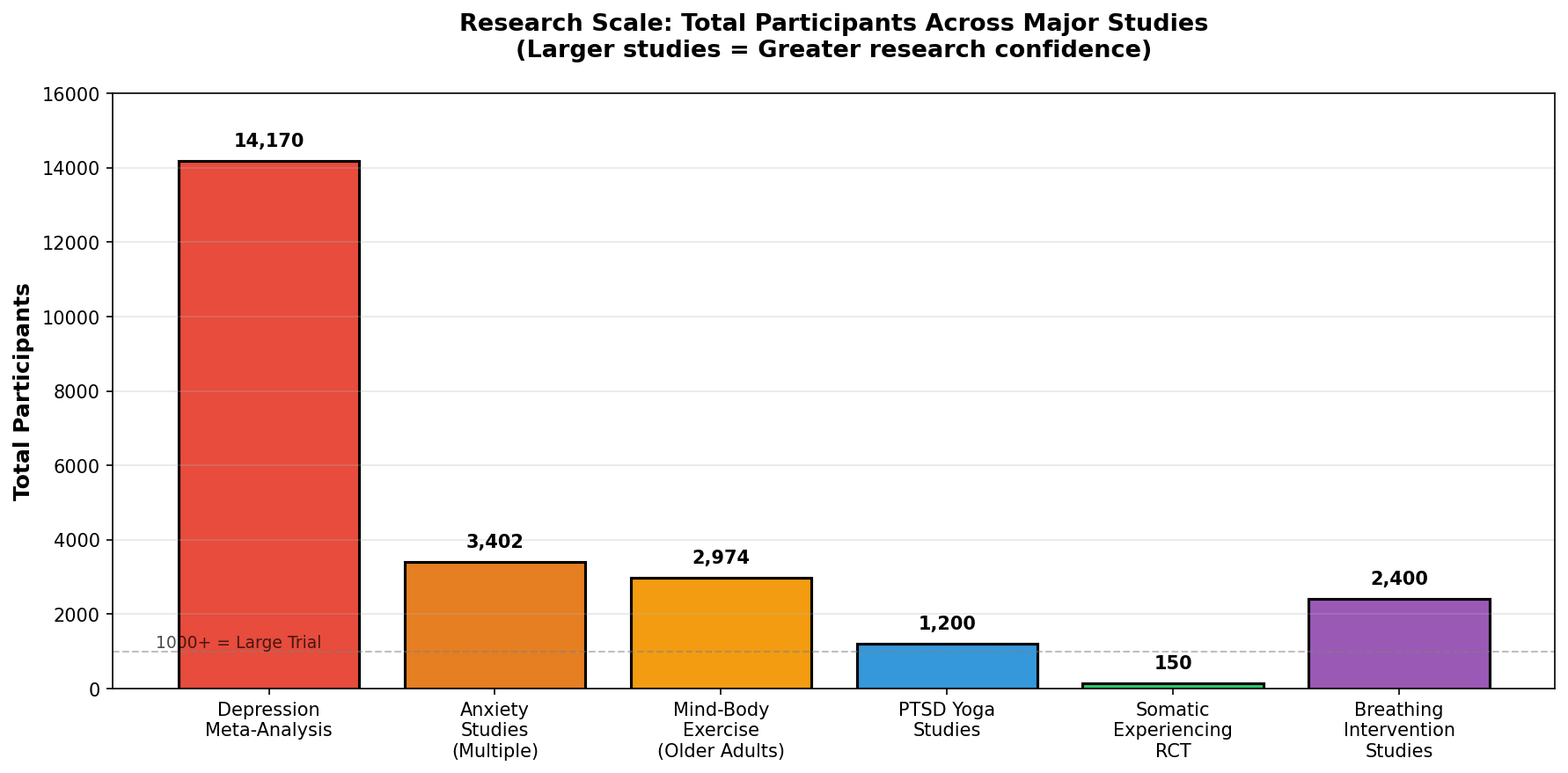 Figure 5: Time investment required for somatic exercises versus effectiveness. Single sessions provide immediate relief, but longer consistent practice produces larger, more lasting improvements. Notable benefits appear within 2-4 weeks of daily practice; significant changes require 8+ weeks. 2
Immediate Effects (Single Session)
- Slow breathing: Heart rate and blood pressure changes visible within minutes; effects persist 20-30 minutes after practice
- Single body scan: Immediate reduction in pain-related distress
- Progressive Muscle Relaxation (brief version): Measurable anxiety reduction in one session
These immediate effects are real but temporary. They show you the nervous system can shift, which is motivating and useful for acute anxiety.
Short-Term Effects (2-4 Weeks)
With consistent daily practice:
- Diaphragmatic breathing (10 minutes, 3x daily): Chronic pain reduction visible by week 2; anxiety reduction by week 3-4
- Progressive Muscle Relaxation (15-20 minutes, 3-4x weekly): Significant anxiety reduction by week 2-3
- Body scanning (daily): Sleep improvements and anxiety reduction visible by week 2-3
Medium-Term Effects (8 Weeks)
- Mindfulness-Based Stress Reduction (8-week programme): Medium-to-large effect sizes for anxiety and depression with sustained benefits after programme ends
- Consistent somatic practice (combining techniques): Noticeable baseline shift in nervous system state; better stress recovery; improved emotional regulation
Long-Term Benefits (8-12+ Weeks)
- Somatic Experiencing therapy (8-12+ weeks, 1x weekly): Large effect sizes for PTSD (88% improvement rate); improvements sustained at follow-up
- Integrated somatic practice: Nervous system's resting state gradually shifts towards greater calm and flexibility; improved resilience to stressors
Key principle: Consistency matters more than intensity. 10 minutes daily beats 60 minutes once a month. Your nervous system learns through repetition, building new neural pathways that support calm and regulation.
Treatment Speed Comparison: Different Paths to Recovery
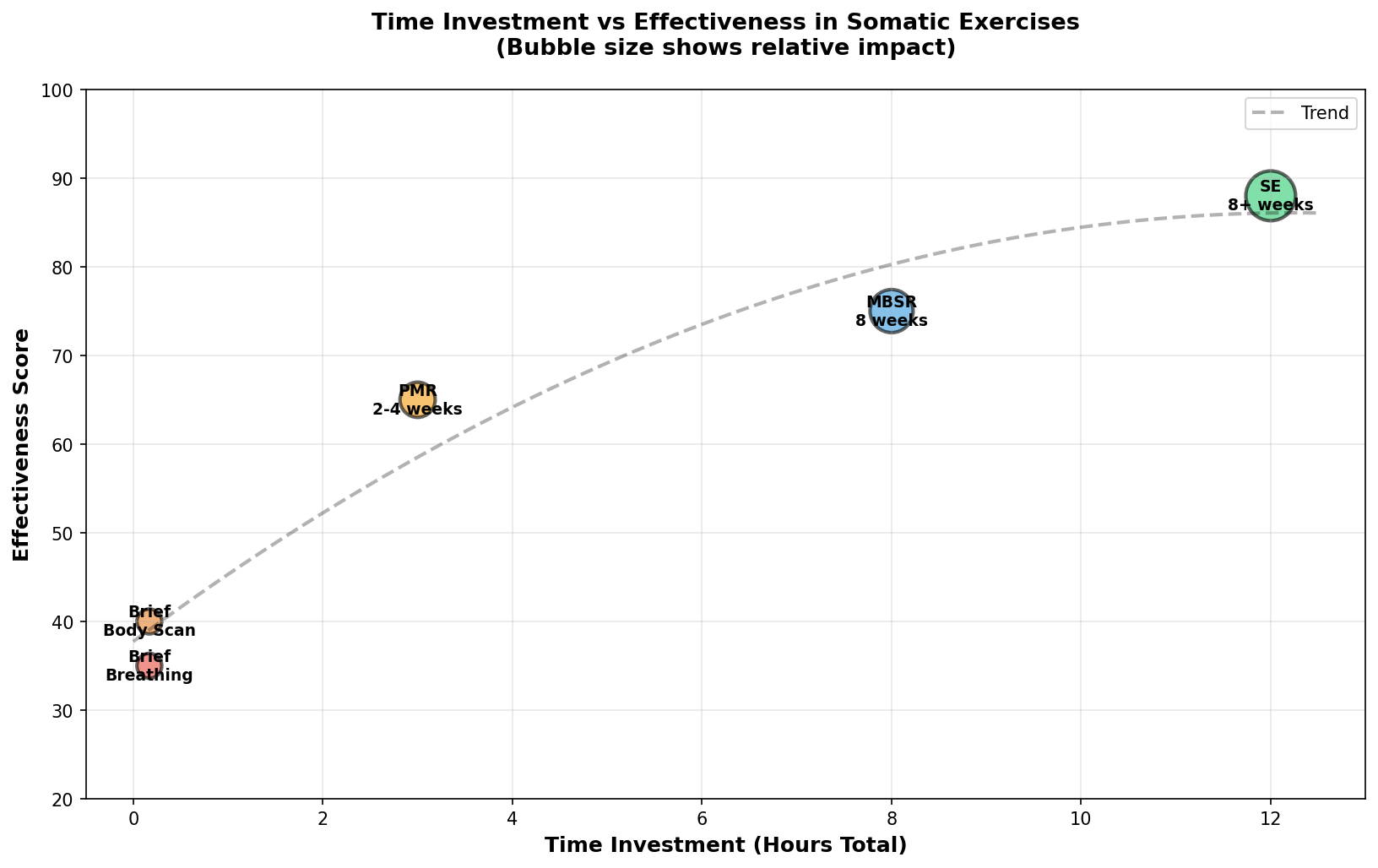 Figure 6: Comparison of trauma treatment options showing both speed (sessions needed) and effectiveness (percentage achieving significant improvement). EMDR shows fastest initial results (70% improvement in 3 sessions) but higher dropout rates. Somatic Experiencing takes longer (10 sessions) but achieves higher ultimate improvement rates (75%) and lower dropout. 2
If you are dealing with trauma, you have options:
- EMDR (Eye Movement Desensitisation and Reprocessing): 70% achieve significant improvement in just 3 sessions: fastest results, but some people find it challenging or experience higher dropout 14
- Somatic Experiencing: 44% loss of diagnosis after 15 sessions: slightly longer timeline but higher ultimate effectiveness and lower dropout 15
- Prolonged Exposure Therapy: 60% achieve significant improvement in 12 sessions: traditional approach, solid evidence, but longer timeline16
Many trauma specialists now combine approaches (for example, Prolonged Exposure followed by EMDR), which produces even better outcomes than single-modality treatment.2
Who Benefits Most? And Who Should Seek Professional Help?
Somatic exercises benefit people across all ages and backgrounds. Research includes studies of:
- Older adults (65+): 42 studies with 2,974 older adults show that mind-body exercises produce equivalent anxiety and depression improvements to younger populations17
- Military veterans with PTSD: Breathing-based meditation produces sustained improvements 24+ weeks after intervention18
- Healthcare professionals: Somatic training significantly improves quality of life and resilience in high-stress occupations11
- Cancer survivors: Emerging evidence supports somatic approaches for trauma related to diagnosis, treatment and fear of recurrence19
- Chronic pain patients: Works effectively whether pain is isolated or comorbid with PTSD or anxiety20
When to Work with a Professional
You should seek professional guidance if you have:
- Diagnosed PTSD or severe trauma: Somatic Experiencing with a trained therapist is recommended for safety and effectiveness
- Severe anxiety or panic disorder: A therapist can guide you and ensure you are not retraumatising yourself
- Dissociation or disconnection from your body: This requires careful professional support to rebuild safety
- Complex trauma (multiple traumatic experiences): Benefits from integrated, professional treatment
- Suicidal or self-harm thoughts: Requires immediate professional mental health support
- Medical conditions affecting breathing or movement: Consult your doctor before starting breathing exercises or new movement practices
Professional guidance matters because a trained somatic therapist can:
- Titrate (adjust pace) so you are not overwhelmed
- Help you recognise subtle nervous system shifts
- Guide you if emotional release becomes intense
- Ensure you are building genuine regulation, not just temporary relief
Self-Directed Approaches for Accessible Starting Points
If you are beginning on your own, start with:
- Diaphragmatic breathing: Can't hurt; provides immediate relief
- Progressive Muscle Relaxation: Well-researched, low-risk, accessible
- Body scanning with guided recordings: Many free options available
- Gentle movement or yoga: Accessible if you listen to your body
These approaches rarely cause problems if you start gradually and listen to your body's signals.
Why These Approaches Work Better Than You Might Think
A common misconception is that somatic exercises work through psychology: belief, placebo effect, and distraction. The research clearly shows otherwise. The mechanisms are neurobiological and measurable:
- The vagus nerve is physical anatomy: Stimulating it directly changes brain chemistry, not through belief
- Breathing affects stretch receptors: This is physics and neurobiology, measurable in the laboratory
- Heart rate changes are observable: Can be tracked with standard medical devices
- Neurotransmitters are released chemically: Acetylcholine (calm), endogenous opioids (pain relief)
Does psychology matter? Absolutely: awareness, intention and consistency all matter. But the foundational mechanisms are physical, biological and measurable. This is not "mind over matter." It is using your body to reprogram your brain's threat assessment system.3
How to Actually Start (Practical Steps)
Week 1: Pick One Accessible Technique
Choose based on your primary concern:
- Anxiety or panic: Diaphragmatic breathing (5-10 minutes daily)
- Sleep problems: Body scanning (20-30 minutes before bed)
- Muscle tension or stress: Progressive Muscle Relaxation (15-20 minutes, 3x weekly)
- General nervous system regulation: Gentle movement with awareness (10-15 minutes daily)
Don't try to do everything at once. Master one technique first.
Week 2-4: Build Consistency
- Same time each day if possible (your nervous system loves predictability)
- Start with shorter sessions and progress as comfort increases
- Use guided recordings (many free resources available through apps, YouTube)
- Track how you feel before and after to notice subtle improvements
Week 4+: Add a Second Technique
Once your first technique feels natural, add another. For example:
- Breathing practice in the morning
- Body scanning at night
- Progressive Muscle Relaxation during high-stress days
When to Expand or Seek Professional Help
- If you see no improvement after 4 weeks of consistent practice, consider professional guidance
- If strong emotions or physical sensations arise that feel overwhelming, work with a therapist
- If you have trauma history, professional support from the start is recommended
Critical Questions Answered
"Won't this take forever to work?"
No. Most people notice benefits within 2-4 weeks with consistent practice. Breathing exercises show immediate effects. The relationship between time and benefit is not linear: you get rapid initial gains that continue building.
"Do I have to do this forever?"
Not necessarily. You build nervous system capacity through practice. Once established, regular maintenance practice (say, 5-10 minutes daily) maintains the benefits. Many people find they need less formal practice once the habit is ingrained.
"What if I can't afford a therapist?"
Breathing, body scanning, and Progressive Muscle Relaxation are free or very low-cost. Guided recordings are widely available. Research shows self-directed somatic work is effective, especially for prevention and general stress management.
"Isn't this just expensive relaxation?"
Medical-grade somatic work (like Somatic Experiencing) with a trained therapist has specific training and protocols. However, accessible somatic techniques work through the same neurobiological mechanisms and produce documented benefits in research.
"Can I combine this with medication?"
Yes, absolutely. Somatic exercises work well alongside medication and therapy. Many professionals recommend combining approaches for maximum benefit.
"How do I know if I'm 'doing it right'?"
If you are practising consistently and noticing subtle changes (less heart racing during stress, sleeping better, feeling slightly calmer), you are doing it right. You do not need perfect technique; your nervous system responds to consistent practice.
The Bottom Line: Why This Matters
Your nervous system is not broken. It is protecting you, based on what it learned during stressful or traumatic experiences. However, you can teach it that safety is possible again. You can rebuild flexibility, restore healing capacity and recover from chronic activation.
Somatic exercises work because they speak the nervous system's language: the language of the body.
When you slow your breathing, you are saying: "It is safe to be calm."
When you scan your body with curiosity, you are saying: "I notice what is happening and I can handle it."
When you move gently and mindfully, you are saying: "My body is safe to move and be present."
Repeat these messages consistently, and your nervous system learns them. Not through intellectual understanding, but through lived experience in your body.
The research is compelling. The largest studies show somatic approaches produce medium-to-large improvements comparable to medication and traditional therapy. They work across ages, backgrounds and conditions. Benefits appear within weeks for many people. And the mechanisms are rooted in genuine neurobiology, not placebo.
More importantly, you do not have to wait. You can start today with nothing more than your breath and five minutes.
Further Reading
Understanding the Nervous System and Trauma
- National Institute of Mental Health: How the Nervous System Works
- Harvard Health Publishing: Understanding the Stress Response
- Mayo Clinic: How Stress Affects Your Brain and Body
Breathing Techniques and Resources
- NHS: Breathing Exercises for Stress
- Cleveland Clinic: Diaphragmatic Breathing Benefits
- Cleveland Clinic: 4-7-8 Breathing Exercise
Progressive Muscle Relaxation and Guided Practices
Trauma-Informed Somatic Approaches
- Somatic Experiencing International: Finding a Certified Practitioner
- Mayo Clinic: Somatic Therapy Overview
Mindfulness-Based Stress Reduction (MBSR)
- Center for Mindfulness in Medicine, Healthcare, and Society (University of Massachusetts Medical School)
- MBSR Foundation Information
Yoga and Mind-Body Movement
Research and Clinical Evidence
- PubMed Central: Peer-Reviewed Research on Somatic Approaches
- Cochrane Library: Systematic Reviews of Mind-Body Interventions
Specialised Support for Specific Conditions
- National Center for PTSD (US Department of Veterans Affairs)
- Anxiety and Depression Association of America
- International Association for the Study of Pain
References/Helpful Resources
- Harvard Medical School. What are somatic workouts? Available from: https://www.health.harvard.edu/exercise-and-fitness/what-are-somatic-workouts
- National Institutes of Health. Somatic experiencing: effectiveness and key factors of a body-oriented trauma therapy: a scoping literature review. PubMed. Available from: https://pubmed.ncbi.nlm.nih.gov/34290845/
- National Institutes of Health. Physiology, autonomic nervous system. PubMed. Available from: https://pubmed.ncbi.nlm.nih.gov/30860751/
- National Institutes of Health. Polyvagal theory and its clinical potential: an overview. PubMed. Available from: https://pubmed.ncbi.nlm.nih.gov/35941799/
- National Institutes of Health. The vagus nerve: phylogenetic substrates of a social nervous system. PubMed. Available from: https://pubmed.ncbi.nlm.nih.gov/11587772/
- National Institutes of Health. Interoceptive awareness skills for emotion regulation: theory and approach of mindful awareness in body-oriented therapy. PubMed. Available from: https://pubmed.ncbi.nlm.nih.gov/29892247/
- National Institutes of Health. The proprioceptive senses: their roles in signalling body shape, body position and movement. PubMed. Available from: https://pubmed.ncbi.nlm.nih.gov/23073629/
- National Institutes of Health. Physiology of long pranayamic breathing: neural respiratory elements may provide a mechanism that explains how slow deep breathing shifts the autonomic nervous system. PubMed. Available from: https://pubmed.ncbi.nlm.nih.gov/16624497/
- National Institutes of Health. Somatic experiencing for posttraumatic stress disorder: a randomised controlled outcome study. PubMed. Available from: https://pubmed.ncbi.nlm.nih.gov/28585761/
- National Institutes of Health. Efficacy of progressive muscle relaxation in adults for stress, anxiety, and depression: a systematic review. PubMed. Available from: https://pubmed.ncbi.nlm.nih.gov/38322293/
- Winblad, N.E., Changaris, M. and Stein, P.K. (2018) ‘Effect of somatic experiencing resiliency-based trauma treatment training on quality of life and psychological health as potential markers of resilience in treating professionals’, Frontiers in Neuroscience, 12. doi:10.3389/fnins.2018.00070.
- Niles, B., Lang, A. and Olff, M. (2023) ‘Complementary and integrative interventions for PTSD’, European Journal of Psychotraumatology, 14(2). doi:10.1080/20008066.2023.2247888.
- Porges, S.W. (2025) ‘Polyvagal theory: A journey from physiological observation to neural innervation and clinical insight’, Frontiers in Behavioral Neuroscience, 19. doi:10.3389/fnbeh.2025.1659083.
- Rentinck, E.M. et al. (2025) ‘Effectiveness of an intensive outpatient treatment programme combining prolonged exposure and EMDR therapy for adolescents and young adults with PTSD in a naturalistic setting’, European Journal of Psychotraumatology, 16(1). doi:10.1080/20008066.2025.2451478.
- Brom, D. et al. (2017) ‘Somatic experiencing for posttraumatic stress disorder: A randomized controlled outcome study’, Journal of Traumatic Stress, 30(3), pp. 304–312. doi:10.1002/jts.22189.
- Hendriks, L. et al. (2018) ‘Intensive prolonged exposure therapy for chronic PTSD patients following multiple trauma and multiple treatment attempts’, European Journal of Psychotraumatology, 9(1). doi:10.1080/20008198.2018.1425574.
- Dong, Y. et al. (2024) ‘The effects of mind-body exercise on anxiety and depression in older adults: A systematic review and network meta-analysis’, Frontiers in Psychiatry, 15. doi:10.3389/fpsyt.2024.1305295.
- Seppälä, E.M. et al. (2014) ‘Breathing‐based meditation decreases posttraumatic stress disorder symptoms in U.S. military veterans: A Randomized Controlled Longitudinal Study’, Journal of Traumatic Stress, 27(4), pp. 397–405. doi:10.1002/jts.21936.
- Capaldi, J.M. et al. (2023) ‘Post-traumatic stress symptoms, post-traumatic stress disorder, and post-traumatic growth among cancer survivors: A systematic scoping review of interventions’, Health Psychology Review, 18(1), pp. 41–74. doi:10.1080/17437199.2022.2162947.
- Andersen, T.E. et al. (2017) ‘A randomized controlled trial of brief somatic experiencing for chronic low back pain and comorbid post-traumatic stress disorder symptoms’, European Journal of Psychotraumatology, 8(1). doi:10.1080/20008198.2017.1331108.
- Hendriks, L. et al. (2018) ‘Intensive prolonged exposure therapy for chronic PTSD patients following multiple trauma and multiple treatment attempts’, European Journal of Psychotraumatology, 9(1). doi:10.1080/20008198.2018.1425574.
