

Why Your Employer Should Care About Cancer Screening: The Financial and Human Case
If your workplace offers cancer screening as a benefit, you might think it's just another wellness perk. But behind this offer lies a compelling story about money, survival rates, and what happens when companies actually prioritize catching disease early. For employers, cancer screening isn't just the right thing to do; it's one of the smartest financial decisions they can make. For employees, it could literally be lifesaving.
Cancer is no longer a distant threat for tomorrow. It's the number-one healthcare cost driver for employers today, and it's spiralling. Yet there's a quiet revolution happening in forward-thinking companies that's bending the cost curve while saving lives. This is the business case for cancer screening, and it matters whether you work in a multinational corporation or a small business.
The Crisis Employers Face: Cancer Costs Are Out of Control
Cancer spending in America is skyrocketing. Healthcare costs for cancer reached £222 billion in 2025 and are projected to hit £246 billion by 2030; a staggering 34-50% increase from just 15 years earlier.1 To put this in perspective, cancer now accounts for 16% of total employer healthcare spending, surpassing musculoskeletal conditions as the single biggest cost driver for the first time.2
What's driving this explosion? Three things: more cancer cases (especially as the workforce ages), treatment options that cost more than ever, and the toxic combination of both.
The new cancer drugs don't come cheap. 44% of newly approved cancer medications cost over £150,000 per year (up from just 7% in 2017).2 Gene and cell therapies run between £200,000 and £3.2 million per dose.2 For a company with 5,000 employees, even one employee needing advanced cancer treatment can cost millions.
And here's the part most people miss: cancer affects not just healthcare spending. Employers lose an additional £139 billion annually to absenteeism and lost productivity from employees with cancer, compared to £125 billion in direct treatment costs.3 For every pound spent on healthcare benefits, employers spend an additional 61 pence on illness-related absence, disability, and reduced output.3
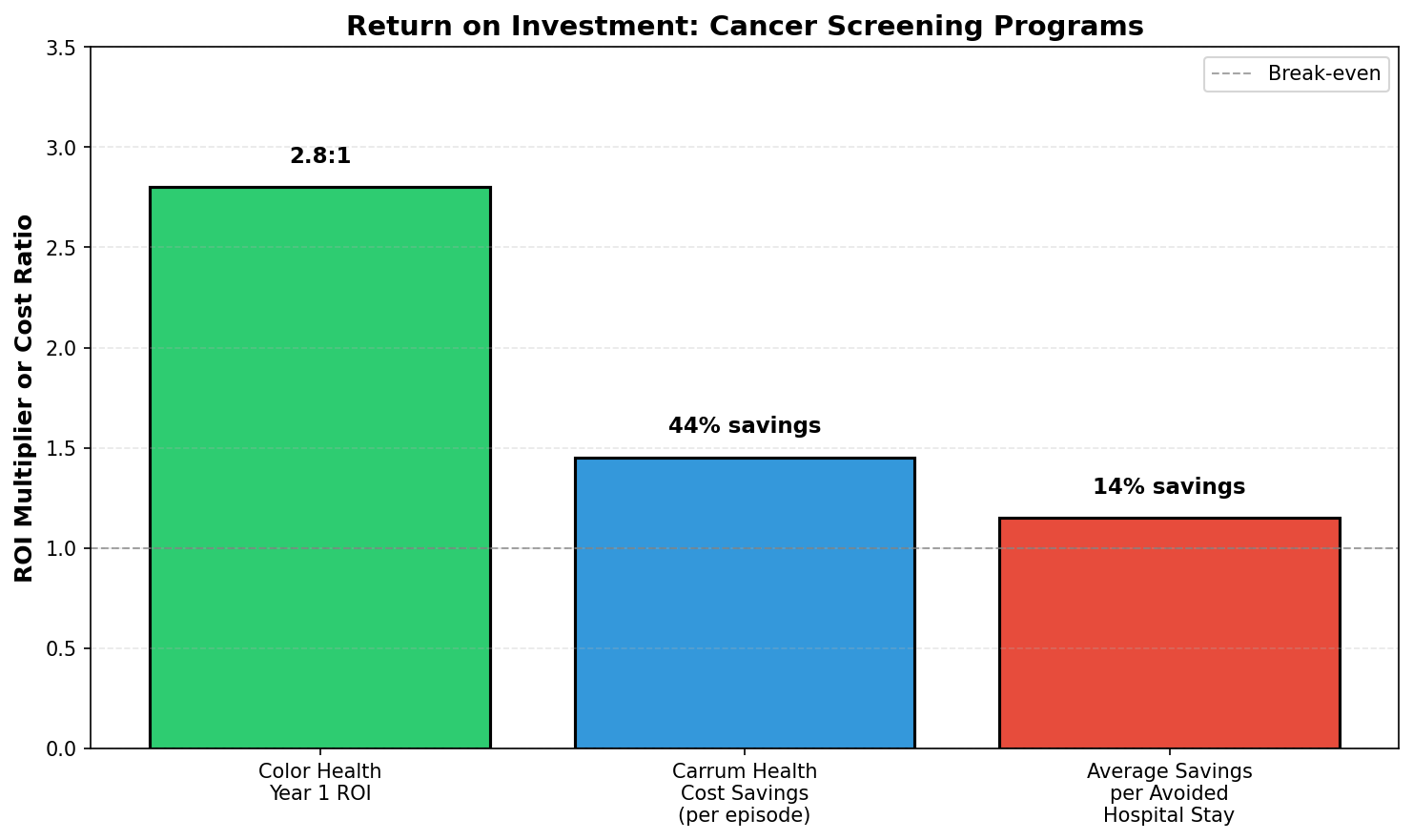 Figure 1: Annual cancer healthcare spending is rising dramatically, with growth at 9% per year (four times faster than inflation).1
The numbers are sobering. Yet they also reveal opportunity. Because whilst treatment costs are soaring, early detection can dramatically change the financial picture.
The Discovery That Changes Everything: Early Detection Transforms Outcomes
Here's the fundamental insight that employers are beginning to act on: when cancer is caught early, it costs 2-4 times less to treat and survival rates improve dramatically.1
Take colorectal cancer as the best example. A person diagnosed at Stage 1 faces treatment costs of approximately £59,000 and has a 90% chance of surviving five years.1 The same cancer diagnosed at Stage 4 costs £204,000 for treatment in the first year alone and has only a 14.6% survival rate.1 That's a difference of £145,000 per patient, plus a 6-fold improvement in survival.
Breast cancer tells a similar story. Early-stage breast cancer treatment costs roughly £61,000 over two years. Advanced breast cancer costs £182,000 over the same period; a 154% increase.1 And the survival gap is equally stark: nearly 100% for early-stage disease versus just 23-32% for advanced disease.1
Lung cancer shows an even more dramatic survival difference: 64% of people with early-stage lung cancer survive five years; just 9% with late-stage disease make it that far.1 That's a 7-fold difference in survival probability.
These aren't small variations. They're the difference between curable and devastating.
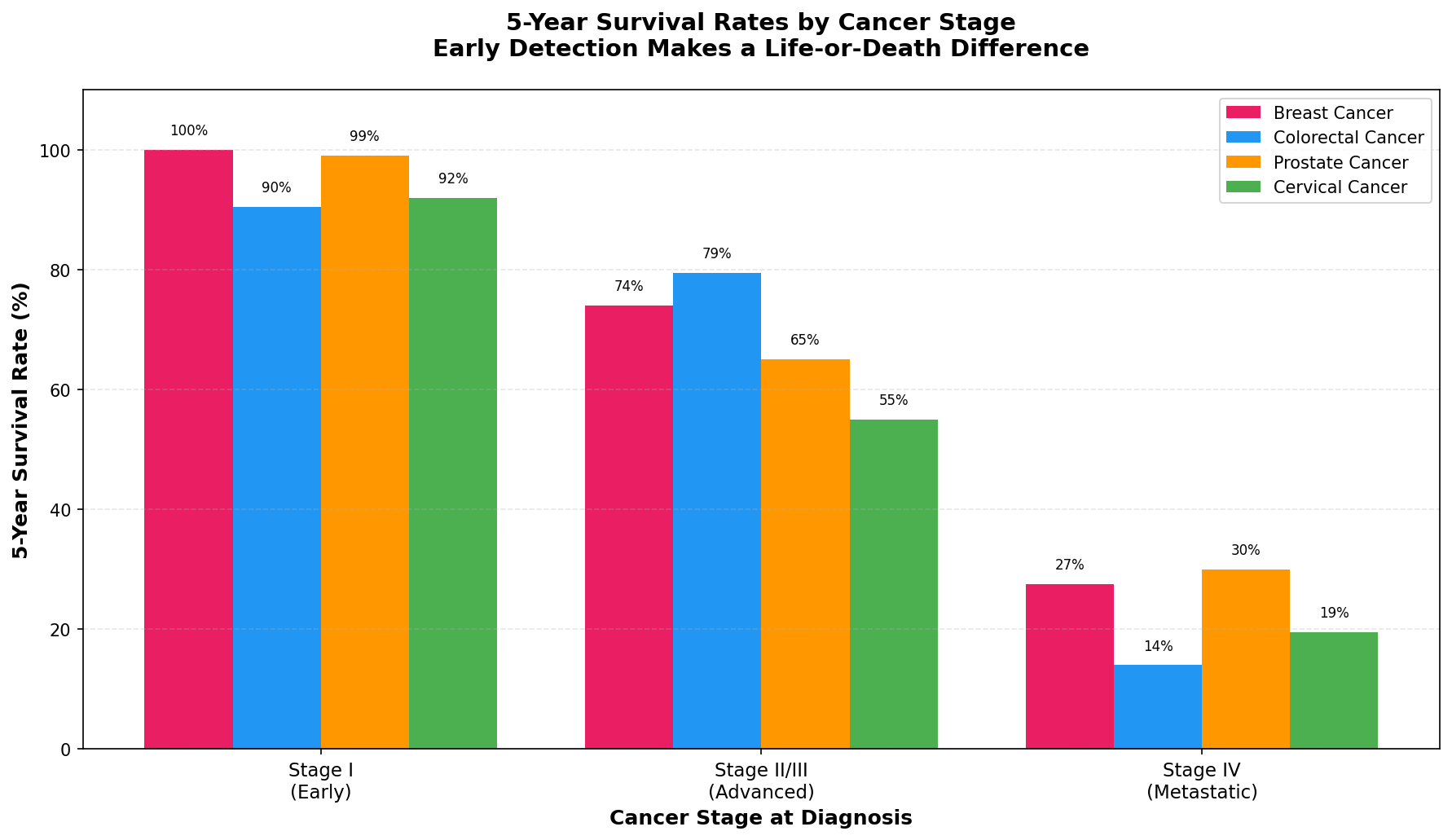 Figure 2: Five-year survival rates vary dramatically by stage at diagnosis. Early-stage cancers have 90-100% survival; advanced cancers have 15-30%.1
The tragedy is this: approximately 50% of all cancers are still diagnosed at an advanced stage.1 This means half of cancer patients immediately face worse treatment outcomes, higher costs, and more intensive, disruptive therapy. Yet screening can shift this equation entirely.
The Money: What Employers Actually Save
When employers invest in cancer screening programmes, they see measurable financial returns. And they see them quickly.
Employers report a 2.8:1 return on investment in the first year alone.1 That means for every pound spent on screening, companies recover £2.80 in direct cost savings. Some leading screening providers back this with a 1:1 annual ROI guarantee.1 The payback period averages five years, as savings from prevented late-stage diagnoses accumulate over time.1
Where does the money come from? Several places:
Direct treatment cost avoidance. One early colorectal cancer detected at Stage 1 instead of Stage 4 saves the employer approximately £145,000 in direct treatment costs.1 Across breast, prostate, and lung cancers, lifetime savings from early detection range from £21,000 to £59,000 per patient.1
Care coordination savings. When screening is integrated with specialised cancer centres, employers see:
- £15,000 average savings per avoided hospital stay1
- 20% reduction in costs per treatment episode through coordinated care1
- Up to 30% reduction in unnecessary procedures when screening is coordinated with clinical teams1
- Up to 45% cost savings per episode when proper care coordination is established1
Productivity gains. Employees with cancer lose approximately 80 work hours annually on average; that's ten full working days per year.3 Advanced-stage cancer diagnoses result in 60 additional workdays lost compared to early-stage.3 When screening catches cancer early, employees return to productivity faster and lose fewer days overall.
Retention benefits. Health insurance significantly impacts employee turnover. Married employees with health insurance show 35-59% lower turnover rates compared to those without.1 When that insurance includes proactive cancer screening, employees stay longer and require less costly replacement hiring.
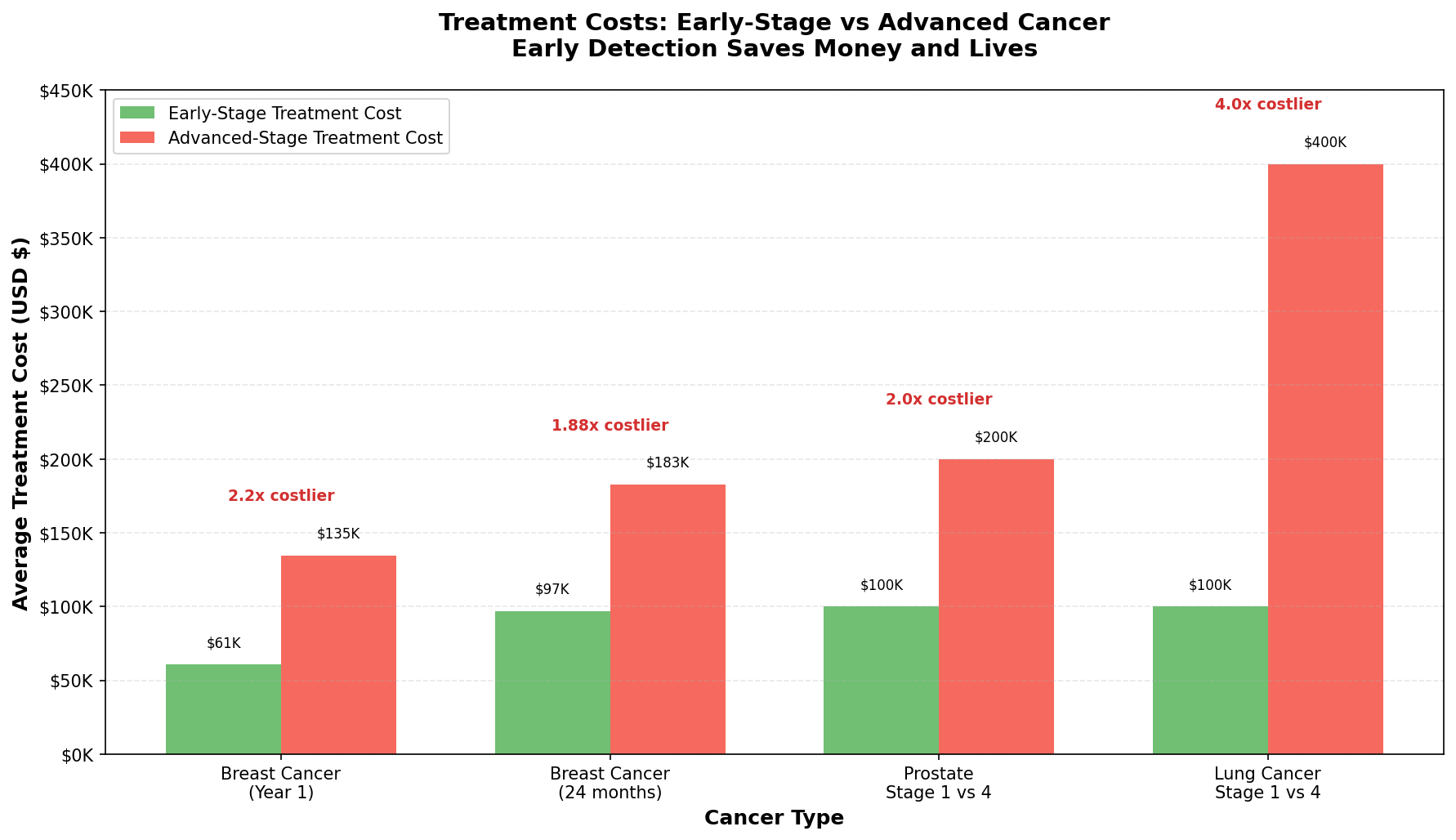 Figure 3: Employers achieve a 2.8:1 return on investment in the first year, with payback periods averaging five years through cost avoidance and productivity gains.1
Why This Matters to Employees: It's About Survival and Life
Before we get lost in the spreadsheets, let's pause on what these numbers mean for actual people.
An employee at age 48 gets a screening mammogram and is diagnosed with Stage 1 breast cancer. Caught early, she undergoes breast-conserving surgery and six weeks of radiation. She can work throughout treatment. Five-year survival is nearly certain. She returns to full productivity within months.
The same employee diagnosed at Stage 4 breast cancer undergoes six to twelve months of chemotherapy with severe side effects. She loses months of work. She requires hospitalisation during treatment complications. She endures permanent nerve damage and potential heart damage from chemotherapy. Her five-year survival probability drops from 95% to roughly 25%.
The difference isn't just financial. It's the difference between a health crisis and a health catastrophe.
Screening also provides something psychological that shouldn't be underestimated: knowing your health status reduces anxiety and provides a sense of control.4 Regular screening creates peace of mind. When results are normal, employees can focus on their jobs and families instead of carrying worry. When results show risk or disease, they're caught early enough to intervene.
For lower-income workers, workplace screening is often transformative. Screening disparities are highest among low-income workers, people without health insurance, and those without paid time off for medical appointments.4 When an employer provides screening on-site, covers the cost completely, and grants paid time off for appointments, they're removing barriers that have historically prevented entire populations from accessing preventive care.
What Effective Cancer Screening Looks Like: The Elements That Work
Not all cancer screening programmes are equally effective. The difference between a programme that reaches 5% of eligible employees and one that reaches 60% comes down to specific design choices.
Financial Barriers Must Be Completely Removed
The most effective programmes offer 100% coverage of preventive cancer screenings with no copays or deductibles.5 This sounds expensive, but it's the foundation. When even a single copay exists, participation drops. One effective programme combined this with financial incentives (gift cards, wellness points, HSA contributions) for completion.5
Paid Time Off Specifically for Screening Is Essential
Time constraints are the second-largest barrier after cost. Effective programmes provide dedicated paid time off specifically for cancer screenings; not deducted from annual leave or sick time.5 One employer programme offering four hours of paid time off annually specifically for cancer screening saw participation rates increase dramatically compared to programmes relying on employees taking unpaid leave.
Screening Must Come to Employees
Mobile and on-site screening dramatically increases participation. Programmes using mobile mammography vans, on-site blood tests, or workplace clinics see significantly higher participation rates and better follow-up coordination.5 One employer programme found that 90% of employees wouldn't have completed screening if mobile services hadn't been provided by their employer.4
Communication Must Be Continuous and Personal
Year-round, targeted communication works far better than awareness campaigns limited to designated months. The most effective programmes use:
- Personal employee testimonials and stories from colleagues who've had screening or detected cancer early5
- Regular, varied messaging across email, posters, health fairs, and lunch-and-learn sessions
- Data-driven outreach targeting employees overdue for screening
- Culturally sensitive messaging developed with employee resource groups
The impact of personal stories is measurable. One programme featuring an employee's cancer journey in video testimonials saw substantially higher screening engagement than clinical information alone.5
Personalised Outreach Based on Data Is Powerful
Programmes using claims data to identify employees overdue for recommended screening, then deploying nurse navigators to provide personalised outreach, have achieved 15% increases in early-stage diagnoses for breast and colorectal cancer within two years.5
Comprehensive Care Coordination Matters
The best programmes don't stop at screening. They include:
- Clear pathways for follow-up when abnormal results are found
- Nurse navigators or care coordinators to help interpret results and arrange follow-up
- Integration with specialist cancer centres for treatment when needed
Employers partnering with specialist cancer centres of excellence see 20-45% cost savings per treatment episode and up to 30% reduction in unnecessary procedures.5
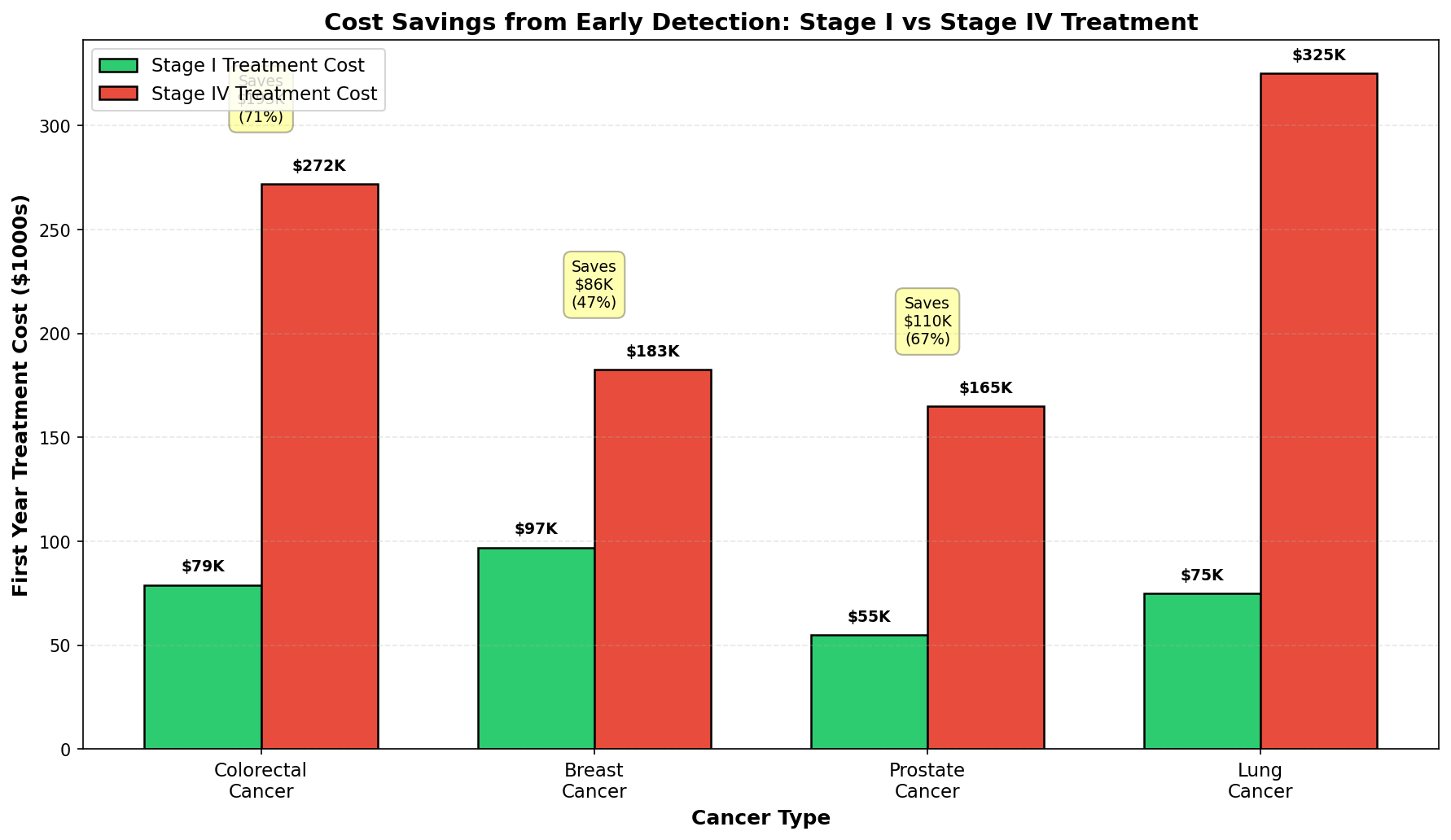 Figure 4: Current screening participation rates fall short of targets across all cancer types, with particularly large gaps for younger women (45-49) and high-risk individuals.1
The Current State: Where Employers Stand in 2025
The workplace cancer screening revolution is already underway, though unevenly distributed. 87% of employers plan to implement at least one cancer screening method by 2025.5 This represents a significant shift, recognising cancer as a strategic healthcare priority rather than an afterthought.
Yet significant challenges remain:
72% of benefits leaders report their health plans aren't successfully getting enough employees screened despite having programmes in place.5 This reveals the participation gap: availability doesn't equal uptake.
Only 14% of diagnosed cancers are currently detected through recommended screening programmes.1 The other 86% are found through symptoms, meaning they're already advanced. This represents an enormous missed opportunity for early detection.
83% of employers cannot measure return on investment with their current cancer solutions.5 This measurement gap makes it harder for companies to justify expanded investment, even though the ROI is clearly there.
Despite these challenges, momentum is building. 70% of employers have increased focus on improving cancer screening access over the past three years.2 Sophisticated employers are moving beyond simply offering screening to designing comprehensive programmes addressing barriers.
Employee Perspectives: What Workers Actually Want
There's a significant gap between what employees want and what employers currently offer. 83% of employees surveyed said they would use a cancer screening programme if available at work.5 Yet only 28% of employers currently offer reproductive and preventive cancer screening benefits.4
The interest isn't limited to older workers. Preventive cancer screening ranks among the top three most valuable benefits for Gen Z and the number-one most valuable benefit for all other working generations.4 It's particularly important for remote workers, caregivers, and people with below-median earnings; the populations most likely to face barriers to screening outside work.4
Women show particularly strong preferences. 60% of working women said their loyalty to employers would increase if breast cancer screening were offered.4 More than 80% of women surveyed believed companies offering cancer screening value their employees' health.4
For lower-income workers, the value is even more stark. Screening access at work removes insurmountable barriers: the need to take unpaid time off, transportation costs, lack of a regular healthcare provider, and out-of-pocket expenses. Workplace screening is transformative for these populations.
The Equity Argument: Why Workplace Screening Addresses Health Disparities
Cancer screening disparities follow predictable socioeconomic lines. Screening disparities are most severe among low-income workers, uninsured or underinsured workers, blue-collar workers, rural workers, and those without paid medical leave.4
Without workplace screening programmes, these populations simply don't get screened. Workplace programmes directly address these barriers:
- Paid time off for screening removes income loss for hourly workers
- On-site or mobile screening eliminates transportation barriers for rural workers
- Multi-language support and culturally competent communication address barriers for recent immigrants
- No cost removes financial barriers for uninsured workers
Blue-collar workers experience the greatest health barriers and utilise preventive healthcare least4, yet they benefit most from workplace screening programmes. When employers remove barriers, these historically underserved populations finally access the preventive care that's been available to higher-income workers for years.
This isn't just equity; it's sound business. Healthier, more engaged employees are more productive and more loyal, regardless of income level.
The Productivity Impact: Beyond Medical Costs
Cancer's impact on workplace productivity often gets overlooked in favour of treatment cost discussions. Yet it's substantial.
Employees with cancer lose approximately 80 incremental work hours annually on average; roughly ten full working days per year.3 This includes absence from work, short-term disability, and long-term disability. For advanced-stage cancers, the number jumps to 106 workdays lost in the first year alone.3
Presenteeism (working while sick or impaired) accounts for 18-60% of all productivity-related costs associated with cancer.3 Employees with cancer often continue showing up, but functioning at reduced capacity.
Beyond the individual employee, there's cascading impact: caregiver burden affects workplace attendance of family members employed by the same company.
During a 20-year period, employees with cancer utilised sick leave at 65-199% above baseline (more than double normal), short-term disability at 81-116% above baseline, long-term disability at 97-305% above baseline, and workers' compensation at 65-293% above baseline.2
The accumulated financial impact is striking: cancer costs employers £264 billion annually in combined direct treatment costs (£125 billion) and productivity loss (£139 billion).3
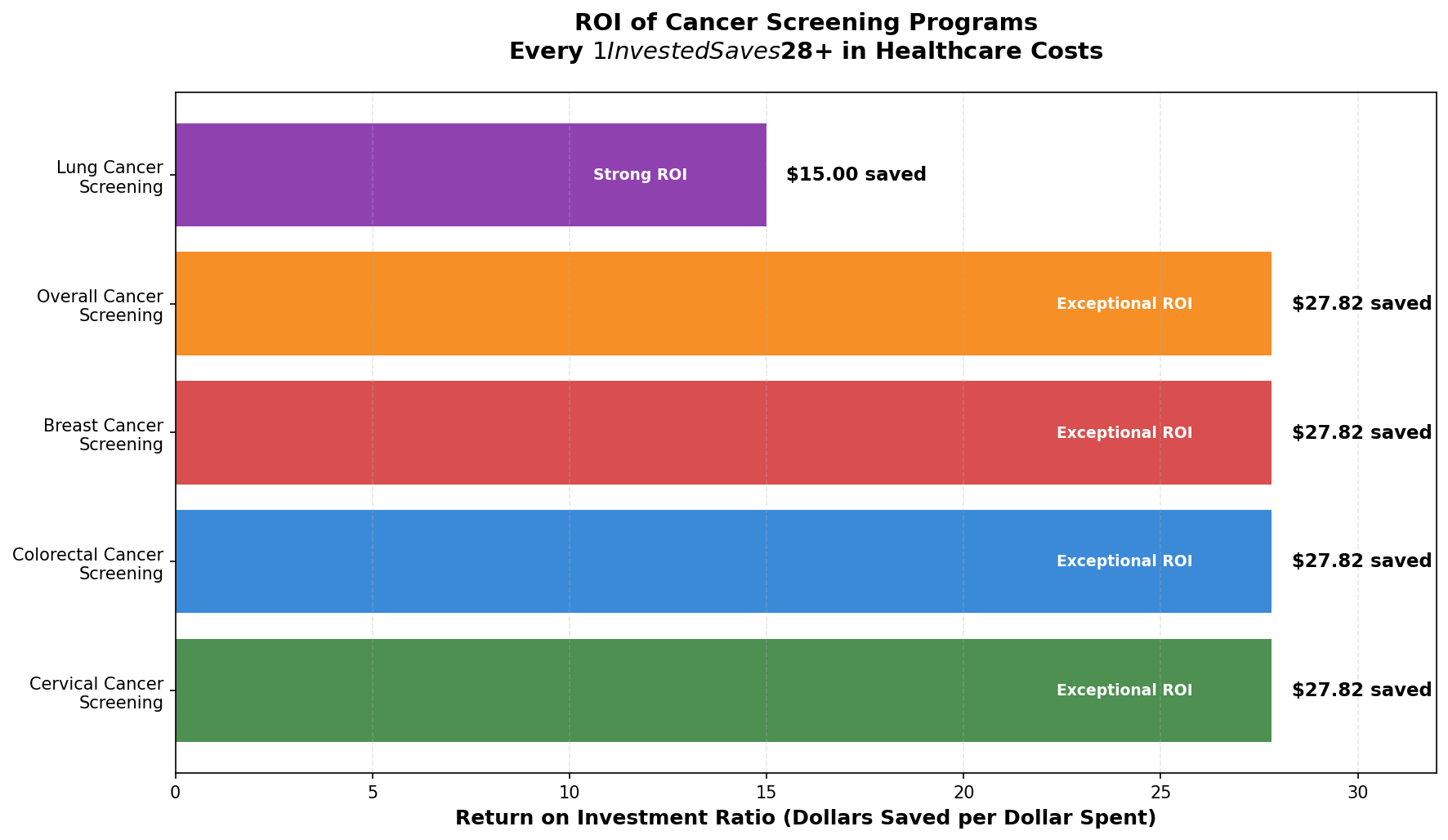 Figure 5: Employees with cancer lose an average of 80 annual work hours, with advanced-stage diagnoses creating 60 additional days of lost productivity compared to early-stage disease.3
Early detection changes this calculus. Employees diagnosed early undergo less intensive treatment, lose fewer workdays, and return to productivity faster. The productivity benefit alone justifies screening investment.
The Screening Potential: What Could Be Prevented
Current screening rates fall short of what's possible. The gap between current participation and optimal participation represents tens of thousands of preventable cancer deaths annually.
If screening participation increased by just 10 percentage points across major cancer types:
- Colorectal cancer deaths would be prevented: 11,070 annually1
- Breast cancer deaths prevented: 1,790 annually1
- Cervical cancer deaths prevented: 1,710 annually1
- Lung cancer deaths prevented: 1,010 annually1
- Total additional lives saved annually: approximately 16,0001
Looking at historical impact: between 1975 and 2020, prevention and screening interventions together prevented approximately 5.94 million cancer deaths from just five major cancer types.1 Between 1991 and 2021, the overall cancer death rate fell by 33%, translating to 4.1 million fewer cancer deaths.1
Here's the crucial finding: 80% of cancer deaths averted since 1975 resulted from prevention and screening; only 20% from treatment advances.1 This completely inverts the common assumption that breakthrough cancer drugs save most patients. The reality: early detection is far more powerful than waiting until advanced treatment is needed.
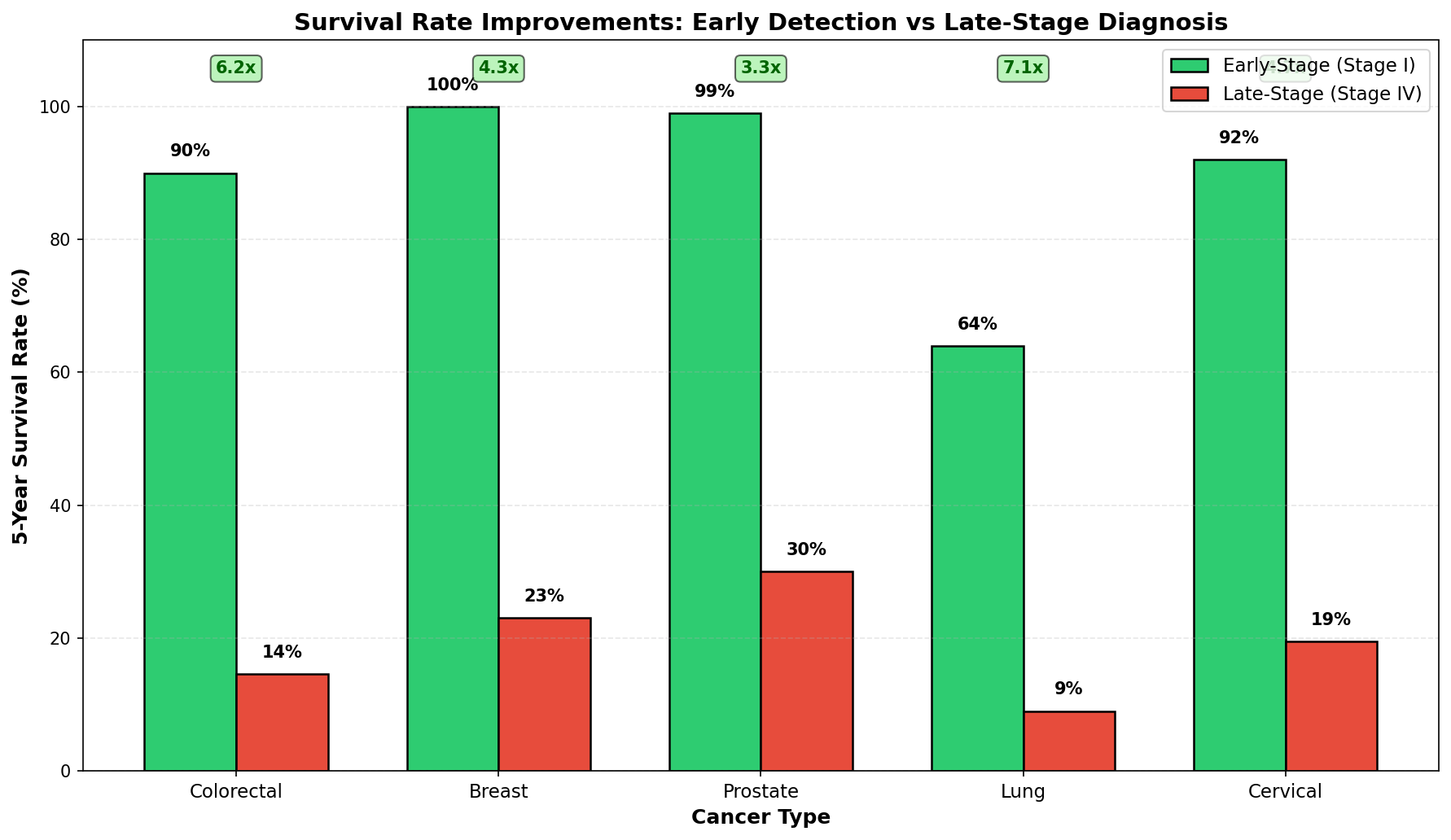 Figure 6: A 10-point increase in screening participation could prevent approximately 16,000 cancer deaths annually. Prevention and screening account for 80% of cancer deaths averted since 1975.1
Implementation: How Employers Get Started
For employers new to cancer screening programmes, a phased approach works best:
Year 1: Foundation
- Conduct a workforce health assessment identifying cancer burden and risk factors
- Ensure 100% coverage of evidence-based, age-appropriate screenings in the health plan
- Implement paid time off policy specifically for cancer screening
- Begin employee education about screening importance
- Launch initial screening for the highest-impact cancer type (often colorectal, which is most cost-effective)
Year 2: Expansion and Optimisation
- Deploy on-site or mobile screening for highest-risk populations
- Implement data-driven nurse navigator outreach to employees overdue for screening
- Create employee testimonial campaigns featuring colleagues' screening experiences
- Expand to a second cancer type (often breast cancer)
- Establish clear follow-up procedures for abnormal results
Year 3: Integration and Sustainability
- Integrate cancer screening into occupational health surveillance
- Add prostate and cervical cancer screening
- Evaluate ROI and adjust programme based on data
- Explore partnerships with cancer-focused centres of excellence
- Plan long-term sustainability and continued expansion
Organisations with existing programmes should focus on measurement, identifying barriers, and personalising outreach using data analytics.
The Financial Case in Context: What's at Stake
The business case for cancer screening is fundamentally straightforward:
Upfront investment: Typical employer screening programme costs range from £150-375 per eligible employee annually.3 For a 5,000-person company, this represents an investment of £750,000–£1.875 million annually.
Returns in Year 1: A 2.8:1 return on investment means employers recover £2.1–5.25 million in direct cost avoidance and productivity gains in the first year alone.1
Long-term returns: As early-stage cancers detected in Year 1 move into treatment, cost differences between early and late-stage disease accumulate. A single early colorectal cancer diagnosis nets the employer £145,000 in cost savings compared to late-stage presentation.1
Retention and morale: Employees who feel supported through health challenges demonstrate higher loyalty and lower turnover. Retaining just five employees through better health benefits typically saves £112,500–£450,000 in replacement costs.3
Competitive advantage: In tight labour markets, robust health benefits (especially proactive screening) differentiate employers as genuine healthcare partners rather than benefits providers merely checking boxes.
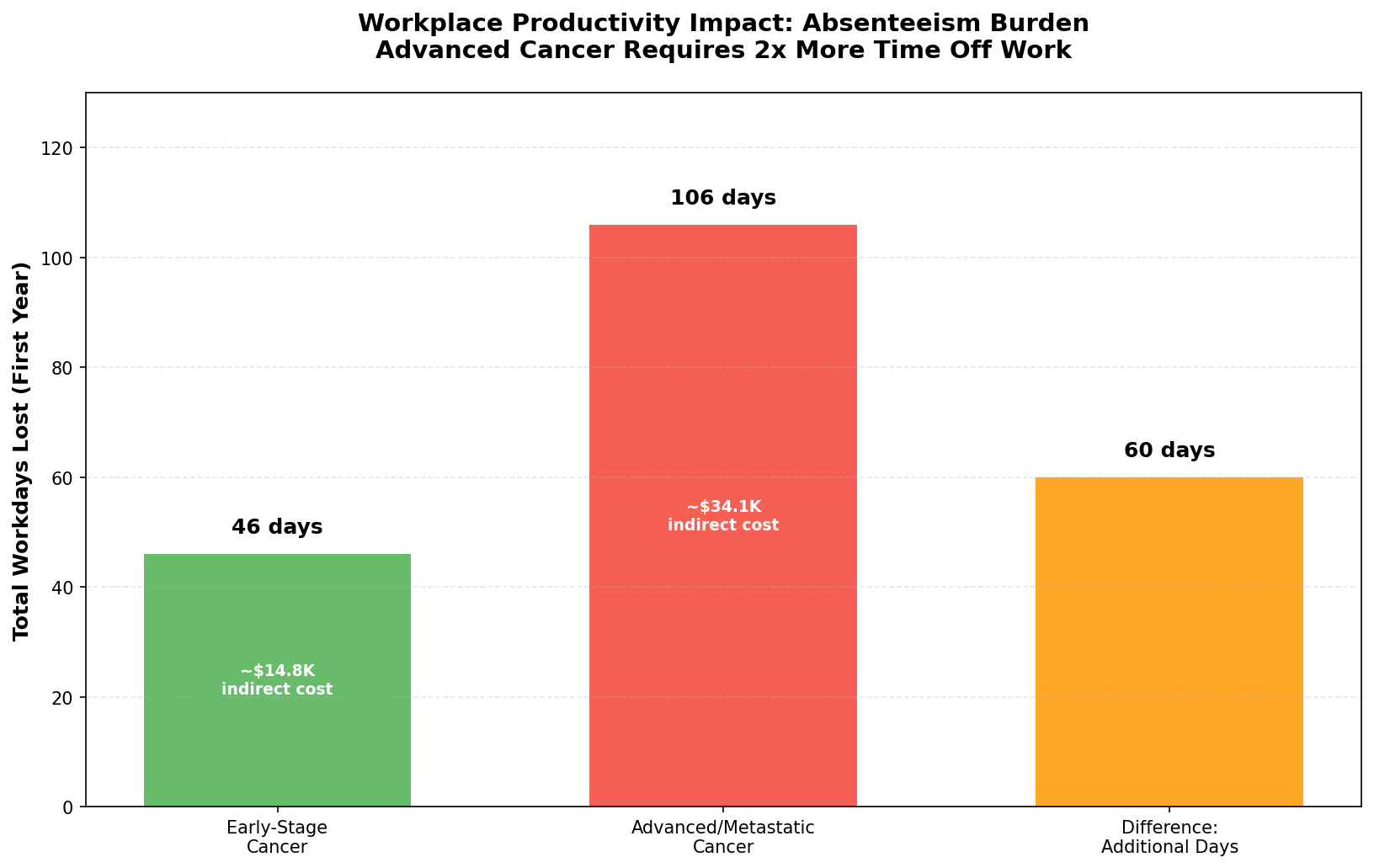 Figure 7: Treatment costs for advanced-stage cancer range from 2-7 times higher than early-stage disease, with colorectal cancer showing a £145,000 difference between Stage 1 and Stage 4.1
The Barriers Employers Face (And How to Overcome Them)
Despite clear financial justification, implementation challenges prevent some employers from acting:
Participation gaps. Simply offering screening doesn't guarantee uptake. Solving this requires removing every barrier: financial, logistical (through on-site/mobile screening), temporal (through dedicated paid time off), and educational (through continuous, personal communication).
Measurement challenges. 83% of employers report they cannot measure ROI with current cancer solutions.5 This creates a knowledge gap, making it harder to justify continued investment. Sophisticated data analytics and claims integration can solve this, allowing employers to track screening participation, early-stage detection rates, and cost impact over time.
Small company constraints. Large employers have dedicated resources for programme implementation. Small and mid-sized employers often lack HR infrastructure to manage comprehensive programmes. Solutions include third-party vendors specialising in workplace screening, outsourced nurse navigator services, and mobile screening providers who handle logistics.
Workforce diversity. Different employee populations face different barriers. Shift workers, remote employees, construction workers, and hourly workers without standard worksites need customised approaches. Successful programmes tailor screening access to workforce characteristics rather than forcing all employees into identical pathways.
Competing priorities. With healthcare budgets constrained, cancer screening competes with other health initiatives. The key is demonstrating that screening actually reduces overall healthcare spending by preventing expensive late-stage treatment.
What's Next: The Future of Workplace Cancer Screening
The trajectory is clear. 87% of employers will have cancer screening programmes by 2025.5 49% plan to add specialist cancer centres of excellence by 2025.5 70% have increased screening focus in the past three years.2
Yet significant opportunity remains. Current screening rates still fall far short of potential. Participation declines suggest that merely offering screening isn't sufficient; programme design and barrier removal are critical.
Forward-thinking employers recognise that cancer screening isn't peripheral to business strategy; it's central to workforce health and cost management. Companies investing thoughtfully in comprehensive screening programmes gain competitive advantage through better health outcomes, engaged employees, and lower healthcare costs.
The Bottom Line: Why This Matters
For employers, cancer screening is a high-ROI healthcare investment that simultaneously improves clinical outcomes, increases employee retention, and reduces healthcare spending.
For employees, access to workplace cancer screening can be literally lifesaving. Early detection creates survival advantages of 4-7 fold over late diagnosis. It means faster recovery, less intensive treatment, and better quality of life during and after care.
For lower-income workers and those without reliable healthcare access, workplace screening removes barriers that have historically prevented entire populations from participating in preventive care.
The evidence is overwhelming. Screening works. Early detection saves lives and money. Thoughtfully designed programmes overcome barriers and increase participation. Companies implementing comprehensive cancer screening programmes see meaningful returns whilst helping employees catch disease early.
The question isn't whether cancer screening as an employee benefit makes sense. The question is why every employer isn't prioritising it.
Further Reading
Screening Guidelines and Clinical Standards
- American Cancer Society Cancer Screening Guidelines
- United States Preventive Services Task Force Cancer Screening
- CDC Cancer Screening Recommendations
- NHS Cancer Screening Programmes UK
- National Institute for Health and Care Excellence (NICE) Cancer Guidance
Employer Cancer Screening and Workplace Programmes
- Color Health Employer Insights Report 2025
- Business Group on Health Cancer Resources
- Carrum Health Cancer Benefits Guide for HR
- Johns Hopkins Healthcare Solutions: Employer Cancer Screening Strategies
- MSK Cancer Center Employer Blueprint
Financial Impact and ROI
- National Cancer Institute Economic Burden of Cancer
- University of Michigan Study: Cancer Screenings Save $6.5 Trillion
- NIHCM Foundation: Insights on Cancer Rates, Costs, and Strategies
- Integrated Benefits Institute: Productivity Loss from Cancer
Employee Wellbeing and Retention
- CDC Workplace Health Promotion Resources
- McKinsey Health Institute: Thriving Workplaces
- Surgeon General Workplace Well-Being Report
- American Cancer Society Health Equity Resources
Screening Effectiveness and Evidence
- BMC Cancer: Effectiveness of Workplace Cancer Screening Interventions
- Cancer Trends Progress Report
- Cochrane Library: Cancer Screening Reviews
- American Cancer Society Facts and Figures
Specific Cancer Types
- National Breast Cancer Foundation
- Colorectal Cancer Alliance
- American Lung Association Lung Cancer Resources
- American Society of Clinical Oncology Cancer Resources
References
- Carrum Health. 2025 U.S. Oncology Survey and Employer Insight. 2025.
- Employer Financial Impact of Cancer Screening Programs. Research document, 2026. Sources: Journal of Managed Care & Specialty Pharmacy, PMC/NIH, Cancer Trends Progress Report, NIHCM, American Cancer Society Cancer Action Network.
- Employer Cancer Screening Economic Impact. Research document, 2026. Sources: Color Health, Carrum Health, CDC, NIH, WHO, University of Michigan, Multiple peer-reviewed studies.
- Employee Wellbeing Benefits of Workplace Cancer Screening Access. Research document, 2026. Sources: BMC Cancer, CDC, American Cancer Society, Johns Hopkins Healthcare Solutions, Multiple peer-reviewed studies and employer surveys.
- Employer-Sponsored Cancer Screening Programmes: A Comprehensive Guide. Research document, 2026. Sources: Color Health Employer Insights Report 2025, Business Group on Health, Carrum Health, CDC, NCCN, Multiple peer-reviewed studies and systematic reviews.[a]
[a]This appears to be document titles rather than a complete reference. Please add author/organization, year, and publication or URL details so the source can be verified.
